
Cells Prokaryotic Eukaryotic Cells Bacteria or Archaea Has
Cells!
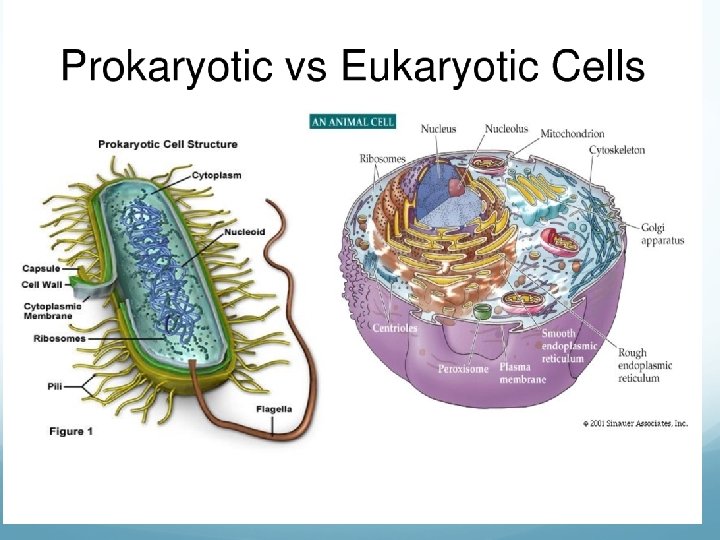
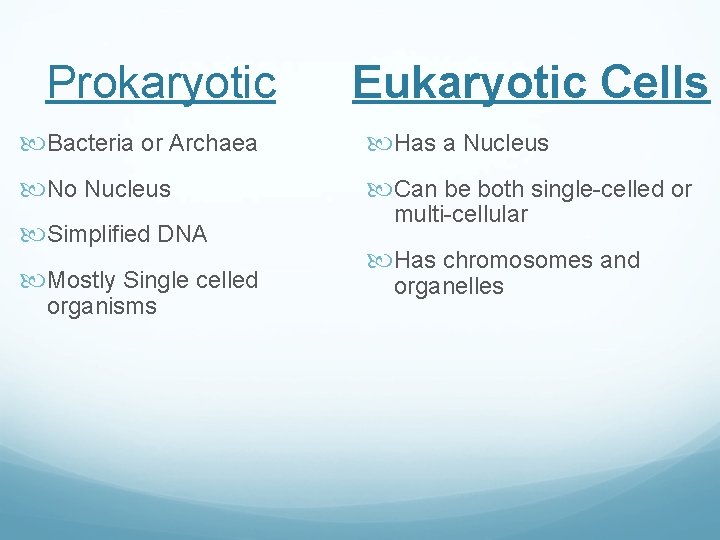
Prokaryotic Eukaryotic Cells Bacteria or Archaea Has a Nucleus No Nucleus Can be both single-celled or Simplified DNA Mostly Single celled organisms multi-cellular Has chromosomes and organelles
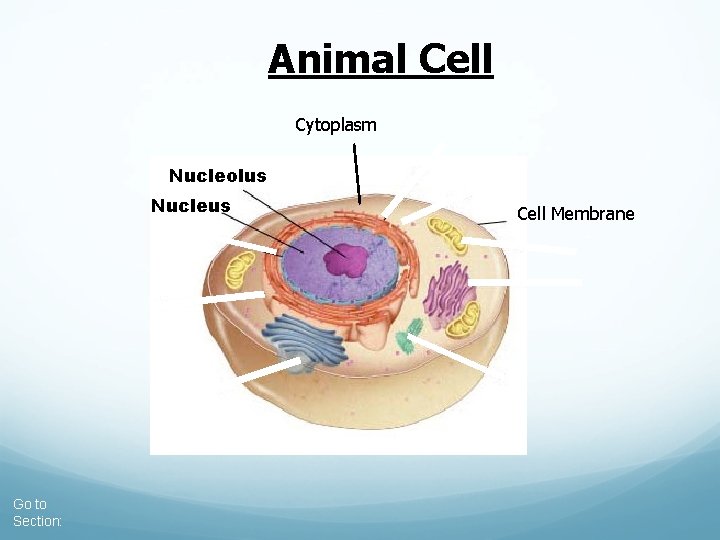
Animal Cell Cytoplasm Nucleolus Nucleus Go to Section: Cell Membrane
Eukaryotic Cell Organelles and Function 1. Nucleus Nickname: “The Control Center” Function: holds the DNA Parts: Nucleolus: dark spot in the middle of the nucleus that helps make ribosomes Is in plant and animal cells
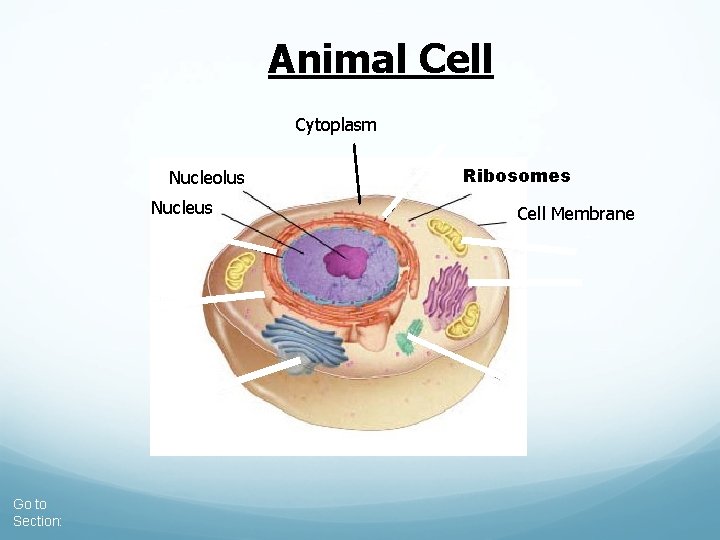
Animal Cell Cytoplasm Nucleolus Nucleus Go to Section: Ribosomes Cell Membrane
Eukaryotic Cell Organelles and Function 2. Ribosomes Function: makes proteins Found in all cells, prokaryotic and eukaryotic Located: Cytoplasm
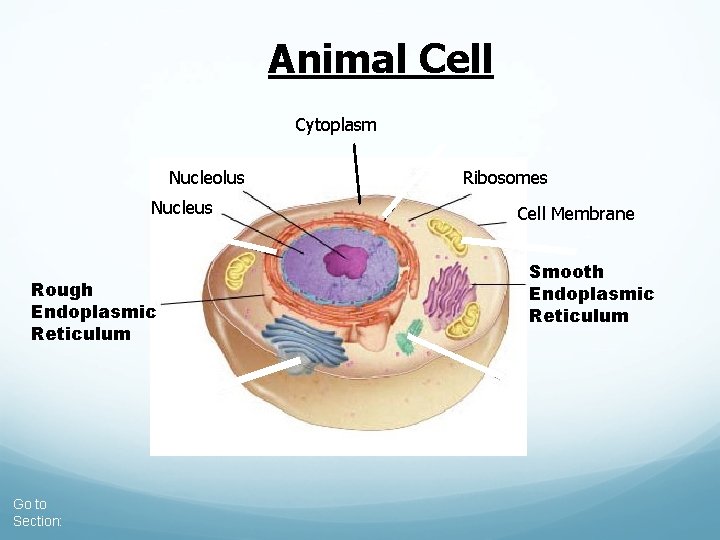
Animal Cell Cytoplasm Nucleolus Nucleus Rough Endoplasmic Reticulum Go to Section: Ribosomes Cell Membrane Smooth Endoplasmic Reticulum
Eukaryotic Cell Organelles and Function 3. Endoplasmic Reticulum (ER) Nickname: “Roads” Function: The internal delivery system of the cell Located: Cytoplasm Plant and animal cells
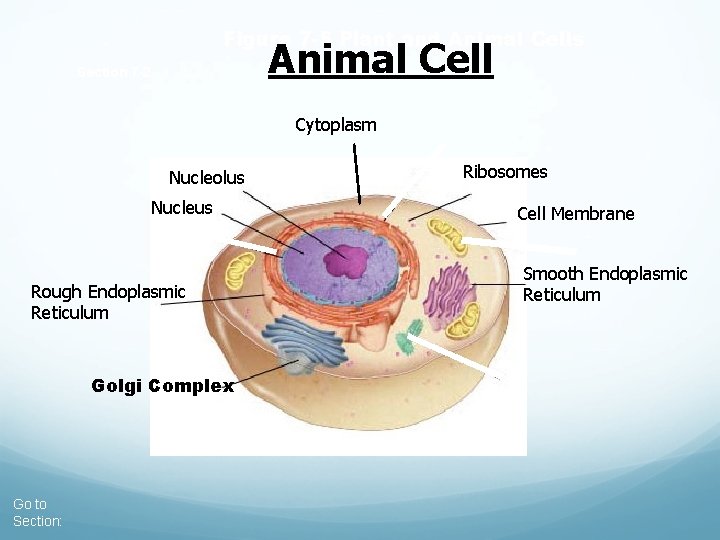
Figure 7 -5 Plant and Animal Cells Animal Cell Section 7 -2 Cytoplasm Nucleolus Nucleus Rough Endoplasmic Reticulum Golgi Complex Go to Section: Ribosomes Cell Membrane Smooth Endoplasmic Reticulum
Eukaryotic Cell Organelles and Function 4. Golgi Body Nickname: The shippers Function: packages, modifies, and transports materials to different location inside/outside of the cell Appearance: stack of pancakes Located: Cytoplasm Plant and animal cells
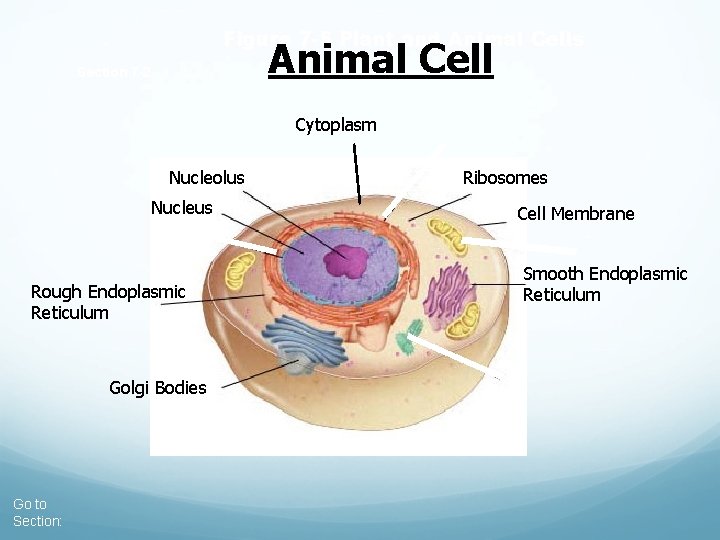
Figure 7 -5 Plant and Animal Cells Animal Cell Section 7 -2 Cytoplasm Nucleolus Nucleus Rough Endoplasmic Reticulum Golgi Bodies Go to Section: Ribosomes Cell Membrane Smooth Endoplasmic Reticulum
Eukaryotic Cell Organelles and Function 5. Lysosomes: circular, but bigger than ribosomes Nickname: “Clean-up Crews” Function: to break down food into particles the rest of the cell can use and to destroy old cells Located: Cytoplasm Plant and animal cells
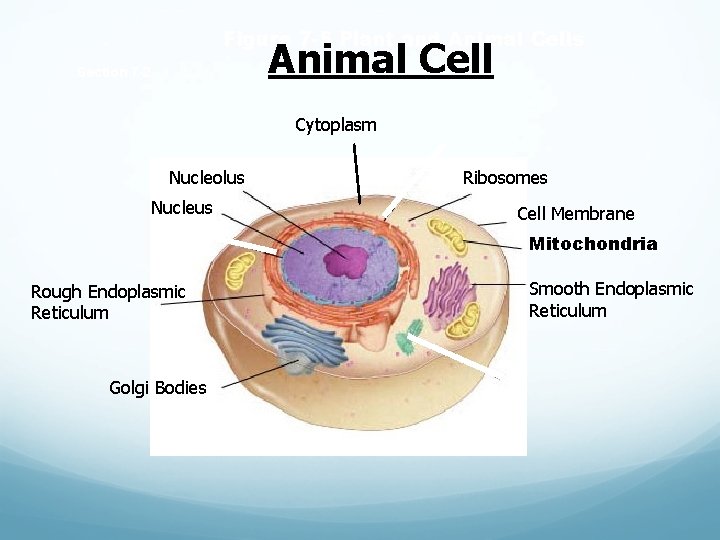
Figure 7 -5 Plant and Animal Cells Animal Cell Section 7 -2 Cytoplasm Nucleolus Nucleus Ribosomes Cell Membrane Mitochondria Rough Endoplasmic Reticulum Golgi Bodies Smooth Endoplasmic Reticulum
Eukaryotic Cell Organelles and Function 6. Mitochondria Nickname: “The Powerhouse” Function: Energy formation Breaks down food to make ATP: is the major fuel for all cell activities that require energy Located: Cytoplasm Plant and animal cells
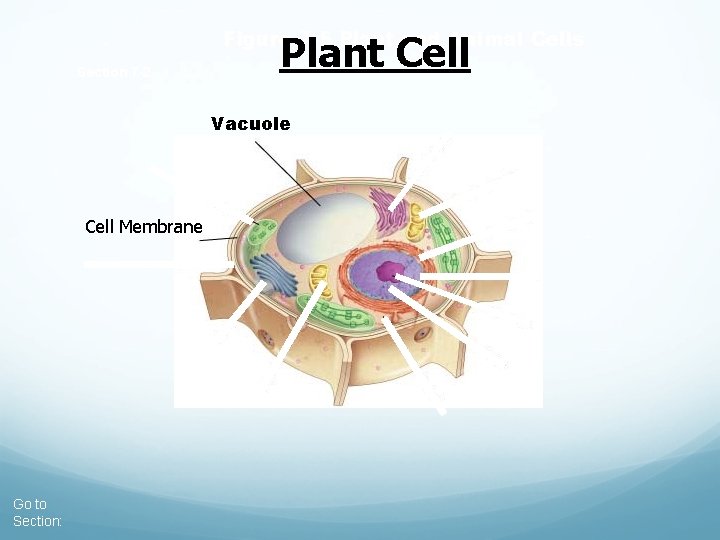
Figure 7 -5 Plant and Animal Cells Section 7 -2 Plant Cell Vacuole Cell Membrane Go to Section:
Eukaryotic Cell Organelles and Function 7. Vacuoles Function: Plant Cells Very large stores water This is what makes lettuce crisp When there is no water, the plant wilts Animal Cells Smaller than in plant cells Stores/releases waste products used in cellular digestion Located: Cytoplasm
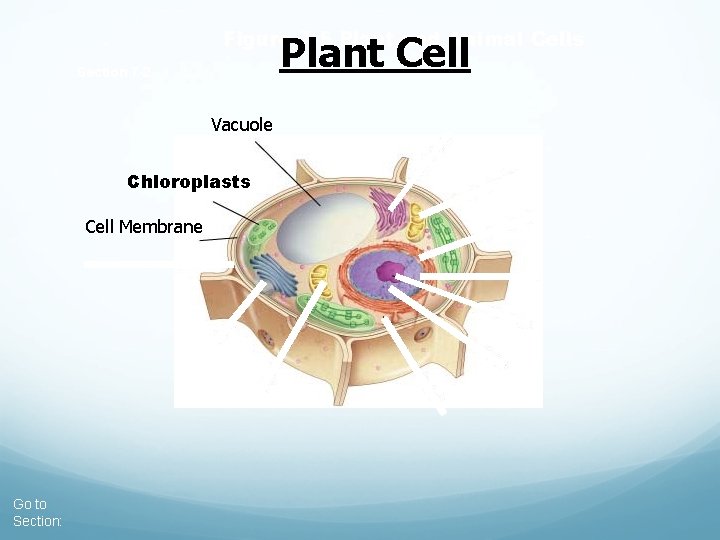
Figure 7 -5 Plant and Animal Cells Plant Cell Section 7 -2 Vacuole Chloroplasts Cell Membrane Go to Section:
Eukaryotic Cell Organelles and Function 8. Chloroplasts Function: traps energy from the sun to produce food for the plant cell Located: Cytoplasm Green in color because of chlorophyll, which is a green pigment Plant cells
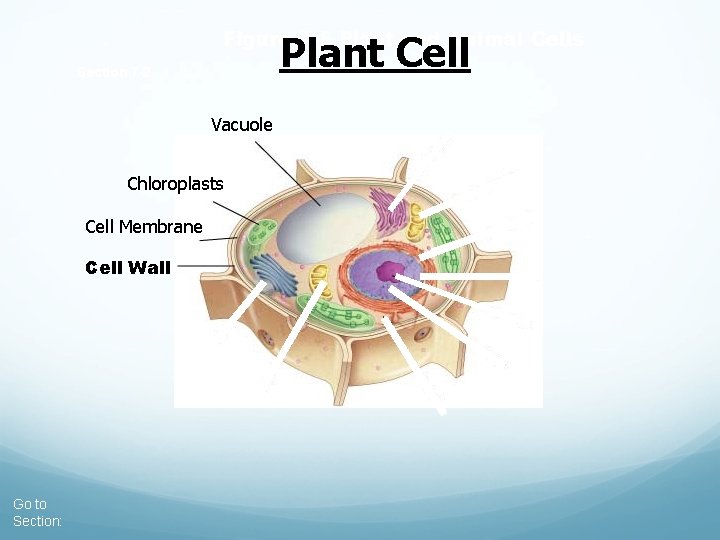
Figure 7 -5 Plant and Animal Cells Plant Cell Section 7 -2 Vacuole Chloroplasts Cell Membrane Cell Wall Go to Section:
Eukaryotic Cell Organelles and Function 9. Cell Wall Function: provides support and protection to the cell membrane Located: Found outside the cell membrane in plant cells
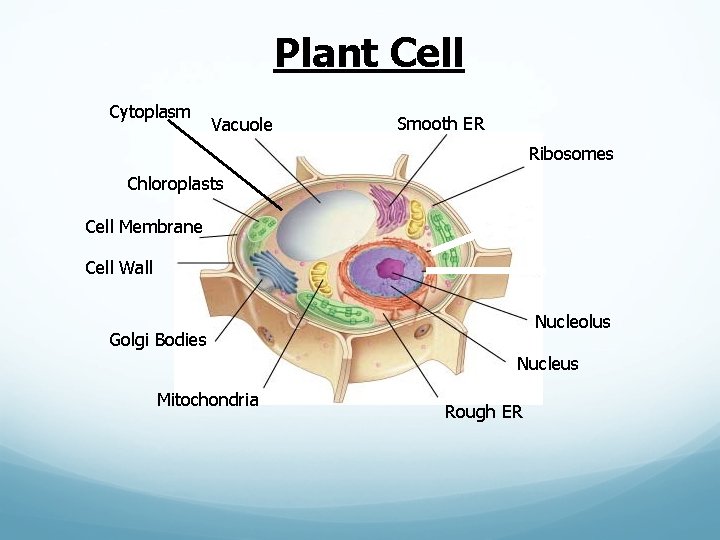
Plant Cell Cytoplasm Vacuole Smooth ER Ribosomes Chloroplasts Cell Membrane Cell Wall Nucleolus Golgi Bodies Nucleus Mitochondria Rough ER
Eukaryotic Cell Organelles and Function 10. Cell Membrane Functions: separates the inside of the cell from its environment Controls what substances enter and leave the cell Oxygen, carbon dioxide, wastes, food, etc… Located: In plant cells, it is to the inside of the cell wall In animal cells, it is the outermost part of the cell
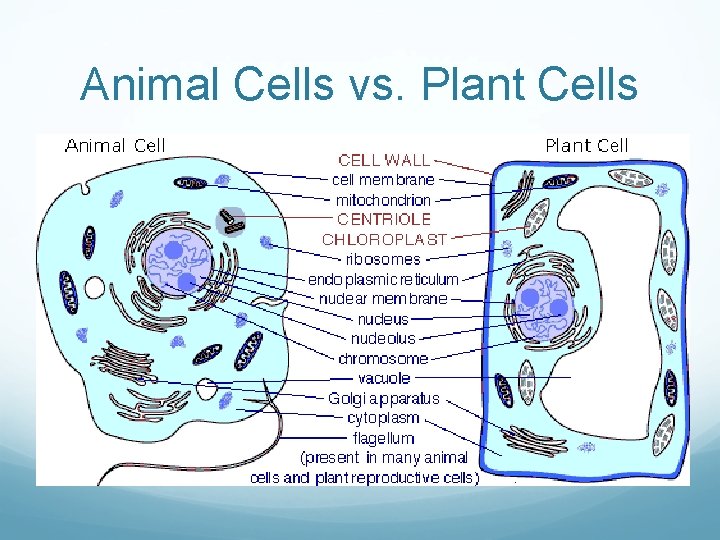
Animal Cells vs. Plant Cells
- Slides: 24