
Cells Preexisting cells cell theory Mitosis Cell size
- Slides: 17
*Cells *
*Pre-existing cells (cell theory) * Mitosis *
*Cell size (SA: V ratio) *Damage/injury/repair *Growth *Asexual reproduction *
*Gene expression… next unit! *
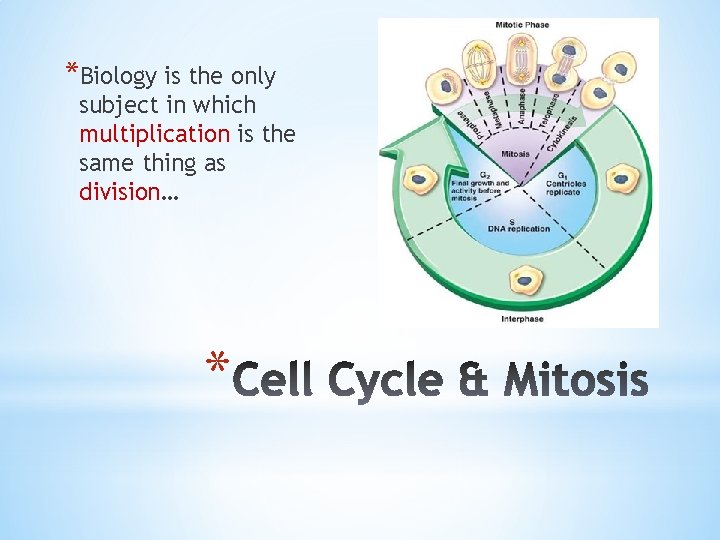
*Biology is the only subject in which multiplication is the same thing as division… *
* Most cell division results in genetically identical daughter cells
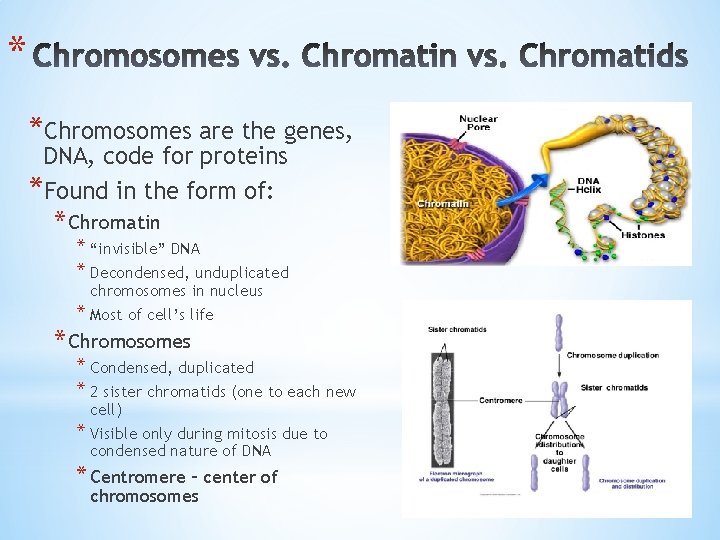
* *Chromosomes are the genes, DNA, code for proteins *Found in the form of: * Chromatin * “invisible” DNA * Decondensed, unduplicated chromosomes in nucleus * Most of cell’s life * Chromosomes * Condensed, duplicated * 2 sister chromatids (one to each new cell) * Visible only during mitosis due to condensed nature of DNA * Centromere – center of chromosomes
* The mitotic phase alternates with interphase in the cell cycle
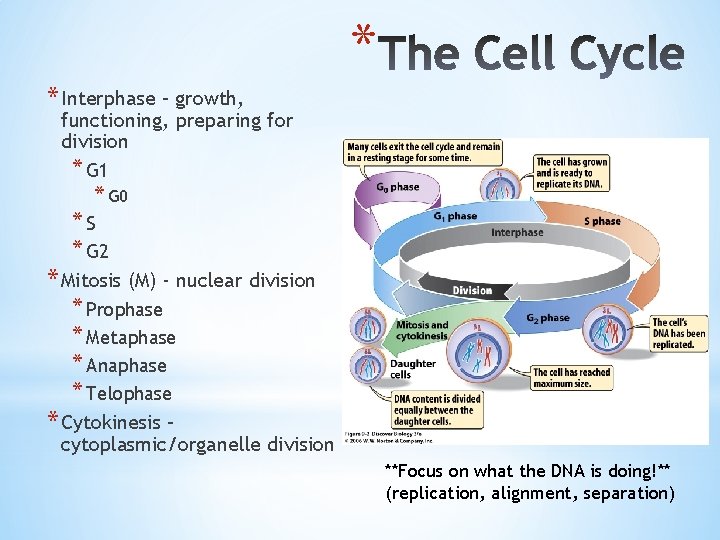
* * Interphase – growth, functioning, preparing for division * G 1 * G 0 *S * G 2 * Mitosis (M) - nuclear division * Prophase * Metaphase * Anaphase * Telophase * Cytokinesis – cytoplasmic/organelle division **Focus on what the DNA is doing!** (replication, alignment, separation)
* The eukaryotic cell cycle is regulated by a molecular control system
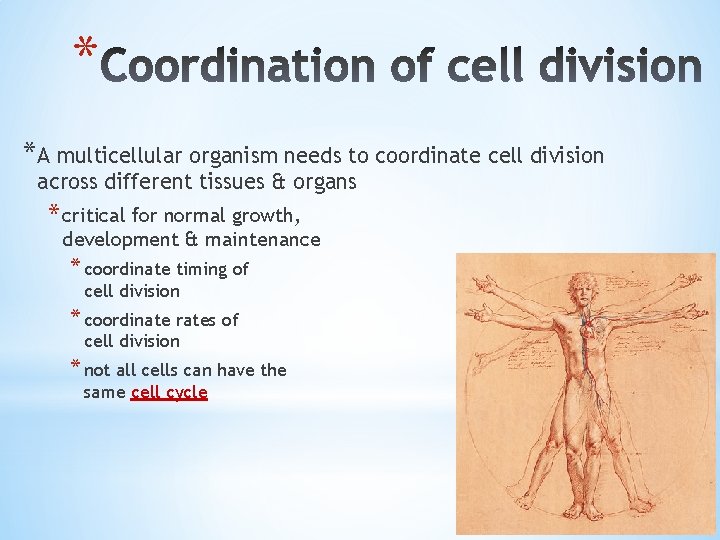
* *A multicellular organism needs to coordinate cell division across different tissues & organs * critical for normal growth, development & maintenance * coordinate timing of cell division * coordinate rates of cell division * not all cells can have the same cell cycle
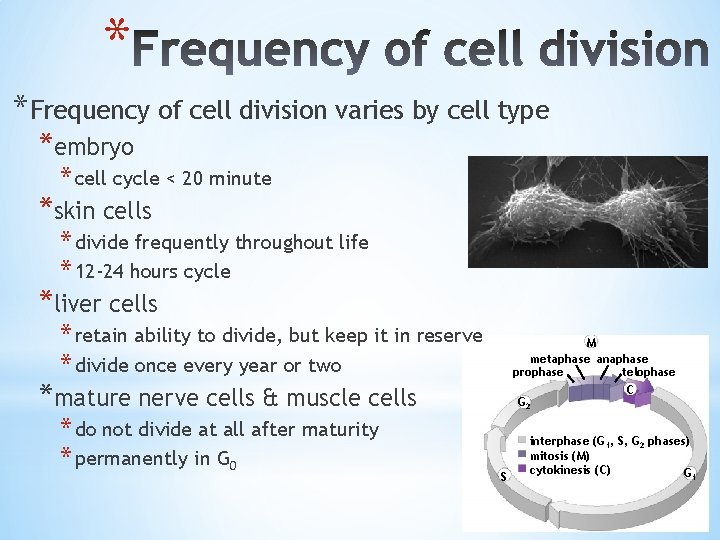
* *Frequency of cell division varies by cell type *embryo * cell cycle < 20 minute *skin cells * divide frequently throughout life * 12 -24 hours cycle *liver cells * retain ability to divide, but keep it in reserve * divide once every year or two M metaphase anaphase telophase prophase *mature nerve cells & muscle cells * do not divide at all after maturity * permanently in G 0 G 2 S C interphase (G 1, S, G 2 phases) mitosis (M) cytokinesis (C) G 1
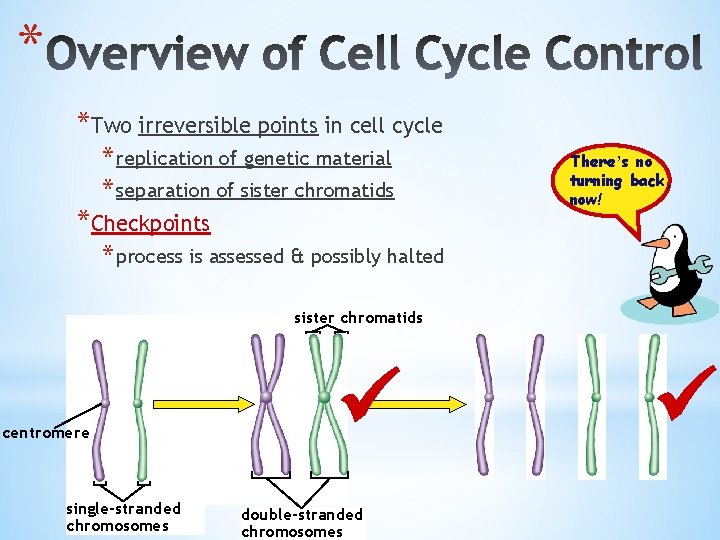
* *Two irreversible points in cell cycle * replication of genetic material * separation of sister chromatids *Checkpoints There’s no turning back, now! * process is assessed & possibly halted sister chromatids centromere single-stranded chromosomes double-stranded chromosomes
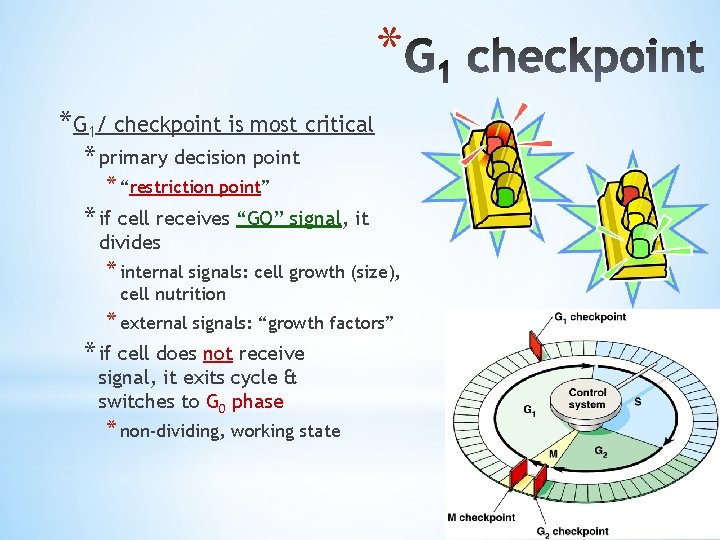
* *G 1/ checkpoint is most critical * primary decision point * “restriction point” * if cell receives “GO” signal, it divides * internal signals: cell growth (size), cell nutrition * external signals: “growth factors” * if cell does not receive signal, it exits cycle & switches to G 0 phase * non-dividing, working state
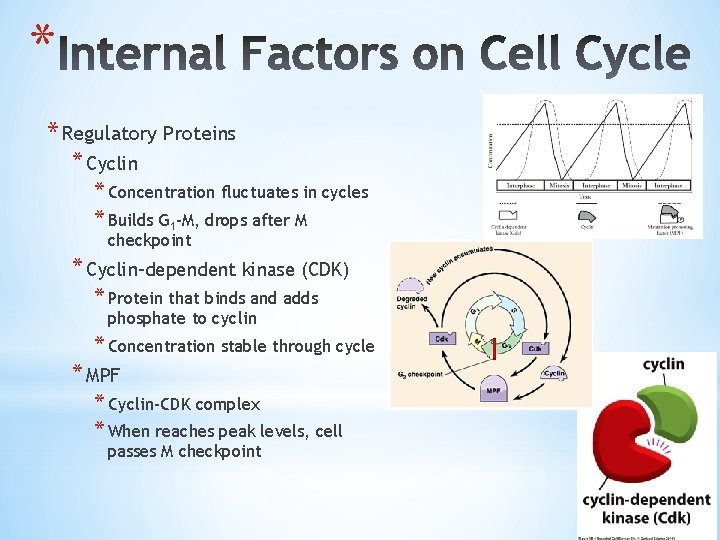
* * Regulatory Proteins * Cyclin * Concentration fluctuates in cycles * Builds G 1 -M, drops after M checkpoint * Cyclin-dependent kinase (CDK) * Protein that binds and adds phosphate to cyclin * Concentration stable through cycle * MPF * Cyclin-CDK complex * When reaches peak levels, cell passes M checkpoint
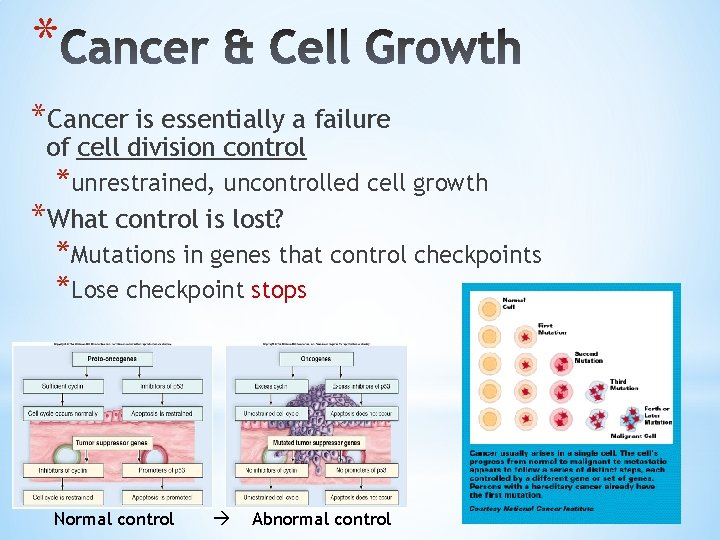
* *Cancer is essentially a failure of cell division control *unrestrained, uncontrolled cell growth *What control is lost? *Mutations in genes that control checkpoints *Lose checkpoint stops Normal control Abnormal control