
Cells of the Immune System Lymphoid lineage Central
- Slides: 11
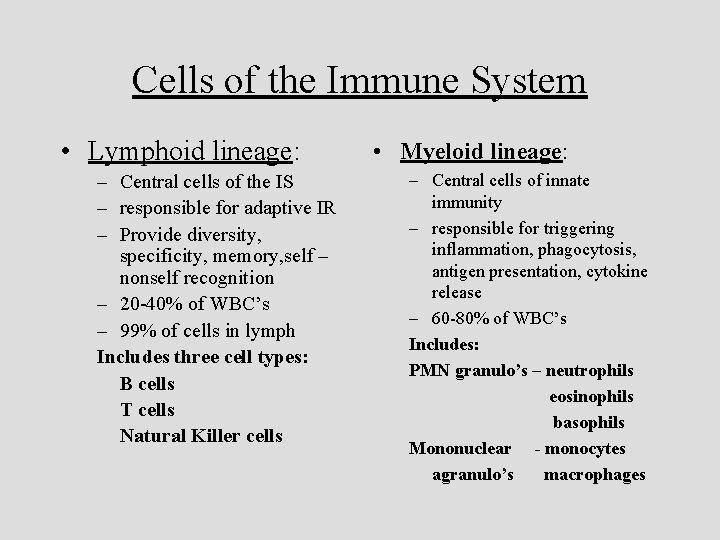
Cells of the Immune System • Lymphoid lineage: – Central cells of the IS – responsible for adaptive IR – Provide diversity, specificity, memory, self – nonself recognition – 20 -40% of WBC’s – 99% of cells in lymph Includes three cell types: B cells T cells Natural Killer cells • Myeloid lineage: – Central cells of innate immunity – responsible for triggering inflammation, phagocytosis, antigen presentation, cytokine release – 60 -80% of WBC’s Includes: PMN granulo’s – neutrophils eosinophils basophils Mononuclear - monocytes agranulo’s macrophages
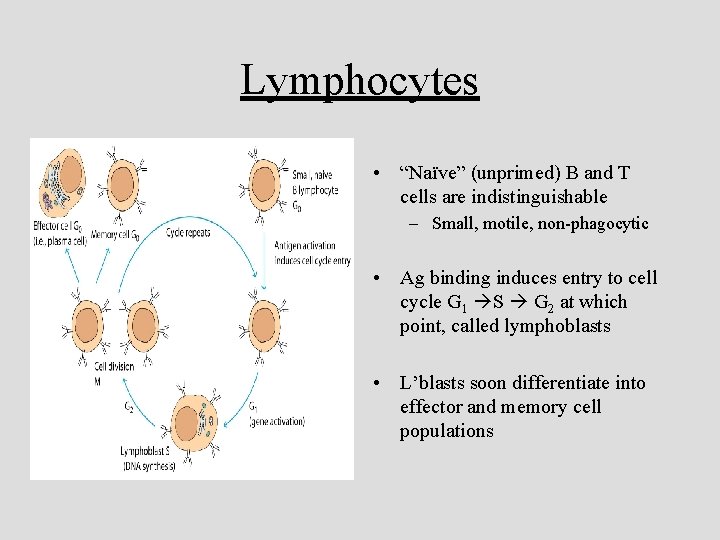
Lymphocytes • “Naïve” (unprimed) B and T cells are indistinguishable – Small, motile, non-phagocytic • Ag binding induces entry to cell cycle G 1 S G 2 at which point, called lymphoblasts • L’blasts soon differentiate into effector and memory cell populations
B Lymphocytes • Named from “B”ursa of Fabricius; bone marrow in humans • Distinguished by synthesis and display of Ab’s on cell • High numbers (1. 5 x 10⁵ Ab’s/cell) – all w/ same Fab • Other surface molecules: Class II MHC for Ag presentation CR 1 + CR 2 - complement receptors CD 32 - receptor for Ig. G CD 40 - critical receptor between B and TH; leads to diff to plasma + memory cells
T Lymphocytes • Named as they mature in Thymus gland • Membrane receptors: • TCR recognizes Ag ONLY when bound to MHC on self cells – CD 4 binds to MHC II (TH cells are Class II restricted) – CD 8 binds to MHC I (TC cells are Class I restricted) • CD 28 – receptor for co-stimulatory B 7 molecules on APC’s • CD 45 – signal transducer • Activated TH cells produce clone of effector cells • Activated TC cells, coming in contact with MHC I/Ag/ cytokines become CTL eliminate altered cells
Natural Killer Cells • • Discovered in 1976 Population of “T-like” cells; defend vs tumors/viral-inf cells No typical T or B cell receptors Recognize target cells 2 ways: • Recog cells with reduced MHC I and unusual surface characterisitcs or • Bind to opsonized tumor/virally inf cells and perform ADCC *Newly discovered NK 1 -T cells which exhibit TCR and release hi levels of cytokines stim AB production/ inflammation
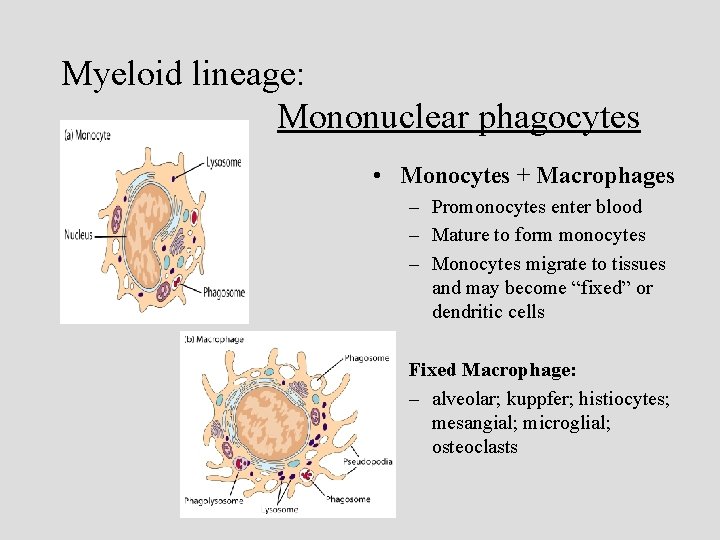
Myeloid lineage: Mononuclear phagocytes • Monocytes + Macrophages – Promonocytes enter blood – Mature to form monocytes – Monocytes migrate to tissues and may become “fixed” or dendritic cells Fixed Macrophage: – alveolar; kuppfer; histiocytes; mesangial; microglial; osteoclasts
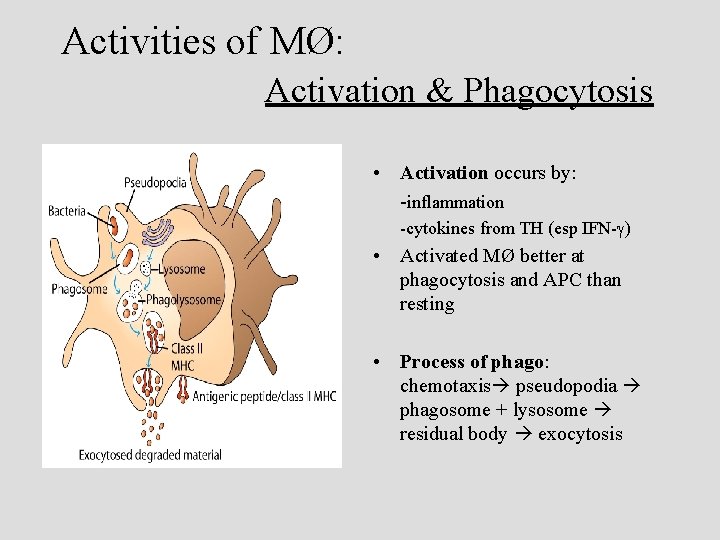
Activities of MØ: Activation & Phagocytosis • Activation occurs by: -inflammation -cytokines from TH (esp IFN- ) • Activated MØ better at phagocytosis and APC than resting • Process of phago: chemotaxis pseudopodia phagosome + lysosome residual body exocytosis
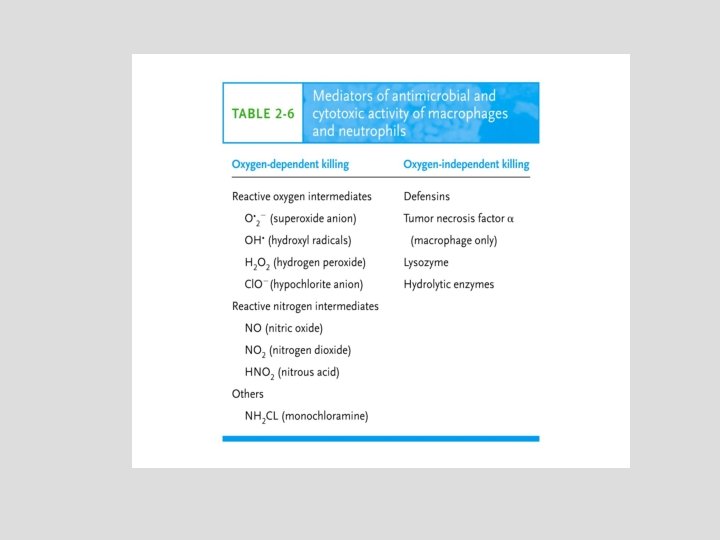
Activities of MØ: Oxygen-dependent killing • Activated MØ produce reactive oxygen and nitrogen intermediates – The “respiratory burst” activates oxidase enzymes which reduce O 2 to: superoxide, hydrogen peroxide, and hydroxyl anions – Myeloperoxidase of lysosomes produces hypochlorite – MØ triggered by bacterial CW’s and T cell cytokines express nitric oxide synthetase which catalyzes the production of nitric oxide, a potent antimicrobial gas
Activities of MØ: Oxygen-independent killing • Activated MØ also produce: – lysozyme and hydrolytic enzymes – defensin peptides – And secretion of TNF-
Activities of MØ: Ag presentation & cytokine secretion • Activation stimulates MHC II + B 7 co-stim » Efficient TH activation; important in both humoral and cell-mediated IR’s • Secretion of cytokines: » IL-1 stimulates lymphocytes » IL-6, TNF- stim fever and inflam • Also Complement proteins and Hydrolytic enzymes