
Cells Mitochondria Glycocalyx vs Free radical processes a






![. Generation of OH biogenic components … degrading action of ROS … [100] [1]](https://slidetodoc.com/presentation_image/4f19b5f39701e88e78b376d2574be2a1/image-40.jpg ". Generation of OH biogenic components … degrading action of ROS … [100] [1]")

- Slides: 46
Cells: Mitochondria, Glycocalyx vs. Free radical processes … a brain storming session … with hypotheses & speculations 11/4/2020 L. Šoltés 1
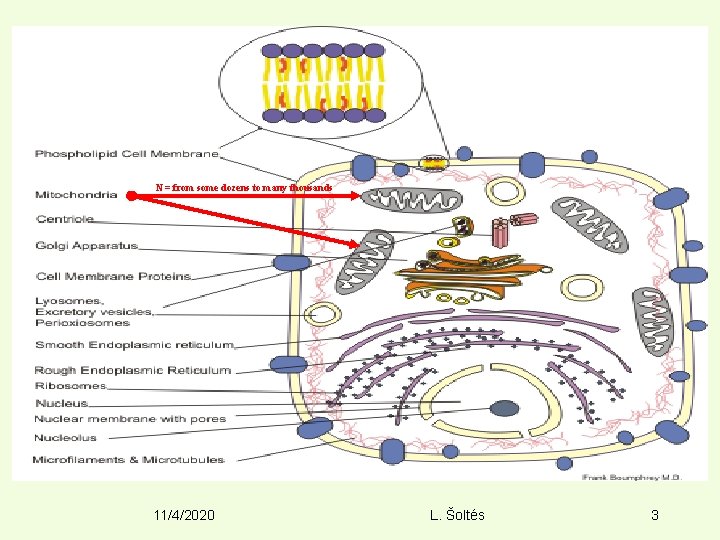
Cell anatomy Cells differ tremendously in morphology, but the main features of mammalian cells are quite similar 11/4/2020 L. Šoltés 2
N = from some dozens to many thousands 11/4/2020 L. Šoltés 3
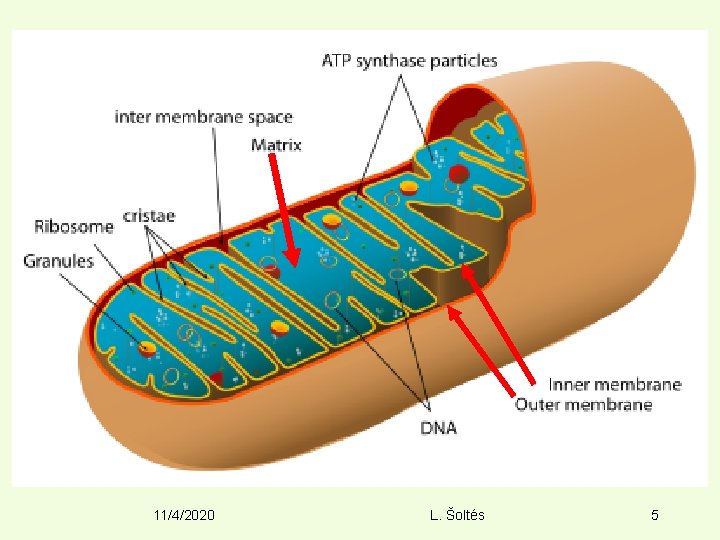
Mitochondrion Mitochondria of an adult absorb about 400 liters of oxygen per day Mitochondria (sing. mitochondrion) are known as the powerhouses of the cell, producing the majority - about 95% - of the ATP that is used in cell metabolism 11/4/2020 L. Šoltés 4
11/4/2020 L. Šoltés 5
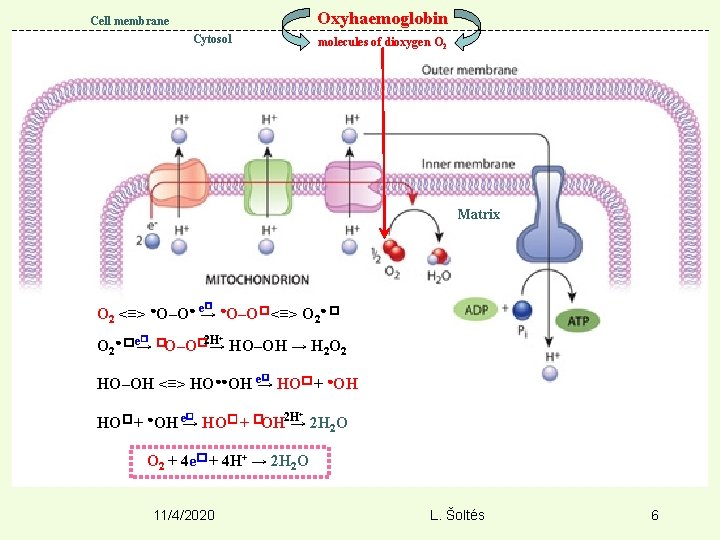
Oxyhaemoglobin Cell membrane Cytosol molecules of dioxygen O 2 Matrix O 2 <≡> ●O–O● e→ ●O–O� <≡> O 2● � � O 2● � e→ �O–O� 2 H → HO–OH → H 2 O 2 + � HO–OH <≡> HO●●OH e→ HO� + ●OH � HO� + ●OH e→ HO� + �OH 2 H → 2 H 2 O � + O 2 + 4 e� + 4 H+ → 2 H 2 O 11/4/2020 L. Šoltés 6
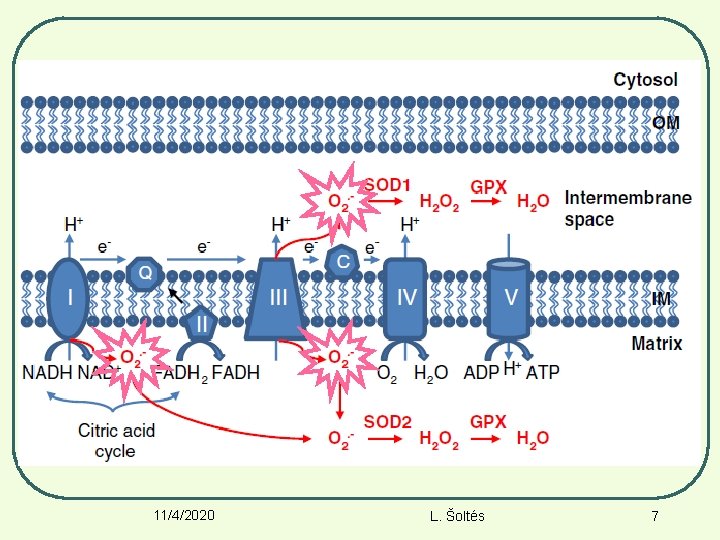
11/4/2020 L. Šoltés 7
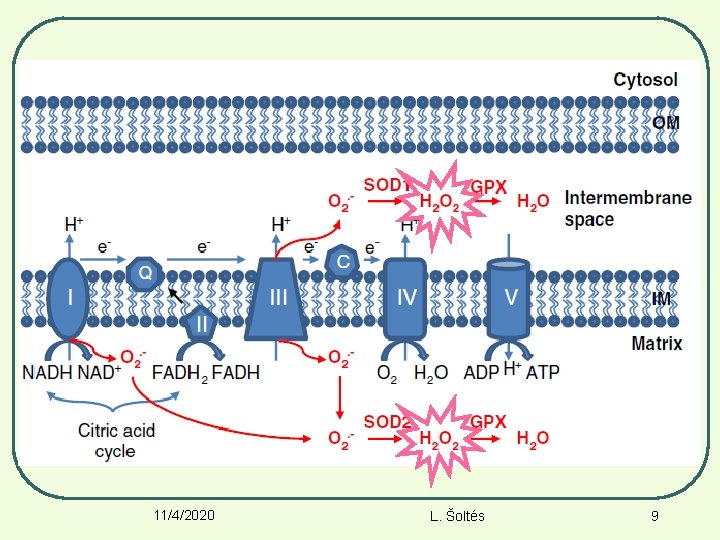
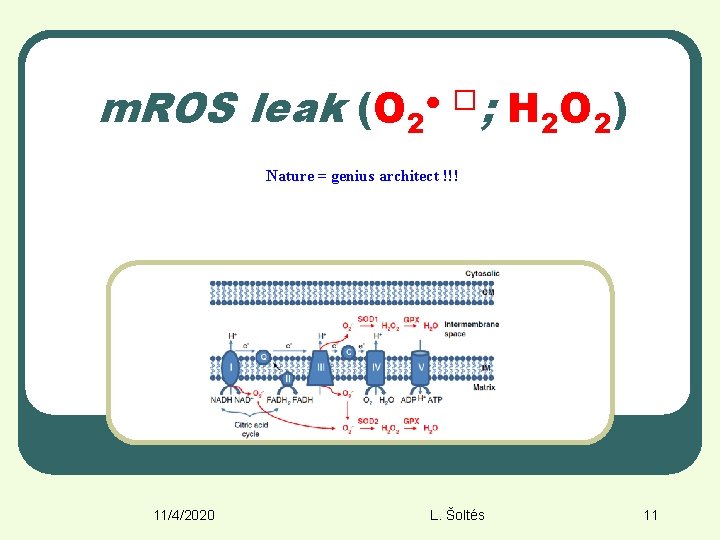
Mitochondrion ROS; O 2● � It has been estimated that 0. 1% to 2. 0% of O 2 consumed by mitochondria generates O 2● � There are the following leak events; corresponding to 0. 4 -8. 0 liters O 2 per day: • Complex I leaks O 2● � towards the matrix • Complex III leaks O 2● � towards the intermembrane space • Complex III leaks O 2● � towards the matrix 11/4/2020 L. Šoltés 8
11/4/2020 L. Šoltés 9
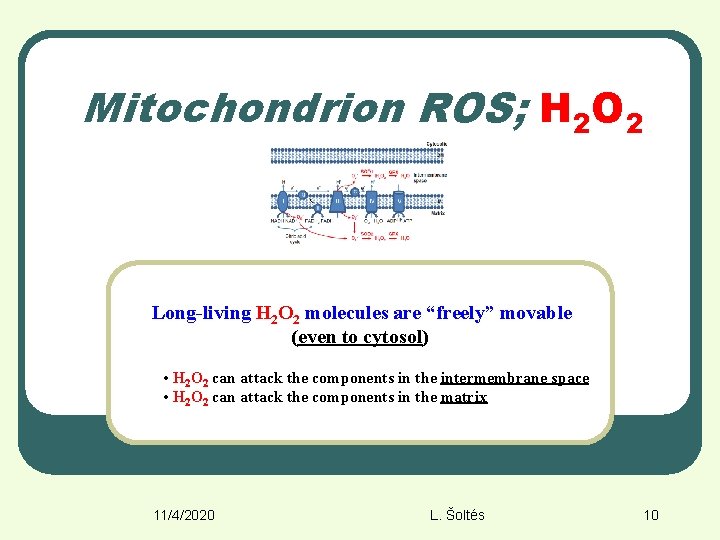
Mitochondrion ROS; H 2 O 2 Long-living H 2 O 2 molecules are “freely” movable (even to cytosol) • H 2 O 2 can attack the components in the intermembrane space • H 2 O 2 can attack the components in the matrix 11/4/2020 L. Šoltés 10
m. ROS leak (O 2● � ; H 2 O 2) Nature = genius architect !!! 11/4/2020 L. Šoltés 11
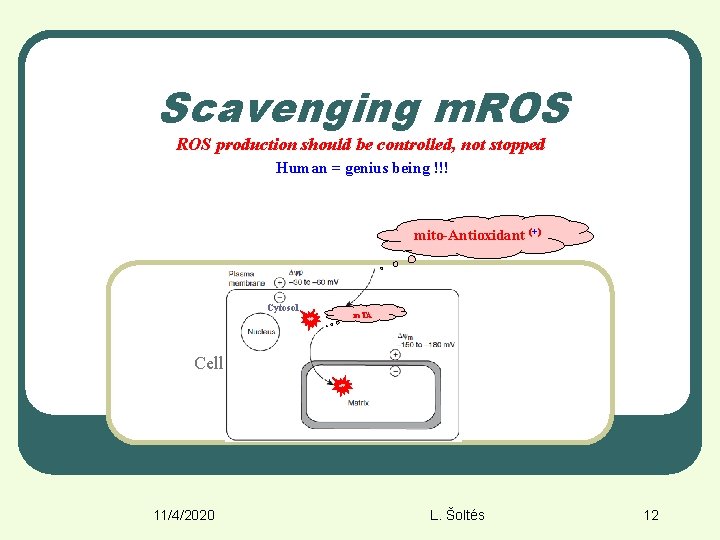
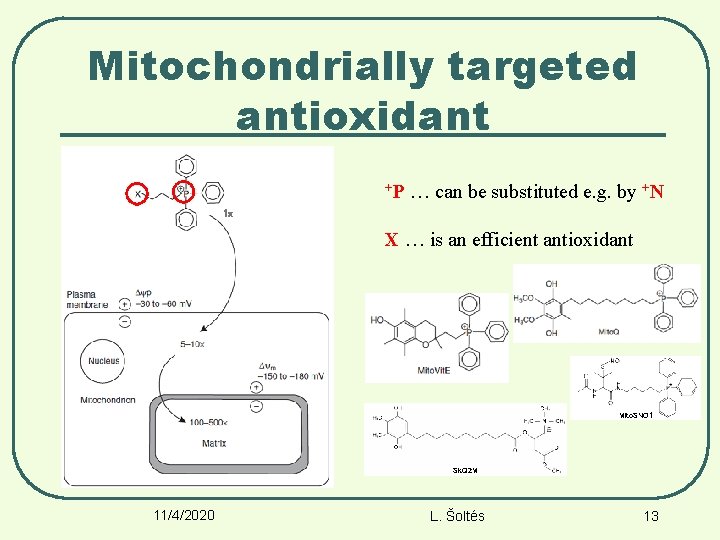
Scavenging m. ROS production should be controlled, not stopped Human = genius being !!! mito-Antioxidant (+) Cytosol m. TA Cell 11/4/2020 L. Šoltés 12
Mitochondrially targeted antioxidant +P … can be substituted e. g. by +N 1 x X … is an efficient antioxidant Mito. SNO 1 Sk. Q 2 M 11/4/2020 L. Šoltés 13
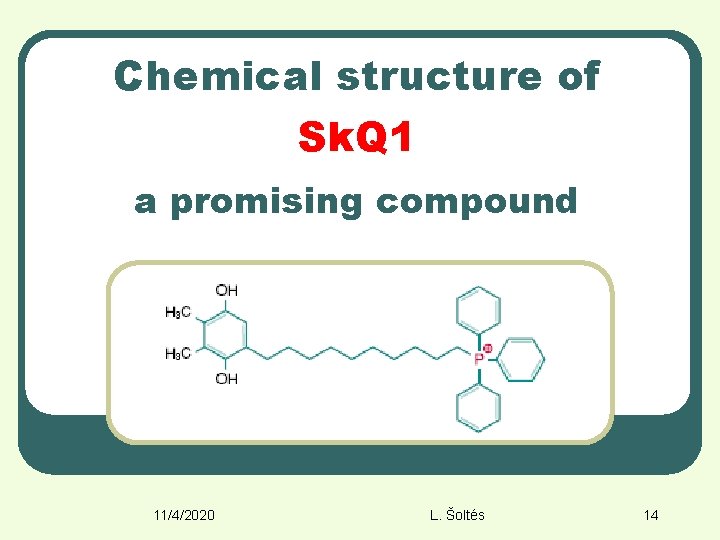
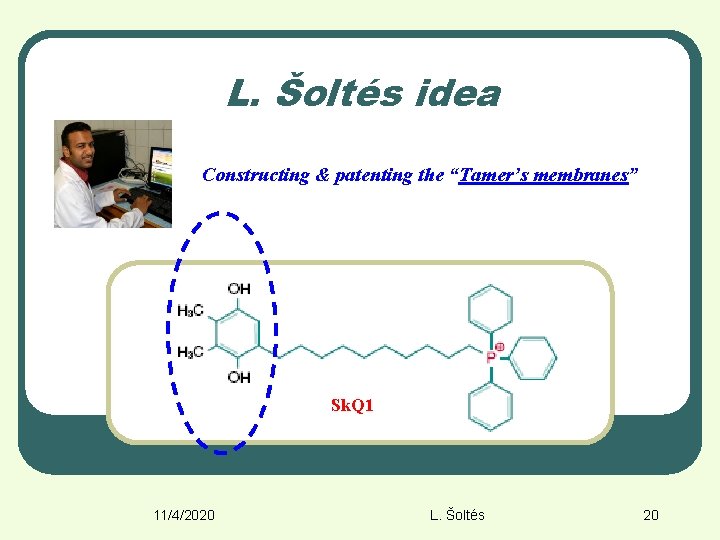
Chemical structure of Sk. Q 1 a promising compound 11/4/2020 L. Šoltés 14
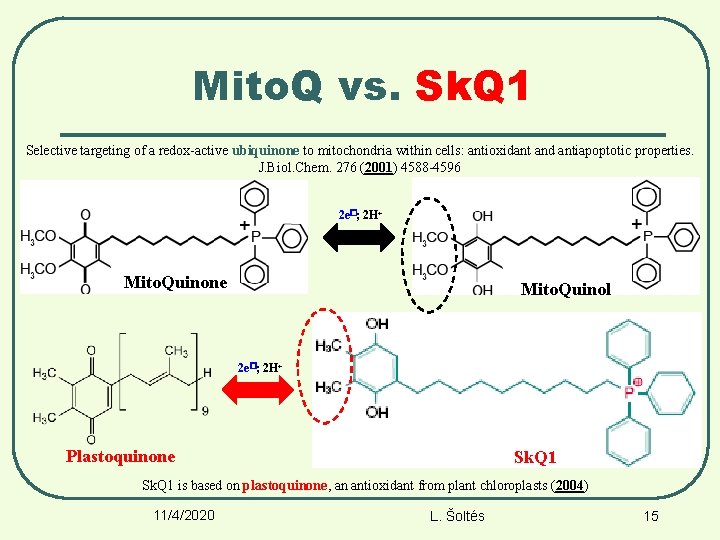
Mito. Q vs. Sk. Q 1 Selective targeting of a redox-active ubiquinone to mitochondria within cells: antioxidant and antiapoptotic properties. J. Biol. Chem. 276 (2001) 4588 -4596 2 e�; 2 H+ Mito. Quinone Mito. Quinol 2 e�; 2 H+ Plastoquinone Sk. Q 1 is based on plastoquinone, an antioxidant from plant chloroplasts (2004) 11/4/2020 L. Šoltés 15
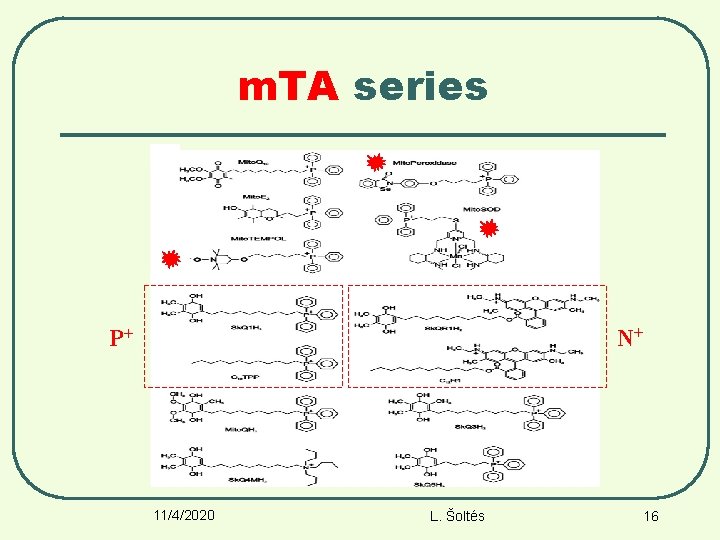
m. TA series N+ P+ 11/4/2020 L. Šoltés 16
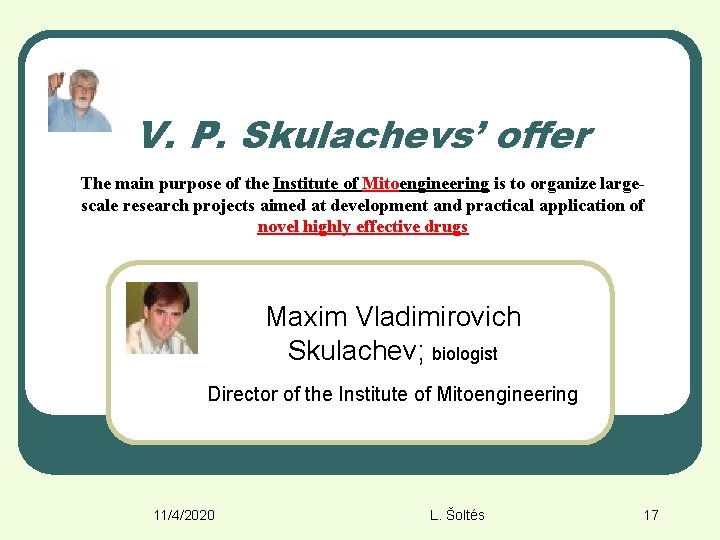
V. P. Skulachevs’ offer The main purpose of the Institute of Mitoengineering is to organize largescale research projects aimed at development and practical application of novel highly effective drugs Maxim Vladimirovich Skulachev; biologist Director of the Institute of Mitoengineering 11/4/2020 L. Šoltés 17
Skulachev’s tenets 1. The “ideal” antioxidant should be specifically targeted to mitochondria where ROS are produced. 2. This antioxidant should effectively remove not all the ROS but just their excess. 3. It is also important for an antioxidant not to be toxic and not to be recognized and eliminated by cell enzymes. 4. Unfortunately none of the antioxidants discovered by the end of the 20 th century fits all these criteria. 11/4/2020 L. Šoltés 18
Skulachev’s observations 1. Extremely high effectiveness of Sk. Q 1 (hundreds-fold higher when compared to analogic Mito. Q) can be explained by Sk. Q 1 ability to “get regenerated”. 2. Having accomplished its function as ROS neutralizer and changed into an oxygenated form, Sk. Q 1 is easily restored by a mitochondrial respiratory chain. 3. It is due to this ability for multiple restorations that Sk. Q 1 proves to be effective even in extremely low nanomolar concentrations. 4. Sk. Q-type compounds allows them to act as the recyclable antioxidants, in contrast to conventional antioxidants that are usually inactivated after interaction with a free radical. 11/4/2020 L. Šoltés 19
L. Šoltés idea Constructing & patenting the “Tamer’s membranes” Sk. Q 1 11/4/2020 L. Šoltés 20
Patent pending - confidential + m. TA Biomembrane + m. TA Wound healing 11/4/2020 L. Šoltés & M. Tamer 21
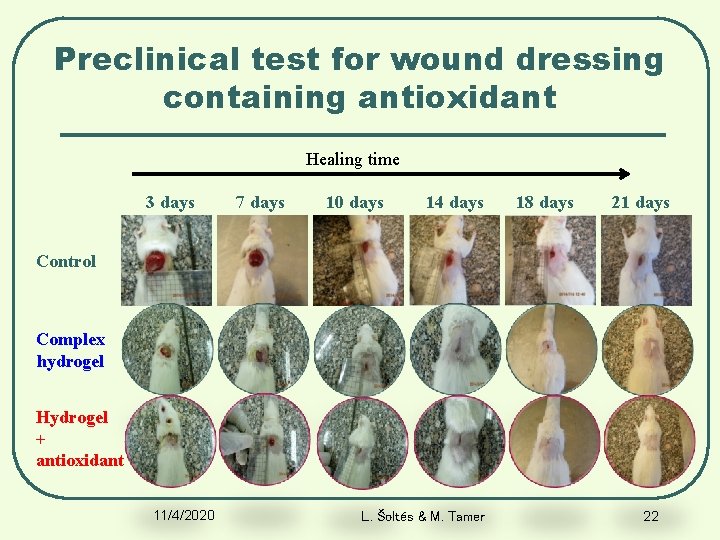
Preclinical test for wound dressing containing antioxidant Healing time 3 days 7 days 10 days 14 days 18 days 21 days Control Complex hydrogel Hydrogel + antioxidant 11/4/2020 L. Šoltés & M. Tamer 22
Cells: Mitochondria, Glycocalyx vs. Free radical processes … a brain storming session … with hypotheses & speculations 11/4/2020 L. Šoltés 23
… a tissue … 11/4/2020 L. Šoltés 24
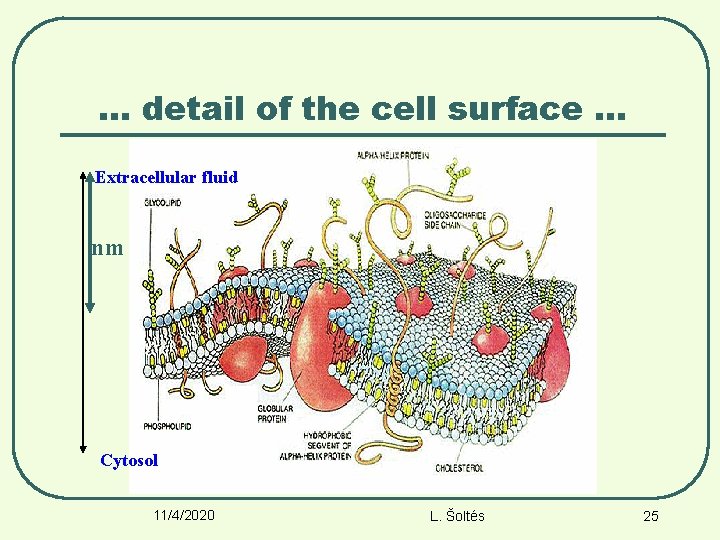
… detail of the cell surface … Extracellular fluid nm Cytosol 11/4/2020 L. Šoltés 25
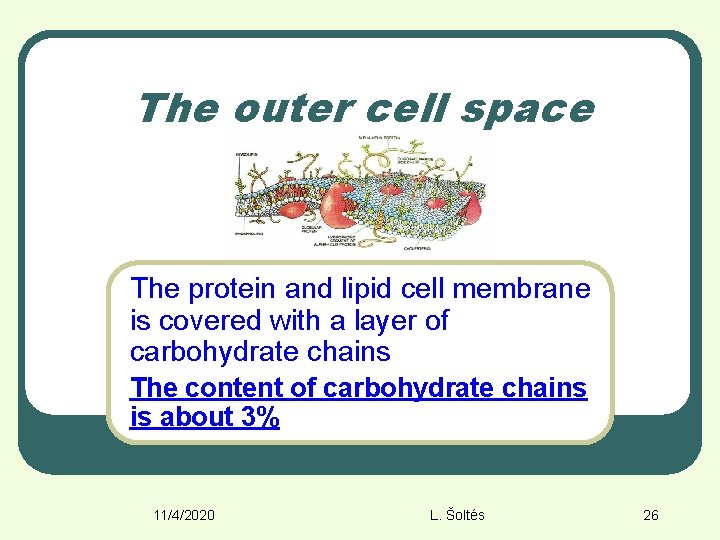
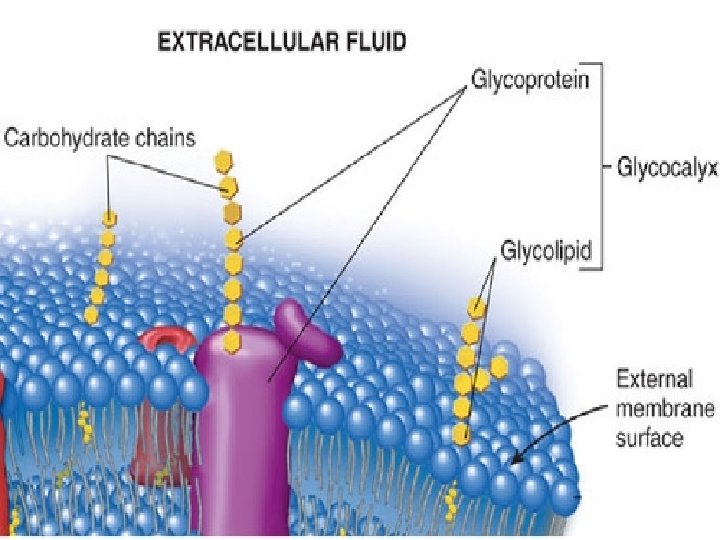
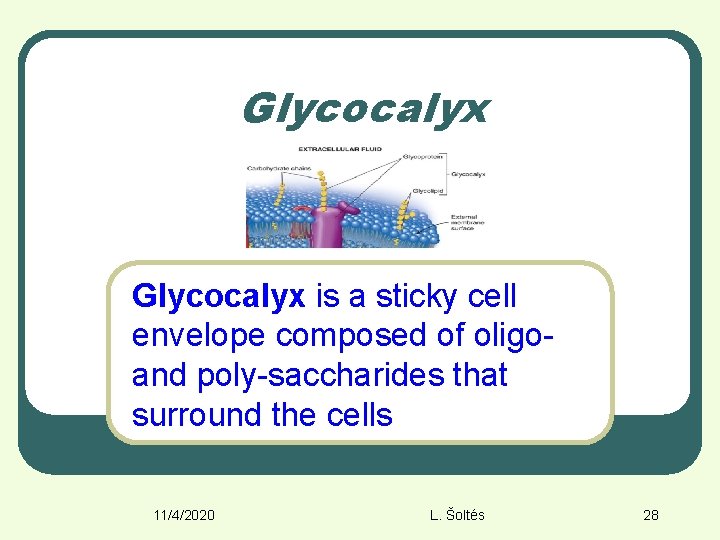
The outer cell space The protein and lipid cell membrane is covered with a layer of carbohydrate chains The content of carbohydrate chains is about 3% 11/4/2020 L. Šoltés 26
11/4/2020 L. Šoltés 27
Glycocalyx is a sticky cell envelope composed of oligoand poly-saccharides that surround the cells 11/4/2020 L. Šoltés 28
Glycocalyx functions l Has a negative electrical charge which repels negatively charged ions l Protect cells against damages l Serve to attach cells to one another l Act as a part of the receptor sites l Enter into immune reactions 11/4/2020 L. Šoltés 29
Glycocalyx functions l Has a negative electrical charge which repels negatively charged ions l Protect cells against damages l Serve to attach cells to one another l Act as a part of the receptor sites l Enter into immune reactions 11/4/2020 L. Šoltés 30
“Glycocalyx” protective function ? Fibroblasts in synovium HAs of MDa molar mass move into the synovial fluid and protect cartilage from damages 11/4/2020 L. Šoltés 31
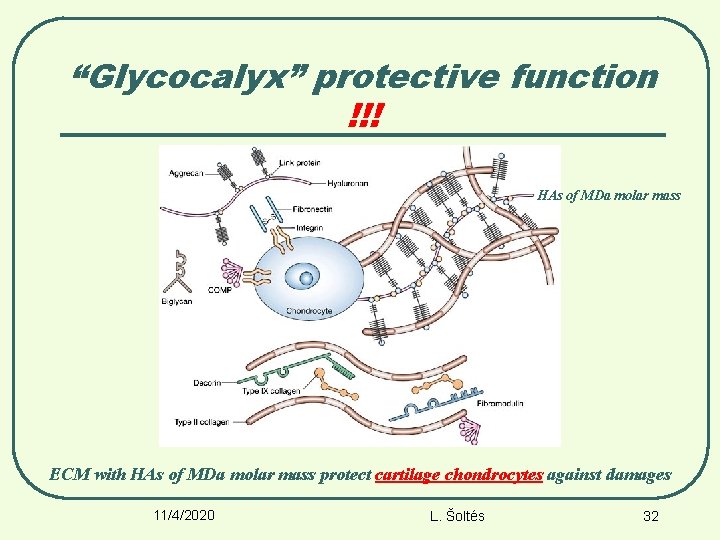
“Glycocalyx” protective function !!! HAs of MDa molar mass ECM with HAs of MDa molar mass protect cartilage chondrocytes against damages 11/4/2020 L. Šoltés 32
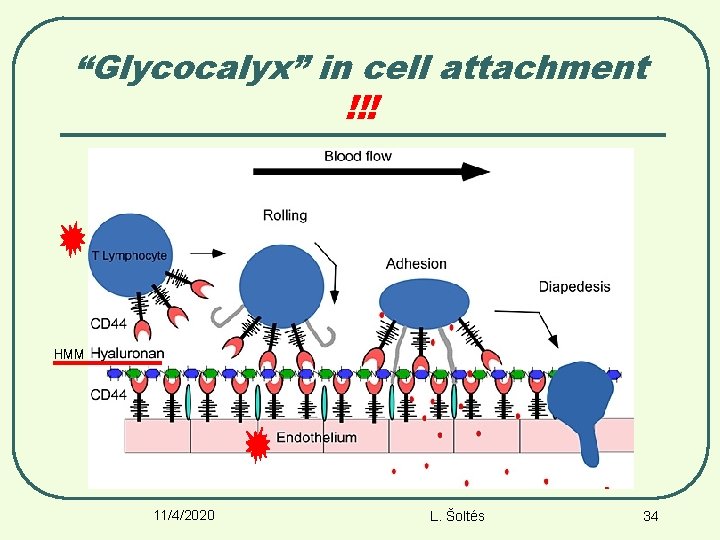
Glycocalyx functions l Has a negative electrical charge which repels negatively charged ions l Protect cells against damages l Serve to attach cells to one another l Act as a part of the receptor sites l Enter into immune reactions 11/4/2020 L. Šoltés 33
“Glycocalyx” in cell attachment !!! HMM 11/4/2020 L. Šoltés 34
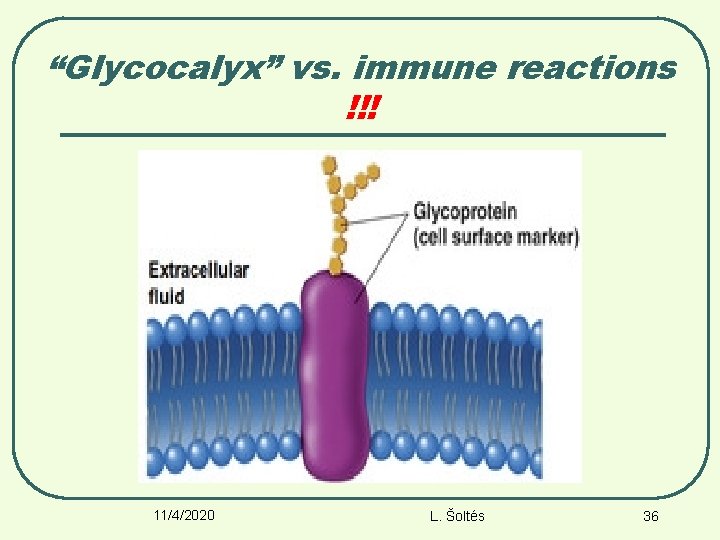
Glycocalyx functions l Has a negative electrical charge which repels negatively charged ions l Protect cells against damages l Serve to attach cells to one another l Act as a part of the receptor sites l Enter into immune reactions 11/4/2020 L. Šoltés 35
“Glycocalyx” vs. immune reactions !!! 11/4/2020 L. Šoltés 36
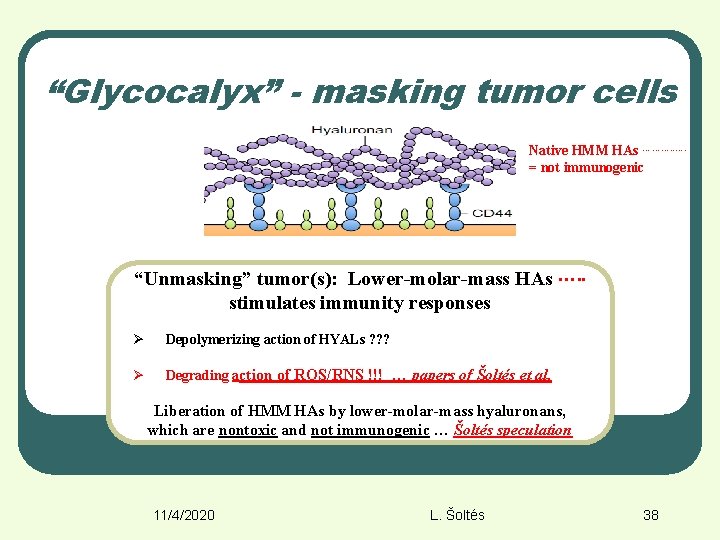
“Glycocalyx” - masking tumor cells by native HMM HAs !!! immunogenic 11/4/2020 L. Šoltés 37
“Glycocalyx” - masking tumor cells Native HMM HAs ………. . …. = not immunogenic “Unmasking” tumor(s): Lower-molar-mass HAs …. . stimulates immunity responses Ø Depolymerizing action of HYALs ? ? ? Ø Degrading action of ROS/RNS !!! … papers of Šoltés et al. Liberation of HMM HAs by lower-molar-mass hyaluronans, which are nontoxic and not immunogenic … Šoltés speculation 11/4/2020 L. Šoltés 38
“Glycocalyx” - unmasking tumor cells Lower MM HAs …… = immunogenic One of the current trends Lower-molar-mass HAs …. . stimulates immunity responses 11/4/2020 L. Šoltés 39
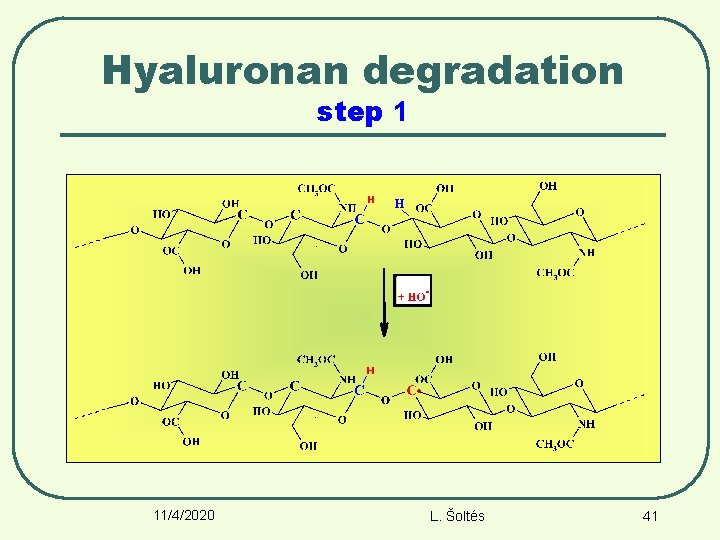
. Generation of OH biogenic components … degrading action of ROS … [100] [1] H 2 O 2 + Cu(I)---complex 11/4/2020 . OH + Cu(II)catalyst L. Šoltés 40
Hyaluronan degradation step 1 H 11/4/2020 L. Šoltés 41
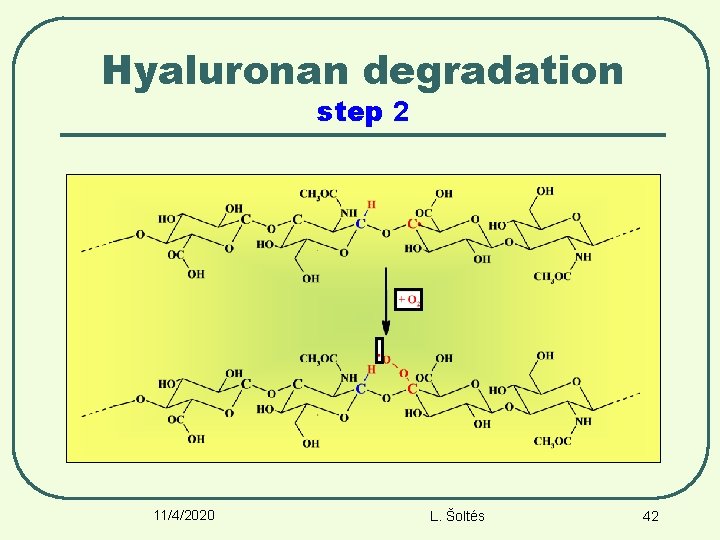
Hyaluronan degradation step 2 11/4/2020 L. Šoltés 42
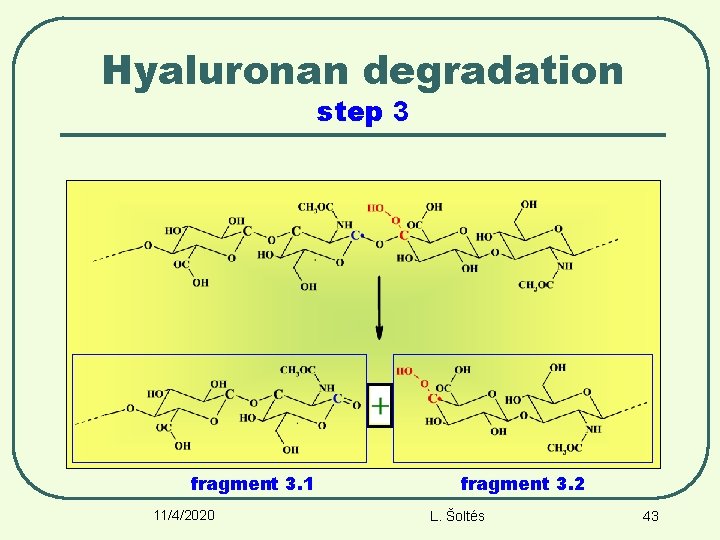
Hyaluronan degradation step 3 fragment 3. 1 11/4/2020 fragment 3. 2 L. Šoltés 43
VEGA project 2011 -2014 Ø Degrading 11/4/2020 action of ROS/RNS on HMM HAs papers of Šoltés et al. L. Šoltés 44
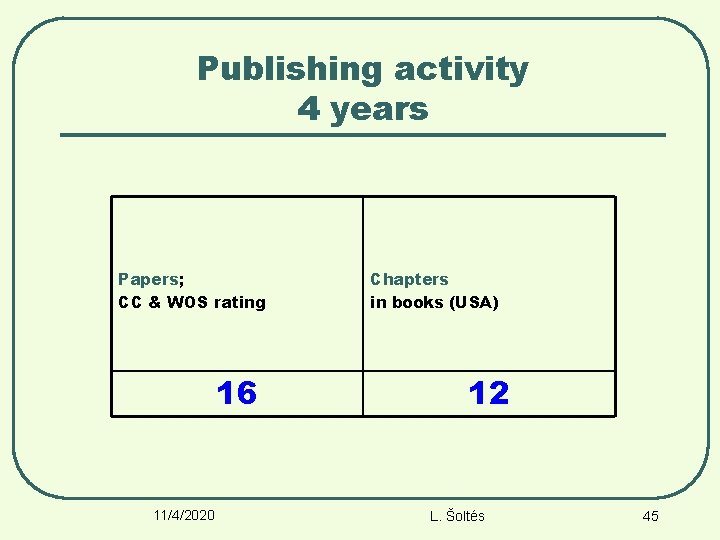
Publishing activity 4 years Papers; CC & WOS rating 16 11/4/2020 Chapters in books (USA) 12 L. Šoltés 45
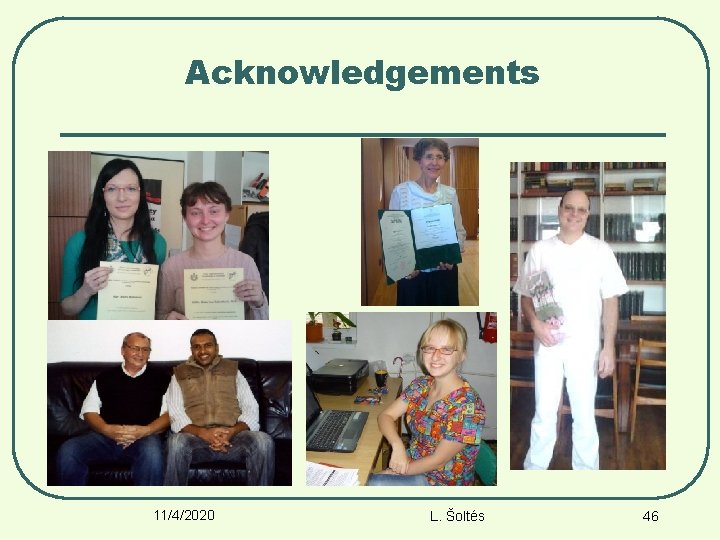
Acknowledgements 11/4/2020 L. Šoltés 46