
Cells Microscopes Cell Theory and Cell Structure Microscope

- Slides: 40
Cells Microscopes, Cell Theory and Cell Structure
Microscope and Cell Theory • Robert Hooke (1665) âLooked at a thin slice of cork and saw many honeycomb-shaped structures. âCalled them cells.
Leeuwenhoek • Used a handmade microscope to look at living blood cells, bacteria and organisms in a drop of water. Brown • Looked at plant cells and described the nucleus.
Schwann & Schleiden: • Said that all plants and animals were made of cells. Beginning of Cell Theory: 1) All living things are made of one or more cells. 2) The cell is the functional unit of life. 3) All cells come from pre-existing cells (don’t just appear!).
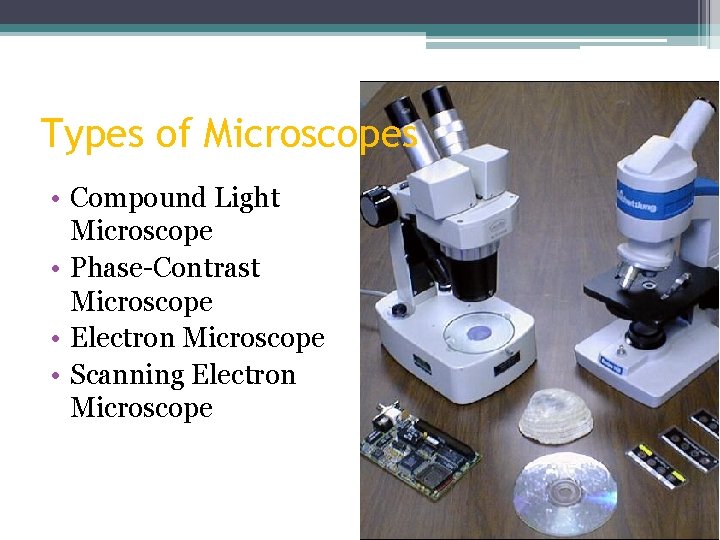
Types of Microscopes • Compound Light Microscope • Phase-Contrast Microscope • Electron Microscope • Scanning Electron Microscope
Light Microscopes âIncreased magnification by adding a second lens âImages are magnified by multiplying 2 lens powers together. âMaximum magnification of 2000 x
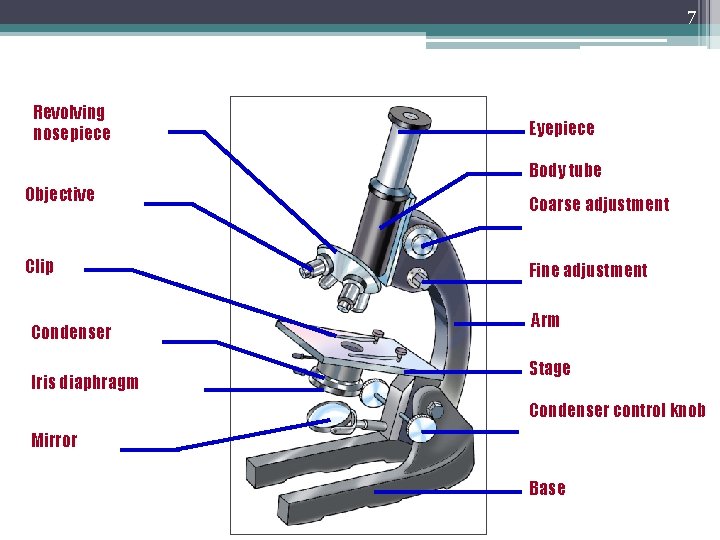
7 Revolving nosepiece Eyepiece Body tube Objective Clip Condenser Iris diaphragm Coarse adjustment Fine adjustment Arm Stage Condenser control knob Mirror Base
Transmission Electron Microscopes âFirst one created an image 400 x bigger; now they are capable of 2 000 x magnification âUses electron beams instead of light beams. âProblems: you can only use thin layers and specimen can’t be kept alive. Must view on computer screen. $$$
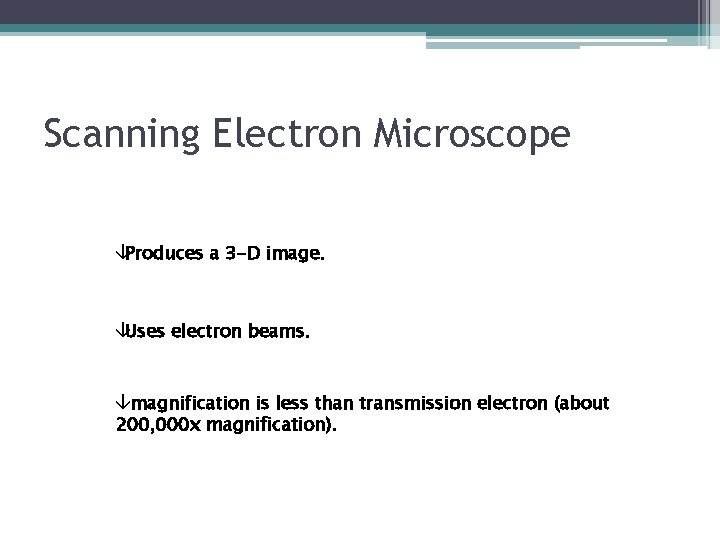
Scanning Electron Microscope âProduces a 3 -D image. âUses electron beams. âmagnification is less than transmission electron (about 200, 000 x magnification).
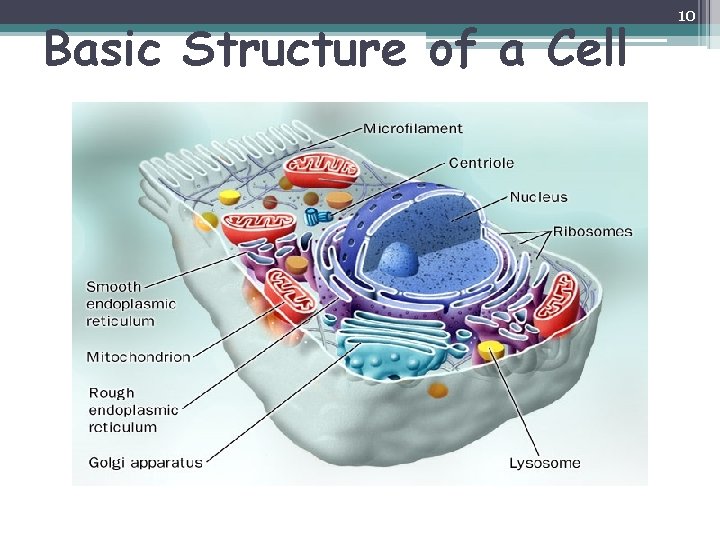
Basic Structure of a Cell 10
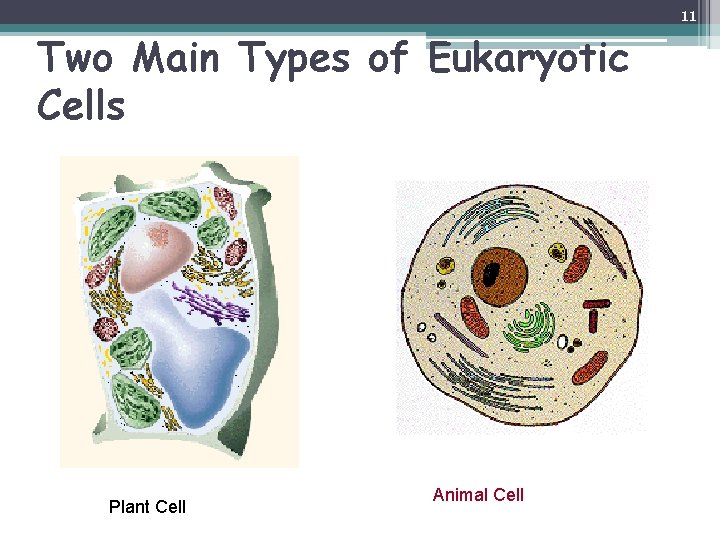
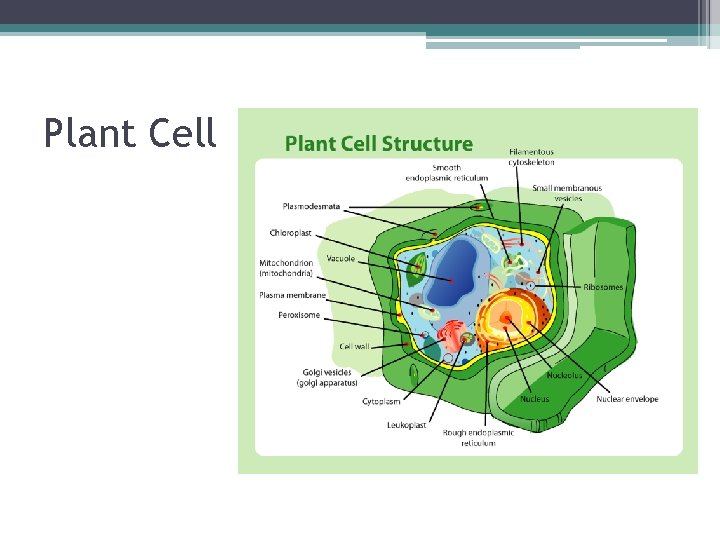
11 Two Main Types of Eukaryotic Cells Plant Cell Animal Cell
12 Organelles Very small size Can only be observed under a microscope Have specific functions Found throughout cytoplasm
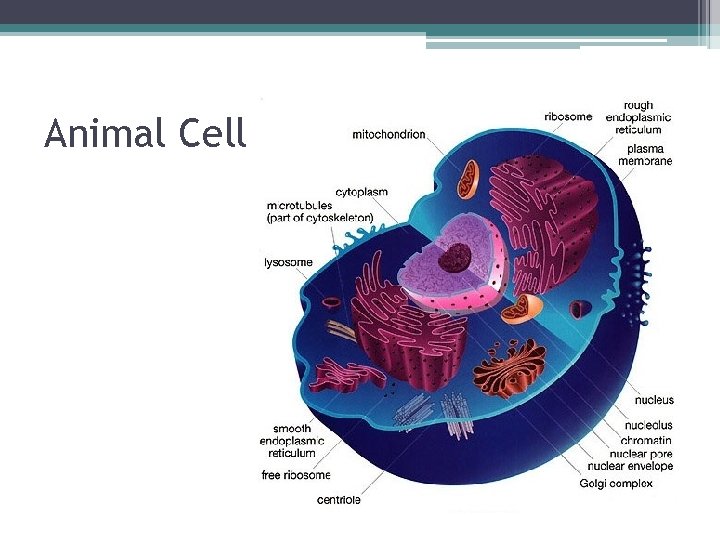
Animal Cell
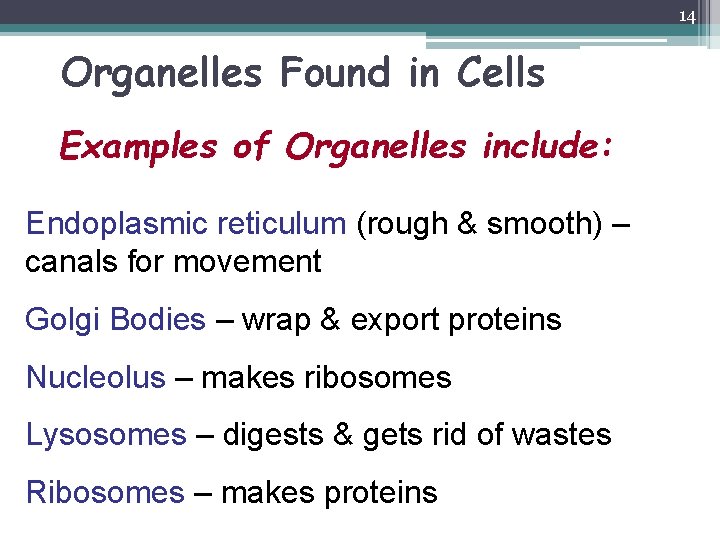
14 Organelles Found in Cells Examples of Organelles include: Endoplasmic reticulum (rough & smooth) – canals for movement Golgi Bodies – wrap & export proteins Nucleolus – makes ribosomes Lysosomes – digests & gets rid of wastes Ribosomes – makes proteins
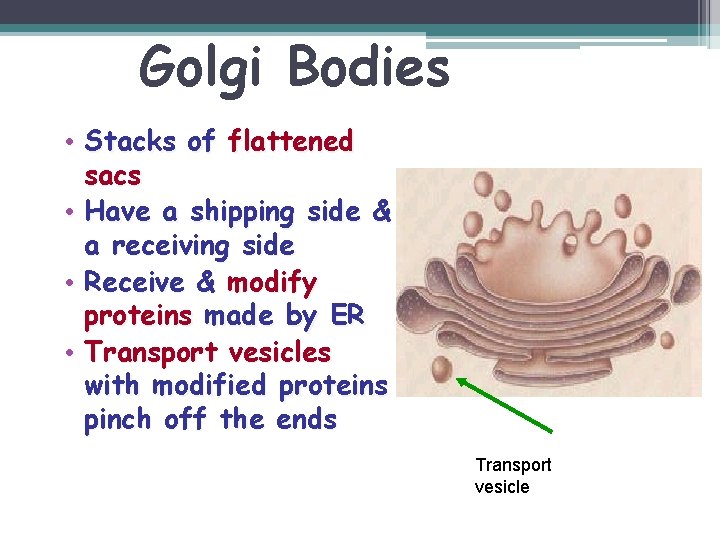
Golgi Bodies • Stacks of flattened sacs • Have a shipping side & a receiving side • Receive & modify proteins made by ER • Transport vesicles with modified proteins pinch off the ends Transport vesicle 15
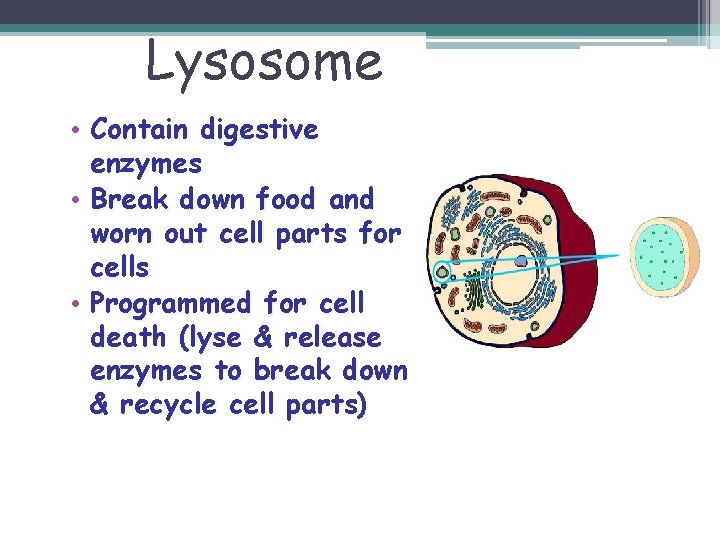
Lysosome • Contain digestive enzymes • Break down food and worn out cell parts for cells • Programmed for cell death (lyse & release enzymes to break down & recycle cell parts) 16
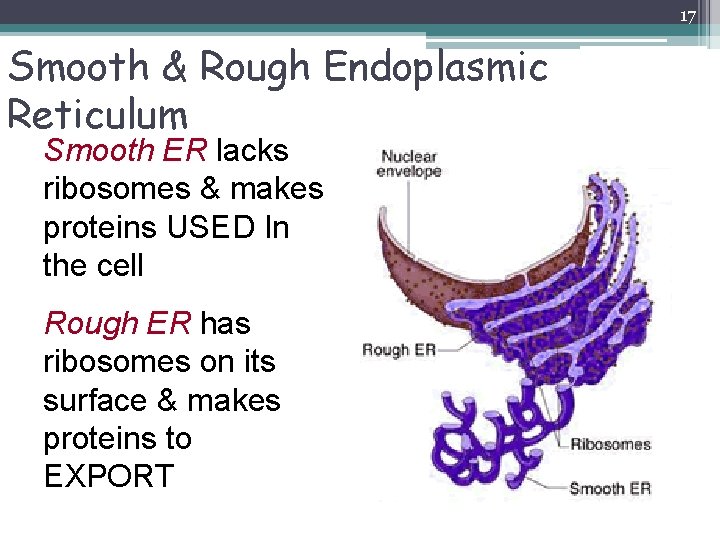
17 Smooth & Rough Endoplasmic Reticulum Smooth ER lacks ribosomes & makes proteins USED In the cell Rough ER has ribosomes on its surface & makes proteins to EXPORT
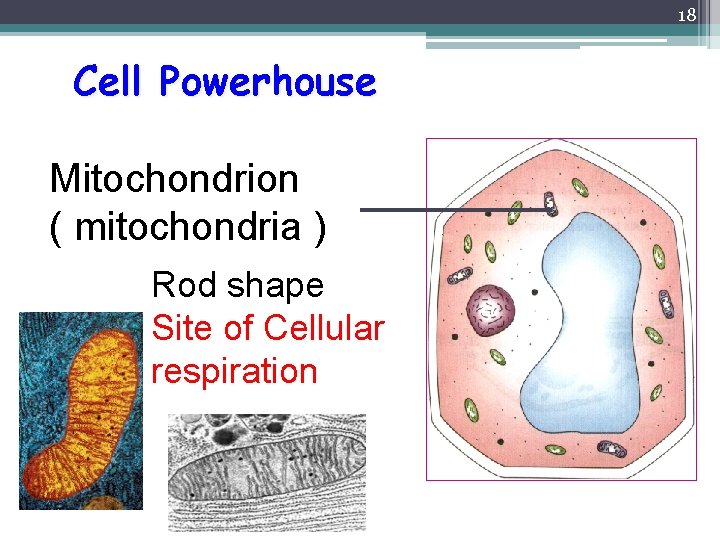
18 Cell Powerhouse Mitochondrion ( mitochondria ) Rod shape Site of Cellular respiration
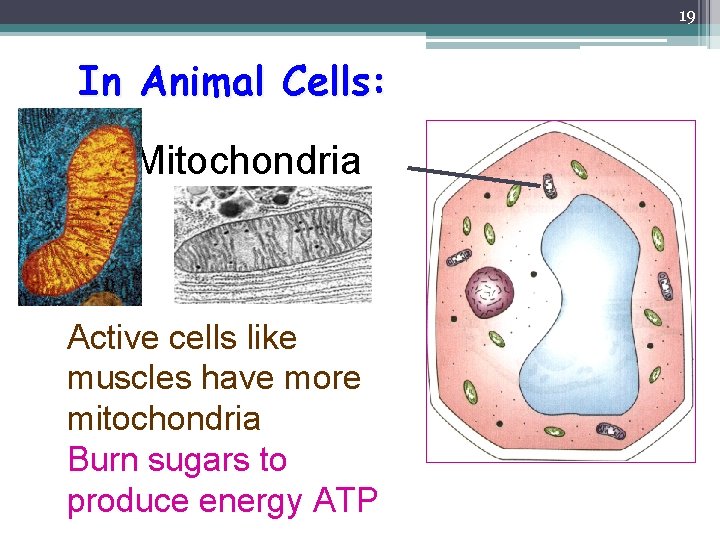
19 In Animal Cells: Mitochondria Active cells like muscles have more mitochondria Burn sugars to produce energy ATP
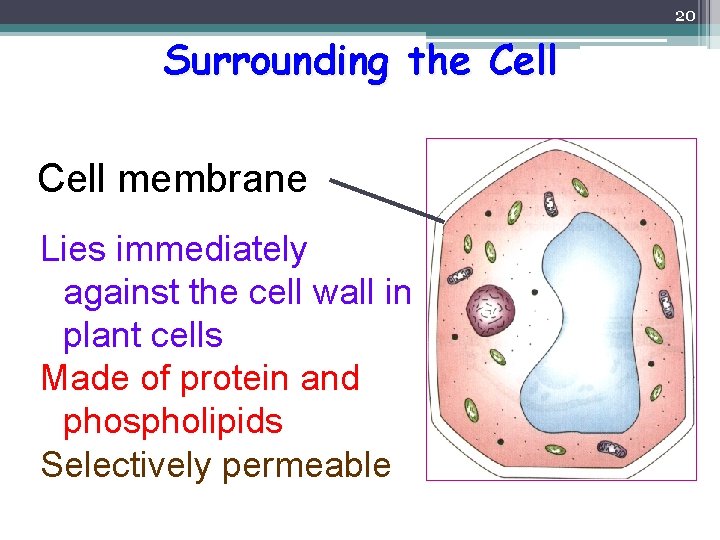
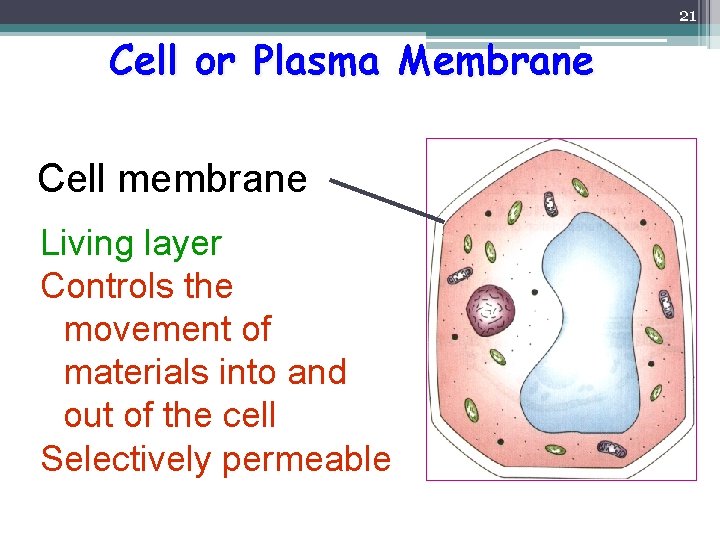
20 Surrounding the Cell membrane Lies immediately against the cell wall in plant cells Made of protein and phospholipids Selectively permeable
21 Cell or Plasma Membrane Cell membrane Living layer Controls the movement of materials into and out of the cell Selectively permeable
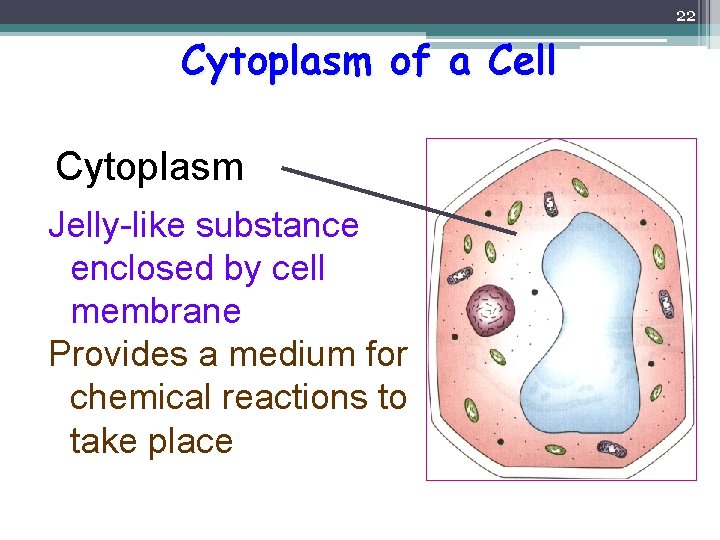
22 Cytoplasm of a Cell Cytoplasm Jelly-like substance enclosed by cell membrane Provides a medium for chemical reactions to take place
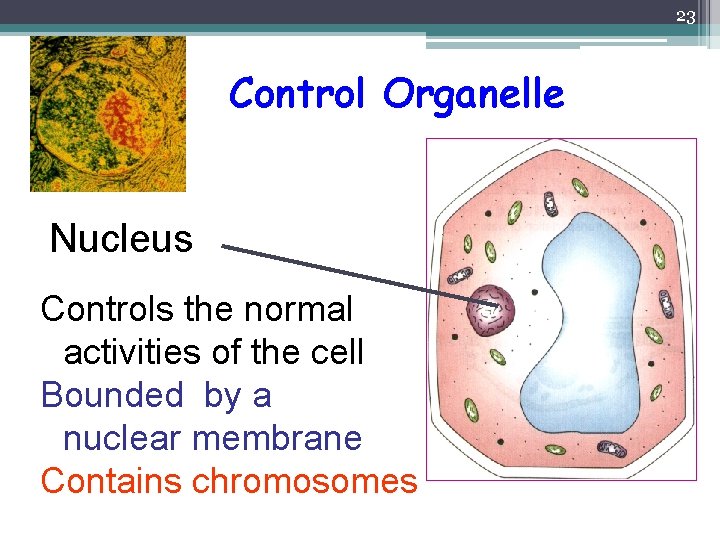
23 Control Organelle Nucleus Controls the normal activities of the cell Bounded by a nuclear membrane Contains chromosomes
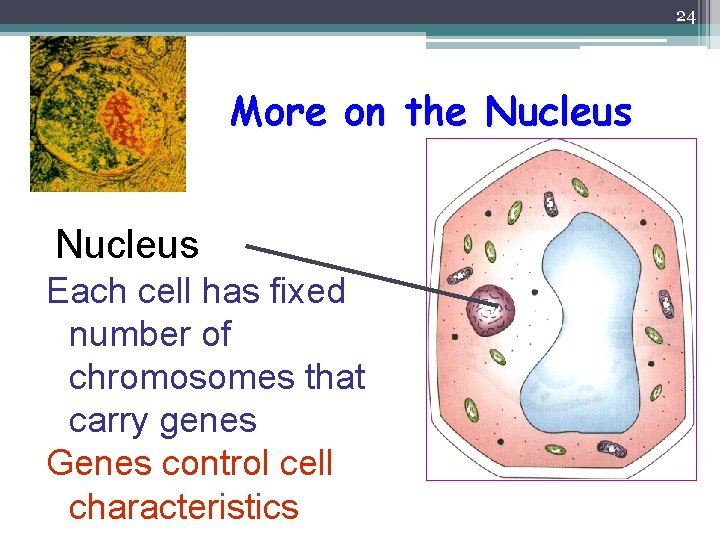
24 More on the Nucleus Each cell has fixed number of chromosomes that carry genes Genes control cell characteristics
Plant Cell
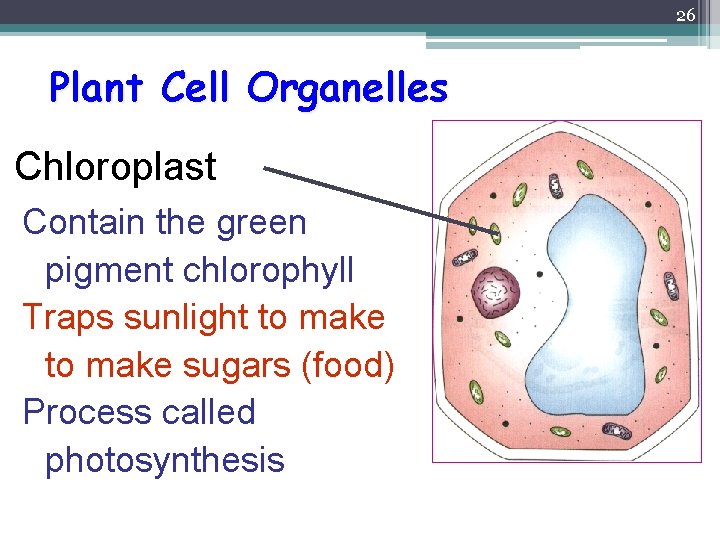
26 Plant Cell Organelles Chloroplast Contain the green pigment chlorophyll Traps sunlight to make sugars (food) Process called photosynthesis
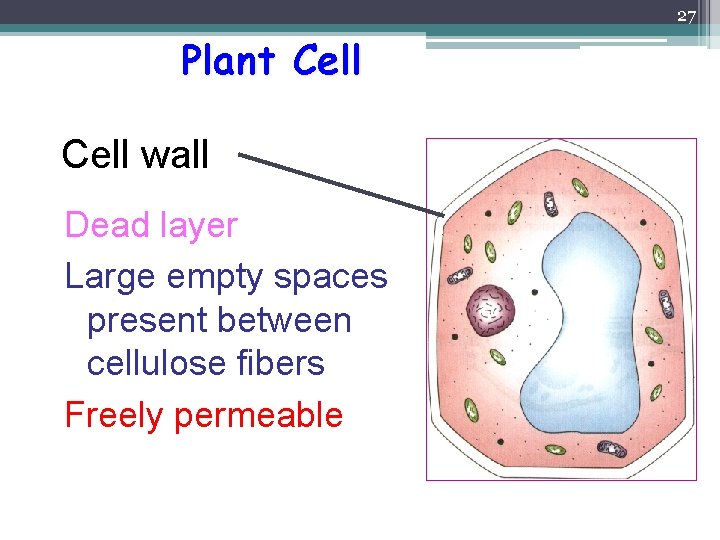
27 Plant Cell wall Dead layer Large empty spaces present between cellulose fibers Freely permeable
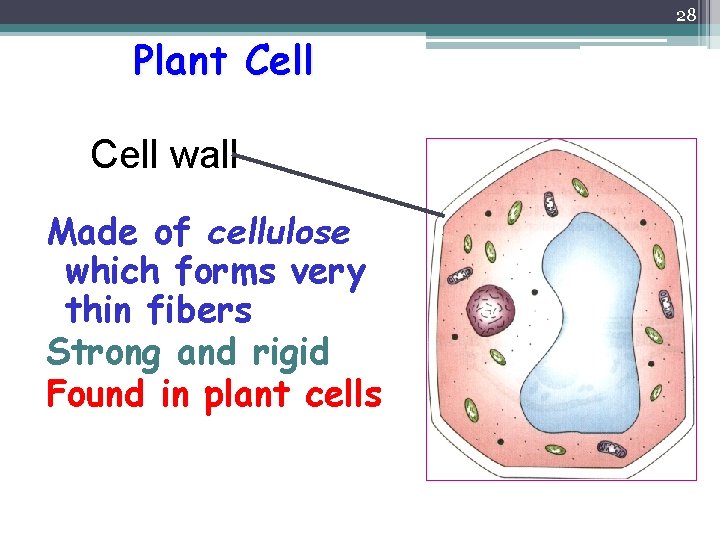
28 Plant Cell wall Made of cellulose which forms very thin fibers Strong and rigid Found in plant cells
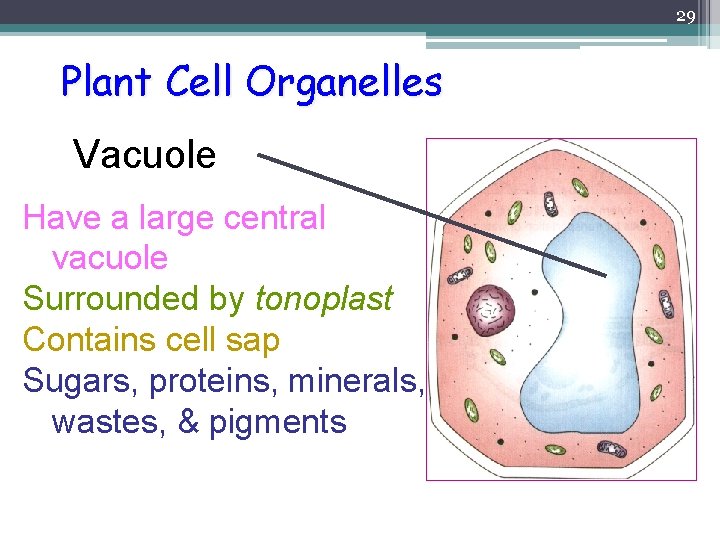
29 Plant Cell Organelles Vacuole Have a large central vacuole Surrounded by tonoplast Contains cell sap Sugars, proteins, minerals, wastes, & pigments
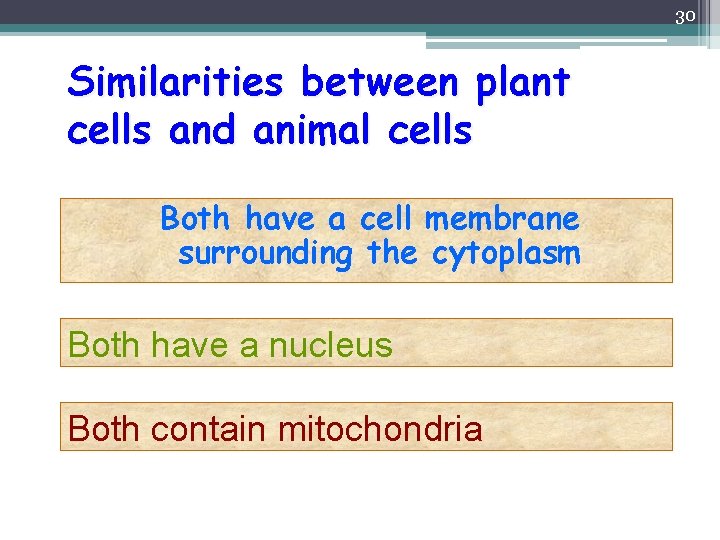
30 Similarities between plant cells and animal cells Both have a cell membrane surrounding the cytoplasm Both have a nucleus Both contain mitochondria
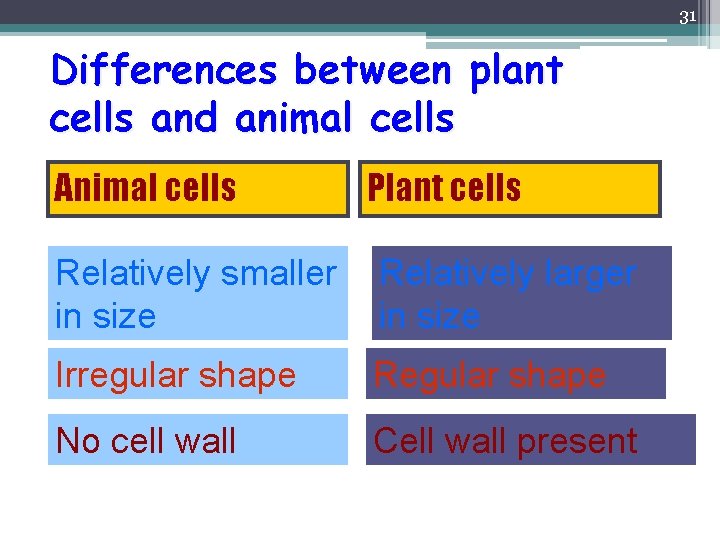
31 Differences between plant cells and animal cells Animal cells Plant cells Relatively smaller in size Relatively larger in size Irregular shape Regular shape No cell wall Cell wall present
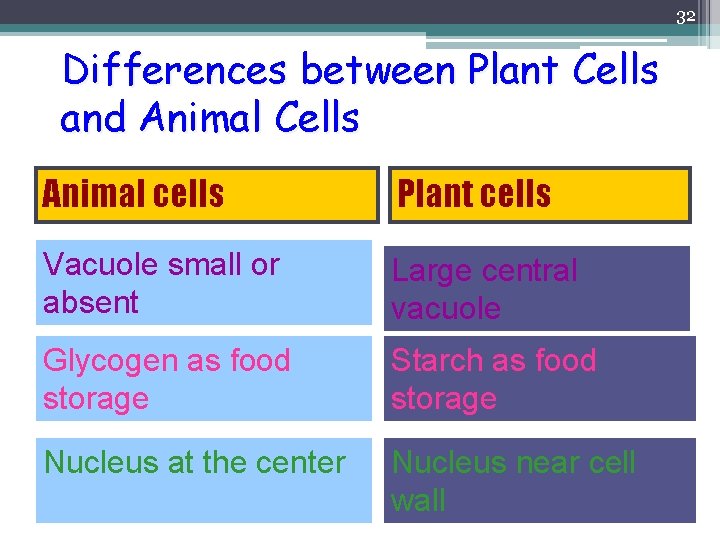
32 Differences between Plant Cells and Animal Cells Animal cells Plant cells Vacuole small or absent Large central vacuole Glycogen as food storage Starch as food storage Nucleus at the center Nucleus near cell wall
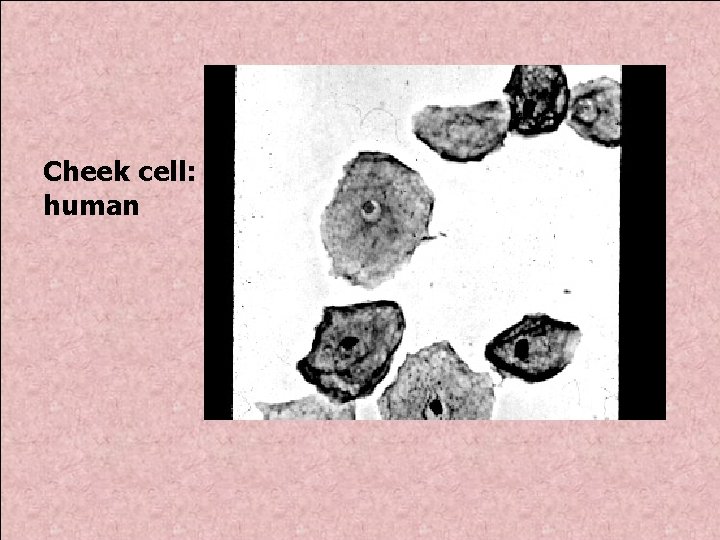
Cheek cell: human
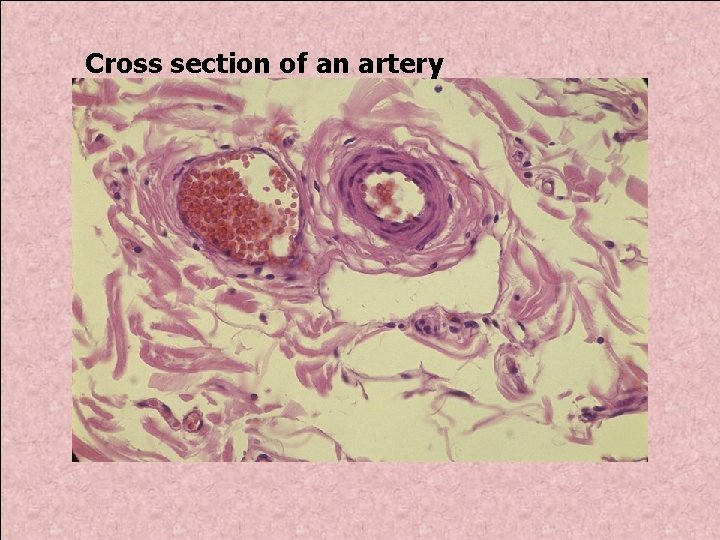
Cross section of an artery
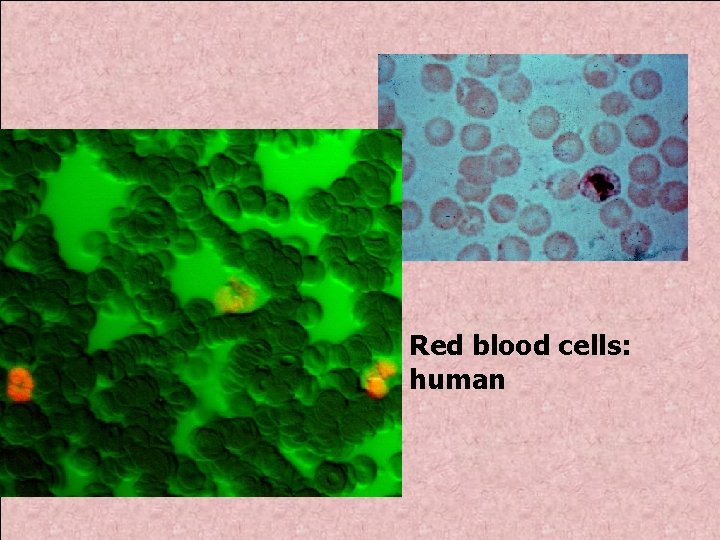
Red blood cells: human
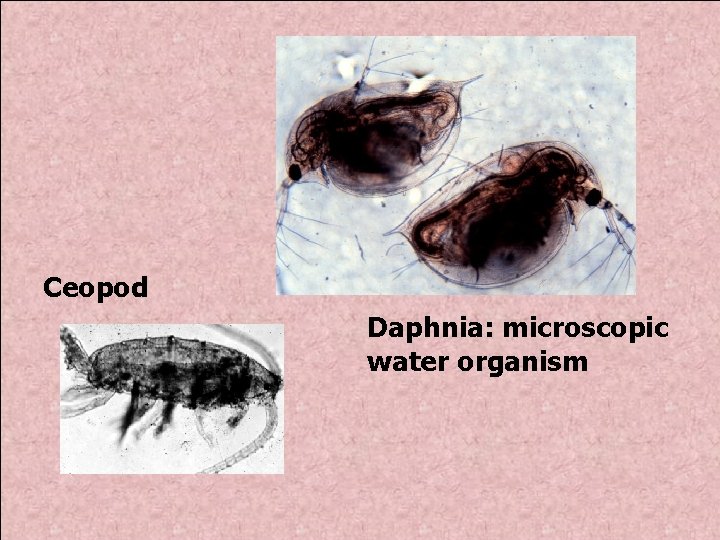
Ceopod Daphnia: microscopic water organism
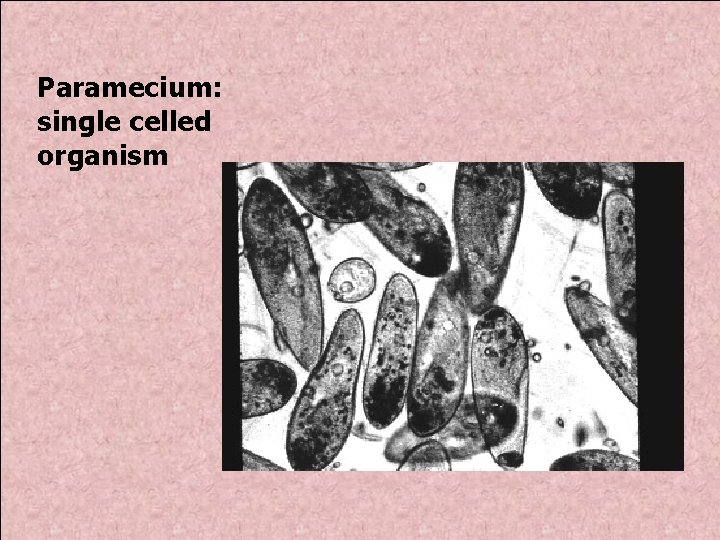
Paramecium: single celled organism
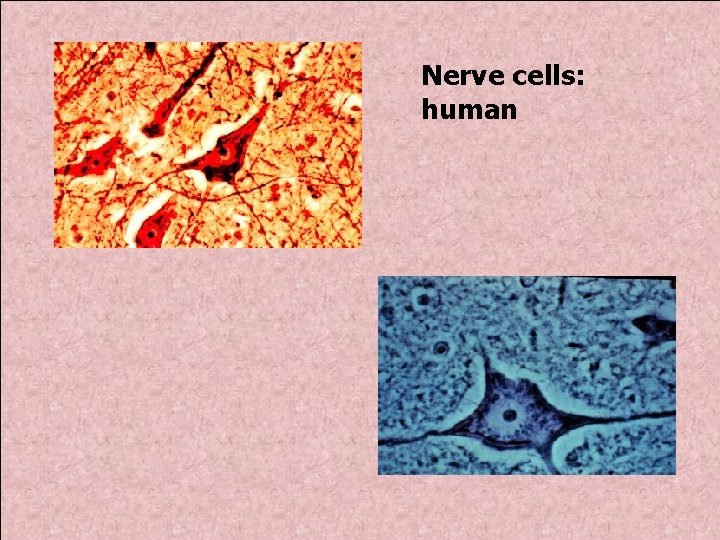
Nerve cells: human
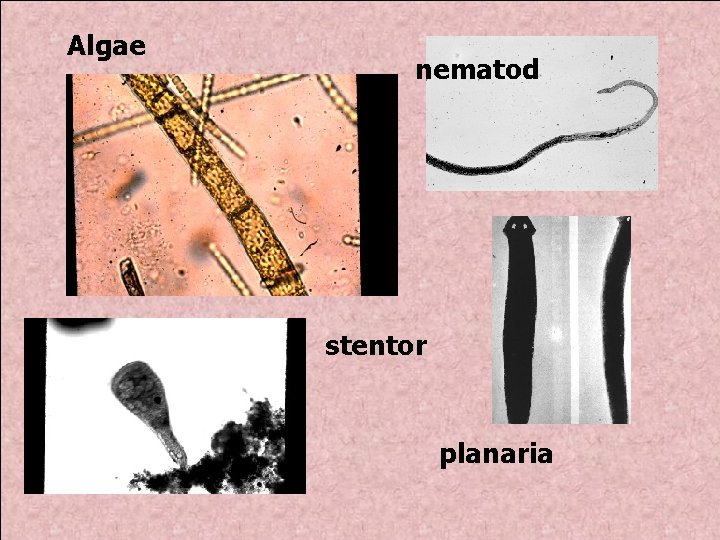
Algae nematod stentor planaria
Fun: • http: //www. quia. com/rr/86966. html