
Cells Metric Review Starts with the base units

Cells
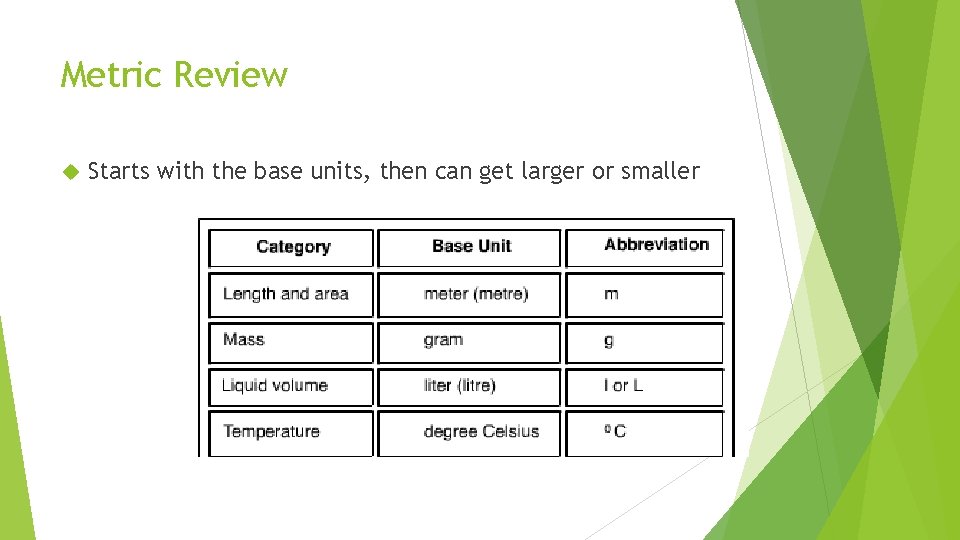
Metric Review Starts with the base units, then can get larger or smaller
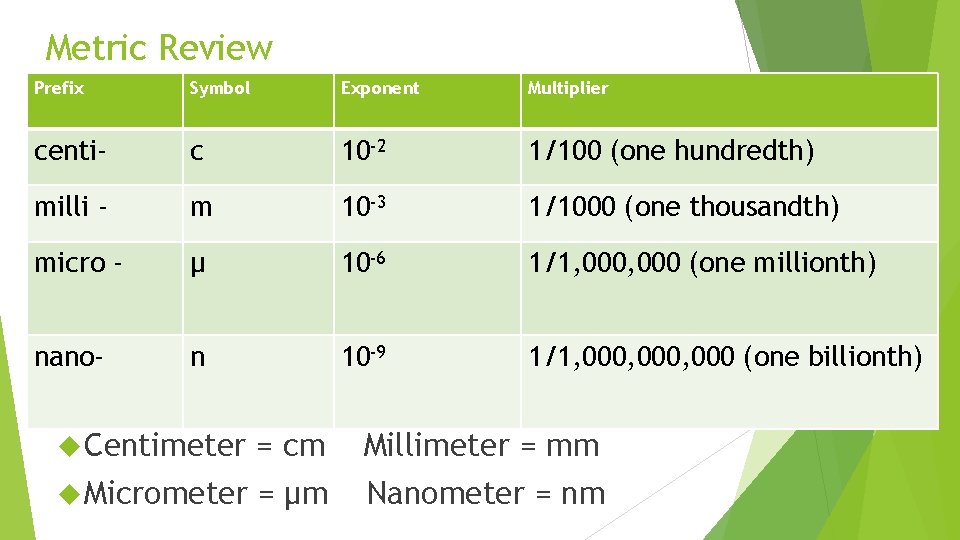
Metric Review Prefix Symbol Exponent Multiplier centi- c 10 -2 1/100 (one hundredth) milli - m 10 -3 1/1000 (one thousandth) micro - µ 10 -6 1/1, 000 (one millionth) nano- n 10 -9 1/1, 000, 000 (one billionth) Centimeter = cm Millimeter = mm Micrometer = µm Nanometer = nm
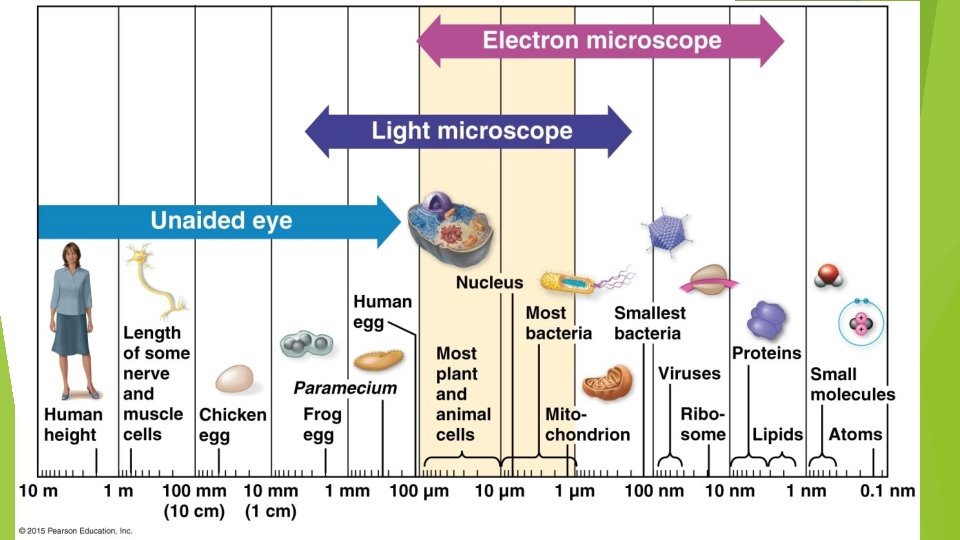
Metric Review
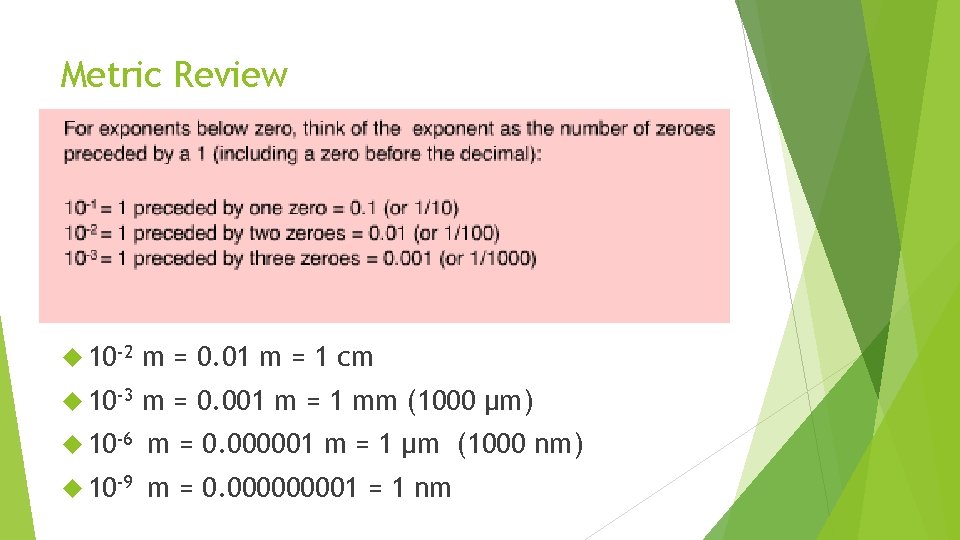
Metric Review 10 -2 m = 0. 01 m = 1 cm 10 -3 m = 0. 001 m = 1 mm (1000 µm) 10 -6 m = 0. 000001 m = 1 µm (1000 nm) 10 -9 m = 0. 00001 = 1 nm
1 in = 2. 54 cm Converting inches and cm How many cm in… 1 inch? 2 inches? 5 inches? 12. 5 How 5 inches? many inches in… cm 32 cm
How large is _______ in… Take a ruler and measure your object in: Inches Centimeters: Millimeters: Micrometers: Nanometers: 1 in = 2. 54 cm
What are cells? Recall:
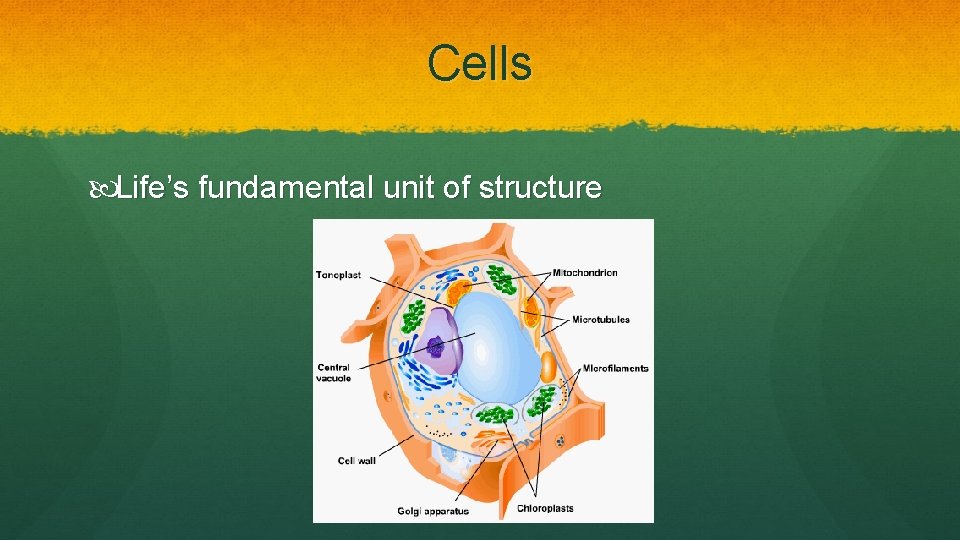
Cells Life’s fundamental unit of structure
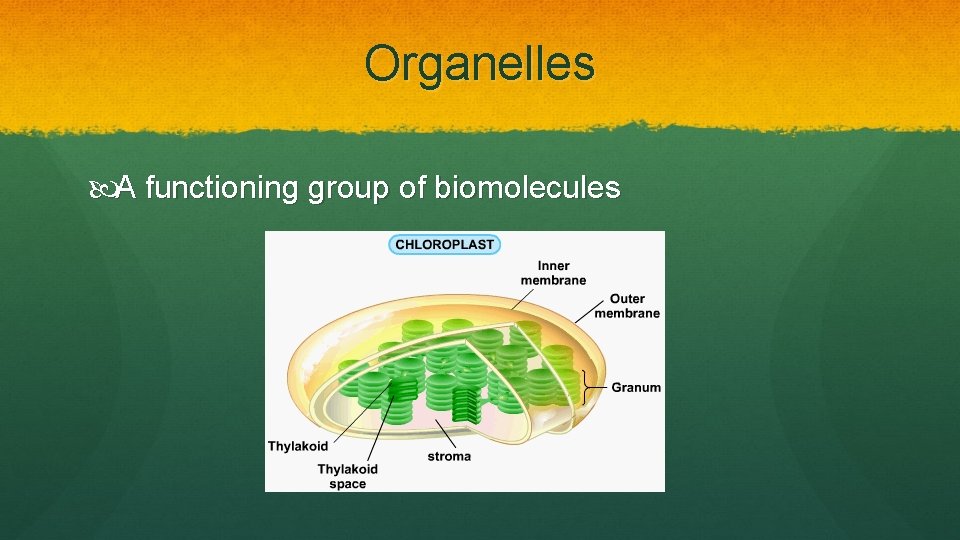
Organelles A functioning group of biomolecules
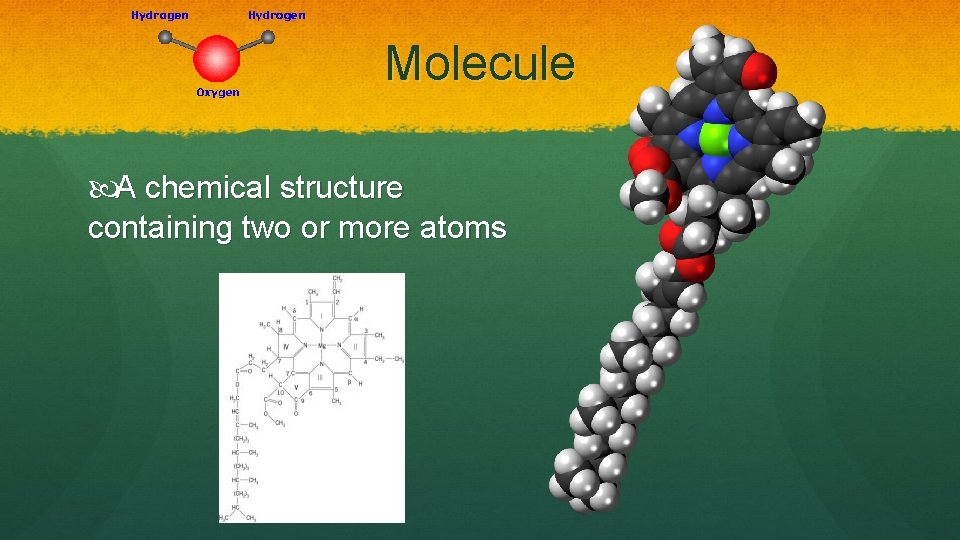
Molecule A chemical structure containing two or more atoms
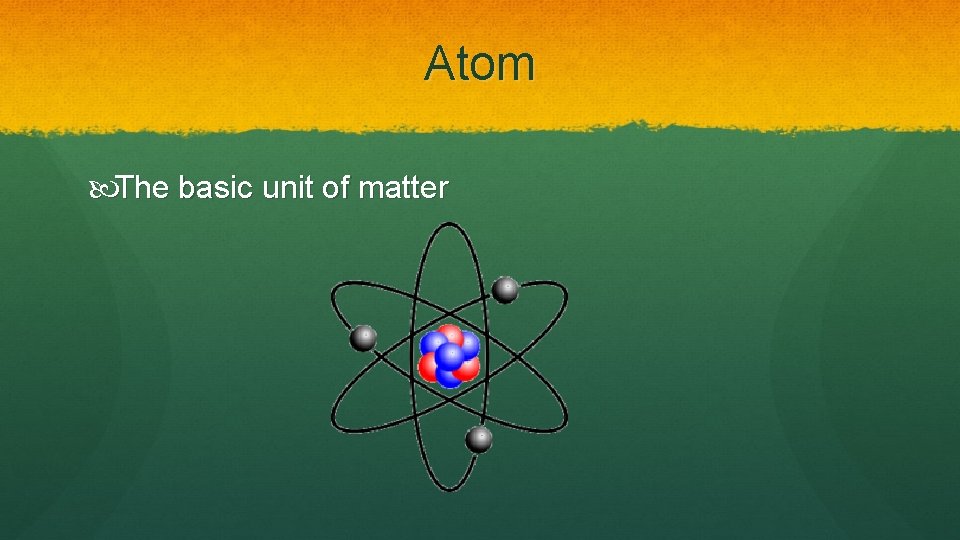
Atom The basic unit of matter
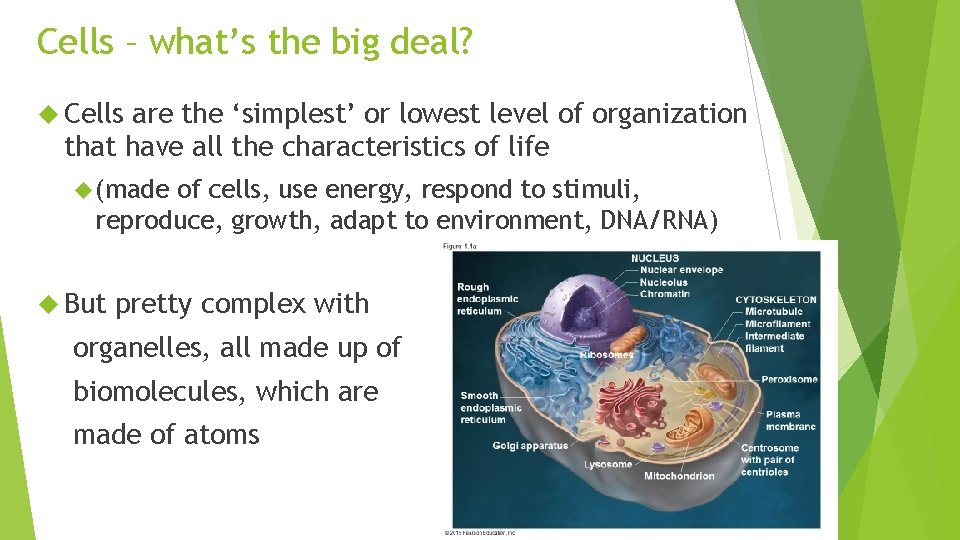
Cells – what’s the big deal? Cells are the ‘simplest’ or lowest level of organization that have all the characteristics of life (made of cells, use energy, respond to stimuli, reproduce, growth, adapt to environment, DNA/RNA) But pretty complex with organelles, all made up of biomolecules, which are made of atoms
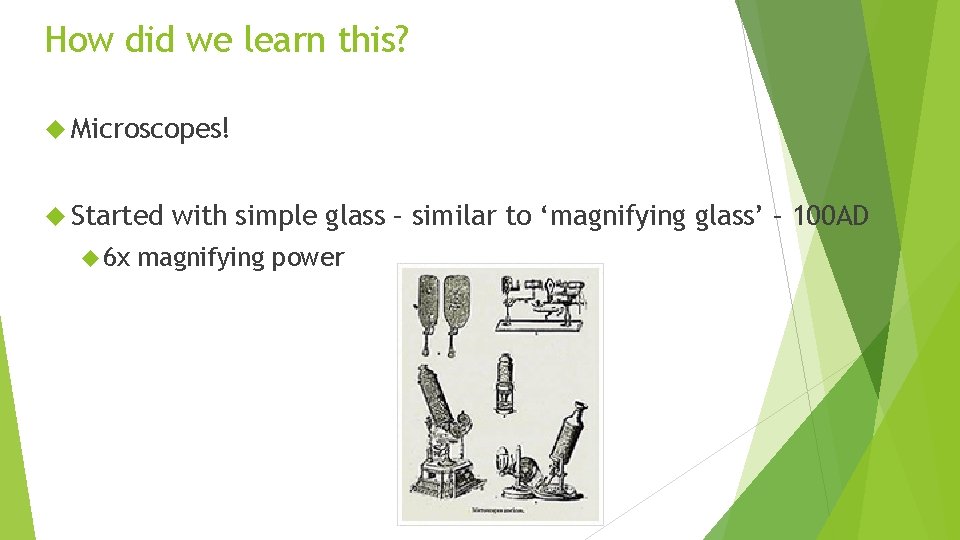
How did we learn this? Microscopes! Started 6 x with simple glass – similar to ‘magnifying glass’ – 100 AD magnifying power
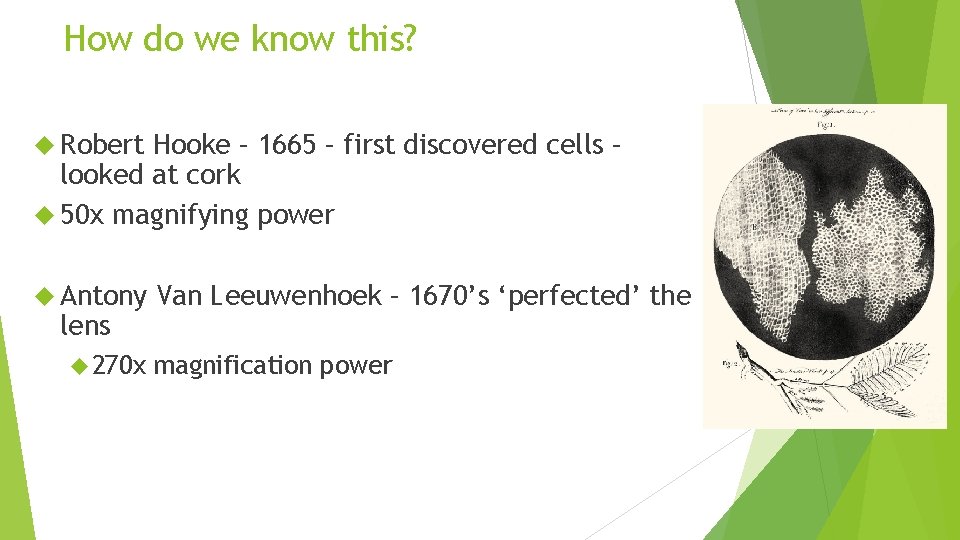
How do we know this? Robert Hooke – 1665 – first discovered cells – looked at cork 50 x magnifying power Antony lens 270 x Van Leeuwenhoek – 1670’s ‘perfected’ the magnification power
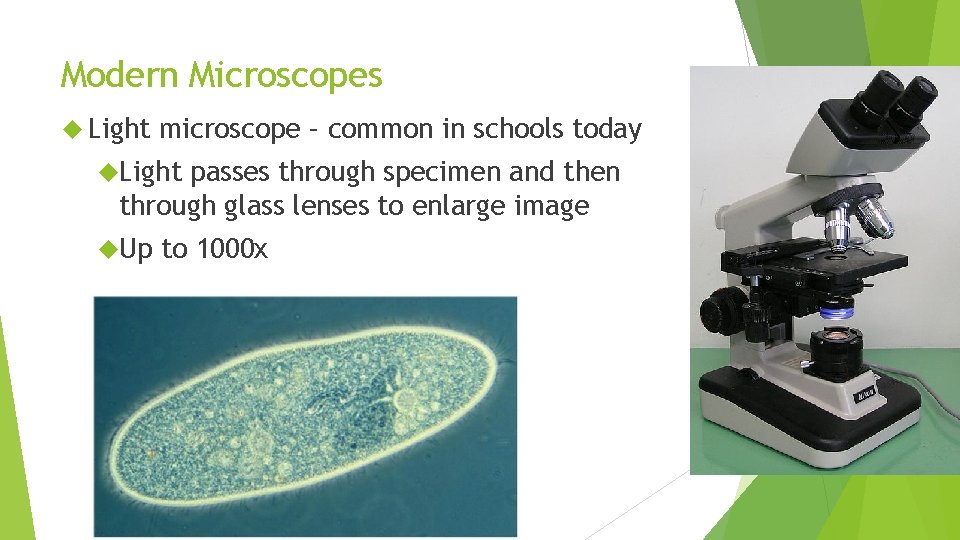
Modern Microscopes Light microscope – common in schools today Light passes through specimen and then through glass lenses to enlarge image Up to 1000 x
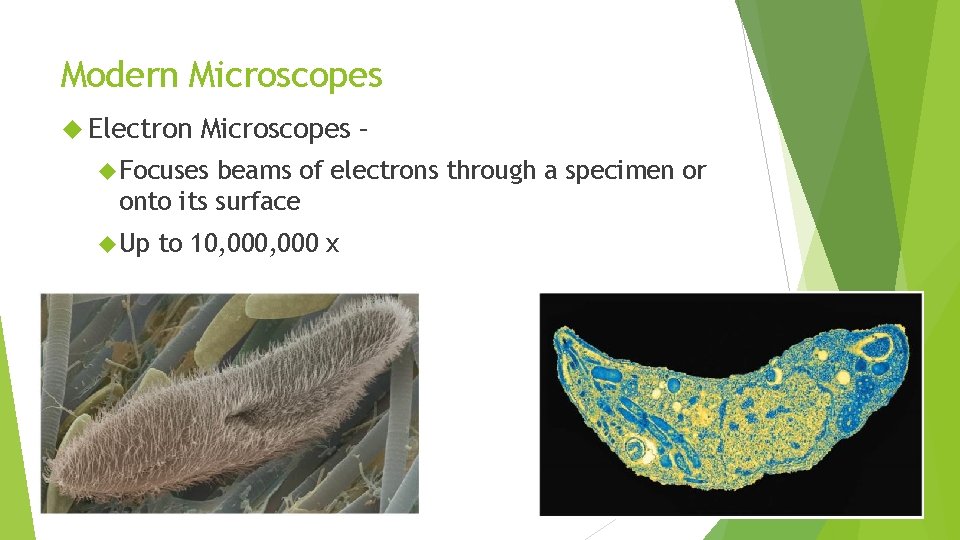
Modern Microscopes Electron Microscopes – Focuses beams of electrons through a specimen or onto its surface Up to 10, 000 x
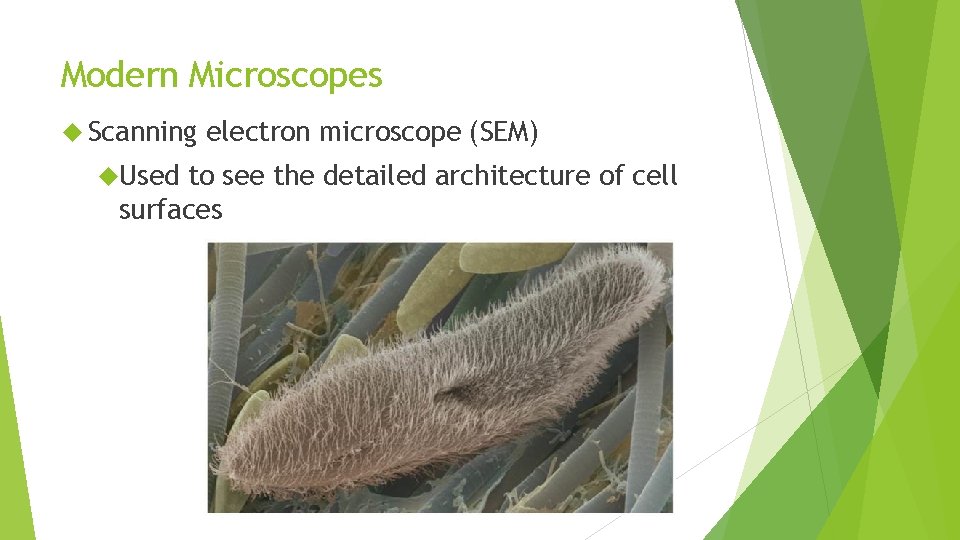
Modern Microscopes Scanning Used electron microscope (SEM) to see the detailed architecture of cell surfaces
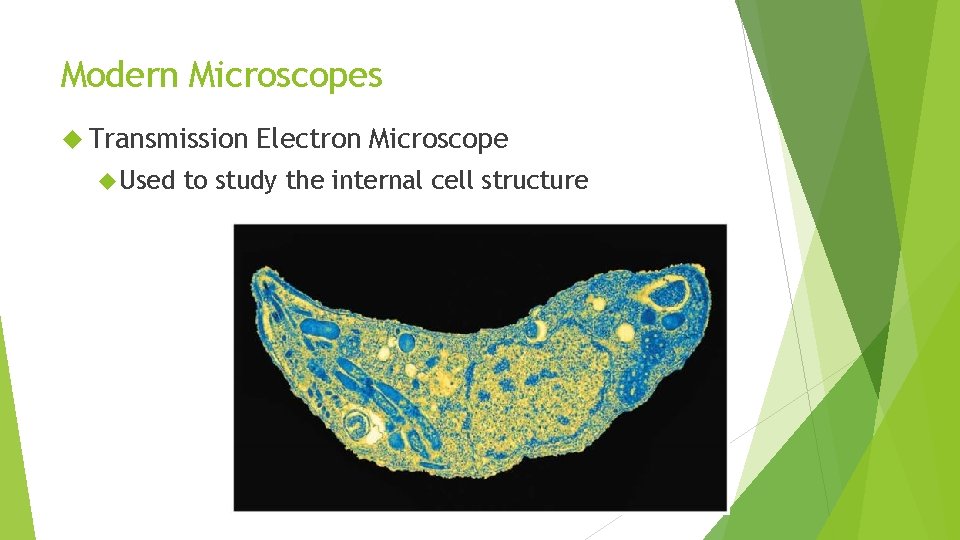
Modern Microscopes Transmission Used Electron Microscope to study the internal cell structure
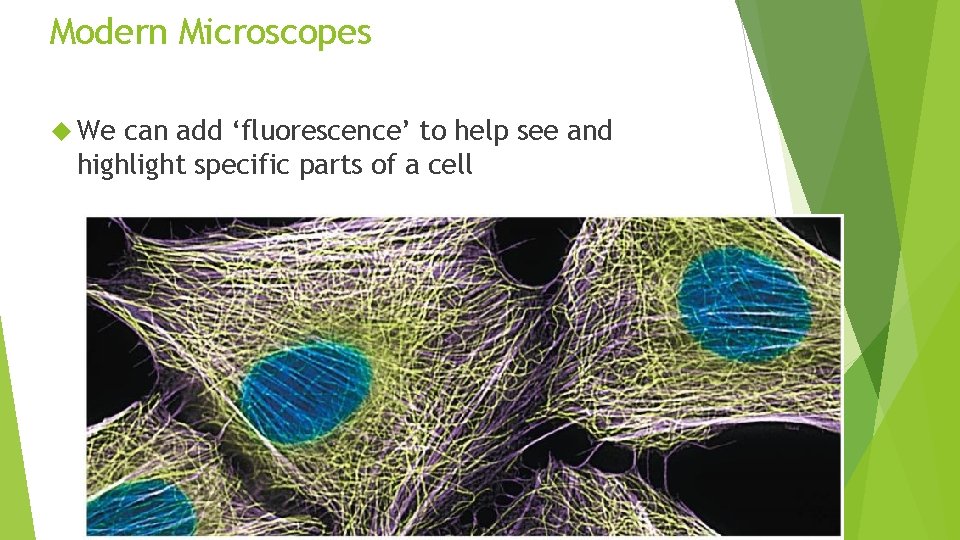
Modern Microscopes We can add ‘fluorescence’ to help see and highlight specific parts of a cell

Cells
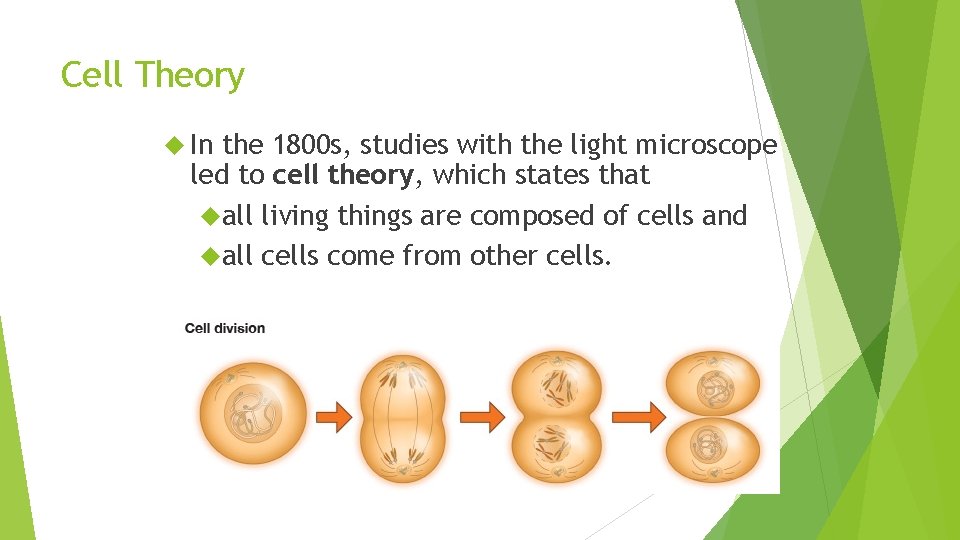
Cell Theory In the 1800 s, studies with the light microscope led to cell theory, which states that all living things are composed of cells and all cells come from other cells.
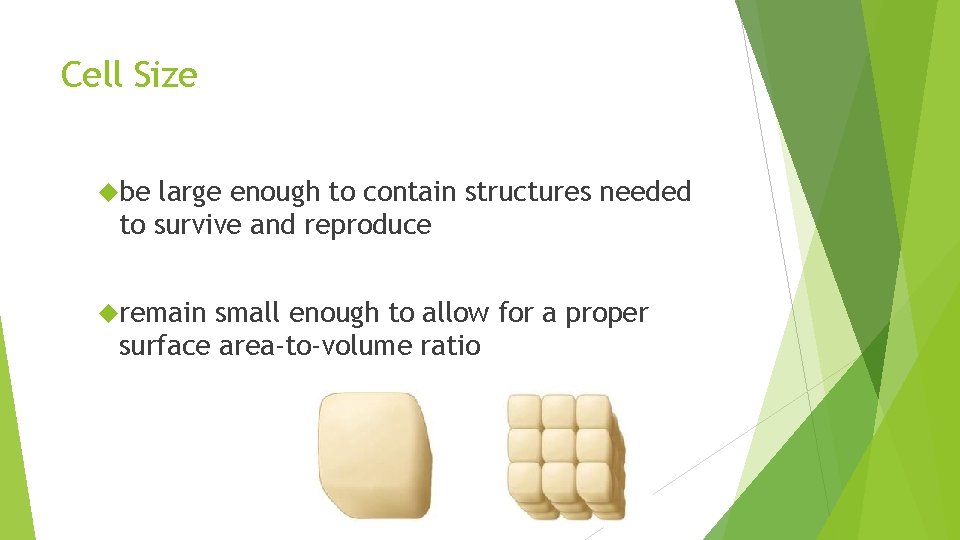
Cell Size be large enough to contain structures needed to survive and reproduce remain small enough to allow for a proper surface area-to-volume ratio
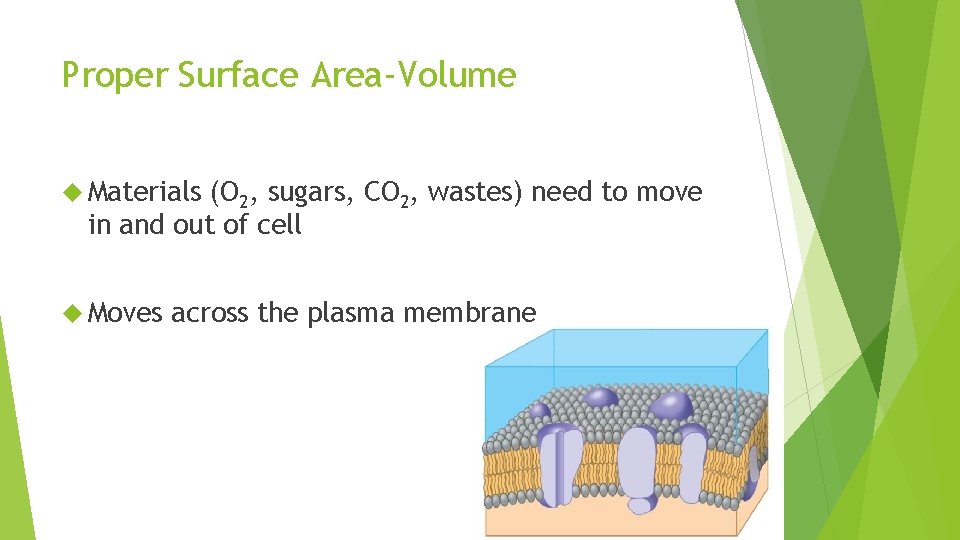
Proper Surface Area-Volume Materials (O 2, sugars, CO 2, wastes) need to move in and out of cell Moves across the plasma membrane
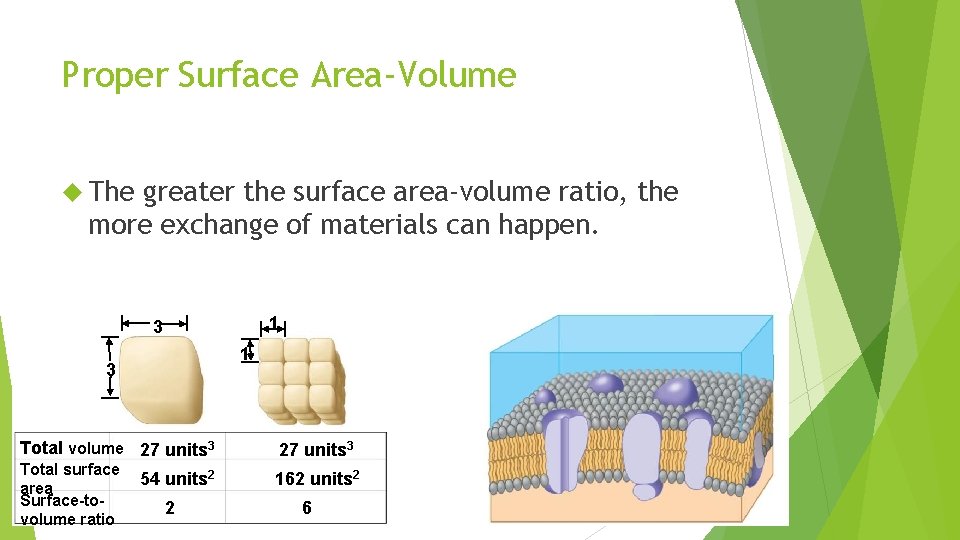
Proper Surface Area-Volume The greater the surface area-volume ratio, the more exchange of materials can happen. 1 3 Total volume 27 units 3 Total surface area Surface-tovolume ratio 54 units 2 2 27 units 3 162 units 2 6
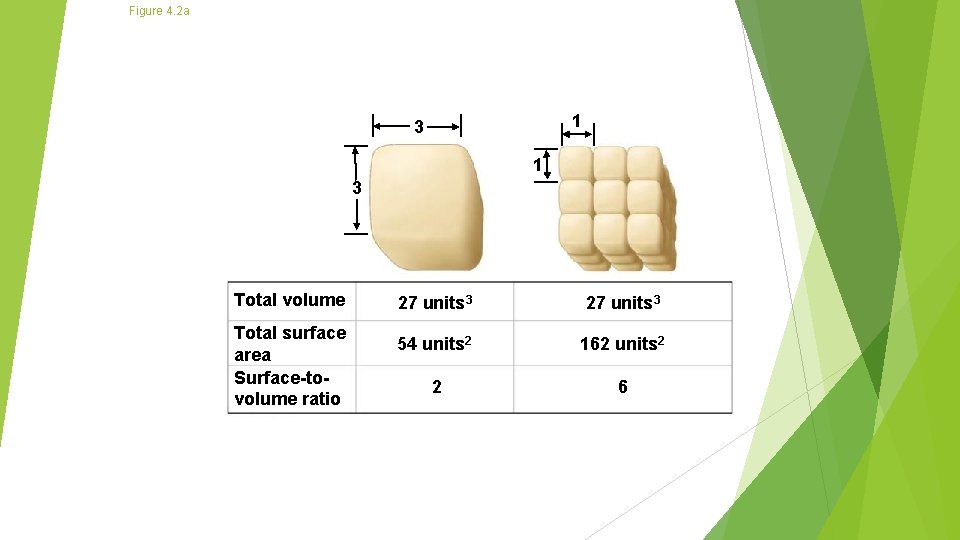
Figure 4. 2 a 1 3 Total volume Total surface area Surface-tovolume ratio 27 units 3 54 units 2 162 units 2 2 6

Hydrogen peroxide how stuff works
Which will produce more bubbles? Potatoes have an enzyme that breaks down hydrogen peroxide causing it to bubble. The more surface area, the more enzyme that can interact, the more bubbles
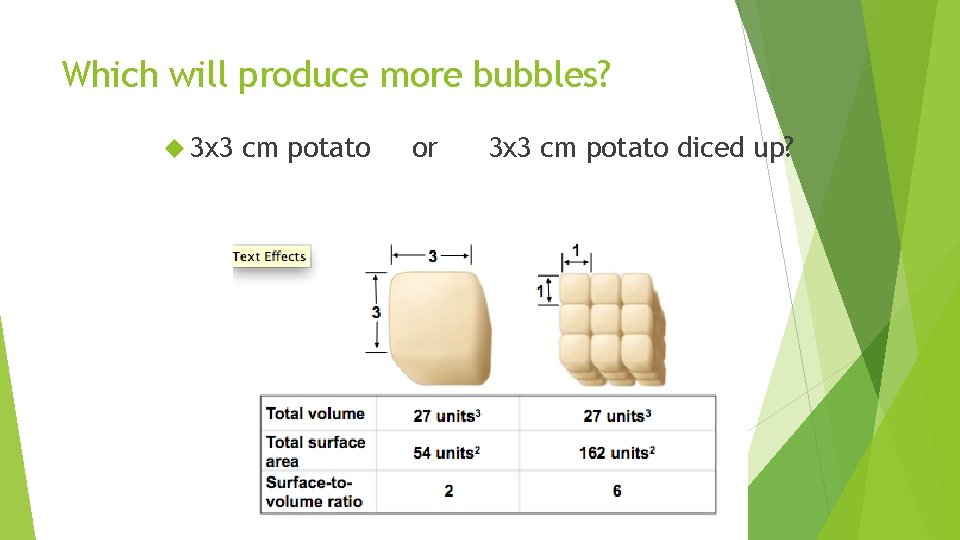
Which will produce more bubbles? 3 x 3 cm potato or 3 x 3 cm potato diced up?

Potato Video
Post potato video Why did the diced potato create more bubbles? There What were more pieces of small sized potato does that mean? More of the enzyme can react with the hydrogen peroxide
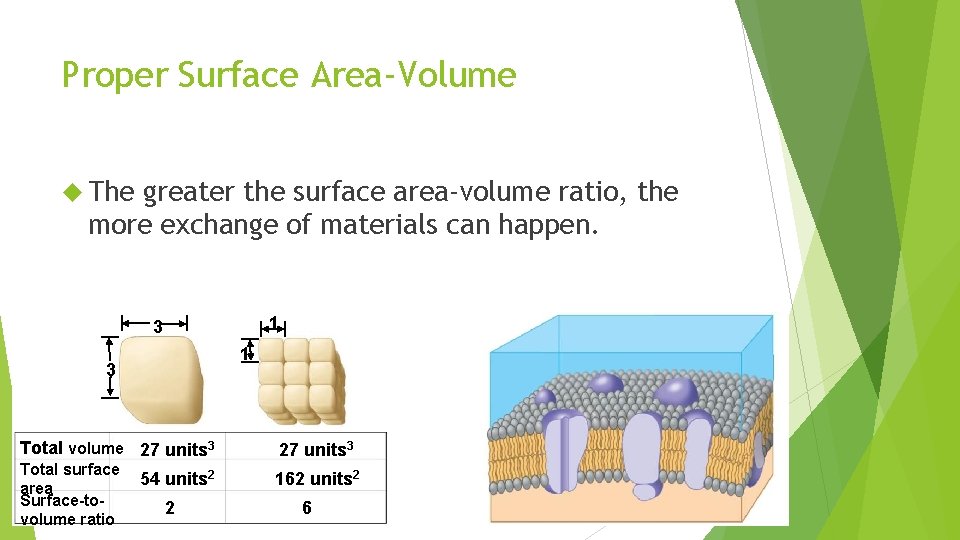
Proper Surface Area-Volume The greater the surface area-volume ratio, the more exchange of materials can happen. 1 3 Total volume 27 units 3 Total surface area Surface-tovolume ratio 54 units 2 2 27 units 3 162 units 2 6
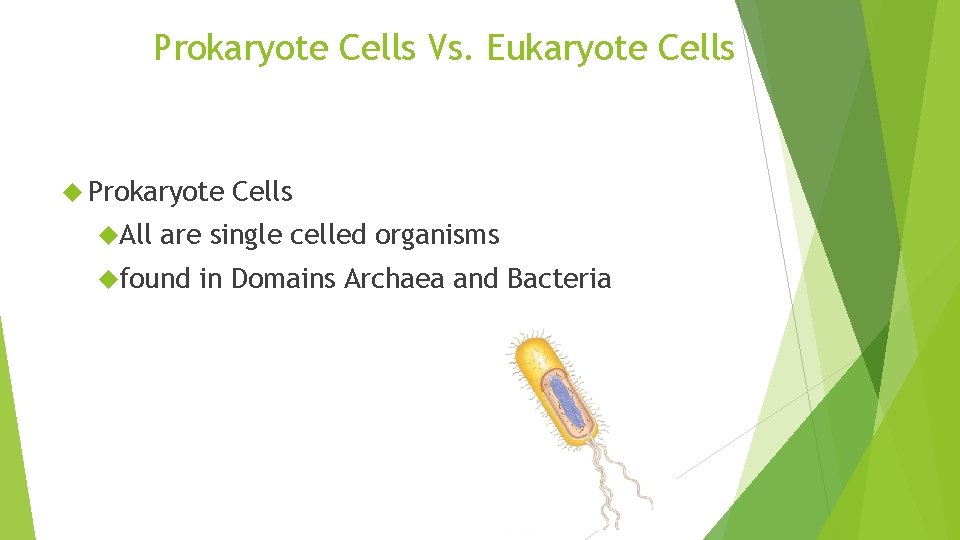
Prokaryote Cells Vs. Eukaryote Cells Prokaryote All Cells are single celled organisms found in Domains Archaea and Bacteria
More than Domains and Kingdoms Mnemonic: Did King Phillip Cry Out “For Goodness Sakes!”?
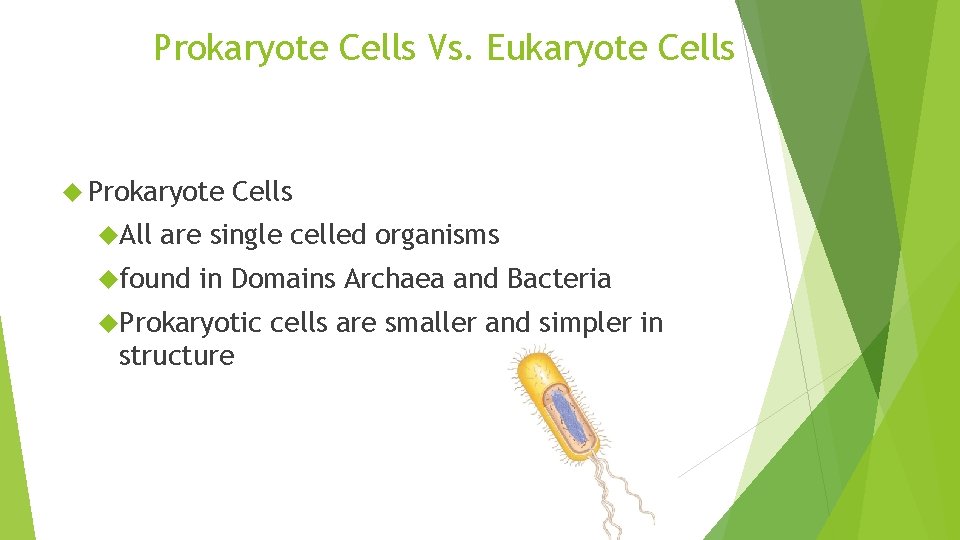
Prokaryote Cells Vs. Eukaryote Cells Prokaryote All Cells are single celled organisms found in Domains Archaea and Bacteria Prokaryotic structure cells are smaller and simpler in
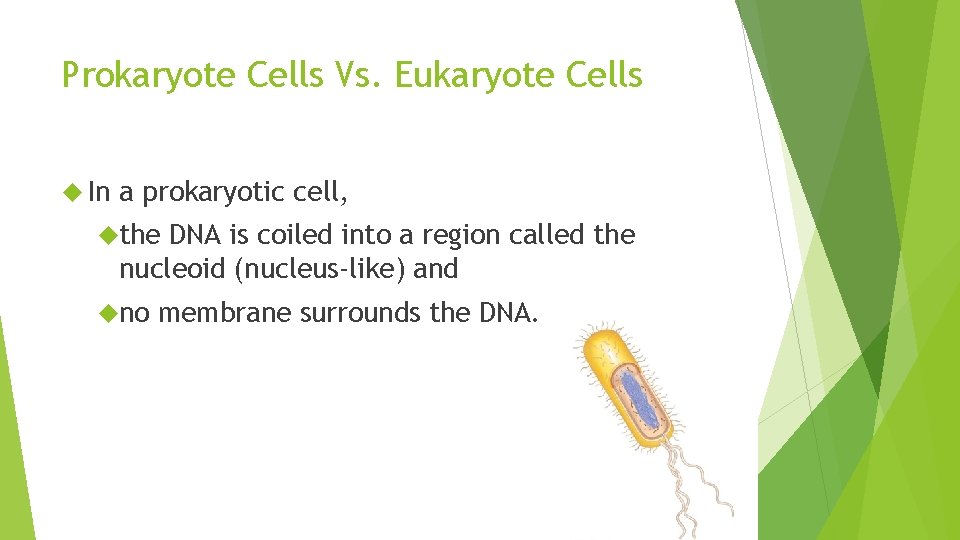
Prokaryote Cells Vs. Eukaryote Cells In a prokaryotic cell, the DNA is coiled into a region called the nucleoid (nucleus-like) and no membrane surrounds the DNA.
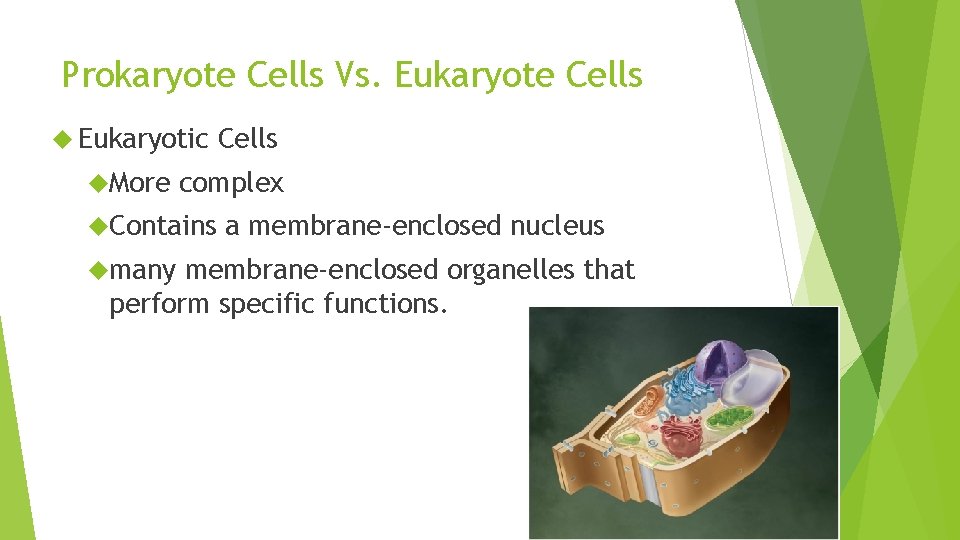
Prokaryote Cells Vs. Eukaryote Cells Eukaryotic More complex Contains many Cells a membrane-enclosed nucleus membrane-enclosed organelles that perform specific functions.
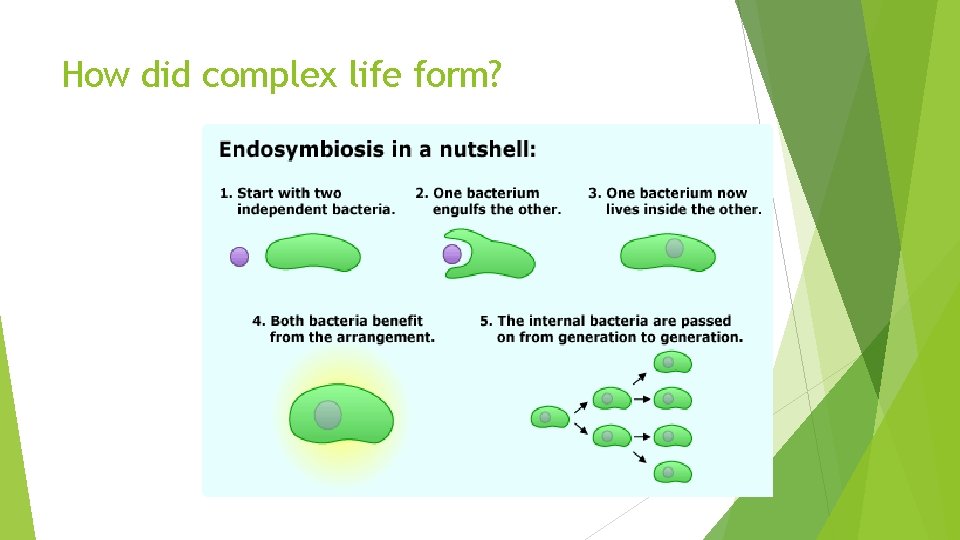
How did complex life form?
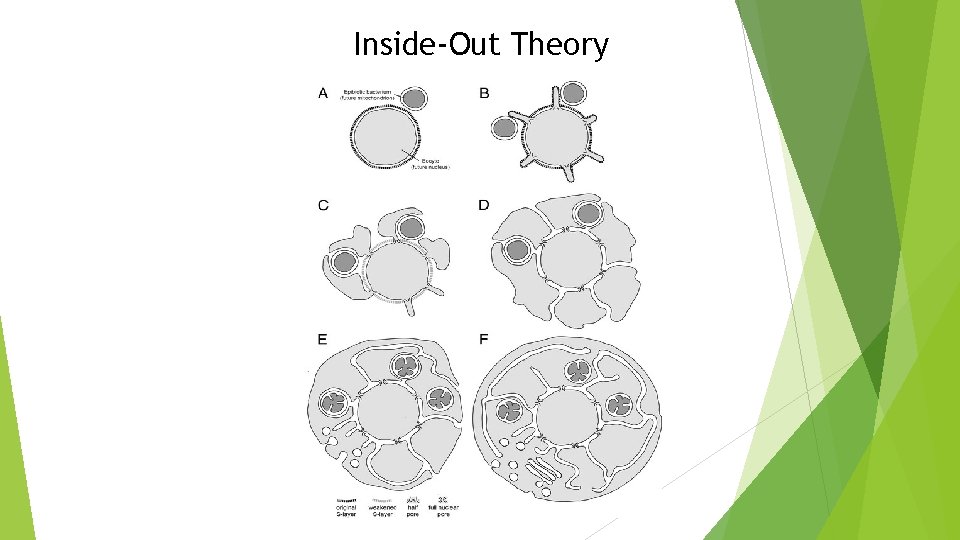
Inside-Out Theory
What’s inside the cell?
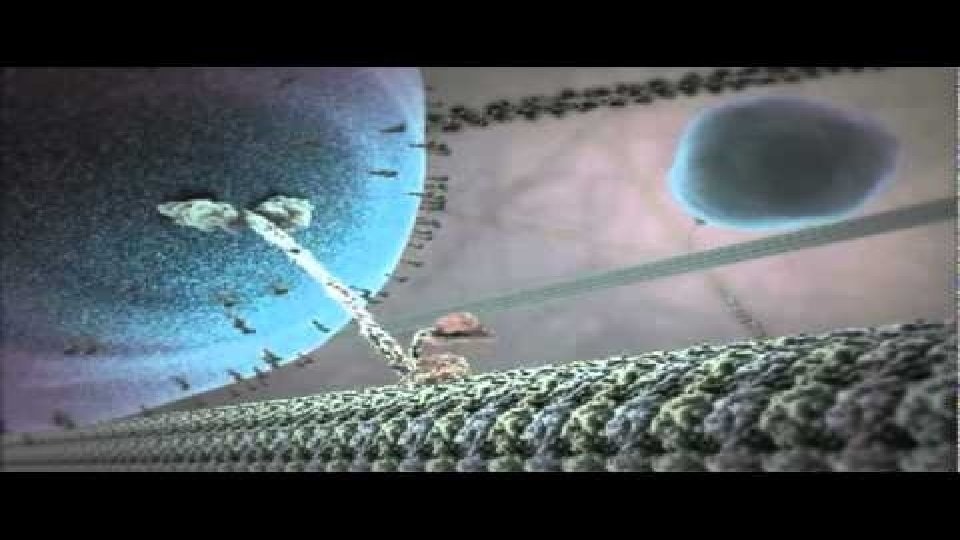
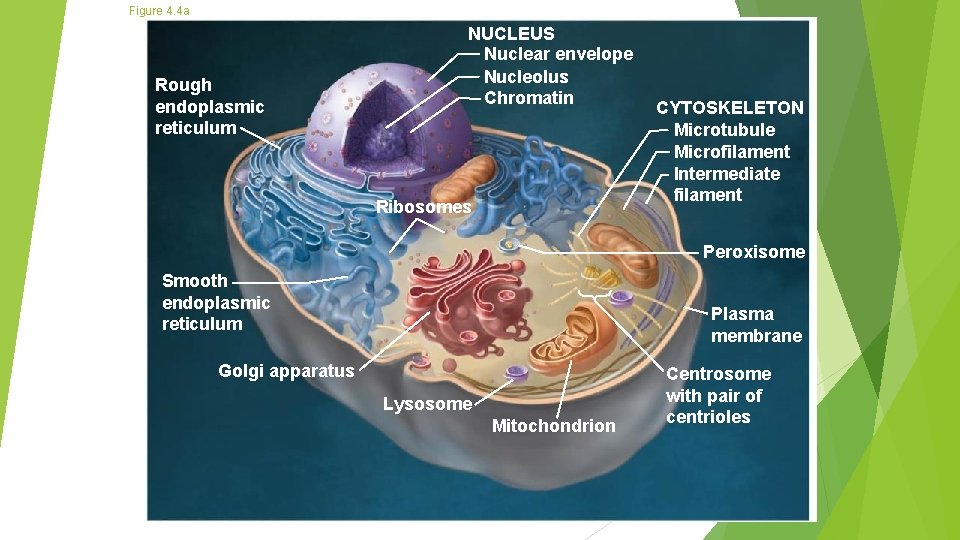
Figure 4. 4 a Rough endoplasmic reticulum NUCLEUS Nuclear envelope Nucleolus Chromatin Ribosomes CYTOSKELETON Microtubule Microfilament Intermediate filament Peroxisome Smooth endoplasmic reticulum Plasma membrane Golgi apparatus Lysosome Mitochondrion Centrosome with pair of centrioles
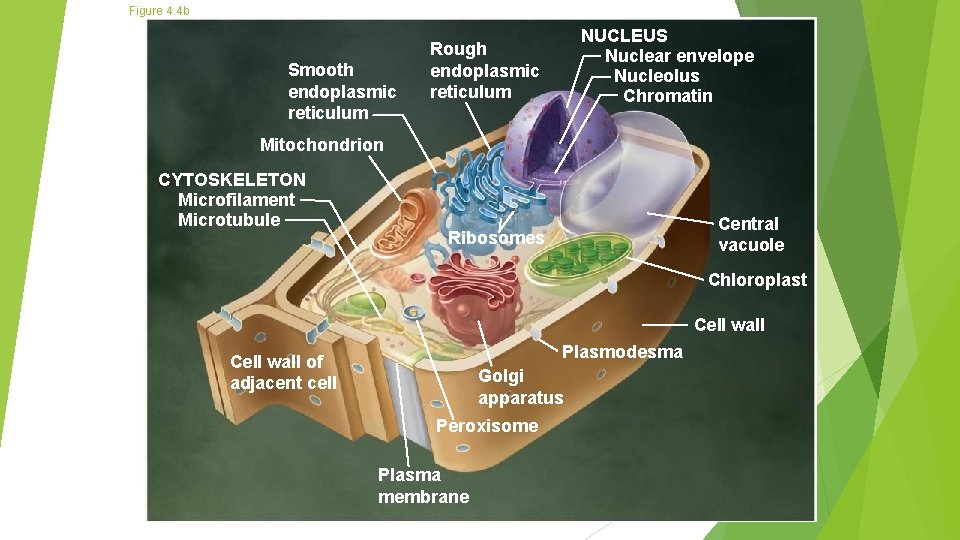
Figure 4. 4 b Smooth endoplasmic reticulum NUCLEUS Nuclear envelope Nucleolus Chromatin Rough endoplasmic reticulum Mitochondrion CYTOSKELETON Microfilament Microtubule Central vacuole Ribosomes Chloroplast Cell wall Plasmodesma Cell wall of adjacent cell Golgi apparatus Peroxisome Plasma membrane
- Slides: 43