
Cells Membranes Prokaryotic vs Eukaryotic Cells Why would
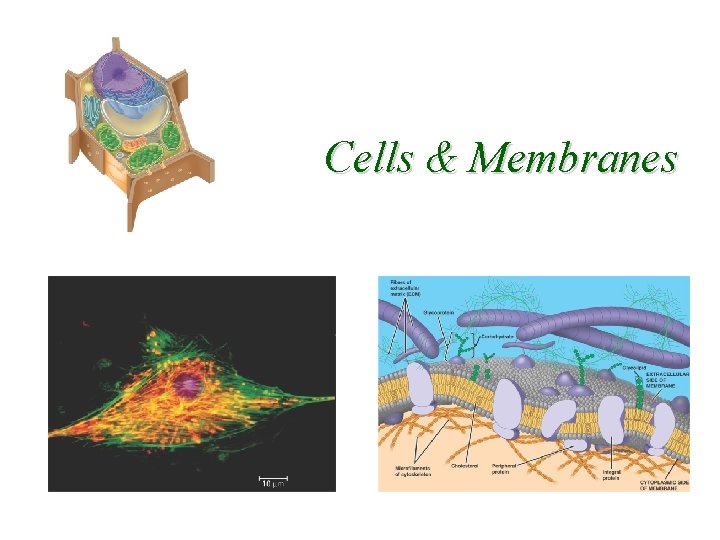
Cells & Membranes
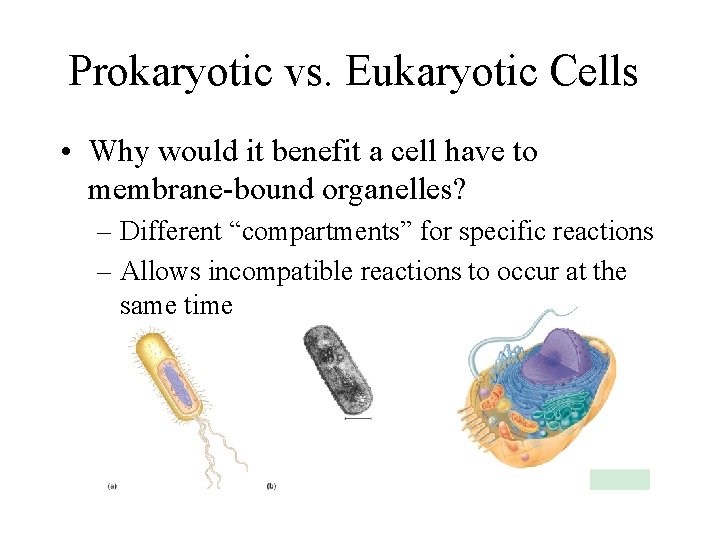
Prokaryotic vs. Eukaryotic Cells • Why would it benefit a cell have to membrane-bound organelles? – Different “compartments” for specific reactions – Allows incompatible reactions to occur at the same time
Limits to Cell Size • Surface Area to Volume Ratio – As a cell increases in size, the volume increases faster than the surface area (SA: V ratio also becomes smaller) • Why is this significant? – If ratio is too small flow of nutrients (in) & flow of wastes (out) aren’t fast enough to keep up with metabolic activities of the cell – Larger cells also have more trouble moving materials through cytoplasm
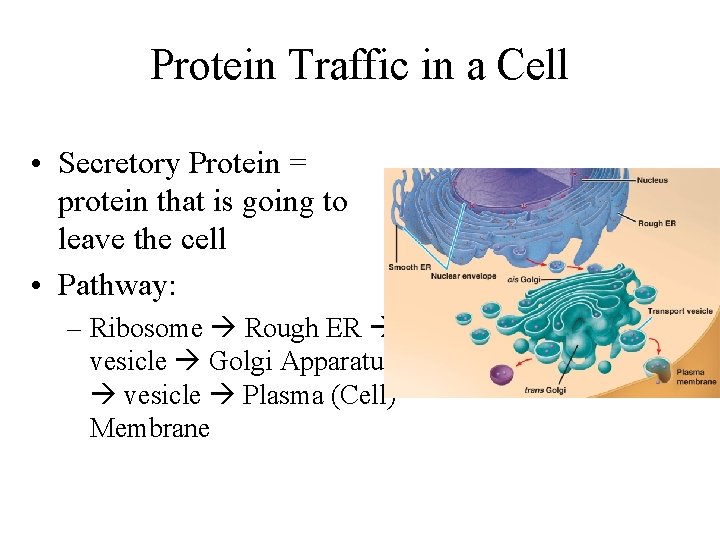
Protein Traffic in a Cell • Secretory Protein = protein that is going to leave the cell • Pathway: – Ribosome Rough ER vesicle Golgi Apparatus vesicle Plasma (Cell) Membrane
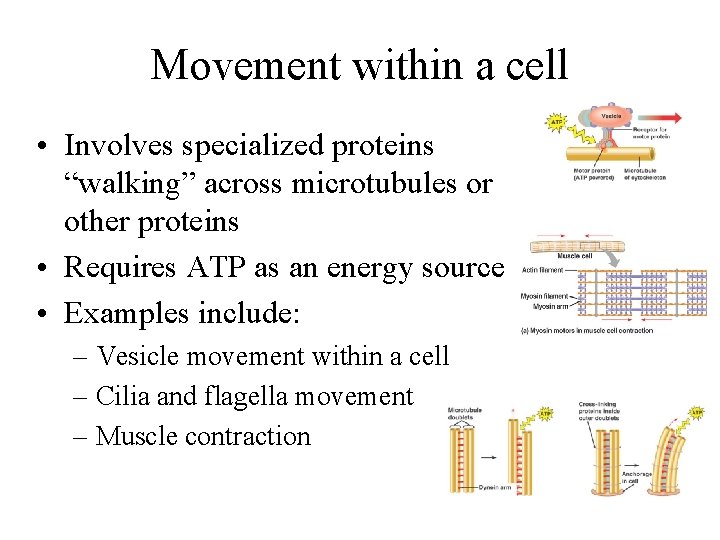
Movement within a cell • Involves specialized proteins “walking” across microtubules or other proteins • Requires ATP as an energy source • Examples include: – Vesicle movement within a cell – Cilia and flagella movement – Muscle contraction
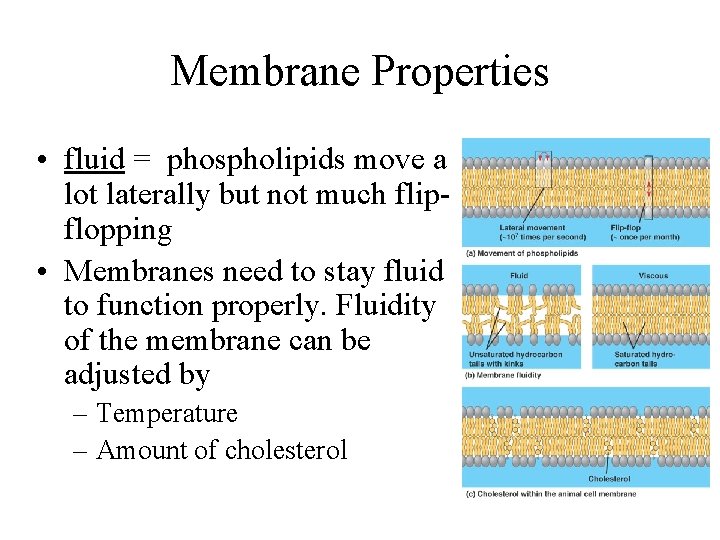
Membrane Properties • fluid = phospholipids move a lot laterally but not much flipflopping • Membranes need to stay fluid to function properly. Fluidity of the membrane can be adjusted by – Temperature – Amount of cholesterol
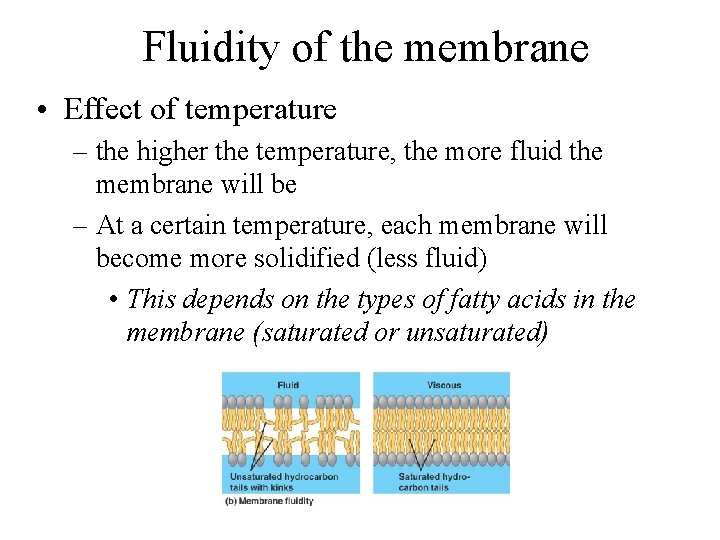
Fluidity of the membrane • Effect of temperature – the higher the temperature, the more fluid the membrane will be – At a certain temperature, each membrane will become more solidified (less fluid) • This depends on the types of fatty acids in the membrane (saturated or unsaturated)
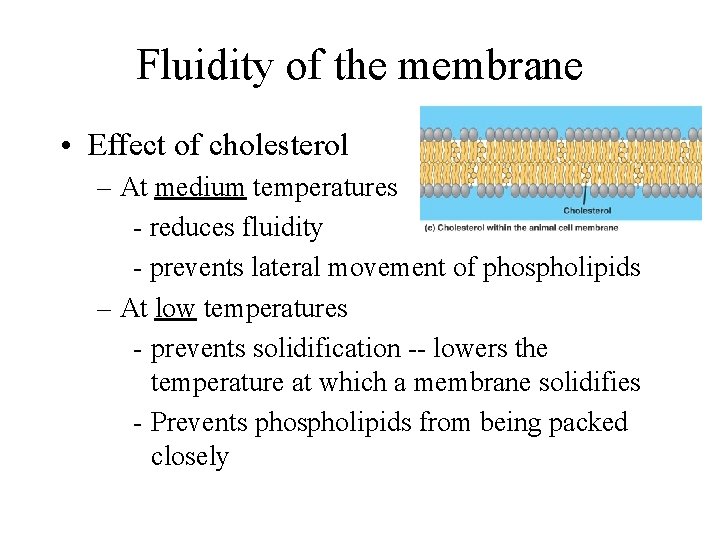
Fluidity of the membrane • Effect of cholesterol – At medium temperatures - reduces fluidity - prevents lateral movement of phospholipids – At low temperatures - prevents solidification -- lowers the temperature at which a membrane solidifies - Prevents phospholipids from being packed closely
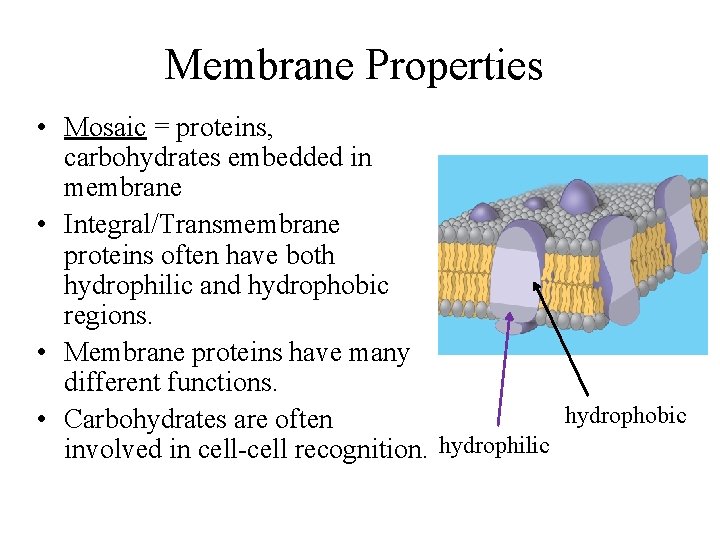
Membrane Properties • Mosaic = proteins, carbohydrates embedded in membrane • Integral/Transmembrane proteins often have both hydrophilic and hydrophobic regions. • Membrane proteins have many different functions. hydrophobic • Carbohydrates are often involved in cell-cell recognition. hydrophilic
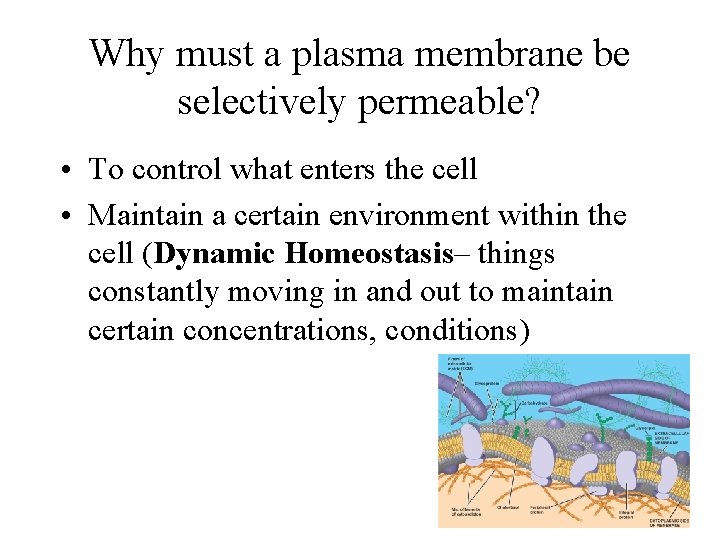
Why must a plasma membrane be selectively permeable? • To control what enters the cell • Maintain a certain environment within the cell (Dynamic Homeostasis– things constantly moving in and out to maintain certain concentrations, conditions)
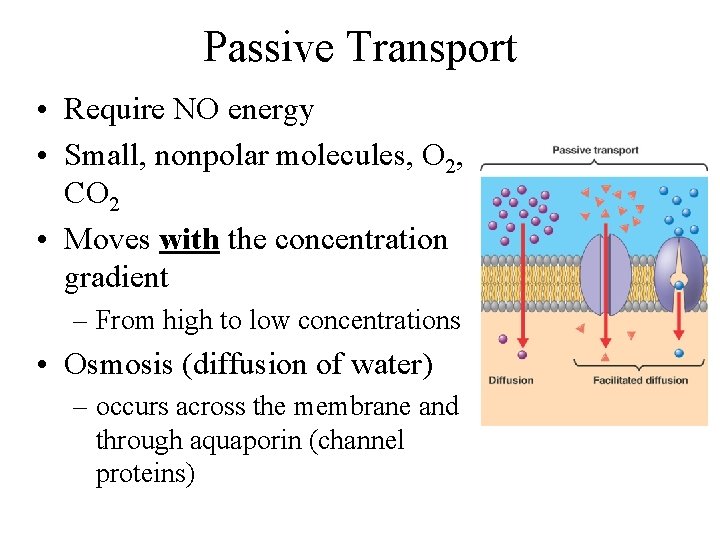
Passive Transport • Require NO energy • Small, nonpolar molecules, O 2, CO 2 • Moves with the concentration gradient – From high to low concentrations • Osmosis (diffusion of water) – occurs across the membrane and through aquaporin (channel proteins)
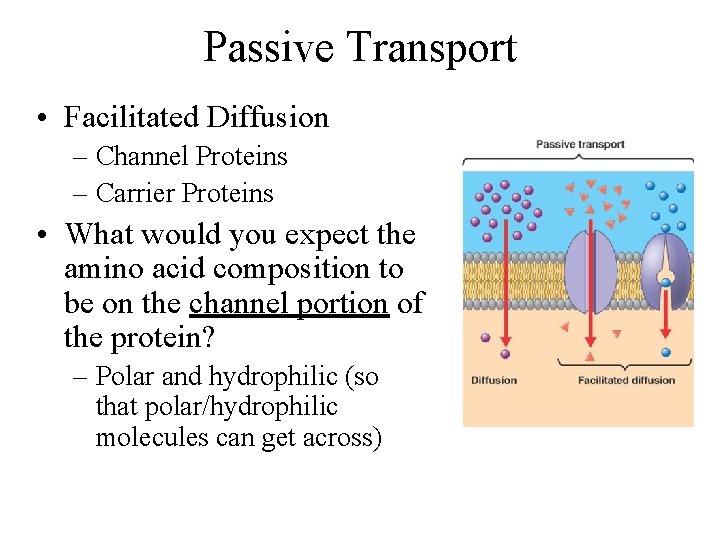
Passive Transport • Facilitated Diffusion – Channel Proteins – Carrier Proteins • What would you expect the amino acid composition to be on the channel portion of the protein? – Polar and hydrophilic (so that polar/hydrophilic molecules can get across)
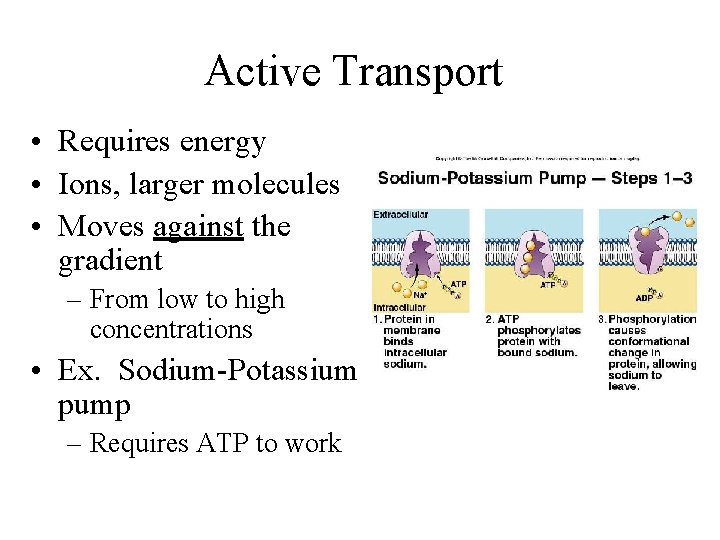
Active Transport • Requires energy • Ions, larger molecules • Moves against the gradient – From low to high concentrations • Ex. Sodium-Potassium pump – Requires ATP to work
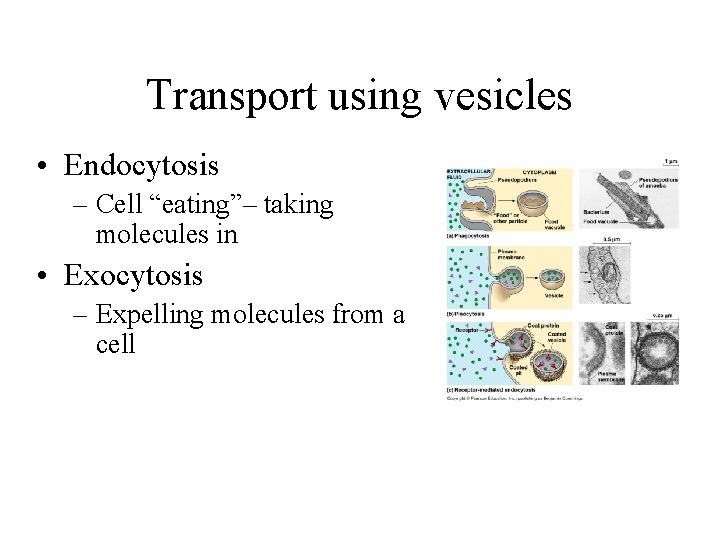
Transport using vesicles • Endocytosis – Cell “eating”– taking molecules in • Exocytosis – Expelling molecules from a cell
- Slides: 14