
Cells Interact with their Environment The Extracellular Matrix
- Slides: 8
Cells Interact with their Environment: The Extracellular Matrix
What is the extracellular matrix? � Extra (E) cellular (C) matrix (M) Outside/outer of the cell surroundings within which something is contained � The part of animal tissue (outside of the cells) that provides _____________ to the cells contained within. What is the ECM composed of? � ___________: large polysaccharides with net negative charge, attracting _____ ions, such as ______, which then cause ______ accumulation, ____________ � _____: collagen & elastin, which provide _______ � Cell adhesion proteins: fibronectin, which provides anchor points for
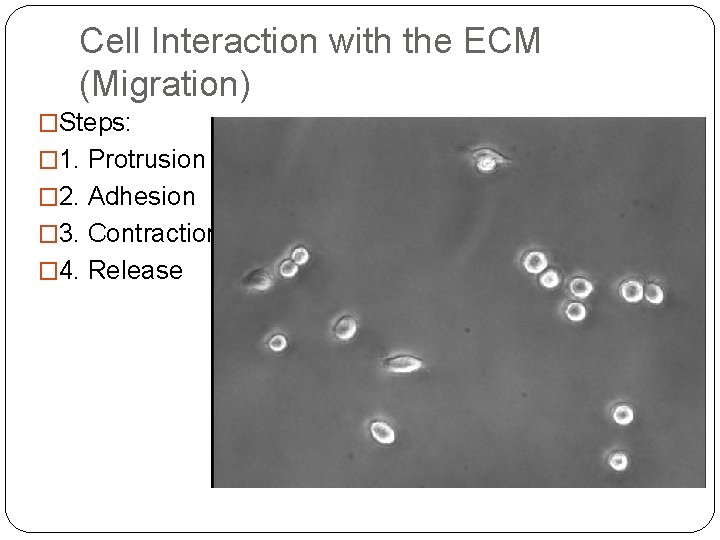
Cell Interaction with the ECM (Migration) �Steps: � 1. Protrusion � 2. Adhesion � 3. Contraction � 4. Release
How might a scientist study cell-ECM interactions? �What characteristics might a synthetic ECM need �What materials might have these desired qualities?
What is a polymer? �Poly - mer Definition: polymers are long-chain molecules consisting of repeating units (called: _______) which are typically connected by ______ chemical bonds. �Synthetic Example Polyethylene (PE): CH 2=CH 2(CH 2)n �Natural Example polysaccharide: Chitosan, randomly distributed D-glucosamine and N-acetyl-D-
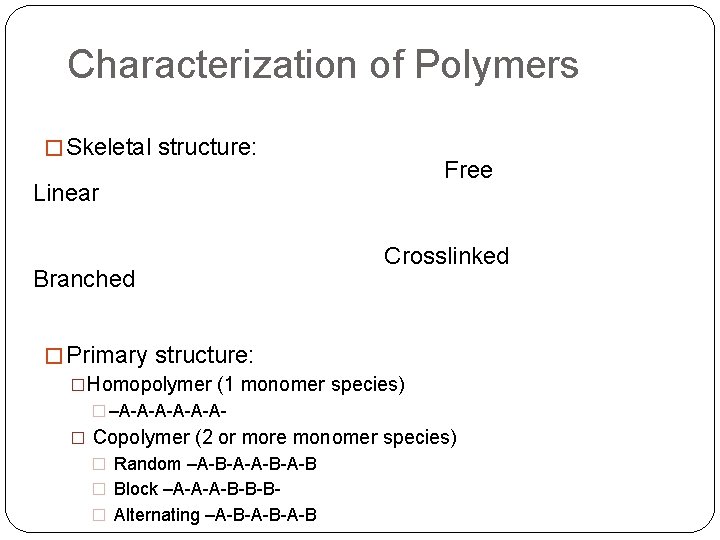
Characterization of Polymers � Skeletal structure: Free Linear Branched Crosslinked � Primary structure: �Homopolymer (1 monomer species) � –A-A-A- � Copolymer (2 or more monomer species) � Random –A-B-A-B � Block –A-A-A-B-B-B� Alternating –A-B-A-B
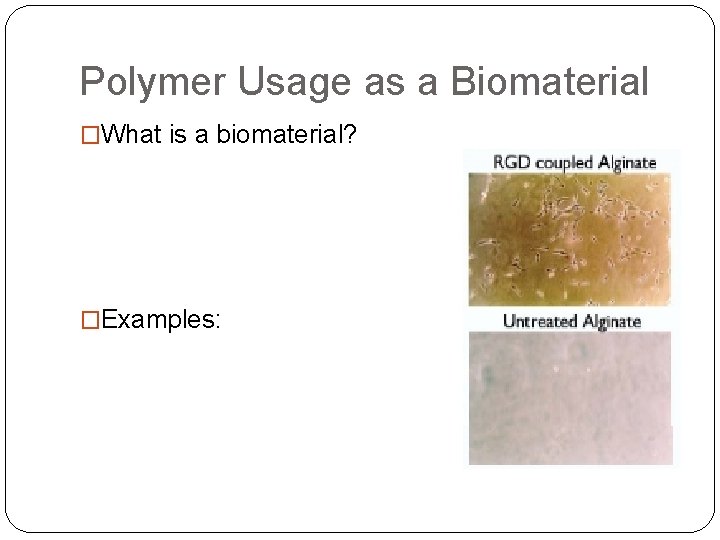
Polymer Usage as a Biomaterial �What is a biomaterial? �Examples:
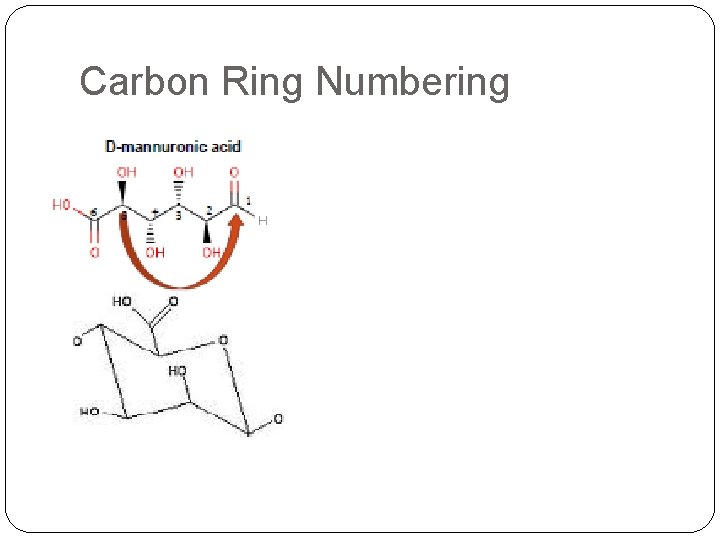
Carbon Ring Numbering