
Cells II Composite Cell A Cell Membrane Plasma
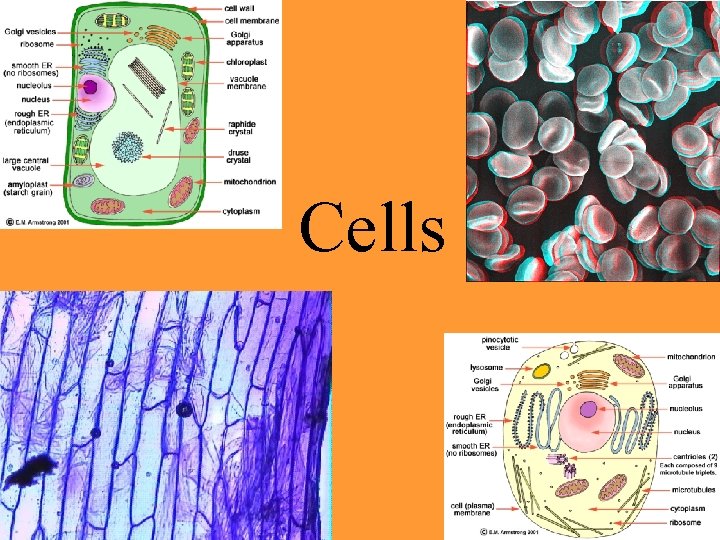
Cells
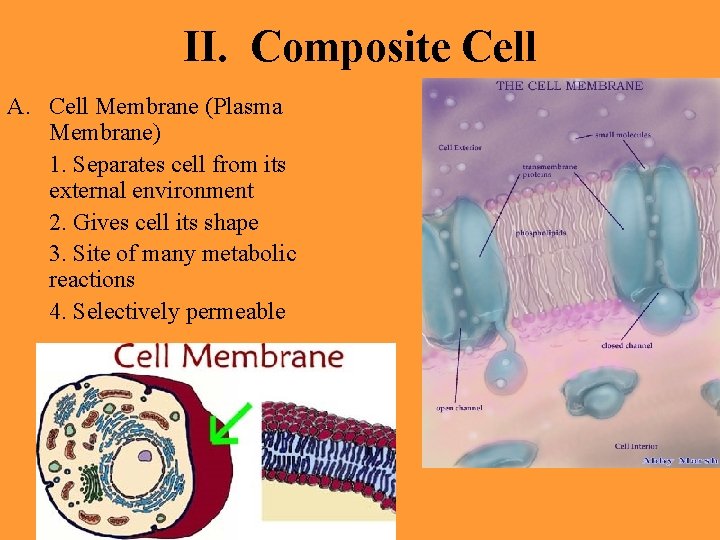
II. Composite Cell A. Cell Membrane (Plasma Membrane) 1. Separates cell from its external environment 2. Gives cell its shape 3. Site of many metabolic reactions 4. Selectively permeable
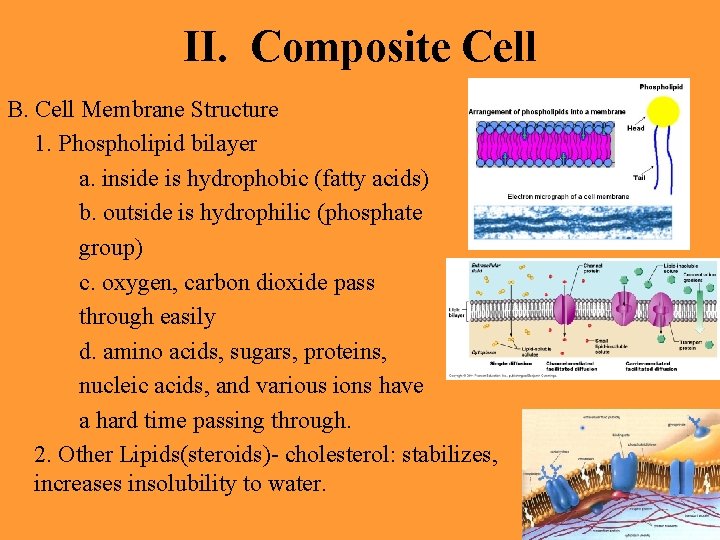
II. Composite Cell B. Cell Membrane Structure 1. Phospholipid bilayer a. inside is hydrophobic (fatty acids) b. outside is hydrophilic (phosphate group) c. oxygen, carbon dioxide pass through easily d. amino acids, sugars, proteins, nucleic acids, and various ions have a hard time passing through. 2. Other Lipids(steroids)- cholesterol: stabilizes, increases insolubility to water.
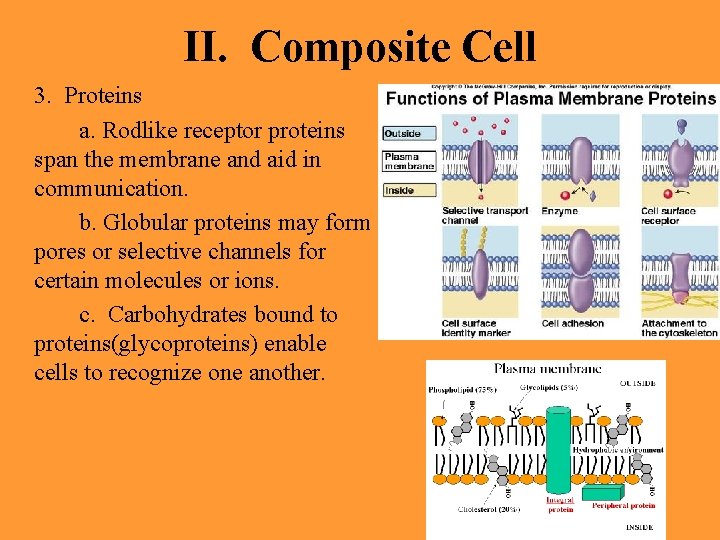
II. Composite Cell 3. Proteins a. Rodlike receptor proteins span the membrane and aid in communication. b. Globular proteins may form pores or selective channels for certain molecules or ions. c. Carbohydrates bound to proteins(glycoproteins) enable cells to recognize one another.
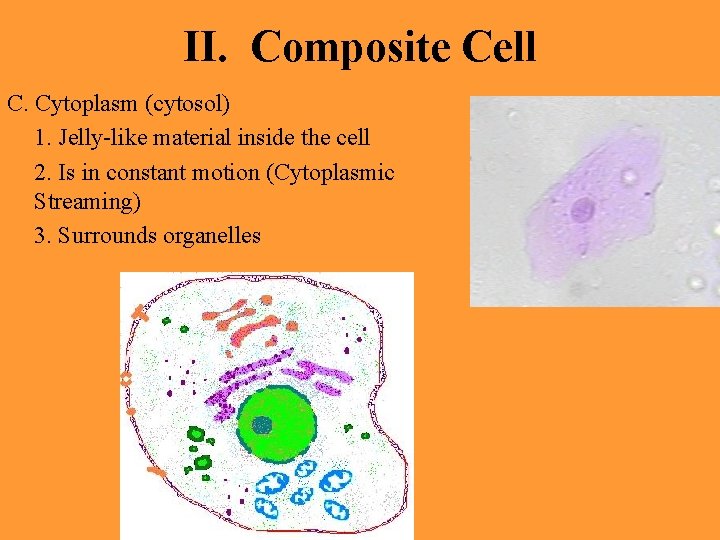
II. Composite Cell C. Cytoplasm (cytosol) 1. Jelly-like material inside the cell 2. Is in constant motion (Cytoplasmic Streaming) 3. Surrounds organelles
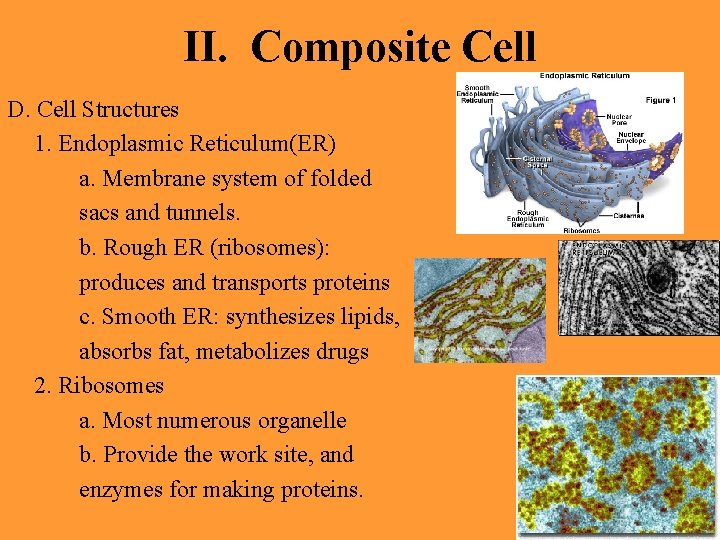
II. Composite Cell D. Cell Structures 1. Endoplasmic Reticulum(ER) a. Membrane system of folded sacs and tunnels. b. Rough ER (ribosomes): produces and transports proteins c. Smooth ER: synthesizes lipids, absorbs fat, metabolizes drugs 2. Ribosomes a. Most numerous organelle b. Provide the work site, and enzymes for making proteins.
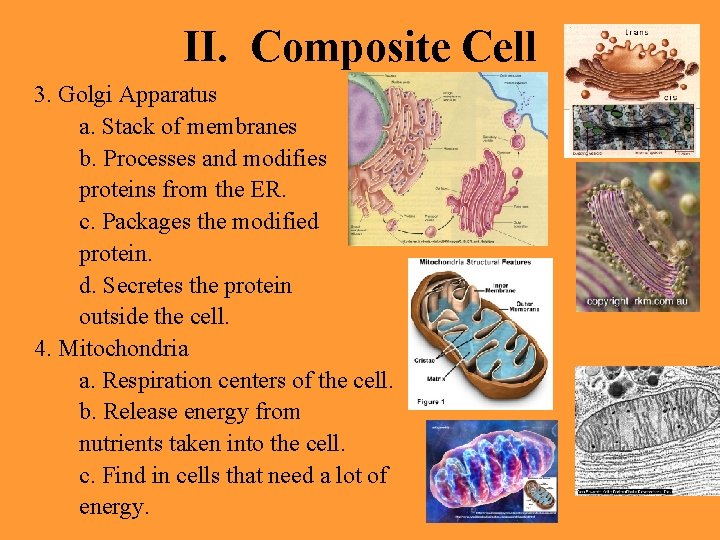
II. Composite Cell 3. Golgi Apparatus a. Stack of membranes b. Processes and modifies proteins from the ER. c. Packages the modified protein. d. Secretes the protein outside the cell. 4. Mitochondria a. Respiration centers of the cell. b. Release energy from nutrients taken into the cell. c. Find in cells that need a lot of energy.
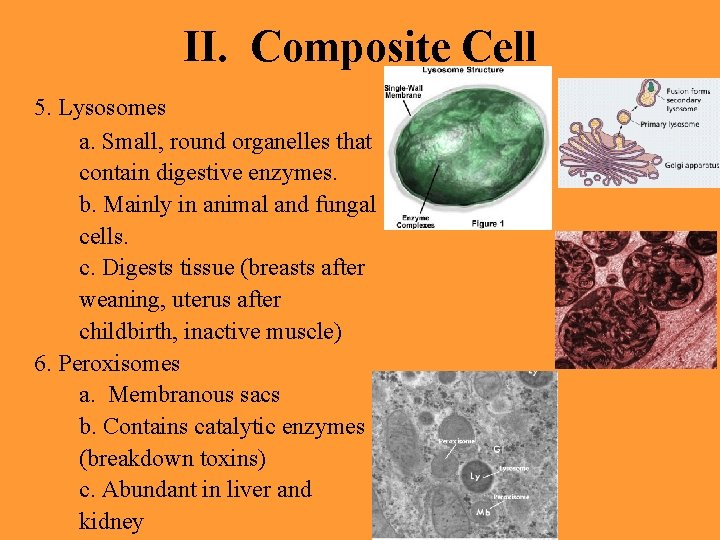
II. Composite Cell 5. Lysosomes a. Small, round organelles that contain digestive enzymes. b. Mainly in animal and fungal cells. c. Digests tissue (breasts after weaning, uterus after childbirth, inactive muscle) 6. Peroxisomes a. Membranous sacs b. Contains catalytic enzymes (breakdown toxins) c. Abundant in liver and kidney
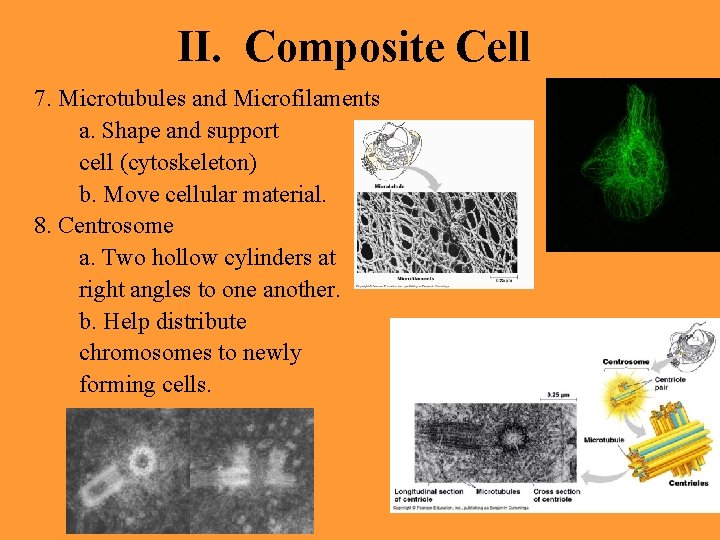
II. Composite Cell 7. Microtubules and Microfilaments a. Shape and support cell (cytoskeleton) b. Move cellular material. 8. Centrosome a. Two hollow cylinders at right angles to one another. b. Help distribute chromosomes to newly forming cells.
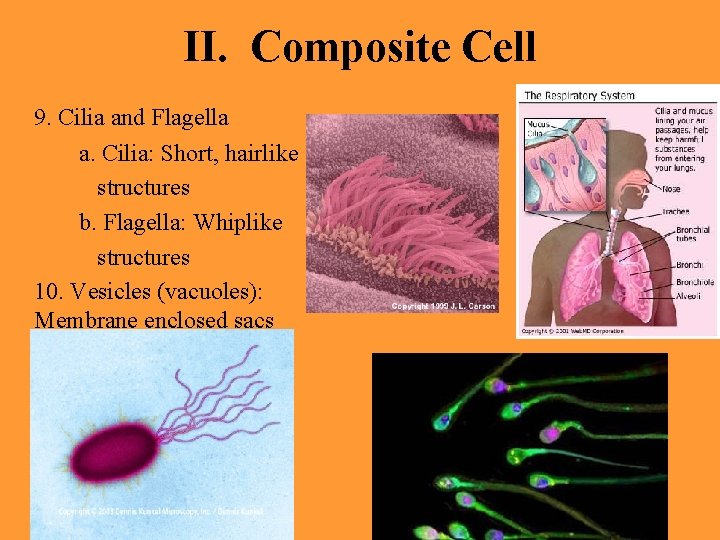
II. Composite Cell 9. Cilia and Flagella a. Cilia: Short, hairlike structures b. Flagella: Whiplike structures 10. Vesicles (vacuoles): Membrane enclosed sacs
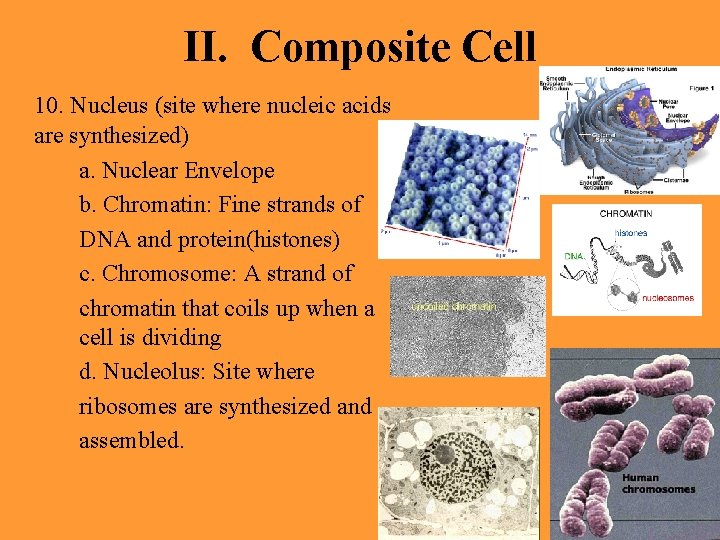
II. Composite Cell 10. Nucleus (site where nucleic acids are synthesized) a. Nuclear Envelope b. Chromatin: Fine strands of DNA and protein(histones) c. Chromosome: A strand of chromatin that coils up when a cell is dividing d. Nucleolus: Site where ribosomes are synthesized and assembled.
- Slides: 11