
Cells Homeostasis Cells work together to maintain homeostasis
- Slides: 28
Cells
Homeostasis • Cells work together to maintain homeostasis. Cells have different functions. • Homeostasis = stable environment in your body; balance • Your body maintains its homeostasis even if outside conditions are changing.
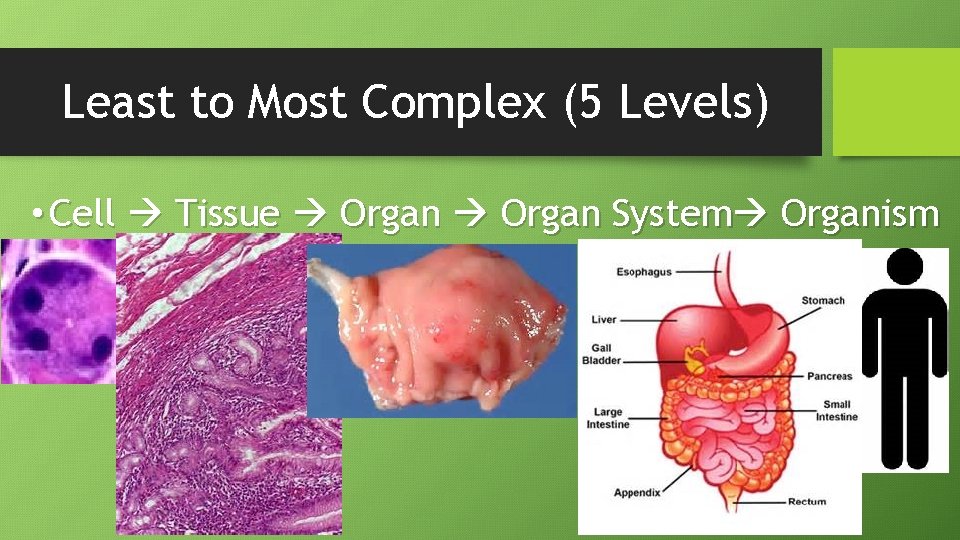
Levels of Organization • Tissue- group of similar cells working together • Organ- two or more tissues that work together • Organ system- two or more organs that work together • Organism- has multiple organ systems that work together to maintain homeostasis in the entire body
Least to Most Complex (5 Levels) • Cell Tissue Organ System Organism
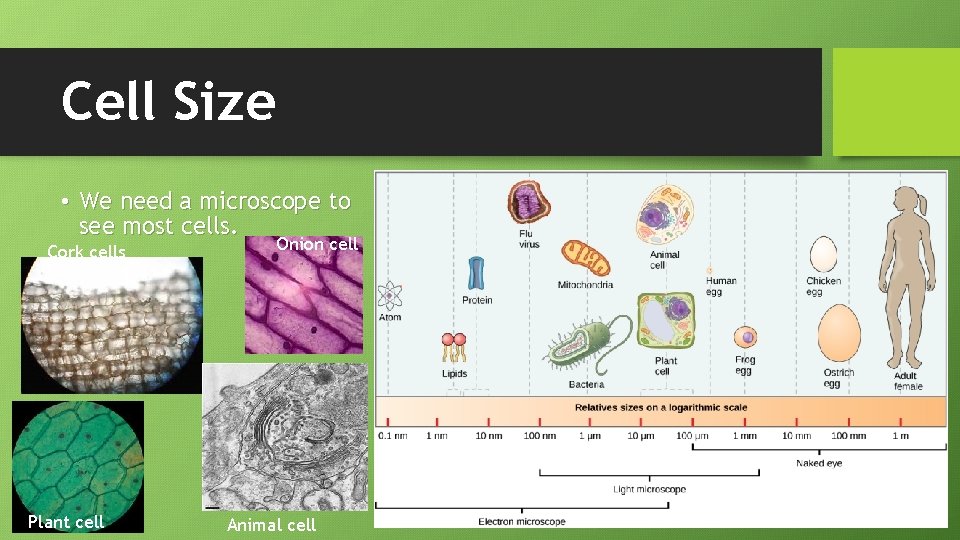
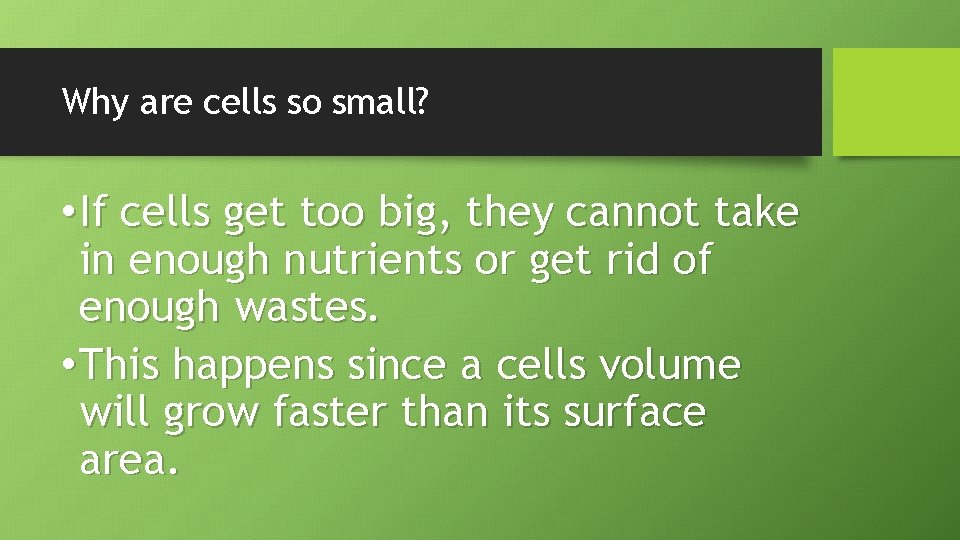
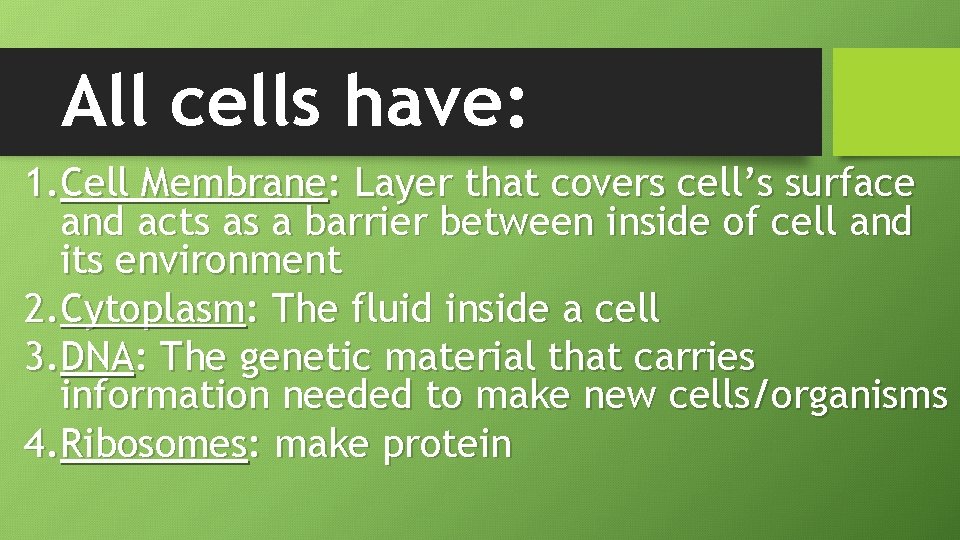
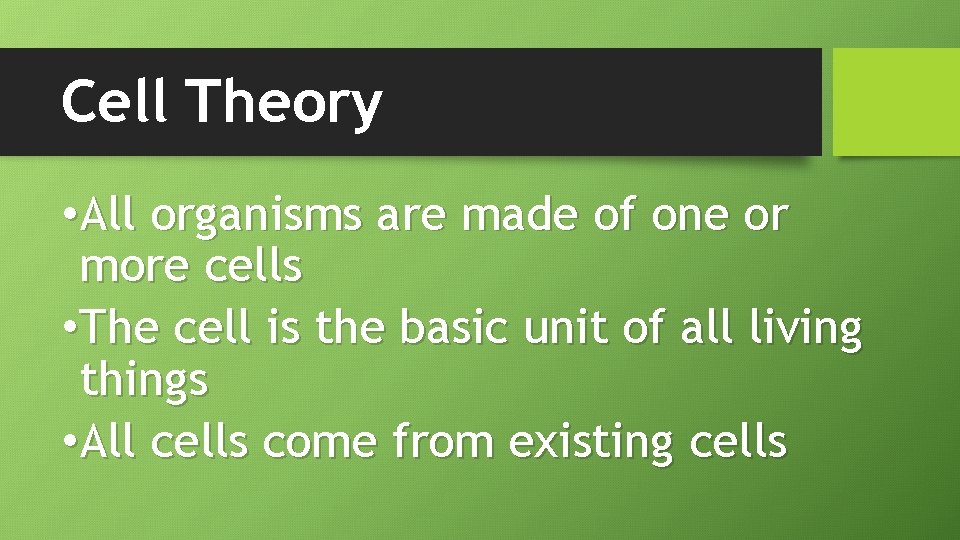
Cell Size • We need a microscope to see most cells. Cork cells Plant cell Onion cell Animal cell
Why are cells so small? • If cells get too big, they cannot take in enough nutrients or get rid of enough wastes. • This happens since a cells volume will grow faster than its surface area.
All cells have: 1. Cell Membrane: Layer that covers cell’s surface and acts as a barrier between inside of cell and its environment 2. Cytoplasm: The fluid inside a cell 3. DNA: The genetic material that carries information needed to make new cells/organisms 4. Ribosomes: make protein
Cell Theory • All organisms are made of one or more cells • The cell is the basic unit of all living things • All cells come from existing cells
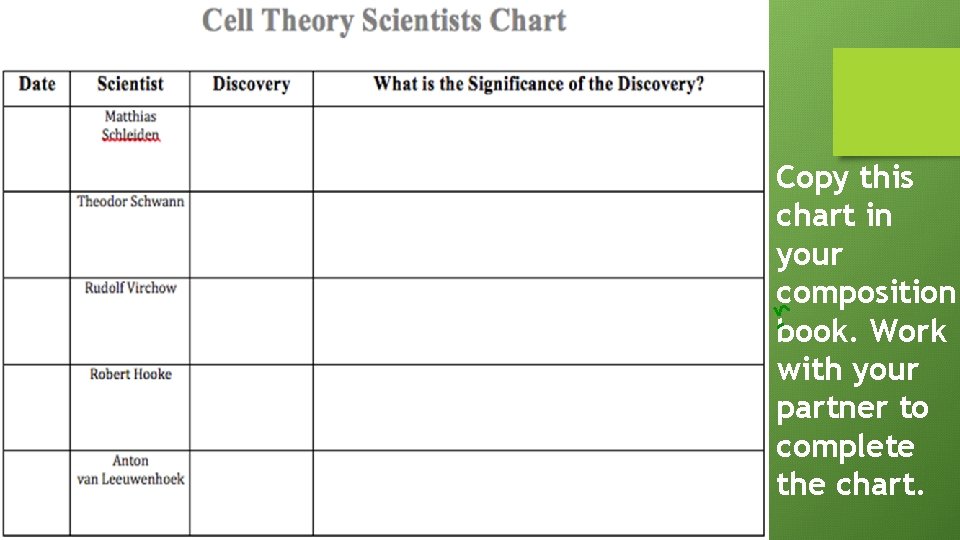
Copy this chart in your composition book. Work with your partner to complete the chart.
Describe how each of these people helped us understand cells and/or what they discovered. 1. Matthias Schleiden 2. Theodor Schwann 3. Rudolf Virchow 4. Robert Hooke 5. Anton van Leeuwenhoek
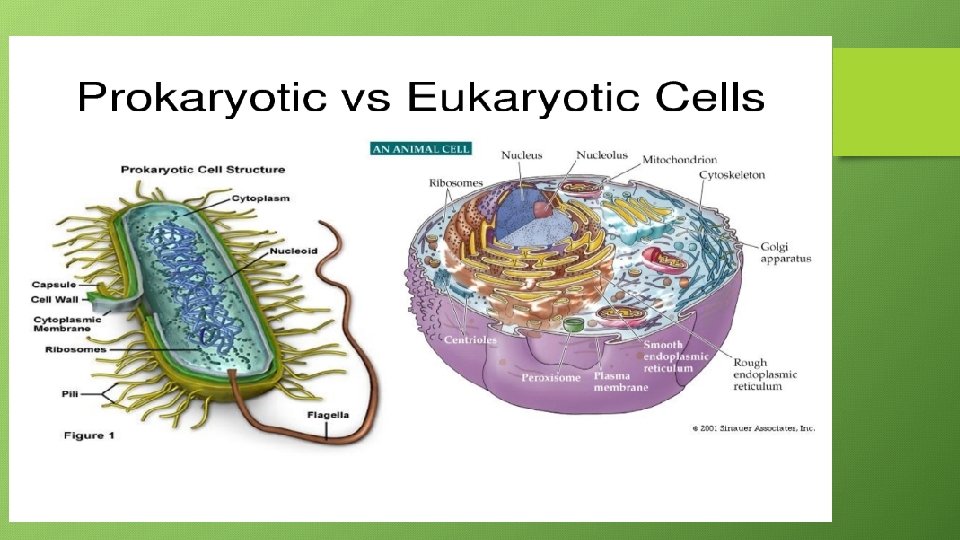
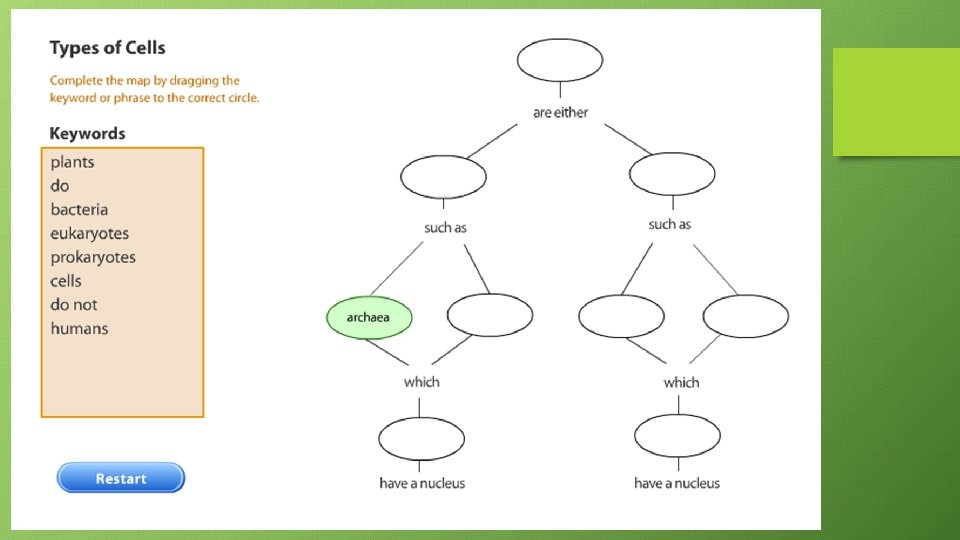
Two Types of Cells 1. Prokaryotes (Pro/No) • Single-celled organisms • Smaller • Do NOT have a nucleus or membrane bound organelles • Ex: bacteria, archaea • Pro means before and kary means nucleus
2. Eukaryotes (You) • Can be single or multi-cellular • Larger • Have a nucleus and organelles • Ex: animals, plants, fungi, protists • Eu means good or true and kary means nucleus
Plant and animal cells are eukaryotic. • Eukaryotic cells are complex and made of many parts.
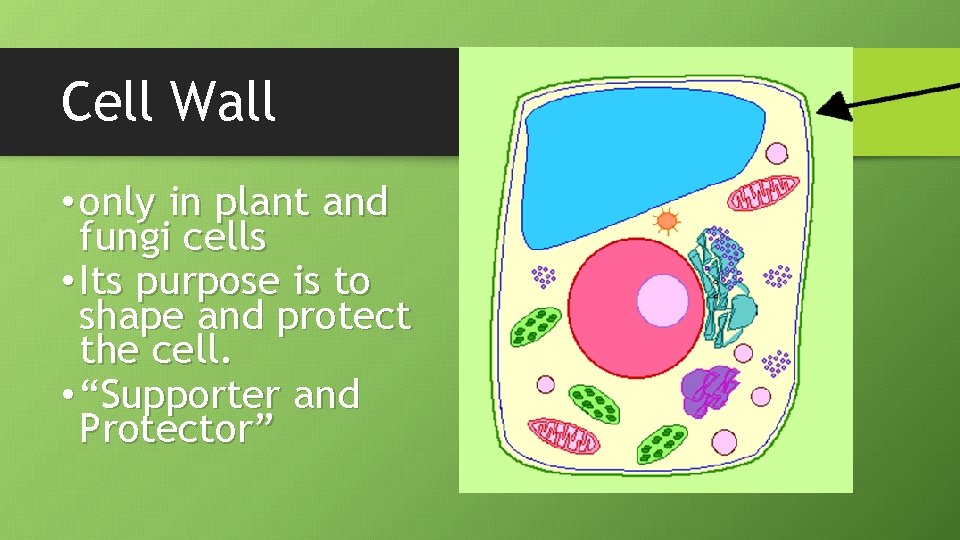
Cell Wall • only in plant and fungi cells • Its purpose is to shape and protect the cell. • “Supporter and Protector”
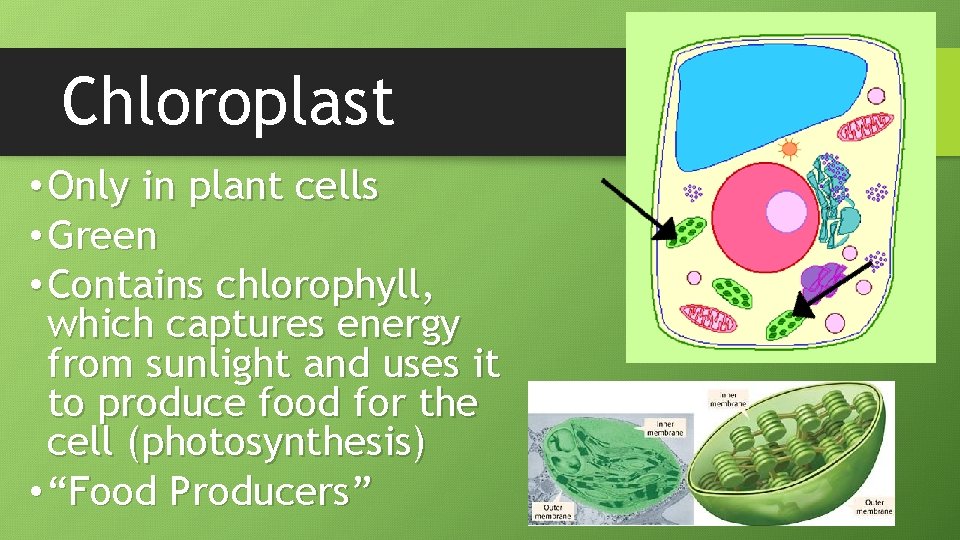
Chloroplast • Only in plant cells • Green • Contains chlorophyll, which captures energy from sunlight and uses it to produce food for the cell (photosynthesis) • “Food Producers”
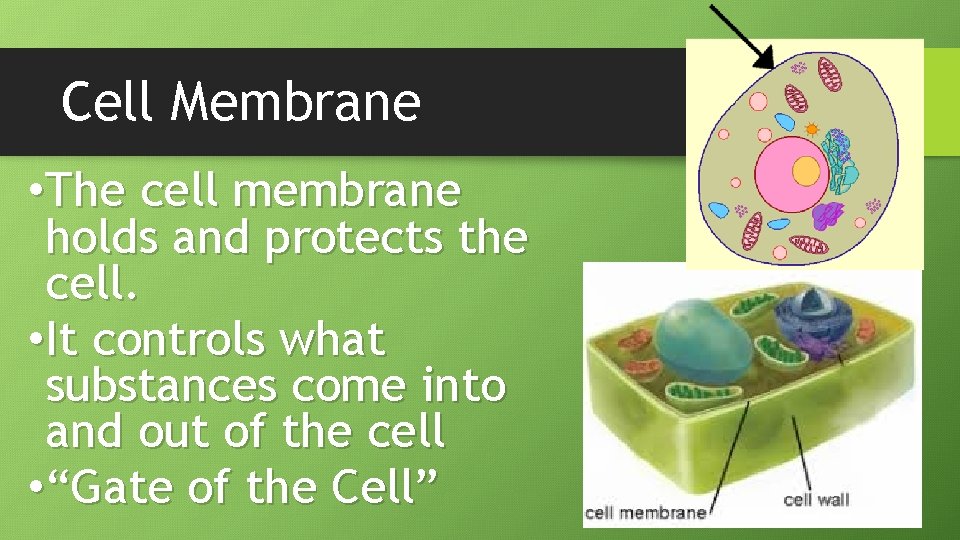
Cell Membrane • The cell membrane holds and protects the cell. • It controls what substances come into and out of the cell • “Gate of the Cell”
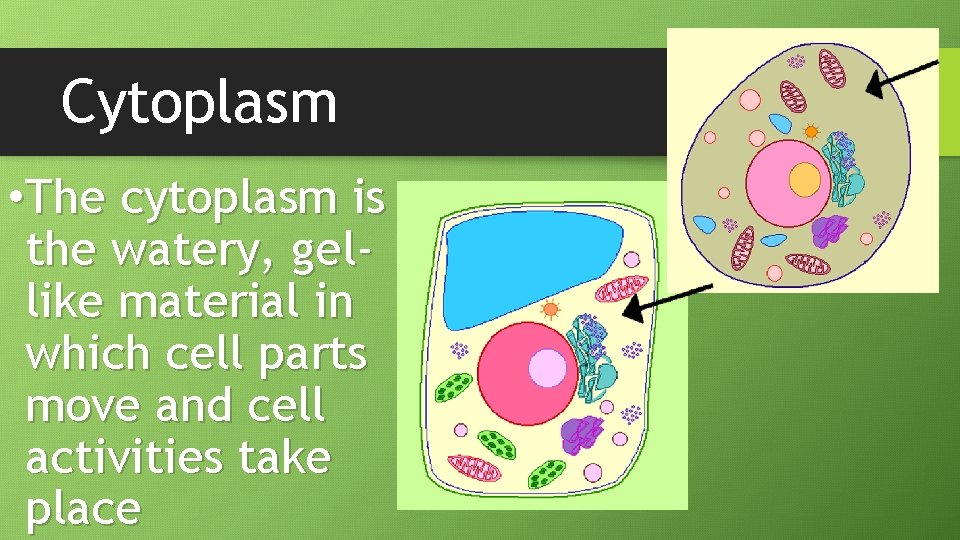
Cytoplasm • The cytoplasm is the watery, gellike material in which cell parts move and cell activities take place
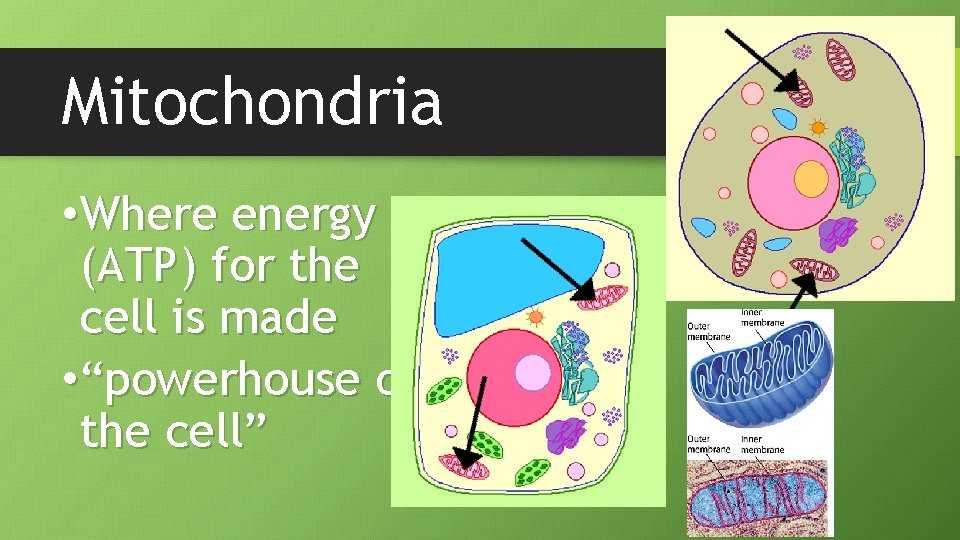
Mitochondria • Where energy (ATP) for the cell is made • “powerhouse of the cell”
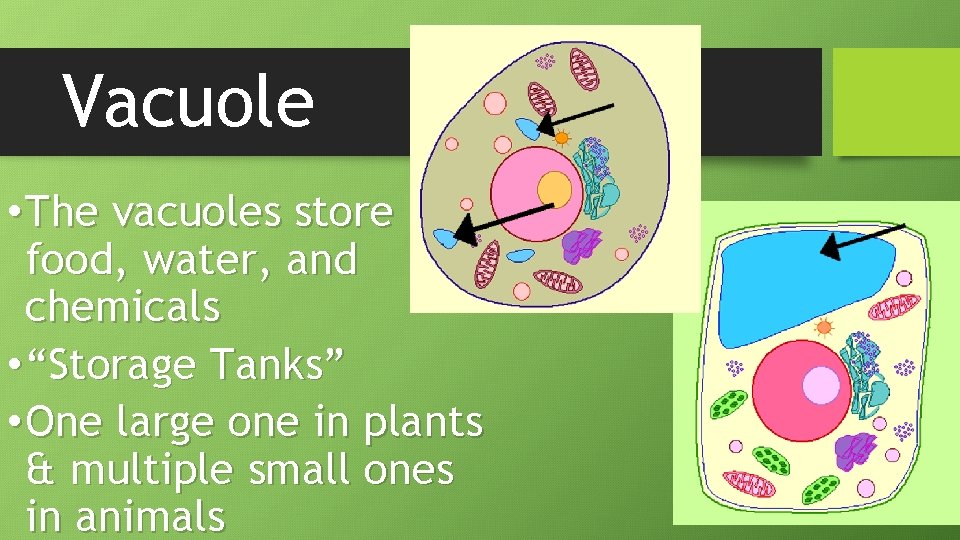
Vacuole • The vacuoles store food, water, and chemicals • “Storage Tanks” • One large one in plants & multiple small ones in animals
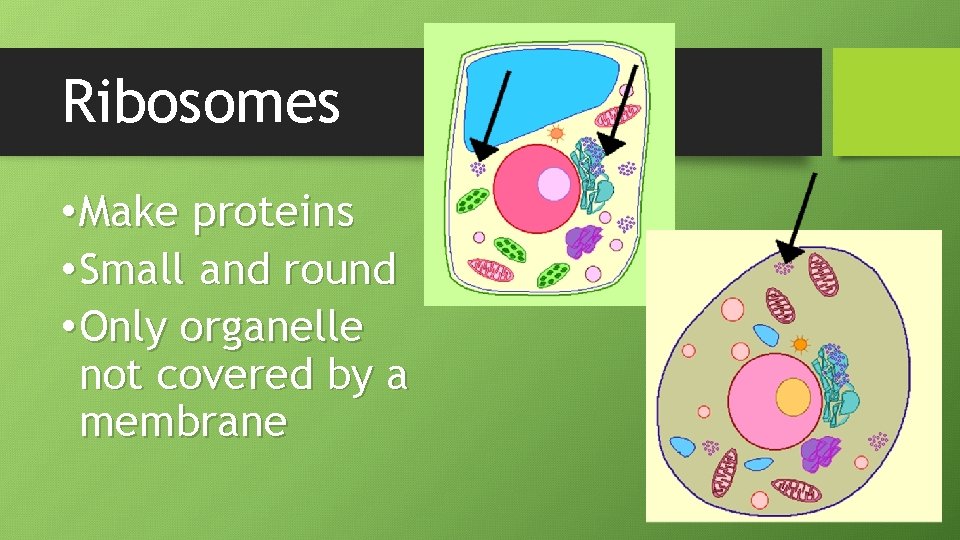
Ribosomes • Make proteins • Small and round • Only organelle not covered by a membrane
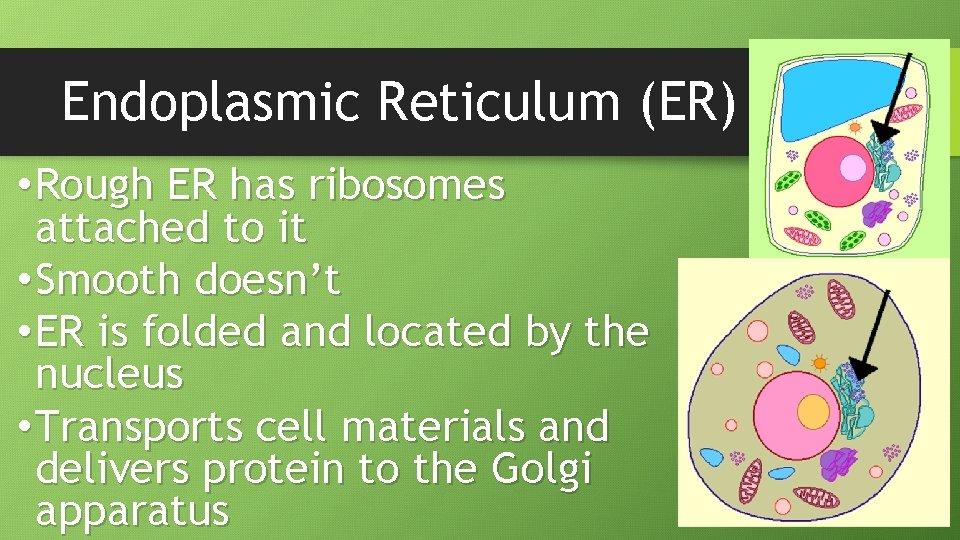
Endoplasmic Reticulum (ER) • Rough ER has ribosomes attached to it • Smooth doesn’t • ER is folded and located by the nucleus • Transports cell materials and delivers protein to the Golgi apparatus
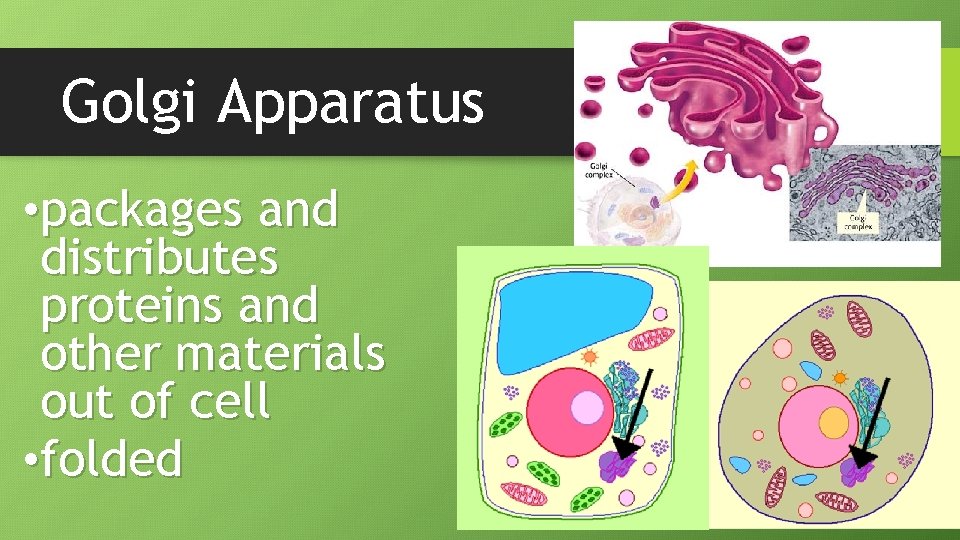
Golgi Apparatus • packages and distributes proteins and other materials out of cell • folded
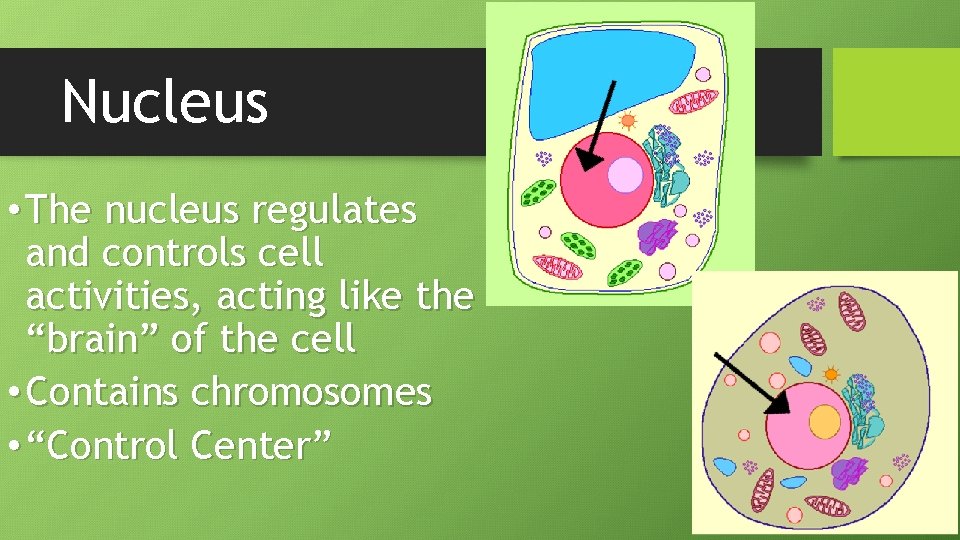
Nucleus • The nucleus regulates and controls cell activities, acting like the “brain” of the cell • Contains chromosomes • “Control Center”
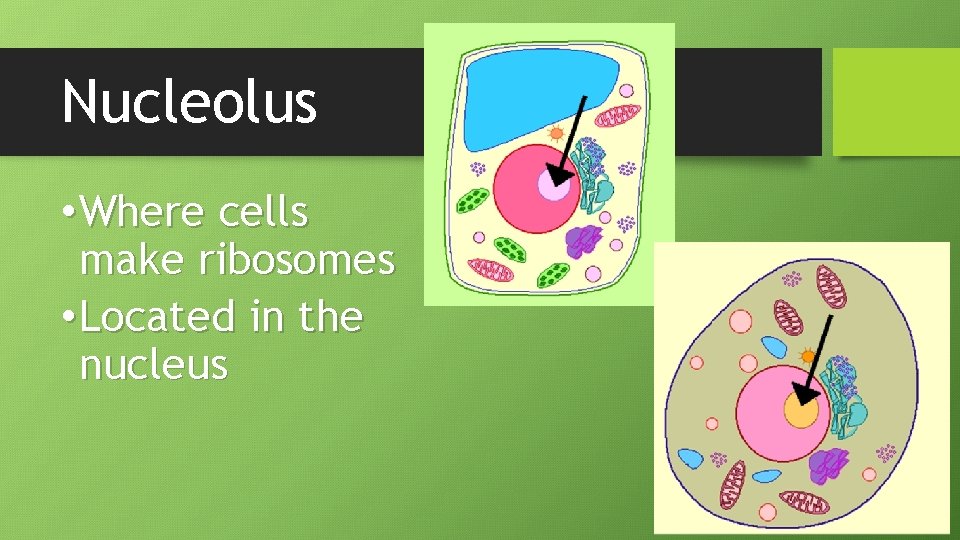
Nucleolus • Where cells make ribosomes • Located in the nucleus
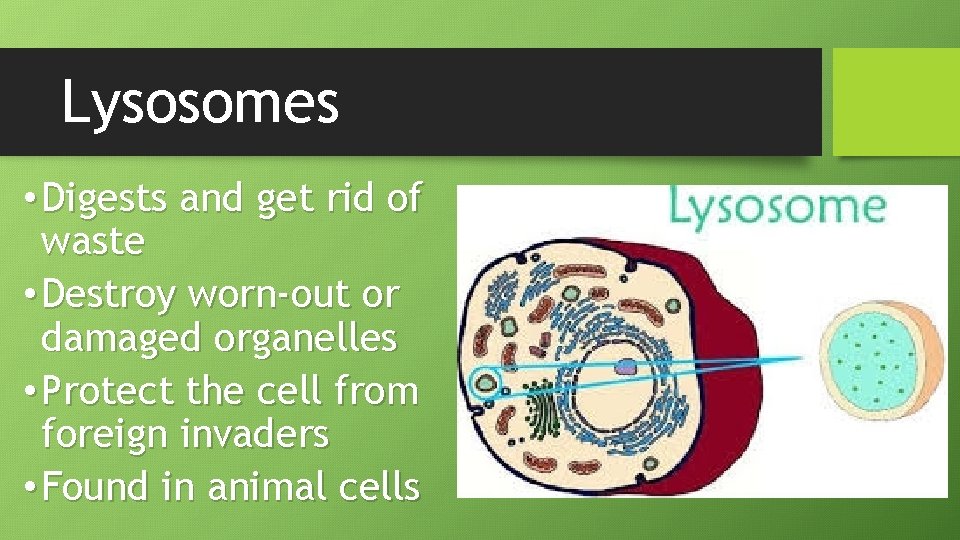
Lysosomes • Digests and get rid of waste • Destroy worn-out or damaged organelles • Protect the cell from foreign invaders • Found in animal cells
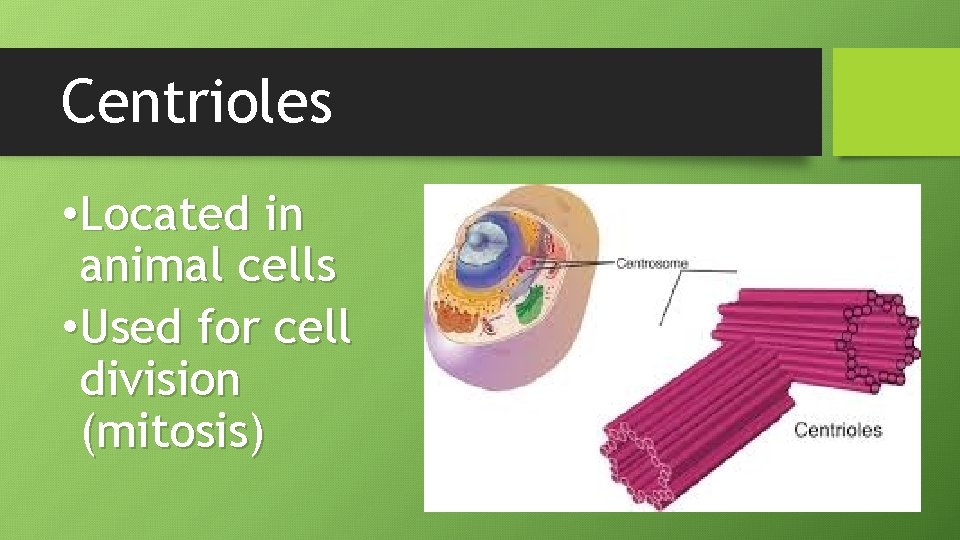
Centrioles • Located in animal cells • Used for cell division (mitosis)