
CELLS CYTOLOGY PART I Unit 1 Chp 3
- Slides: 33
CELLS: CYTOLOGY PART I Unit 1 Chp 3
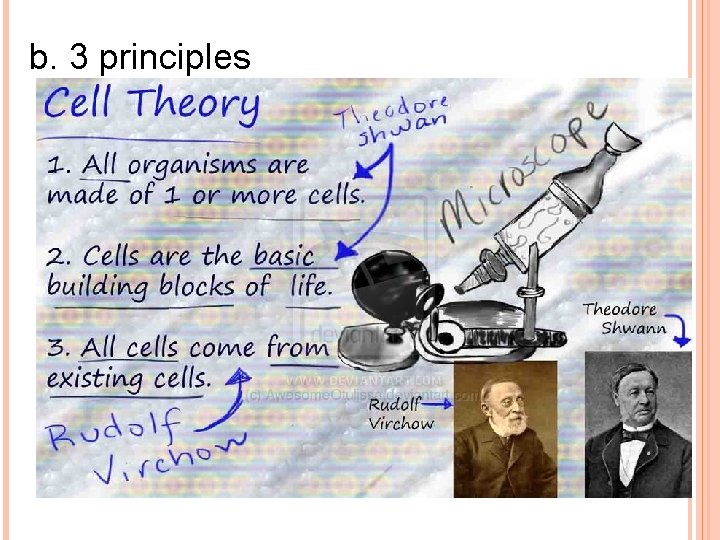
A. STRUCTURE 1. Cell Theory a. Introduction 1) Cytology – study of cells 2) Robert Hooke – coined the word cell 3) Matthias Schleiden – plants made of cells 4) Theodor Schwann – animals made of cells 5) Rudolf Virchow – cells come from preexisting cells
b. 3 principles
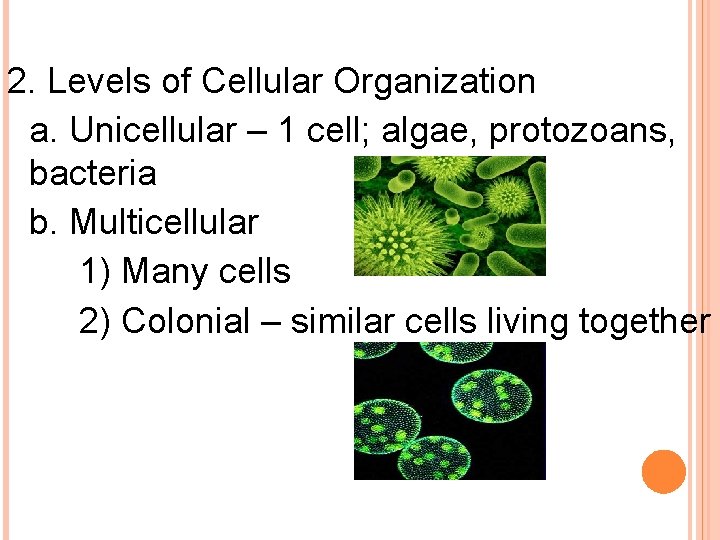
2. Levels of Cellular Organization a. Unicellular – 1 cell; algae, protozoans, bacteria b. Multicellular 1) Many cells 2) Colonial – similar cells living together
3) Tissue – similar cells working together 4) Organ – several tissues working together 5) Organ system – group of organs that complete a function 6) All systems rely on others for survival
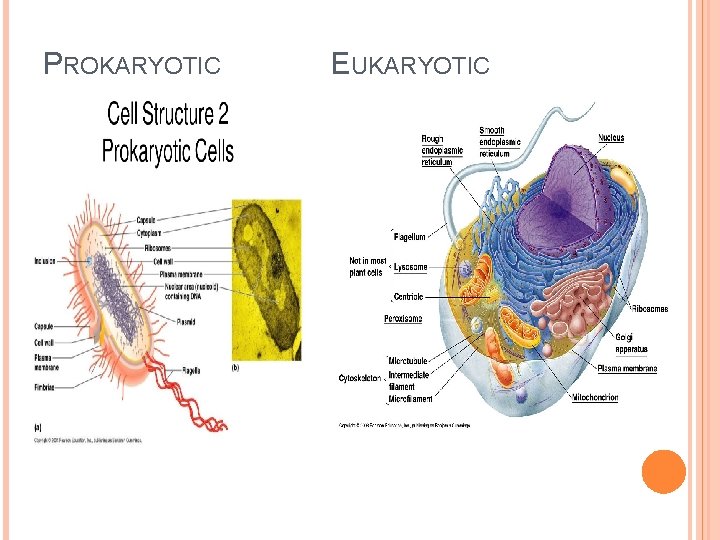
B. CELL ANATOMY 1. Two Types a. Eukaryotic 1) Have membrane around nucleus 2) Have organelles in cytoplasm b. Prokaryotic 1) No membrane bound nucleus 2) No membrane bound organelles
PROKARYOTIC EUKARYOTIC
2. Cell Boundaries a. Plasma membranes 1) Both prokaryotic and eukaryotic cells 2) Aka – cell membrane 3) Outermost membrane 4) Phospholipid bilayer 5) Hydrophobic/philic ends 6) Proteins let things through (pg 77)
b. Cell Walls 1) Only plants 2) Outer most layer 3) Rigid and made of cellulose 4) Primary wall – made when cell is still developing 5) Secondary wall a) Produced when cell is mature b) More cellulose than primary wall
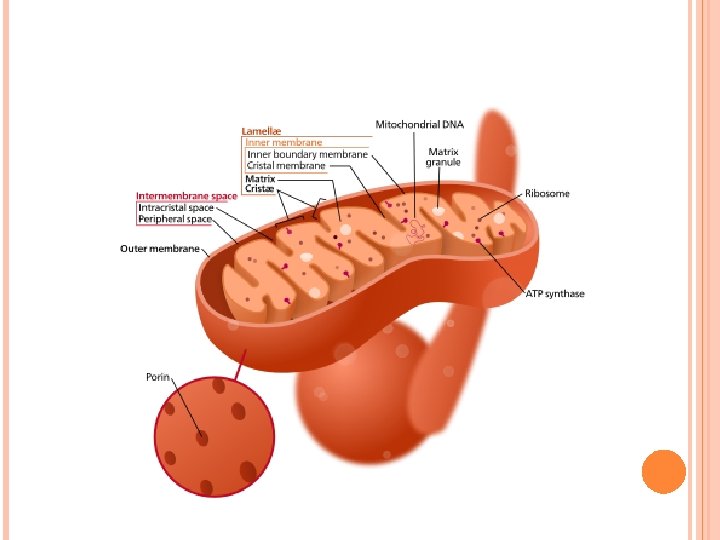
3. Cytoplasm a. Holds all organelles b. Jelly-like c. Cytoplasmic organelles (pg 80 – 85) 1) Mitochondria a) “Powerhouse” b) Make energy from sugar c) 2 membranes
i. Outer – smooth ii. Inner i) Lots of folds – increase surface area ii) Called cristae d) Contain own DNA e) Numerous to few in a cell
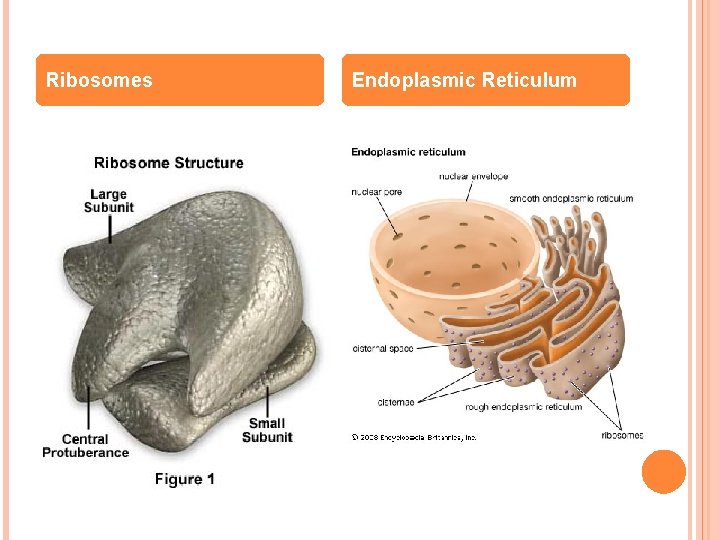
2) Ribosomes a) Made of protein and RNA b) Makes protein c) Free floating or on ER 3) Endoplasmic reticulum a) Transport system and holds shape b) 2 kinds i. RER – has ribosomes ii. SER – detoxifies
Ribosomes Endoplasmic Reticulum
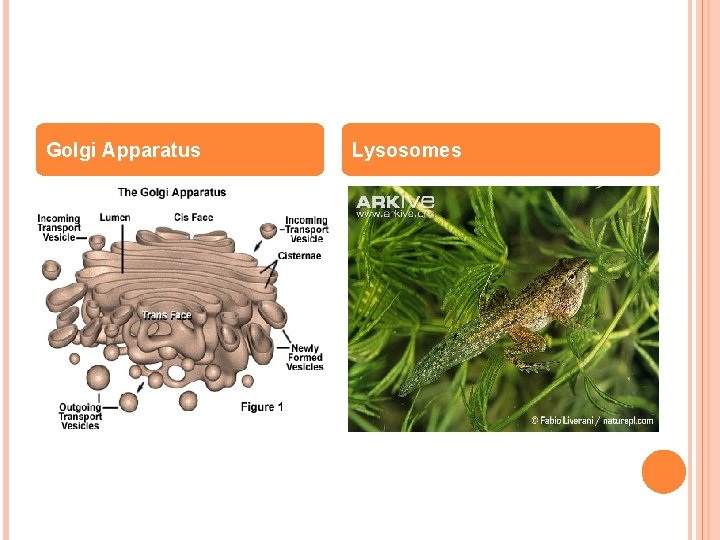
4) Golgi Apparatus a) Packaging – proteins and lipids b) Sacs get pinched off 5) Lysosomes a) Garbage men b) Have digestive enzymes c) Bacteria and nonfunctional cells
Golgi Apparatus Lysosomes
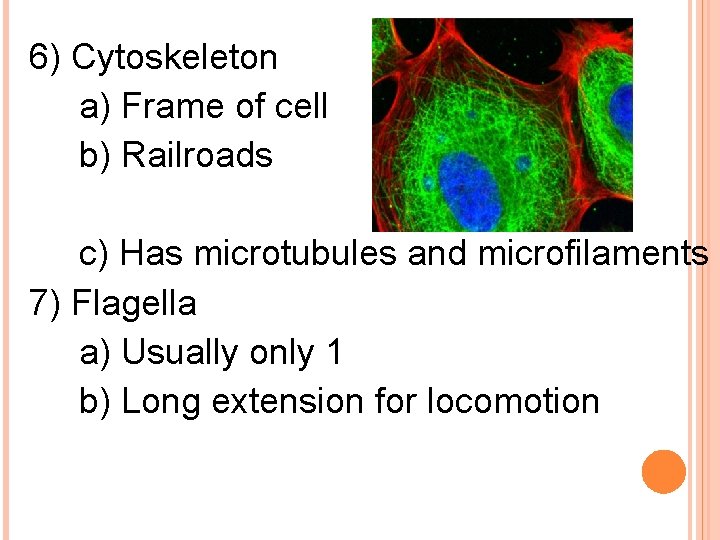
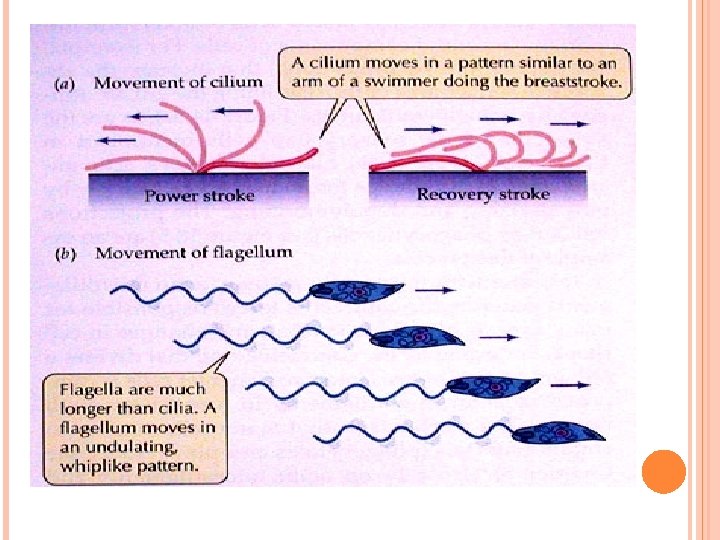
6) Cytoskeleton a) Frame of cell b) Railroads c) Has microtubules and microfilaments 7) Flagella a) Usually only 1 b) Long extension for locomotion
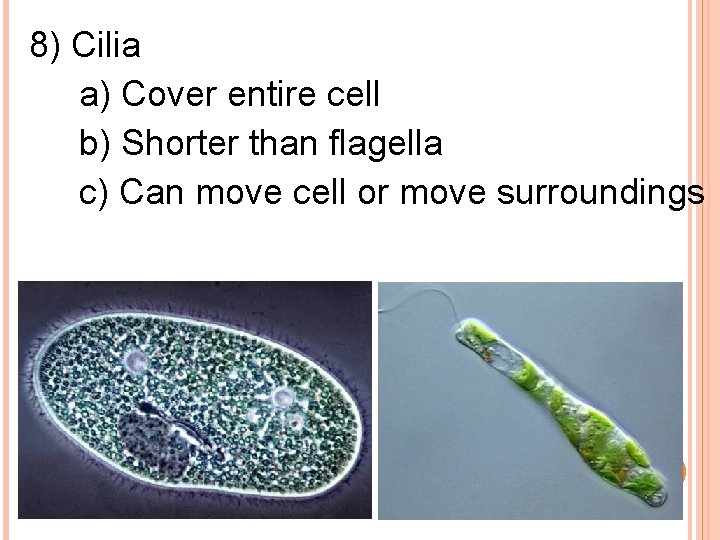
8) Cilia a) Cover entire cell b) Shorter than flagella c) Can move cell or move surroundings
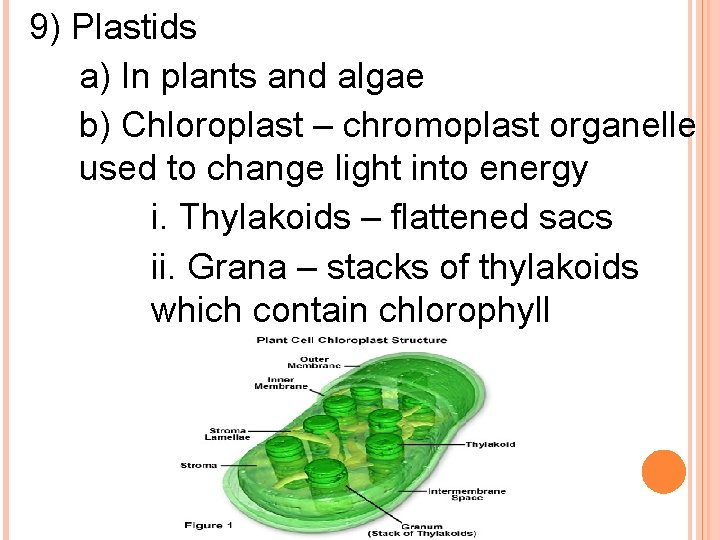
9) Plastids a) In plants and algae b) Chloroplast – chromoplast organelle used to change light into energy i. Thylakoids – flattened sacs ii. Grana – stacks of thylakoids which contain chlorophyll
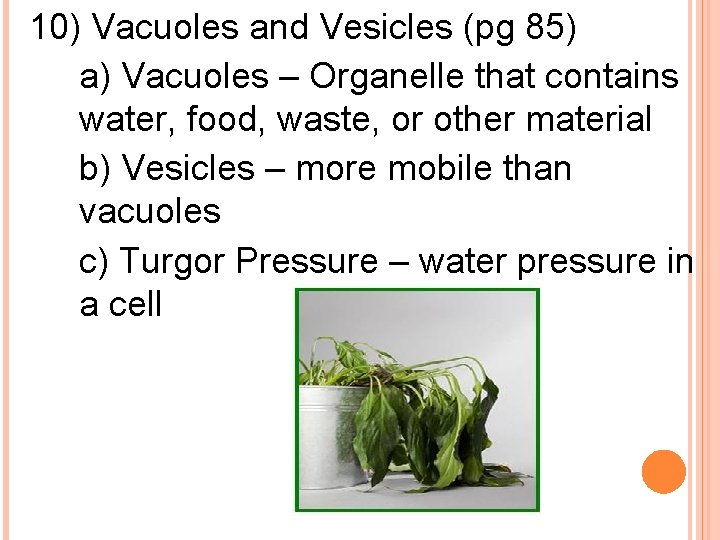
10) Vacuoles and Vesicles (pg 85) a) Vacuoles – Organelle that contains water, food, waste, or other material b) Vesicles – more mobile than vacuoles c) Turgor Pressure – water pressure in a cell
Turgor Pressure – sped up � http: //www. youtube. com/watch? v=f. Ny. Yu. Var. TIQ Turgor Pressure – matches � http: //www. youtube. com/watch? v=qrp 7 V 0 Q 5 q. YQ
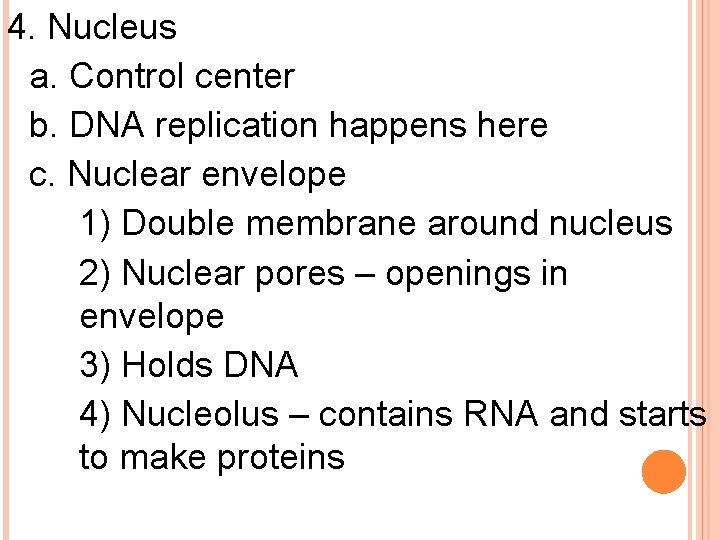
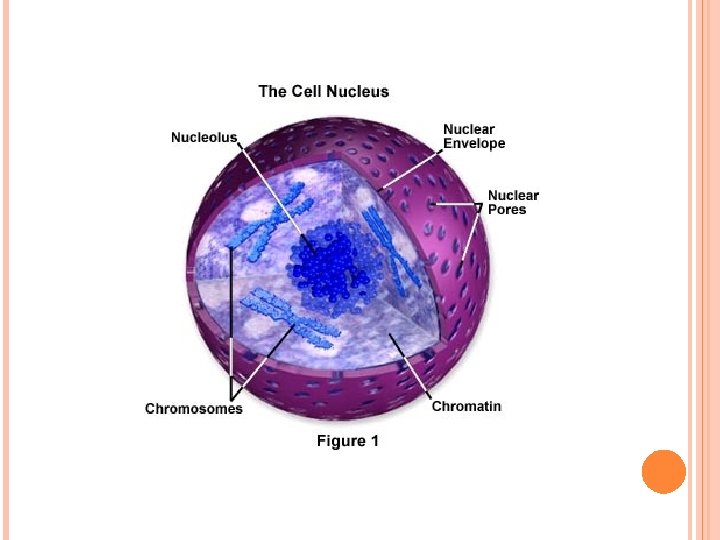
4. Nucleus a. Control center b. DNA replication happens here c. Nuclear envelope 1) Double membrane around nucleus 2) Nuclear pores – openings in envelope 3) Holds DNA 4) Nucleolus – contains RNA and starts to make proteins
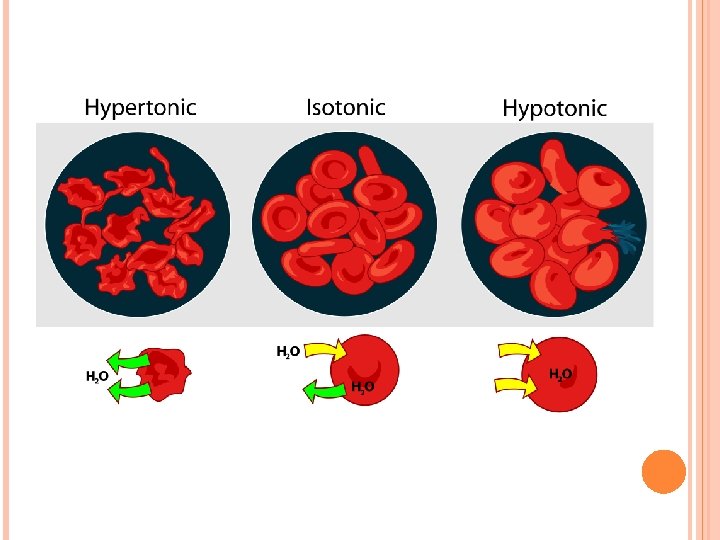
C. CELLS AND THEIR ENVIRONMENT 1. Homeostasis a. Keeping a steady condition b. Constantly collects info and interprets c. Temperature d. Solutions 1) Isotonic – concentration same inside and out of cell
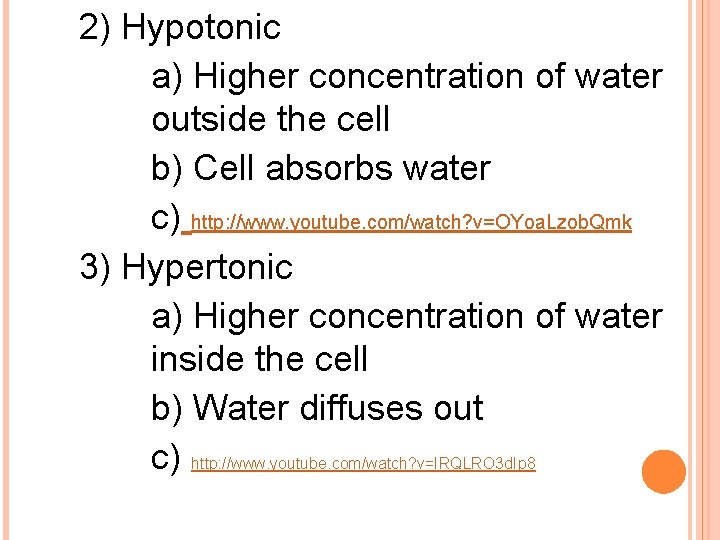
2) Hypotonic a) Higher concentration of water outside the cell b) Cell absorbs water c) http: //www. youtube. com/watch? v=OYoa. Lzob. Qmk 3) Hypertonic a) Higher concentration of water inside the cell b) Water diffuses out c) http: //www. youtube. com/watch? v=IRQLRO 3 d. Ip 8
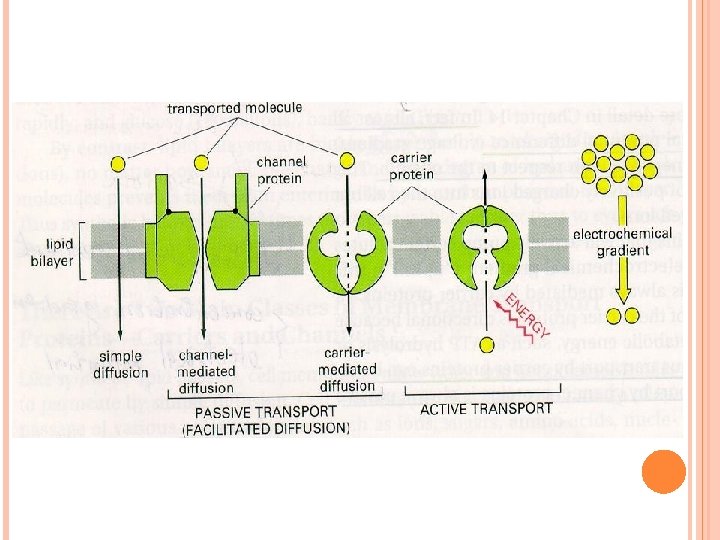
2. Transportation across membrane a. Passive Transport 1) No energy needed 2) Diffusion and osmosis 3) Speed a) Size b) Shape c) Electrical charges
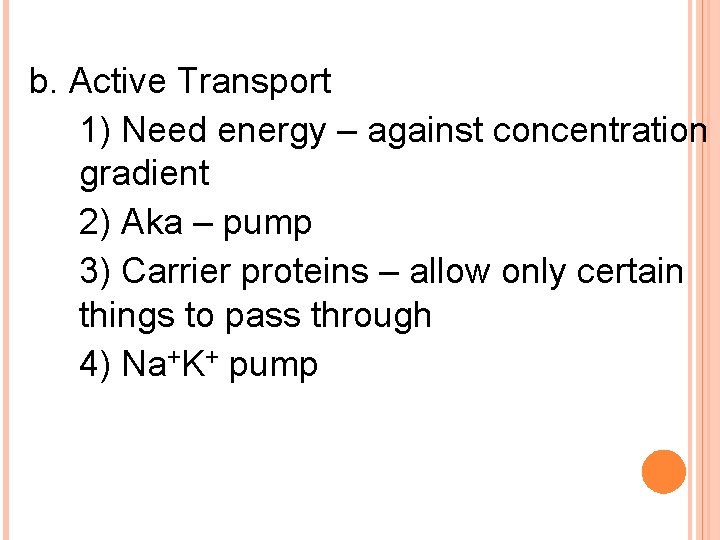
b. Active Transport 1) Need energy – against concentration gradient 2) Aka – pump 3) Carrier proteins – allow only certain things to pass through 4) Na+K+ pump
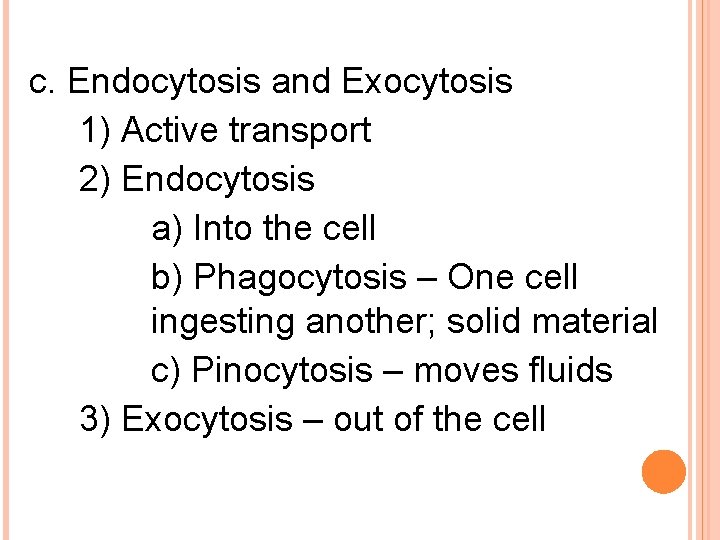
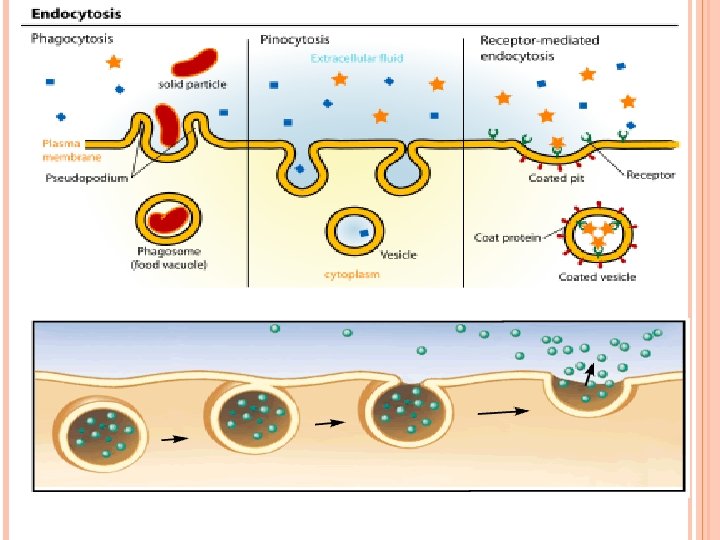
c. Endocytosis and Exocytosis 1) Active transport 2) Endocytosis a) Into the cell b) Phagocytosis – One cell ingesting another; solid material c) Pinocytosis – moves fluids 3) Exocytosis – out of the cell
Endocytosis vs. Exocytosis (2 min) � http: //www. youtube. com/watch? v=qpw 2 p 1 x 9 Cic Sodium-Potassium Pump (3 min) � http: //www. youtube. com/watch? v=awz 6 l. Iss 3 h. Q Diffusion, solutions, and more! � http: //www. youtube. com/watch? v=d. PKv. Hr. D 1 e. S 4 (12 min)