
Cells Composite Cells Movements Through Membranes Cell Cycle
Cells Composite Cells Movements Through Membranes Cell Cycle
Composite Cell • Describing a “typical” cell is difficult due to the variation in cells. • A composite cell shows many of the typical structures of a cell. Cells have most, but not all of these structures. • Nucleus, cytoplasm, and cell membrane are easily seen under a microscope.
Organelles • Specialized structures within the cytoplasm. • Suspended in cytosol • Perform specific functions, divide the “work” of the cell. • Nucleus – directs all of the cells activities and houses the genetic material.
Cell Membrane • Regulates movement of substances and is the site of much biological activity. • Extremely thin, but flexible and elastic • Folded for increased surface area • Selectively permeable – controls what comes in and out of the cell.
Cytoplasm • Contains networks of membranes and organelles suspended in a clear liquid called cytosol. • Cell activities occur here: nutrients are received, processed and used. • The following slides deal with organelles contained in the cytoplasm.
Endoplasmic Reticulum • Called “ER” for short • Flattened, elongated canals and bubbles called vesicles. • Interconnected and communicate with the cell membrane, nuclear envelope, and other organelles • Tubular network that transports molecules to other organelles.
Smooth and Rough • ER that contains ribosomes is called “rough” ER • ER that doesn’t contain ribosomes is called “smooth” ER • Ribosomes – site of protein synthesis in the cell. Composed of protein and RNA molecules
Golgi Apparatus • Composed of a stack of about 6 flattened, membranous sacs • Refines, packages, and delivers proteins synthesized on ribosomes.
Mitochondria • Can move slowly through cytoplasm and reproduce by dividing. • Inner layer contains folds called “cristae” • Major site of chemical reactions that transform energy into ATP = gives the cell energy.
Lysosomes • “garbage” disposals of the cell • Contain powerful enzymes that break down nutrient molecules or foreign particles • Help body fight disease w/white blood cells • Also destroy worn cellular parts
Homeostasis And Transport
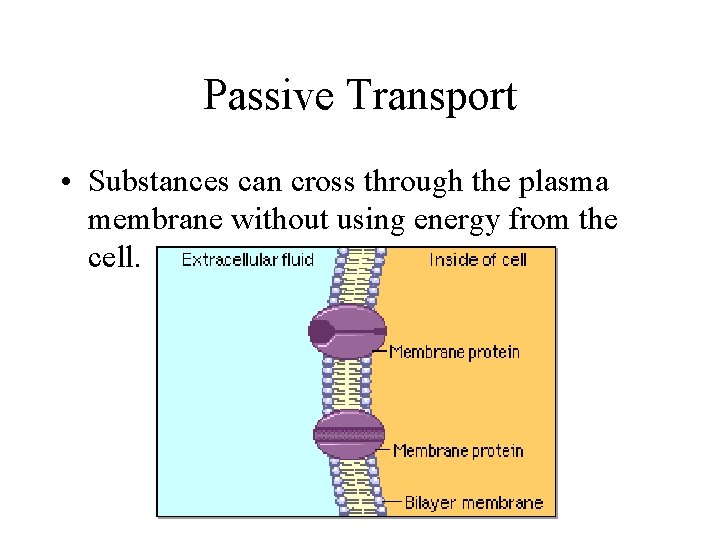
Passive Transport • Substances can cross through the plasma membrane without using energy from the cell.
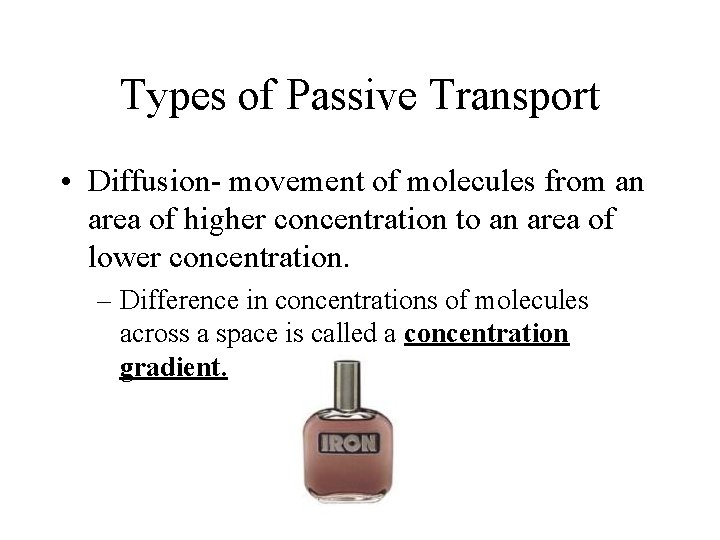
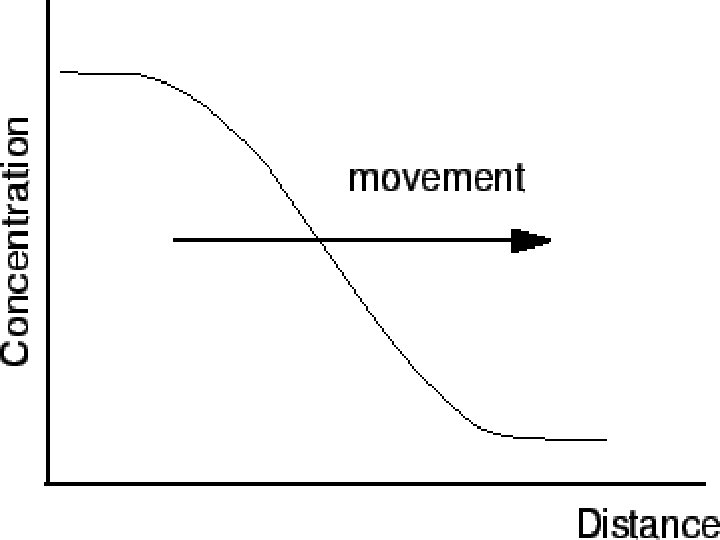
Types of Passive Transport • Diffusion- movement of molecules from an area of higher concentration to an area of lower concentration. – Difference in concentrations of molecules across a space is called a concentration gradient.
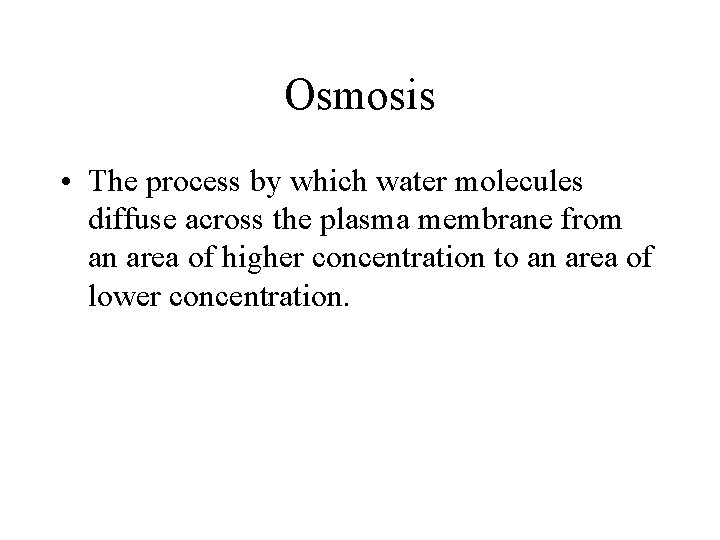
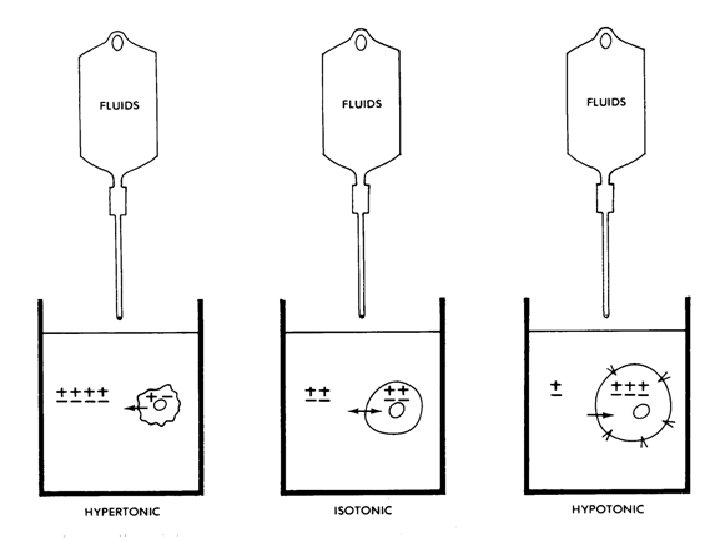
Osmosis • The process by which water molecules diffuse across the plasma membrane from an area of higher concentration to an area of lower concentration.
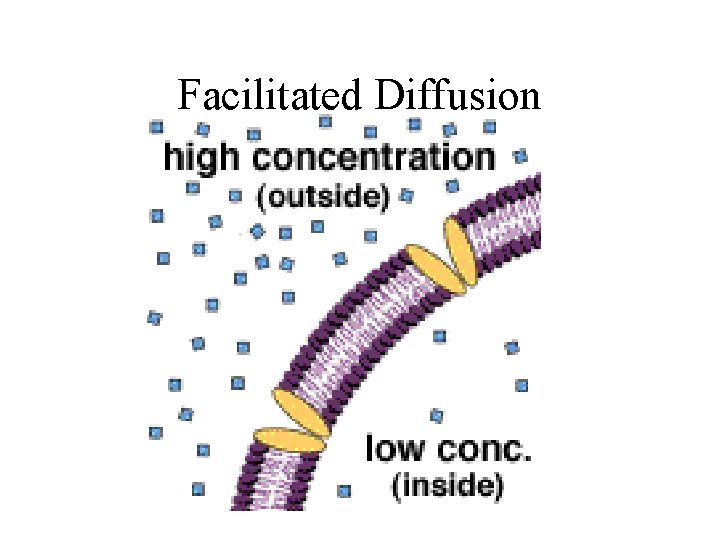
Facilitated Diffusion
Homeostasis • Maintaining stable internal conditions in a changing environment. – Example: • The cell membrane allows some substances in while keeping other substances out.
- Slides: 18