
Cells Cells The basic unit of life Microscopic
Cells

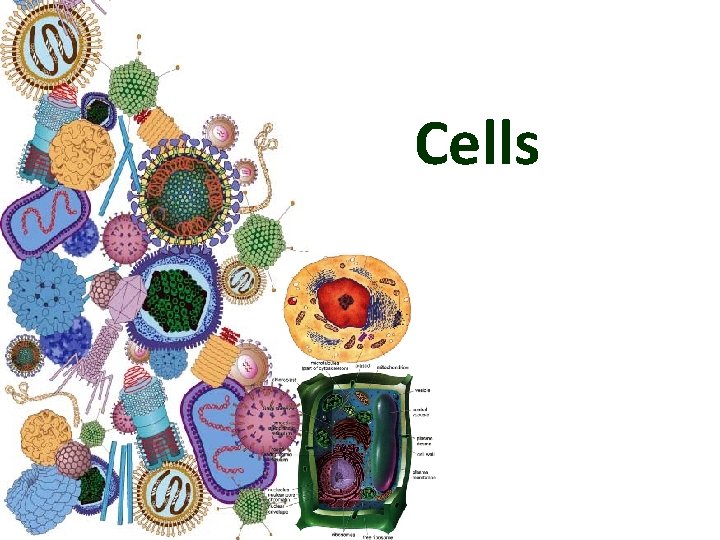
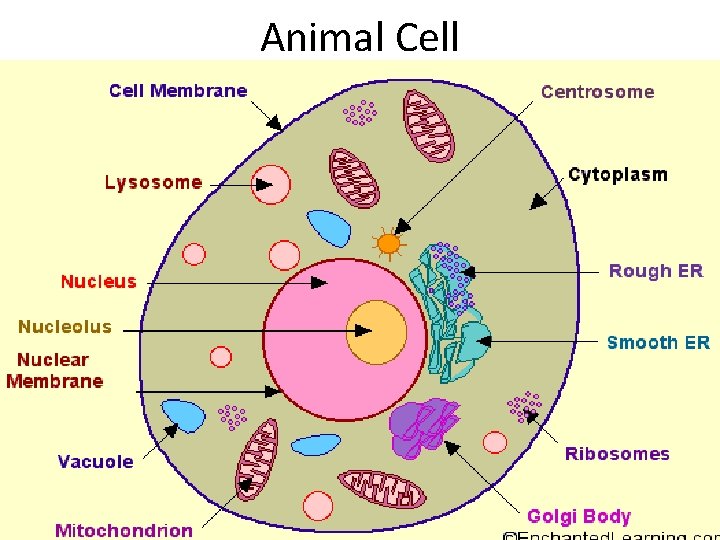
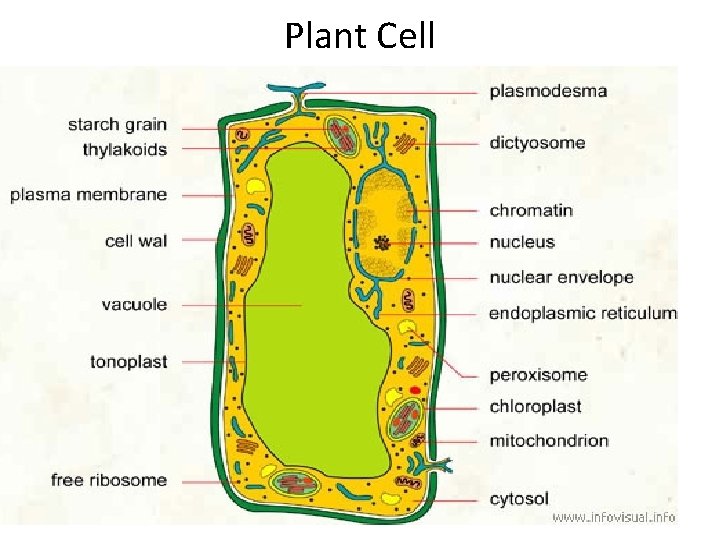
Cells • The basic unit of life • Microscopic • Organelles – Structures within cells that perform different functions but work together • Two types – Animal cells – Plant cells
Animal Cell
Plant Cell
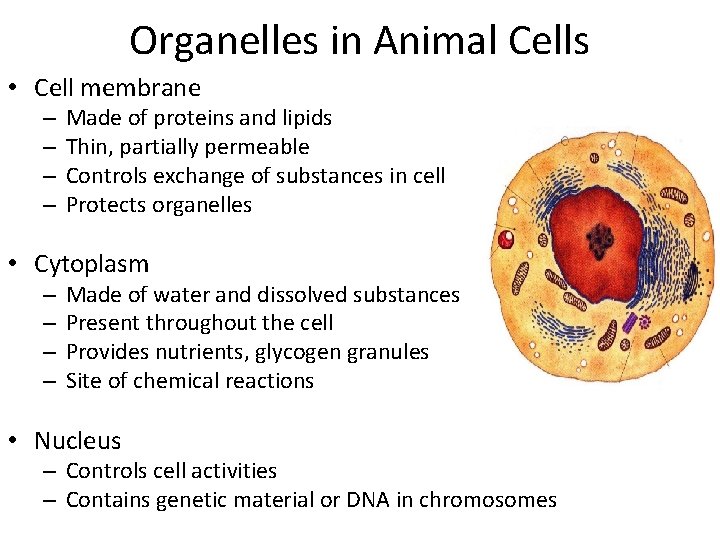
Organelles in Animal Cells • Cell membrane – – Made of proteins and lipids Thin, partially permeable Controls exchange of substances in cell Protects organelles • Cytoplasm – – Made of water and dissolved substances Present throughout the cell Provides nutrients, glycogen granules Site of chemical reactions • Nucleus – Controls cell activities – Contains genetic material or DNA in chromosomes
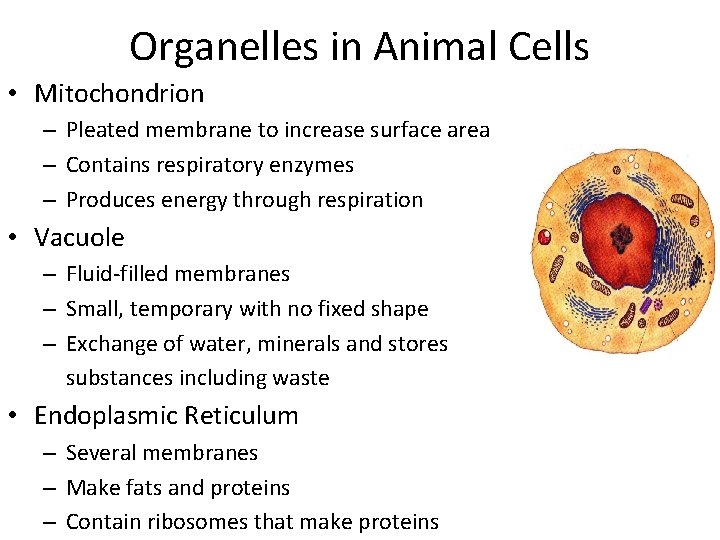
Organelles in Animal Cells • Mitochondrion – Pleated membrane to increase surface area – Contains respiratory enzymes – Produces energy through respiration • Vacuole – Fluid-filled membranes – Small, temporary with no fixed shape – Exchange of water, minerals and stores substances including waste • Endoplasmic Reticulum – Several membranes – Make fats and proteins – Contain ribosomes that make proteins
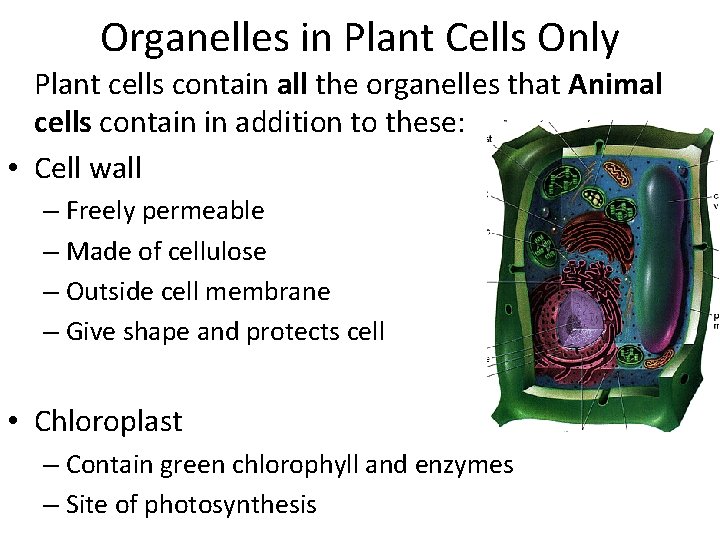
Organelles in Plant Cells Only Plant cells contain all the organelles that Animal cells contain in addition to these: • Cell wall – Freely permeable – Made of cellulose – Outside cell membrane – Give shape and protects cell • Chloroplast – Contain green chlorophyll and enzymes – Site of photosynthesis
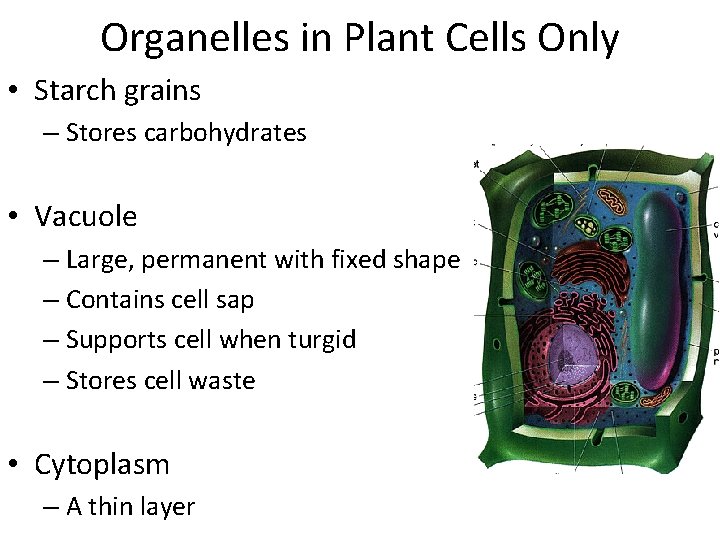
Organelles in Plant Cells Only • Starch grains – Stores carbohydrates • Vacuole – Large, permanent with fixed shape – Contains cell sap – Supports cell when turgid – Stores cell waste • Cytoplasm – A thin layer
Specialization • Unicellular organisms made of one cell – Independent of other cells – One cell carries out functions • Multicellular organisms made of many cells – Each cell does a different job – All work together and depend on each other
Specialization • Division of Labour – Allows organism to increase in size – Higher productivity and efficiency – Develop special features to carry out specific functions – Different functions can be performed at the same time
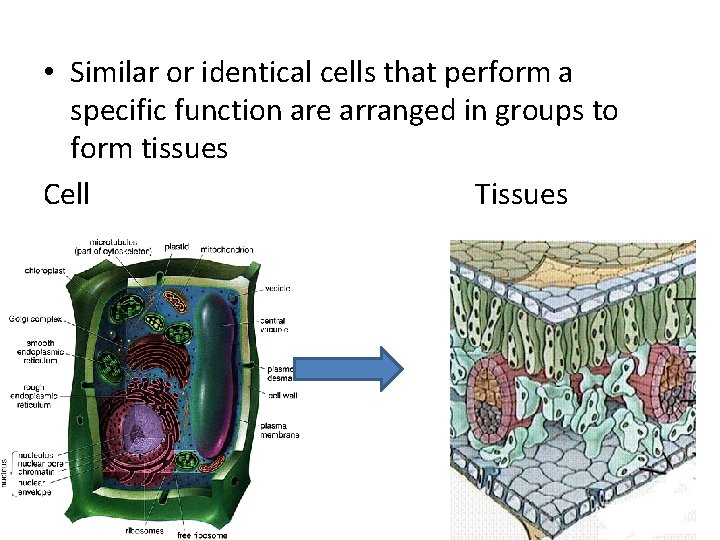
• Similar or identical cells that perform a specific function are arranged in groups to form tissues Cell Tissues
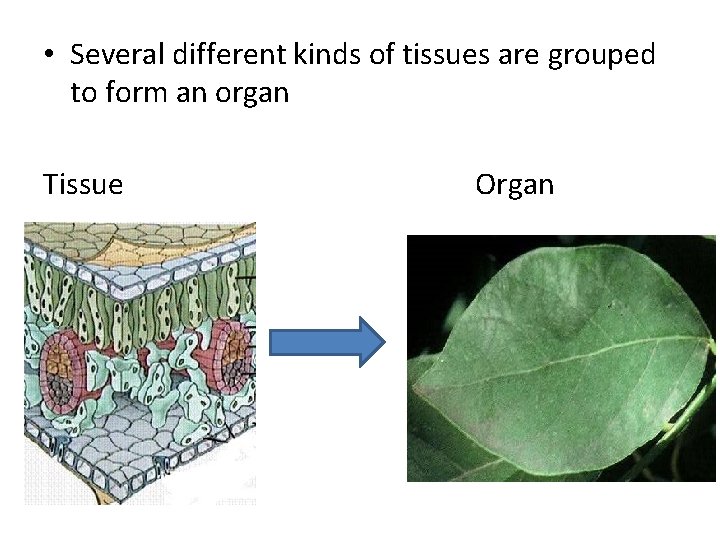
• Several different kinds of tissues are grouped to form an organ Tissue Organ
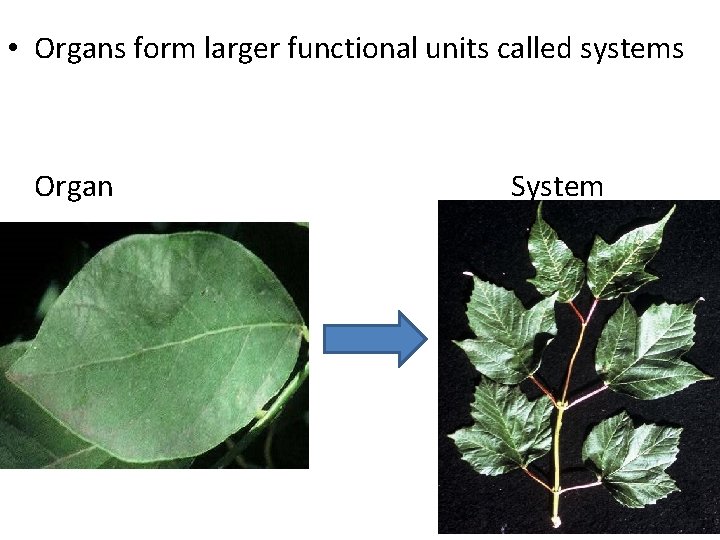
• Organs form larger functional units called systems Organ System
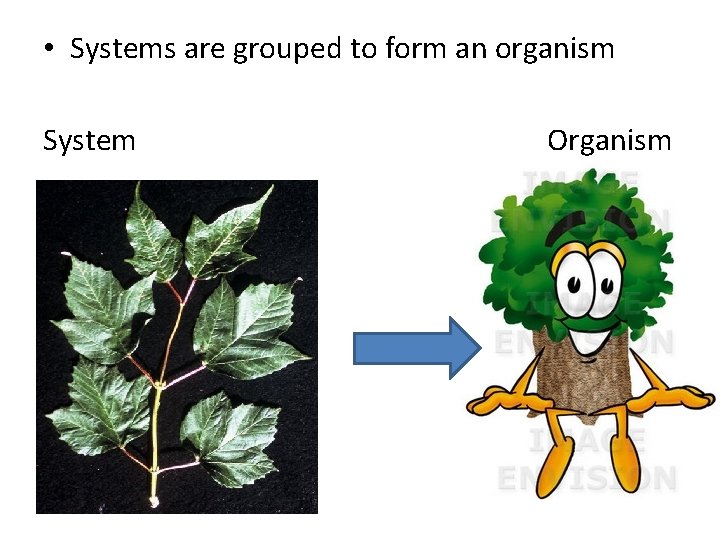
• Systems are grouped to form an organism System Organism
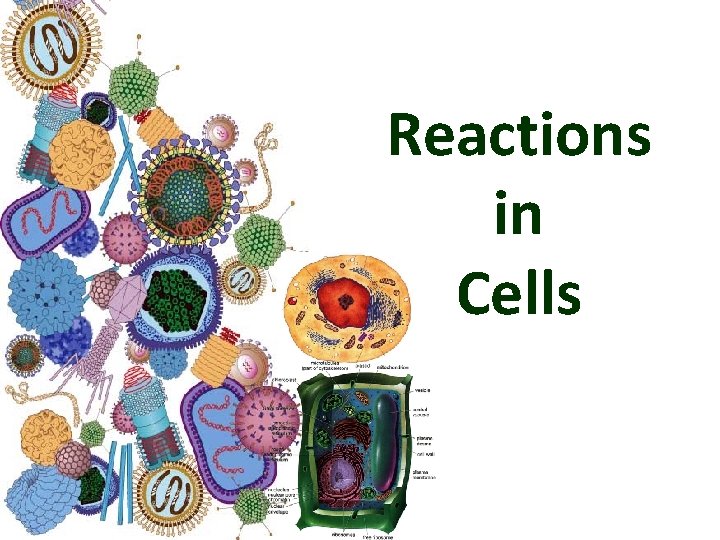
Reactions in Cells
Osmosis • Movement of water particles from an area of high water concentration to an area of low water concentration across a selectively permeable membrane.
Diffusion • Movement of molecules along a concentration gradient from a region of high concentration to a low concentration – In gases and liquids – Can occur across thin, permeable membranes • End- products of digestion diffuse from gut into blood • Carbon dioxide and Oxygen diffuse between blood and alveoli • Between blood and cells – Characteristics of surfaces for efficient diffusion • • Thin Concentration gradient Moist Large surface area to volume ratio
Importance of Diffusion and Osmosis • To bring useful substances to organelles for reactions to take place – Glucose and Oxygen in Respiration • Removal of waste products – Carbon dioxide from respiration, urea – These are secreted out of the cell • Small vessicles transport substances • Hormones are transported this way
Active Transport • Transport of molecules across a membrane from a region of lower concentration to a region of higher concentration, using energy. – Allows cells to take up extra substances already present in its cytoplasm. e. g liver and glucose – Allows cell to remove extra substances present in the cytoplasm.
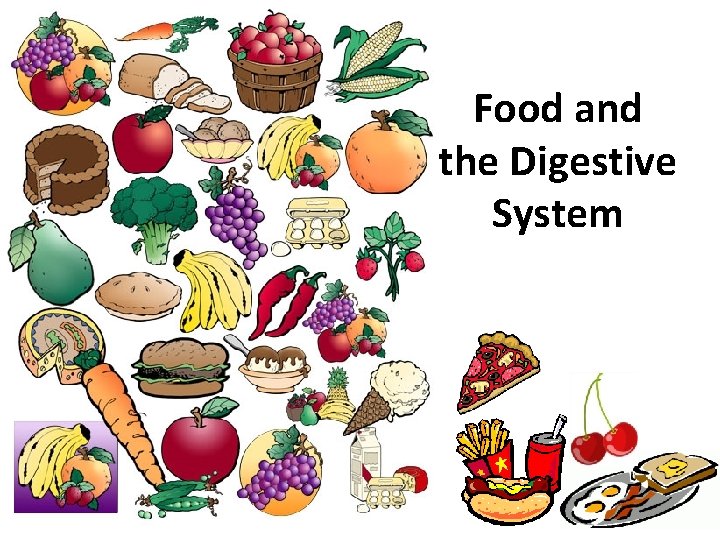
Food and the Digestive System
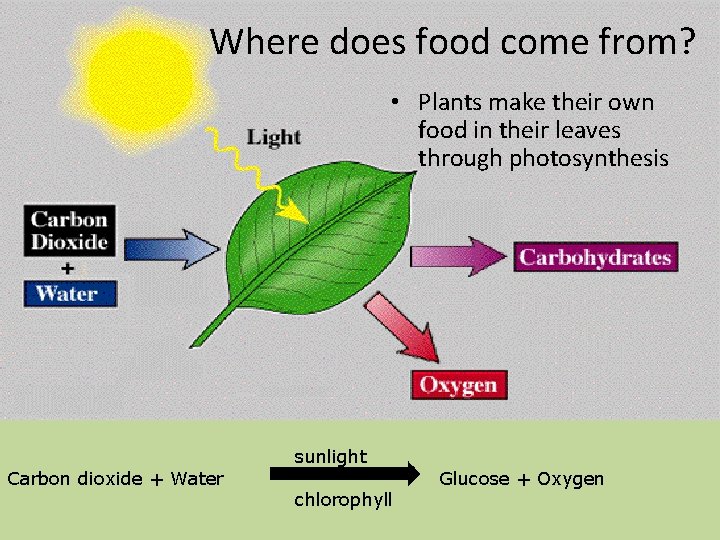
Where does food come from? • Plants make their own food in their leaves through photosynthesis Carbon dioxide + Water sunlight chlorophyll Glucose + Oxygen
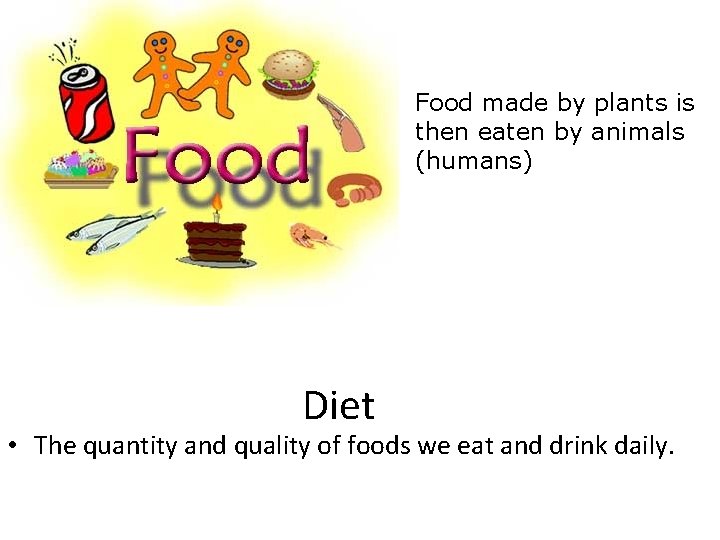
Food made by plants is then eaten by animals (humans) Diet • The quantity and quality of foods we eat and drink daily.
Diet • Foods from six food groups: – Staples – Legumes and Nuts – Vegetables (dark green, leafy and yellow) – Food from Animals – Fruits – Fats and substitutes
Balanced Diet • Contains the correct quality and amount of nutrients to suit an individual’s needs and maintain good health. • Includes foods with: • Water • Fibre ORGANIC NUTRIENTS • Carbohydrates • Proteins • Lipids • Vitamins INORGANIC NUTRIENTS Minerals
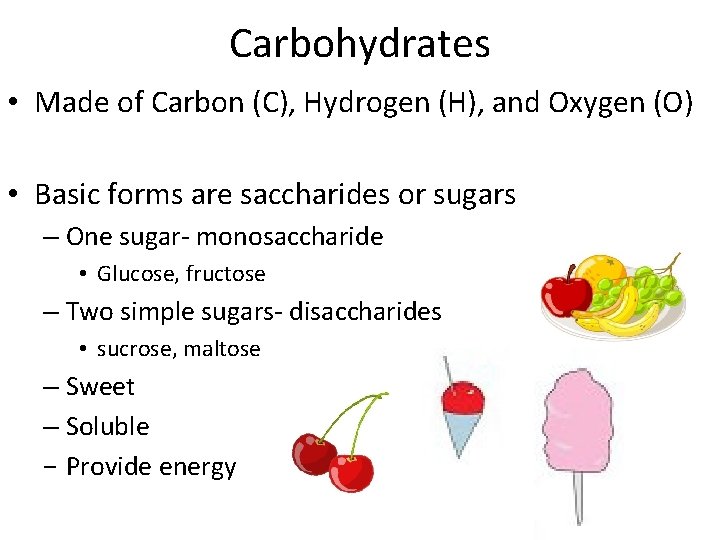
Carbohydrates • Made of Carbon (C), Hydrogen (H), and Oxygen (O) • Basic forms are saccharides or sugars – One sugar- monosaccharide • Glucose, fructose – Two simple sugars- disaccharides • sucrose, maltose – Sweet – Soluble − Provide energy
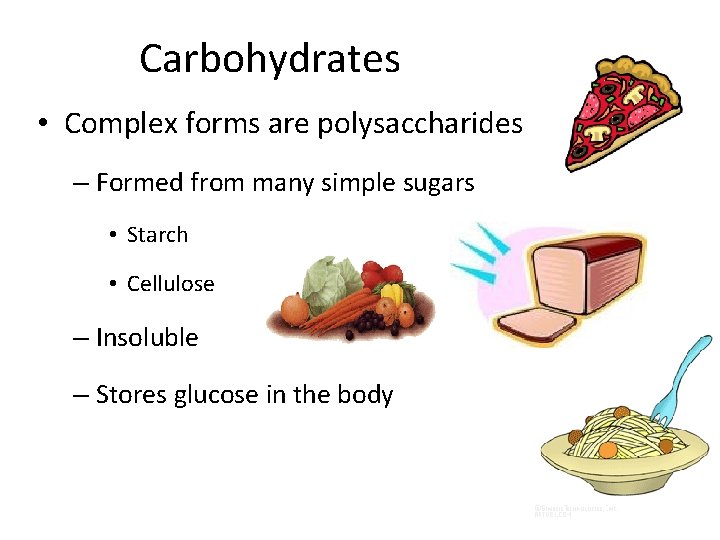
Carbohydrates • Complex forms are polysaccharides – Formed from many simple sugars • Starch • Cellulose – Insoluble – Stores glucose in the body
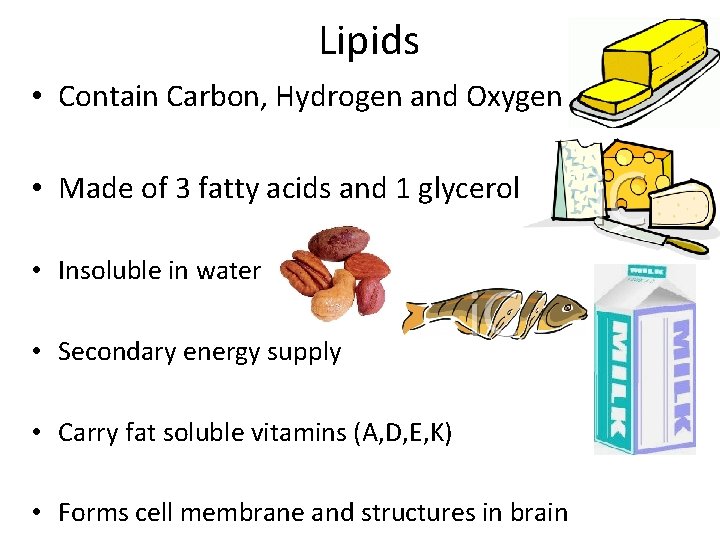
Lipids • Contain Carbon, Hydrogen and Oxygen • Made of 3 fatty acids and 1 glycerol • Insoluble in water • Secondary energy supply • Carry fat soluble vitamins (A, D, E, K) • Forms cell membrane and structures in brain
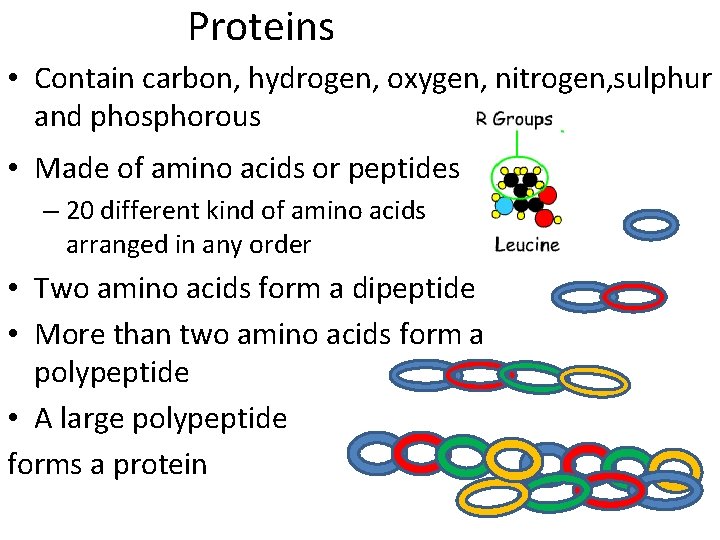
Proteins • Contain carbon, hydrogen, oxygen, nitrogen, sulphur and phosphorous • Made of amino acids or peptides – 20 different kind of amino acids arranged in any order • Two amino acids form a dipeptide • More than two amino acids form a polypeptide • A large polypeptide forms a protein
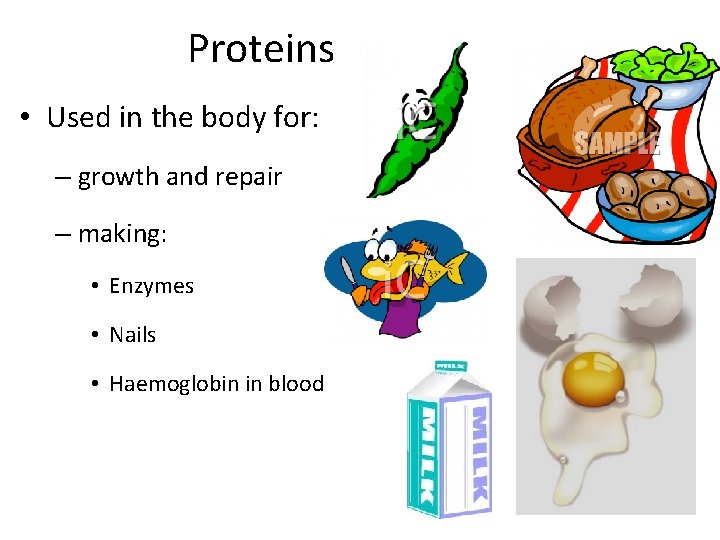
Proteins • Used in the body for: – growth and repair – making: • Enzymes • Nails • Haemoglobin in blood
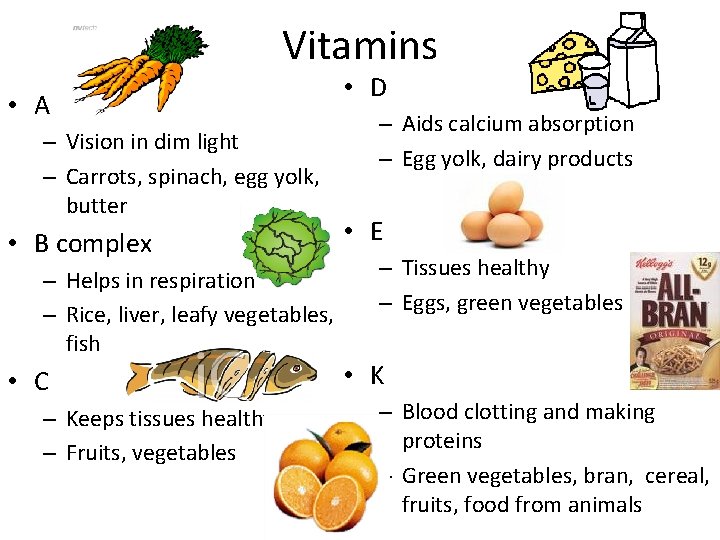
Vitamins • A – Vision in dim light – Carrots, spinach, egg yolk, butter • B complex – Helps in respiration – Rice, liver, leafy vegetables, fish • C – Keeps tissues healthy – Fruits, vegetables • D – Aids calcium absorption – Egg yolk, dairy products • E – Tissues healthy – Eggs, green vegetables • K – Blood clotting and making proteins – Green vegetables, bran, cereal, fruits, food from animals
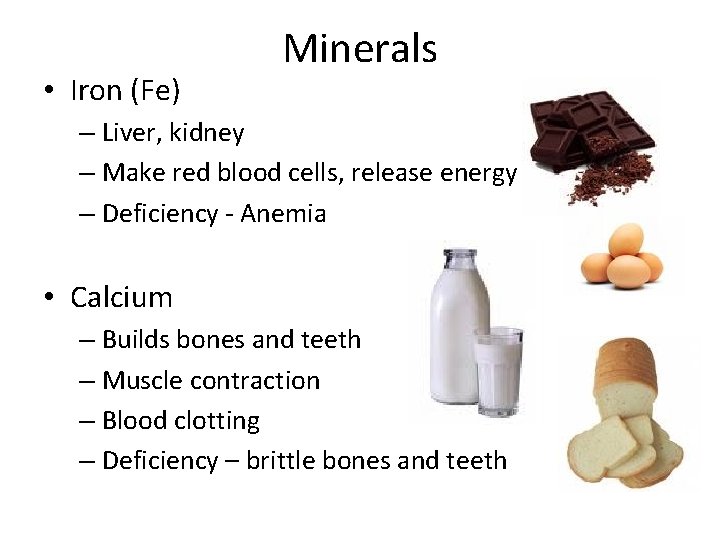
• Iron (Fe) Minerals – Liver, kidney – Make red blood cells, release energy – Deficiency - Anemia • Calcium – Builds bones and teeth – Muscle contraction – Blood clotting – Deficiency – brittle bones and teeth
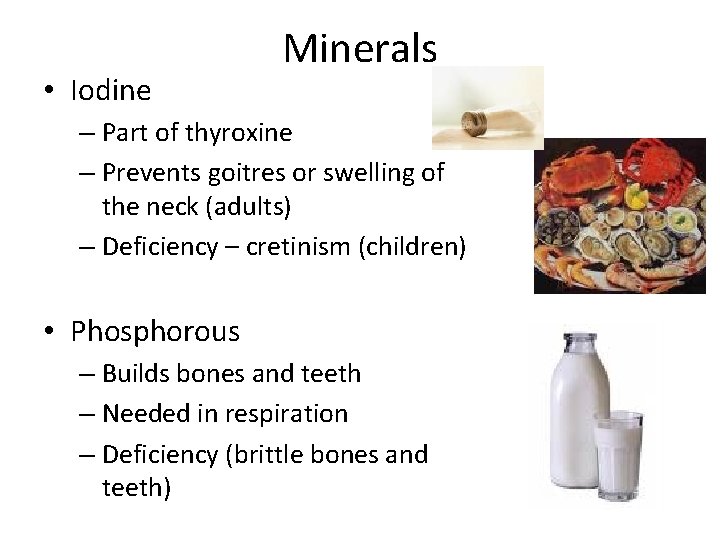
• Iodine Minerals – Part of thyroxine – Prevents goitres or swelling of the neck (adults) – Deficiency – cretinism (children) • Phosphorous – Builds bones and teeth – Needed in respiration – Deficiency (brittle bones and teeth)
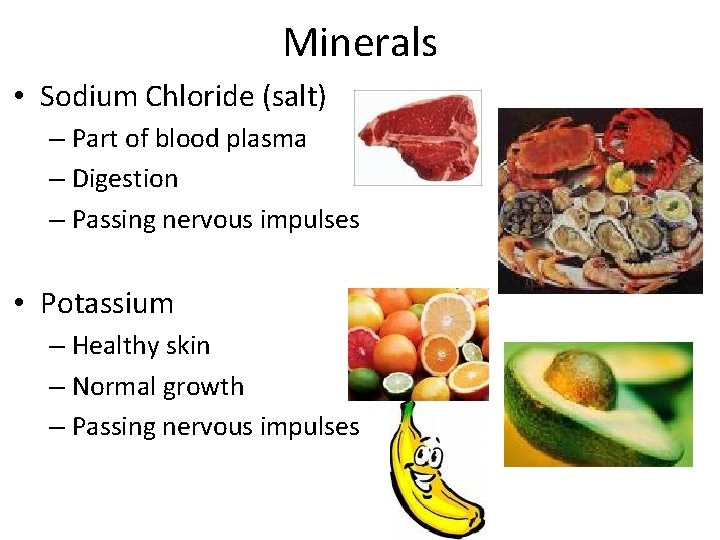
Minerals • Sodium Chloride (salt) – Part of blood plasma – Digestion – Passing nervous impulses • Potassium – Healthy skin – Normal growth – Passing nervous impulses
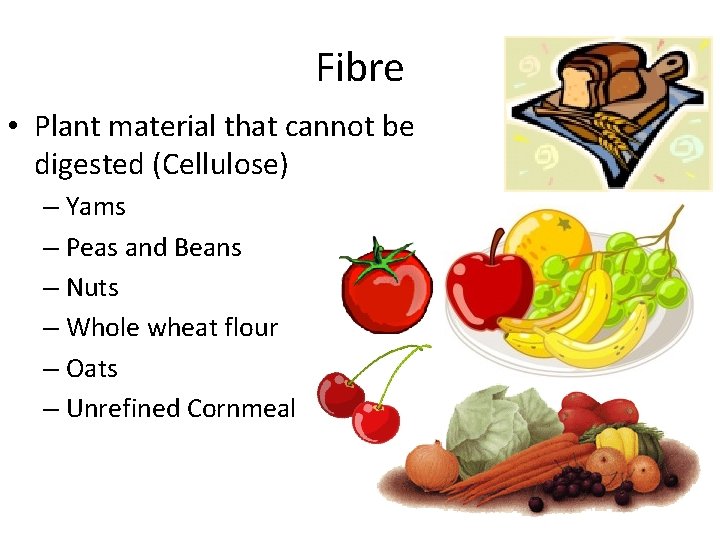
Fibre • Plant material that cannot be digested (Cellulose) – Yams – Peas and Beans – Nuts – Whole wheat flour – Oats – Unrefined Cornmeal
Fibre • Keeps the intestines healthy • Relieves constipation – Irregular bowel movement or not completely emptied. – causes diseases as toxins remain in and are transported around the body. • Guards against some cancers of the intestinal tract. • Helps in weight loss
Water • Solvent – dissolve minerals, nutrients and vitamins so they can be absorbed by body • Transport medium – Moves dissolved substances around the body and into cells • Hydrolysis – Used to break down big molecules into simple substances • Starch into monosaccharides
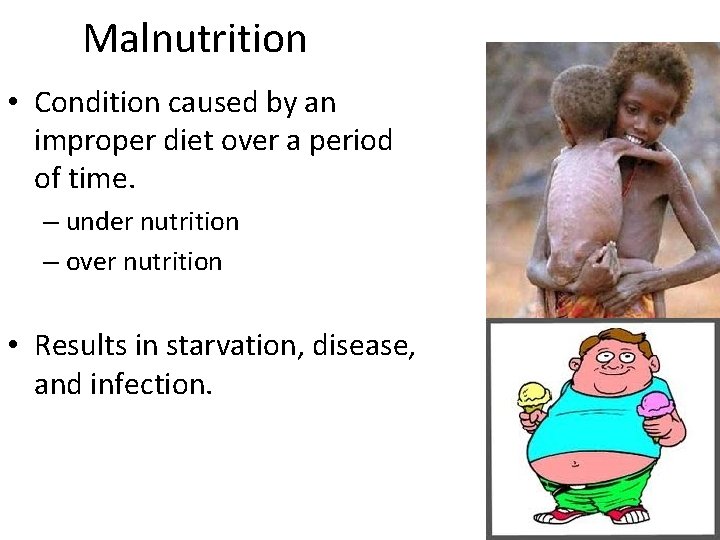
Malnutrition • Condition caused by an improper diet over a period of time. – under nutrition – over nutrition • Results in starvation, disease, and infection.
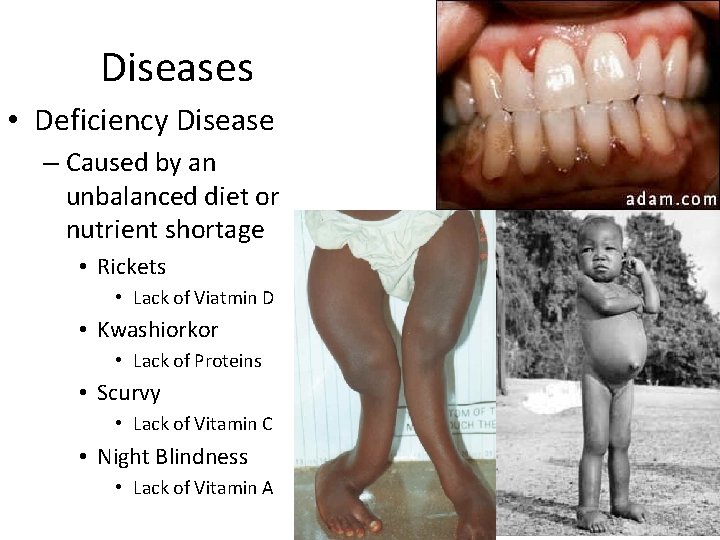
Diseases • Deficiency Disease – Caused by an unbalanced diet or nutrient shortage • Rickets • Lack of Viatmin D • Kwashiorkor • Lack of Proteins • Scurvy • Lack of Vitamin C • Night Blindness • Lack of Vitamin A
How do we get energy from food? • Ingestion: act of taking in food • Digestion: process of breaking down large complex substances into small, simple, soluble molecules • Absorption: diffusion of soluble food molecules into the blood stream • Assimilation: food molecules are taken from blood and used by body cells for respiration, growth and development • Egestion / defecation: undigested food is removed from the body
Digestion • Teeth: Mechanically break down food into smaller pieces to increase the surface area for enzymes to work on. • Enzymes: Chemically break down food molecules into smaller pieces. – Organic catalysts which speed up reactions
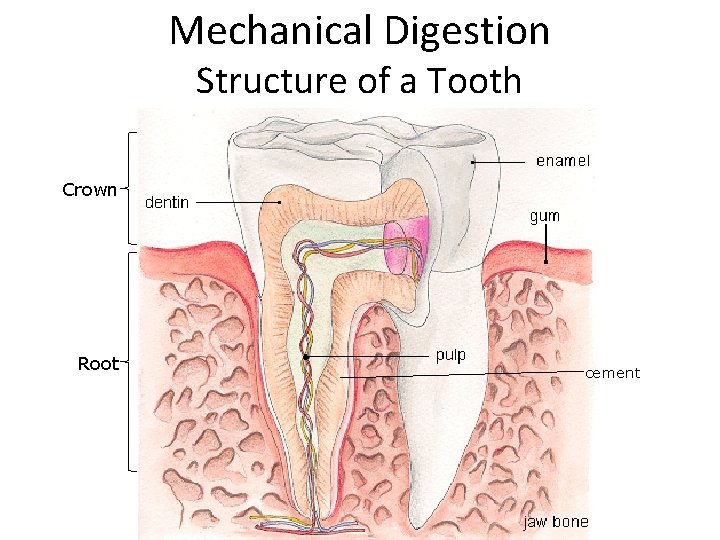
Mechanical Digestion Structure of a Tooth Crown Root cement
Parts of the Tooth • Crown - exposed part of tooth • Root - part embedded in jaw • Enamel – Hard substance covering outer surface • Dentine – main section of the tooth – living tissue like bone – not as hard or resistant to decay as enamel
Parts of the Tooth • Pulp cavity – nerve endings – blood vessels carry oxygen and nutrients in to cells, and remove waste • Cement – rough covering which holds tooth in place
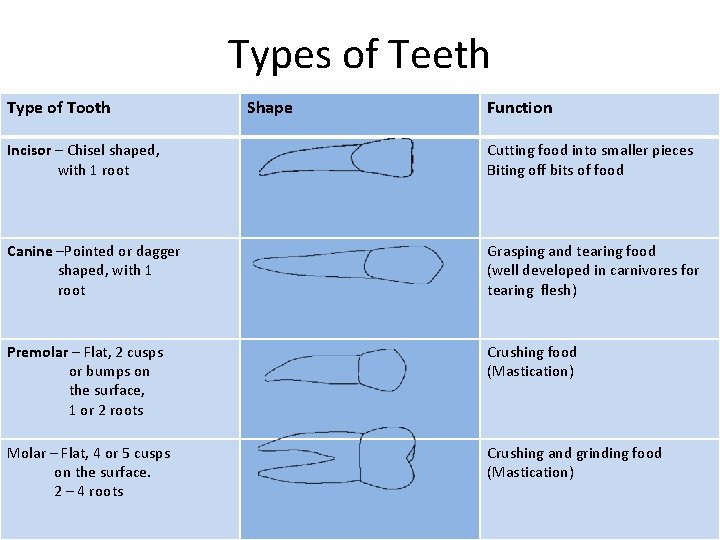
Types of Teeth Type of Tooth Shape Function Incisor – Chisel shaped, with 1 root Cutting food into smaller pieces Biting off bits of food Canine –Pointed or dagger shaped, with 1 root Grasping and tearing food (well developed in carnivores for tearing flesh) Premolar – Flat, 2 cusps or bumps on the surface, 1 or 2 roots Crushing food (Mastication) Molar – Flat, 4 or 5 cusps on the surface. 2 – 4 roots Crushing and grinding food (Mastication)
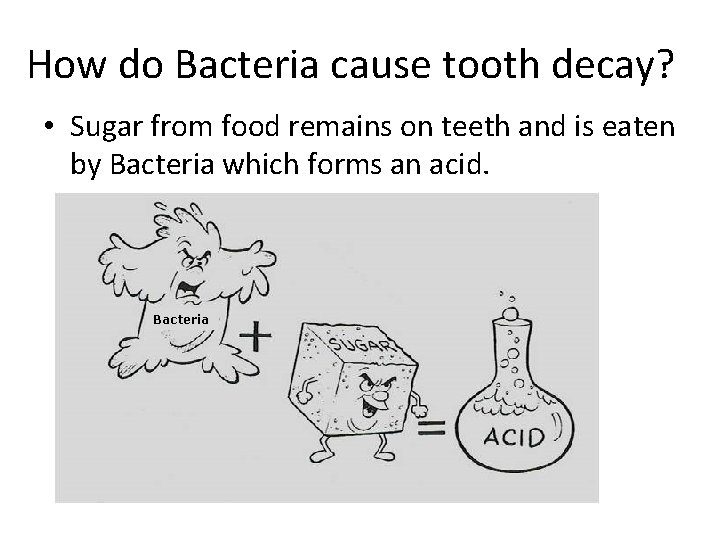
How do Bacteria cause tooth decay? • Sugar from food remains on teeth and is eaten by Bacteria which forms an acid. Bacteria
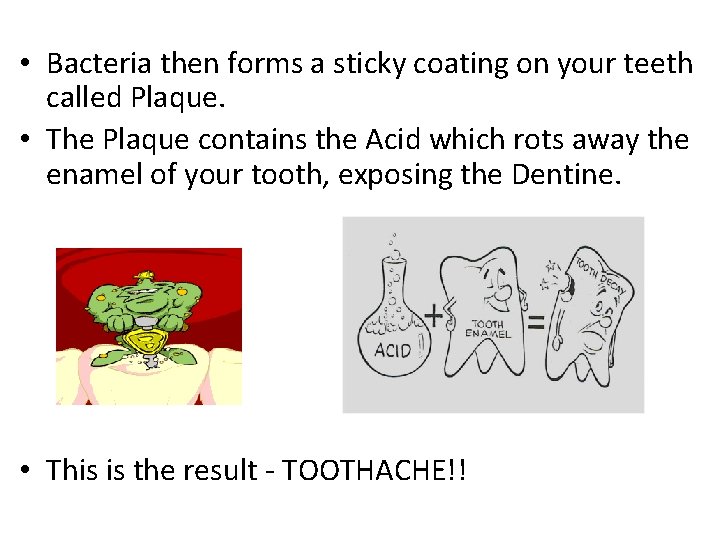
• Bacteria then forms a sticky coating on your teeth called Plaque. • The Plaque contains the Acid which rots away the enamel of your tooth, exposing the Dentine. • This is the result - TOOTHACHE!!
How can we prevent bacteria from attacking our teeth? • Regular brushing – After eating – Before going to bed. • • Regular dentist visits. Drink lots of milk and eat cheese and fruit. Cut down on sweets and cakes. Drink water with FLUORIDE.
Chemical Digestion Enzymes • Enzymes are substances in our bodies that – speed up reactions in living cells without taking part in the reaction themselves – are found throughout our digestive system
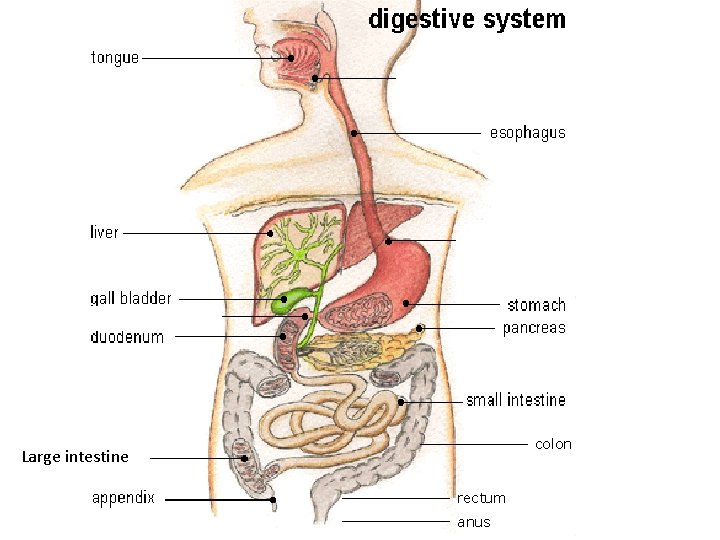
colon Large intestine rectum anus
Parts of Digestive System • Mouth: – Ingestion: act of taking in food – Digestion: breaking down large complex substances into small, simple, soluble molecules • Mechanical: by teeth • Chemical: by enzymes (salivary amylase) found in saliva • Oesophagus – Muscular tube connecting mouth to stomach – Peristalsis moves food down • Stomach – Chemical digestion – Muscular organ mixes food with gastric juices (enzymes, mucus and hydrochloric acid) to form chyme.
• Small Intestine: – Duodenum: digestion completed • Chyme • Bile: made in liver, stored in gall bladder to break down fat into smaller droplets (emulsification) • Pancreatic juice: made in pancreas, contains enzymes (amylase, lipase, trypsin), sodium hydrogencarbonate – Ileum: site of absorption • • • Absorption: Diffusion of soluble food molecules into blood 6 m long with large surface area formed by folds called villi Good blood supply Lacteal or lymph capillary to absorb fatty acids Assimilation: process of using and incorporating digested food into the body
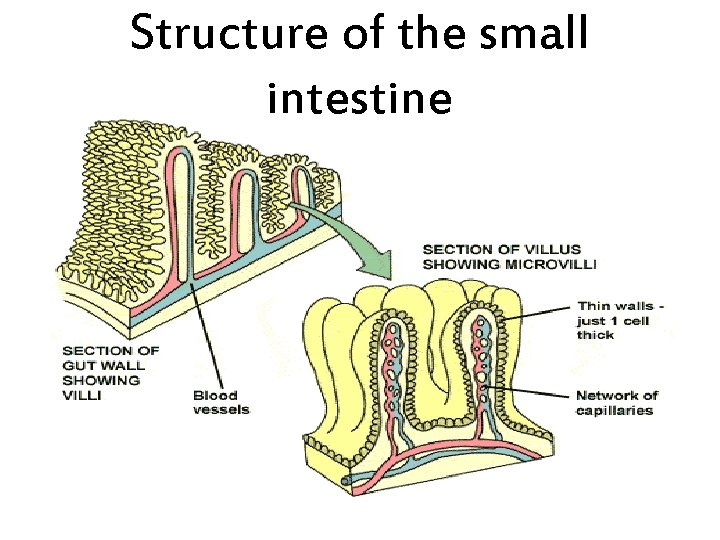
Structure of the small intestine
• Large Intestine /Colon – Transports undigested food, dead cells and bacteria (faeces) – Reabsorbs water from faeces • Rectum – Temporarily stores faeces – Faeces enter anus where it is egested from the body • Egestion or defaecation: process of removing undigested food from the body
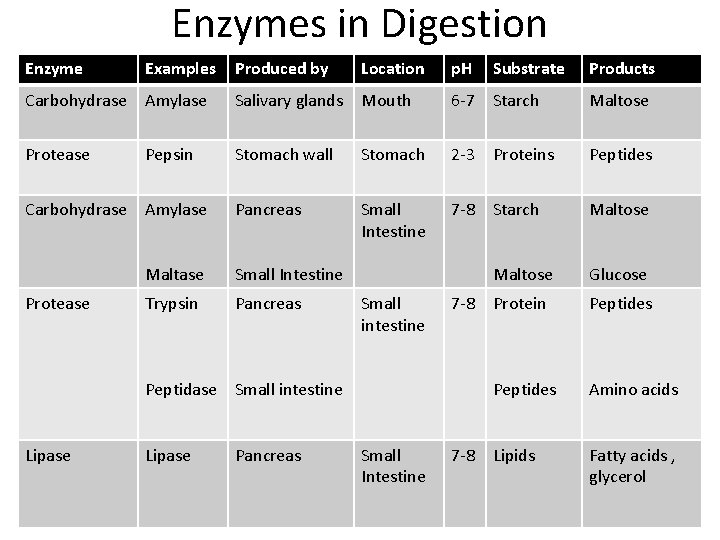
Enzymes in Digestion Enzyme Examples Produced by Location p. H Substrate Products Carbohydrase Amylase Salivary glands Mouth 6 -7 Starch Maltose Protease Pepsin Stomach wall Stomach 2 -3 Proteins Peptides Carbohydrase Amylase Pancreas Small Intestine 7 -8 Starch Maltose Maltase Small Intestine Maltose Glucose Trypsin Pancreas Protein Peptides Peptidase Small intestine Peptides Amino acids Lipase Pancreas Lipids Fatty acids , glycerol Protease Lipase Small intestine Small Intestine 7 -8
Breathing and the Respiratory System
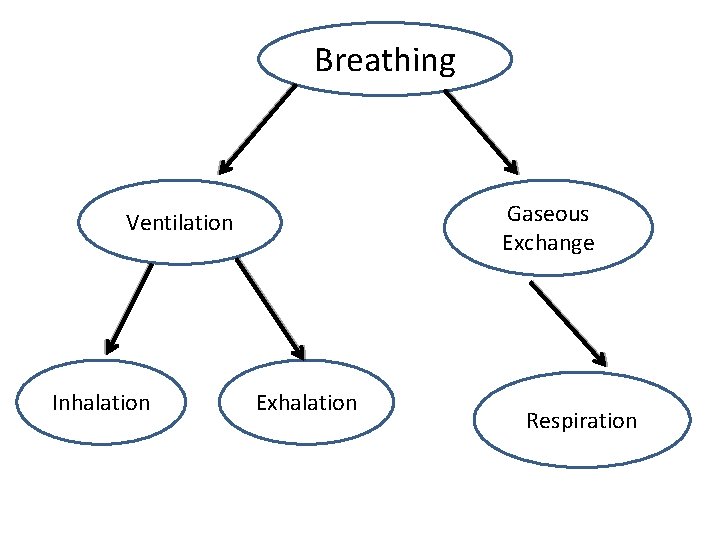
Breathing Gaseous Exchange Ventilation Inhalation Exhalation Respiration
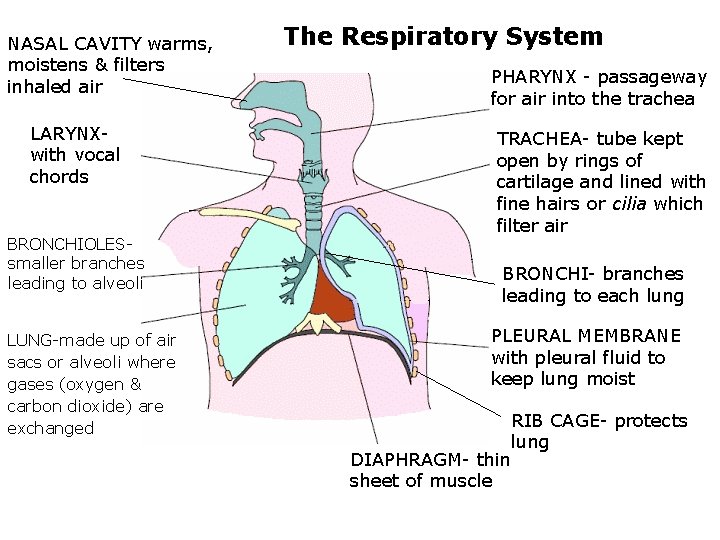
NASAL CAVITY warms, moistens & filters inhaled air LARYNXwith vocal chords BRONCHIOLESsmaller branches leading to alveoli LUNG-made up of air sacs or alveoli where gases (oxygen & carbon dioxide) are exchanged The Respiratory System PHARYNX - passageway for air into the trachea TRACHEA- tube kept open by rings of cartilage and lined with fine hairs or cilia which filter air BRONCHI- branches leading to each lung PLEURAL MEMBRANE with pleural fluid to keep lung moist RIB CAGE- protects lung DIAPHRAGM- thin sheet of muscle
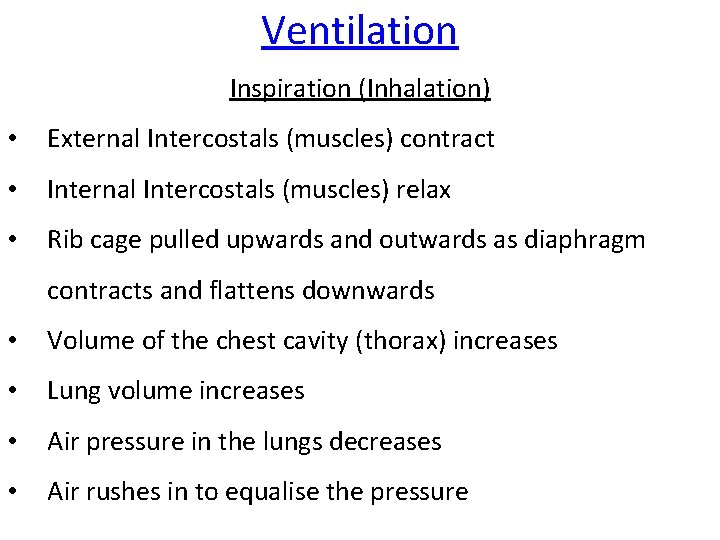
Ventilation Inspiration (Inhalation) • External Intercostals (muscles) contract • Internal Intercostals (muscles) relax • Rib cage pulled upwards and outwards as diaphragm contracts and flattens downwards • Volume of the chest cavity (thorax) increases • Lung volume increases • Air pressure in the lungs decreases • Air rushes in to equalise the pressure
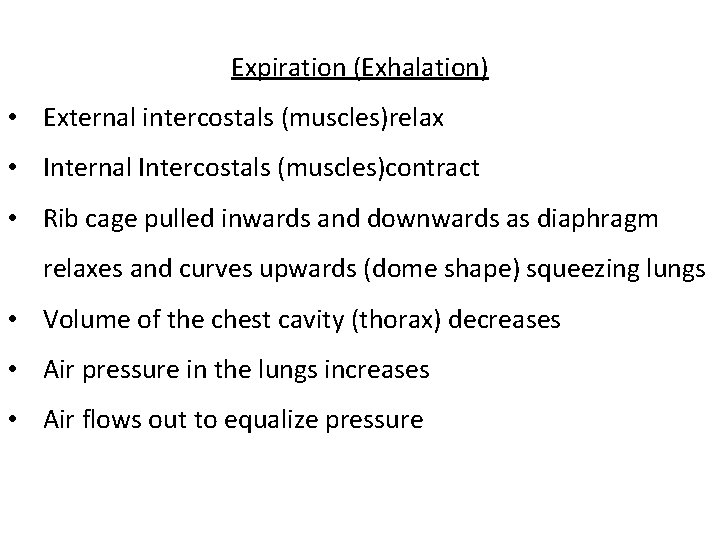
Expiration (Exhalation) • External intercostals (muscles)relax • Internal Intercostals (muscles)contract • Rib cage pulled inwards and downwards as diaphragm relaxes and curves upwards (dome shape) squeezing lungs • Volume of the chest cavity (thorax) decreases • Air pressure in the lungs increases • Air flows out to equalize pressure
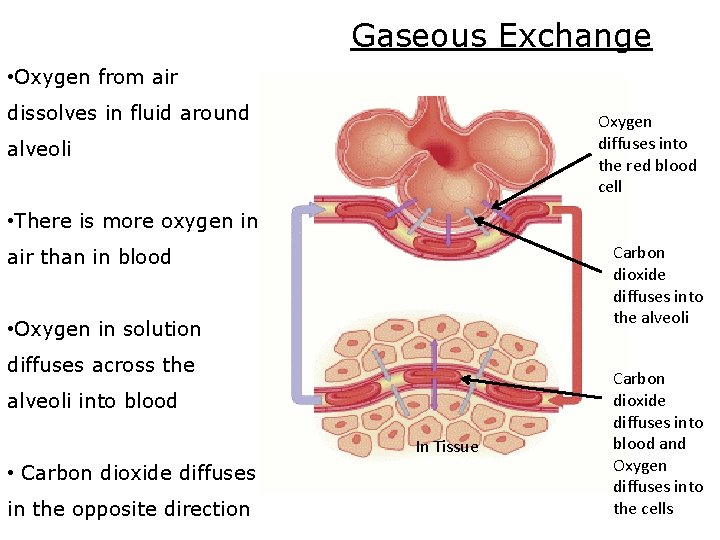
Gaseous Exchange • Oxygen from air dissolves in fluid around Oxygen diffuses into the red blood cell alveoli • There is more oxygen in Carbon dioxide diffuses into the alveoli air than in blood • Oxygen in solution diffuses across the alveoli into blood In Tissue • Carbon dioxide diffuses in the opposite direction Carbon dioxide diffuses into blood and Oxygen diffuses into the cells
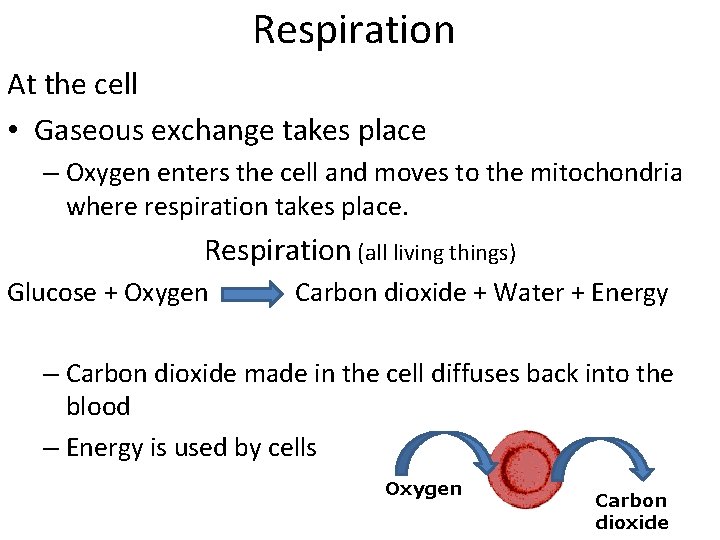
Respiration At the cell • Gaseous exchange takes place – Oxygen enters the cell and moves to the mitochondria where respiration takes place. Respiration (all living things) Glucose + Oxygen Carbon dioxide + Water + Energy – Carbon dioxide made in the cell diffuses back into the blood – Energy is used by cells Oxygen Carbon dioxide
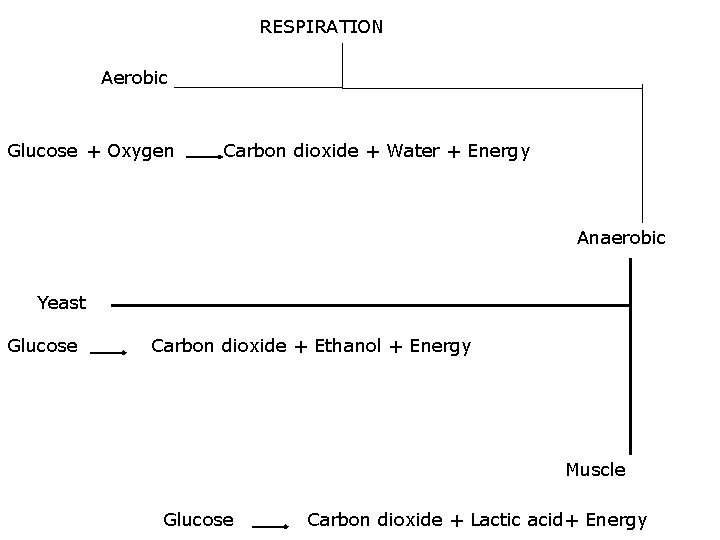
RESPIRATION Aerobic Glucose + Oxygen Carbon dioxide + Water + Energy Anaerobic Yeast Glucose Carbon dioxide + Ethanol + Energy Muscle Glucose Carbon dioxide + Lactic acid+ Energy
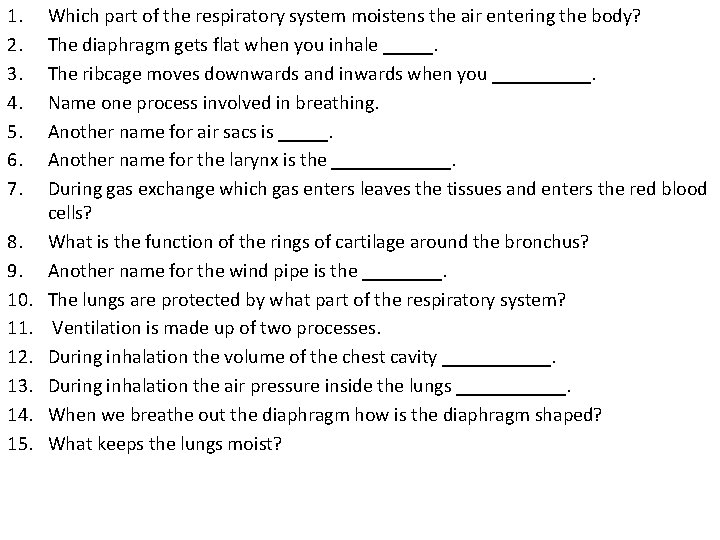
1. 2. 3. 4. 5. 6. 7. 8. 9. 10. 11. 12. 13. 14. 15. Which part of the respiratory system moistens the air entering the body? The diaphragm gets flat when you inhale _____. The ribcage moves downwards and inwards when you _____. Name one process involved in breathing. Another name for air sacs is _____. Another name for the larynx is the ______. During gas exchange which gas enters leaves the tissues and enters the red blood cells? What is the function of the rings of cartilage around the bronchus? Another name for the wind pipe is the ____. The lungs are protected by what part of the respiratory system? Ventilation is made up of two processes. During inhalation the volume of the chest cavity ______. During inhalation the air pressure inside the lungs ______. When we breathe out the diaphragm how is the diaphragm shaped? What keeps the lungs moist?
- Slides: 63