
CELLS Cells The basic unit of all living
CELLS
Cells • The basic unit of all living things. • Are made up of “little organs” called organelles.
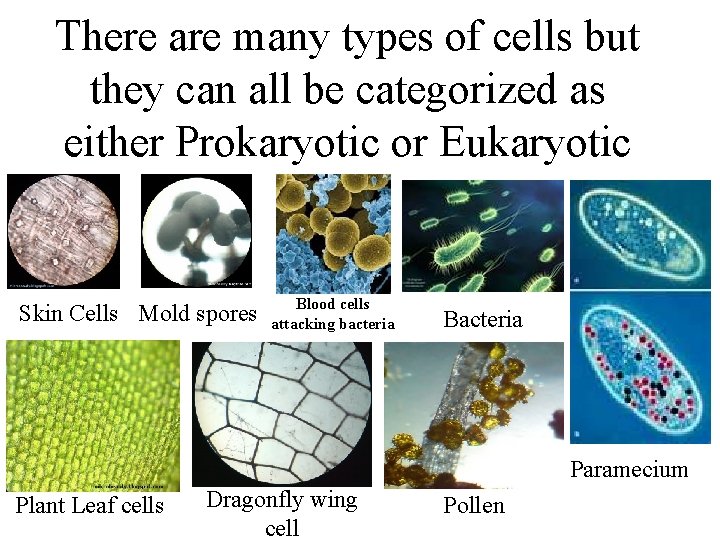
There are many types of cells but they can all be categorized as either Prokaryotic or Eukaryotic Skin Cells Mold spores Blood cells attacking bacteria Bacteria Paramecium Plant Leaf cells Dragonfly wing cell Pollen
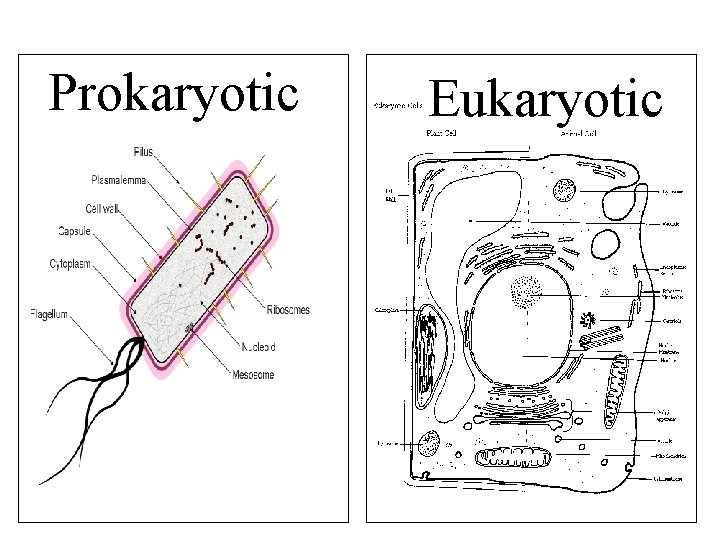
Prokaryotic Eukaryotic

PROKARYOTE
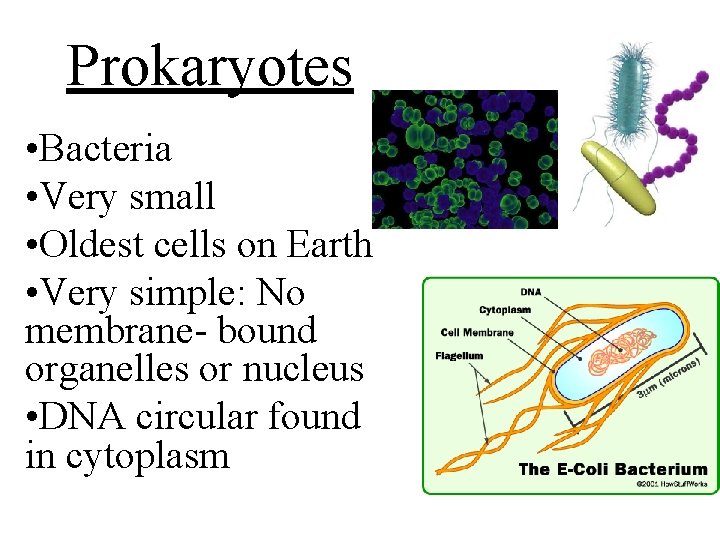
Prokaryotes • Bacteria • Very small • Oldest cells on Earth • Very simple: No membrane- bound organelles or nucleus • DNA circular found in cytoplasm
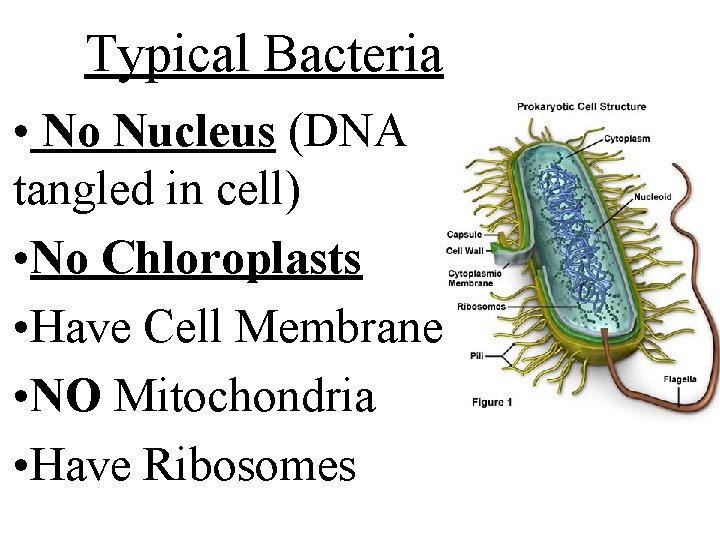
Typical Bacteria • No Nucleus (DNA tangled in cell) • No Chloroplasts • Have Cell Membrane • NO Mitochondria • Have Ribosomes

EUKARYOTE
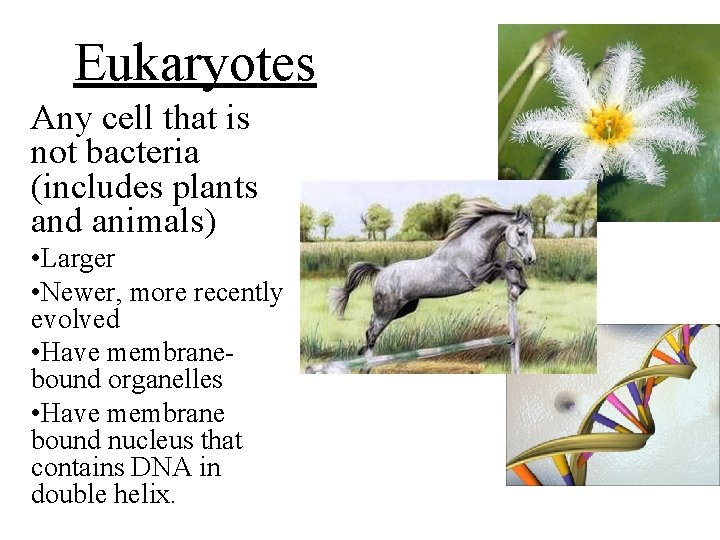
Eukaryotes Any cell that is not bacteria (includes plants and animals) • Larger • Newer, more recently evolved • Have membranebound organelles • Have membrane bound nucleus that contains DNA in double helix.
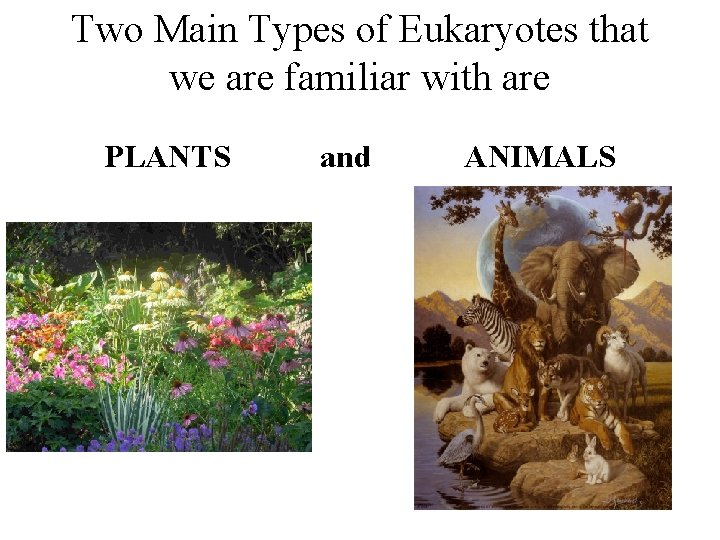
Two Main Types of Eukaryotes that we are familiar with are PLANTS and ANIMALS
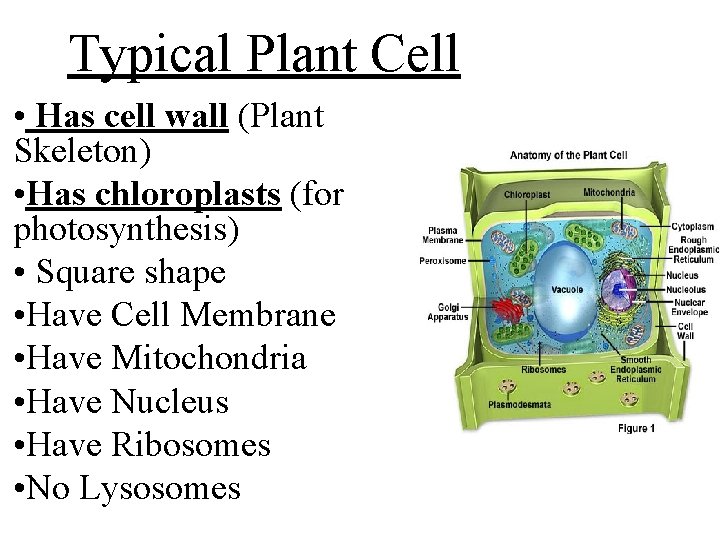
Typical Plant Cell • Has cell wall (Plant Skeleton) • Has chloroplasts (for photosynthesis) • Square shape • Have Cell Membrane • Have Mitochondria • Have Nucleus • Have Ribosomes • No Lysosomes
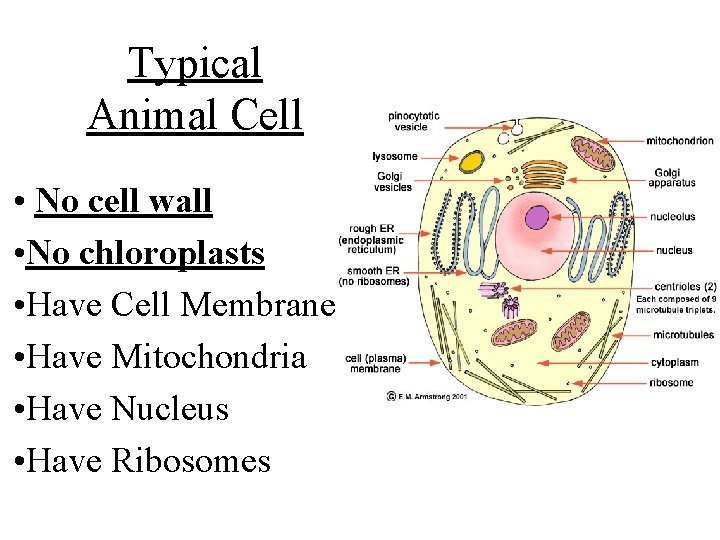
Typical Animal Cell • No cell wall • No chloroplasts • Have Cell Membrane • Have Mitochondria • Have Nucleus • Have Ribosomes
ORGANELLES
Organelles • Cell Membrane- Acts as boundary and bouncer determining what comes in and what gets out (phospholipids) • Nucleus- Contains DNA (genetic information) “Brain of cell” • Ribosomes- Makes protein (RNA gives code from DNA –translation) • Chloroplasts- performs Photosynthesis (makes sugar from sunlight) • Mitochondria- Breaks sugars and releases usable energy
- Slides: 14