
CELLS CELL THEORY CELL TYPES FAMOUS SCIENTIST WHO
- Slides: 10
CELLS CELL THEORY CELL TYPES FAMOUS SCIENTIST WHO HELPED DISCOVER CELLS
CELL THEORY �Proposed in 1838 �A. All living things are composed of one or more cells. �B. Cells are the basic unit of structure and organization of all living organisms. �C. All cells come from other cells. Cells pass copies of their genetic material on to their daughter cells.
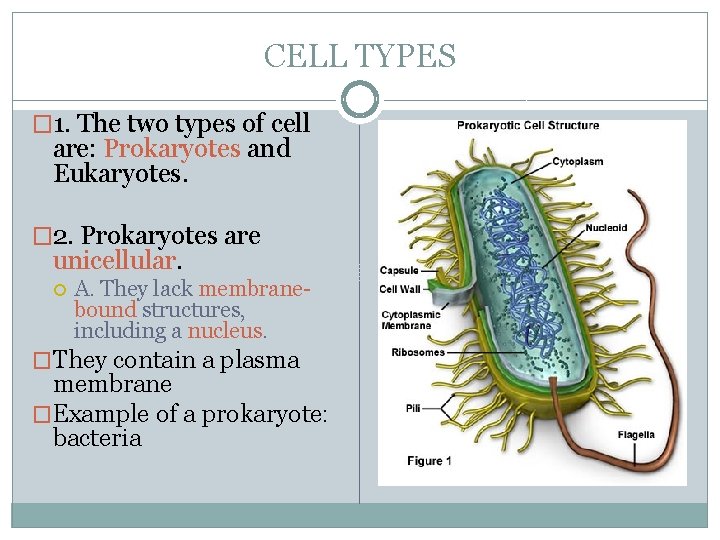
CELL TYPES � 1. The two types of cell are: Prokaryotes and Eukaryotes. � 2. Prokaryotes are unicellular. A. They lack membranebound structures, including a nucleus. �They contain a plasma membrane �Example of a prokaryote: bacteria
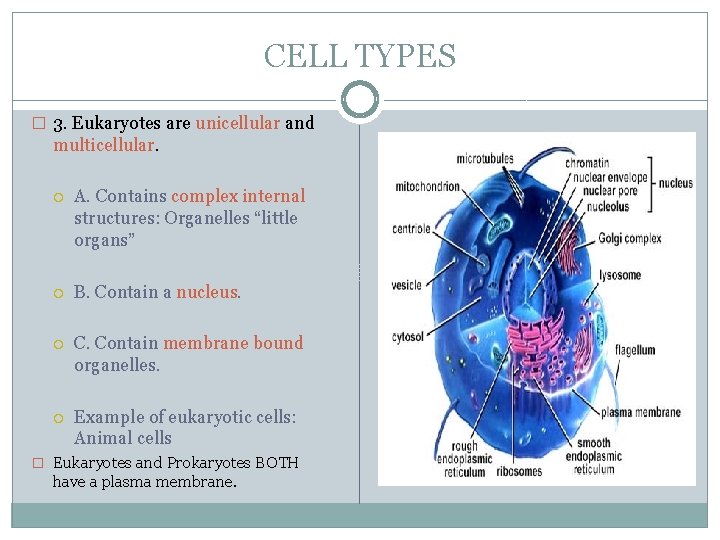
CELL TYPES � 3. Eukaryotes are unicellular and multicellular. A. Contains complex internal structures: Organelles “little organs” B. Contain a nucleus. C. Contain membrane bound organelles. Example of eukaryotic cells: Animal cells � Eukaryotes and Prokaryotes BOTH have a plasma membrane.
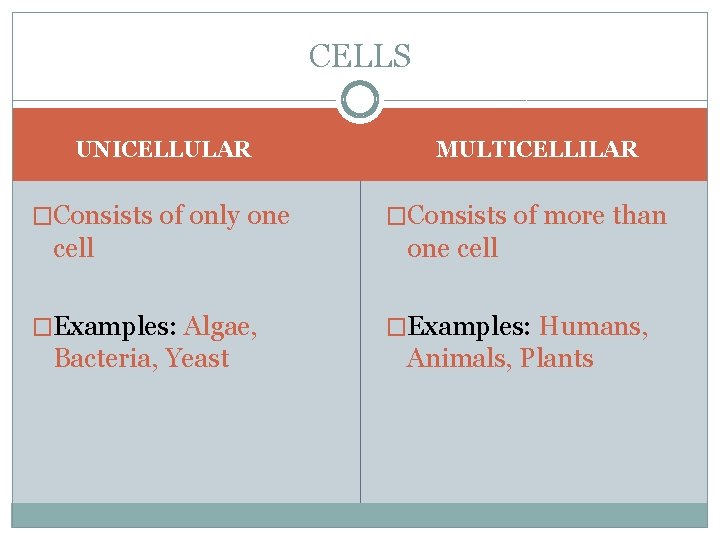
CELLS UNICELLULAR �Consists of only one cell �Examples: Algae, Bacteria, Yeast MULTICELLILAR �Consists of more than one cell �Examples: Humans, Animals, Plants
DISCOVERING THE CELL: ROBERT HOOKE �Robert Hooke discovered cells in 1665. �He examined a piece of cork, which resembled tiny, hollow boxes. �These structures reminded him of the rooms in a monastery. Therefore, he called them cellulae/cells (which means small rooms in Latin).
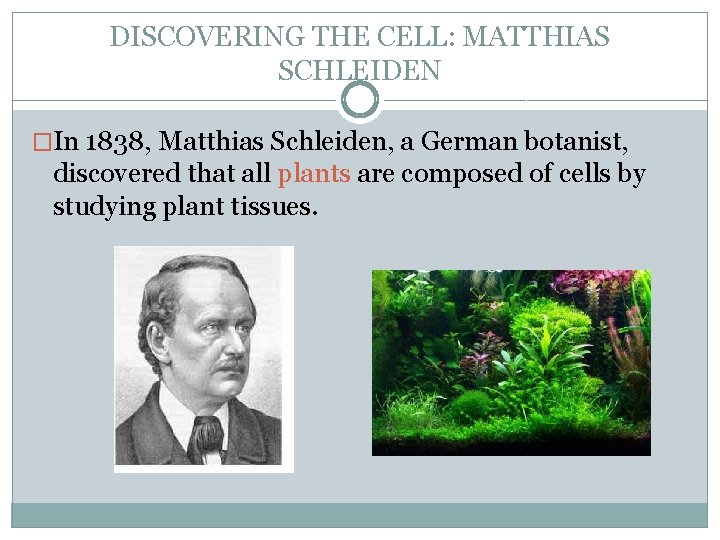
DISCOVERING THE CELL: MATTHIAS SCHLEIDEN �In 1838, Matthias Schleiden, a German botanist, discovered that all plants are composed of cells by studying plant tissues.
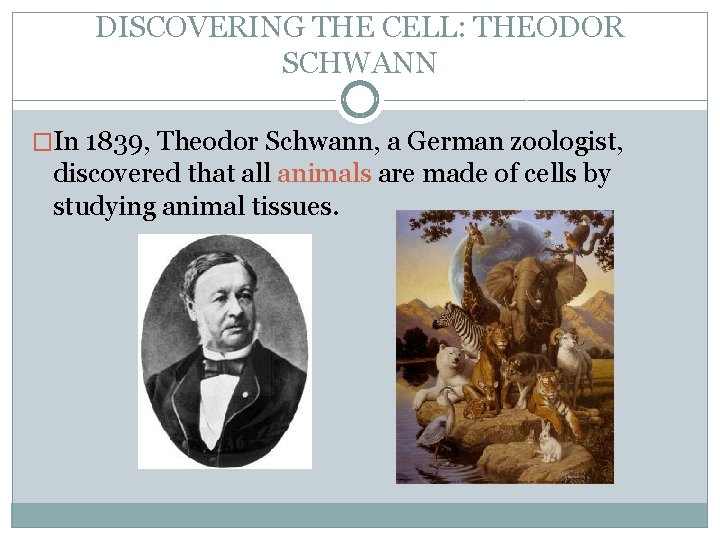
DISCOVERING THE CELL: THEODOR SCHWANN �In 1839, Theodor Schwann, a German zoologist, discovered that all animals are made of cells by studying animal tissues.
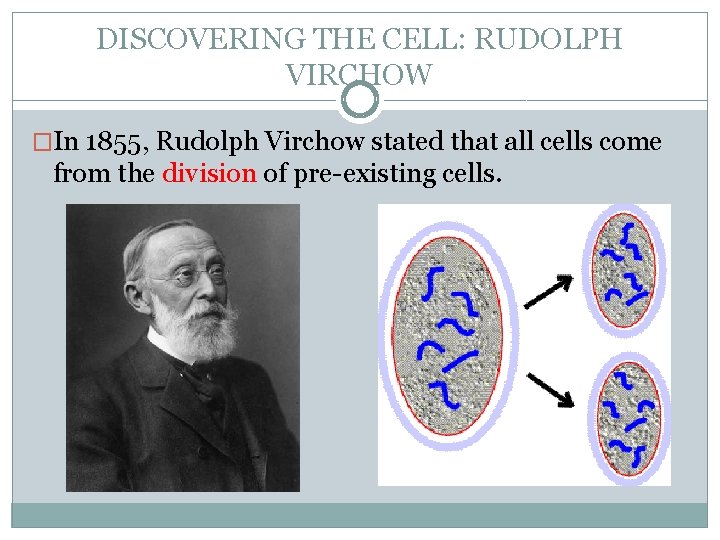
DISCOVERING THE CELL: RUDOLPH VIRCHOW �In 1855, Rudolph Virchow stated that all cells come from the division of pre-existing cells.
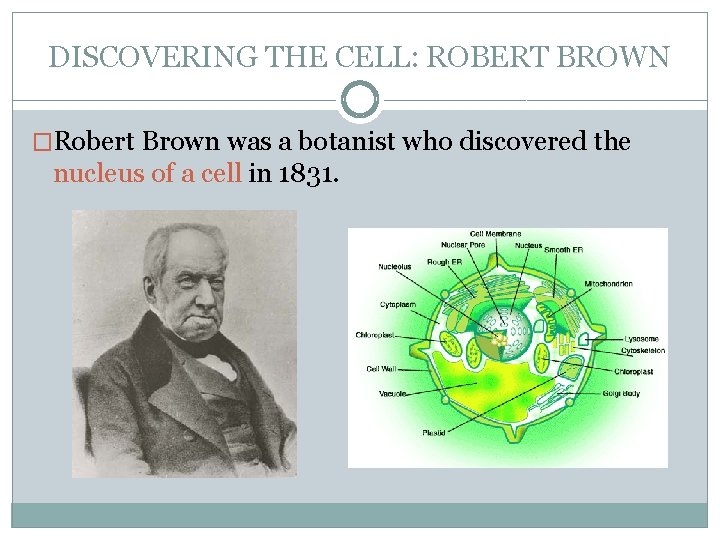
DISCOVERING THE CELL: ROBERT BROWN �Robert Brown was a botanist who discovered the nucleus of a cell in 1831.