
CELLS Cell Theory and the Organelles Learning Target
- Slides: 24
CELLS Cell Theory and the Organelles.
Learning Target: �I can explain my comprehension of the following topics: • scientists who contributed to the cell theory • Parts of the cell theory • prokaryote vs. eukaryote cells • Know the functions of cell organelles
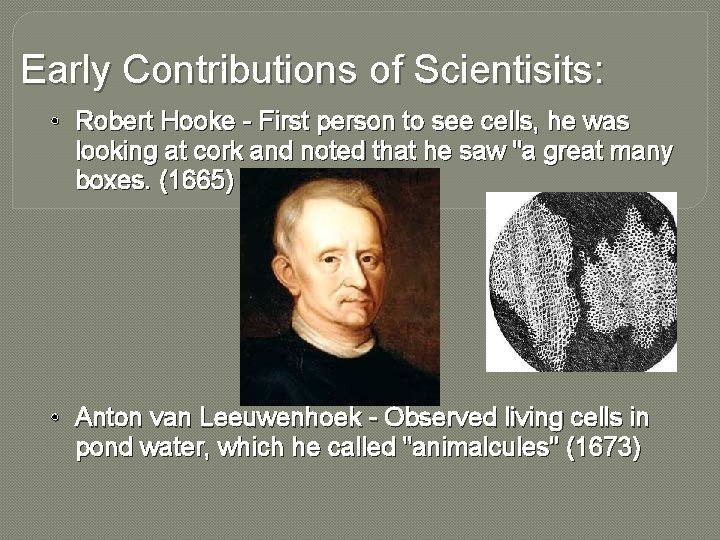
Early Contributions of Scientisits: • Robert Hooke - First person to see cells, he was looking at cork and noted that he saw "a great many boxes. (1665) • Anton van Leeuwenhoek - Observed living cells in pond water, which he called "animalcules" (1673)
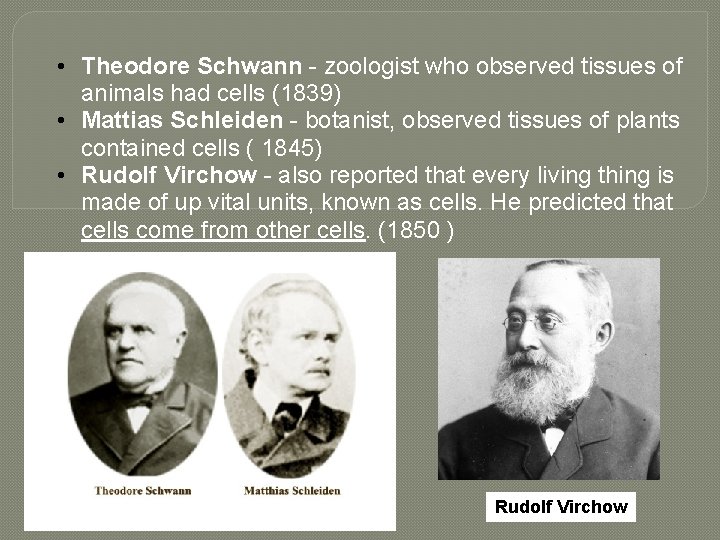
• Theodore Schwann - zoologist who observed tissues of animals had cells (1839) • Mattias Schleiden - botanist, observed tissues of plants contained cells ( 1845) • Rudolf Virchow - also reported that every living thing is made of up vital units, known as cells. He predicted that cells come from other cells. (1850 ) Rudolf Virchow
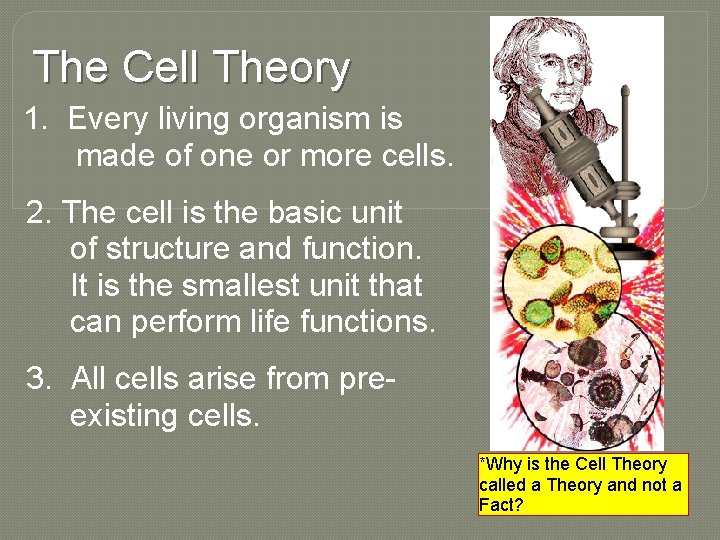
The Cell Theory 1. Every living organism is made of one or more cells. 2. The cell is the basic unit of structure and function. It is the smallest unit that can perform life functions. 3. All cells arise from preexisting cells. *Why is the Cell Theory called a Theory and not a Fact?
Comprehension Checkpoint Answer true or false and explain why… 1. Robert Hooke was the first person to see cells. 2. Bacteria cells have a cell membrane. 3. The Cell Theory was developed by a single scientist. 4. Plant cells have cytoplasm. 5. Cells taken from fungi do not have DNA. 6. Cells can only come from pre-existing cells. 7. It only took five years to develop the Cell Theory.
Organelles of the Cells Prokaryotic and Eukaryotic
ALL cells have: �CELL MEMBRANE • Forms the boundary of the cell • Bacteria, Protists, Fungus and Plants have a cell wall as well. �GENETIC MATERIAL • DNA �CYTOPLASM • Interior of cell • The gel like substance is called CYTOSOL
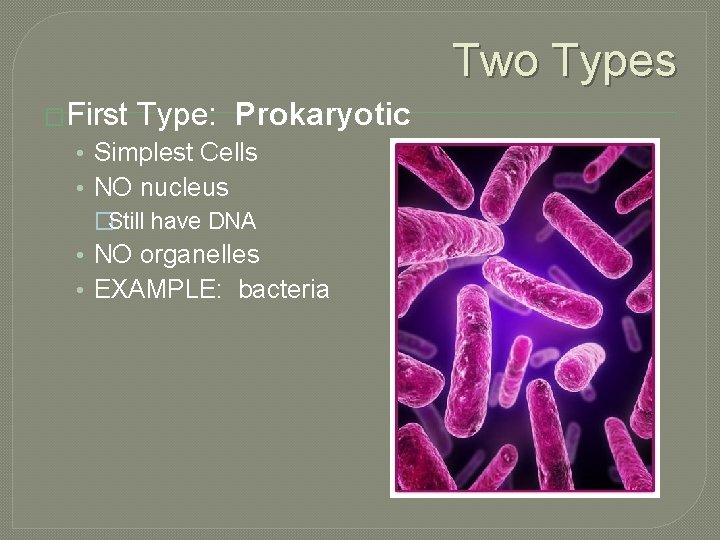
Two Types �First Type: Prokaryotic • Simplest Cells • NO nucleus �Still have DNA • NO organelles • EXAMPLE: bacteria
Other features found in some bacteria �Flagella – lash-like appendage that protrudes from the cell body of certain prokaryotic and eukaryotic cells used for movement �Pilus - small hair like structures used for attaching to other cells
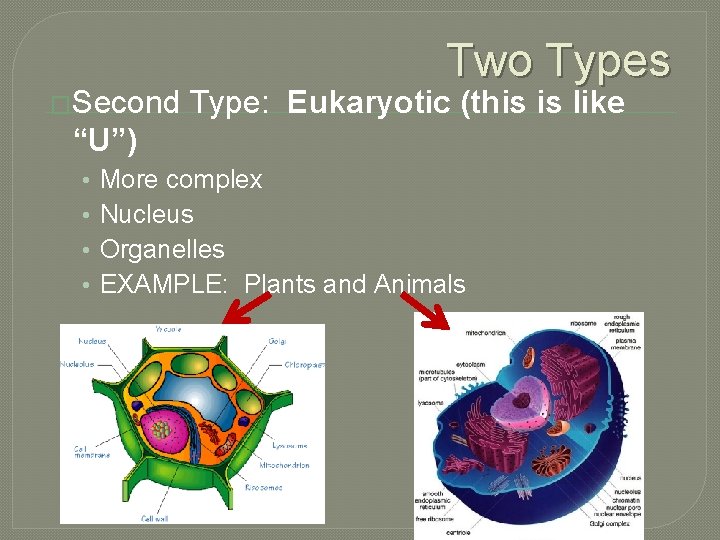
�Second Two Types Type: Eukaryotic (this is like “U”) • • More complex Nucleus Organelles EXAMPLE: Plants and Animals
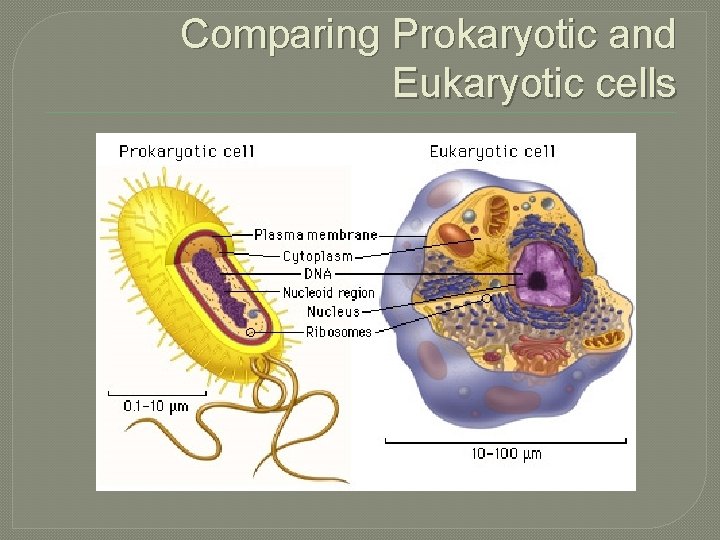
Comparing Prokaryotic and Eukaryotic cells
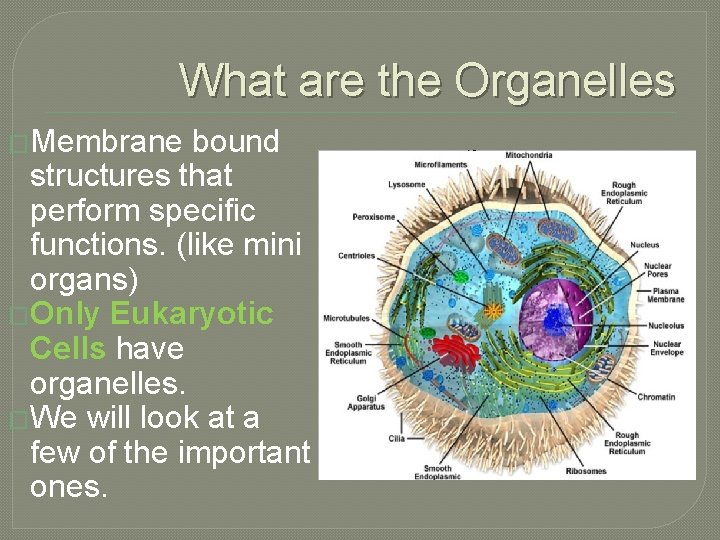
What are the Organelles �Membrane bound structures that perform specific functions. (like mini organs) �Only Eukaryotic Cells have organelles. �We will look at a few of the important ones.
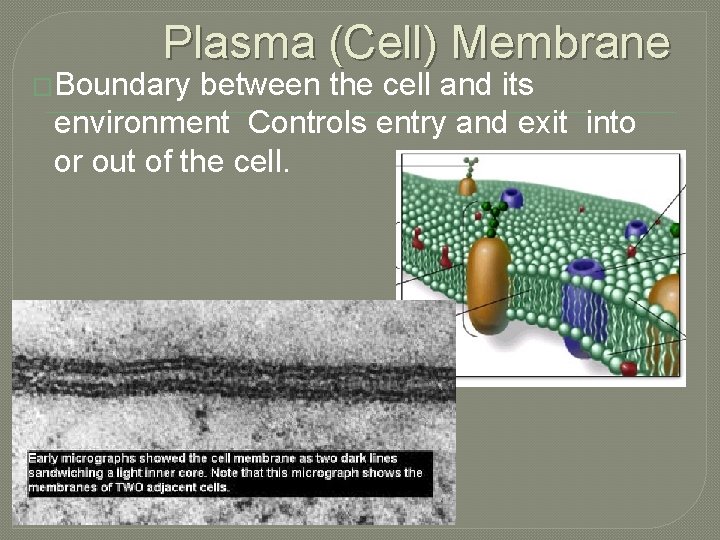
Plasma (Cell) Membrane �Boundary between the cell and its environment Controls entry and exit into or out of the cell.
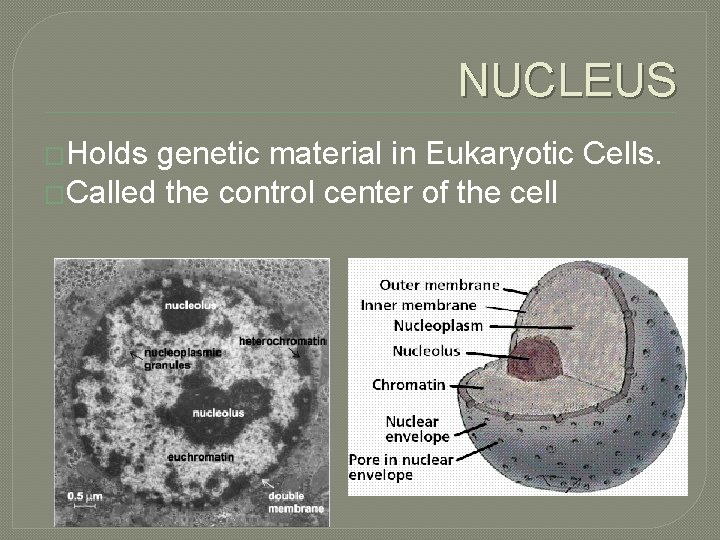
NUCLEUS �Holds genetic material in Eukaryotic Cells. �Called the control center of the cell
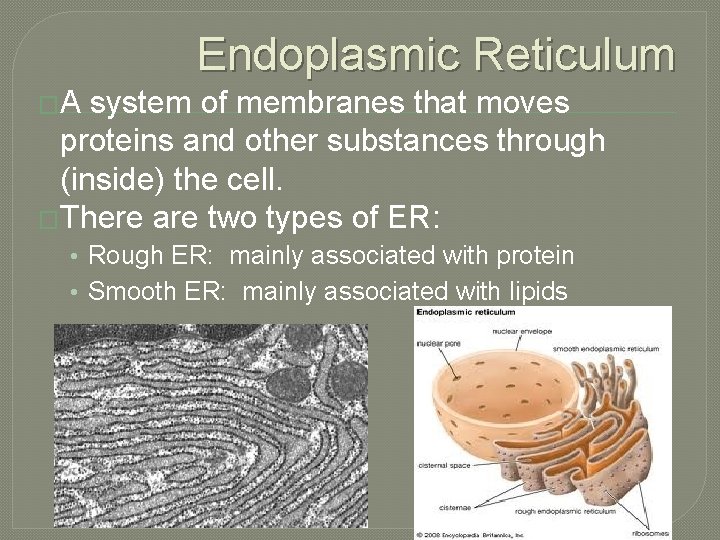
Endoplasmic Reticulum �A system of membranes that moves proteins and other substances through (inside) the cell. �There are two types of ER: • Rough ER: mainly associated with protein • Smooth ER: mainly associated with lipids
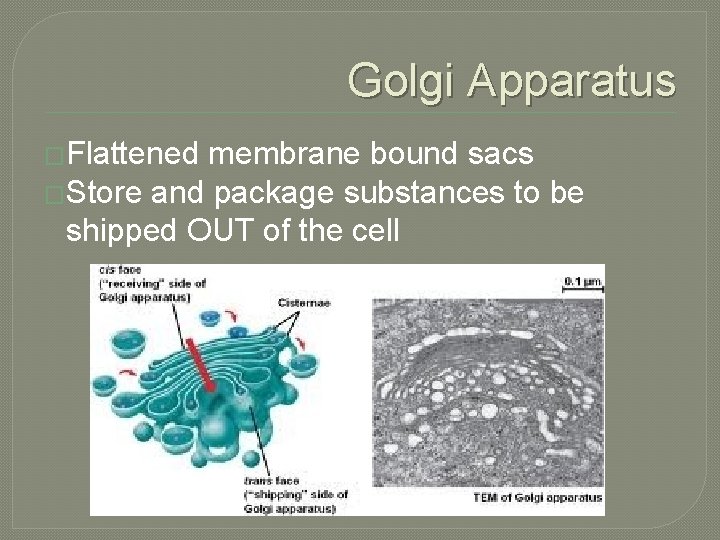
Golgi Apparatus �Flattened membrane bound sacs �Store and package substances to be shipped OUT of the cell
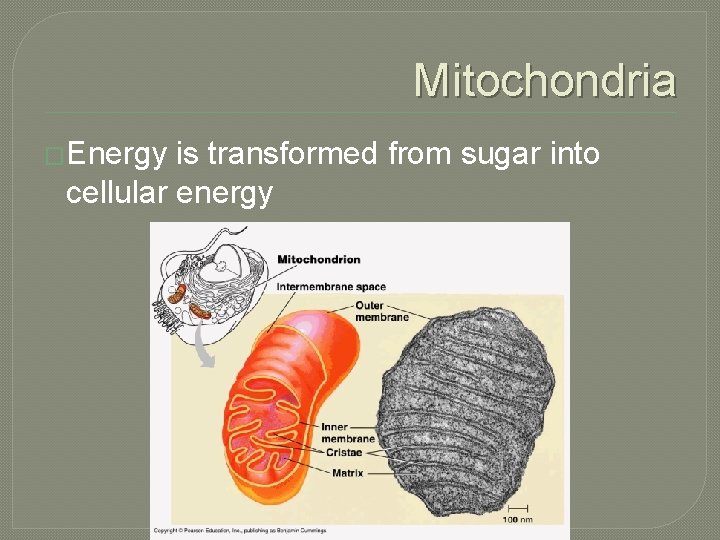
Mitochondria �Energy is transformed from sugar into cellular energy
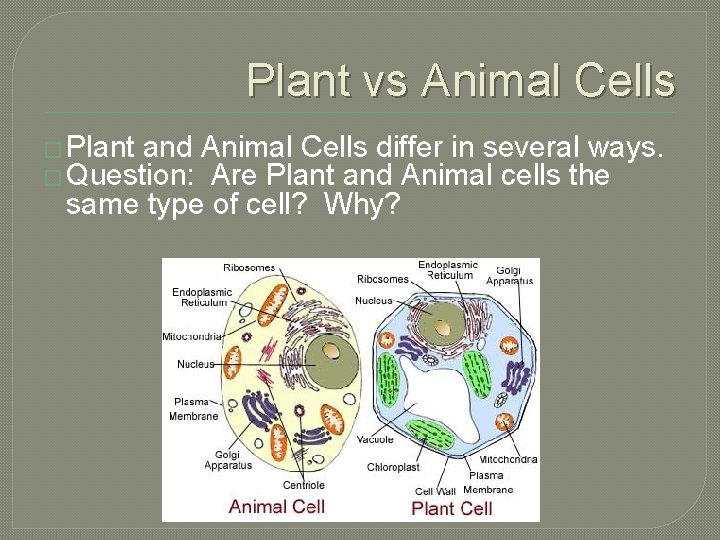
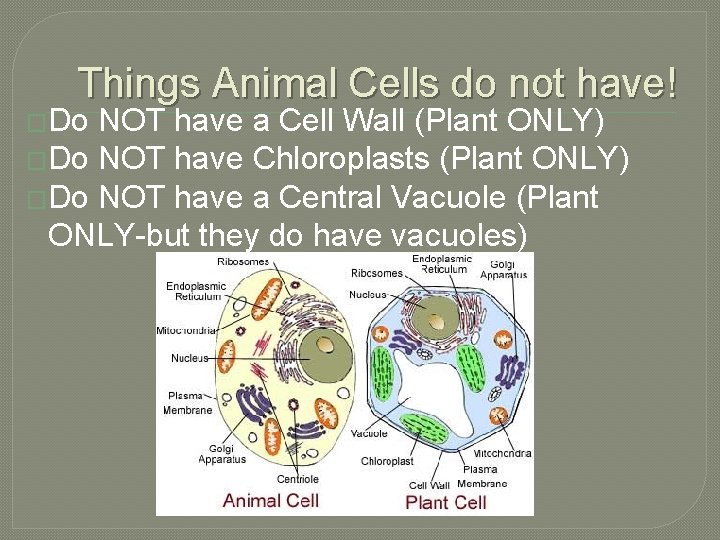
Plant vs Animal Cells � Plant and � Question: Animal Cells differ in several ways. Are Plant and Animal cells the same type of cell? Why?
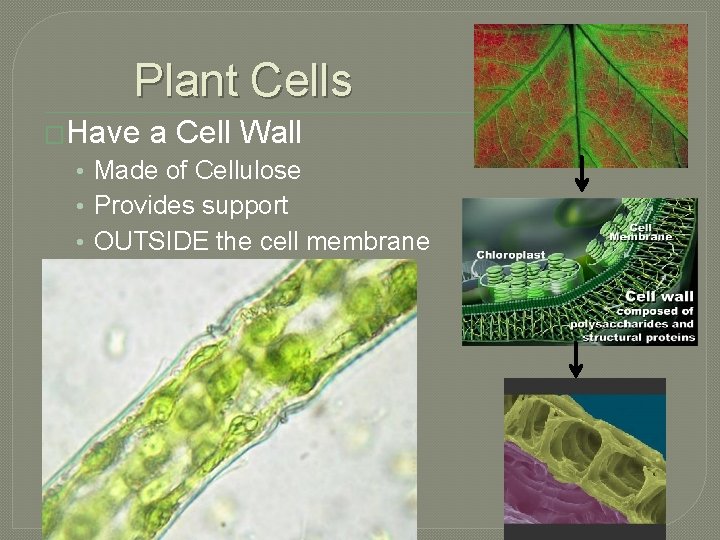
Plant Cells �Have a Cell Wall • Made of Cellulose • Provides support • OUTSIDE the cell membrane
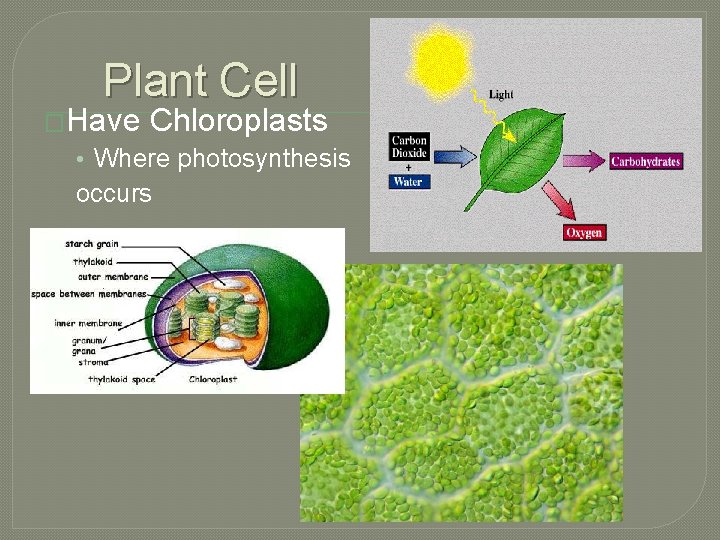
Plant Cell �Have Chloroplasts • Where photosynthesis occurs
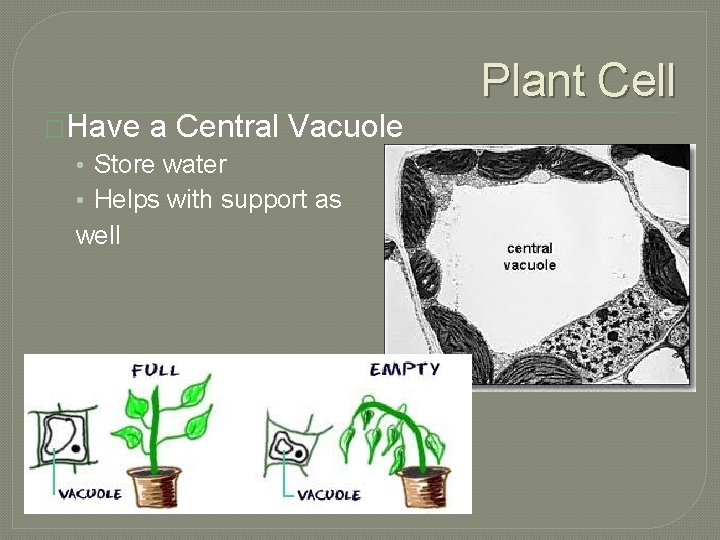
Plant Cell �Have a Central Vacuole • Store water • Helps with support as well
Things Animal Cells do not have! �Do NOT have a Cell Wall (Plant ONLY) �Do NOT have Chloroplasts (Plant ONLY) �Do NOT have a Central Vacuole (Plant ONLY-but they do have vacuoles)
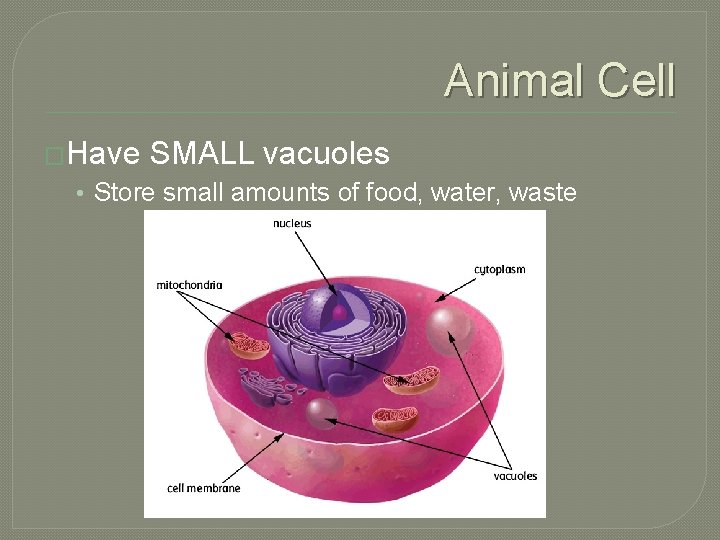
Animal Cell �Have SMALL vacuoles • Store small amounts of food, water, waste