
Cells Cell Organelles Doing Lifes Work Biology Types
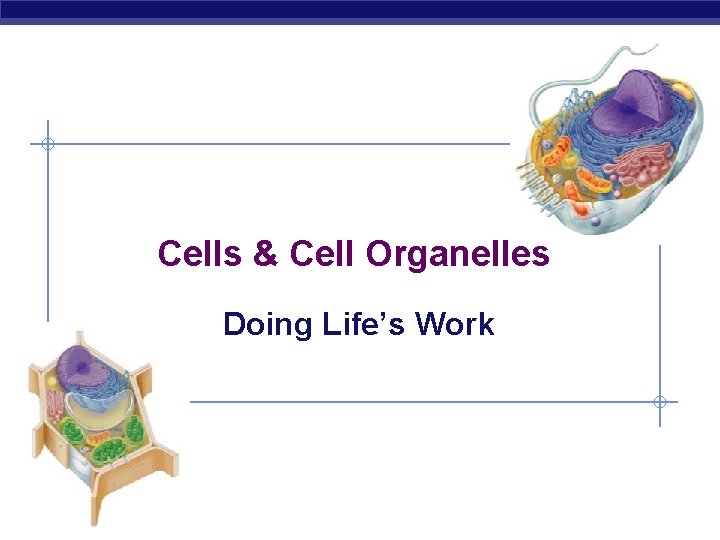
Cells & Cell Organelles Doing Life’s Work Biology
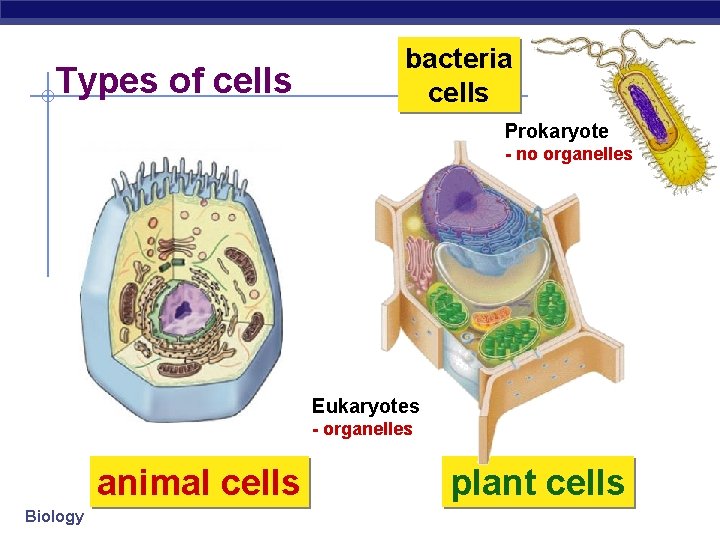
Types of cells bacteria cells Prokaryote - no organelles Eukaryotes - organelles animal cells Biology plant cells
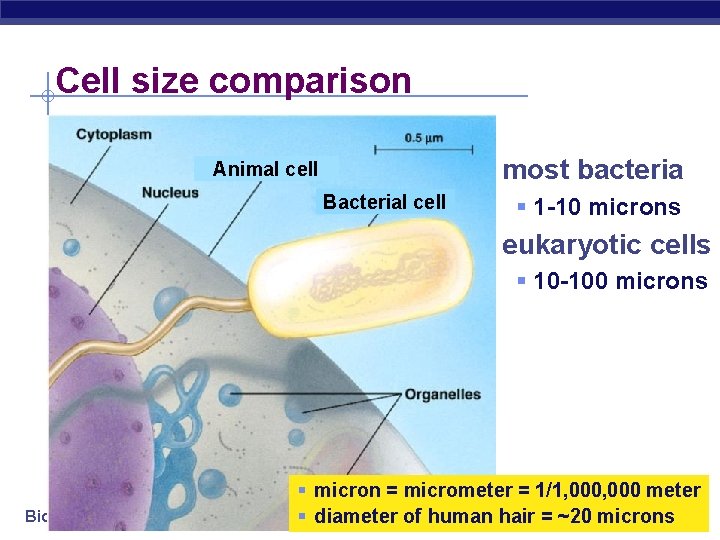
Cell size comparison most bacteria Animal cell Bacterial cell § 1 -10 microns eukaryotic cells § 10 -100 microns Biology § micron = micrometer = 1/1, 000 meter § diameter of human hair = ~20 microns
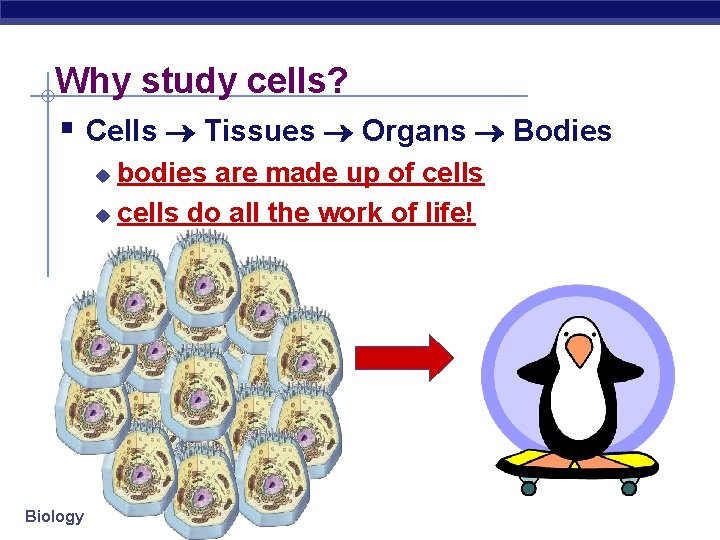
Why study cells? § Cells Tissues Organs Bodies bodies are made up of cells u cells do all the work of life! u Biology
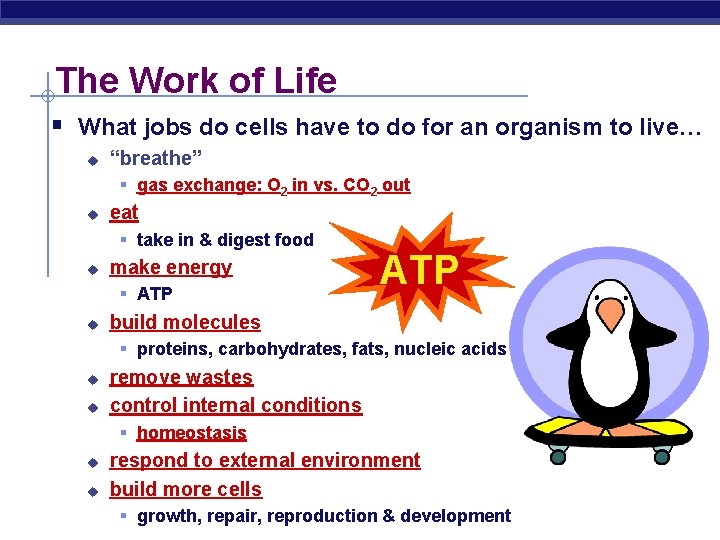
The Work of Life § What jobs do cells have to do for an organism to live… u “breathe” § gas exchange: O 2 in vs. CO 2 out u eat § take in & digest food u make energy § ATP u ATP build molecules § proteins, carbohydrates, fats, nucleic acids u u remove wastes control internal conditions § homeostasis u u Biology respond to external environment build more cells § growth, repair, reproduction & development

The Jobs of Cells § Cells have 3 main jobs u make energy § need energy for all activities § need to clean up waste produced while making energy u Our organelles do all these jobs! make proteins § proteins do all the work in a cell, so we need lots of them u make more cells § for growth § to replace damaged or diseased cells Biology
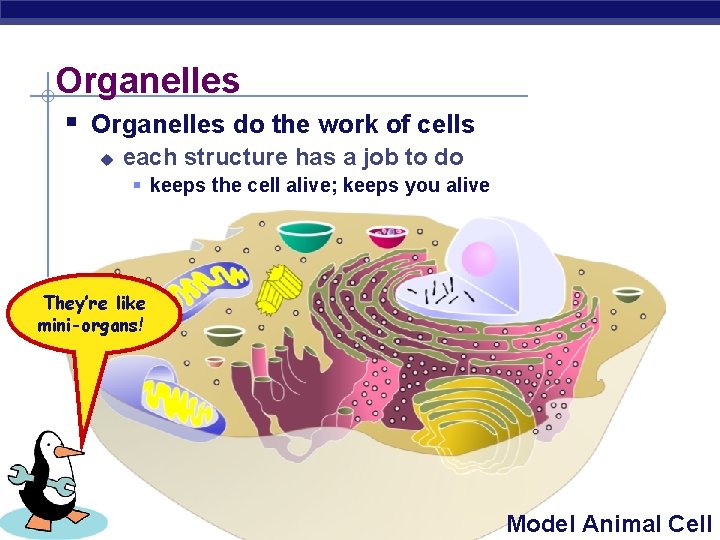
Organelles § Organelles do the work of cells u each structure has a job to do § keeps the cell alive; keeps you alive They’re like mini-organs! Biology Model Animal Cell
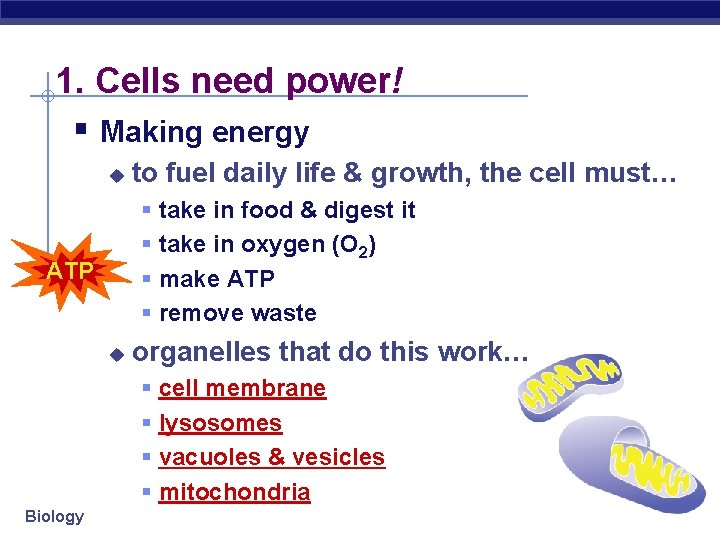
1. Cells need power! § Making energy u to fuel daily life & growth, the cell must… § § ATP u organelles that do this work… § § Biology take in food & digest it take in oxygen (O 2) make ATP remove waste cell membrane lysosomes vacuoles & vesicles mitochondria
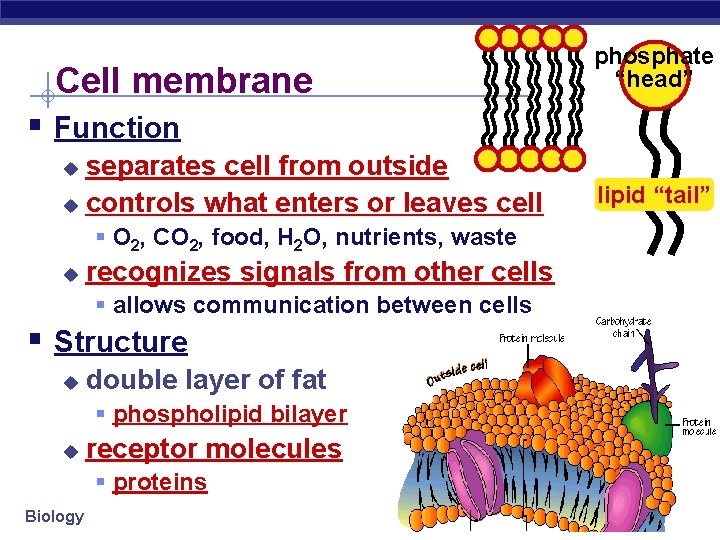
Cell membrane phosphate “head” § Function separates cell from outside u controls what enters or leaves cell u § O 2, CO 2, food, H 2 O, nutrients, waste u recognizes signals from other cells § allows communication between cells § Structure u double layer of fat § phospholipid bilayer u receptor molecules § proteins Biology lipid “tail”
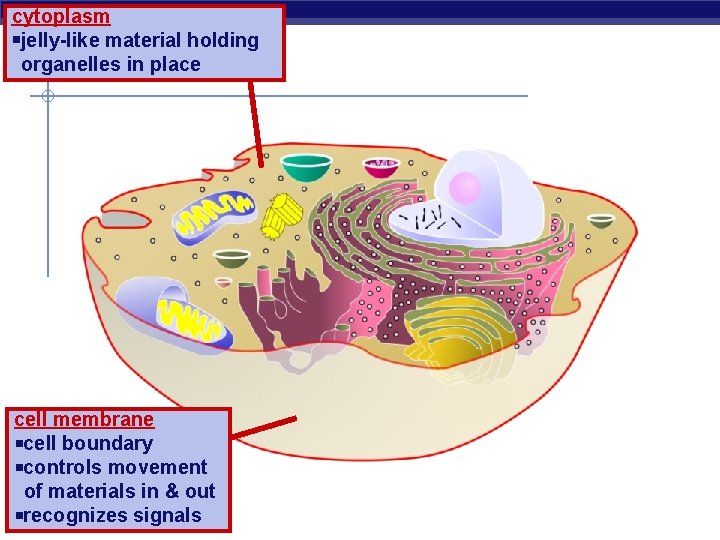
cytoplasm jelly-like material holding organelles in place cell membrane cell boundary controls movement of materials in & out Biology recognizes signals
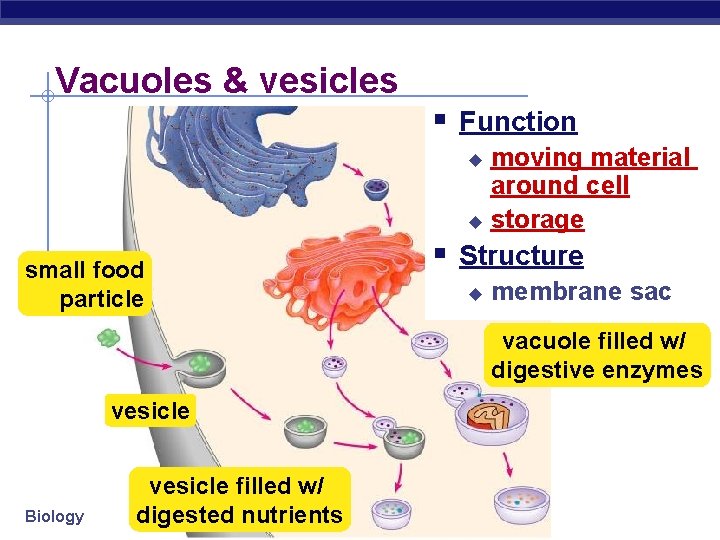
Vacuoles & vesicles § Function moving material around cell u storage u small food particle § Structure u membrane sac vacuole filled w/ digestive enzymes vesicle Biology vesicle filled w/ digested nutrients
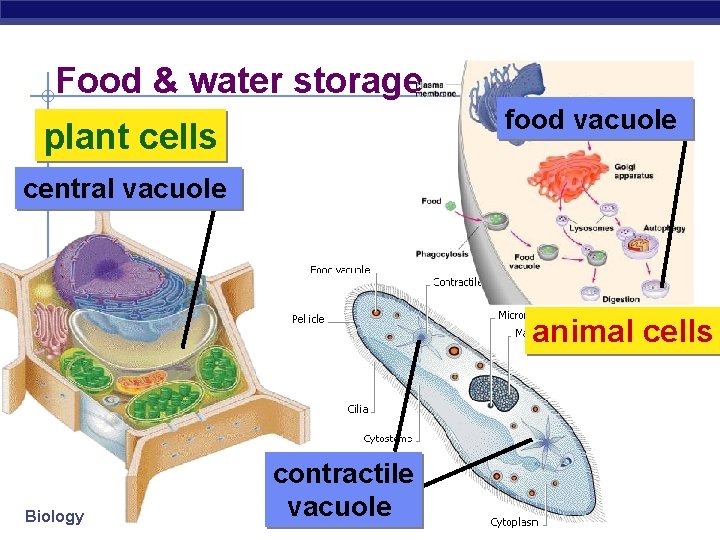
Food & water storage food vacuole plant cells central vacuole animal cells Biology contractile vacuole
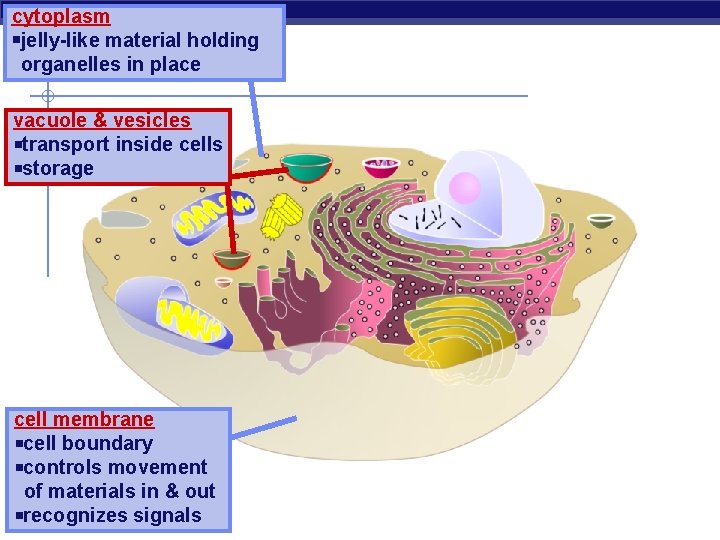
cytoplasm jelly-like material holding organelles in place vacuole & vesicles transport inside cells storage cell membrane cell boundary controls movement of materials in & out Biology recognizes signals
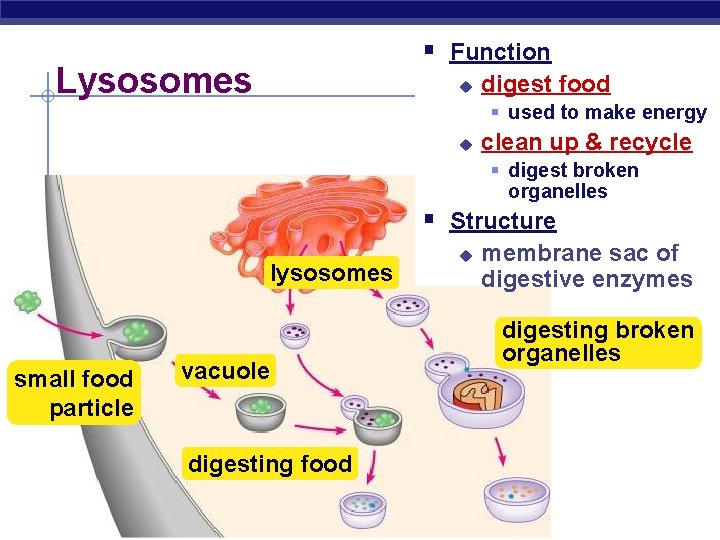
§ Function Lysosomes u digest food § used to make energy u clean up & recycle § digest broken organelles § Structure lysosomes small food particle vacuole digesting food Biology u membrane sac of digestive enzymes digesting broken organelles
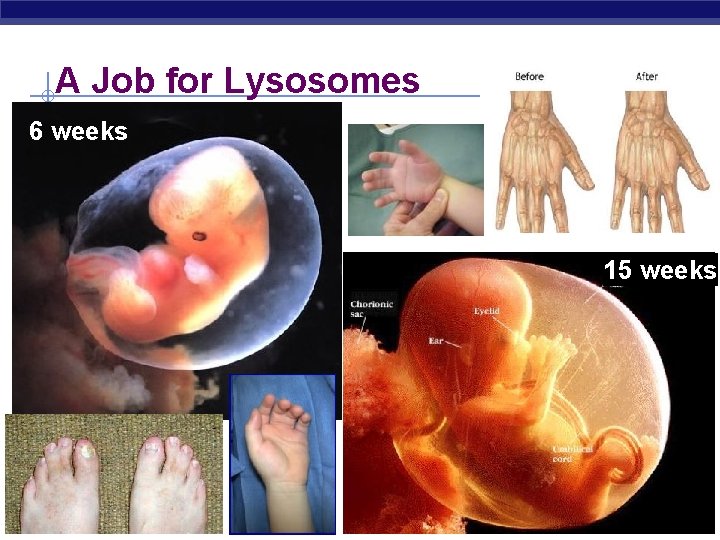
A Job for Lysosomes 6 weeks 15 weeks Biology
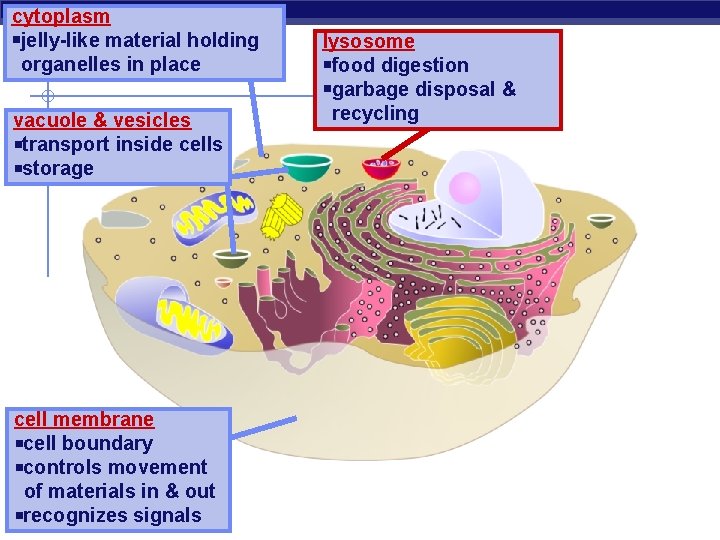
cytoplasm jelly-like material holding organelles in place vacuole & vesicles transport inside cells storage cell membrane cell boundary controls movement of materials in & out Biology recognizes signals lysosome food digestion garbage disposal & recycling
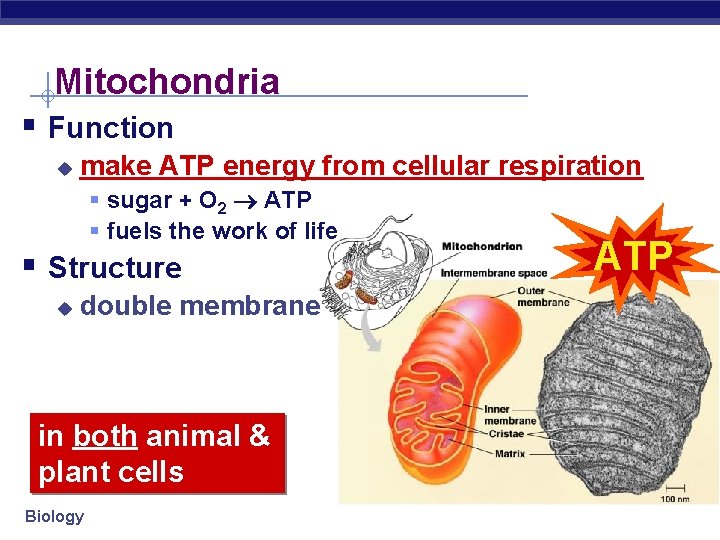
Mitochondria § Function u make ATP energy from cellular respiration § sugar + O 2 ATP § fuels the work of life § Structure u double membrane in both animal & plant cells Biology ATP
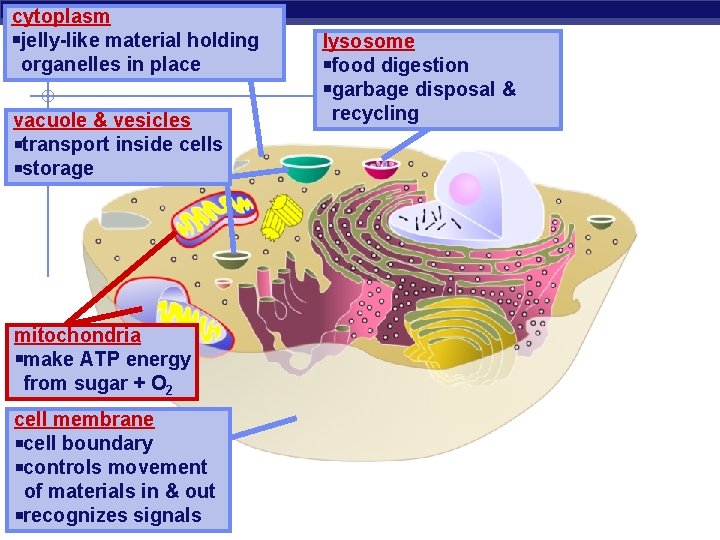
cytoplasm jelly-like material holding organelles in place vacuole & vesicles transport inside cells storage mitochondria make ATP energy from sugar + O 2 cell membrane cell boundary controls movement of materials in & out Biology recognizes signals lysosome food digestion garbage disposal & recycling
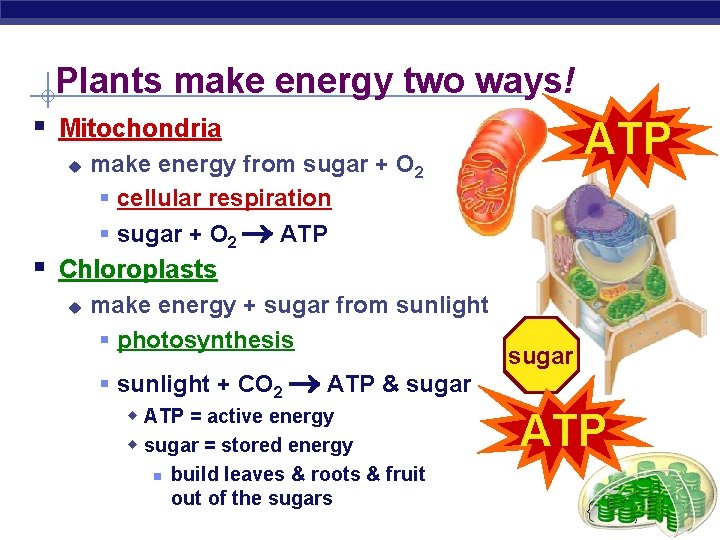
Plants make energy two ways! § Mitochondria u ATP make energy from sugar + O 2 § cellular respiration § sugar + O 2 ATP § Chloroplasts u make energy + sugar from sunlight § photosynthesis § sunlight + CO 2 ATP & sugar w ATP = active energy w sugar = stored energy n Biology build leaves & roots & fruit out of the sugars sugar ATP
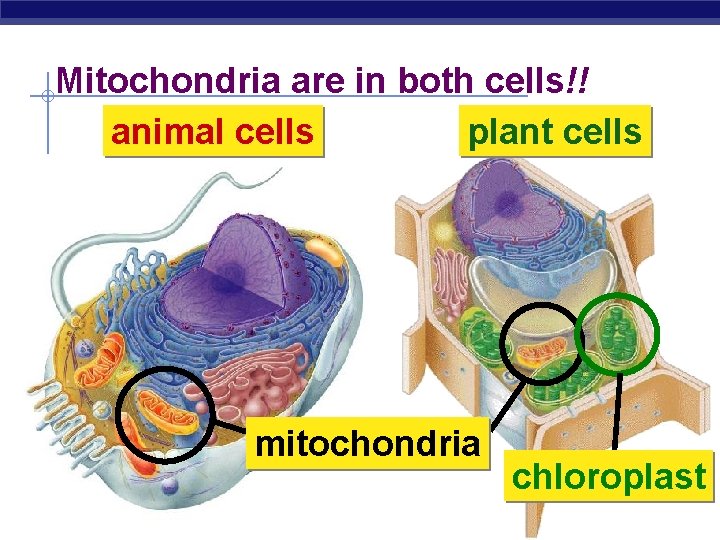
Mitochondria are in both cells!! animal cells plant cells mitochondria Biology chloroplast
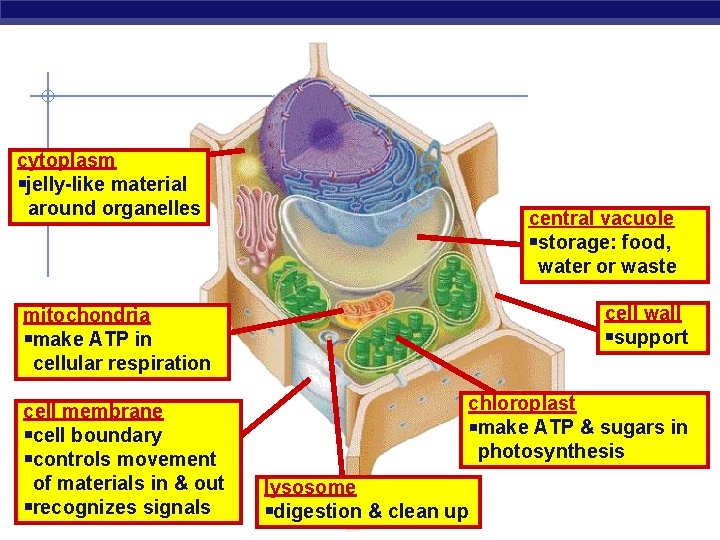
cytoplasm jelly-like material around organelles central vacuole storage: food, water or waste cell wall support mitochondria make ATP in cellular respiration cell membrane cell boundary controls movement of materials in & out recognizes signals Biology chloroplast make ATP & sugars in photosynthesis lysosome digestion & clean up
2. Cells need workers = proteins! § Making proteins u to run daily life & growth, the cell must… § read genes (DNA) § build proteins w structural proteins (muscle fibers, hair, skin, claws) w enzymes (speed up chemical reactions) w signals (hormones) & receptors u organelles that do this work… § § Biology nucleus ribosomes endoplasmic reticulum (ER) Golgi apparatus
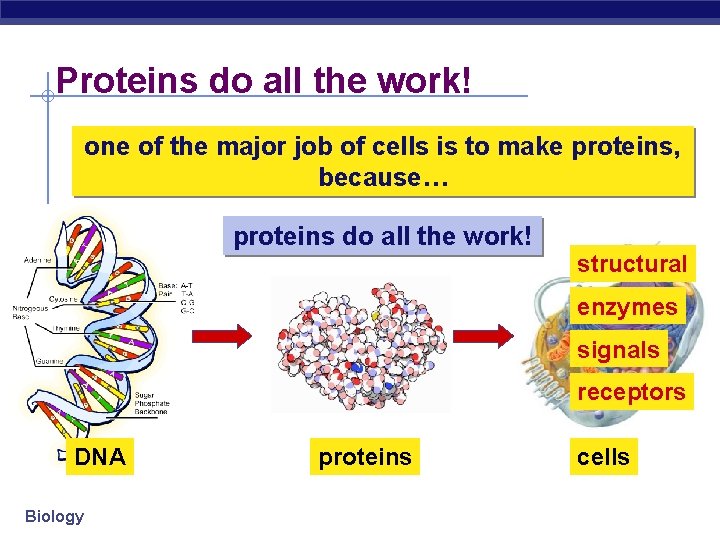
Proteins do all the work! one of the major job of cells is to make proteins, because… proteins do all the work! structural enzymes signals receptors DNA Biology proteins cells
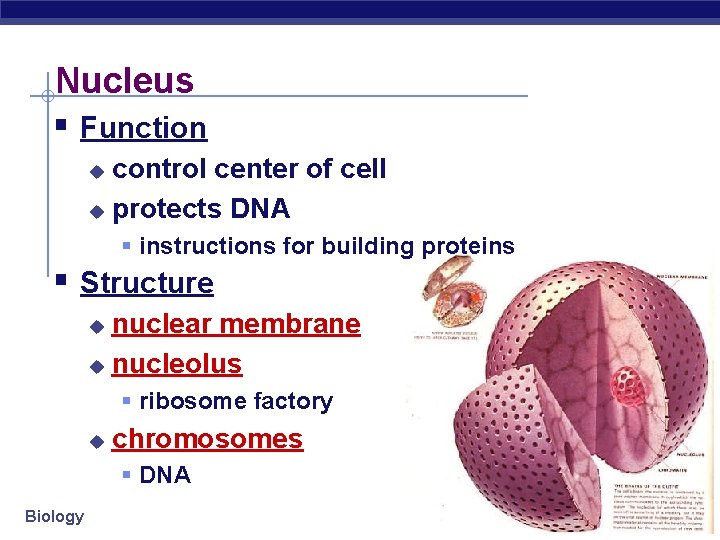
Nucleus § Function control center of cell u protects DNA u § instructions for building proteins § Structure nuclear membrane u nucleolus u § ribosome factory u chromosomes § DNA Biology
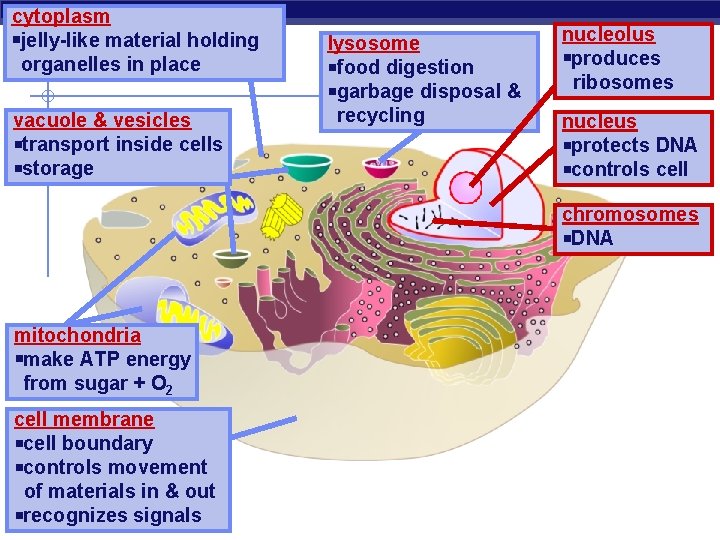
cytoplasm jelly-like material holding organelles in place vacuole & vesicles transport inside cells storage lysosome food digestion garbage disposal & recycling nucleolus produces ribosomes nucleus protects DNA controls cell chromosomes DNA mitochondria make ATP energy from sugar + O 2 cell membrane cell boundary controls movement of materials in & out Biology recognizes signals
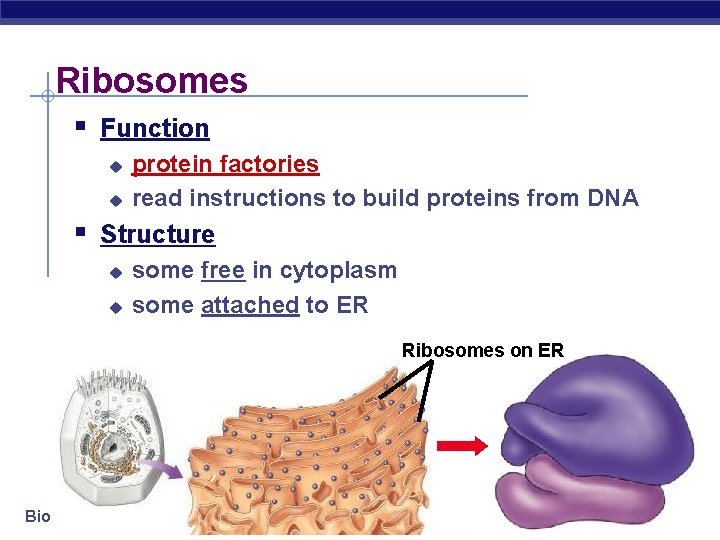
Ribosomes § Function u u protein factories read instructions to build proteins from DNA § Structure u u some free in cytoplasm some attached to ER Ribosomes on ER Biology
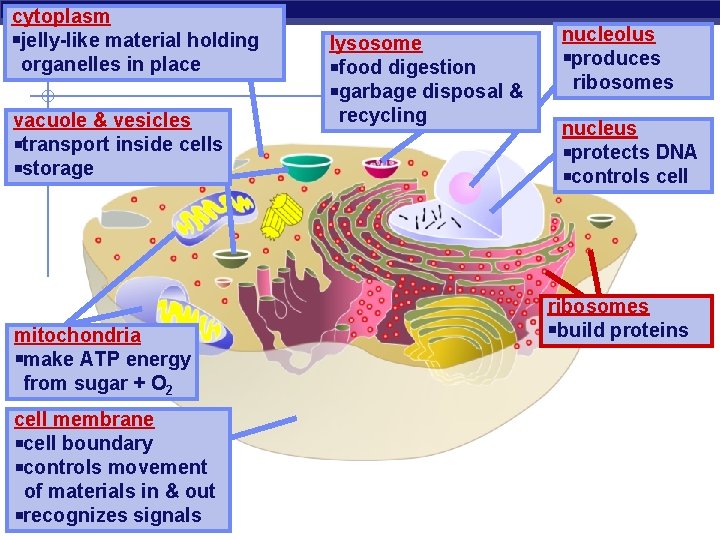
cytoplasm jelly-like material holding organelles in place vacuole & vesicles transport inside cells storage mitochondria make ATP energy from sugar + O 2 cell membrane cell boundary controls movement of materials in & out Biology recognizes signals lysosome food digestion garbage disposal & recycling nucleolus produces ribosomes nucleus protects DNA controls cell ribosomes build proteins
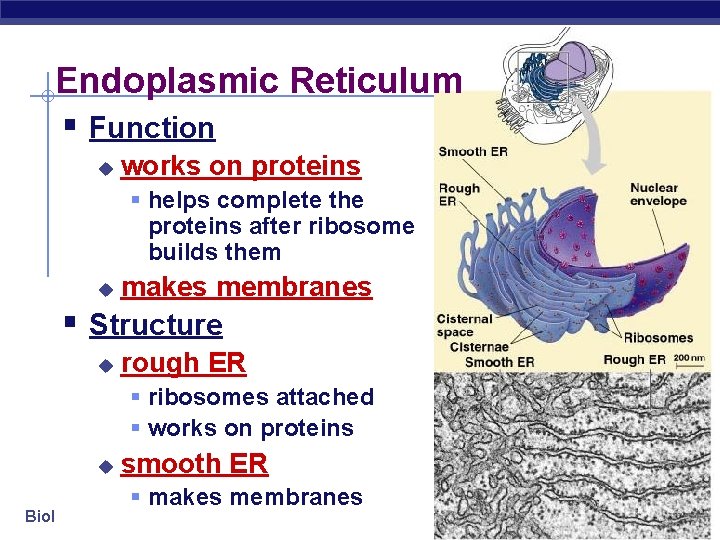
Endoplasmic Reticulum § Function u works on proteins § helps complete the proteins after ribosome builds them u makes membranes § Structure u rough ER § ribosomes attached § works on proteins u Biology smooth ER § makes membranes

cytoplasm jelly-like material holding organelles in place vacuole & vesicles transport inside cells storage lysosome food digestion garbage disposal & recycling ribosomes builds proteins mitochondria make ATP energy from sugar + O 2 cell membrane cell boundary controls movement of materials in & out Biology recognizes signals nucleus protects DNA controls cell ER works on proteins makes membranes
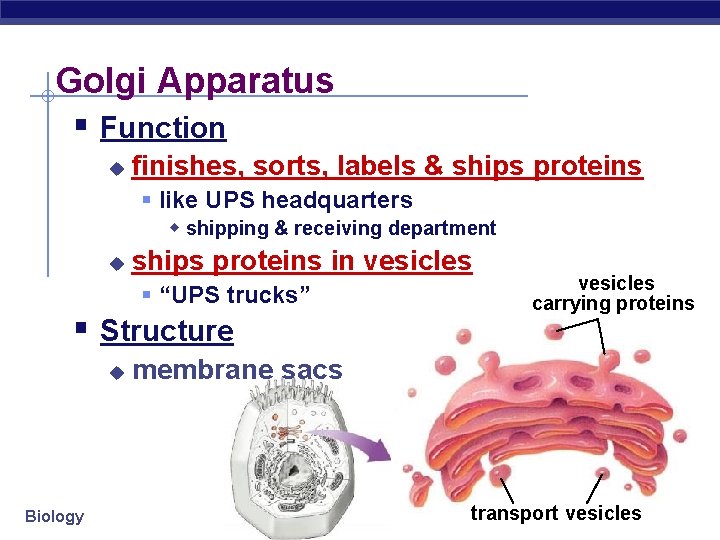
Golgi Apparatus § Function u finishes, sorts, labels & ships proteins § like UPS headquarters w shipping & receiving department u ships proteins in vesicles § “UPS trucks” § Structure u Biology vesicles carrying proteins membrane sacs transport vesicles
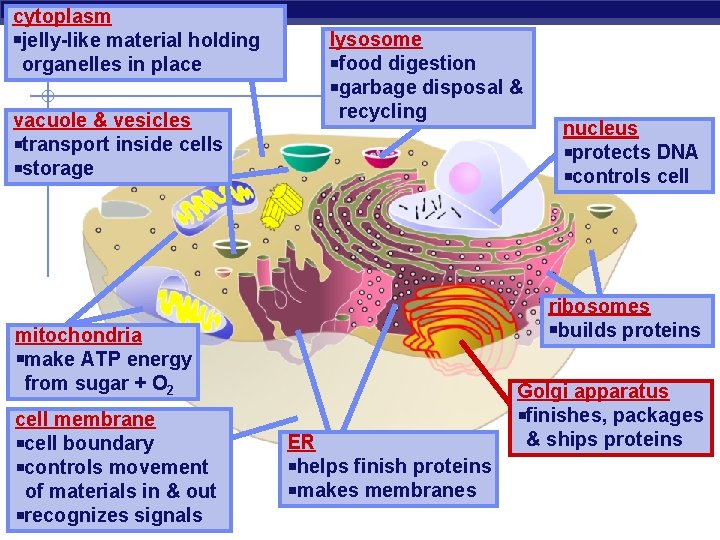
cytoplasm jelly-like material holding organelles in place vacuole & vesicles transport inside cells storage lysosome food digestion garbage disposal & recycling ribosomes builds proteins mitochondria make ATP energy from sugar + O 2 cell membrane cell boundary controls movement of materials in & out Biology recognizes signals nucleus protects DNA controls cell ER helps finish proteins makes membranes Golgi apparatus finishes, packages & ships proteins
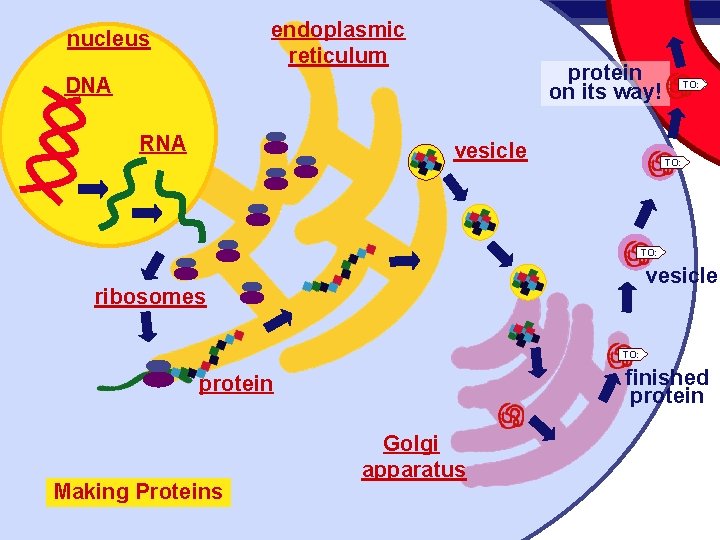
endoplasmic reticulum nucleus protein on its way! DNA RNA vesicle TO: vesicle ribosomes TO: finished protein Making Proteins Biology Golgi apparatus
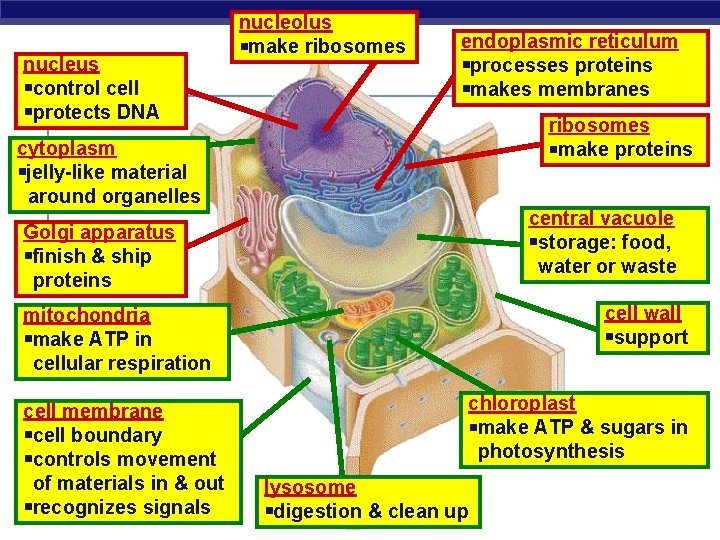
nucleus control cell protects DNA nucleolus make ribosomes endoplasmic reticulum processes proteins makes membranes ribosomes make proteins cytoplasm jelly-like material around organelles central vacuole storage: food, water or waste Golgi apparatus finish & ship proteins cell wall support mitochondria make ATP in cellular respiration cell membrane cell boundary controls movement of materials in & out recognizes signals Biology chloroplast make ATP & sugars in photosynthesis lysosome digestion & clean up
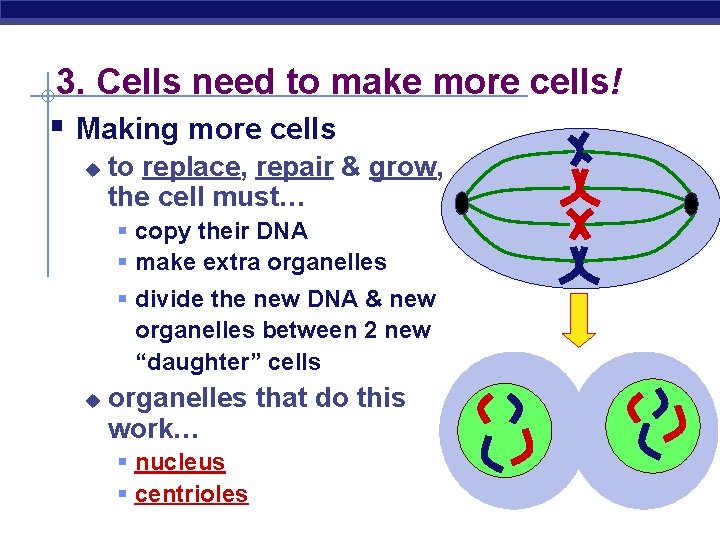
3. Cells need to make more cells! § Making more cells u to replace, repair & grow, the cell must… § copy their DNA § make extra organelles § divide the new DNA & new organelles between 2 new “daughter” cells u organelles that do this work… § nucleus § centrioles Biology
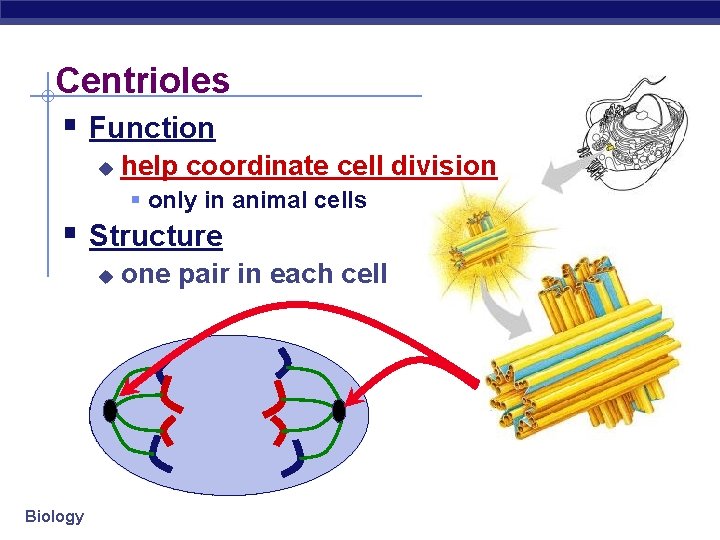
Centrioles § Function u help coordinate cell division § only in animal cells § Structure u Biology one pair in each cell

cytoplasm jelly-like material holding organelles in place vacuole & vesicles transport inside cells storage lysosome food digestion garbage disposal & recycling nucleus protects DNA controls cell centrioles cell division ribosomes builds proteins mitochondria make ATP energy from sugar + O 2 cell membrane cell boundary controls movement of materials in & out Biology recognizes signals ER helps finish proteins makes membranes Golgi apparatus finishes, packages & ships proteins

Cell Summary § Cells have 3 main jobs u make energy § need food + O 2 § cellular respiration & photosynthesis Our § need to remove wastes u make proteins organelles do all those jobs! § need instructions from DNA § need to chain together amino acids & “finish” & “ship” the protein u make more cells § need to copy DNA & divide it up to daughter cells Biology
That’s my cellular story… Any Questions? Biology
- Slides: 38