
cells Bio Chp 2 Cells Chapter 2 Pure
cells Bio Chp 2: Cells Chapter 2 Pure biology 1
Learning outcomes • State the definition of cells. • State the role of cells in an organism. • Identify organelles of typical plant and animal cells from diagrams, photomicrographs, and as seen under a microscope: 9 chloroplasts, cell membrane, cell wall, cytoplasm, cell vacuoles, nucleus • Identify the following membrane systems and organelles from diagrams and electron micrographs: 9 endoplasmic reticulum, mitochondria, Golgi body, ribosomes • State the functions of the membrane systems and organelles identified above. • State the relationship between cell function and cell structure for the following: 9 absorption – root hair cells 9 conduction and support – xylem vessels 9 transport of oxygen – red blood cells • Differentiate cell, tissue, organ and organ system. Bio Chp 2: Cells 2
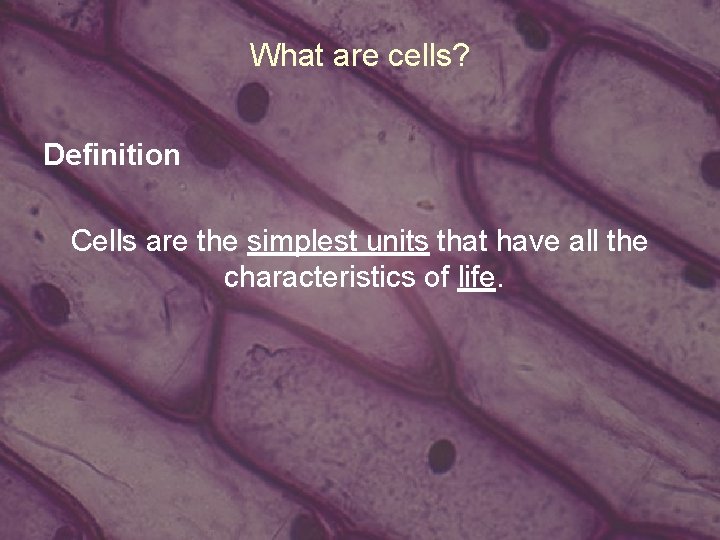
What are cells? Definition Cells are the simplest units that have all the characteristics of life. Bio Chp 2: Cells 3
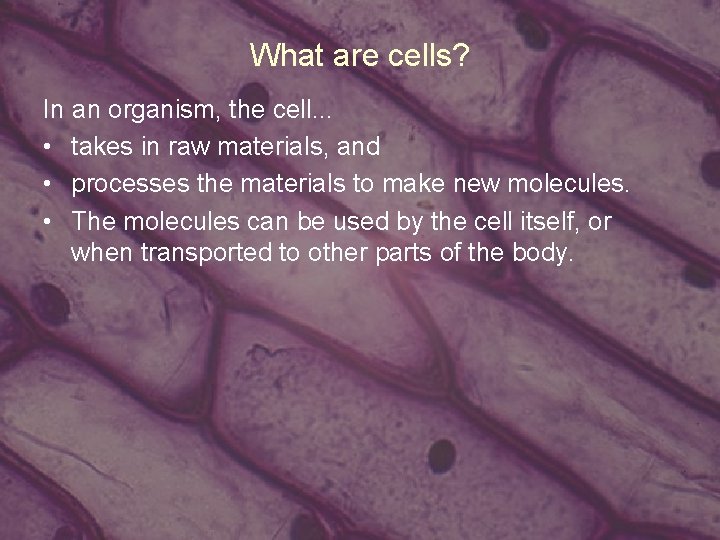
What are cells? In an organism, the cell. . . • takes in raw materials, and • processes the materials to make new molecules. • The molecules can be used by the cell itself, or when transported to other parts of the body. Bio Chp 2: Cells 4
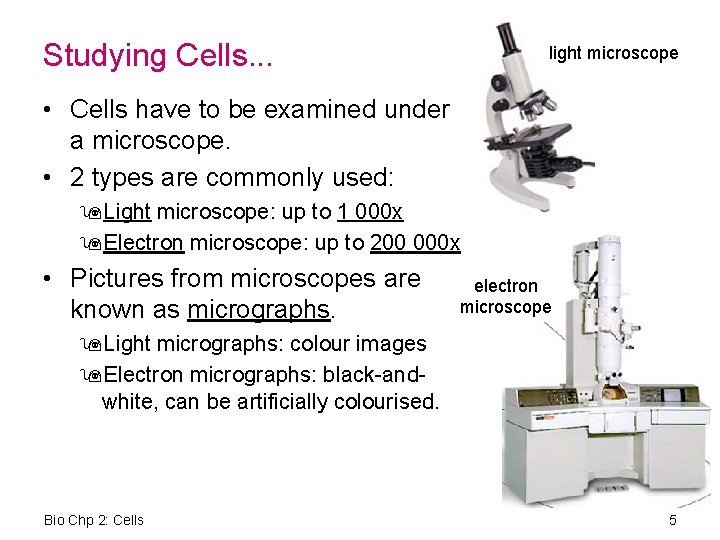
Studying Cells. . . light microscope • Cells have to be examined under a microscope. • 2 types are commonly used: 9 Light microscope: up to 1 000 x 9 Electron microscope: up to 200 000 x • Pictures from microscopes are known as micrographs. electron microscope 9 Light micrographs: colour images 9 Electron micrographs: black-andwhite, can be artificially colourised. Bio Chp 2: Cells 5
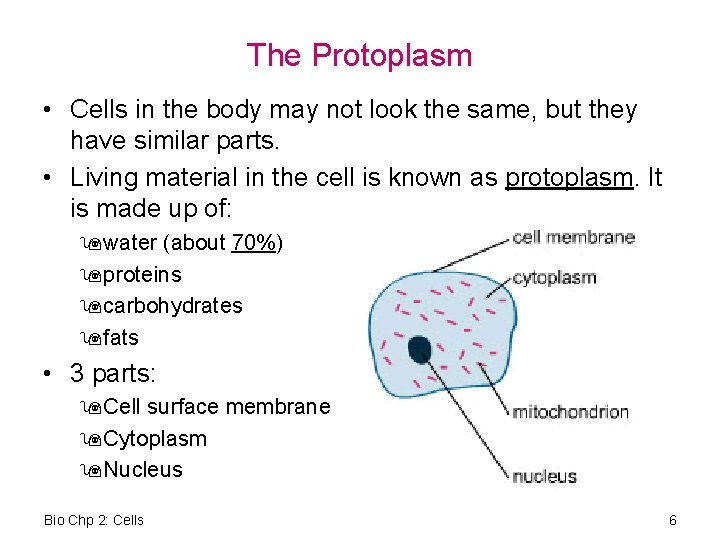
The Protoplasm • Cells in the body may not look the same, but they have similar parts. • Living material in the cell is known as protoplasm. It is made up of: 9 water (about 70%) 9 proteins 9 carbohydrates 9 fats • 3 parts: 9 Cell surface membrane 9 Cytoplasm 9 Nucleus Bio Chp 2: Cells 6
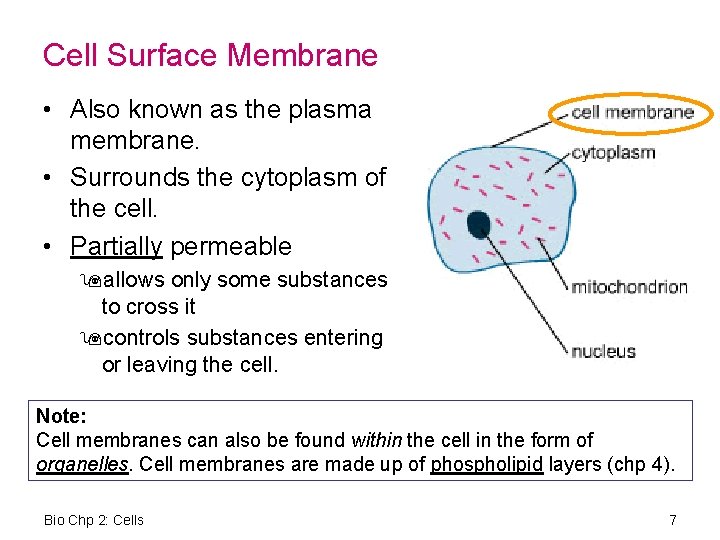
Cell Surface Membrane • Also known as the plasma membrane. • Surrounds the cytoplasm of the cell. • Partially permeable 9 allows only some substances to cross it 9 controls substances entering or leaving the cell. Note: Cell membranes can also be found within the cell in the form of organelles. Cell membranes are made up of phospholipid layers (chp 4). Bio Chp 2: Cells 7
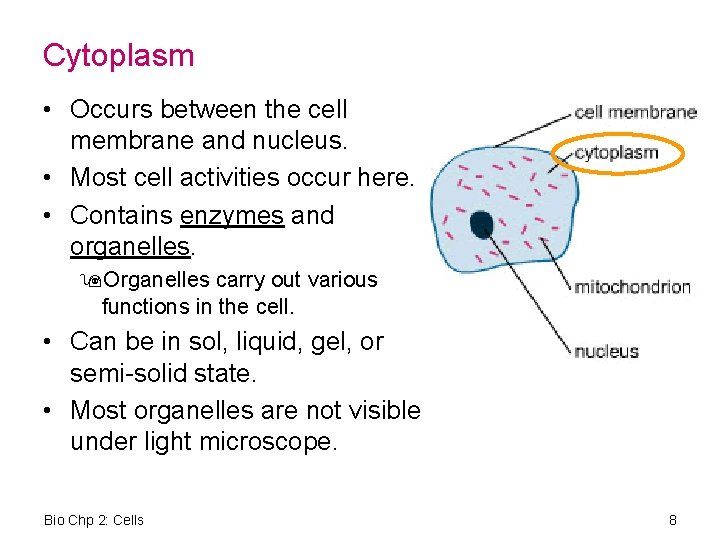
Cytoplasm • Occurs between the cell membrane and nucleus. • Most cell activities occur here. • Contains enzymes and organelles. 9 Organelles carry out various functions in the cell. • Can be in sol, liquid, gel, or semi-solid state. • Most organelles are not visible under light microscope. Bio Chp 2: Cells 8
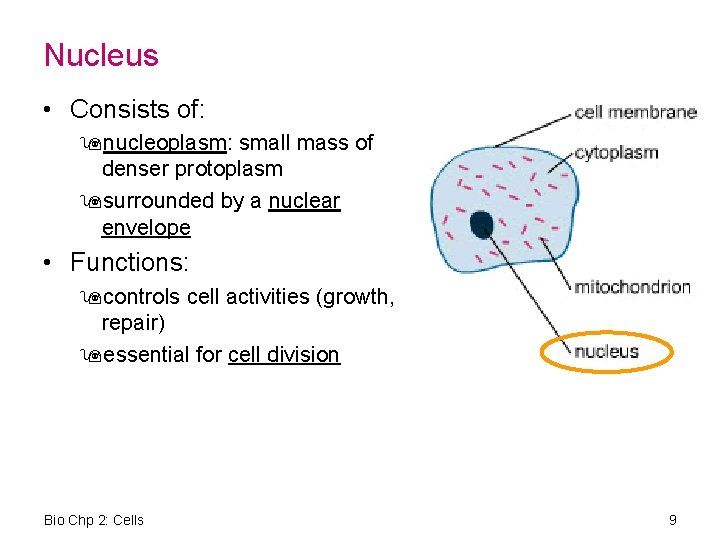
Nucleus • Consists of: 9 nucleoplasm: small mass of denser protoplasm 9 surrounded by a nuclear envelope • Functions: 9 controls cell activities (growth, repair) 9 essential for cell division Bio Chp 2: Cells 9
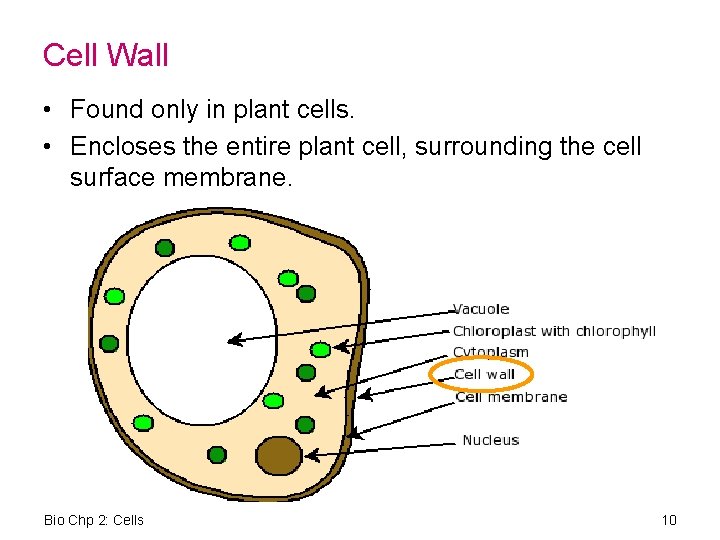
Cell Wall • Found only in plant cells. • Encloses the entire plant cell, surrounding the cell surface membrane. Bio Chp 2: Cells 10
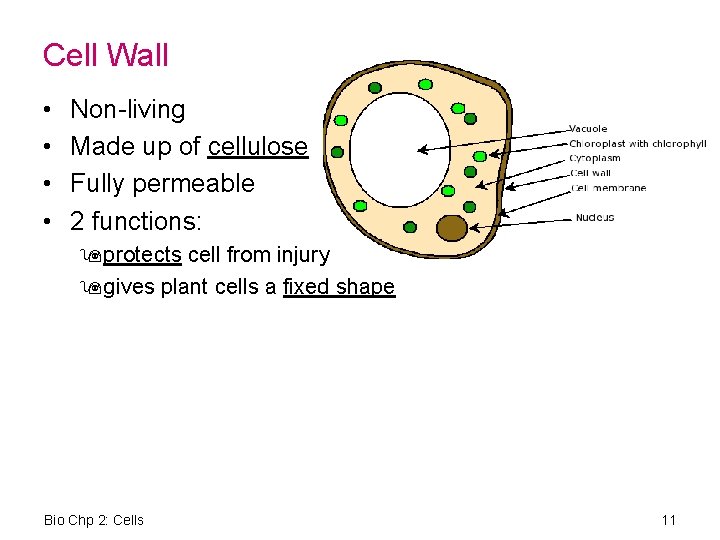
Cell Wall • • Non-living Made up of cellulose Fully permeable 2 functions: 9 protects cell from injury 9 gives plant cells a fixed shape Bio Chp 2: Cells 11
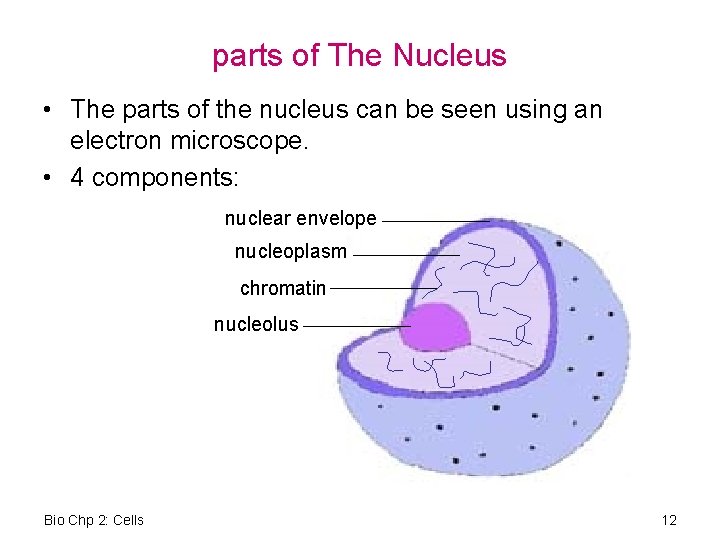
parts of The Nucleus • The parts of the nucleus can be seen using an electron microscope. • 4 components: nuclear envelope nucleoplasm chromatin nucleolus Bio Chp 2: Cells 12
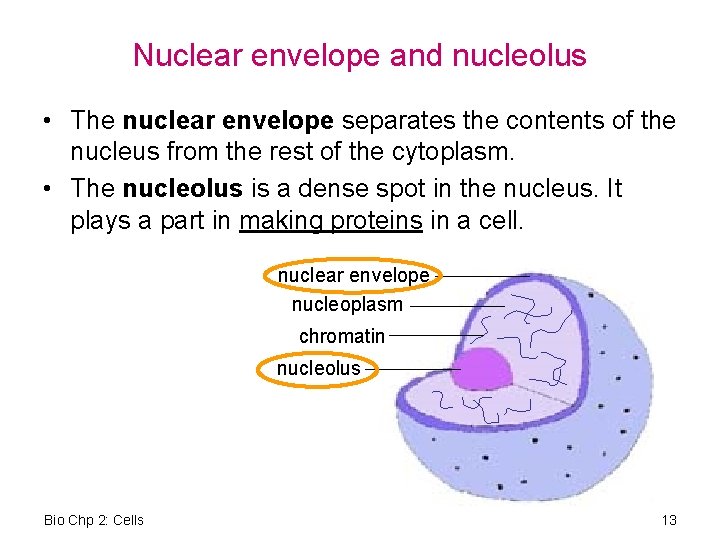
Nuclear envelope and nucleolus • The nuclear envelope separates the contents of the nucleus from the rest of the cytoplasm. • The nucleolus is a dense spot in the nucleus. It plays a part in making proteins in a cell. nuclear envelope nucleoplasm chromatin nucleolus Bio Chp 2: Cells 13
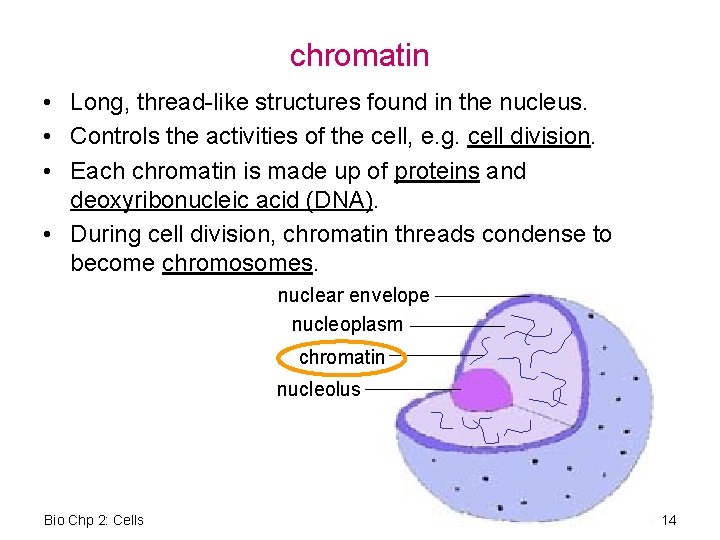
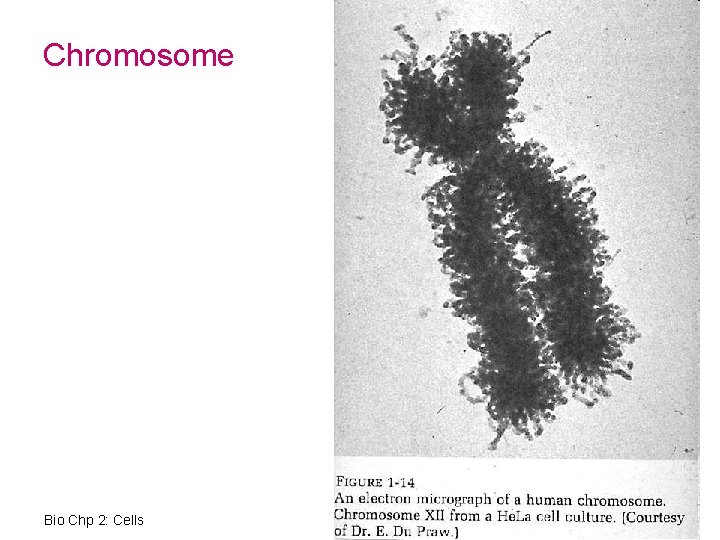
chromatin • Long, thread-like structures found in the nucleus. • Controls the activities of the cell, e. g. cell division. • Each chromatin is made up of proteins and deoxyribonucleic acid (DNA). • During cell division, chromatin threads condense to become chromosomes. nuclear envelope nucleoplasm chromatin nucleolus Bio Chp 2: Cells 14
Chromosome Bio Chp 2: Cells 15
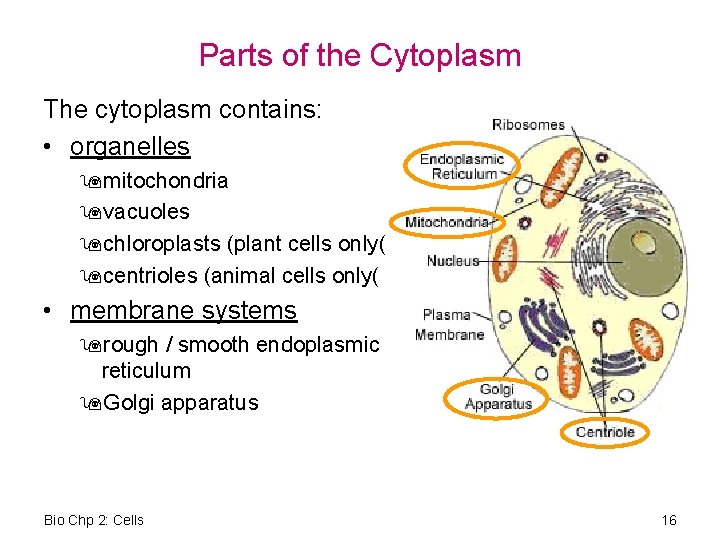
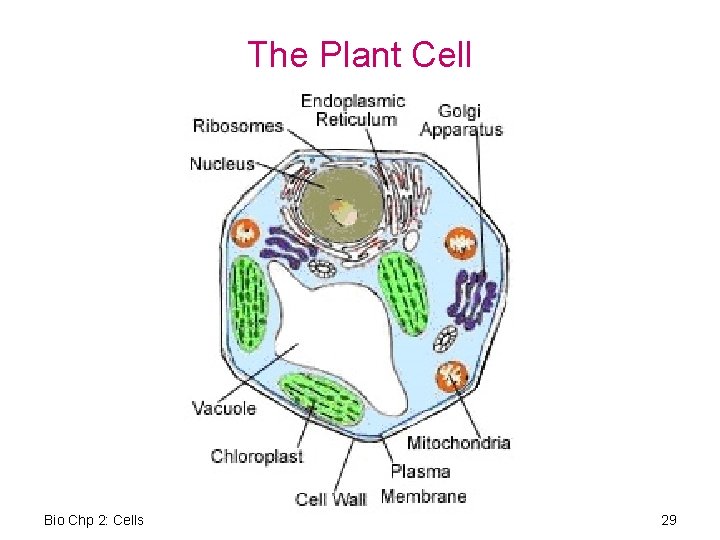
Parts of the Cytoplasm The cytoplasm contains: • organelles 9 mitochondria 9 vacuoles 9 chloroplasts (plant cells only( 9 centrioles (animal cells only( • membrane systems 9 rough / smooth endoplasmic reticulum 9 Golgi apparatus Bio Chp 2: Cells 16
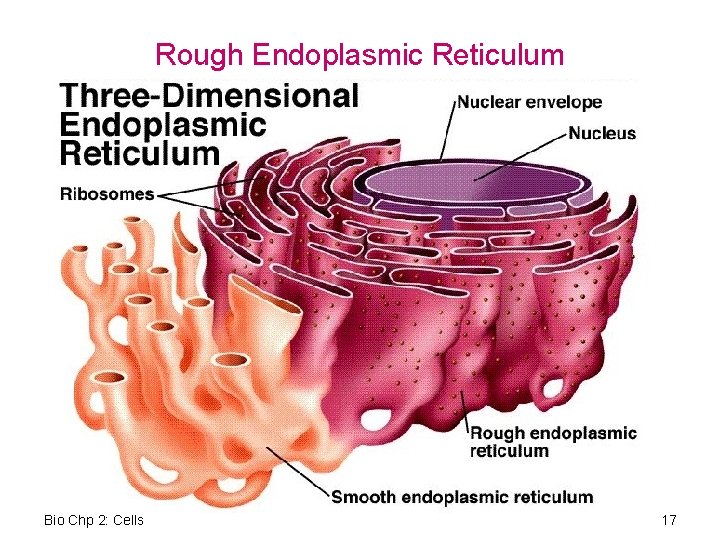
Rough Endoplasmic Reticulum Bio Chp 2: Cells 17
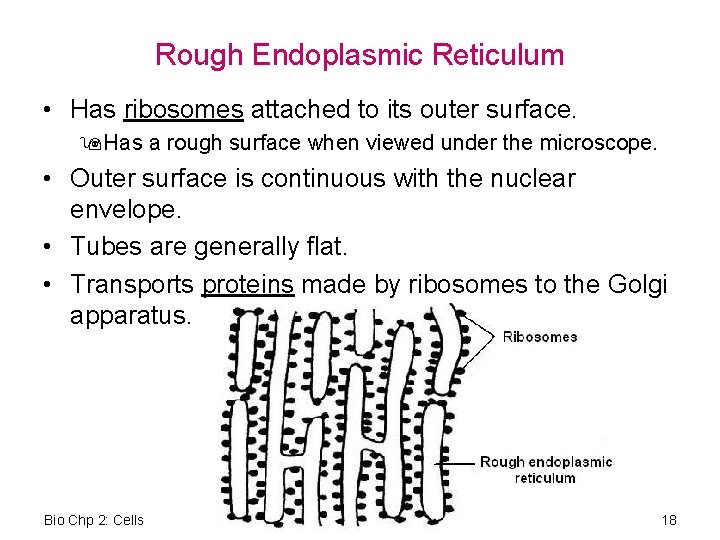
Rough Endoplasmic Reticulum • Has ribosomes attached to its outer surface. 9 Has a rough surface when viewed under the microscope. • Outer surface is continuous with the nuclear envelope. • Tubes are generally flat. • Transports proteins made by ribosomes to the Golgi apparatus. Bio Chp 2: Cells 18
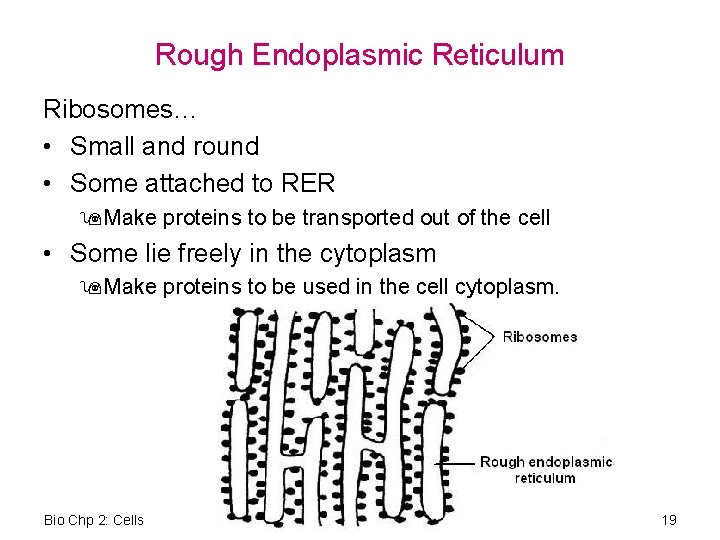
Rough Endoplasmic Reticulum Ribosomes… • Small and round • Some attached to RER 9 Make proteins to be transported out of the cell • Some lie freely in the cytoplasm 9 Make proteins to be used in the cell cytoplasm. Bio Chp 2: Cells 19
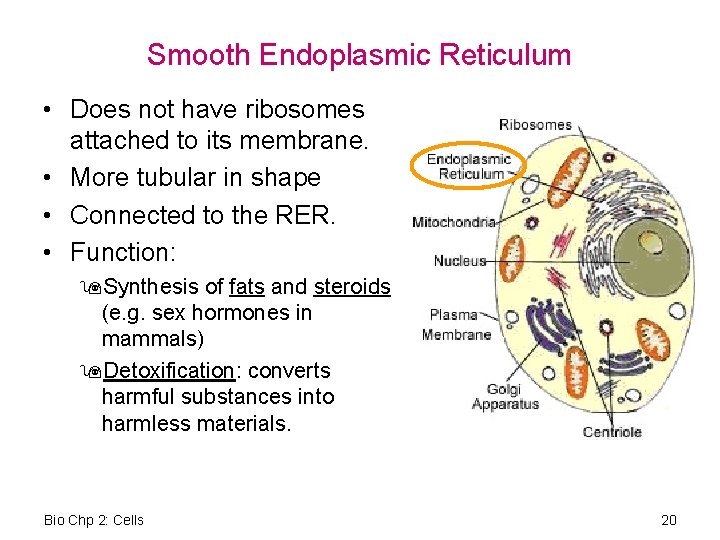
Smooth Endoplasmic Reticulum • Does not have ribosomes attached to its membrane. • More tubular in shape • Connected to the RER. • Function: 9 Synthesis of fats and steroids (e. g. sex hormones in mammals) 9 Detoxification: converts harmful substances into harmless materials. Bio Chp 2: Cells 20
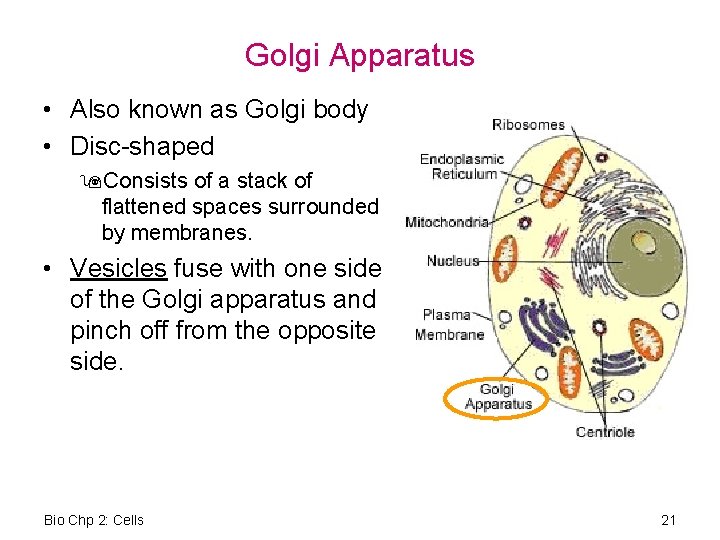
Golgi Apparatus • Also known as Golgi body • Disc-shaped 9 Consists of a stack of flattened spaces surrounded by membranes. • Vesicles fuse with one side of the Golgi apparatus and pinch off from the opposite side. Bio Chp 2: Cells 21
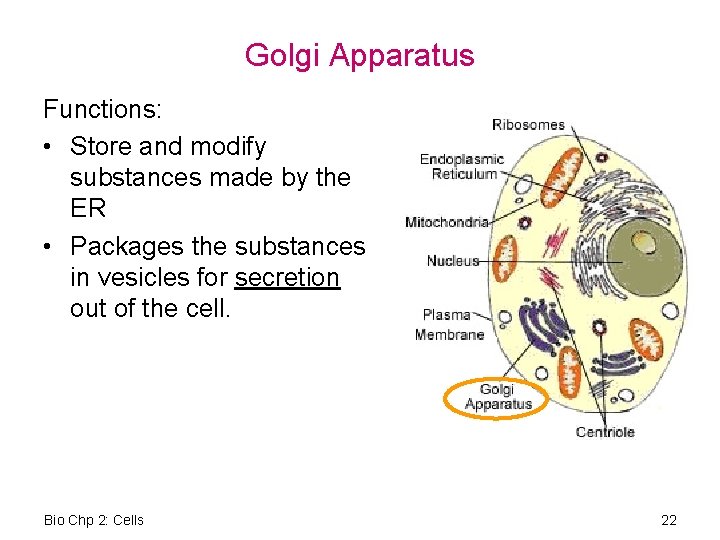
Golgi Apparatus Functions: • Store and modify substances made by the ER • Packages the substances in vesicles for secretion out of the cell. Bio Chp 2: Cells 22
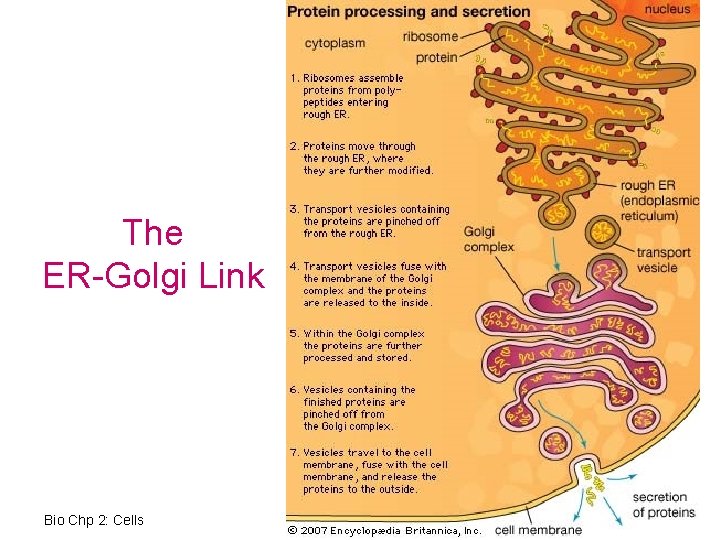
The ER-Golgi Link Bio Chp 2: Cells 23
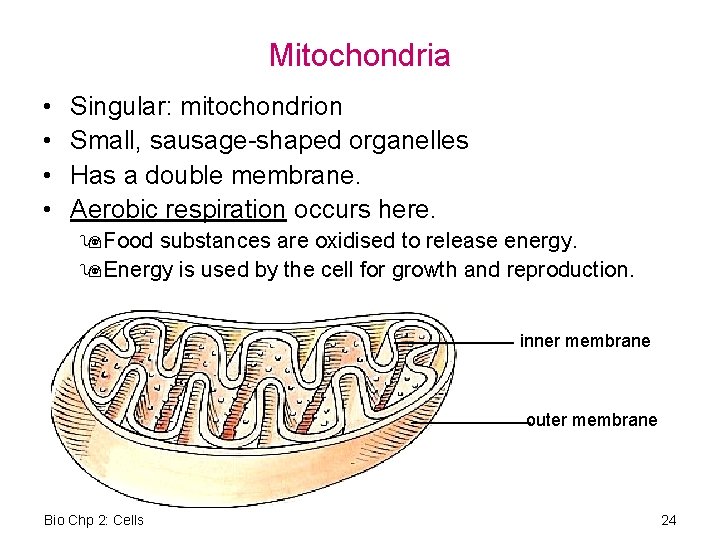
Mitochondria • • Singular: mitochondrion Small, sausage-shaped organelles Has a double membrane. Aerobic respiration occurs here. 9 Food substances are oxidised to release energy. 9 Energy is used by the cell for growth and reproduction. inner membrane outer membrane Bio Chp 2: Cells 24
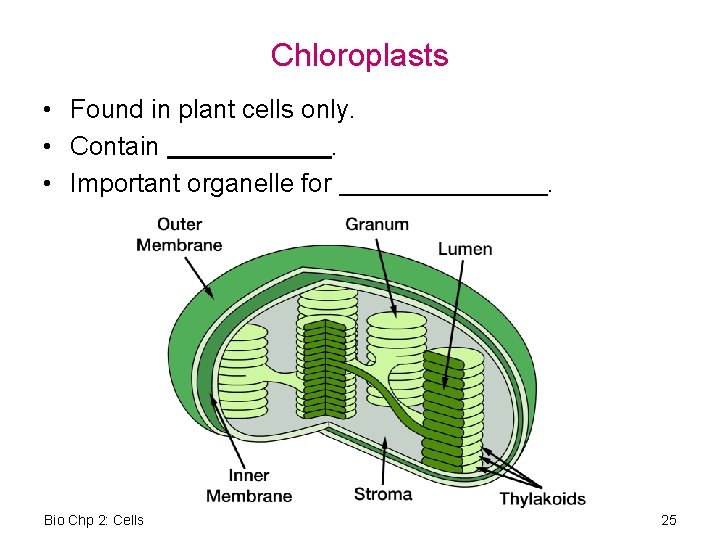
Chloroplasts • Found in plant cells only. • Contain. • Important organelle for Bio Chp 2: Cells . 25
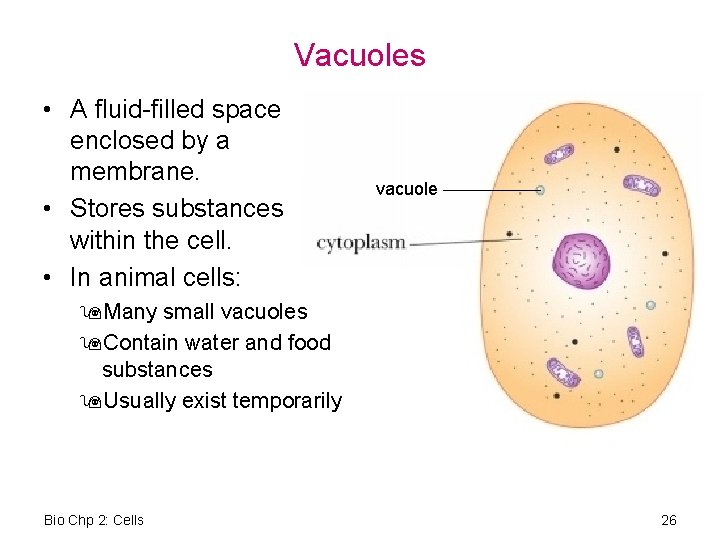
Vacuoles • A fluid-filled space enclosed by a membrane. • Stores substances within the cell. • In animal cells: vacuole 9 Many small vacuoles 9 Contain water and food substances 9 Usually exist temporarily Bio Chp 2: Cells 26
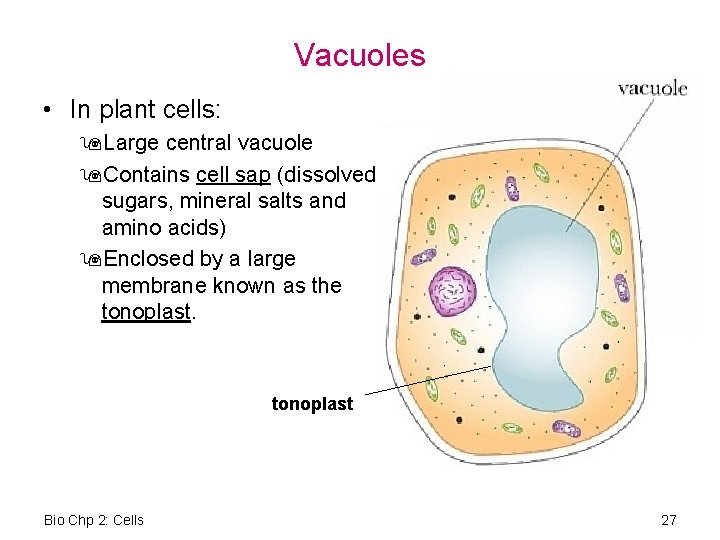
Vacuoles • In plant cells: 9 Large central vacuole 9 Contains cell sap (dissolved sugars, mineral salts and amino acids) 9 Enclosed by a large membrane known as the tonoplast Bio Chp 2: Cells 27
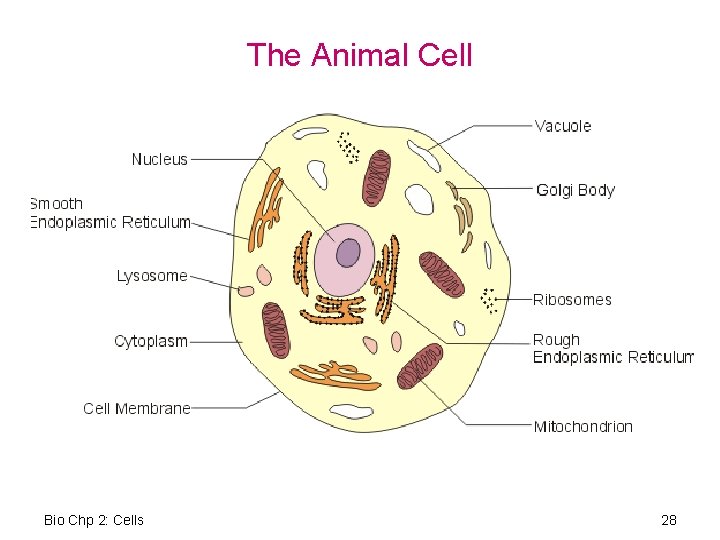
The Animal Cell Bio Chp 2: Cells 28
The Plant Cell Bio Chp 2: Cells 29
Specialized cells, tissues, organs and systems • Living organisms grow through cell division, producing new cells. • New cells may differentiate to enable them to carry out specific functions. Differentiation: A process by which a cell becomes specialized for a specific function. Bio Chp 2: Cells 30
Specialized Cells • Specialized cells have specific structures to enable it to carry out its specific function. Bio Chp 2: Cells 31
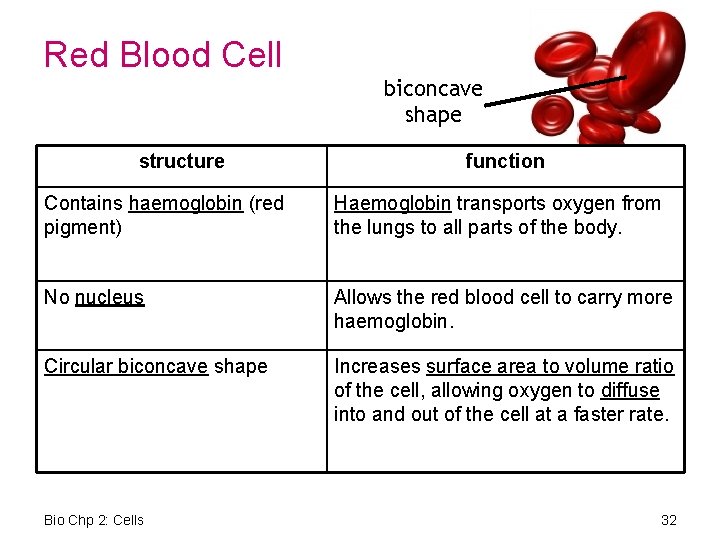
Red Blood Cell biconcave shape structure function Contains haemoglobin (red pigment) Haemoglobin transports oxygen from the lungs to all parts of the body. No nucleus Allows the red blood cell to carry more haemoglobin. Circular biconcave shape Increases surface area to volume ratio of the cell, allowing oxygen to diffuse into and out of the cell at a faster rate. Bio Chp 2: Cells 32
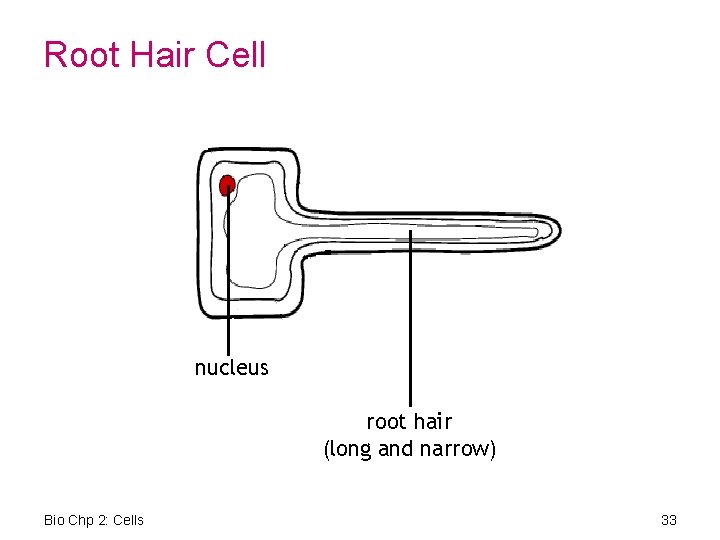
Root Hair Cell nucleus root hair (long and narrow) Bio Chp 2: Cells 33
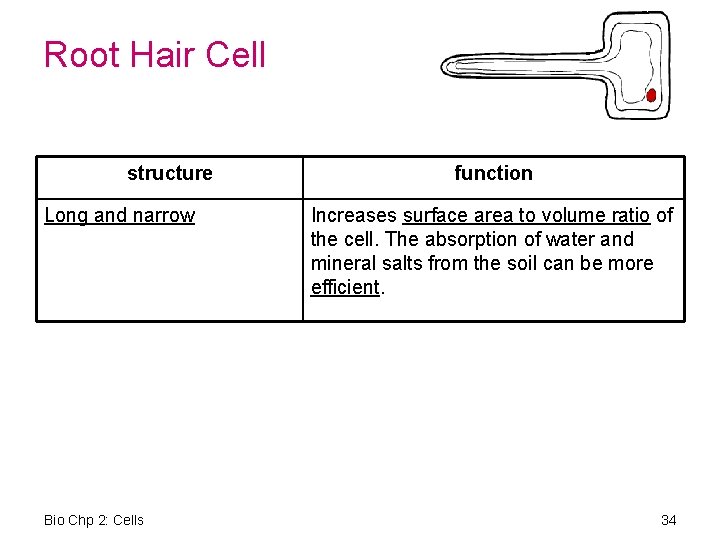
Root Hair Cell structure Long and narrow Bio Chp 2: Cells function Increases surface area to volume ratio of the cell. The absorption of water and mineral salts from the soil can be more efficient. 34
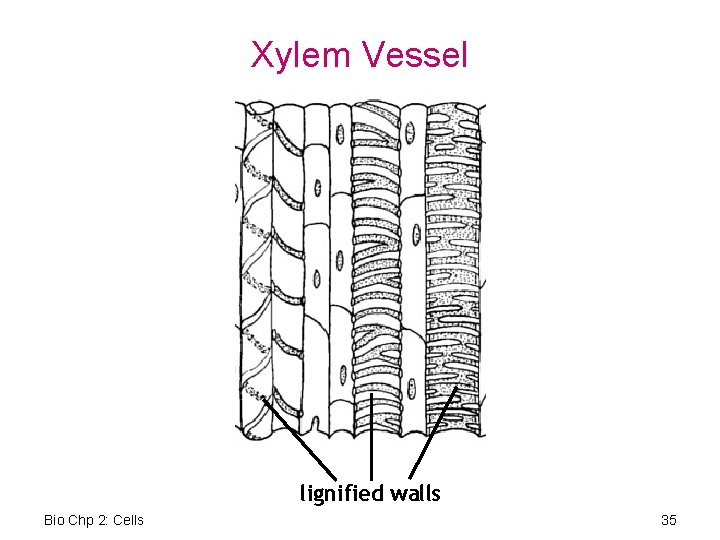
Xylem Vessel lignified walls Bio Chp 2: Cells 35
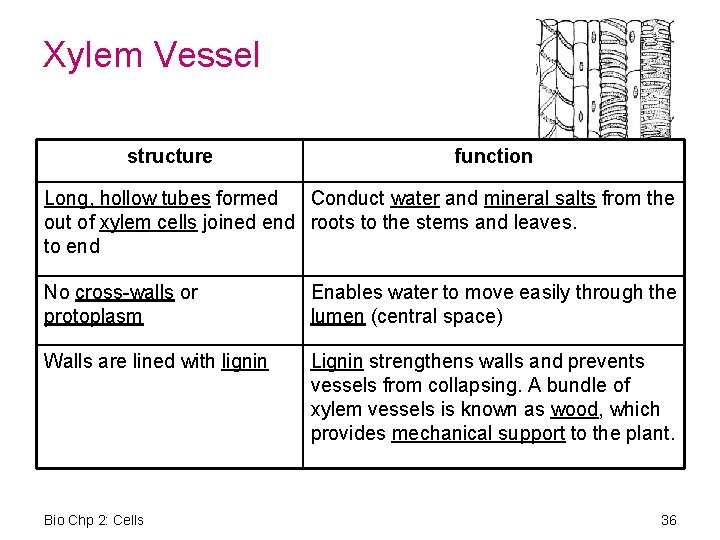
Xylem Vessel structure function Long, hollow tubes formed Conduct water and mineral salts from the out of xylem cells joined end roots to the stems and leaves. to end No cross-walls or protoplasm Enables water to move easily through the lumen (central space) Walls are lined with lignin Lignin strengthens walls and prevents vessels from collapsing. A bundle of xylem vessels is known as wood, which provides mechanical support to the plant. Bio Chp 2: Cells 36
Cells in a Multicellular Organism many cells living thing • Multicellular organisms are organisms that are made up of many cells. • Cells do not work alone; they work together with other cells. Bio Chp 2: Cells 37
Cells group together to form TISSUE • Tissue is a group of cells working together to perform a specific function. • Cells of the same type form simple tissue. • Different types of cells group together to form complex tissue. Bio Chp 2: Cells 38
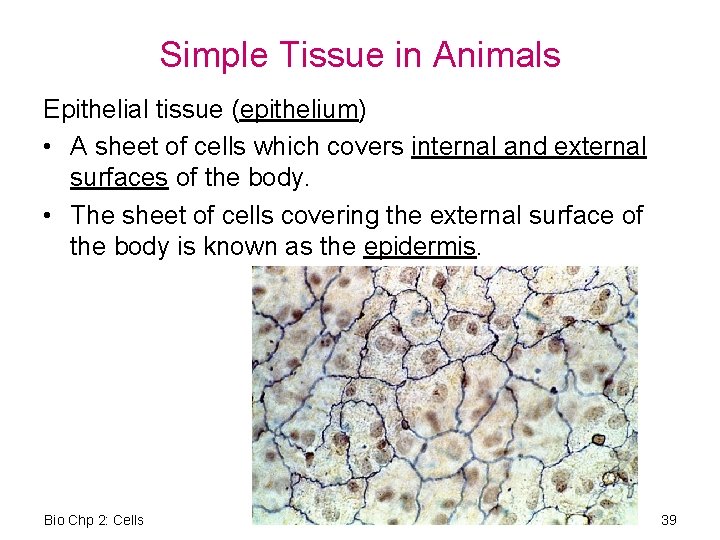
Simple Tissue in Animals Epithelial tissue (epithelium) • A sheet of cells which covers internal and external surfaces of the body. • The sheet of cells covering the external surface of the body is known as the epidermis. Bio Chp 2: Cells 39
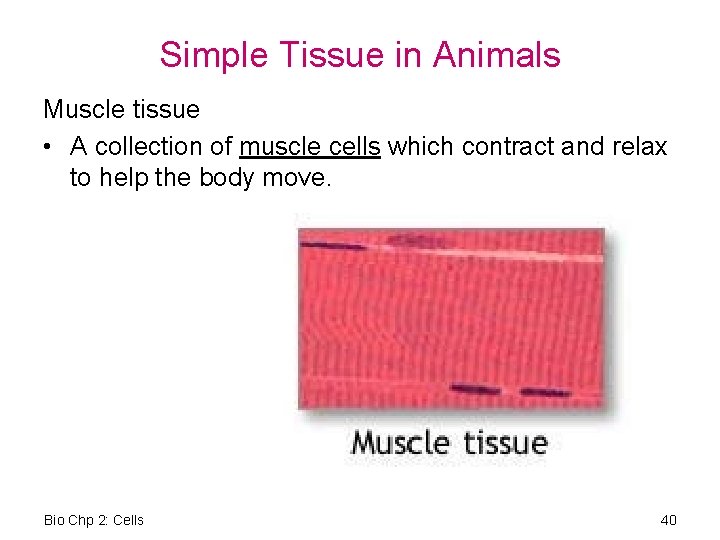
Simple Tissue in Animals Muscle tissue • A collection of muscle cells which contract and relax to help the body move. Bio Chp 2: Cells 40
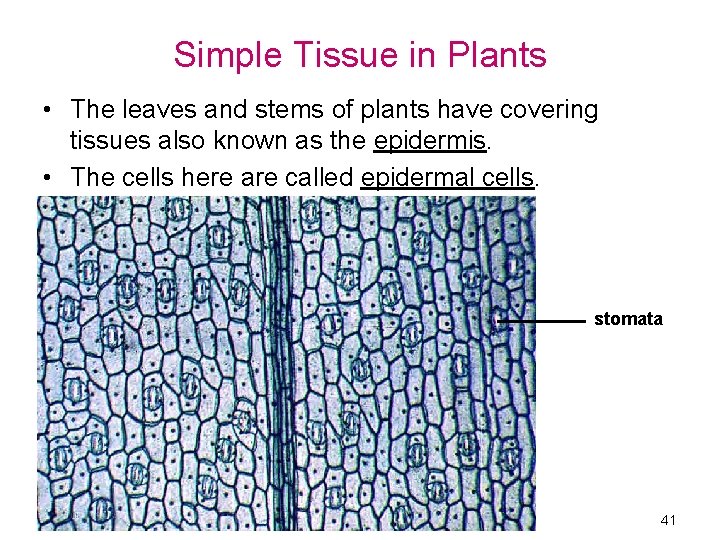
Simple Tissue in Plants • The leaves and stems of plants have covering tissues also known as the epidermis. • The cells here are called epidermal cells. stomata Bio Chp 2: Cells 41
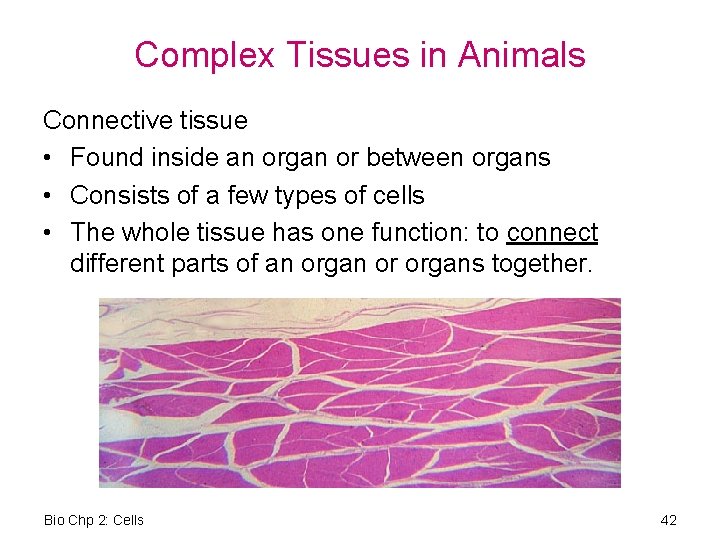
Complex Tissues in Animals Connective tissue • Found inside an organ or between organs • Consists of a few types of cells • The whole tissue has one function: to connect different parts of an organ or organs together. Bio Chp 2: Cells 42
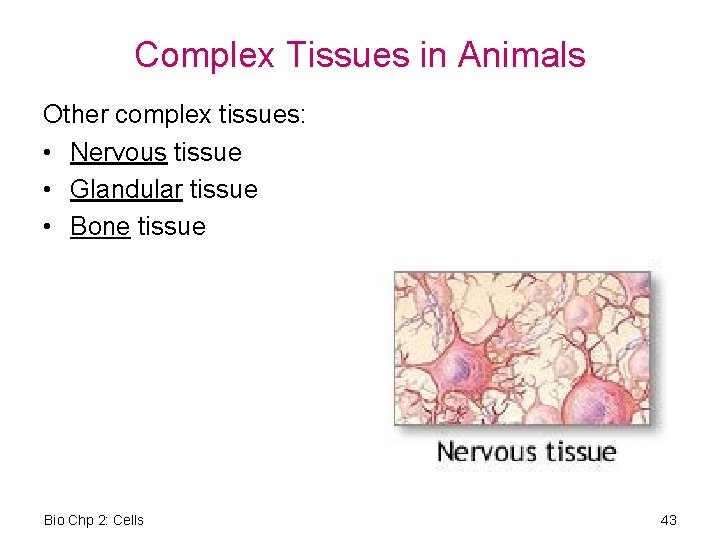
Complex Tissues in Animals Other complex tissues: • Nervous tissue • Glandular tissue • Bone tissue Bio Chp 2: Cells 43
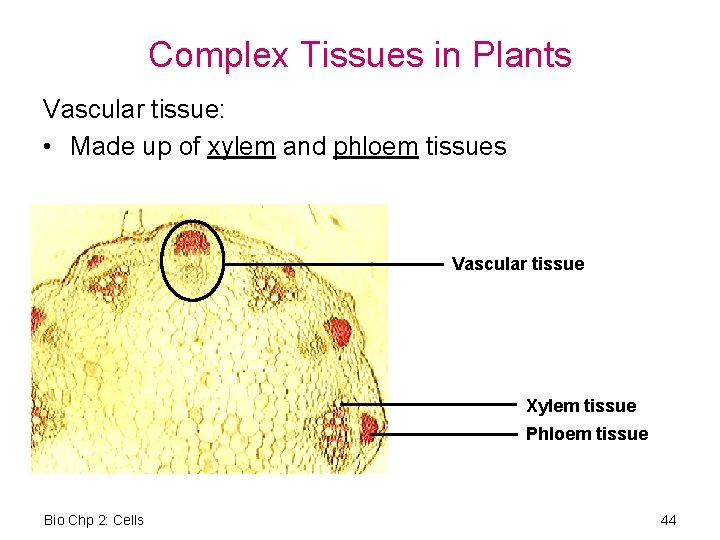
Complex Tissues in Plants Vascular tissue: • Made up of xylem and phloem tissues Vascular tissue Xylem tissue Phloem tissue Bio Chp 2: Cells 44
Tissues work together to form ORGANS • Different tissues may be united to form an organ. • The different tissues work together to perform a specific function. Bio Chp 2: Cells 45
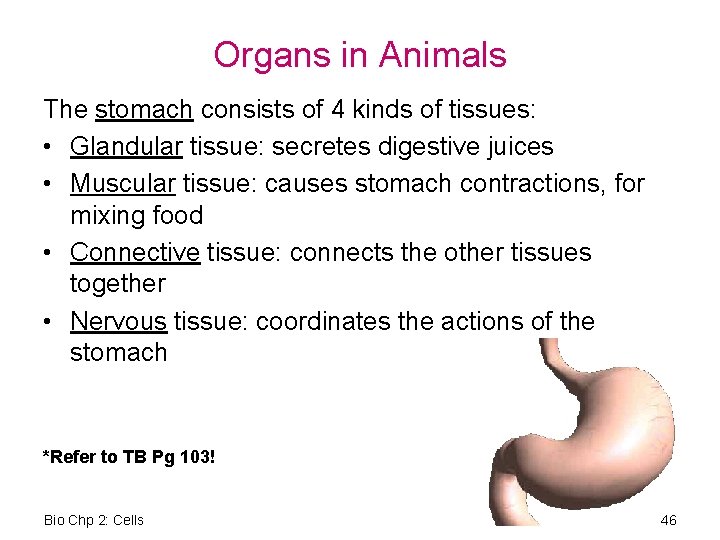
Organs in Animals The stomach consists of 4 kinds of tissues: • Glandular tissue: secretes digestive juices • Muscular tissue: causes stomach contractions, for mixing food • Connective tissue: connects the other tissues together • Nervous tissue: coordinates the actions of the stomach *Refer to TB Pg 103! Bio Chp 2: Cells 46
Organs in Animals Sense organs • The skin is the largest organ in the body. • Other sense organs include the eyes, ears, nose and mouth. Bio Chp 2: Cells 47
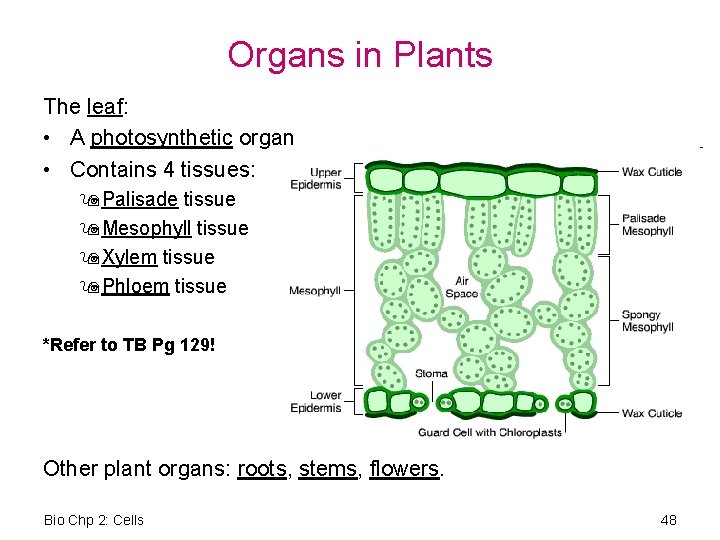
Organs in Plants The leaf: • A photosynthetic organ • Contains 4 tissues: 9 Palisade tissue 9 Mesophyll tissue 9 Xylem tissue 9 Phloem tissue *Refer to TB Pg 129! Other plant organs: roots, stems, flowers. Bio Chp 2: Cells 48
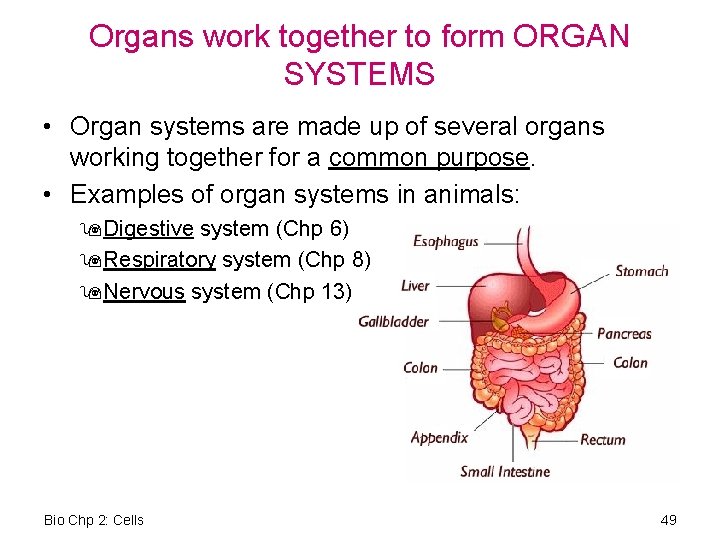
Organs work together to form ORGAN SYSTEMS • Organ systems are made up of several organs working together for a common purpose. • Examples of organ systems in animals: 9 Digestive system (Chp 6) 9 Respiratory system (Chp 8) 9 Nervous system (Chp 13) Bio Chp 2: Cells 49
Various systems work together to make up the ORGANISM! Bio Chp 2: Cells 50
- Slides: 50