
Cells ANIMAL PLANT Cells A cell must Breathe
Cells ANIMAL & PLANT
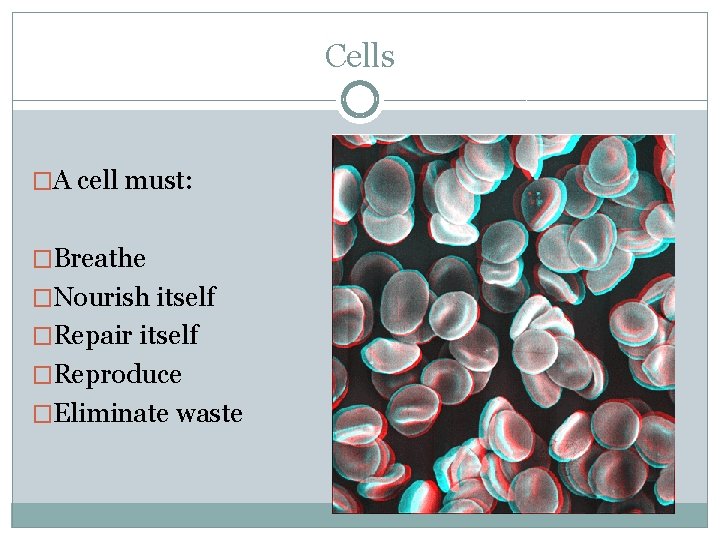
Cells �A cell must: �Breathe �Nourish itself �Repair itself �Reproduce �Eliminate waste
Cells �The internal structures of a cell are called organelles
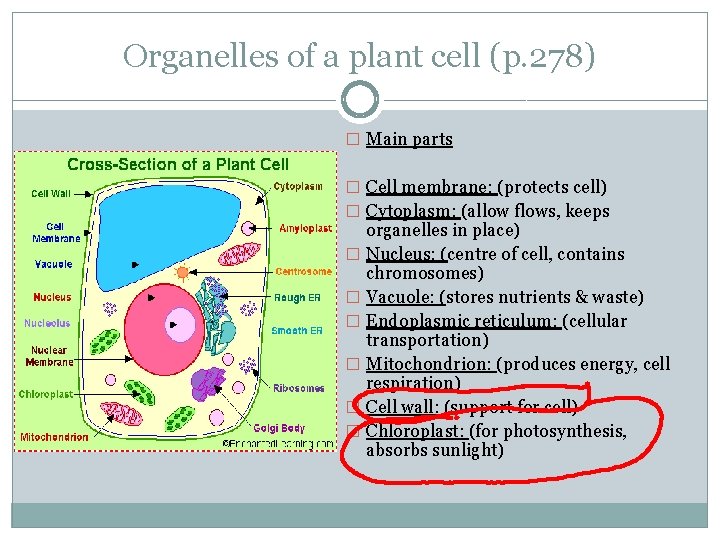
Organelles of a plant cell (p. 278) � Main parts � Cell membrane: (protects cell) � Cytoplasm: (allow flows, keeps � � � organelles in place) Nucleus: (centre of cell, contains chromosomes) Vacuole: (stores nutrients & waste) Endoplasmic reticulum: (cellular transportation) Mitochondrion: (produces energy, cell respiration) Cell wall: (support for cell) Chloroplast: (for photosynthesis, absorbs sunlight)
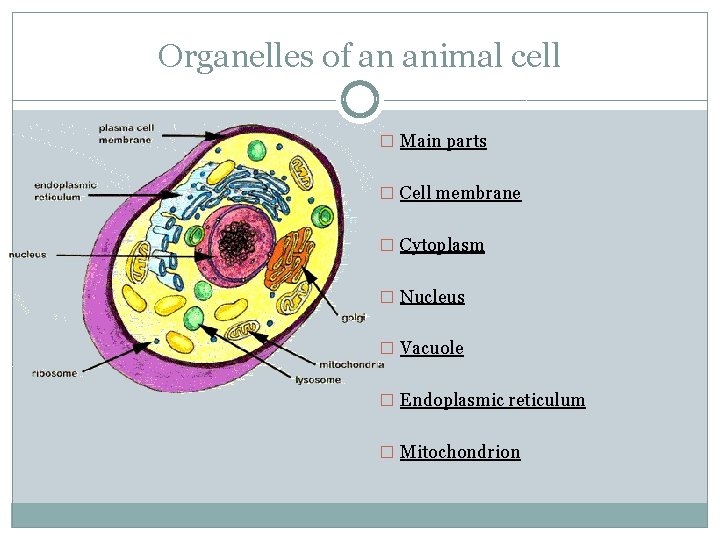
Organelles of an animal cell � Main parts � Cell membrane � Cytoplasm � Nucleus � Vacuole � Endoplasmic reticulum � Mitochondrion
How cells work �Inputs : the things that enter the cell to make it work �(i. e. Water, nutrients, oxygen) �Outputs: Once the cell has used up its inputs it must remove the waste (outputs)
Exchange between cells and their environment �The cell membrane makes sure only the correct inputs enter the cell �The substances that enter the cell move in and out via diffusion
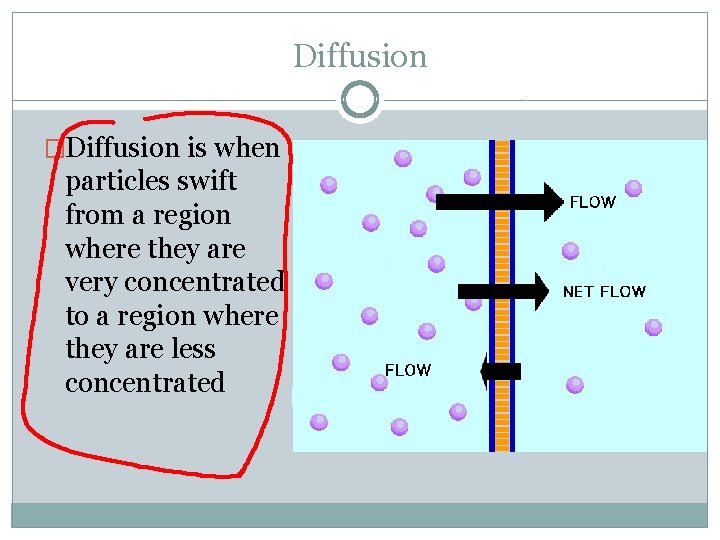
Diffusion �Diffusion is when particles swift from a region where they are very concentrated to a region where they are less concentrated
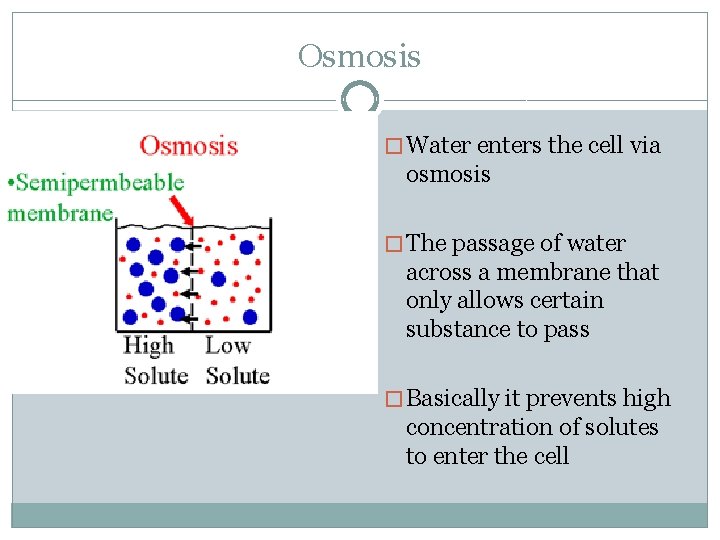
Osmosis � Water enters the cell via osmosis � The passage of water across a membrane that only allows certain substance to pass � Basically it prevents high concentration of solutes to enter the cell
The vital functions of the cell � Plant cells Animal cells: � Photosynthesis : - Take in carbon dioxide, water, solar energy (inputs) - Let out oxygen and carbohydrates (outputs) Cellular respiration: -oxygen, carbs (inputs) - carbon dioxide, water, energy (outputs)
IN CLASS WORK �P. 289 �#1 to 4
- Slides: 11