
Cells and Tissues Chapter 3 Cells and Tissues
- Slides: 37
Cells and Tissues Chapter 3
Cells and Tissues • Carry out all chemical activities • Cells are the building blocks of all living things • Tissues are groups of cells that are similar in structure and function
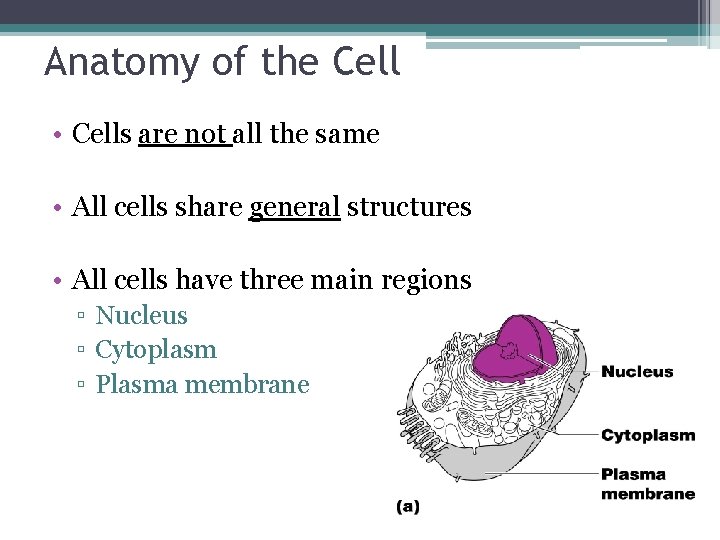
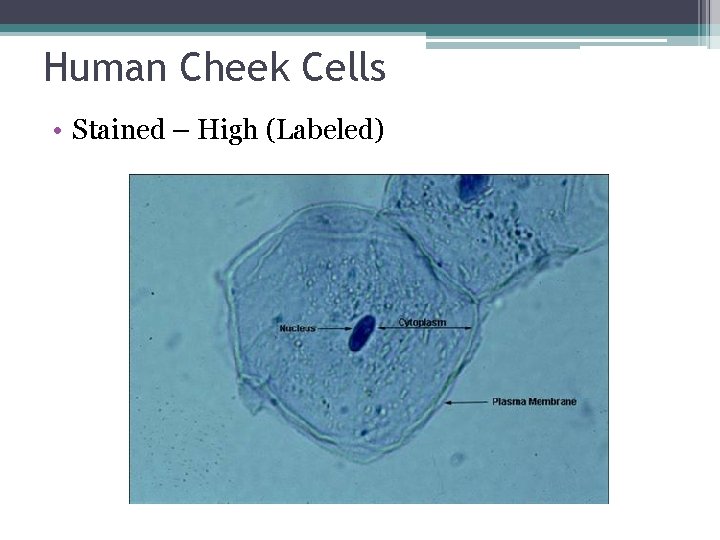
Anatomy of the Cell • Cells are not all the same • All cells share general structures • All cells have three main regions ▫ Nucleus ▫ Cytoplasm ▫ Plasma membrane
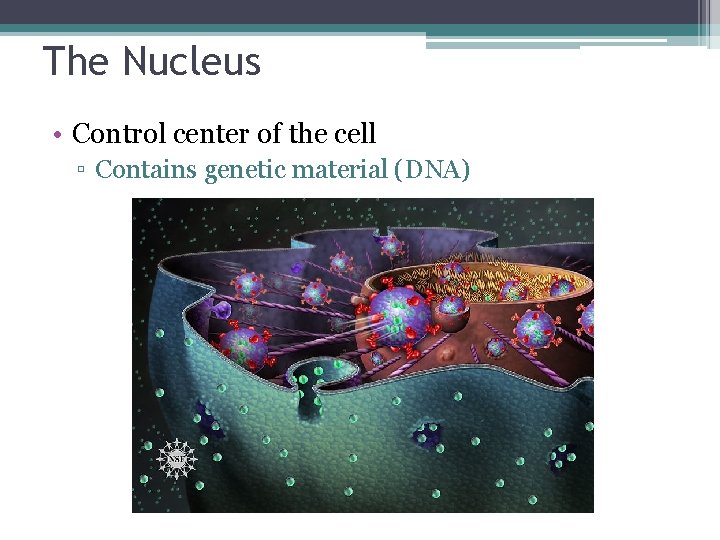
The Nucleus • Control center of the cell ▫ Contains genetic material (DNA)
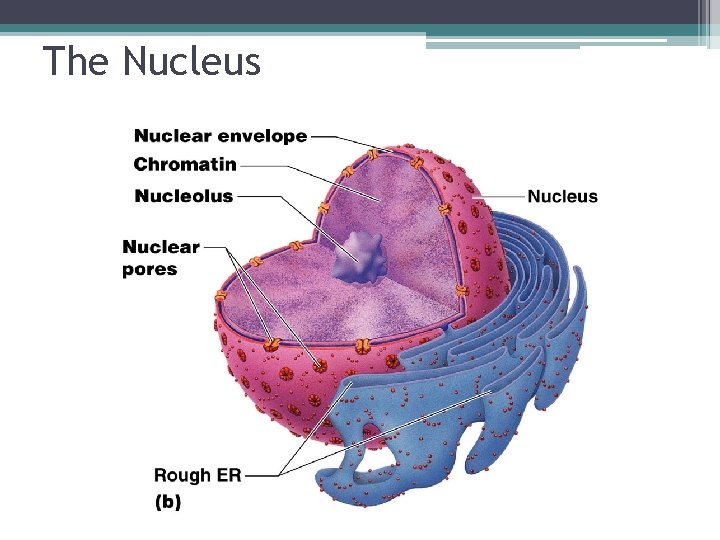
The Nucleus • Three regions ▫ Nuclear envelope (membrane) ▫ Nucleolus ▫ Chromatin
The Nucleus
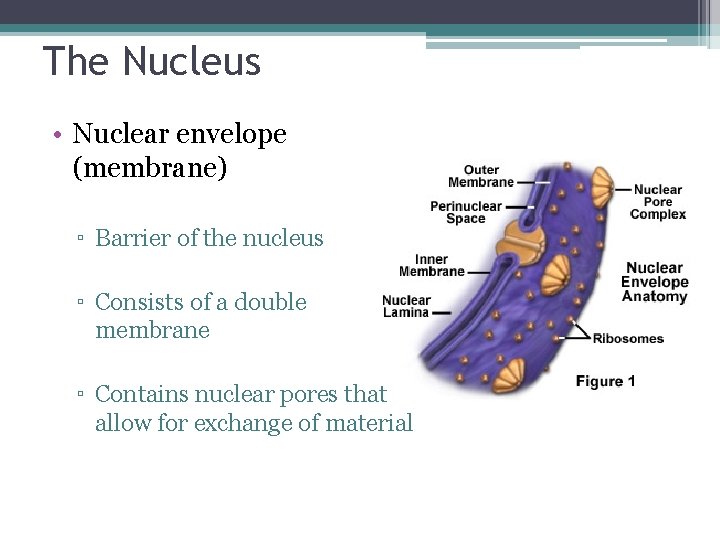
The Nucleus • Nuclear envelope (membrane) ▫ Barrier of the nucleus ▫ Consists of a double membrane ▫ Contains nuclear pores that allow for exchange of material
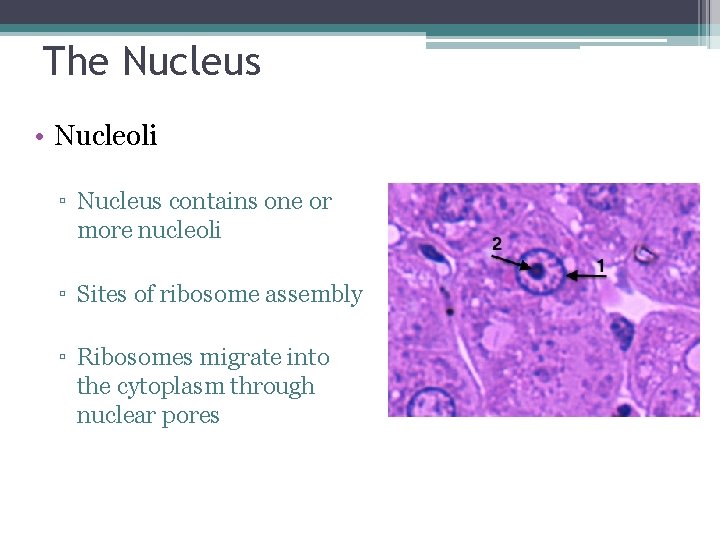
The Nucleus • Nucleoli ▫ Nucleus contains one or more nucleoli ▫ Sites of ribosome assembly ▫ Ribosomes migrate into the cytoplasm through nuclear pores
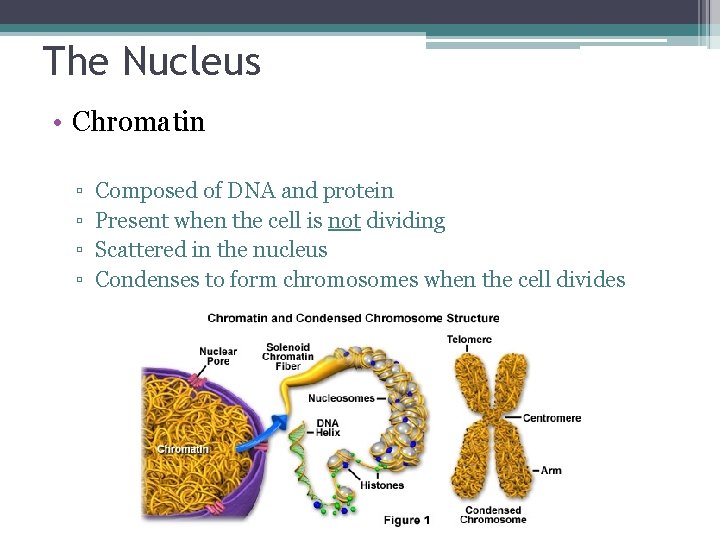
The Nucleus • Chromatin ▫ ▫ Composed of DNA and protein Present when the cell is not dividing Scattered in the nucleus Condenses to form chromosomes when the cell divides
Comparing a Cell to a School • Use pages 66 -73 to complete the chart comparing a cell to a school • Fill in the cell organelle that best fits the described person or place • Write out the function of this organelle in a cell
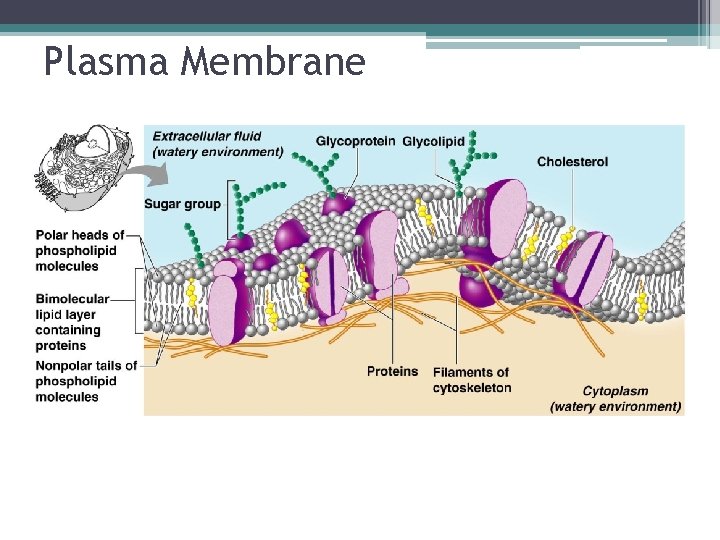
Plasma Membrane • Barrier for cell contents • Double phospholipid layer ▫ Hydrophilic heads ▫ Hydrophobic tails • Also contains proteins, cholesterol, and glycoproteins
Plasma Membrane
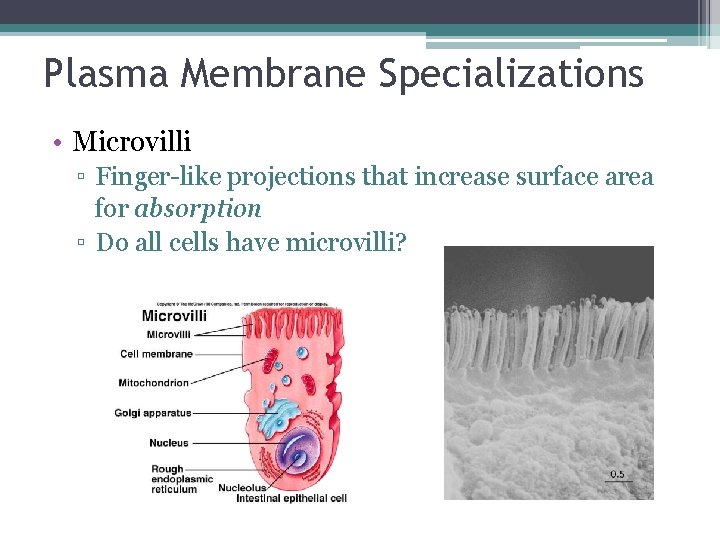
Plasma Membrane Specializations • Microvilli ▫ Finger-like projections that increase surface area for absorption ▫ Do all cells have microvilli?
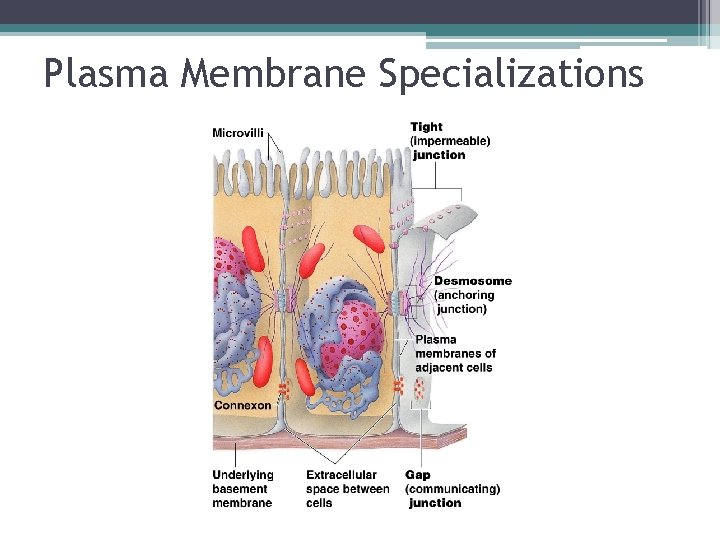
Plasma Membrane Specializations • Membrane junctions ▫ Tight junctions ▫ Desmosomes ▫ Gap junctions
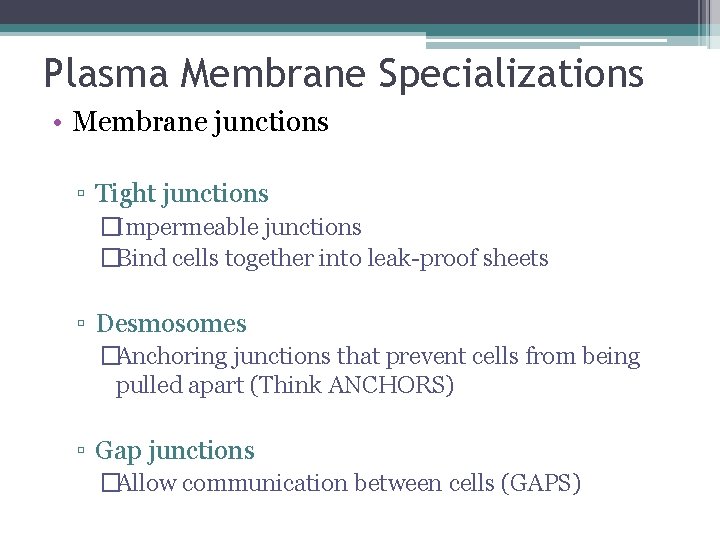
Plasma Membrane Specializations • Membrane junctions ▫ Tight junctions �Impermeable junctions �Bind cells together into leak-proof sheets ▫ Desmosomes �Anchoring junctions that prevent cells from being pulled apart (Think ANCHORS) ▫ Gap junctions �Allow communication between cells (GAPS)
Plasma Membrane Specializations
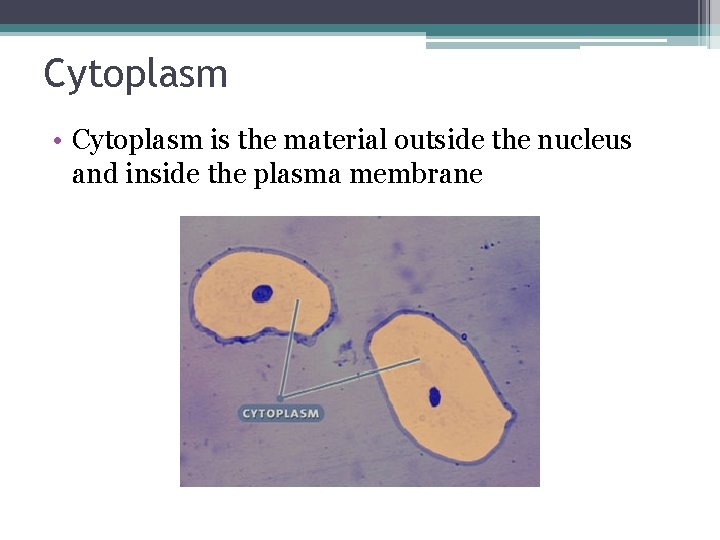
Cytoplasm • Cytoplasm is the material outside the nucleus and inside the plasma membrane
Cytoplasm • Cytosol �Fluid that suspends other elements • Organelles �“Little organs” that perform functions • Inclusions �Stored nutrients or cell products
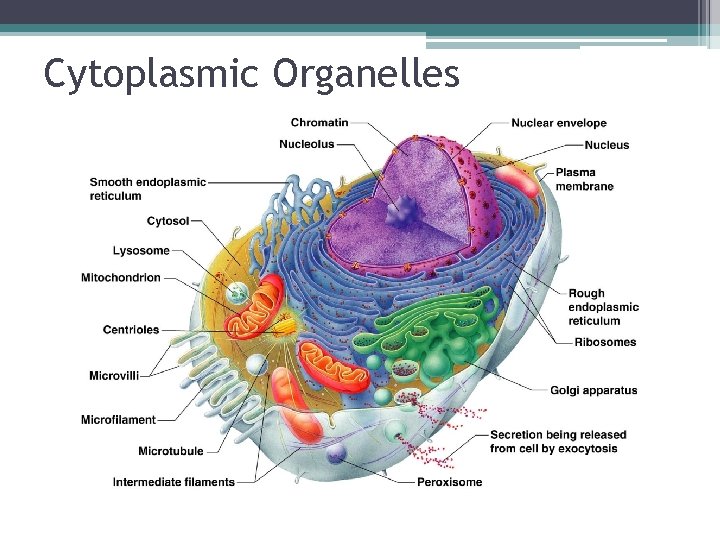
Cytoplasmic Organelles
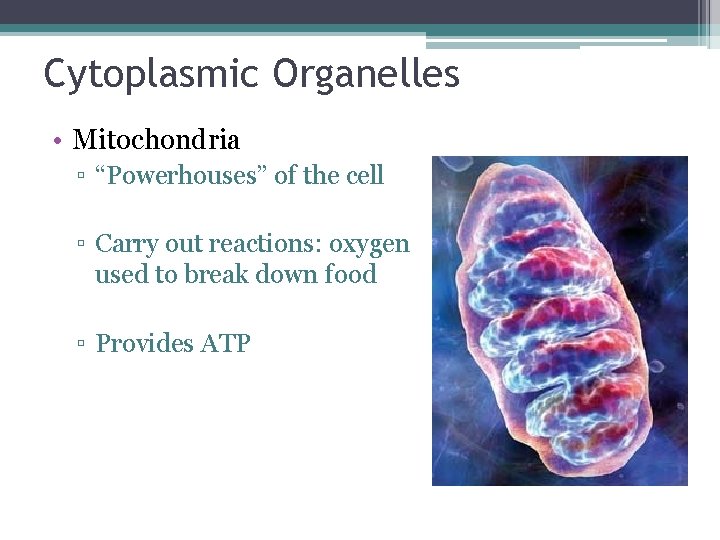
Cytoplasmic Organelles • Mitochondria ▫ “Powerhouses” of the cell ▫ Carry out reactions: oxygen used to break down food ▫ Provides ATP
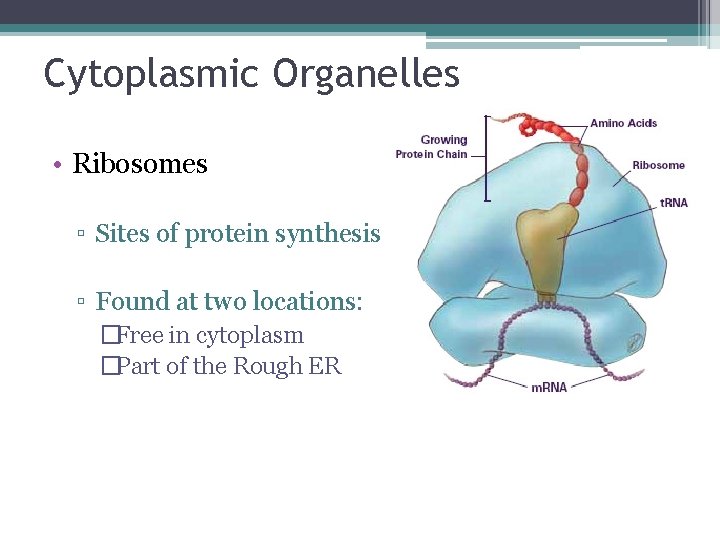
Cytoplasmic Organelles • Ribosomes ▫ Sites of protein synthesis ▫ Found at two locations: �Free in cytoplasm �Part of the Rough ER
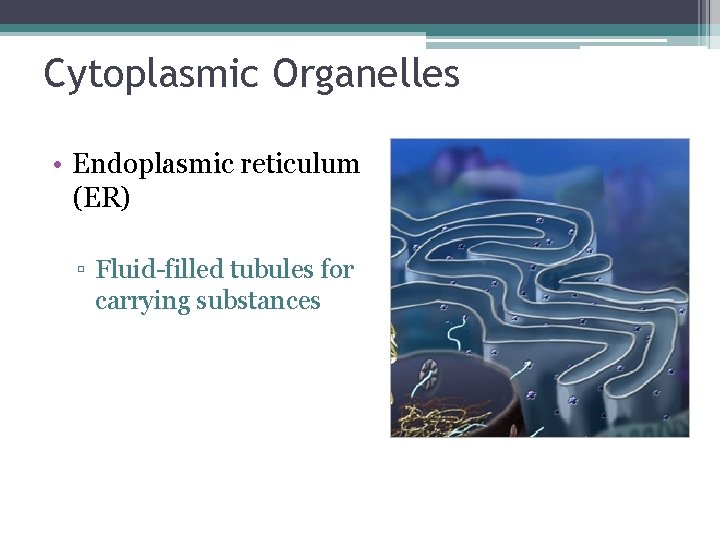
Cytoplasmic Organelles • Endoplasmic reticulum (ER) ▫ Fluid-filled tubules for carrying substances
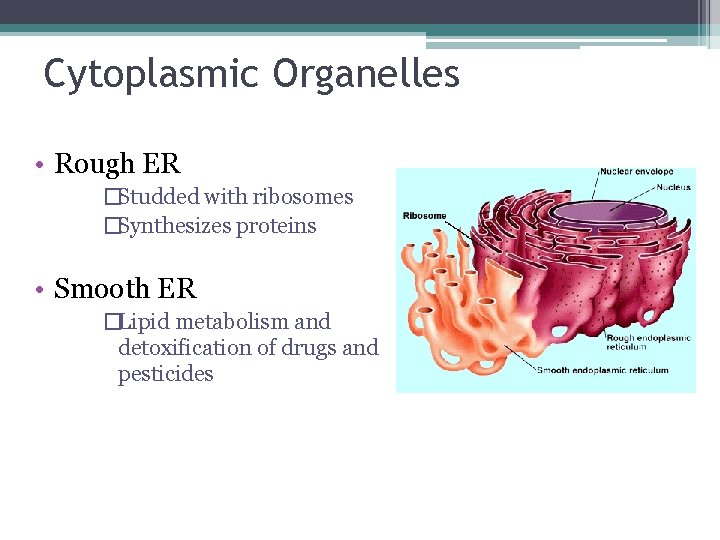
Cytoplasmic Organelles • Rough ER �Studded with ribosomes �Synthesizes proteins • Smooth ER �Lipid metabolism and detoxification of drugs and pesticides
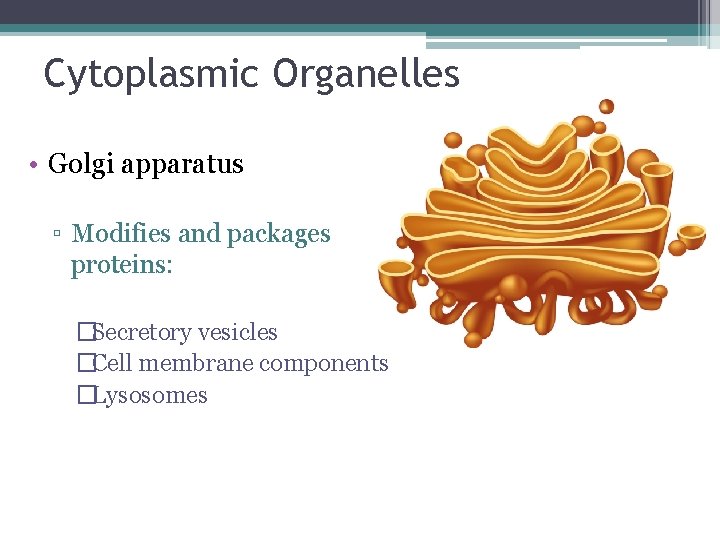
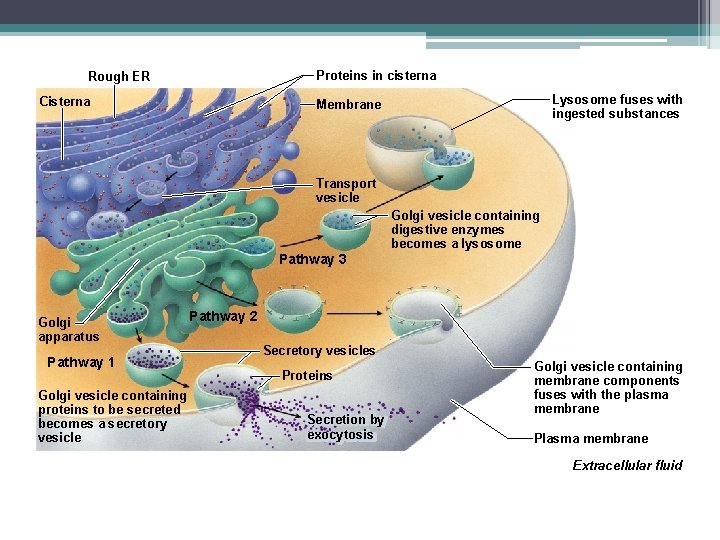
Cytoplasmic Organelles • Golgi apparatus ▫ Modifies and packages proteins: �Secretory vesicles �Cell membrane components �Lysosomes
Proteins in cisterna Rough ER Cisterna Lysosome fuses with ingested substances Membrane Transport vesicle Golgi vesicle containing digestive enzymes becomes a lysosome Pathway 3 Golgi apparatus Pathway 1 Golgi vesicle containing proteins to be secreted becomes a secretory vesicle Pathway 2 Secretory vesicles Proteins Secretion by exocytosis Golgi vesicle containing membrane components fuses with the plasma membrane Plasma membrane Extracellular fluid
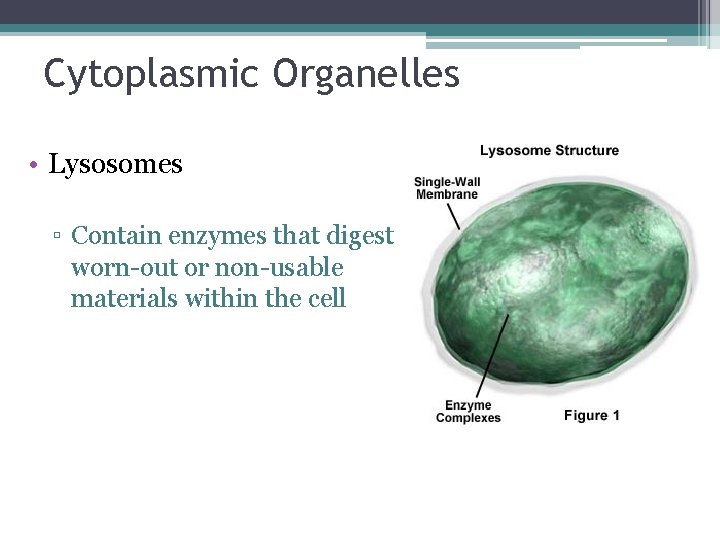
Cytoplasmic Organelles • Lysosomes ▫ Contain enzymes that digest worn-out or non-usable materials within the cell
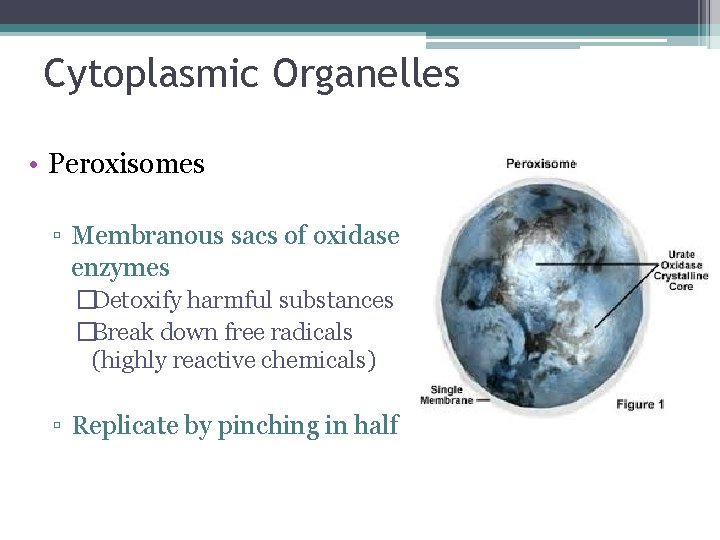
Cytoplasmic Organelles • Peroxisomes ▫ Membranous sacs of oxidase enzymes �Detoxify harmful substances �Break down free radicals (highly reactive chemicals) ▫ Replicate by pinching in half
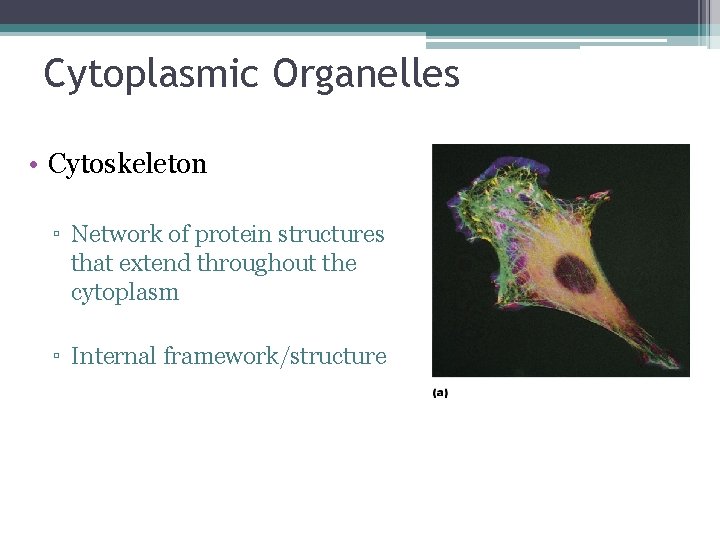
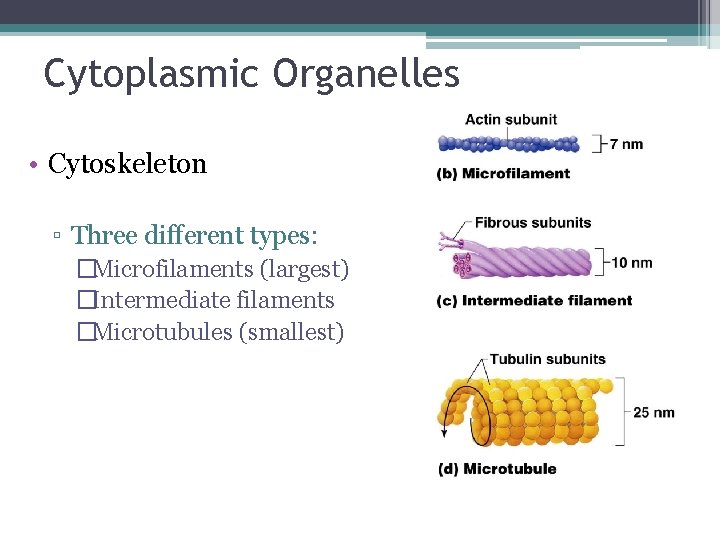
Cytoplasmic Organelles • Cytoskeleton ▫ Network of protein structures that extend throughout the cytoplasm ▫ Internal framework/structure
Cytoplasmic Organelles • Cytoskeleton ▫ Three different types: �Microfilaments (largest) �Intermediate filaments �Microtubules (smallest)
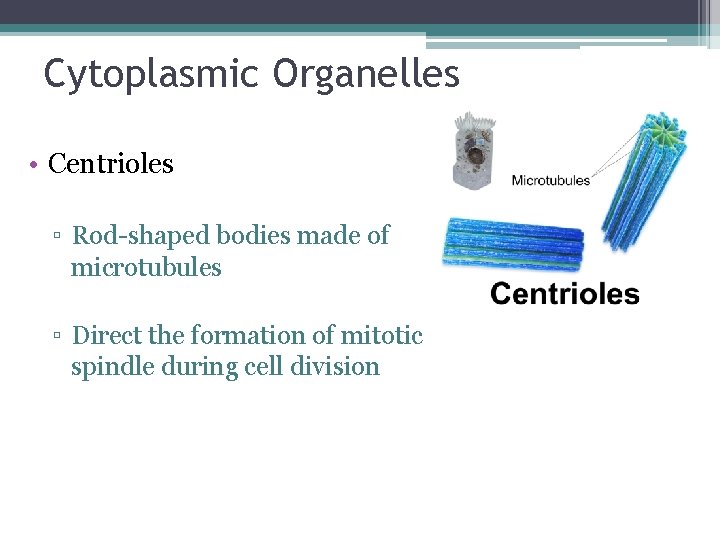
Cytoplasmic Organelles • Centrioles ▫ Rod-shaped bodies made of microtubules ▫ Direct the formation of mitotic spindle during cell division
Cellular Projections • Not found in all cells • Used for movement
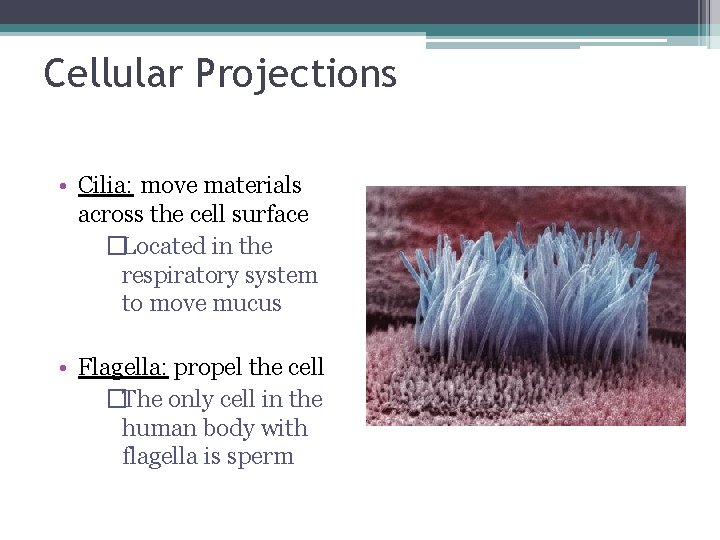
Cellular Projections • Cilia: move materials across the cell surface �Located in the respiratory system to move mucus • Flagella: propel the cell �The only cell in the human body with flagella is sperm
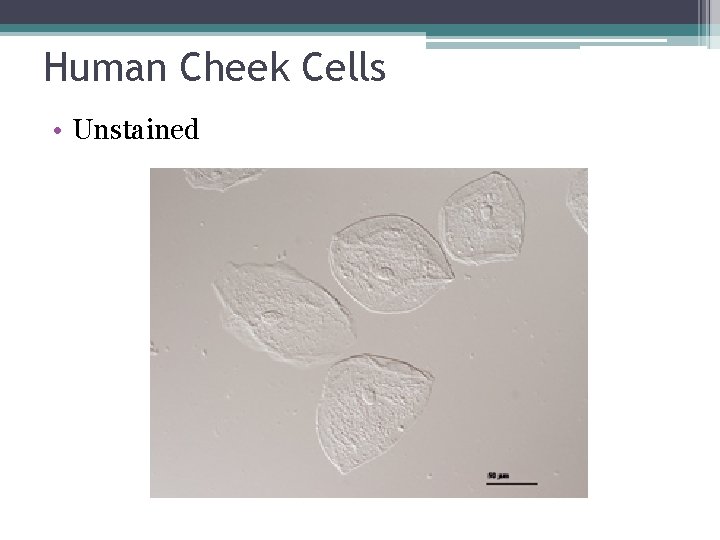
Human Cheek Cells • Unstained
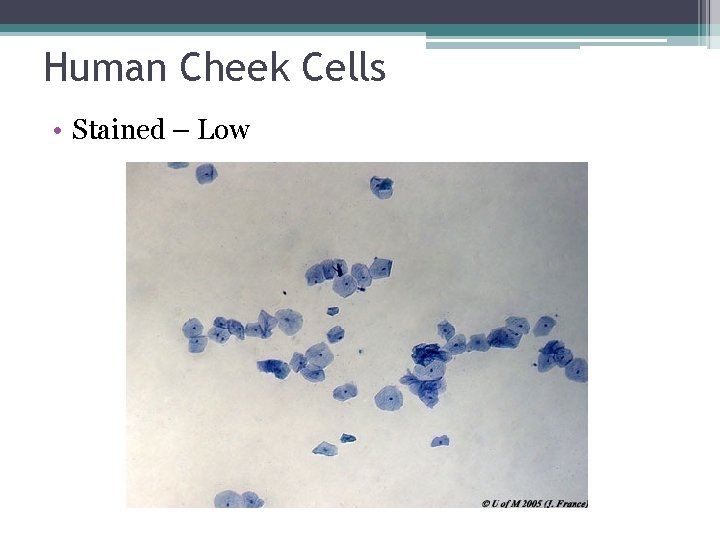
Human Cheek Cells • Stained – Low
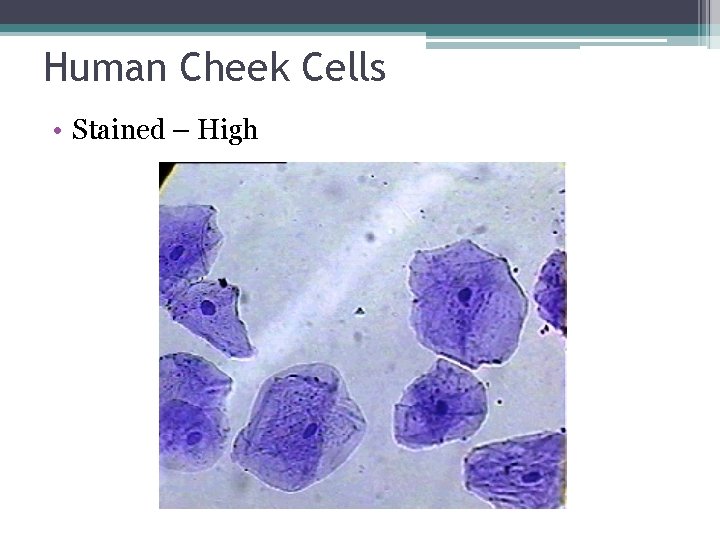
Human Cheek Cells • Stained – High
Human Cheek Cells • Stained – High (Labeled)
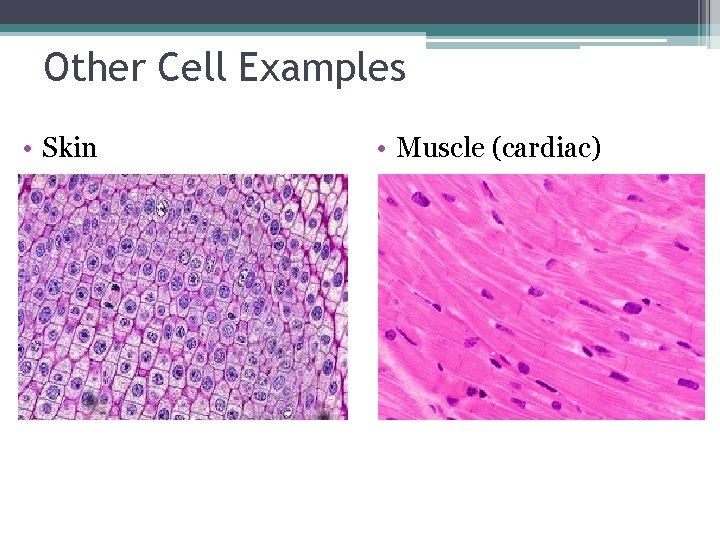
Other Cell Examples • Skin • Muscle (cardiac)