
Cells and their Environment Maintaining Homeostasis One way
- Slides: 20
Cells and their Environment
Maintaining Homeostasis • One way that cells maintain homeostasis is by controlling the movement of substances across the cell membrane • The cell membrane is fluid, not rigid
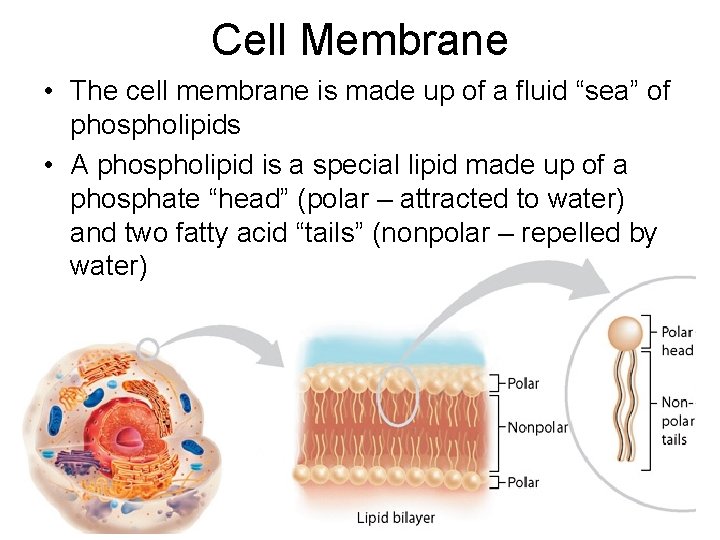
Cell Membrane • The cell membrane is made up of a fluid “sea” of phospholipids • A phospholipid is a special lipid made up of a phosphate “head” (polar – attracted to water) and two fatty acid “tails” (nonpolar – repelled by water)
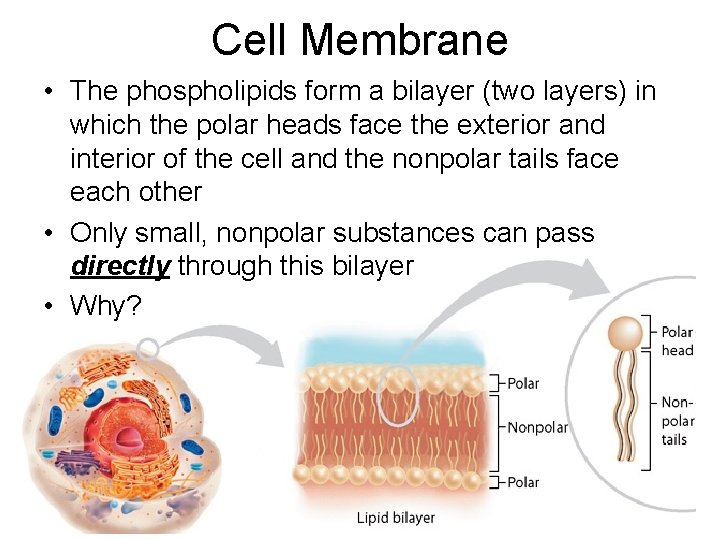
Cell Membrane • The phospholipids form a bilayer (two layers) in which the polar heads face the exterior and interior of the cell and the nonpolar tails face each other • Only small, nonpolar substances can pass directly through this bilayer • Why?
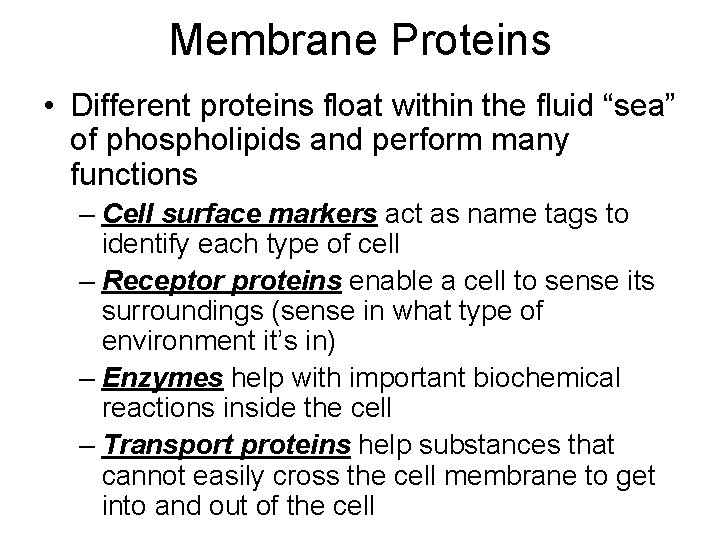
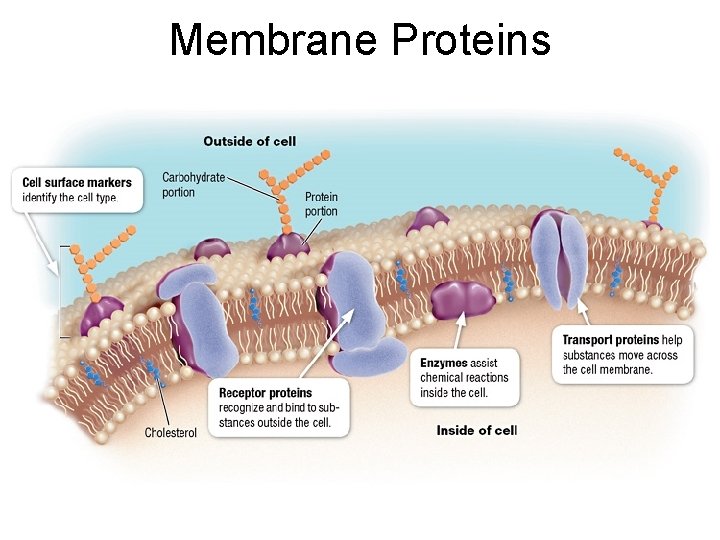
Membrane Proteins • Different proteins float within the fluid “sea” of phospholipids and perform many functions – Cell surface markers act as name tags to identify each type of cell – Receptor proteins enable a cell to sense its surroundings (sense in what type of environment it’s in) – Enzymes help with important biochemical reactions inside the cell – Transport proteins help substances that cannot easily cross the cell membrane to get into and out of the cell
Membrane Proteins
Cell Transport • Substances can enter and leave the cell in many ways • Sometimes, energy is needed, and other times, it is not…
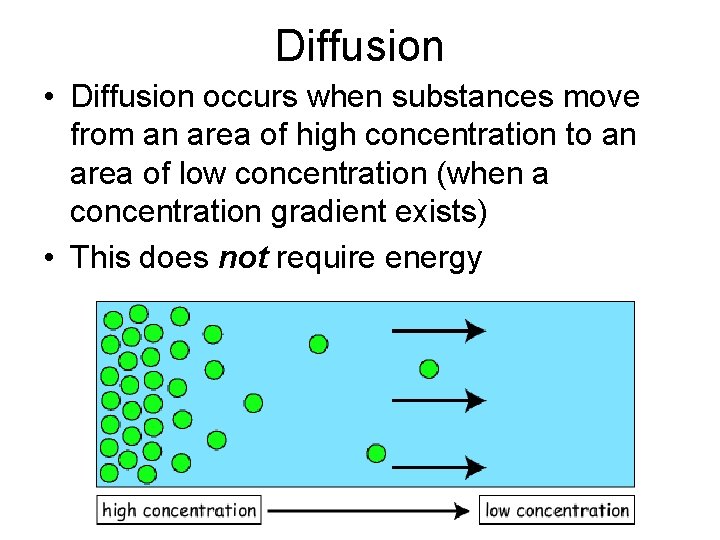
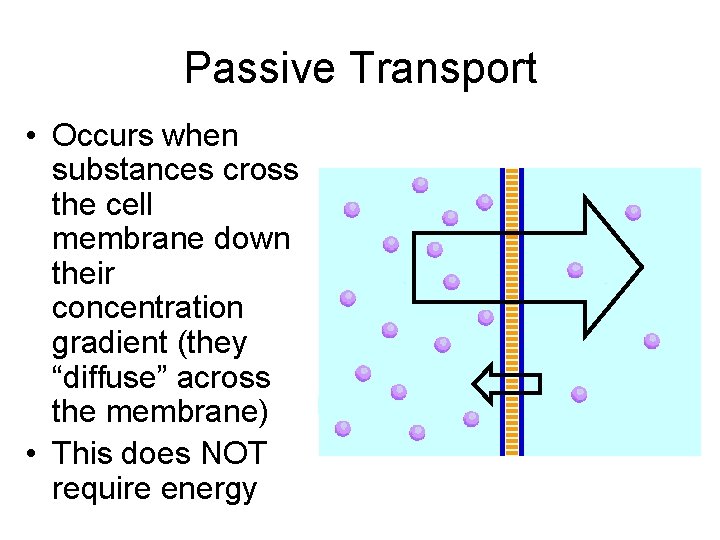
Diffusion • Diffusion occurs when substances move from an area of high concentration to an area of low concentration (when a concentration gradient exists) • This does not require energy
Passive Transport • Occurs when substances cross the cell membrane down their concentration gradient (they “diffuse” across the membrane) • This does NOT require energy
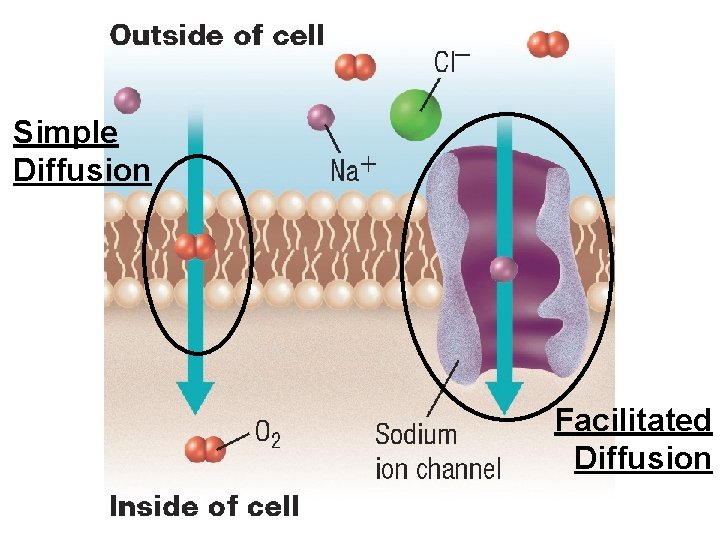
Passive Transport • Simple diffusion allows small nonpolar molecules to pass directly through lipid bilayer (ex: oxygen) • Facilitated diffusion occurs when transport proteins help substances that can’t pass directly through lipid bilayer (ions and polar molecules) cross the membrane. – Even though transport proteins are involved, energy is NOT required!
Passive Transport Simple Diffusion Facilitated Diffusion
Osmosis • Osmosis is the diffusion of water molecules across a cell membrane • Osmosis allows cells to maintain water balance as their environment changes • Since water molecules are polar, they must diffuse through special transport proteins (a form of facilitated diffusion)
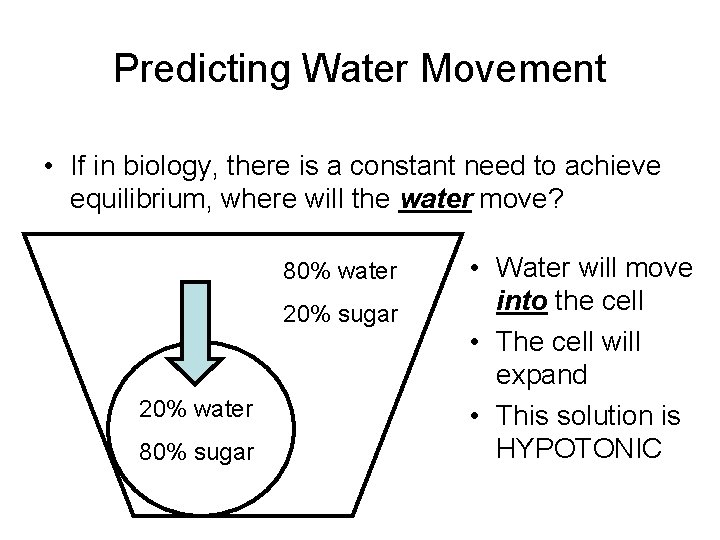
Predicting Water Movement • If in biology, there is a constant need to achieve equilibrium, where will the water move? 80% water 20% sugar 20% water 80% sugar • Water will move into the cell • The cell will expand • This solution is HYPOTONIC
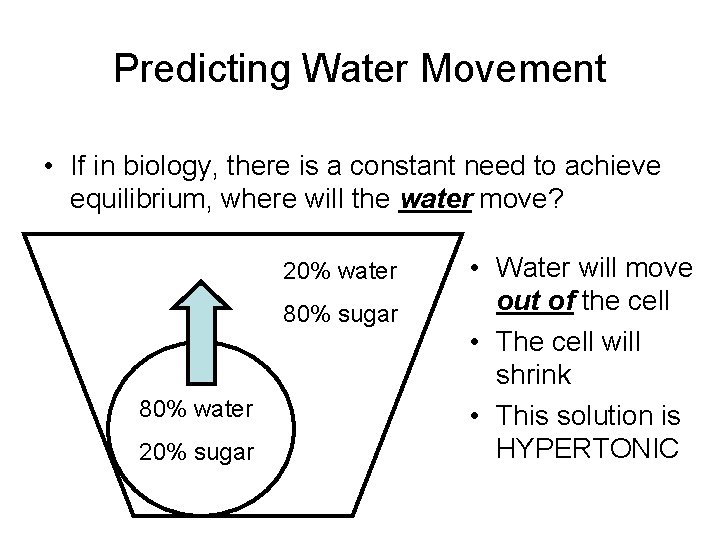
Predicting Water Movement • If in biology, there is a constant need to achieve equilibrium, where will the water move? 20% water 80% sugar 80% water 20% sugar • Water will move out of the cell • The cell will shrink • This solution is HYPERTONIC
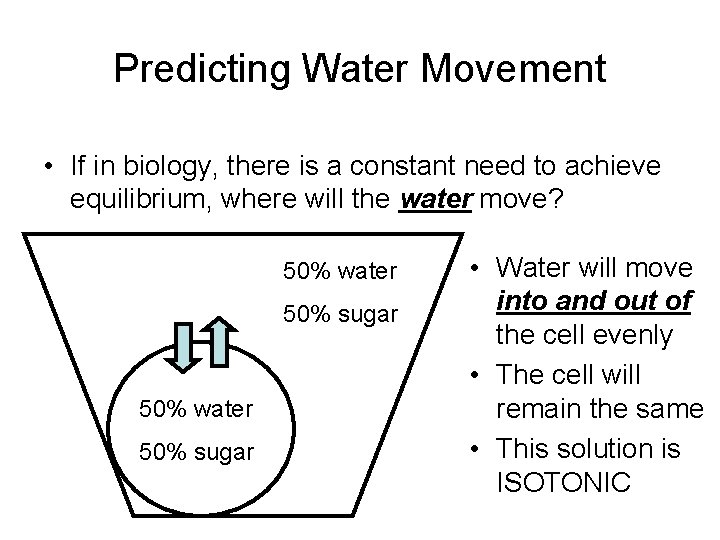
Predicting Water Movement • If in biology, there is a constant need to achieve equilibrium, where will the water move? 50% water 50% sugar • Water will move into and out of the cell evenly • The cell will remain the same • This solution is ISOTONIC
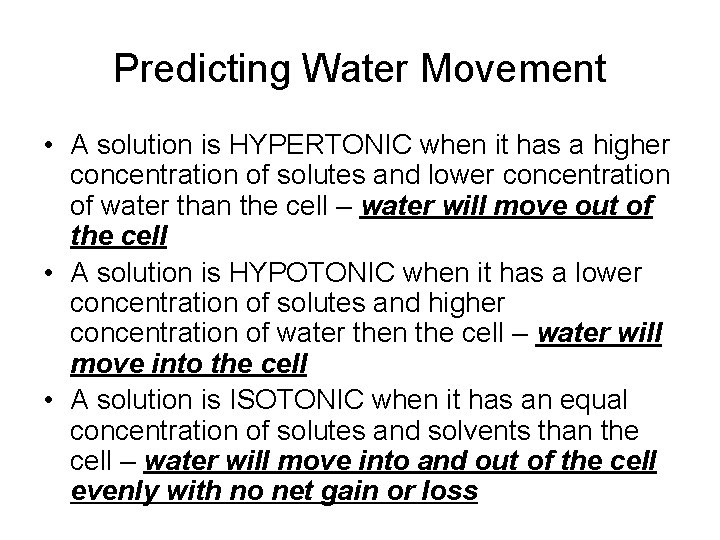
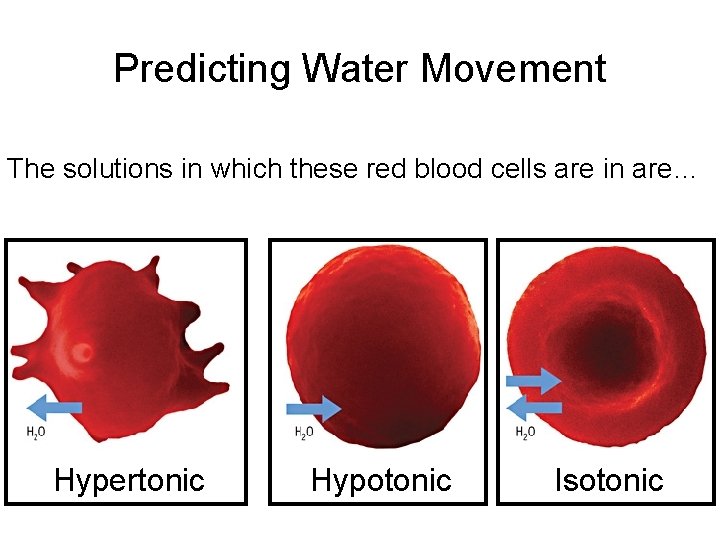
Predicting Water Movement • A solution is HYPERTONIC when it has a higher concentration of solutes and lower concentration of water than the cell – water will move out of the cell • A solution is HYPOTONIC when it has a lower concentration of solutes and higher concentration of water then the cell – water will move into the cell • A solution is ISOTONIC when it has an equal concentration of solutes and solvents than the cell – water will move into and out of the cell evenly with no net gain or loss
Predicting Water Movement The solutions in which these red blood cells are in are… Hypertonic Hypotonic Isotonic
Active Transport • Energy is needed when – Cells transport substances against their concentration gradient – Large molecules need to get into/out of a cell
Active Transport • Proteins can be used as pumps to pump substances against their concentration gradient • These are the same kinds of proteins used in facilitated diffusion, except ENERGY is used
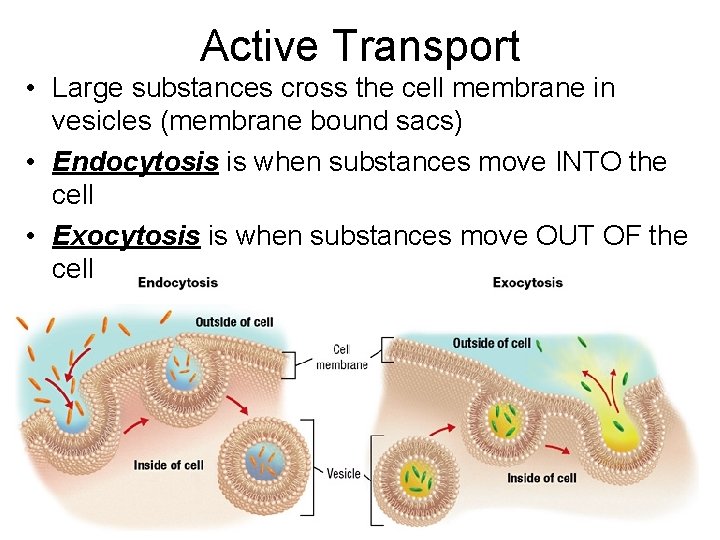
Active Transport • Large substances cross the cell membrane in vesicles (membrane bound sacs) • Endocytosis is when substances move INTO the cell • Exocytosis is when substances move OUT OF the cell