
Cells and Their Environment Cells and Their Environment

- Slides: 10
Cells and Their Environment
Cells and Their Environment How do cells move materials in and out? Cells use passive and active transport Passive transport - The movement of molecules without expending energy (osmosis, diffusion) Active transport - The movement of molecules using the energy from ATP (endocytosis, exocytosis, molecular pumps)
Cells and Their Environment Diffusion - The movement of a molecule from a high concentration to a low concentration; needs no energy Perfume from a bottle
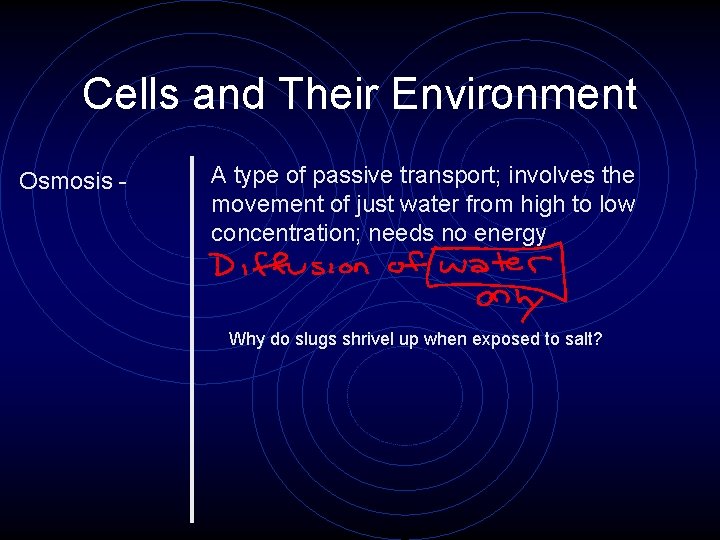
Cells and Their Environment Osmosis - A type of passive transport; involves the movement of just water from high to low concentration; needs no energy Why do slugs shrivel up when exposed to salt?
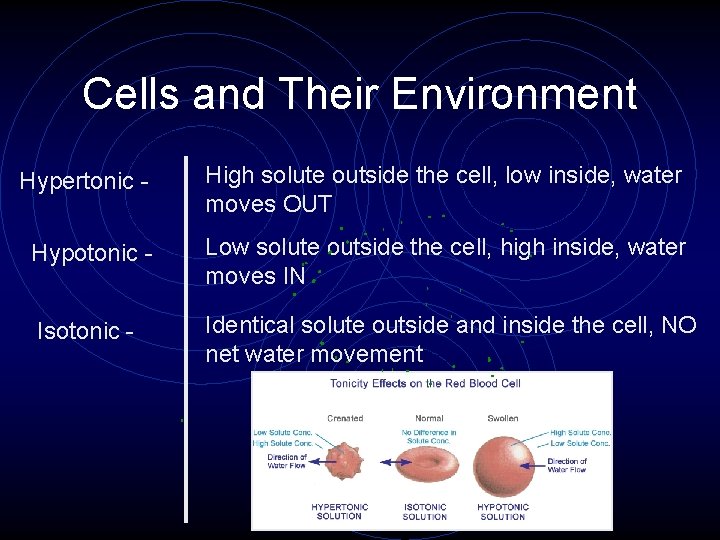
Cells and Their Environment Hypertonic - High solute outside the cell, low inside, water moves OUT Hypotonic - Low solute outside the cell, high inside, water moves IN Isotonic - Identical solute outside and inside the cell, NO net water movement
Cells and Their Environment Endocytosis - The movement of materials into a cell; requires ATP (energy) There are two types of endocytosis: Phagocytosis - The intake of larger particles (bacteria or even entire cells) Pinocytosis - The intake of small dissolved molecules (vitamins or minerals for example)
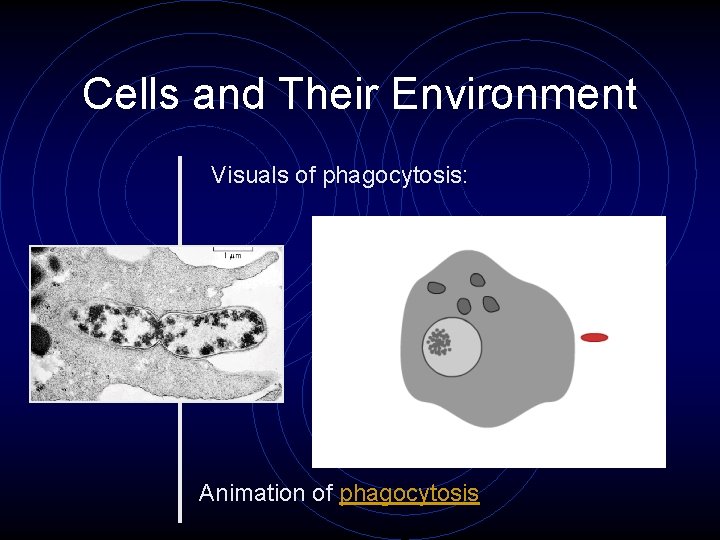
Cells and Their Environment Visuals of phagocytosis: Animation of phagocytosis
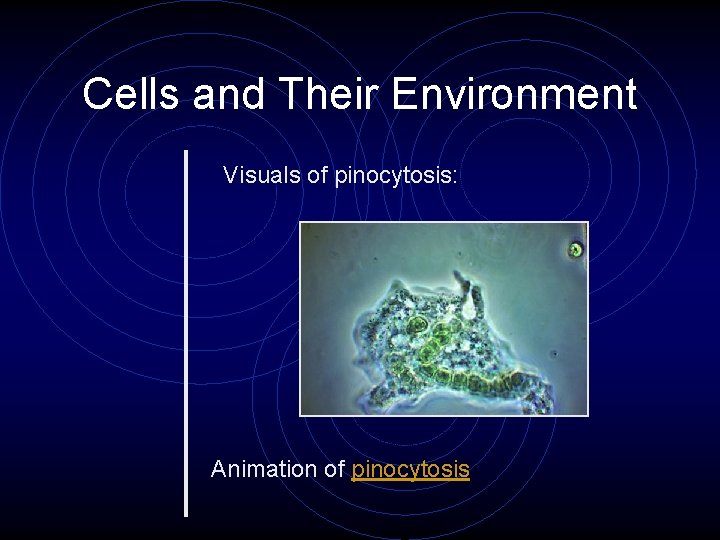
Cells and Their Environment Visuals of pinocytosis: Animation of pinocytosis
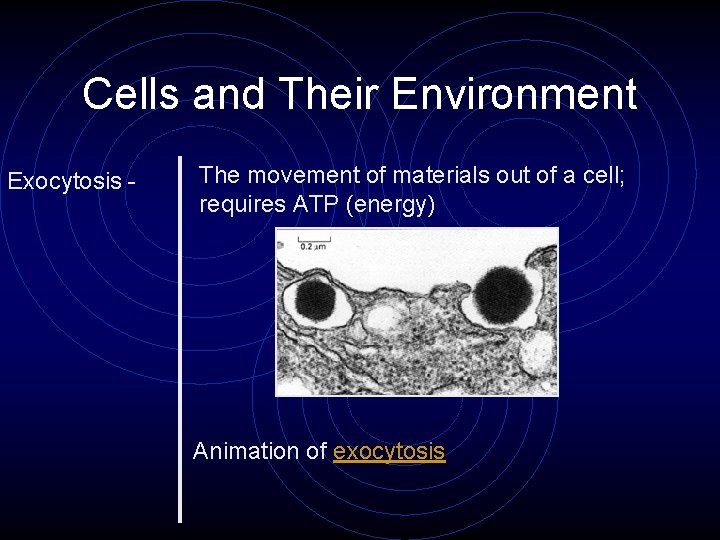
Cells and Their Environment Exocytosis - The movement of materials out of a cell; requires ATP (energy) Animation of exocytosis
Cells and Their Environment Facilitated diffusion - The pumping of molecules into or out of a cell from low to high concentration; works in the OPPOSITE direction as regular diffusion and requires energy (example: a molecular pump like the sodium potassium pump) Animation of sodium-potassium pump