
CELLS AND LIFE REVIEW KEY LESSON 1 1
- Slides: 45
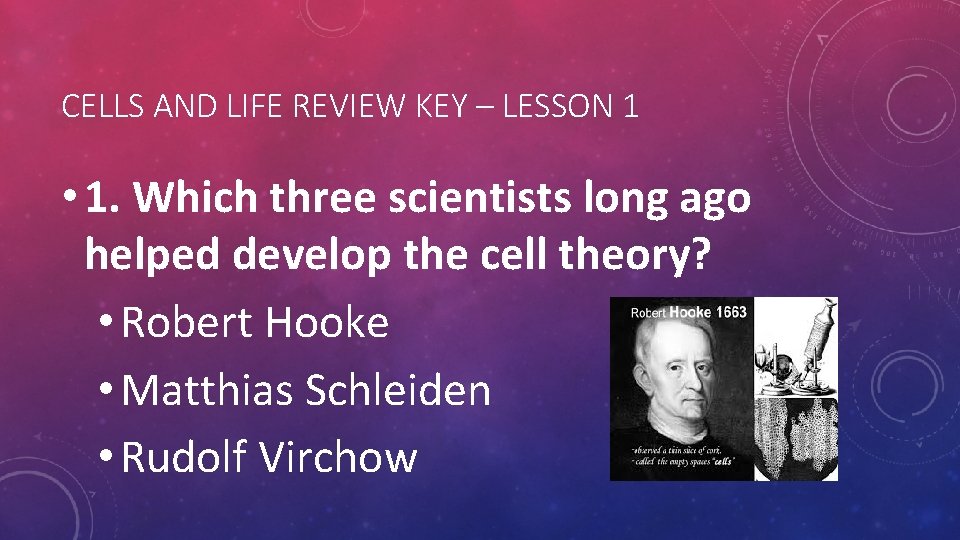
CELLS AND LIFE REVIEW KEY – LESSON 1 • 1. Which three scientists long ago helped develop the cell theory? • Robert Hooke • Matthias Schleiden • Rudolf Virchow
2. WHAT ARE THREE PARTS OF CELL THEORY? • 1. All living things are made of one or more cells • 2. The cell is the smallest unit of life • 3. All new cells form from existing cells.
MACROMOLECULE • What does “macr” mean? • If you have your blue page, look at that! • What does “cule” mean?
SO • Macr = large • Cule = small • And “mole” = mass So “macromolecule” = large, mass that is small
3. HOW DO MACROMOLECULES FORM? • Smaller molecules join together
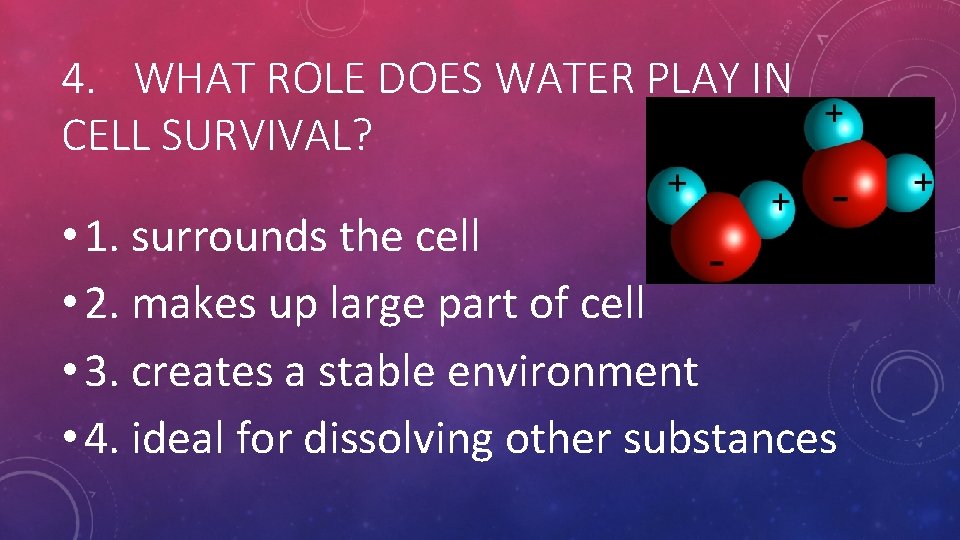
4. WHAT ROLE DOES WATER PLAY IN CELL SURVIVAL? • 1. surrounds the cell • 2. makes up large part of cell • 3. creates a stable environment • 4. ideal for dissolving other substances
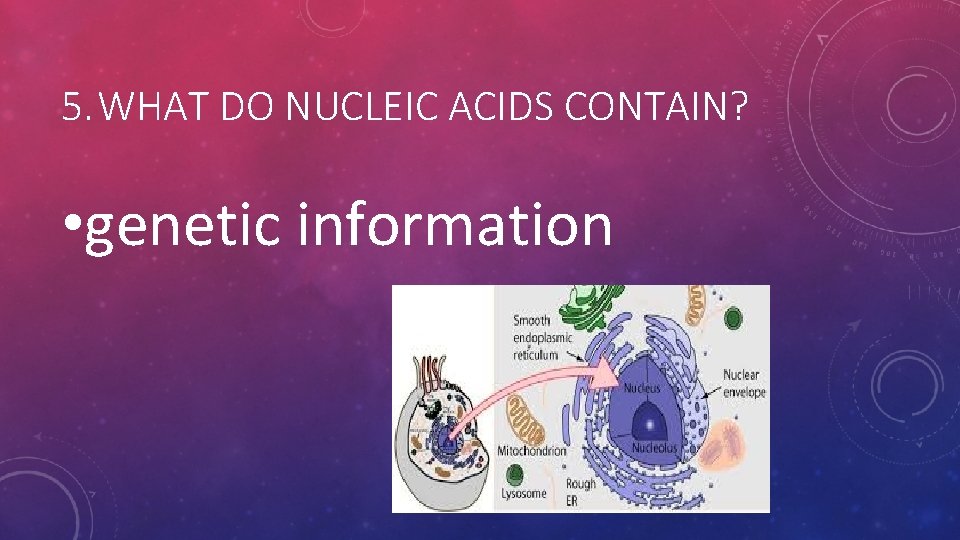
5. WHAT DO NUCLEIC ACIDS CONTAIN? • genetic information
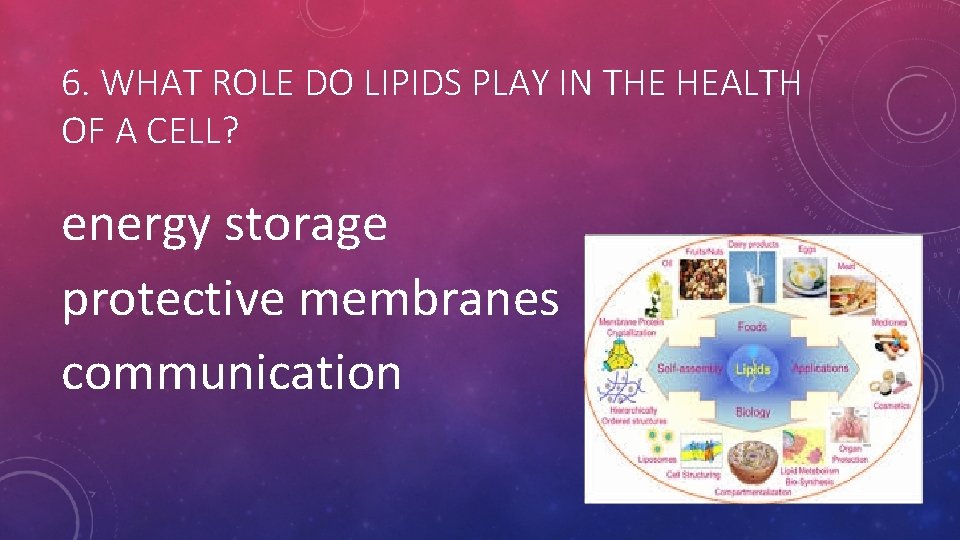
6. WHAT ROLE DO LIPIDS PLAY IN THE HEALTH OF A CELL? energy storage protective membranes communication
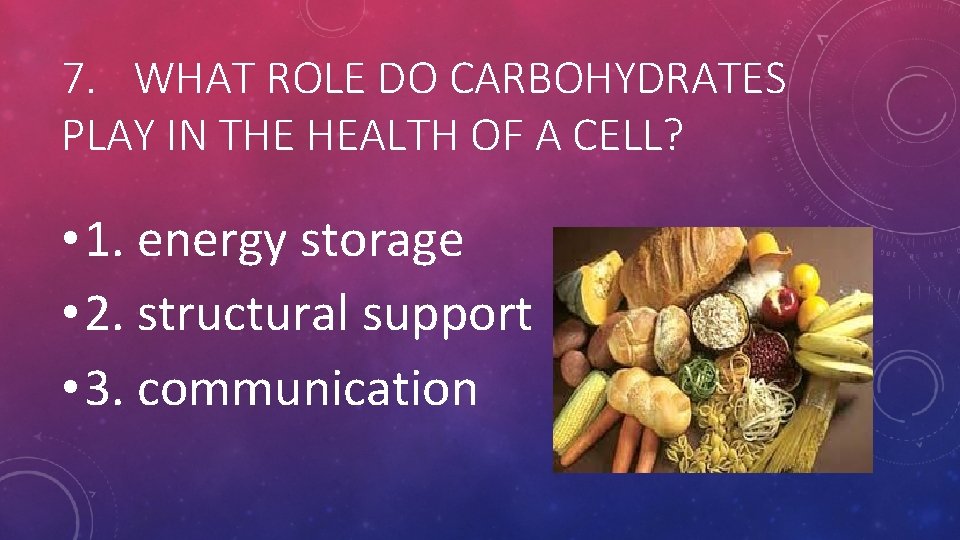
7. WHAT ROLE DO CARBOHYDRATES PLAY IN THE HEALTH OF A CELL? • 1. energy storage • 2. structural support • 3. communication
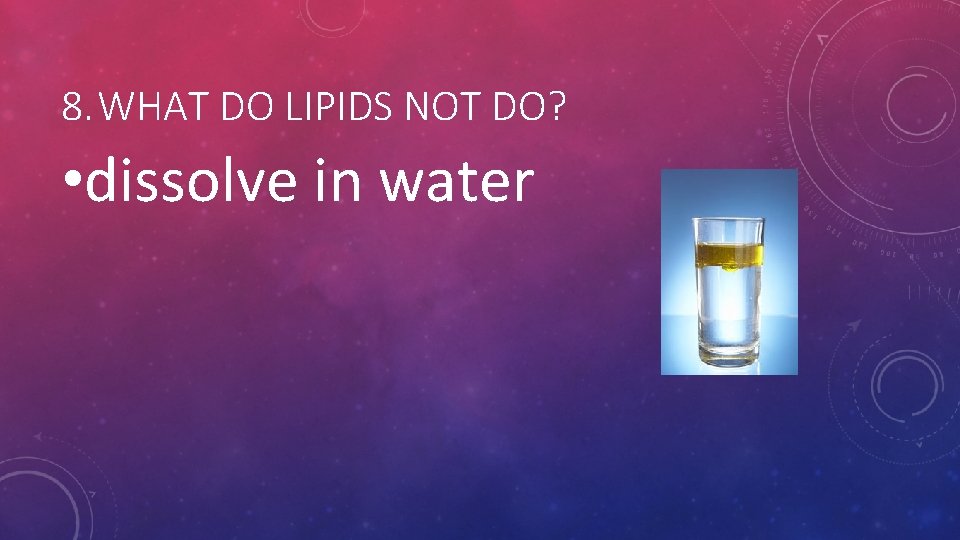
8. WHAT DO LIPIDS NOT DO? • dissolve in water
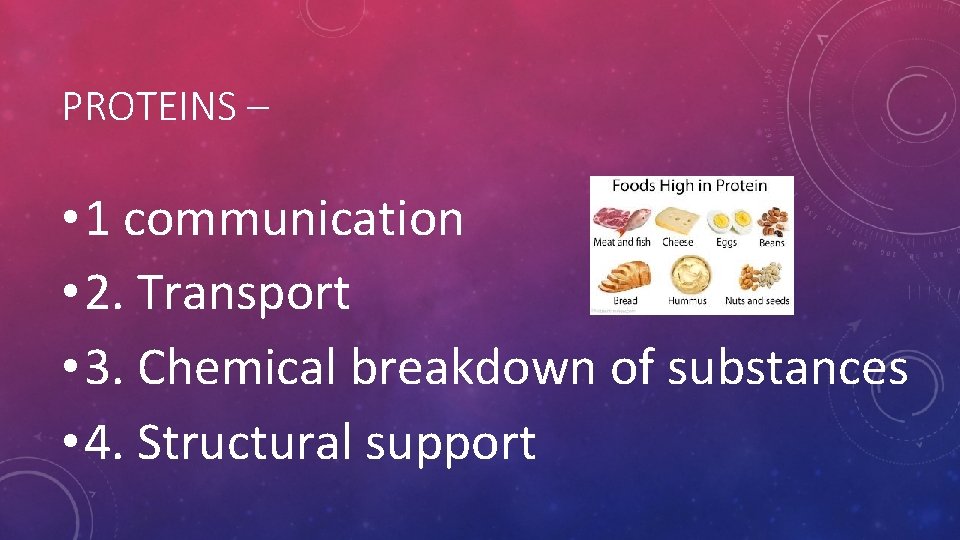
PROTEINS – • 1 communication • 2. Transport • 3. Chemical breakdown of substances • 4. Structural support
CARBOHYDRATE 1. Energy storage 2. Structural support 3. Communication
LIPIDS 1. Energy Storage 2. Protective membranes 3. Communication
NUCLEAIC ACIDS • – contain genetic information
• Water is the main ingredient in every cell.
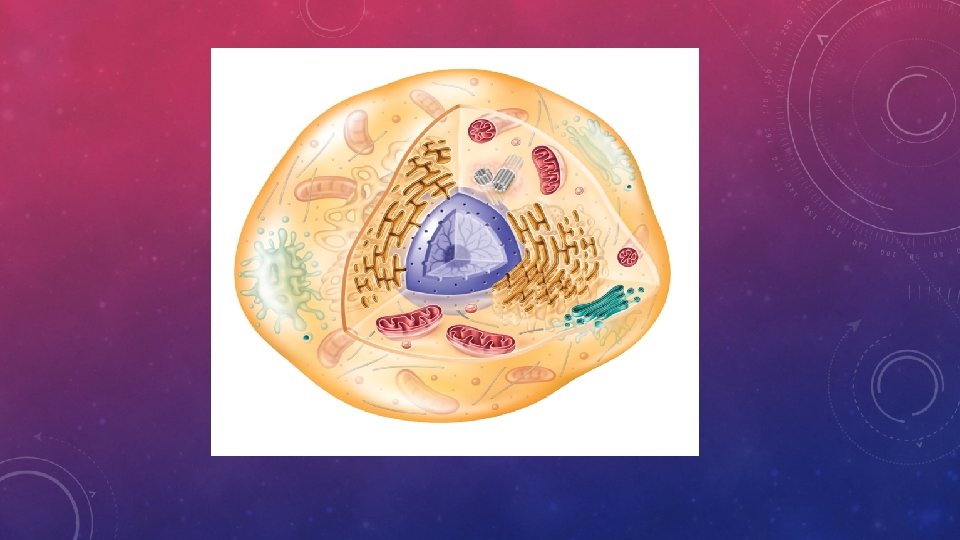
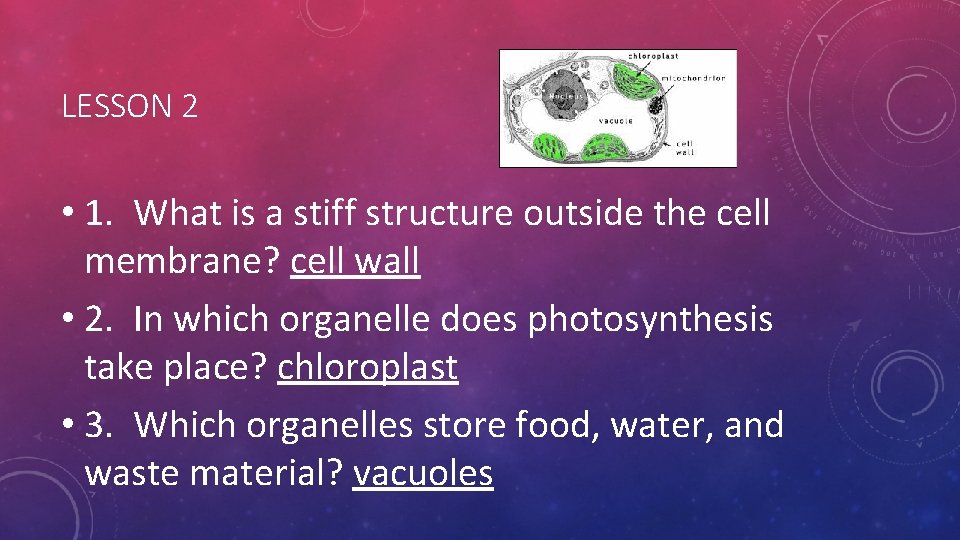
LESSON 2 • 1. What is a stiff structure outside the cell membrane? cell wall • 2. In which organelle does photosynthesis take place? chloroplast • 3. Which organelles store food, water, and waste material? vacuoles
COMMON TO PLANT AND ANIMAL CELLS: • 4. What is a flexible barrier that protects the inside of a cell? cell membrane • 5. What are short, hairlike structures that help move a cell? cilia • 6. What is the fluid that fills the inside of the cell? cytoplasm • 7. What gives framework to a cell and helps it move? cytoskeleton
COMMON TO ALL EUKARYOTIC CELLS (PLANTS, ANIMALS, FUNGI, AND PROTISTS): • 8. Which organelle contains genetic information and controls the cell? nucleus • 9. In which organelle are proteins made? ribosome • 10. What removes harmful substances for a cell? endoplasmic reticulum • 11. Which organelle releases energy in a cell? mitochondria
• 12. Which organelle prepares proteins for specific jobs? Golgi apparatus • 13. Which organelle carries substances to other parts of a cell? vesicle • 14. Which vacuole-like structures break down and recycle cell parts? lysosome
LESSON 3 | MOVING CELLULAR MATERIAL • What passes through a cell using passive transport? • 1. oxygen, carbon dioxide, other small molecules
WHAT ARE THE 3 TYPES OF PASSIVE TRANSPORT? • 2. diffusion, osmosis, facilitated diffusion
PASSIVE TRANSPORT • https: //www. brainpop. com/science/cellularlifeandgenetics/passivetransport/
3. HOW DO SUBSTANCES MOVE IN PASSIVE TRANSPORT? • 3. from higher to lower concentration
4. WHAT IS THE DIFFUSION OF WATER MOLECULES ONLY? • 4. osmosis
WHAT IS USED IN FACILITATED DIFFUSION TO ASSIST THE TRANSPORT OF SUGAR AND SODIUM MOLECULES? • 5. carrier proteins, channel proteins
DIFFUSION • https: //www. brainpop. com/science/cellularlifeandgenetics/diffusion/
WHAT IS ONLY USED IN ACTIVE TRANSPORT? • 6. energy
HOW DO SUBSTANCES MOVE IN ACTIVE TRANSPORT? • 7. from lower to higher concentration
ACTIVE TRANSPORT • https: //www. brainpop. com/science/cellularlifeandgenetics/activetransport/
WHICH PROTEINS ARE USED IN ACTIVE AND PASSIVE TRANSPORT? • 8. carrier proteins
WHAT DOES A CELL DO TO A SUBSTANCE IN ENDOCYTOSIS? • 9. surrounds it and brings it inside the cell
WHAT DOES A CELL USE TO ELIMINATE (GET RID OF) A SUBSTANCE THAT IS TO LARGE TO LEAVE BY DIFFUSION? • 10. exocytosis
WHICH STRUCTURES JOIN WITH THE CELL’S MEMBRANE DURING EXOCYTOSIS? • 11. vesicles (sounds like vehicle, something that helps you move around)
CELL SPECIALIZATION
DO NOT USE ENERGY (in any order) diffusion, facilitated diffusion, osmosis;
USE ENERGY • (in any order) endocytosis; exocytosis
LESSON 4 CELLS AND ENERGY • Go to the flow chart on the following page – you will do the numbers after
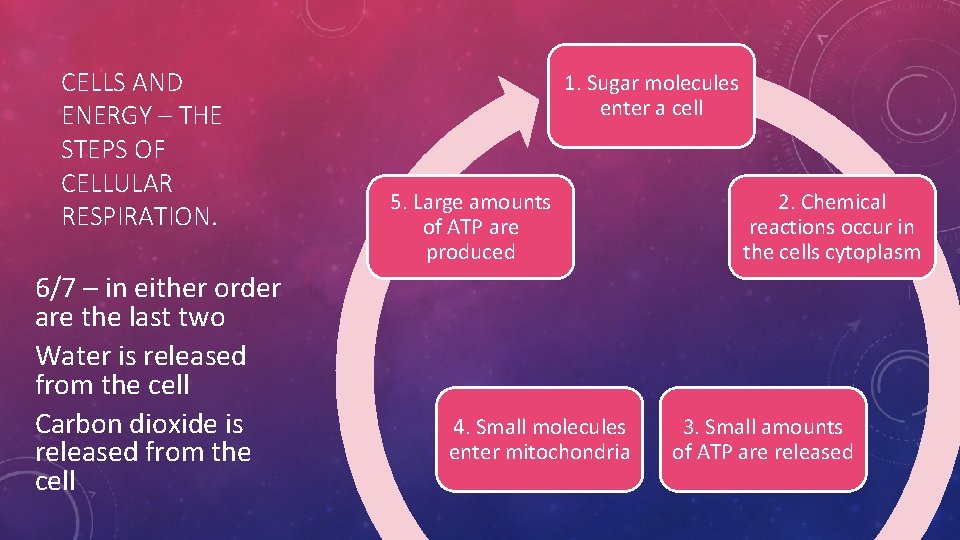
CELLS AND ENERGY – THE STEPS OF CELLULAR RESPIRATION. 6/7 – in either order are the last two Water is released from the cell Carbon dioxide is released from the cell 1. Sugar molecules enter a cell 5. Large amounts of ATP are produced 4. Small molecules enter mitochondria 2. Chemical reactions occur in the cells cytoplasm 3. Small amounts of ATP are released
CELL STRUCTURES • https: //www. brainpop. com/science/cellularlifeandgenetics/cellstructures/
• 1. The organelles in plants that convert light energy to food during photosynthesis are chloroplasts. • 2. A process that breaks down glucose into smaller molecules and produces ATP is called glycolysis. • 3. A series of chemical reactions that converts the energy in food into ATP is called cellular respiration.
• 4. Cheese, yogurt, and sour cream are made when bacteria carry out lactic acid fermentation. • 5. Glycolysis occurs in the cytoplasm of a cell. • 6. When yeasts in bread dough carry out alcohol fermentation, they produce the carbon dioxide that causes dough to rise. • 7. The second step in cellular respiration occurs in a cell’s mitochondria.
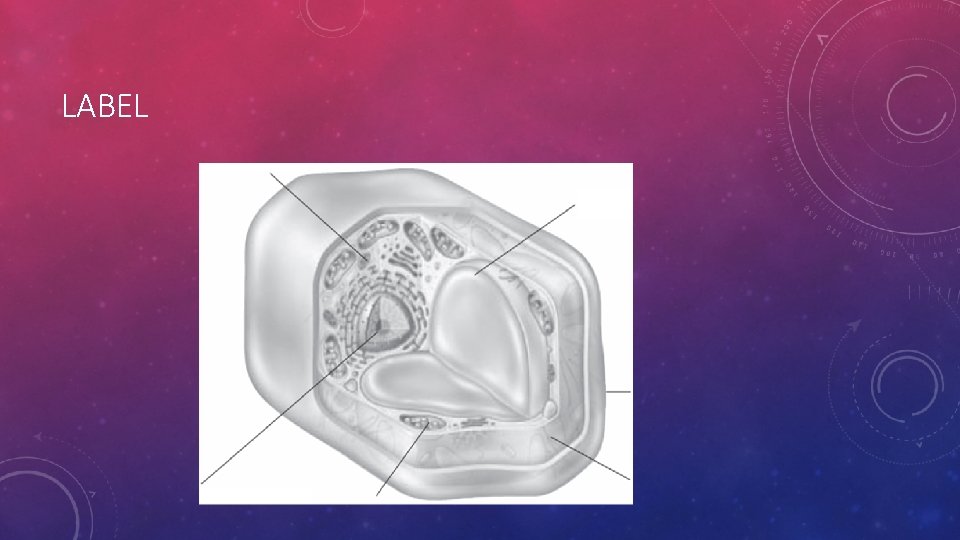
LABEL
• A – Central vacuole • B – Cell Wall • C – cell membrane • D – chloroplast • E – nucleus • F - mitochondrion
TURN IN TO YOUR CLASS PERIOD IN BOX • https: //ed. ted. com/lessons/how-we-think-complex-cells-evolved-adam-jacobson