
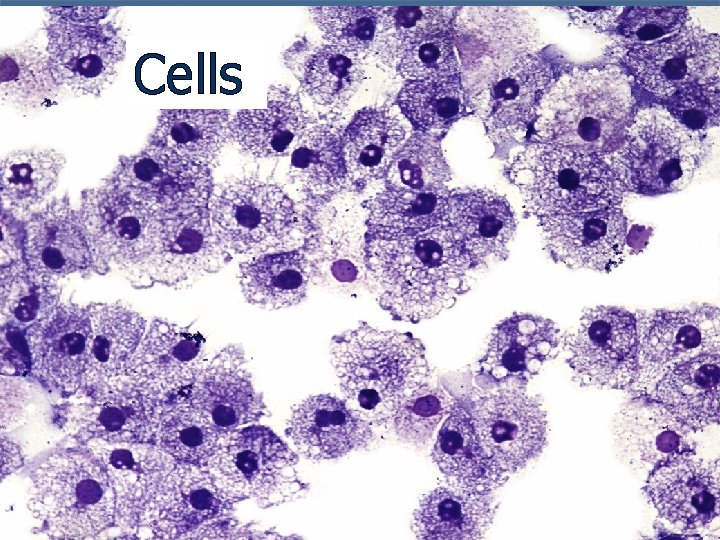
Cells All living things are made of cells
- Slides: 36
Cells
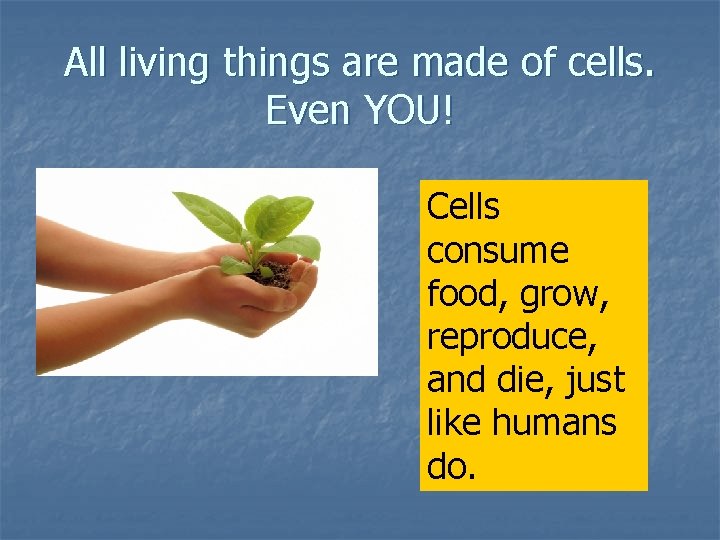
All living things are made of cells. Even YOU! Cells consume food, grow, reproduce, and die, just like humans do.
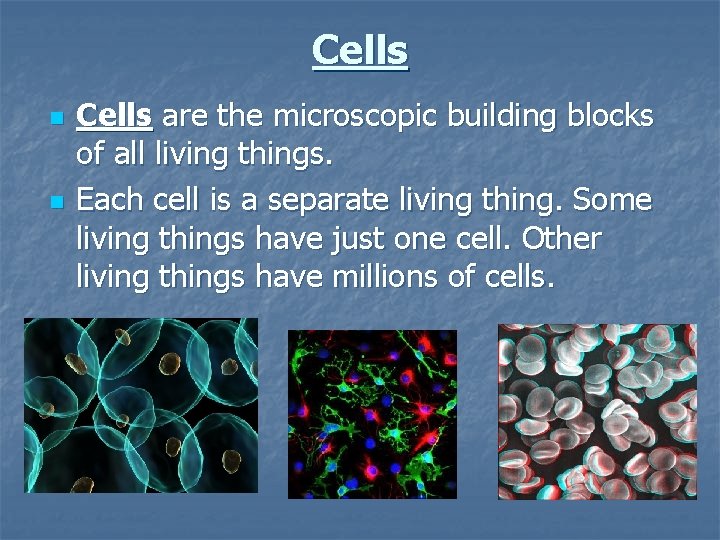
Cells n n Cells are the microscopic building blocks of all living things. Each cell is a separate living thing. Some living things have just one cell. Other living things have millions of cells.
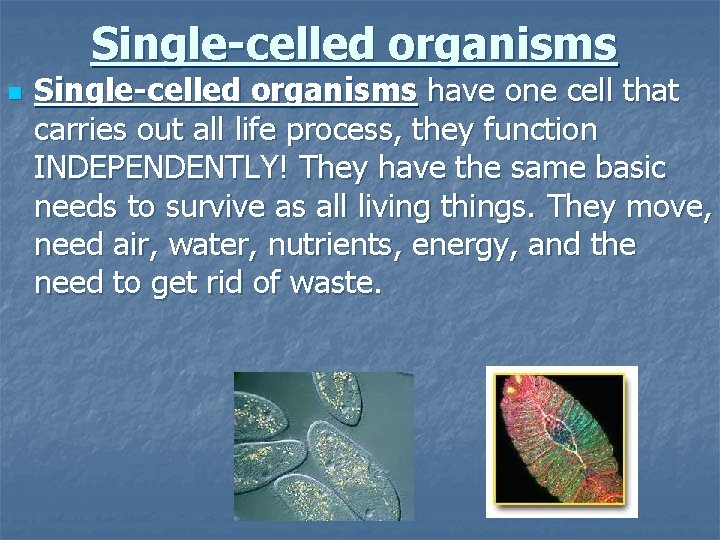
Single-celled organisms n Single-celled organisms have one cell that carries out all life process, they function INDEPENDENTLY! They have the same basic needs to survive as all living things. They move, need air, water, nutrients, energy, and the need to get rid of waste.
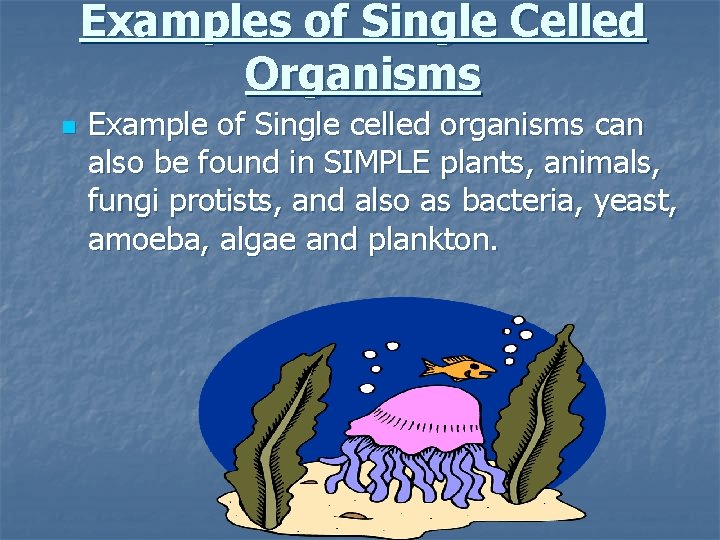
Examples of Single Celled Organisms n Example of Single celled organisms can also be found in SIMPLE plants, animals, fungi protists, and also as bacteria, yeast, amoeba, algae and plankton.
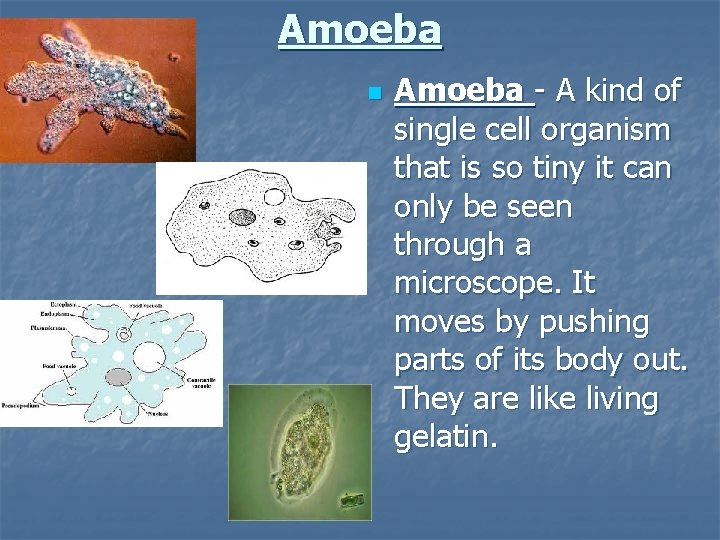
Amoeba n Amoeba - A kind of single cell organism that is so tiny it can only be seen through a microscope. It moves by pushing parts of its body out. They are like living gelatin.
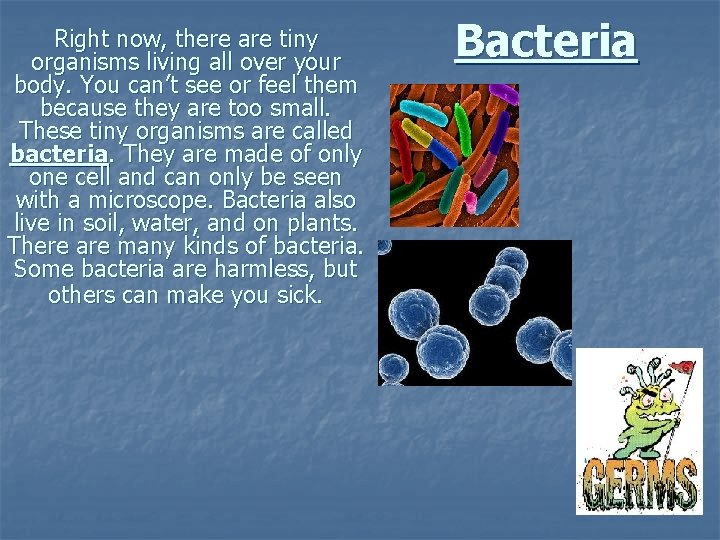
Right now, there are tiny organisms living all over your body. You can’t see or feel them because they are too small. These tiny organisms are called bacteria. They are made of only one cell and can only be seen with a microscope. Bacteria also live in soil, water, and on plants. There are many kinds of bacteria. Some bacteria are harmless, but others can make you sick. Bacteria
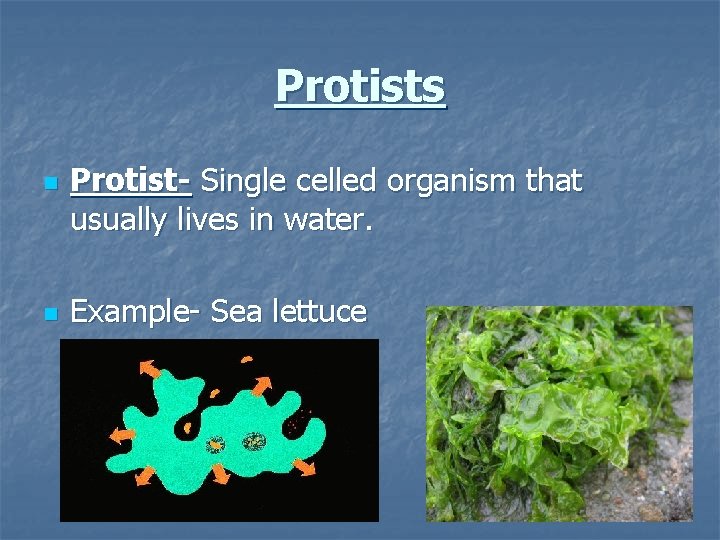
Protists n n Protist- Single celled organism that usually lives in water. Example- Sea lettuce
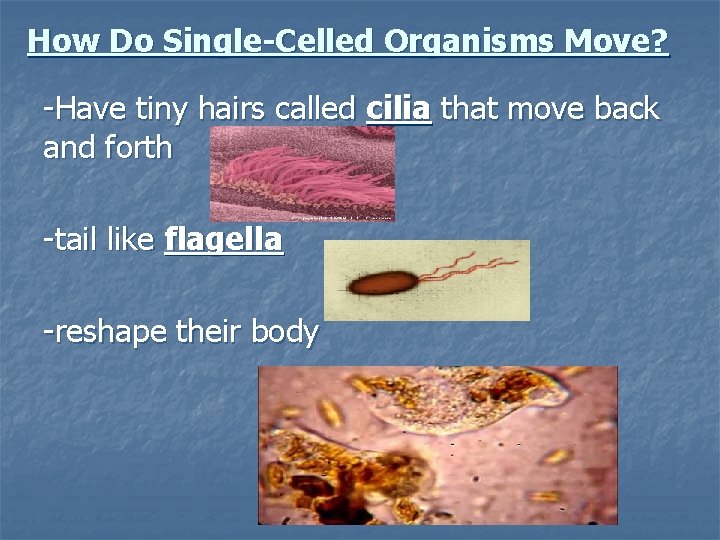
How Do Single-Celled Organisms Move? -Have tiny hairs called cilia that move back and forth -tail like flagella -reshape their body
Did you know? Single Celled organisms are critical for human survival. EXAMPLE- Bacteria in the human intestines helps to digest the food you eat. Also, algae gives off oxygen, which goes into the air for you to breathe!
n n Have you ever played baseball? Players have different roles on a team. The pitcher throws the ball. The shortstop guards a base. The outfielders catch balls. Each person must work as a team. Your body is like a baseball team. Different cells in your body work together. Your skin cells protect the inside of your body. Your brain controls all the activity in your body. Your lung cells make breathing possible. You have many different types of cells.
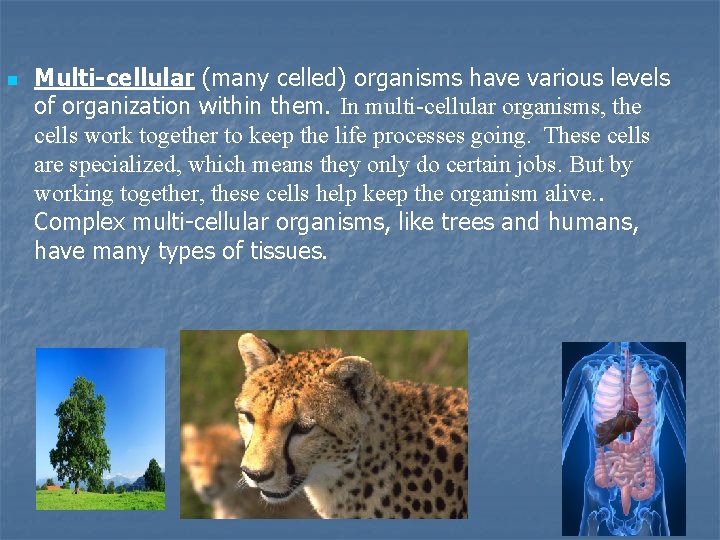
n Multi-cellular (many celled) organisms have various levels of organization within them. In multi-cellular organisms, the cells work together to keep the life processes going. These cells are specialized, which means they only do certain jobs. But by working together, these cells help keep the organism alive. . Complex multi-cellular organisms, like trees and humans, have many types of tissues.
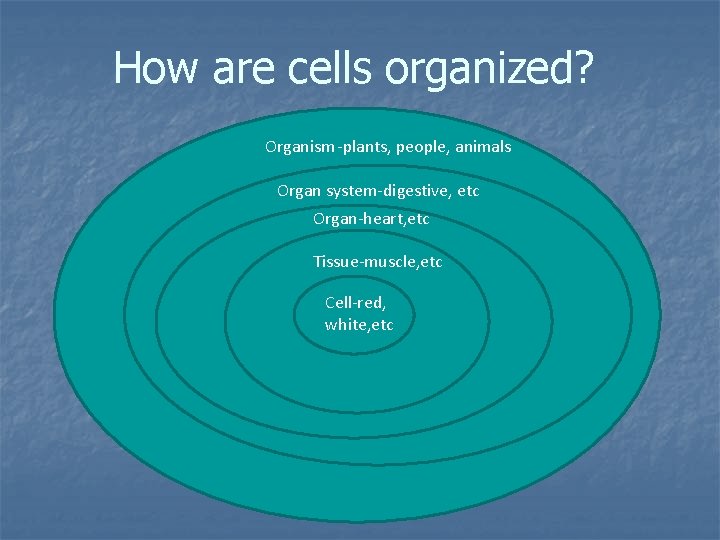
How are cells organized? Organism-plants, people, animals Organ system-digestive, etc Organ-heart, etc Tissue-muscle, etc Cell-red, white, etc
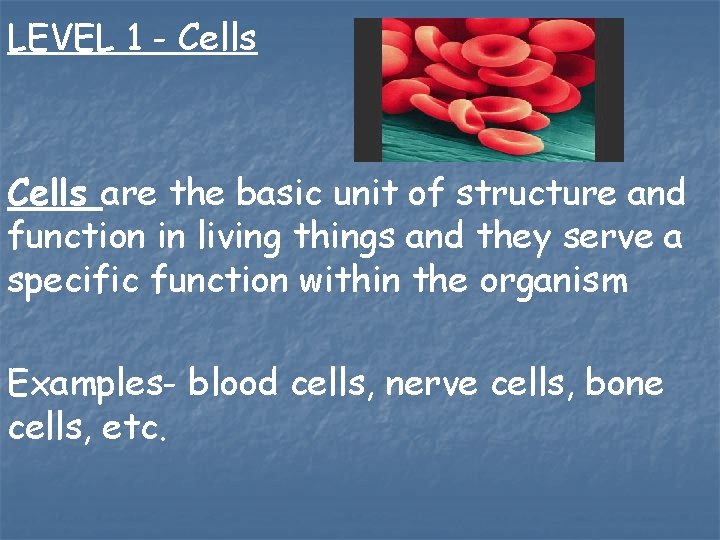
LEVEL 1 - Cells are the basic unit of structure and function in living things and they serve a specific function within the organism Examples- blood cells, nerve cells, bone cells, etc.
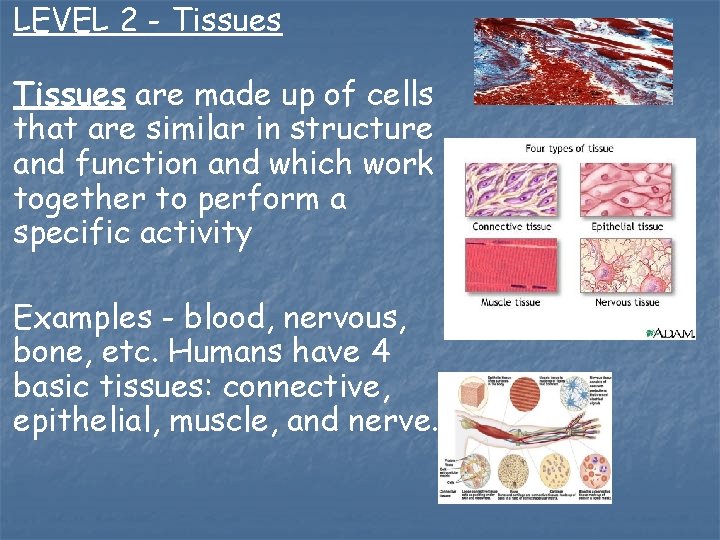
LEVEL 2 - Tissues are made up of cells that are similar in structure and function and which work together to perform a specific activity Examples - blood, nervous, bone, etc. Humans have 4 basic tissues: connective, epithelial, muscle, and nerve.
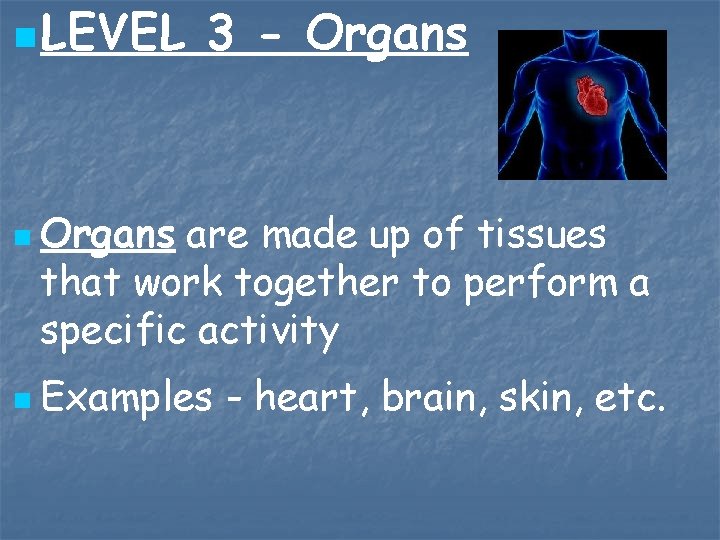
n LEVEL 3 - Organs n Organs are made up of tissues that work together to perform a specific activity n Examples - heart, brain, skin, etc.
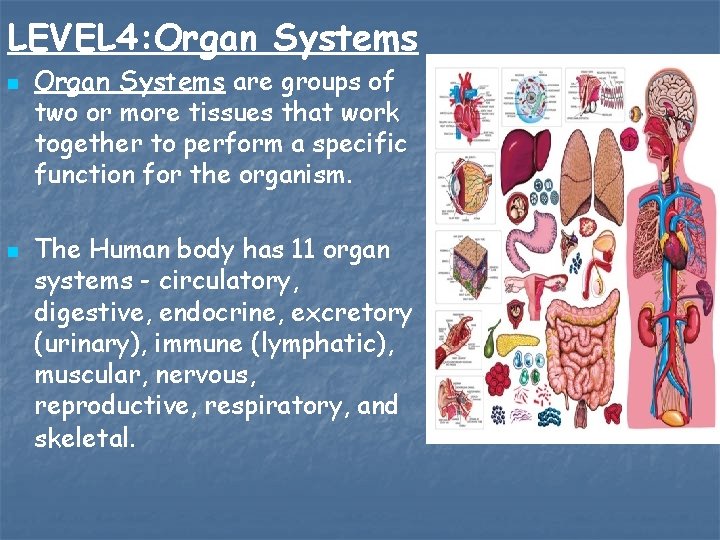
LEVEL 4: Organ Systems n n Organ Systems are groups of two or more tissues that work together to perform a specific function for the organism. The Human body has 11 organ systems - circulatory, digestive, endocrine, excretory (urinary), immune (lymphatic), muscular, nervous, reproductive, respiratory, and skeletal.
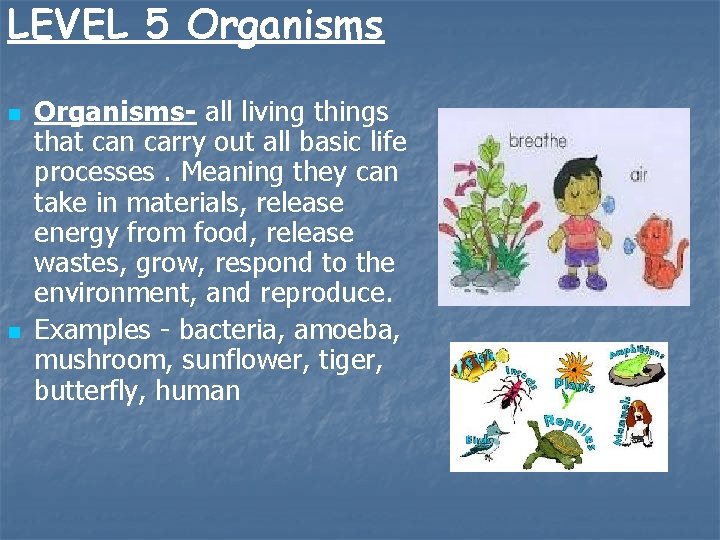
LEVEL 5 Organisms n n Organisms- all living things that can carry out all basic life processes. Meaning they can take in materials, release energy from food, release wastes, grow, respond to the environment, and reproduce. Examples - bacteria, amoeba, mushroom, sunflower, tiger, butterfly, human
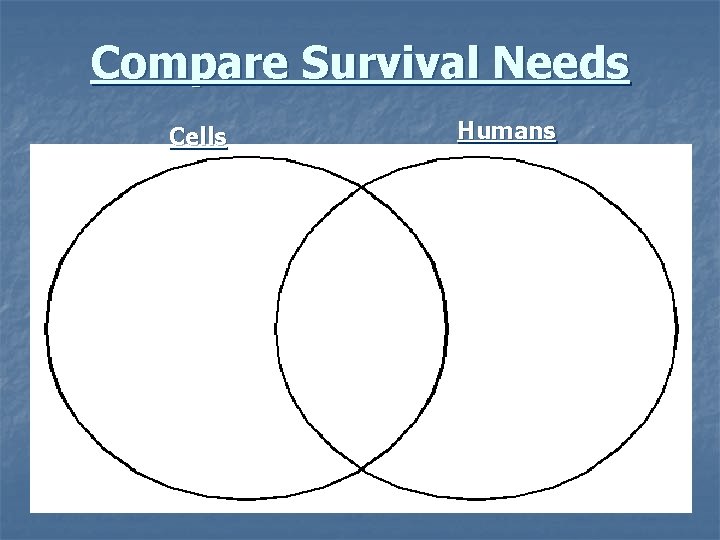
Compare Survival Needs Cells Humans
Questions to answer in your science notebook: • What are single-celled organisms? • What kinds of needs do single-celled organisms have? • How do single-celled organisms help other organisms? • How do some single-celled organisms move by themselves?
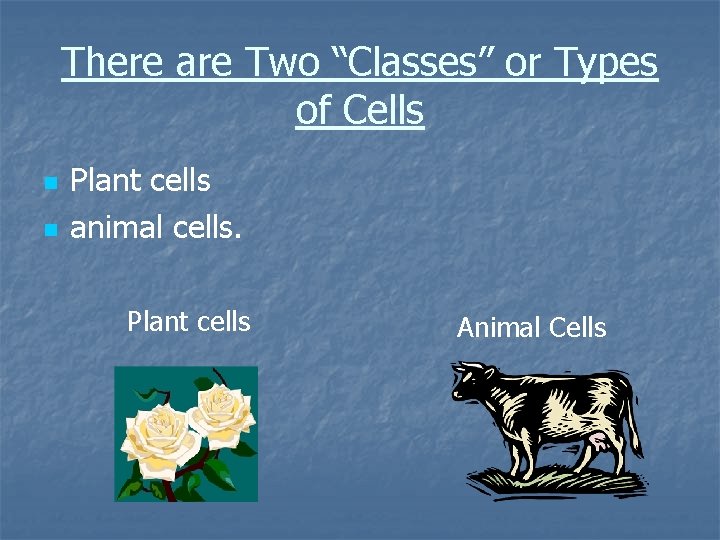
There are Two “Classes” or Types of Cells n n Plant cells animal cells. Plant cells Animal Cells
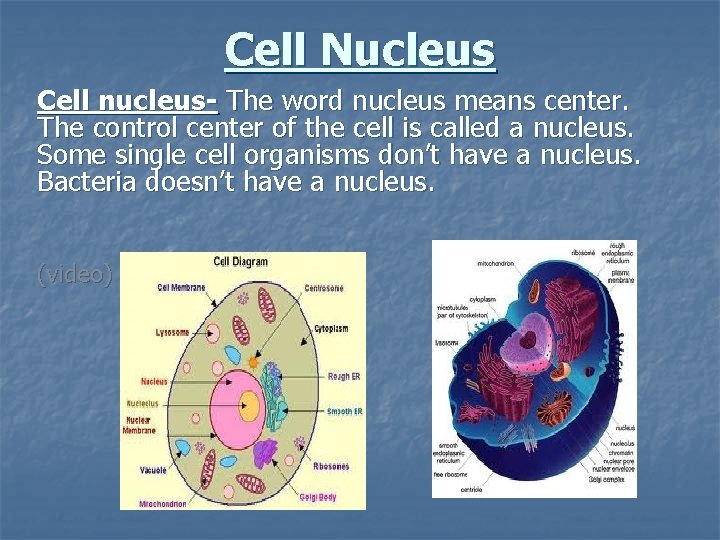
Cell Nucleus Cell nucleus- The word nucleus means center. The control center of the cell is called a nucleus. Some single cell organisms don’t have a nucleus. Bacteria doesn’t have a nucleus. (video)
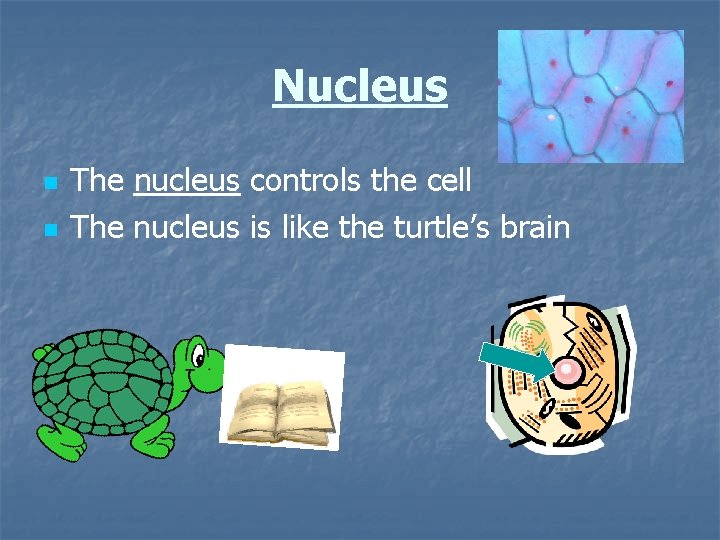
Nucleus n n The nucleus controls the cell The nucleus is like the turtle’s brain
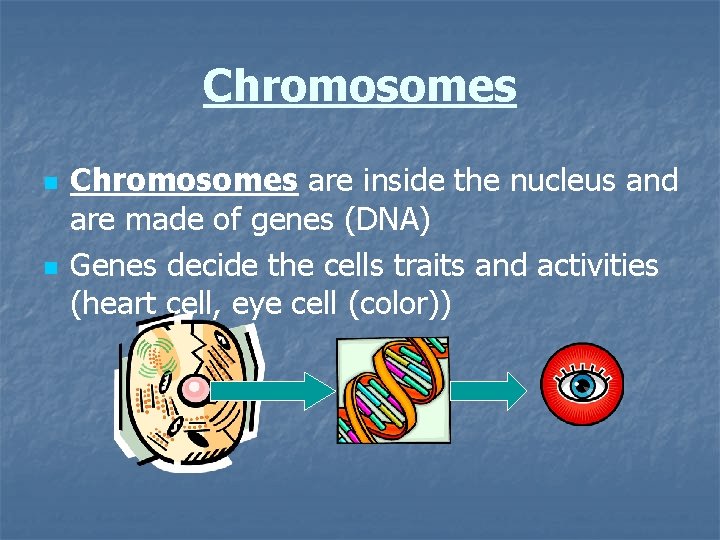
Chromosomes n n Chromosomes are inside the nucleus and are made of genes (DNA) Genes decide the cells traits and activities (heart cell, eye cell (color))
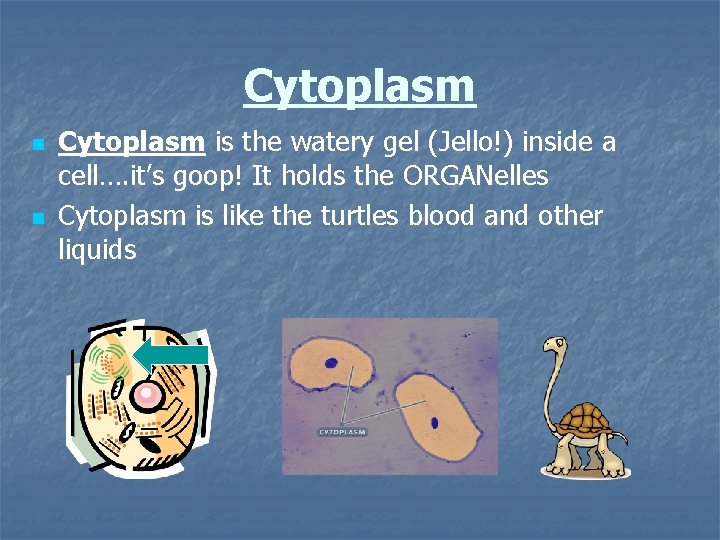
Cytoplasm n n Cytoplasm is the watery gel (Jello!) inside a cell…. it’s goop! It holds the ORGANelles Cytoplasm is like the turtles blood and other liquids
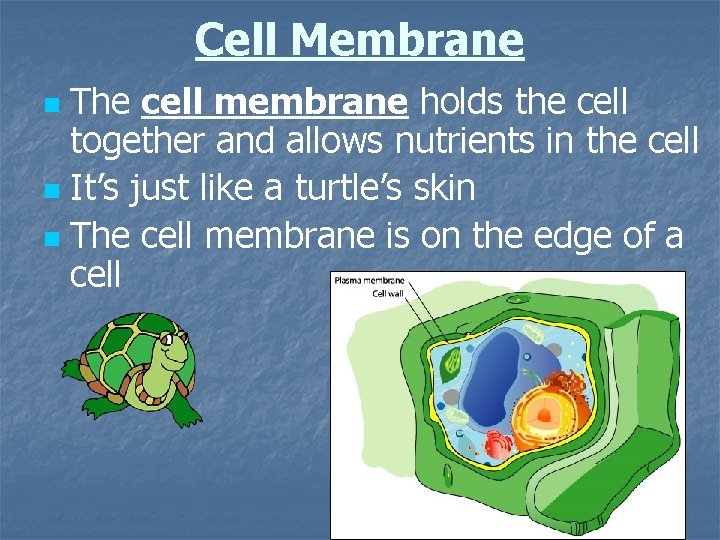
Cell Membrane The cell membrane holds the cell together and allows nutrients in the cell n It’s just like a turtle’s skin n The cell membrane is on the edge of a cell n
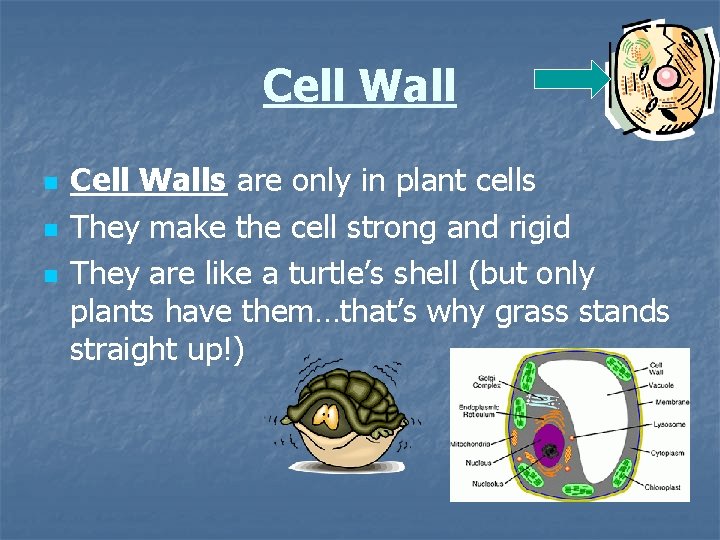
Cell Wall n n n Cell Walls are only in plant cells They make the cell strong and rigid They are like a turtle’s shell (but only plants have them…that’s why grass stands straight up!)
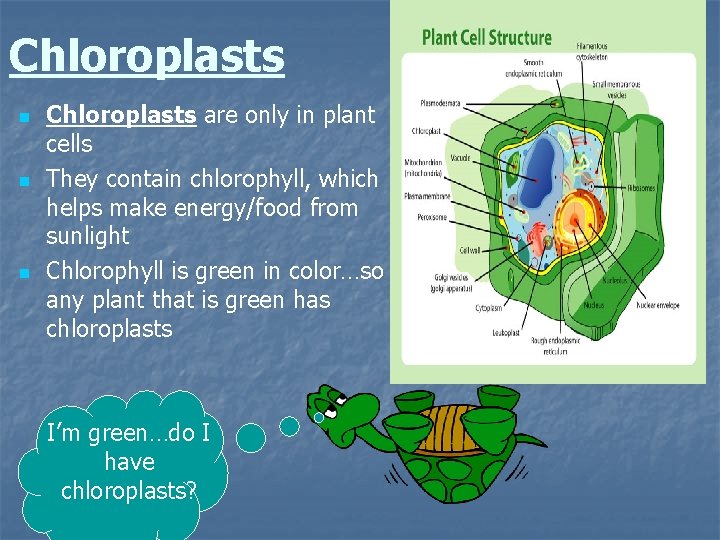
Chloroplasts n n n Chloroplasts are only in plant cells They contain chlorophyll, which helps make energy/food from sunlight Chlorophyll is green in color…so any plant that is green has chloroplasts I’m green…do I have chloroplasts?
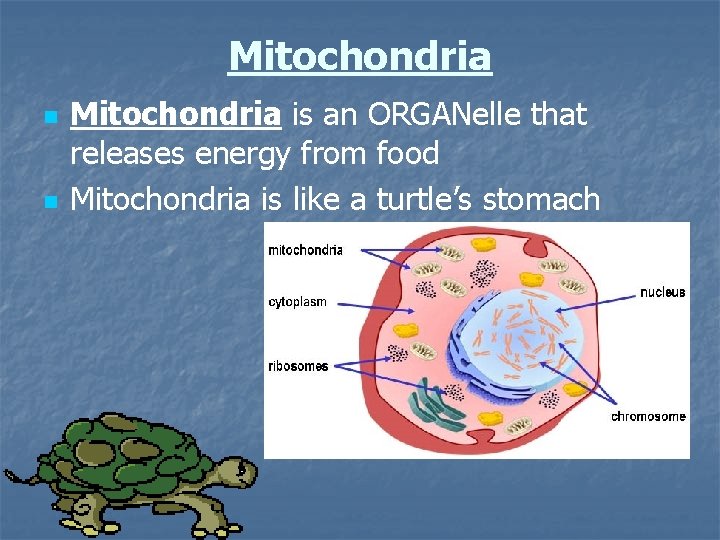
Mitochondria n n Mitochondria is an ORGANelle that releases energy from food Mitochondria is like a turtle’s stomach
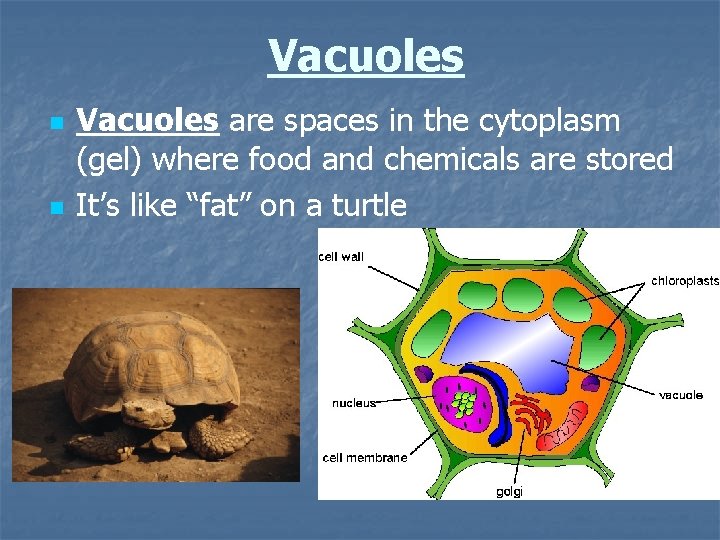
Vacuoles n n Vacuoles are spaces in the cytoplasm (gel) where food and chemicals are stored It’s like “fat” on a turtle I am NOT fat…I’m just a little plump!!
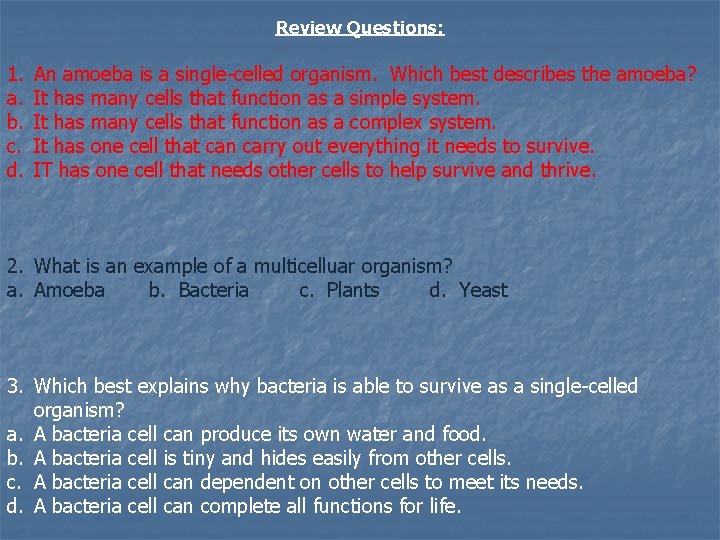
Review Questions: 1. a. b. c. d. An amoeba is a single-celled organism. Which best describes the amoeba? It has many cells that function as a simple system. It has many cells that function as a complex system. It has one cell that can carry out everything it needs to survive. IT has one cell that needs other cells to help survive and thrive. 2. What is an example of a multicelluar organism? a. Amoeba b. Bacteria c. Plants d. Yeast 3. Which best explains why bacteria is able to survive as a single-celled organism? a. A bacteria cell can produce its own water and food. b. A bacteria cell is tiny and hides easily from other cells. c. A bacteria cell can dependent on other cells to meet its needs. d. A bacteria cell can complete all functions for life.
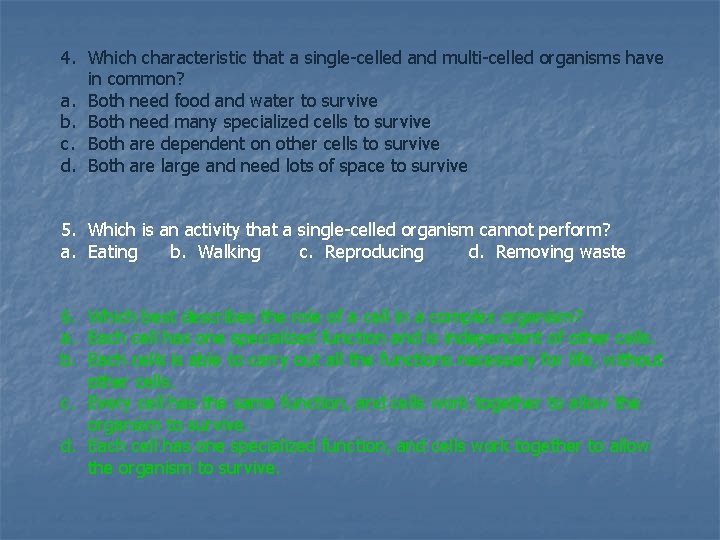
4. Which characteristic that a single-celled and multi-celled organisms have in common? a. Both need food and water to survive b. Both need many specialized cells to survive c. Both are dependent on other cells to survive d. Both are large and need lots of space to survive 5. Which is an activity that a single-celled organism cannot perform? a. Eating b. Walking c. Reproducing d. Removing waste 6. Which best describes the role of a cell in a complex organism? a. Each cell has one specialized function and is independent of other cells. b. Each cells is able to carry out all the functions necessary for life, without other cells. c. Every cell has the same function, and cells work together to allow the organism to survive. d. Each cell has one specialized function, and cells work together to allow the organism to survive.
7. Which best explains why plants cannot exist as single-celled organisms? a. Plants make their own food. b. Plants need water and sunlight c. Plants are very simple organisms d. Plants need different cells to perform life functions 8. Several organisms are living in a pond and experience a food shortage. Which organisms requires the least amount of food to survive? a. An amoeba b. A duck c. A plant d. A fish
9. Why do multicellular organisms need transport system? a. Most have cells that are not able to exchange gases with the outside environment. b. Most have cells that are unable to grow and survive in their environment c. Most have cells that need food from sources outside their environment d. Most have cells that require more energy to survive than single-celled organism. 10. What is an example of an organism? a. Plant b. Animal c. None of the above d. Both A and B
11. a. It b. It c. It d. It Which statement best describe a bacterial cell? contains more than one cell is a complete organism is a part of a larger organism contain different kinds of cells
Songs About Cells http: //www. youtube. com/watch? v=r. ABKB 5 a. S 2 Zg http: //www. youtube. com/watch? v=-zaf. JKb. MPA 8 http: //www. youtube. com/watch? v=w. RZth. Glz. EUc