
Cells All living things are made of cells
- Slides: 14
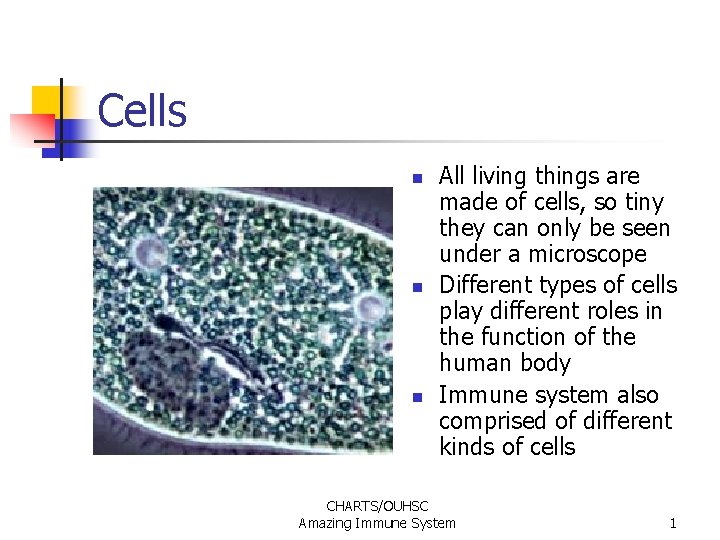
Cells All living things are made of cells, so tiny they can only be seen under a microscope n Different types of cells play different roles in the function of the human body n Immune system also comprised of different kinds of cells n CHARTS/OUHSC Amazing Immune System 1
Blood n n n Made up of fluid called plasma and 3 types of cells: 1. White blood cells (WBCs or leukocytes), help body fight infection 2. Red blood cells (RBCs or erthrocytes), carry oxygen from lungs to body’s tissues and take carbon dioxide from tissues back to lungs. Gives blood its color n n 3. Platelets (thrombocytes), helps form blood clots to control bleeding Blood cells are formed in bone marrow, the soft spongy center of bones. n Some blood cells are called blasts. n Some stay in marrow to mature n Some travel to other parts of the body to mature CHARTS/OUHSC Amazing Immune System 2
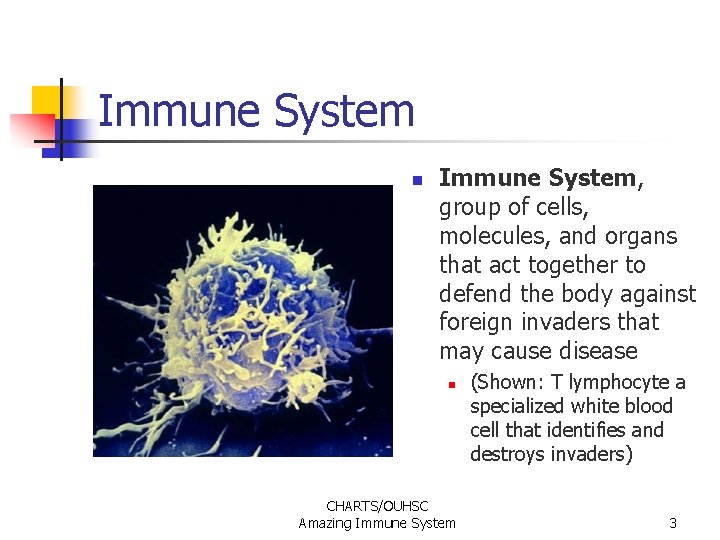
Immune System n Immune System, group of cells, molecules, and organs that act together to defend the body against foreign invaders that may cause disease n CHARTS/OUHSC Amazing Immune System (Shown: T lymphocyte a specialized white blood cell that identifies and destroys invaders) 3
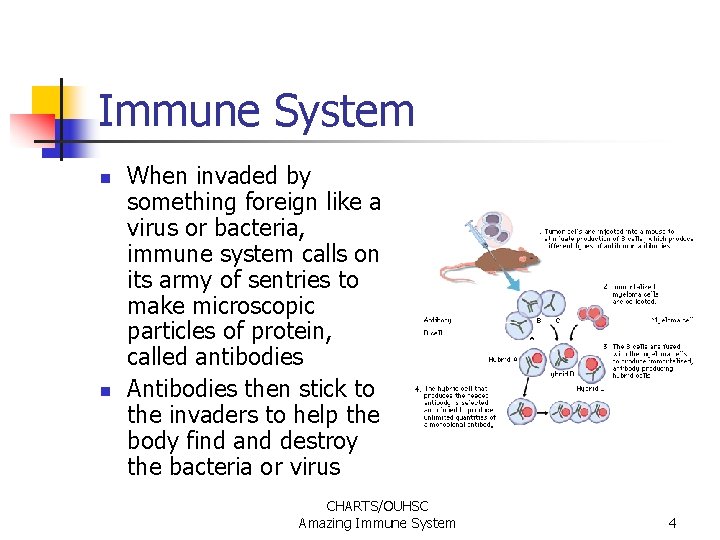
Immune System n n When invaded by something foreign like a virus or bacteria, immune system calls on its army of sentries to make microscopic particles of protein, called antibodies Antibodies then stick to the invaders to help the body find and destroy the bacteria or virus CHARTS/OUHSC Amazing Immune System 4
What Is Disease? n n Disease occurs when illness attacks the body Upset or breakdown in the way the body functions Some diseases make a person feel sick, others attack places in the body that cannot be felt immediately, i. e. internal organs Symptoms are changes that you can see or feel when you have a disease n Coughing can be a symptom of a cold CHARTS/OUHSC Amazing Immune System 5
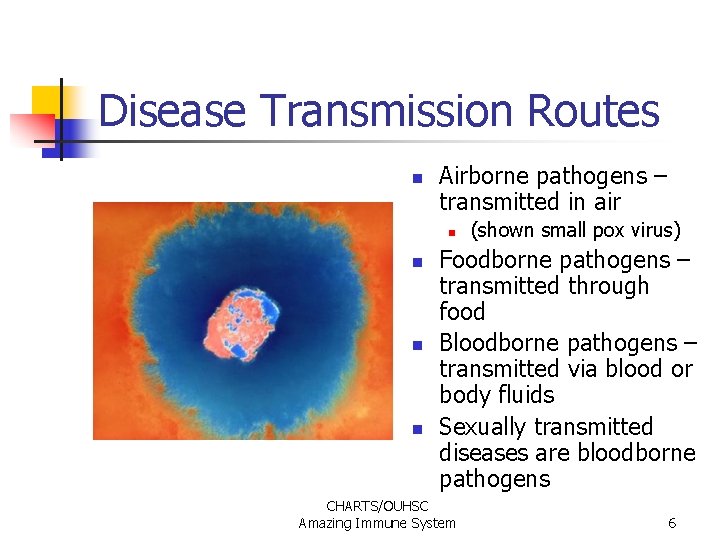
Disease Transmission Routes n Airborne pathogens – transmitted in air n n (shown small pox virus) Foodborne pathogens – transmitted through food Bloodborne pathogens – transmitted via blood or body fluids Sexually transmitted diseases are bloodborne pathogens CHARTS/OUHSC Amazing Immune System 6
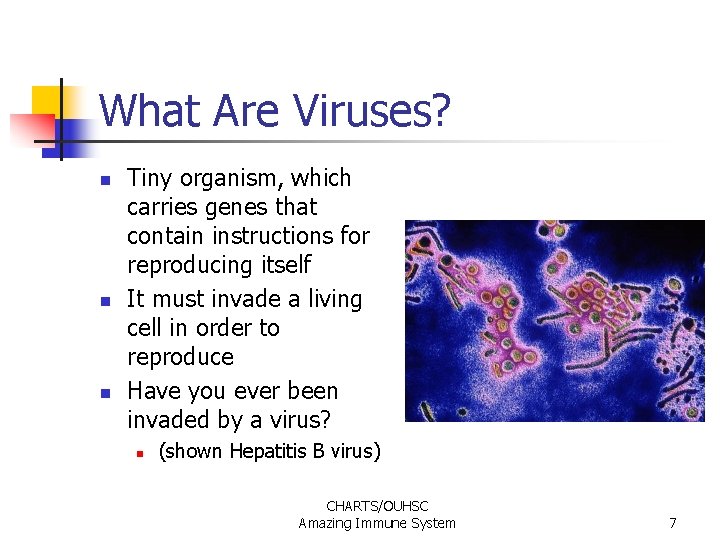
What Are Viruses? n n n Tiny organism, which carries genes that contain instructions for reproducing itself It must invade a living cell in order to reproduce Have you ever been invaded by a virus? n (shown Hepatitis B virus) CHARTS/OUHSC Amazing Immune System 7
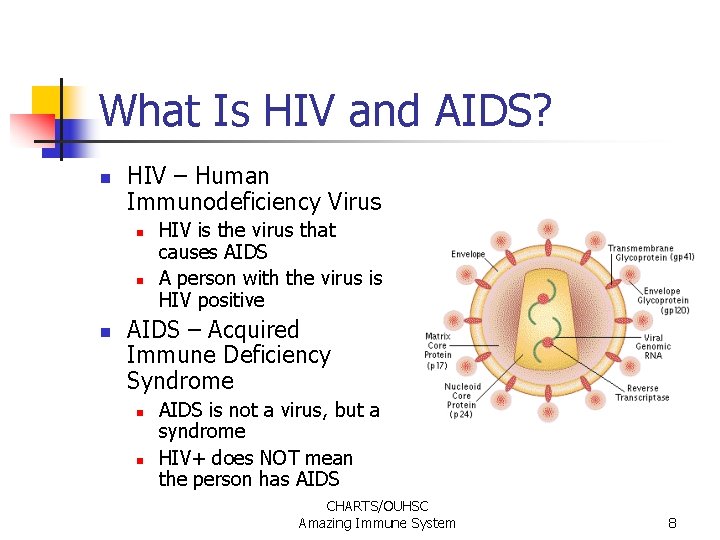
What Is HIV and AIDS? n HIV – Human Immunodeficiency Virus n n n HIV is the virus that causes AIDS A person with the virus is HIV positive AIDS – Acquired Immune Deficiency Syndrome n n AIDS is not a virus, but a syndrome HIV+ does NOT mean the person has AIDS CHARTS/OUHSC Amazing Immune System 8
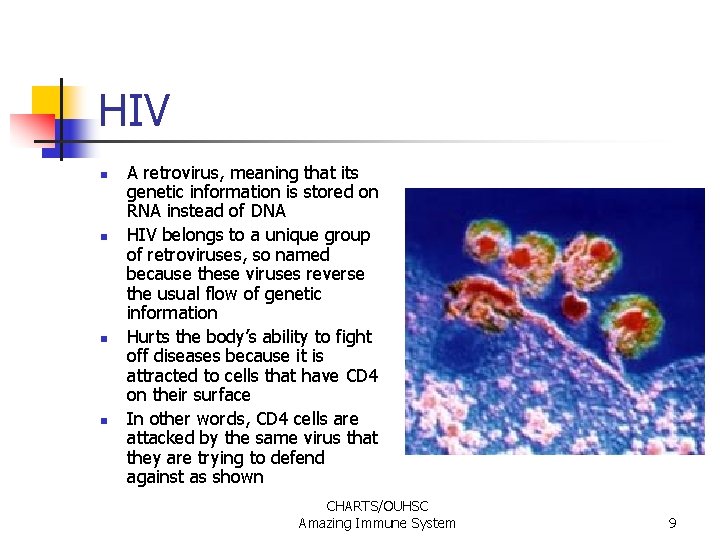
HIV n n A retrovirus, meaning that its genetic information is stored on RNA instead of DNA HIV belongs to a unique group of retroviruses, so named because these viruses reverse the usual flow of genetic information Hurts the body’s ability to fight off diseases because it is attracted to cells that have CD 4 on their surface In other words, CD 4 cells are attacked by the same virus that they are trying to defend against as shown CHARTS/OUHSC Amazing Immune System 9
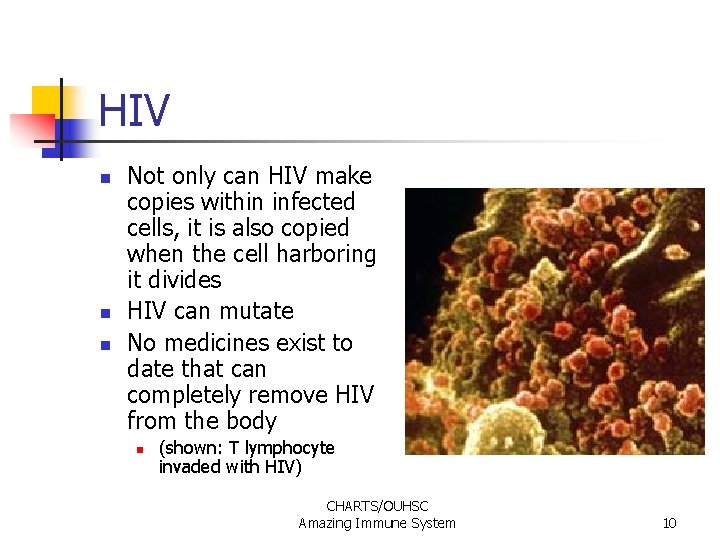
HIV n n n Not only can HIV make copies within infected cells, it is also copied when the cell harboring it divides HIV can mutate No medicines exist to date that can completely remove HIV from the body n (shown: T lymphocyte invaded with HIV) CHARTS/OUHSC Amazing Immune System 10
How Is HIV Passed? HIV is not transmitted by casual contact n HIV can only be transmitted by close contact with blood and other body fluids, and is transmitted by: n n n Sexual contact, including vaginal, and oral sex Intravenous (IV) drug use Body piercing or tattoos with unsterile equipment Blood transfusions (although very rare today with new blood screening) Mother-to-child, during pregnancy, delivery, or when breast feeding CHARTS/OUHSC Amazing Immune System 11
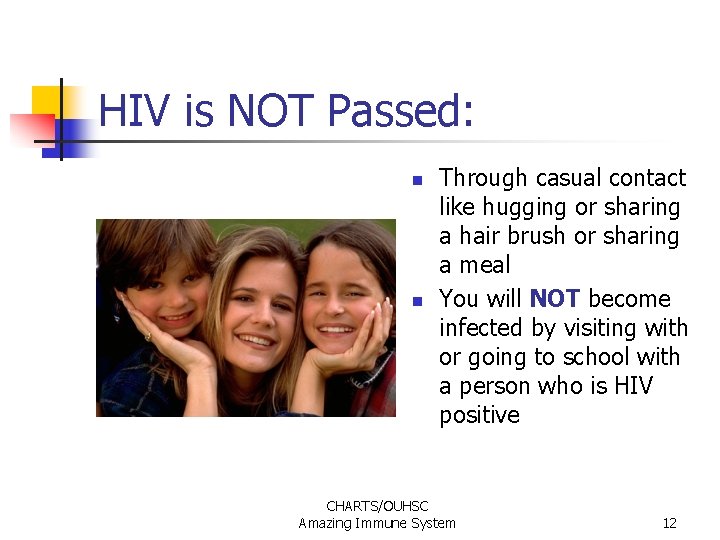
HIV is NOT Passed: n n Through casual contact like hugging or sharing a hair brush or sharing a meal You will NOT become infected by visiting with or going to school with a person who is HIV positive CHARTS/OUHSC Amazing Immune System 12
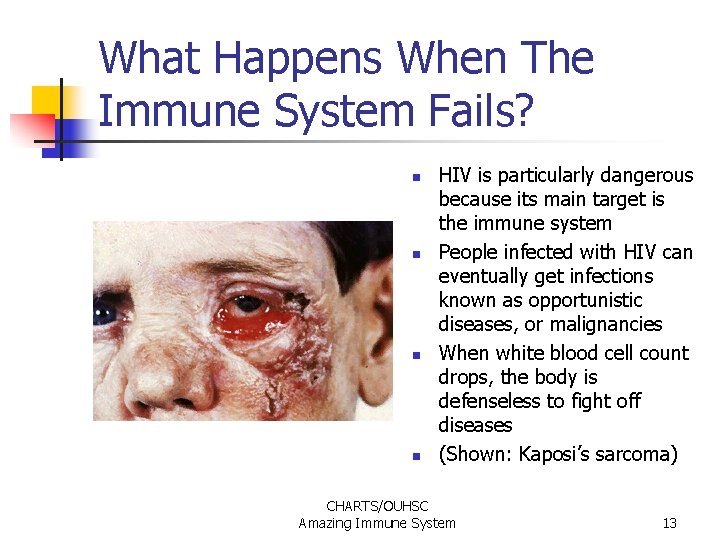
What Happens When The Immune System Fails? n n HIV is particularly dangerous because its main target is the immune system People infected with HIV can eventually get infections known as opportunistic diseases, or malignancies When white blood cell count drops, the body is defenseless to fight off diseases (Shown: Kaposi’s sarcoma) CHARTS/OUHSC Amazing Immune System 13
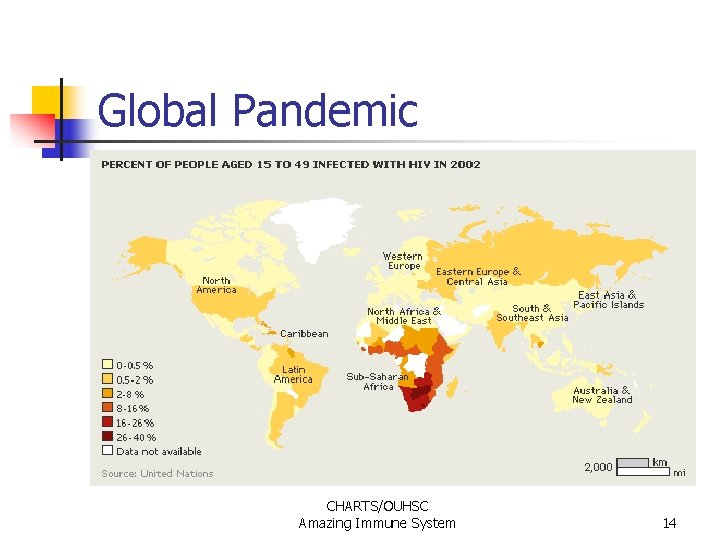
Global Pandemic CHARTS/OUHSC Amazing Immune System 14