
Cell wall Protoplast Central Vacuole Plant Cell Protoplast
- Slides: 48
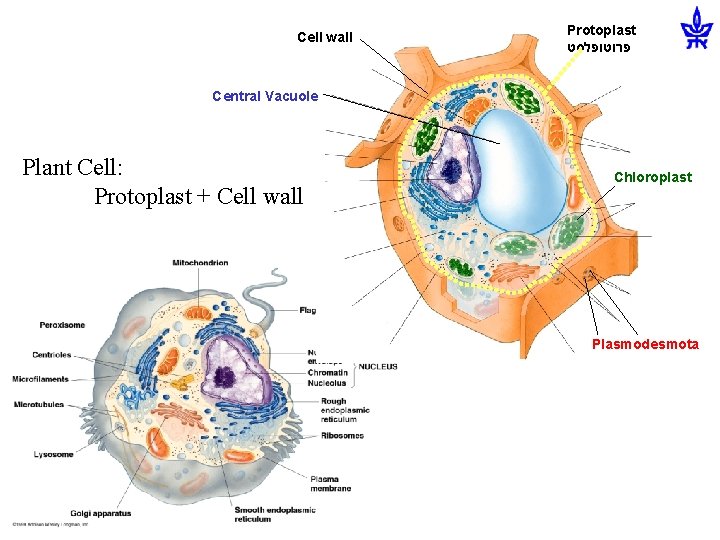
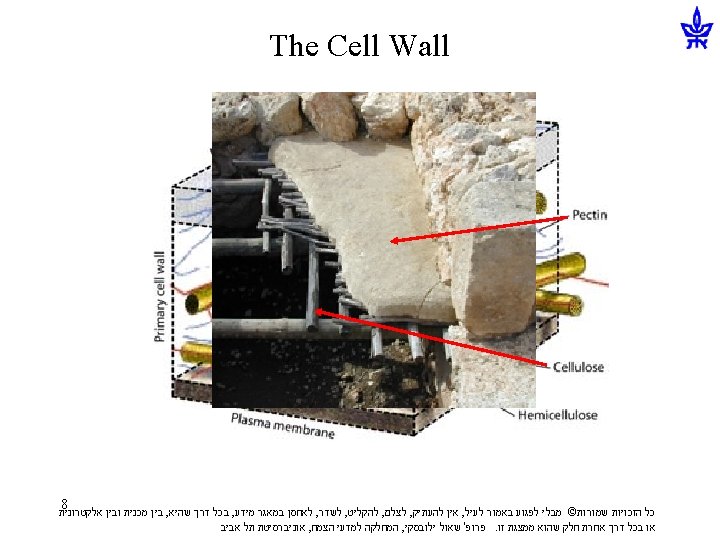
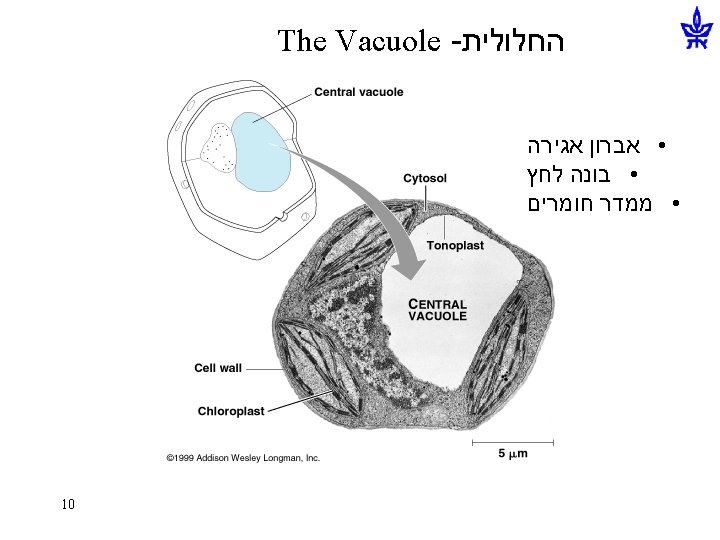
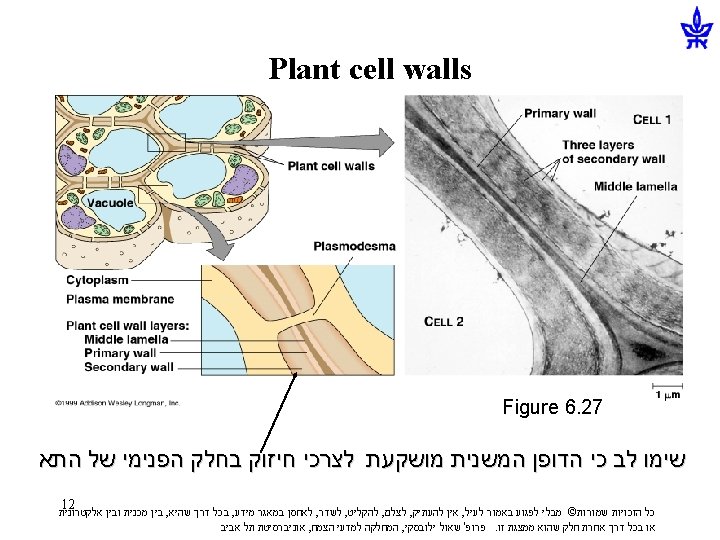
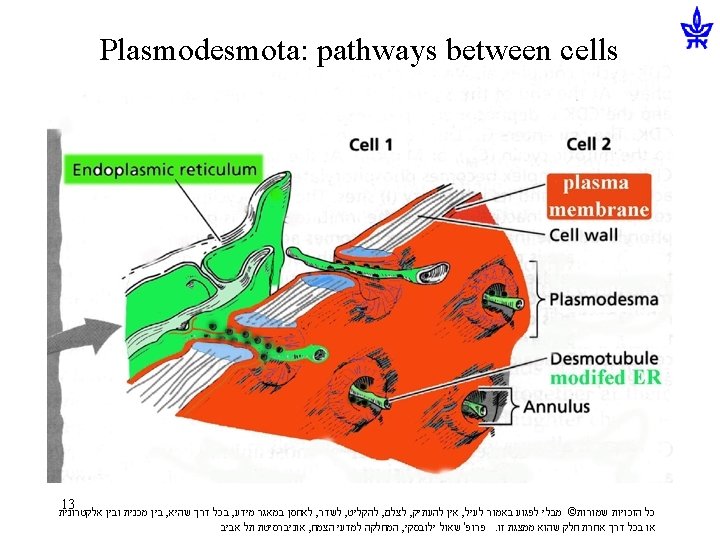
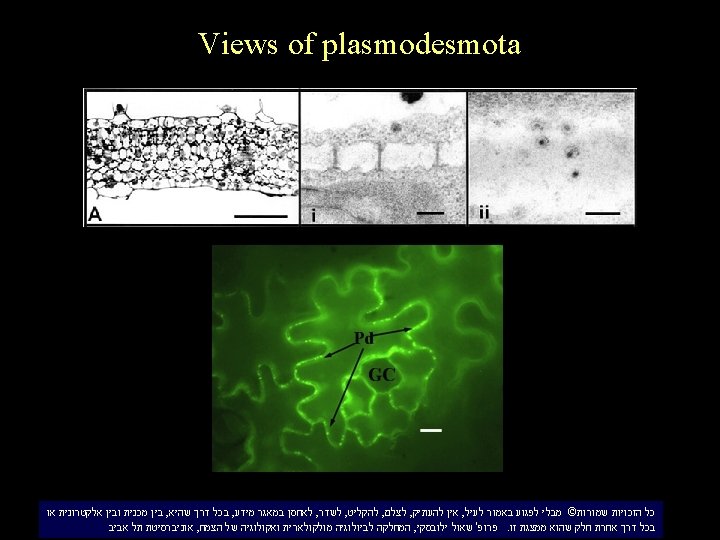
Cell wall Protoplast פרוטופלסט Central Vacuole Plant Cell: Protoplast + Cell wall Chloroplast Plasmodesmota 6
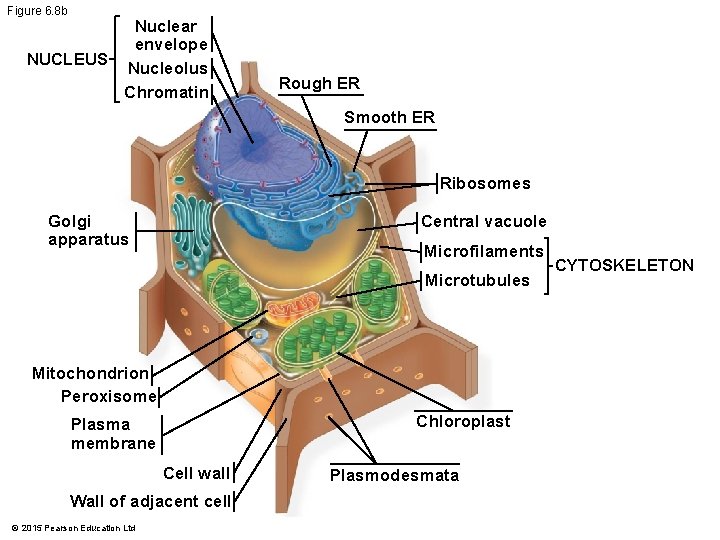
Figure 6. 8 b Nuclear envelope NUCLEUS Nucleolus Chromatin Rough ER Smooth ER Ribosomes Golgi apparatus Central vacuole Microfilaments Microtubules Mitochondrion Peroxisome Chloroplast Plasma membrane Cell wall Wall of adjacent cell © 2015 Pearson Education Ltd Plasmodesmata CYTOSKELETON
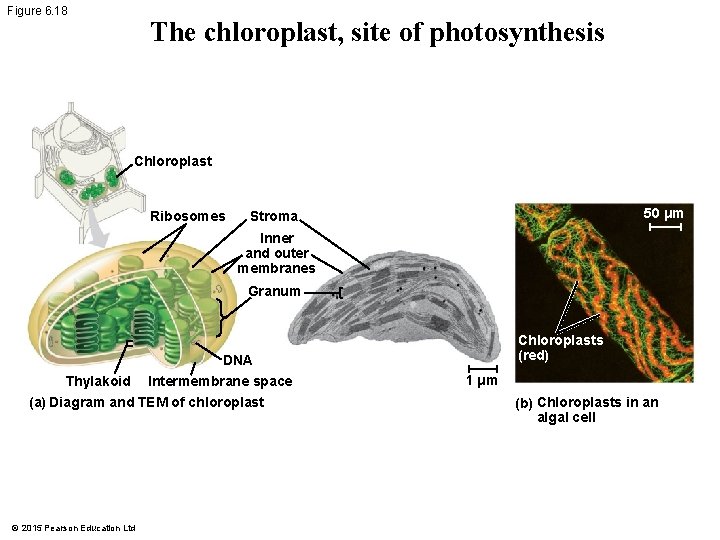
Figure 6. 18 The chloroplast, site of photosynthesis Chloroplast Ribosomes 50 μm Stroma Inner and outer membranes Granum Thylakoid DNA Intermembrane space (a) Diagram and TEM of chloroplast © 2015 Pearson Education Ltd Chloroplasts (red) 1 μm (b) Chloroplasts in an algal cell
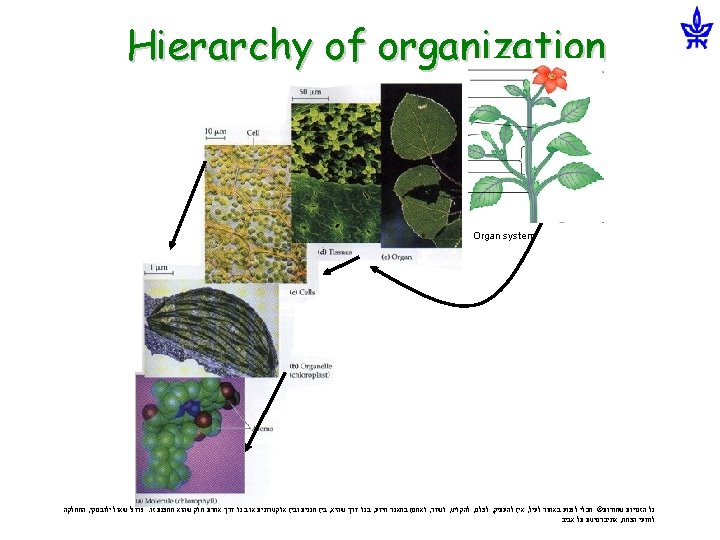
Plants have a hierarchical organization consisting of organs, tissues, and cells • Plants have organs composed of different tissues, which in turn are composed of different cell types • An organ consists of several types of tissues that together carry out particular functions • A tissue is a group of cells consisting of one or more cell types that together perform a specialized function
The Three Basic Plant Organs: Roots, Stems, and Leaves • Basic morphology of vascular plants reflects their evolution as organisms that draw nutrients from below ground above ground • Plants take up water and minerals from below ground • Plants take up CO 2 and light from above ground
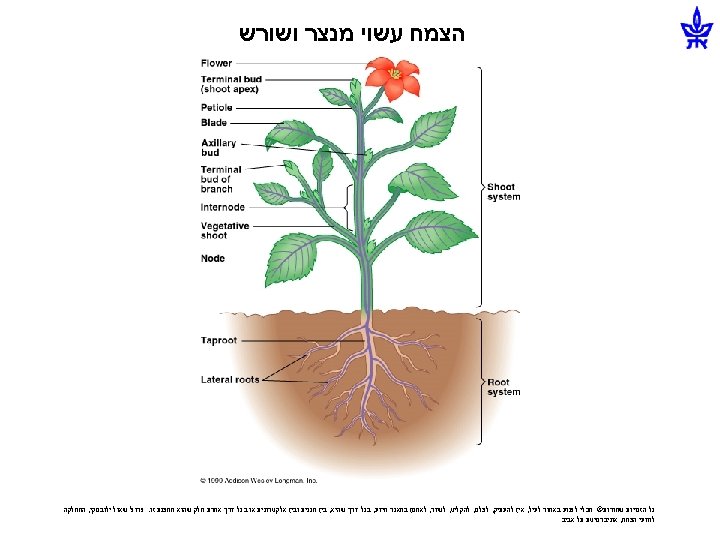
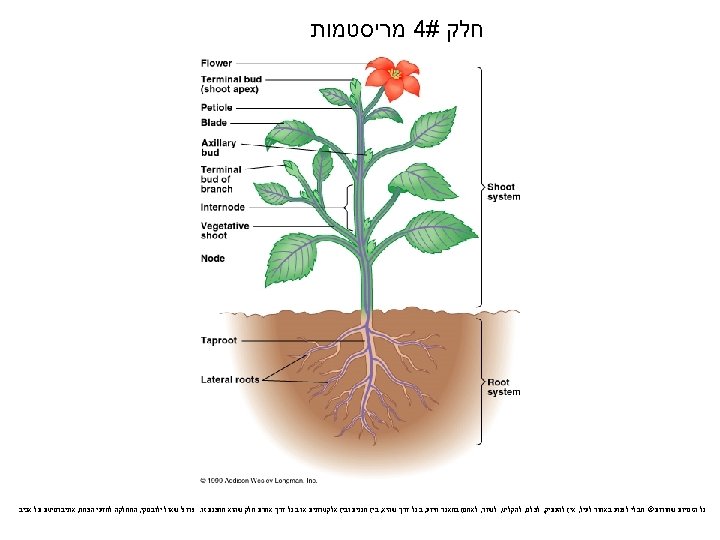
• Three basic organs evolved: roots, stems, and leaves • They are organized into a: • root system and a • shoot system
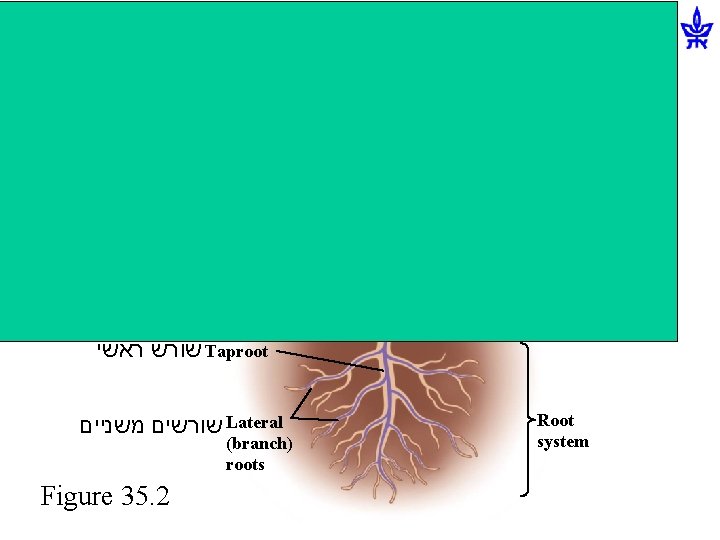
Reproductive shoot (flower) ניצן קודקודי Apical bud מפרק Node פרק Internode Apical bud Vegetative - עלה shoot פטוטרת וטרף Blade Leaf Petiole ניצן חיקי Axillary bud Shoot system Stem גבעול שורש ראשי Taproot שורשים משניים Lateral (branch) roots Figure 35. 2 Root system
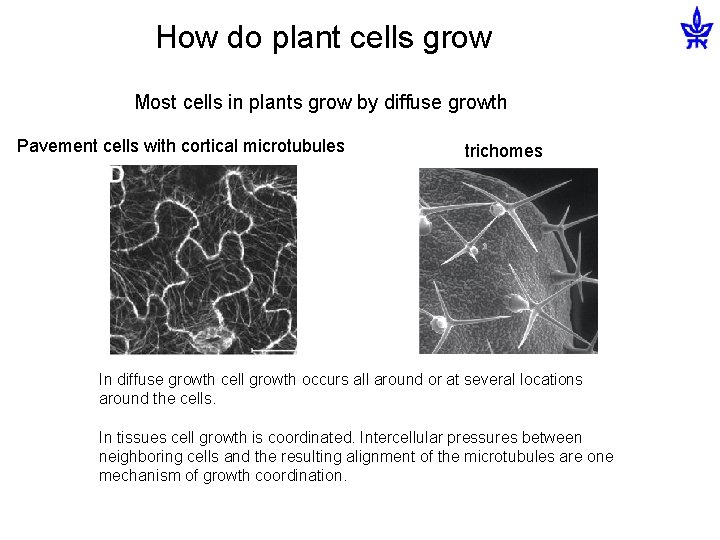
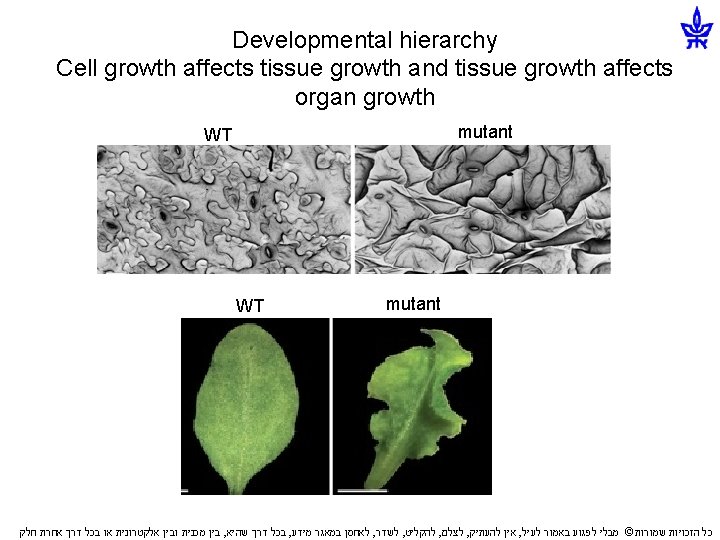
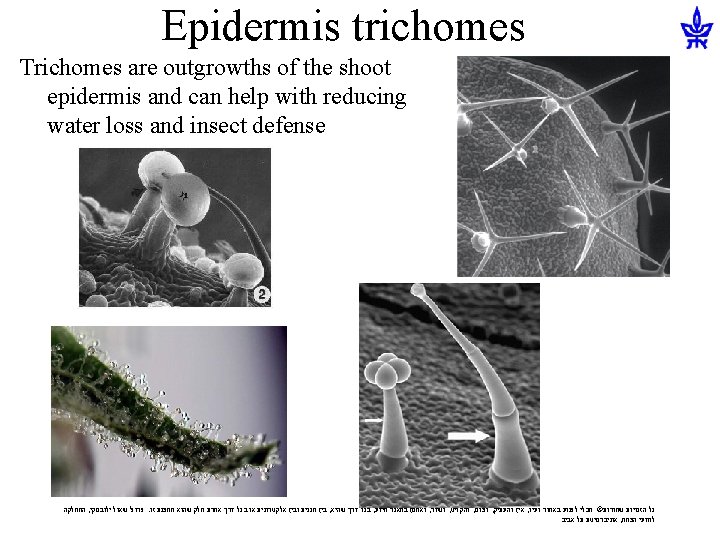
How do plant cells grow Most cells in plants grow by diffuse growth Pavement cells with cortical microtubules trichomes In diffuse growth cell growth occurs all around or at several locations around the cells. In tissues cell growth is coordinated. Intercellular pressures between neighboring cells and the resulting alignment of the microtubules are one mechanism of growth coordination.
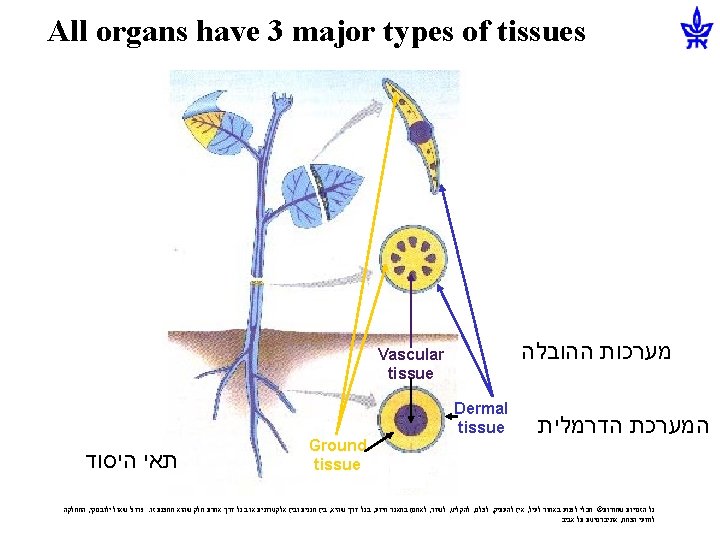
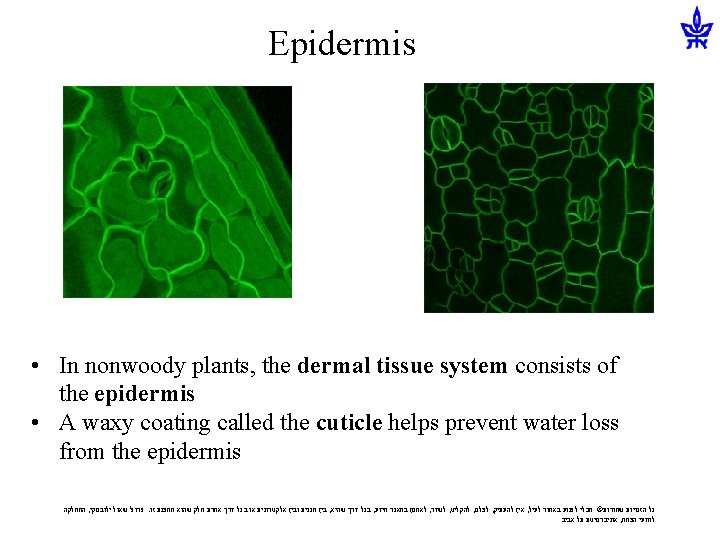
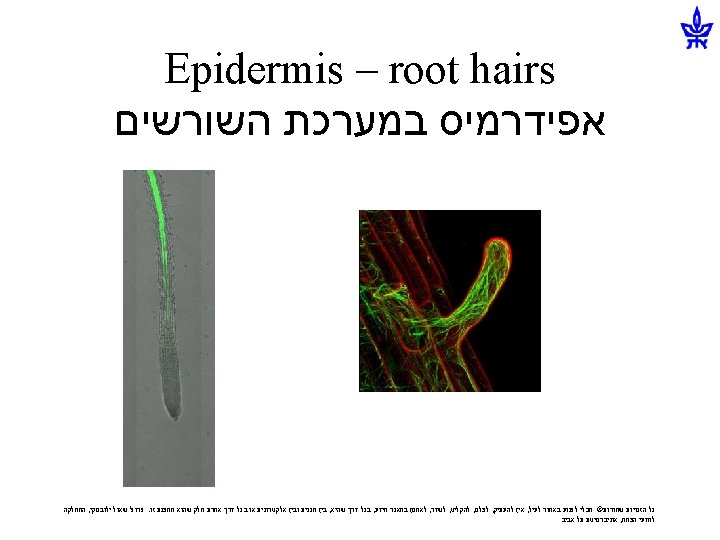
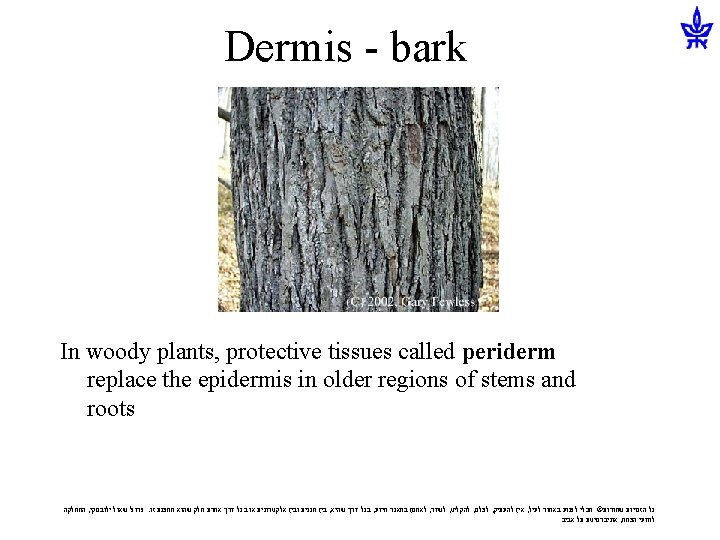
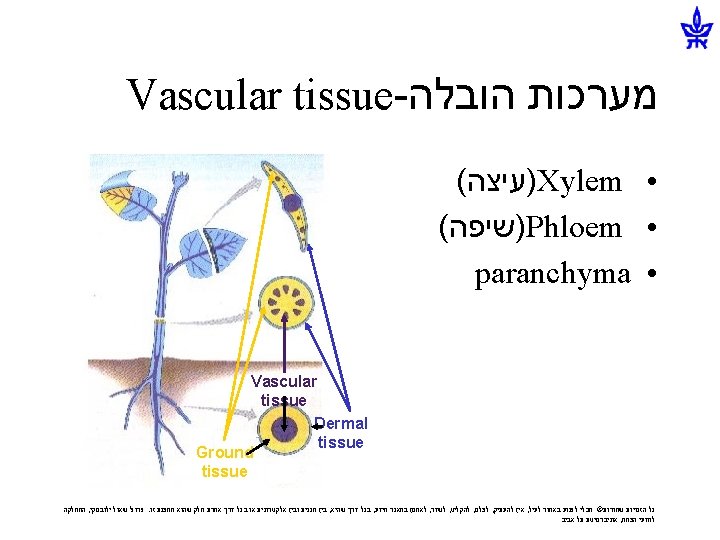
Dermal, Vascular, and Ground Tissue Systems • Each plant organ has dermal דרמלית , ground tissues יסוד , and vascular הובלה • Each of these three categories forms a tissue system רקמות • Each tissue system is continuous throughout the plant
Ground tissue - רקמת יסוד • Tissues that are neither dermal nor vascular are the ground tissue system • Ground tissue internal to the vascular tissue is pith; ground tissue external to the vascular tissue is cortex • Ground tissue includes cells specialized for storage, photosynthesis, support, and transport 34 בין מכנית ובין אלקטרונית , בכל דרך שהיא , לאחסן במאגר מידע , לשדר , להקליט , לצלם , אין להעתיק , כל הזכויות שמורות© מבלי לפגוע באמור לעיל אוניברסיטת תל אביב , המחלקה למדעי הצמח , פרופ' דני חיימוביץ. או בכל דרך אחרת חלק שהוא ממצגת זו
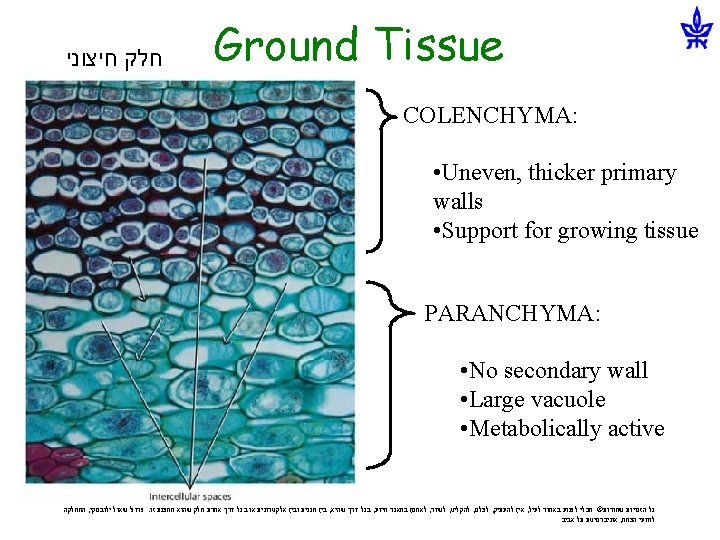
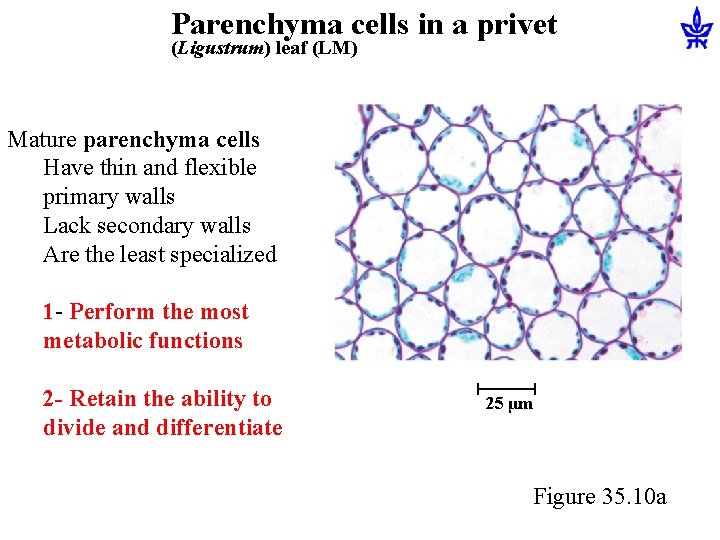
Parenchyma cells in a privet (Ligustrum) leaf (LM) Mature parenchyma cells Have thin and flexible primary walls Lack secondary walls Are the least specialized 1 - Perform the most metabolic functions 2 - Retain the ability to divide and differentiate 25 μm Figure 35. 10 a
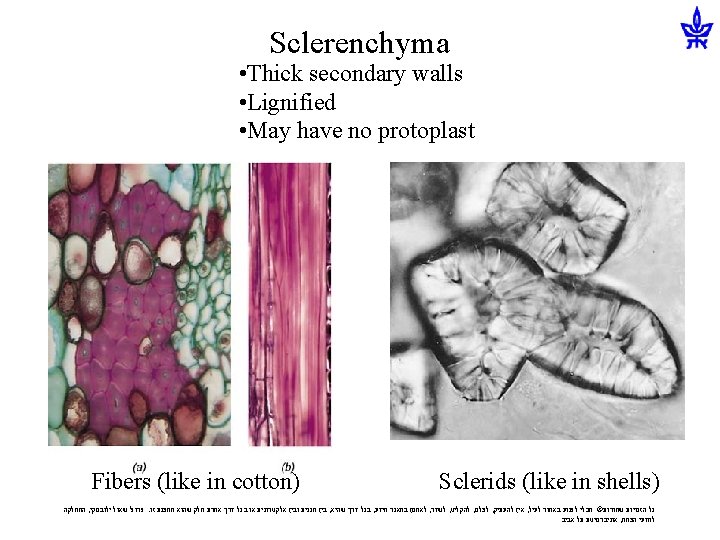
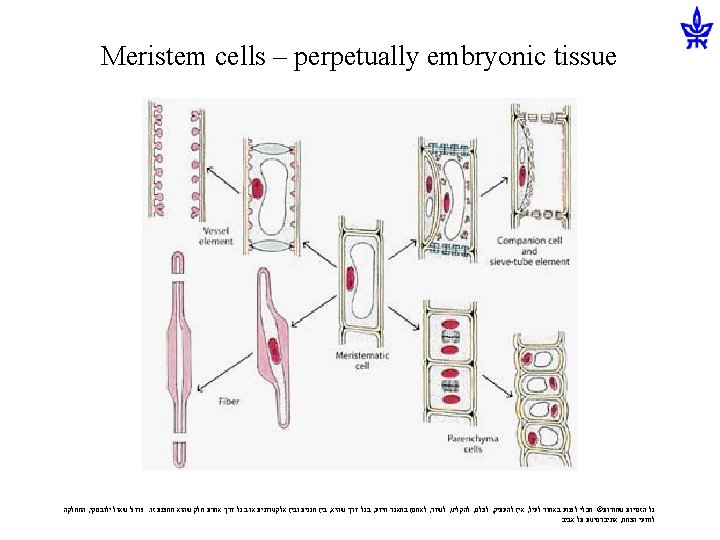
Sclerenchyma Cells • Sclerenchyma cells are rigid because of thick secondary walls strengthened with lignin, an indigestible strengthening polymer • They are dead at functional maturity • There are two types – Sclereids are short and irregular in shape and have thick lignified secondary walls – Fibers are long and slender and arranged in threads
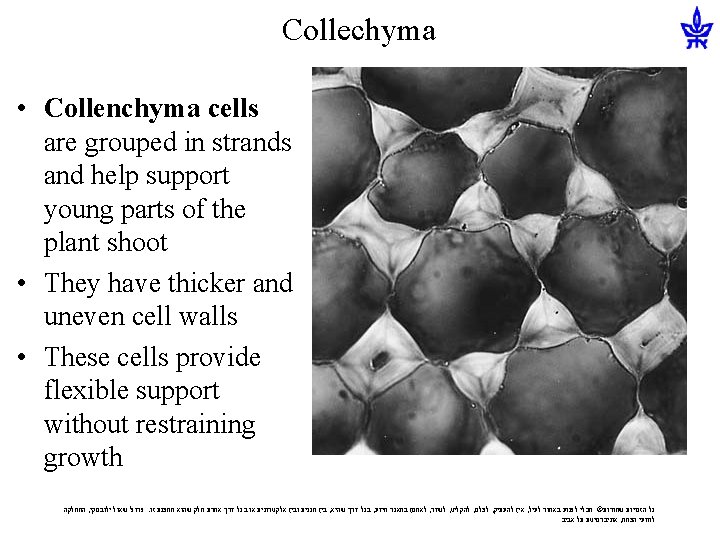
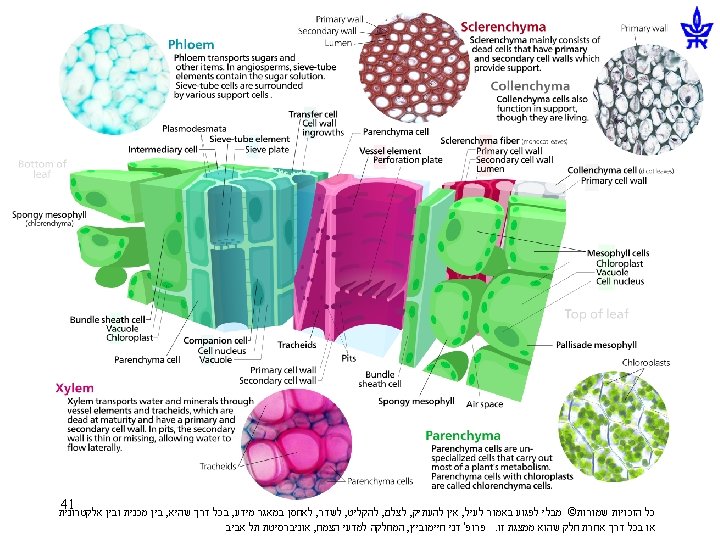
The ground tissue of plants includes all tissues that are neither dermal nor vascular. It can be divided into three classes based on the nature of the cell walls. • Parenchyma cells have thin primary walls and usually remain alive after they become mature. Parenchyma forms the "filler" tissue in the soft parts of plants. • Collenchyma cells have thin primary walls with some areas of secondary thickening. Collenchyma provides extra structural support, particularly in regions of new growth. • Sclerenchyma cells have thick lignified secondary walls and often die when mature. Sclerenchyma provides the main structural support to a plant 40 בין מכנית ובין אלקטרונית , בכל דרך שהיא , לאחסן במאגר מידע , לשדר , להקליט , לצלם , אין להעתיק , כל הזכויות שמורות© מבלי לפגוע באמור לעיל אוניברסיטת תל אביב , המחלקה למדעי הצמח , פרופ' דני חיימוביץ. או בכל דרך אחרת חלק שהוא ממצגת זו
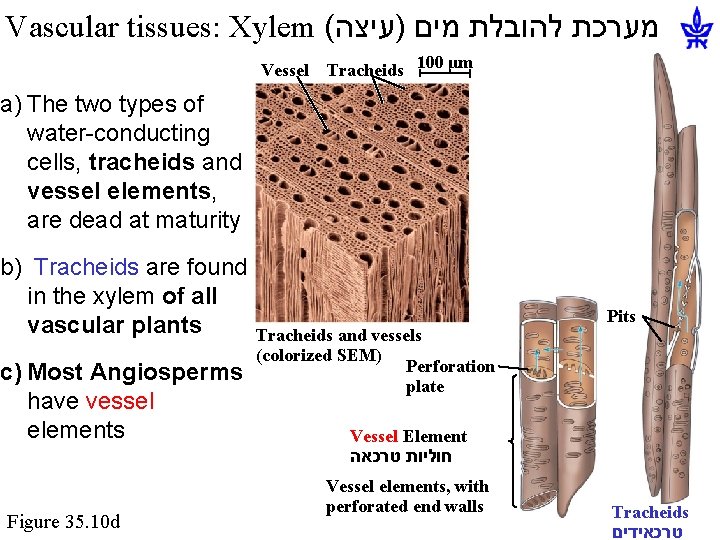
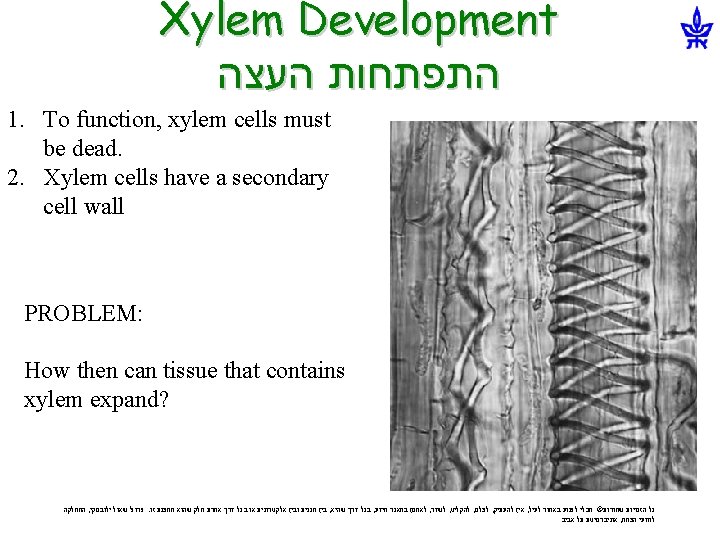
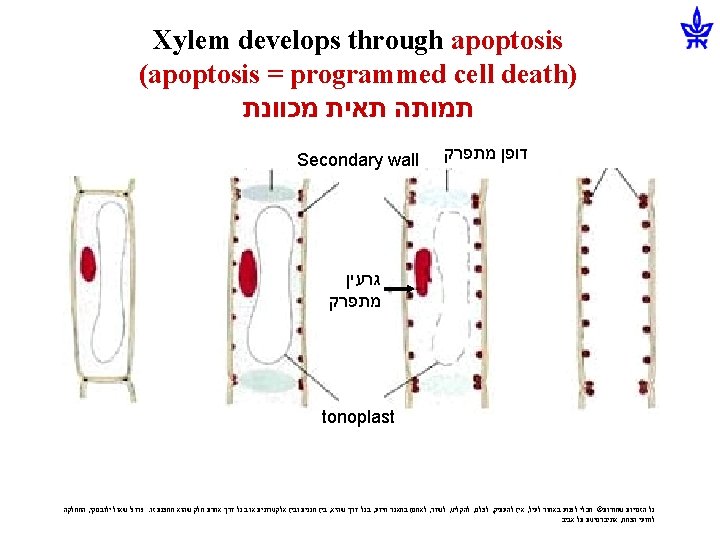
Vascular tissues: Xylem ( מערכת להובלת מים )עיצה Vessel Tracheids 100 μm a) The two types of water-conducting cells, tracheids and vessel elements, are dead at maturity b) Tracheids are found in the xylem of all vascular plants c) Most Angiosperms have vessel elements Figure 35. 10 d Tracheids and vessels (colorized SEM) Perforation plate Pits Vessel Element חוליות טרכאה Vessel elements, with perforated end walls Tracheids טרכאידים
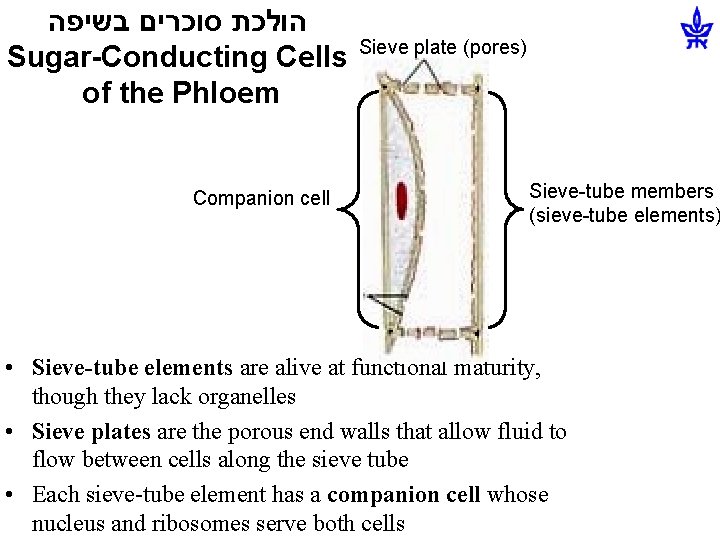
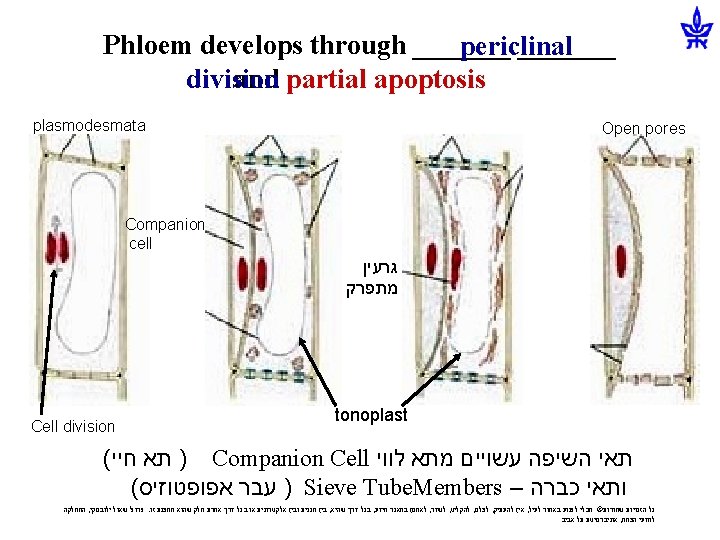
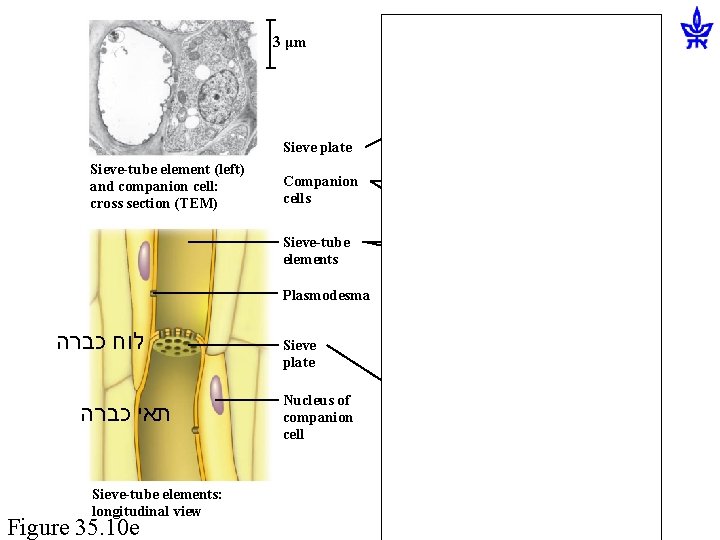
הולכת סוכרים בשיפה Sugar-Conducting Cells of the Phloem Companion cell Sieve plate (pores) Sieve-tube members (sieve-tube elements) • Sieve-tube elements are alive at functional maturity, though they lack organelles • Sieve plates are the porous end walls that allow fluid to flow between cells along the sieve tube • Each sieve-tube element has a companion cell whose nucleus and ribosomes serve both cells
3 μm Sieve-tube elements: longitudinal view (LM) Sieve plate Sieve-tube element (left) and companion cell: cross section (TEM) Companion cells Sieve-tube elements Plasmodesma לוח כברה תאי כברה Sieve plate 30 μm Nucleus of companion cell 15 μm Sieve-tube elements: longitudinal view Figure 35. 10 e Sieve plate with pores (LM)