
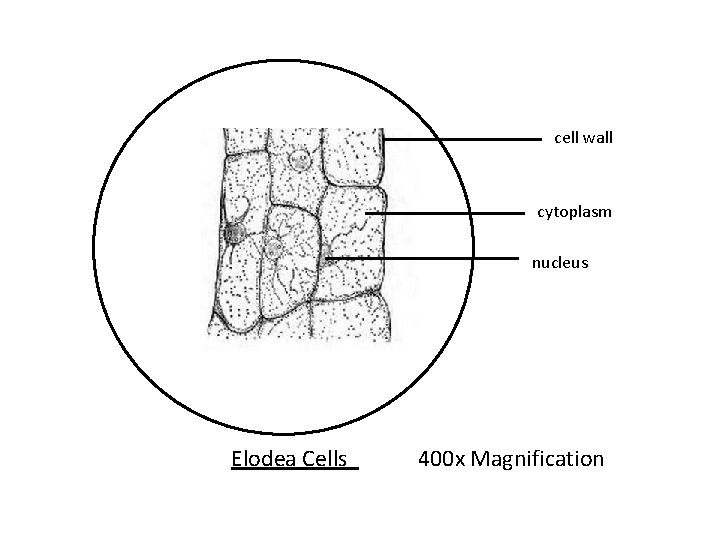
cell wall cytoplasm nucleus Elodea Cells 400 x
- Slides: 13
cell wall cytoplasm nucleus Elodea Cells 400 x Magnification
Introduction to Genes It all starts in the nucleus How do cells know what to do and how does a single cell become a full grown multicellular plant or animal?
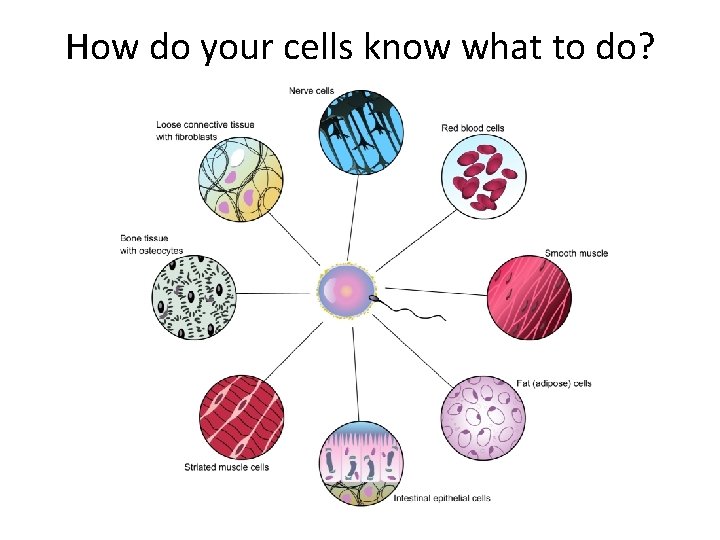
How do your cells know what to do?
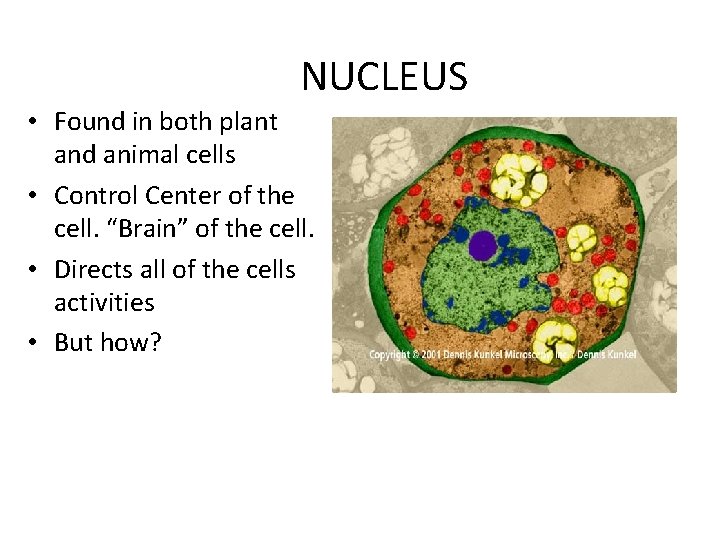
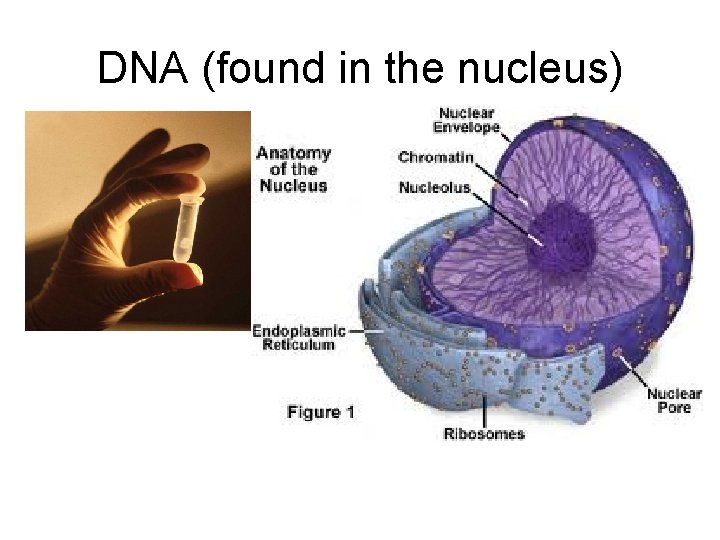
NUCLEUS • Found in both plant and animal cells • Control Center of the cell. “Brain” of the cell. • Directs all of the cells activities • But how?
DNA (found in the nucleus)
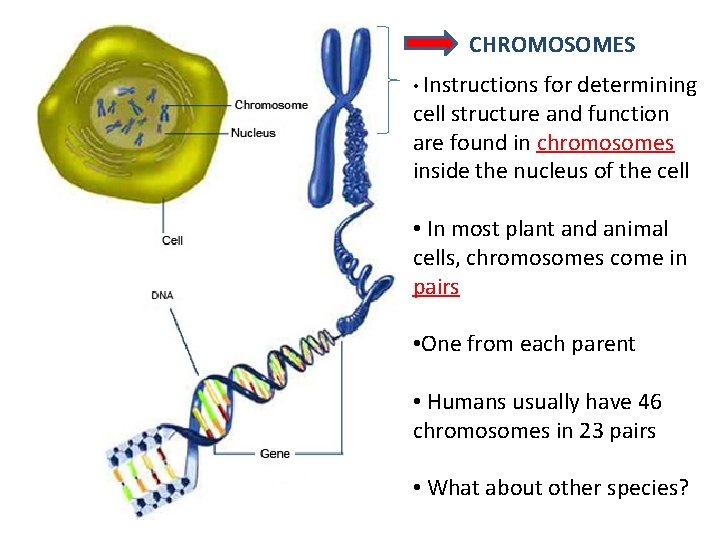
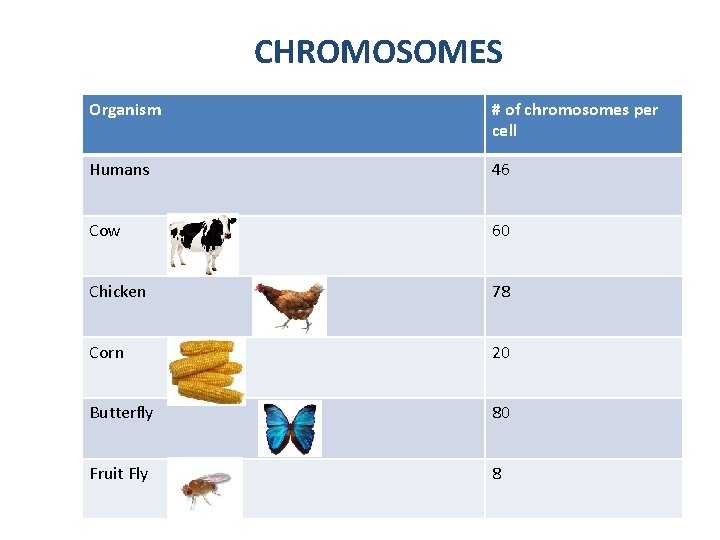
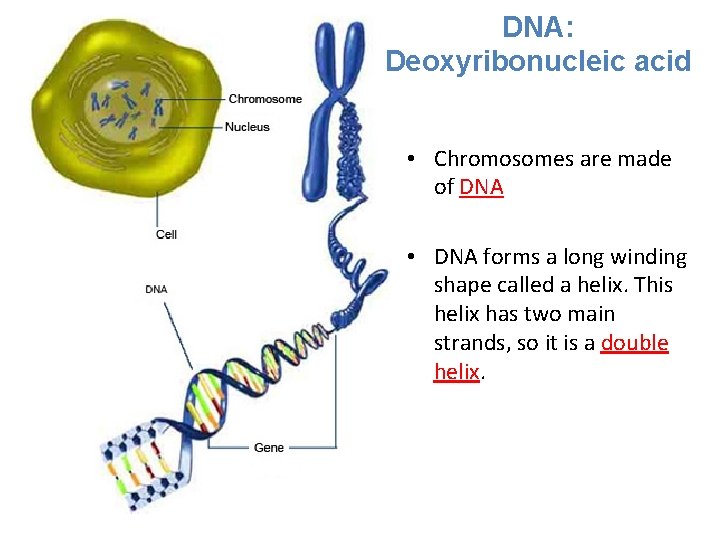
CHROMOSOMES • Instructions for determining cell structure and function are found in chromosomes inside the nucleus of the cell • In most plant and animal cells, chromosomes come in pairs • One from each parent • Humans usually have 46 chromosomes in 23 pairs • What about other species?
CHROMOSOMES Organism # of chromosomes per cell Humans 46 Cow 60 Chicken 78 Corn 20 Butterfly 80 Fruit Fly 8
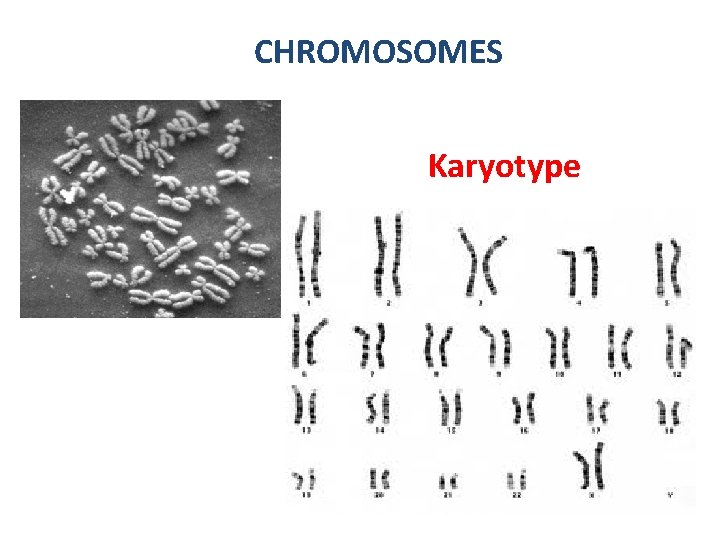
CHROMOSOMES Karyotype
DNA: Deoxyribonucleic acid • Chromosomes are made of DNA • DNA forms a long winding shape called a helix. This helix has two main strands, so it is a double helix.
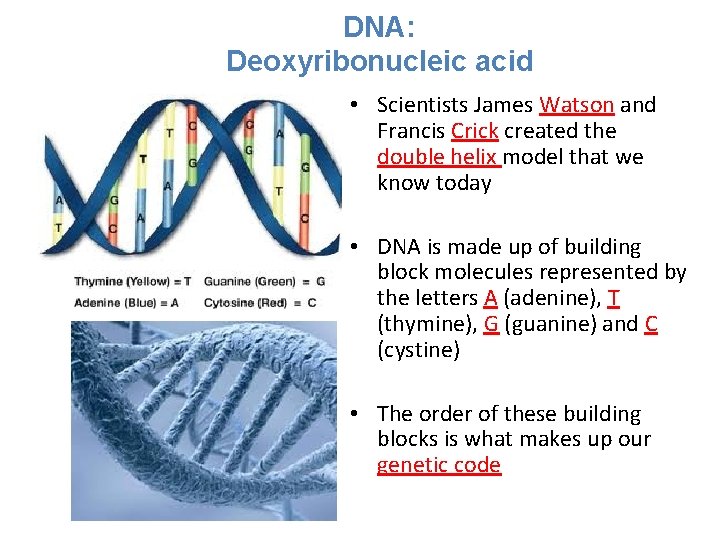
DNA: Deoxyribonucleic acid • Scientists James Watson and Francis Crick created the double helix model that we know today • DNA is made up of building block molecules represented by the letters A (adenine), T (thymine), G (guanine) and C (cystine) • The order of these building blocks is what makes up our genetic code
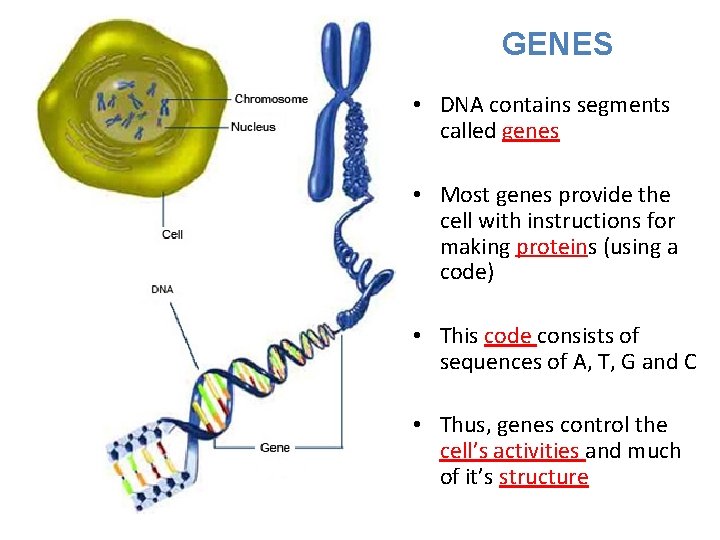
GENES • DNA contains segments called genes • Most genes provide the cell with instructions for making proteins (using a code) • This code consists of sequences of A, T, G and C • Thus, genes control the cell’s activities and much of it’s structure
FROM GENES TO PROTEINS • The Code: A always pairs with T C always pairs with G • Each DNA molecule contains hundreds or thousands of genes • Genes control many features such as hair and eye colour, food allergies, height • Genes determine what kinds of proteins your cells can make which determines how your body functions and/or looks • Environmental factors can play a role as well
FROM GENES TO PROTEINS • Each protein is designed to carry out a specific job • Some examples include: – Building parts of the body – Couriers to carry materials throughout the body – Transfer signals within the body – Speed up chemical reactions within the body