
Cell types structures and functions Good morning Get

- Slides: 43
Cell types, structures and functions
Good morning! Get your journals out On the next page of your journal title it Prokaryotes and Eukaryotes On the next line write: EQ: How are prokaryotes and eukaryotes a like and different? Make sure that you put prokaryote and eukaryote in your table of contents!
Cells exploration guide With your group look at the 3 pictures of cells Use the pictures to fill in the chart Write YES if it is there Write NO if it is not there Highlight all of the boxes that say YES – this will help later Answer the questions on the back Tape/glue this on the left side of the page
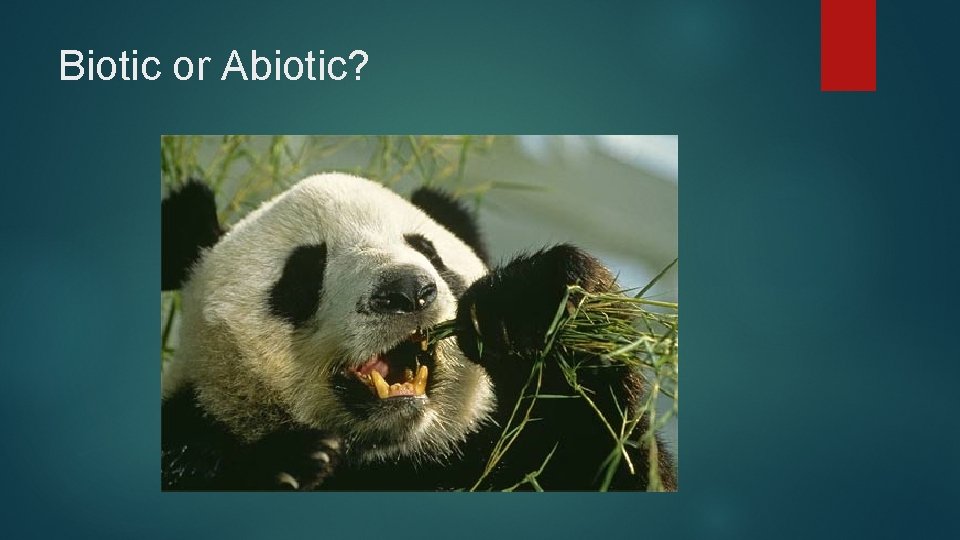
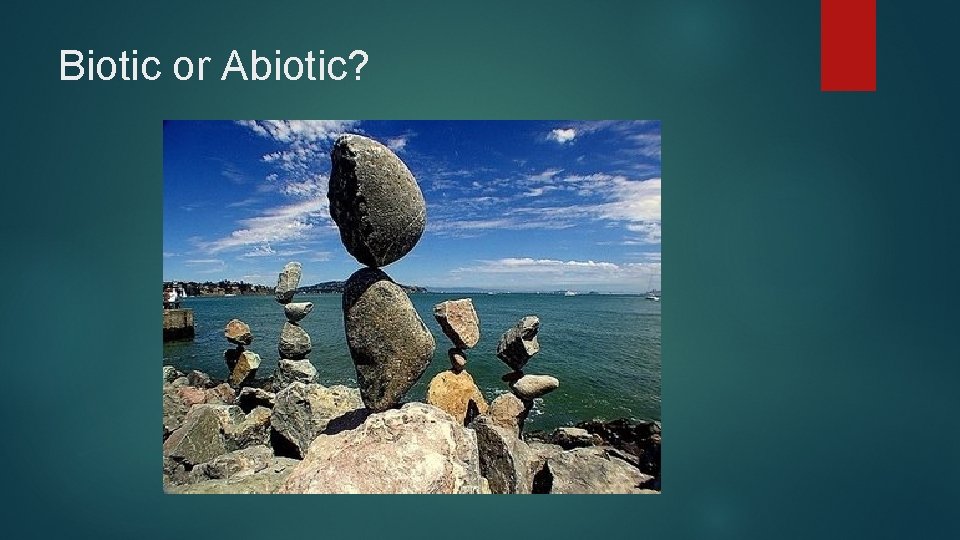
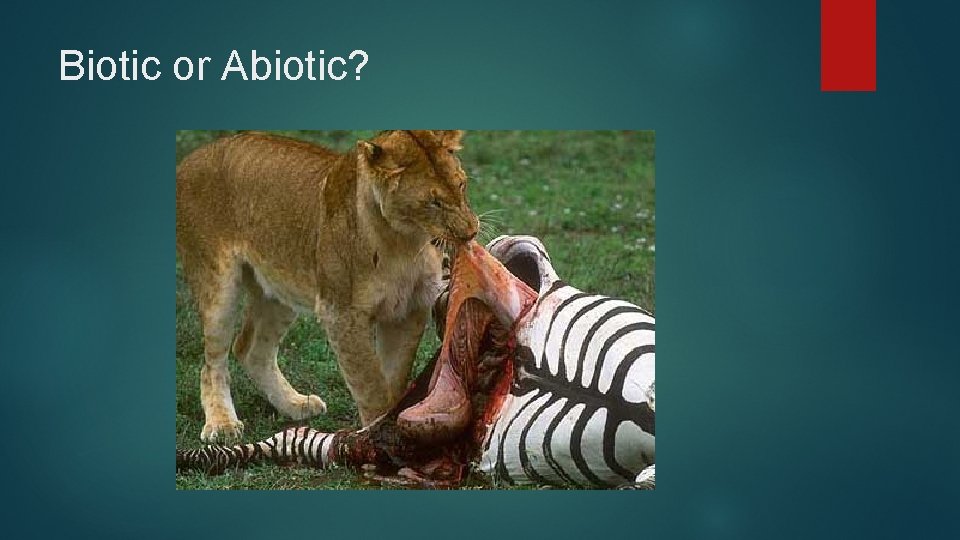
Abiotic vs Biotic Bio = life Biotic = living organisms Examples: Abiotic = not living Examples:
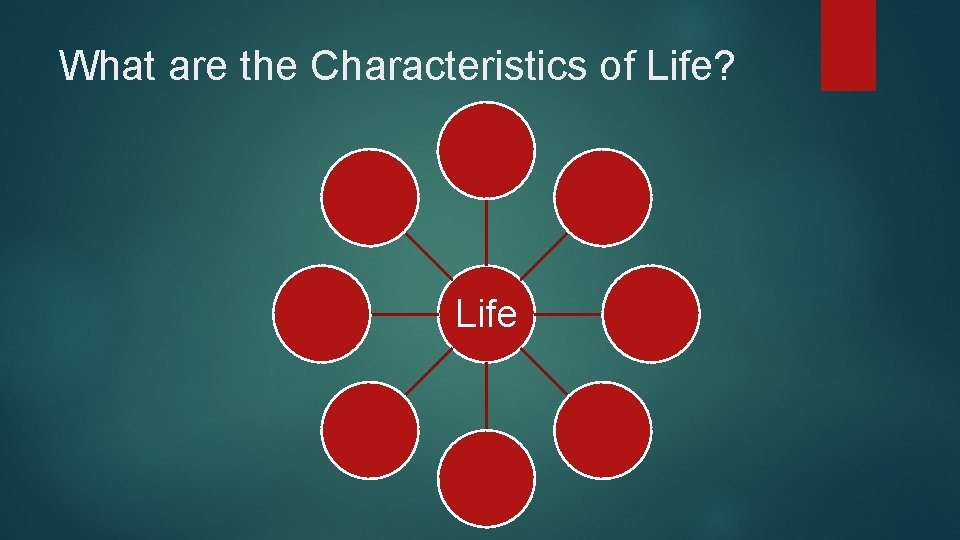
What are the Characteristics of Life? Life
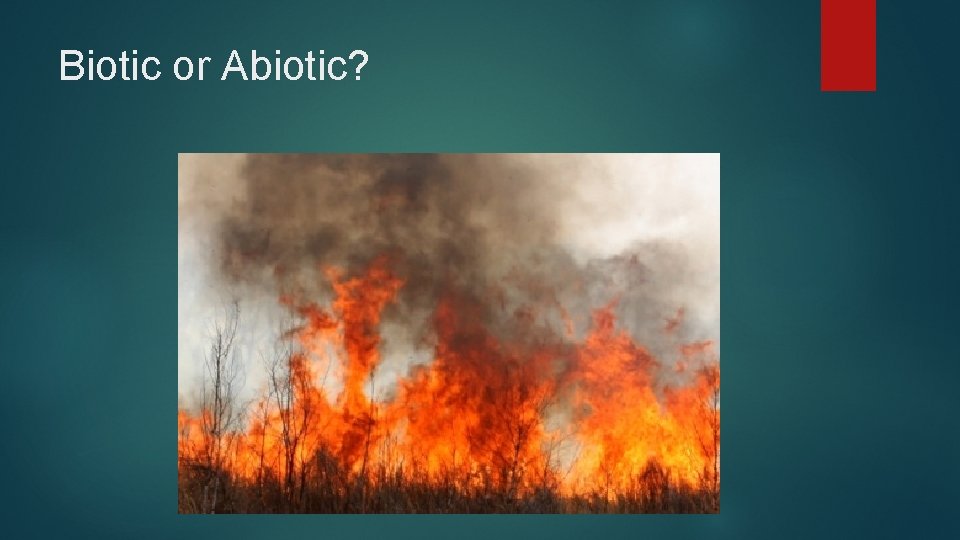
Biotic or Abiotic?
Biotic or Abiotic?
Biotic or Abiotic?
Biotic or Abiotic?
How do we define life? Cell Theory All living organisms are composed of cells Cells are the smallest structures that perform the functions of life All cells come from preexisting cells
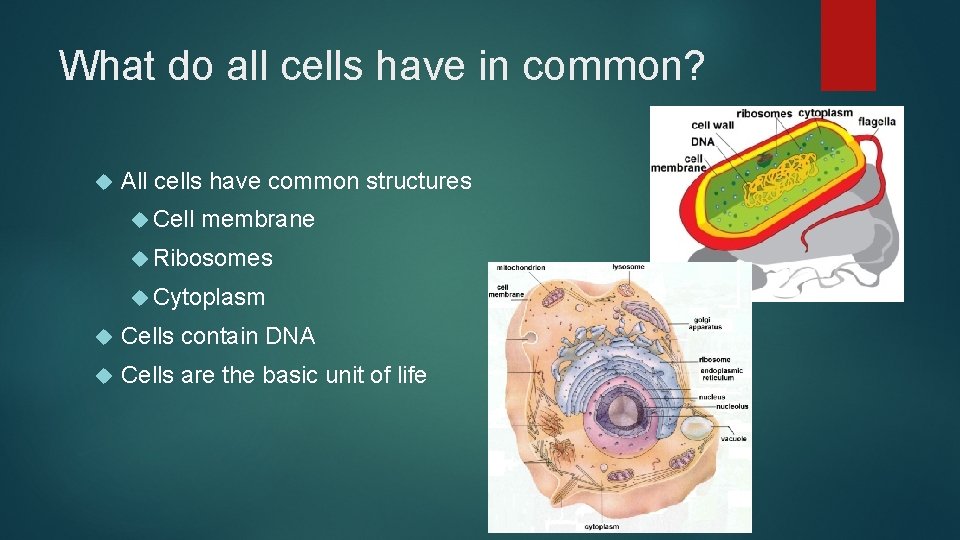
What do all cells have in common? All cells have common structures Cell membrane Ribosomes Cytoplasm Cells contain DNA Cells are the basic unit of life
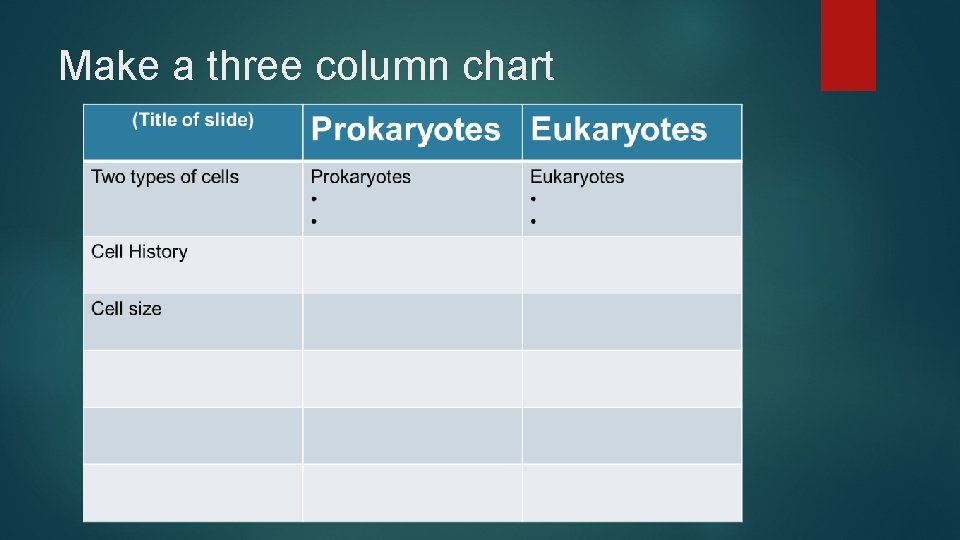
Make a three column chart
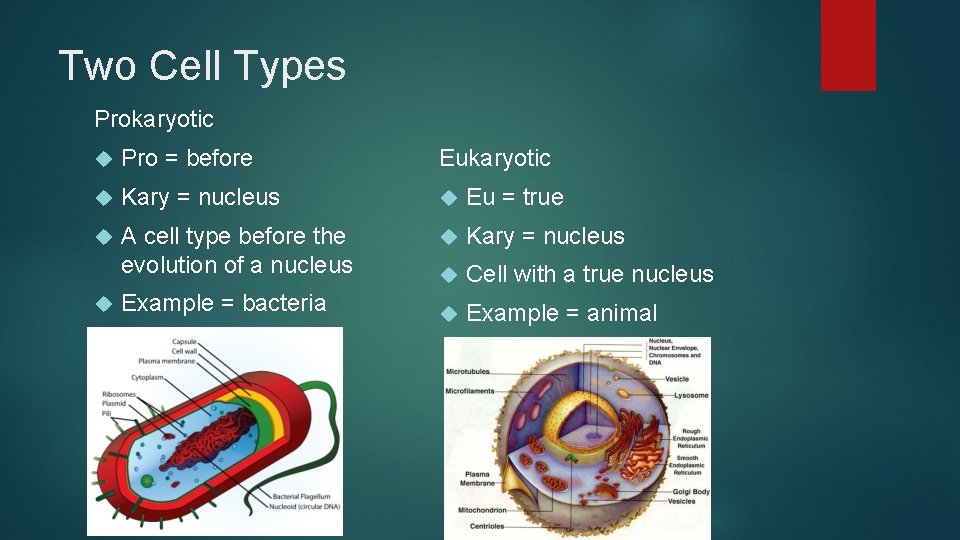
Two Cell Types Prokaryotic Pro = before Eukaryotic Kary = nucleus Eu = true A cell type before the evolution of a nucleus Kary = nucleus Cell with a true nucleus Example = animal Example = bacteria
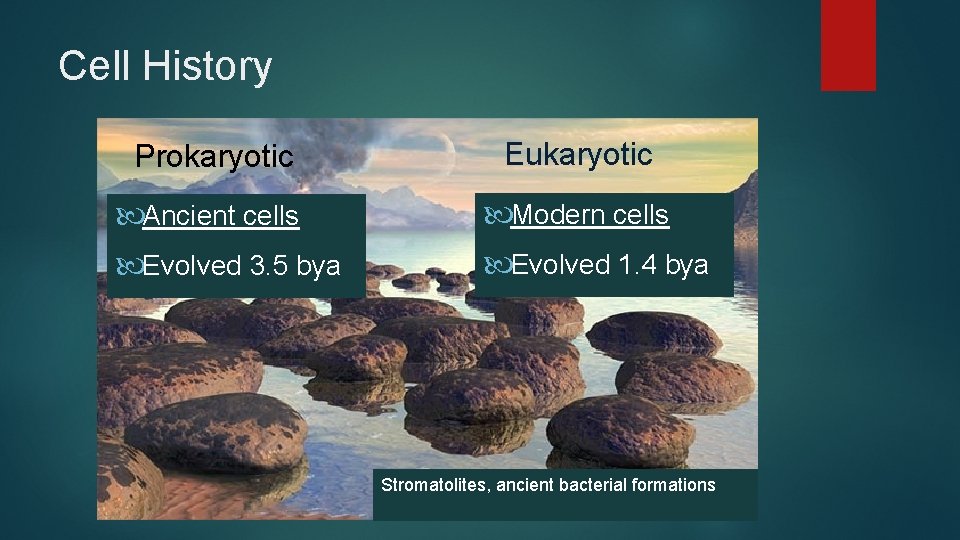
Cell History Prokaryotic Eukaryotic Ancient cells Modern cells Evolved 3. 5 bya Evolved 1. 4 bya Stromatolites, ancient bacterial formations
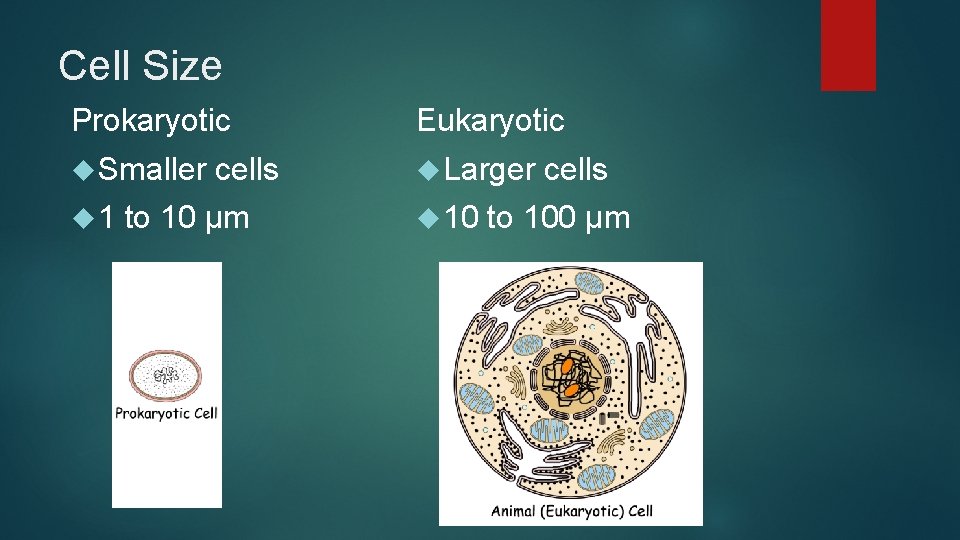
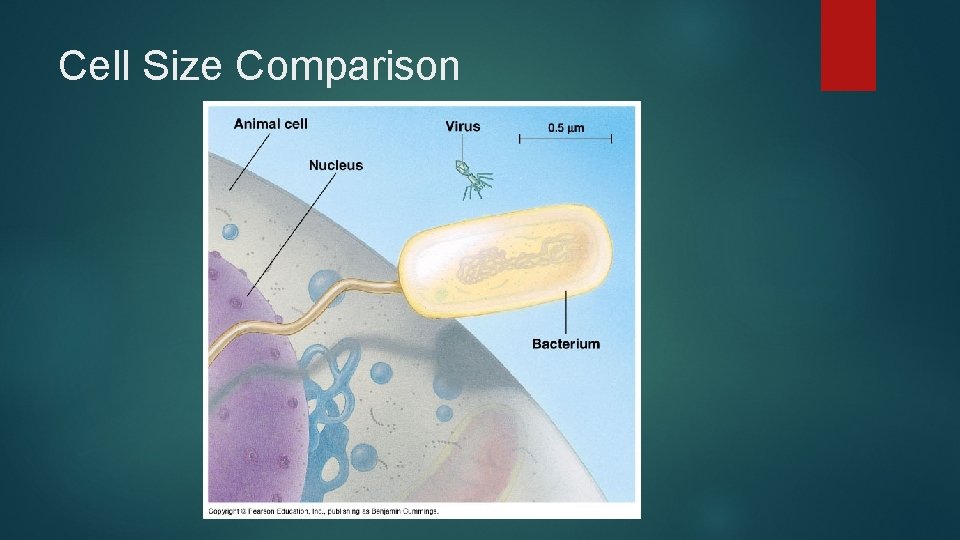
Cell Size Prokaryotic Eukaryotic Smaller Larger 1 cells to 10 µm 10 cells to 100 µm
Cell Size Comparison
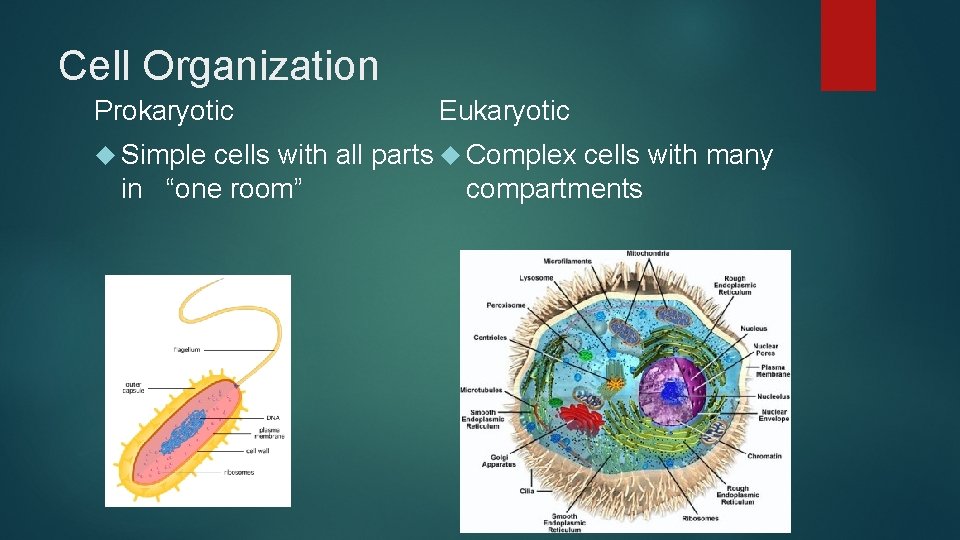
Cell Organization Prokaryotic Eukaryotic cells with all parts Complex cells with many compartments in “one room” Simple
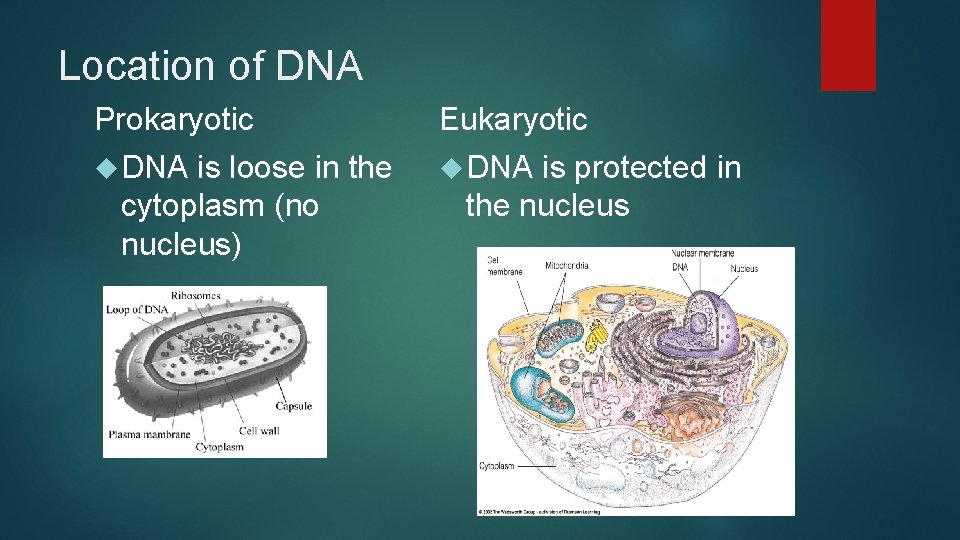
Location of DNA Prokaryotic Eukaryotic DNA is loose in the cytoplasm (no nucleus) is protected in the nucleus
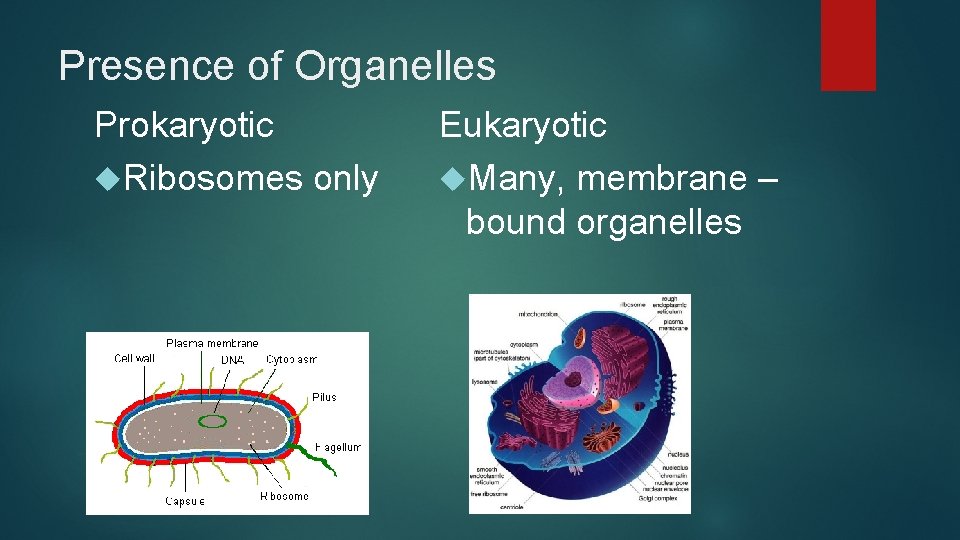
Presence of Organelles Prokaryotic Ribosomes only Eukaryotic Many, membrane – bound organelles
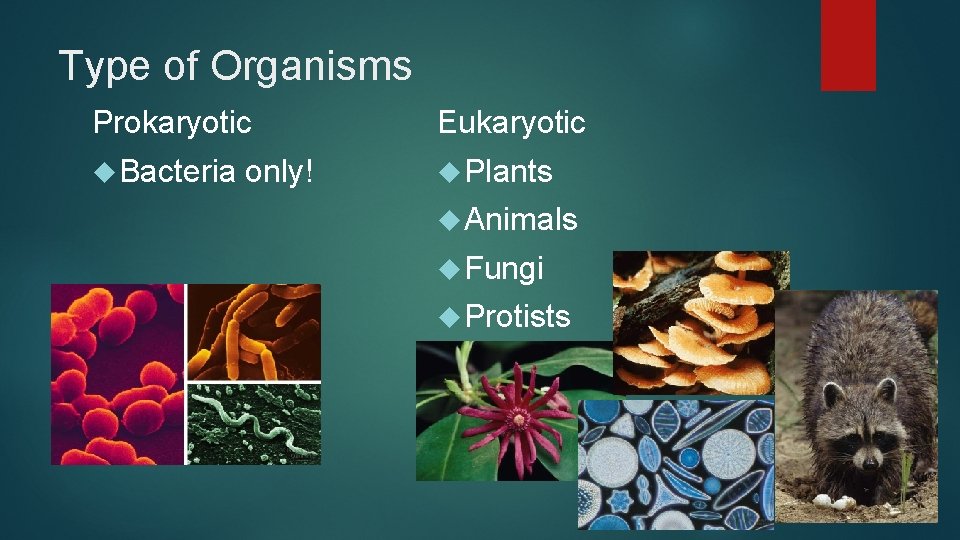
Type of Organisms Prokaryotic Eukaryotic Bacteria Plants only! Animals Fungi Protists
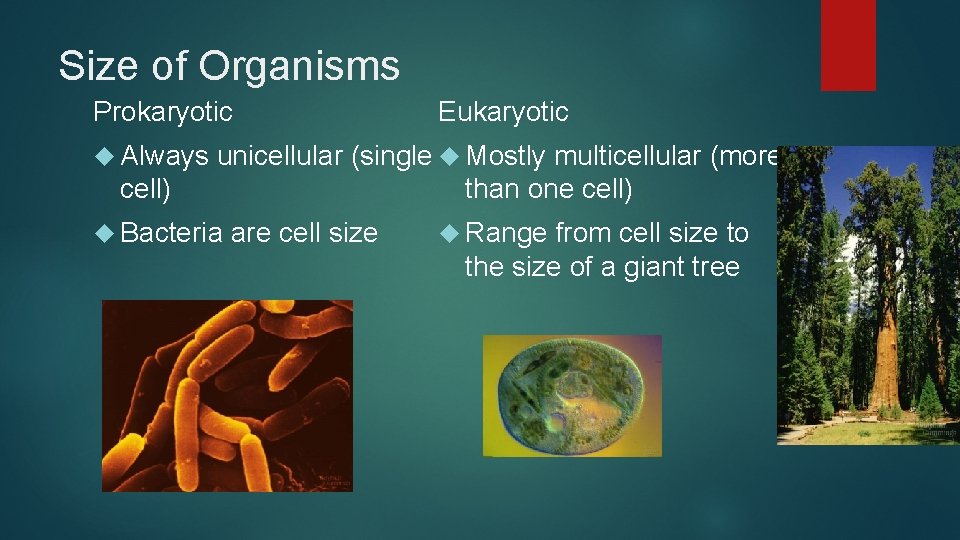
Size of Organisms Prokaryotic Always cell) Eukaryotic unicellular (single Mostly multicellular (more than one cell) Bacteria are cell size Range from cell size to the size of a giant tree
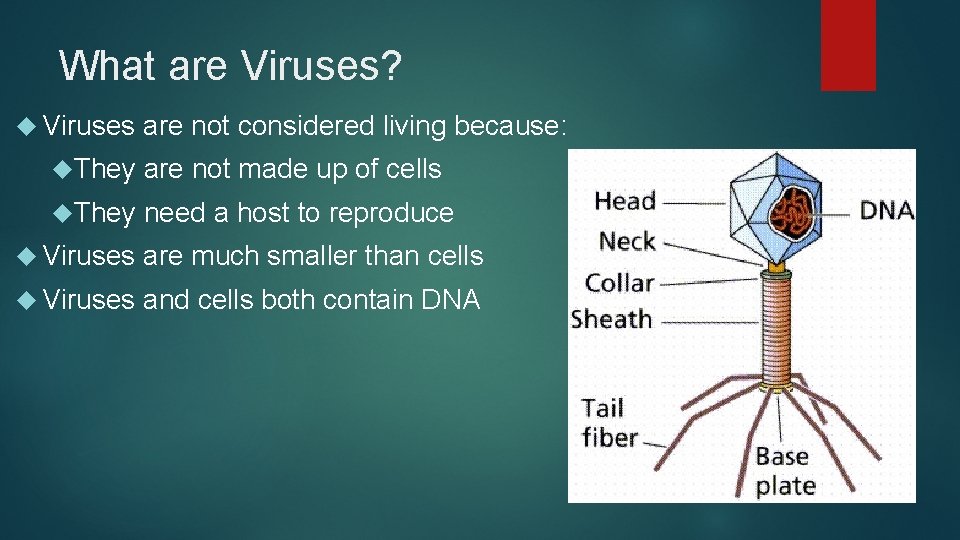
What are Viruses? Viruses are not considered living because: They are not made up of cells They need a host to reproduce Viruses are much smaller than cells Viruses and cells both contain DNA
Gallery Walk In your notebook write down if the cell is prokaryotic or eukaryotic A B C D
Prokaryote or Eukaryote? It’s time to play is it a Prokaryote, Eukaryote or both!
Card sort Work in partners and match which cards are prokaryotes and which ones are eukaryotes
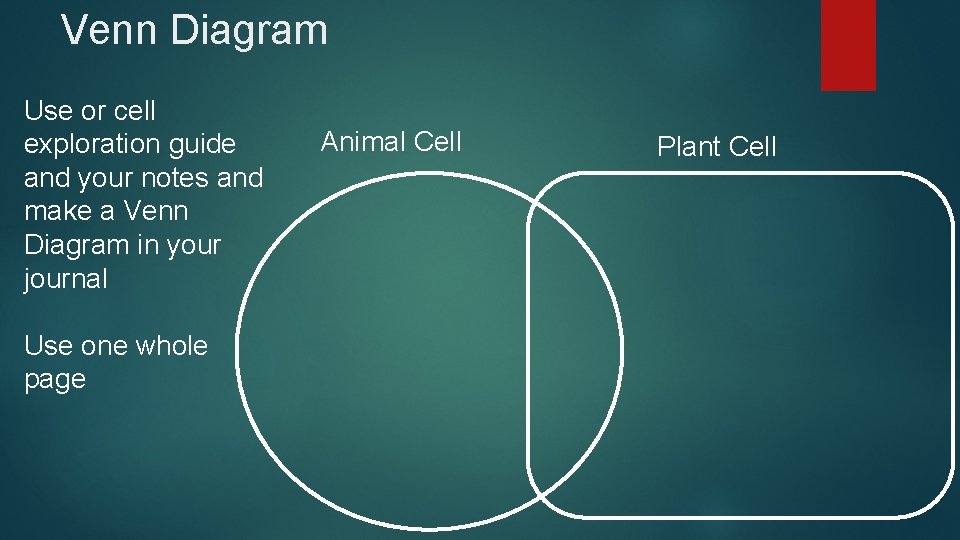
Venn Diagram Use or cell exploration guide and your notes and make a Venn Diagram in your journal Use one whole page Animal Cell Plant Cell
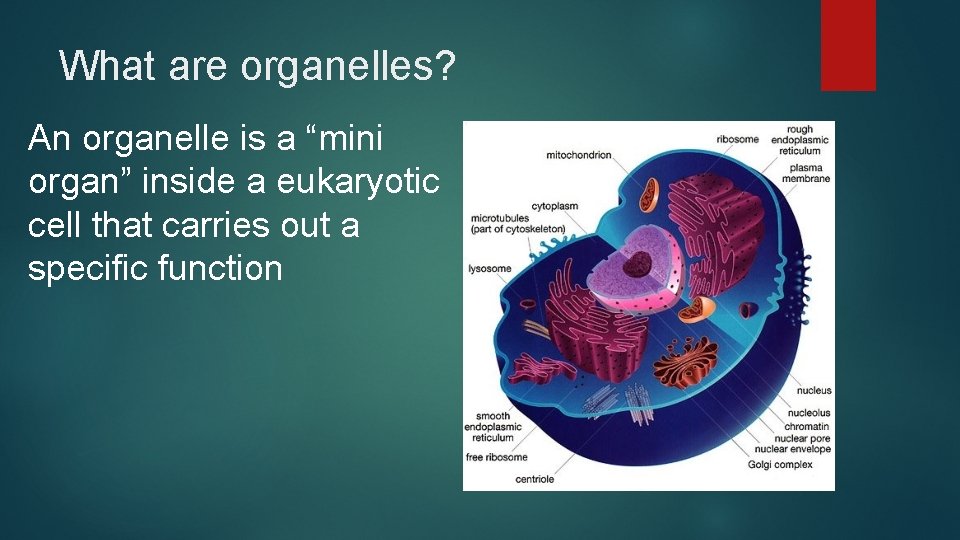
What are organelles? An organelle is a “mini organ” inside a eukaryotic cell that carries out a specific function
Make a T chart One side says organelle One side says Function Organelle Function
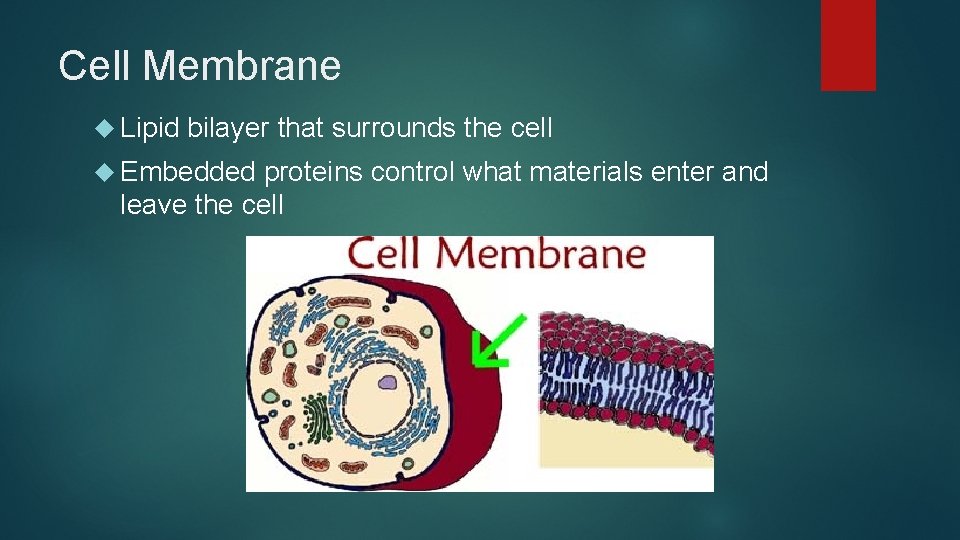
Cell Membrane Lipid bilayer that surrounds the cell Embedded proteins control what materials enter and leave the cell
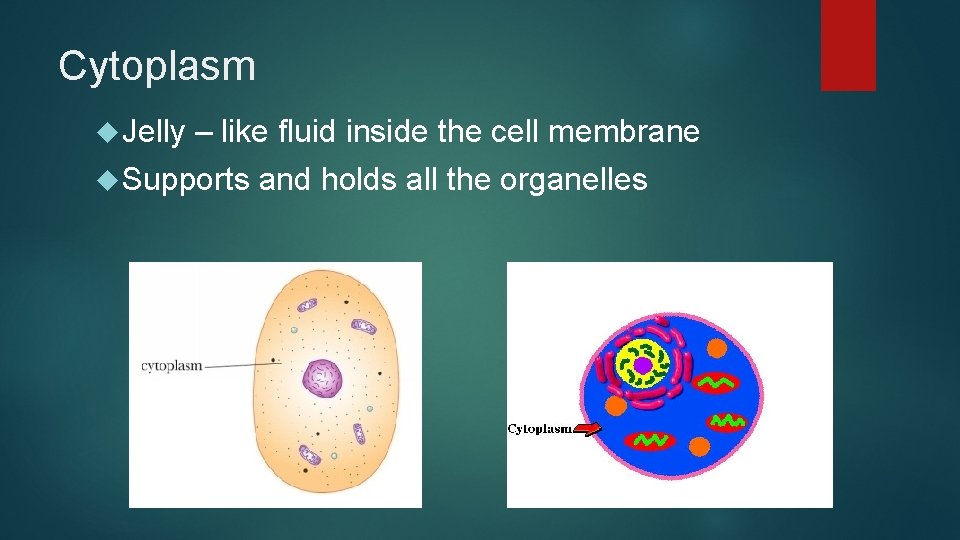
Cytoplasm Jelly – like fluid inside the cell membrane Supports and holds all the organelles
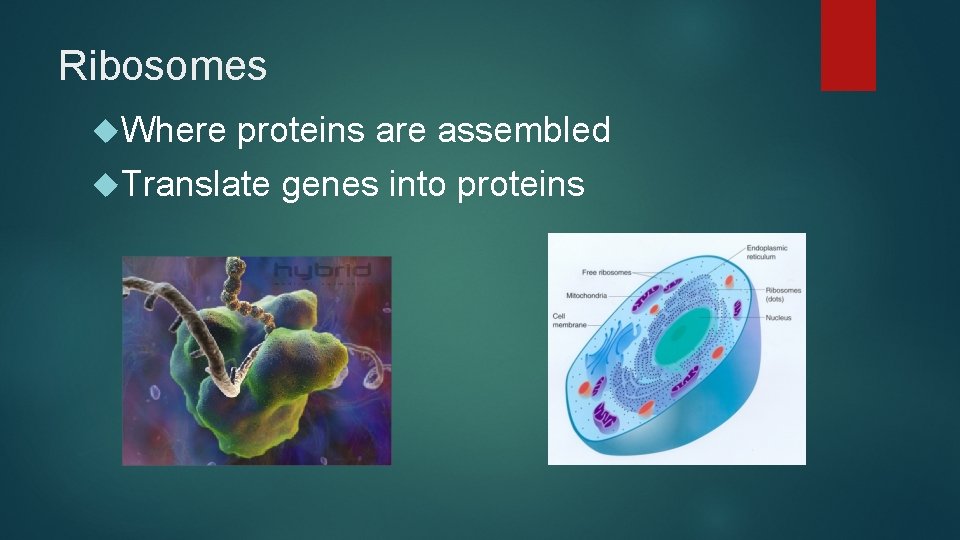
Ribosomes Where proteins are assembled Translate genes into proteins
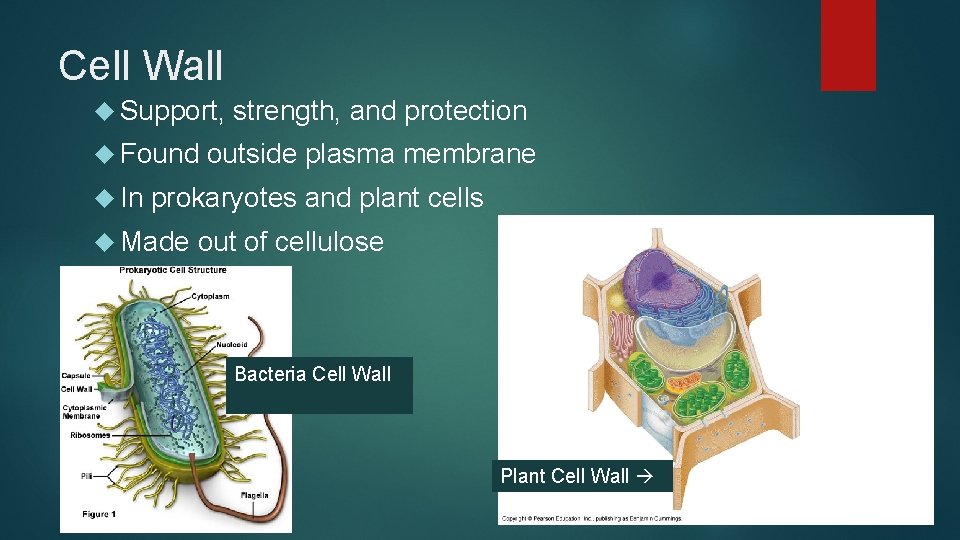
Cell Wall Support, Found In strength, and protection outside plasma membrane prokaryotes and plant cells Made out of cellulose Bacteria Cell Wall Plant Cell Wall
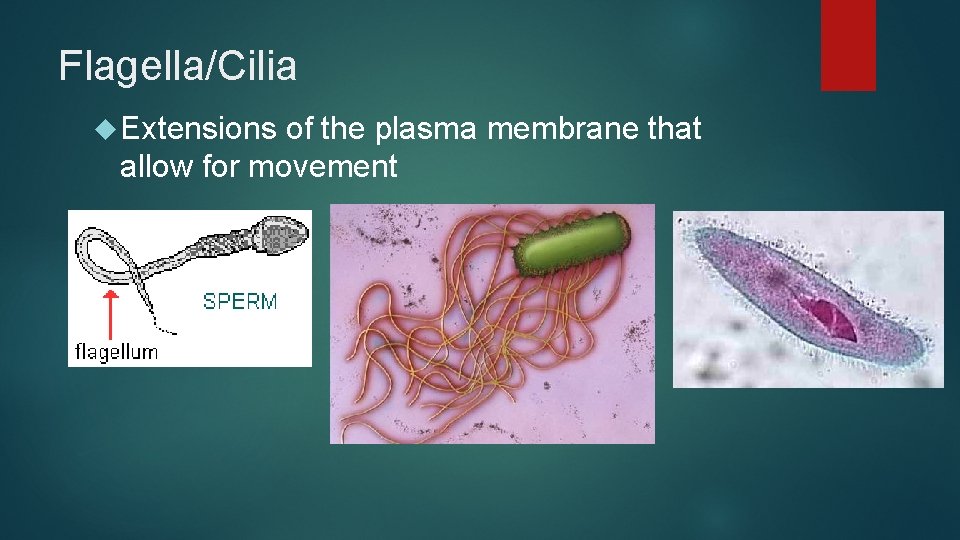
Flagella/Cilia Extensions of the plasma membrane that allow for movement
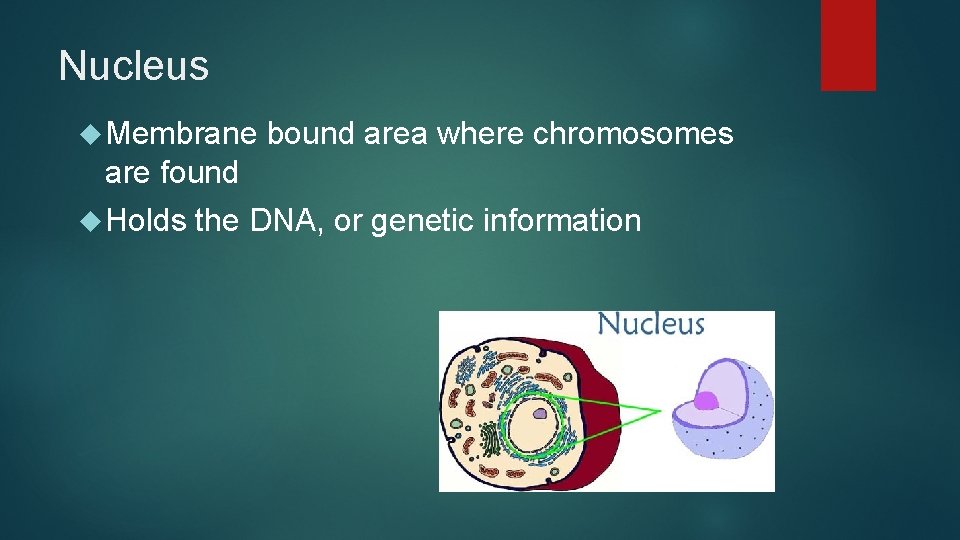
Nucleus Membrane bound area where chromosomes are found Holds the DNA, or genetic information
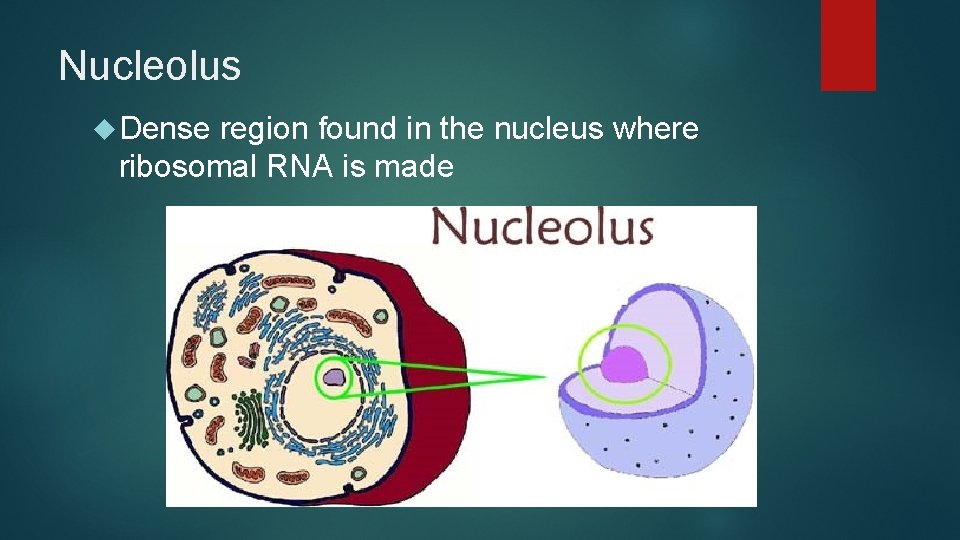
Nucleolus Dense region found in the nucleus where ribosomal RNA is made
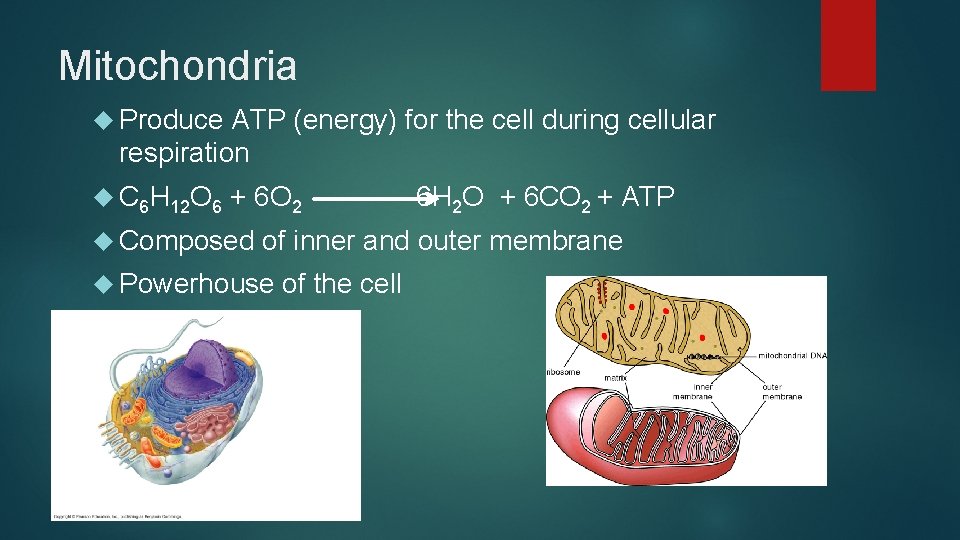
Mitochondria Produce ATP (energy) for the cell during cellular respiration C 6 H 12 O 6 + 6 O 2 Composed 6 H 2 O + 6 CO 2 + ATP of inner and outer membrane Powerhouse of the cell
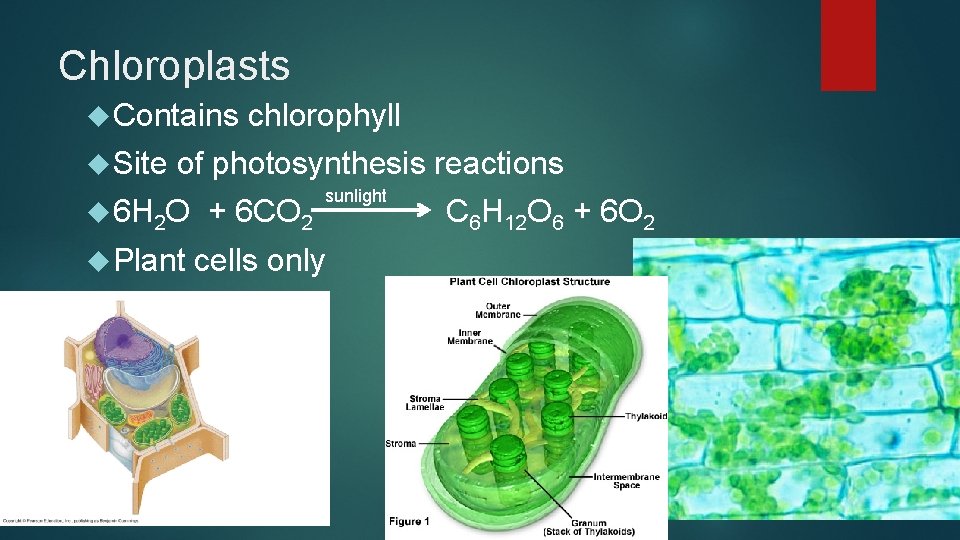
Chloroplasts Contains Site chlorophyll of photosynthesis reactions sunlight 6 H 2 O + 6 CO 2 Plant cells only C 6 H 12 O 6 + 6 O 2
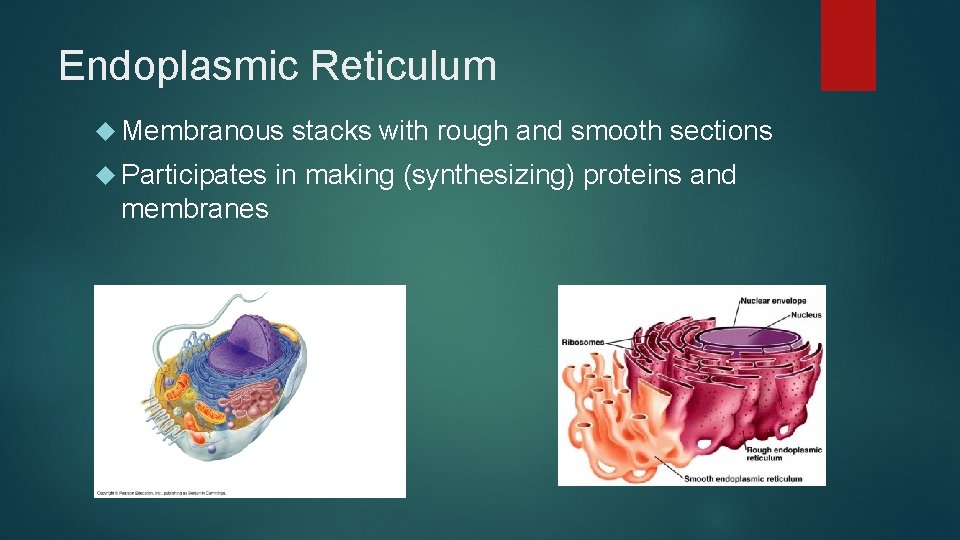
Endoplasmic Reticulum Membranous Participates membranes stacks with rough and smooth sections in making (synthesizing) proteins and
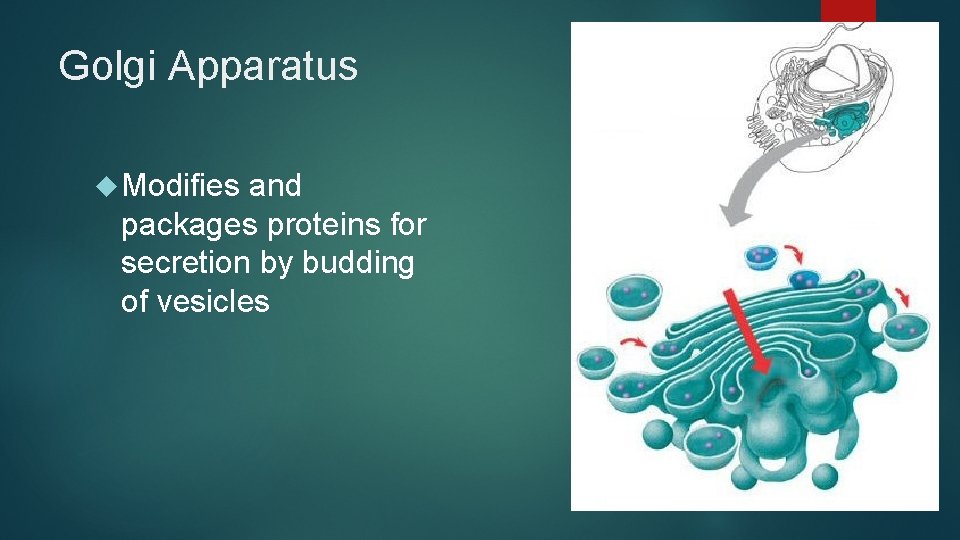
Golgi Apparatus Modifies and packages proteins for secretion by budding of vesicles
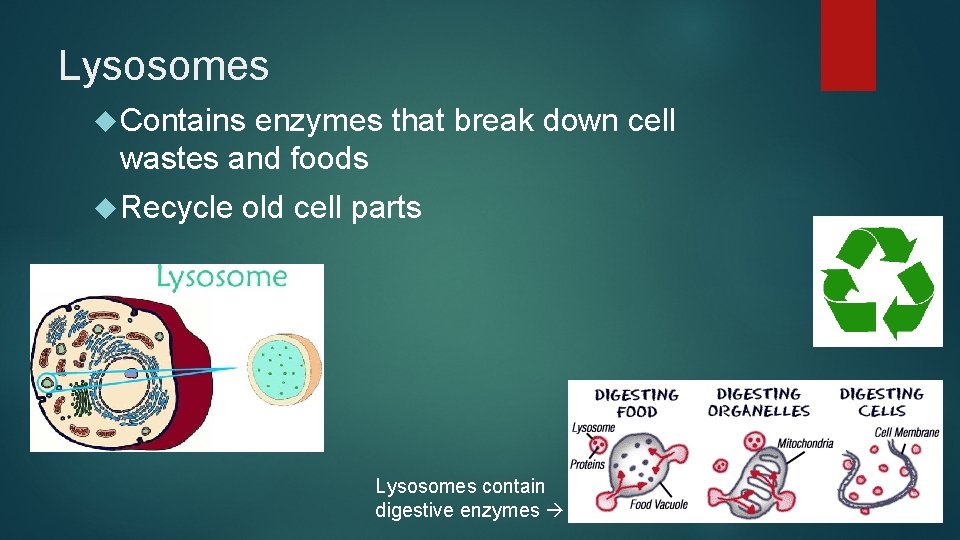
Lysosomes Contains enzymes that break down cell wastes and foods Recycle old cell parts Lysosomes contain digestive enzymes
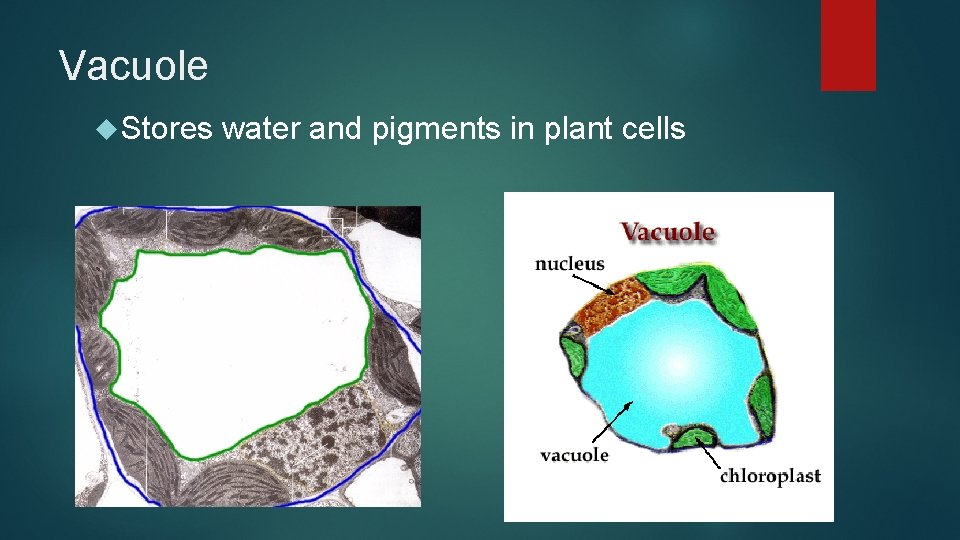
Vacuole Stores water and pigments in plant cells
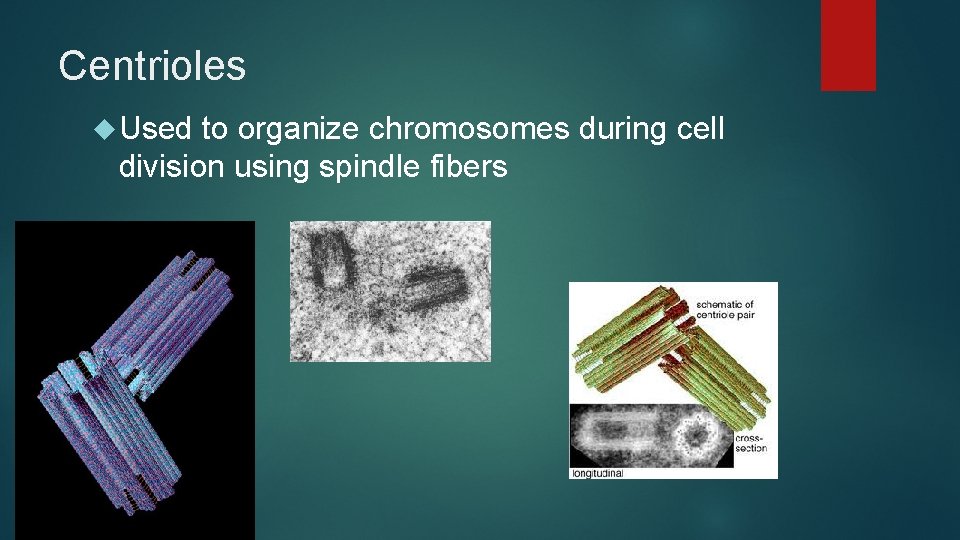
Centrioles Used to organize chromosomes during cell division using spindle fibers