
Cell Types and Cell Organelles Cell Theory Cell
- Slides: 22
Cell Types and Cell Organelles
Cell Theory Cell Theory: All living things are composed of cells Cells are the basic units of living things. New cells arise only from preexisting cells. Microscopes revealed the presence of cells and show their detailed structure. Animal and Plant cells contain organelles Organelles are “little organs”: small bodies that have a specific structure and function
Important Scientists for Cells 1665: Robert Hooke: Came up with the name cells while observing cork from a tree 1674: Anton van Leeuwenhoek: Used single-lensed microscope to observe pond water 1838: Matthias Schleiden: Discovered that all plants are made of cells 1839: Theodore Schwann: Discovered all animals are made of cells
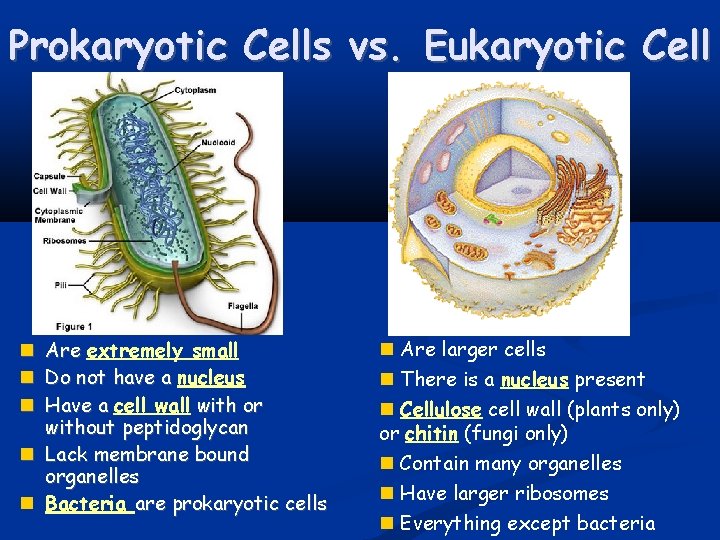
Prokaryotic Cells vs. Eukaryotic Cell Are extremely small Do not have a nucleus Have a cell wall with or without peptidoglycan Lack membrane bound organelles Bacteria are prokaryotic cells Are larger cells There is a nucleus present Cellulose cell wall (plants only) or chitin (fungi only) Contain many organelles Have larger ribosomes Everything except bacteria
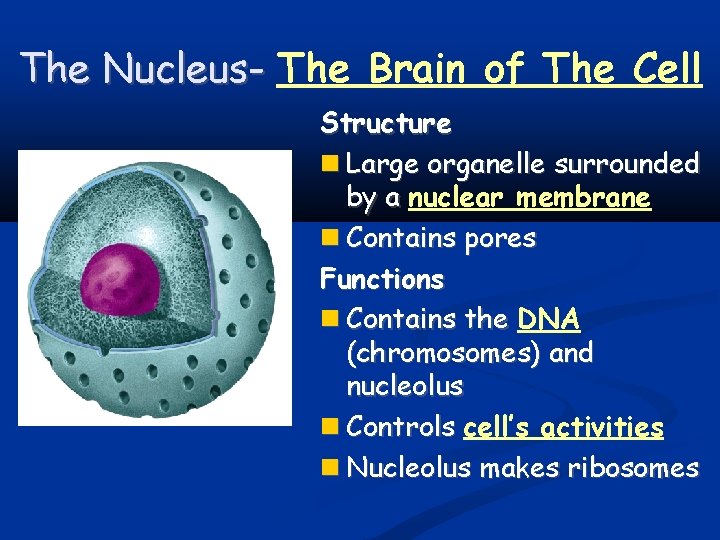
The Nucleus- The Brain of The Cell Structure Large organelle surrounded by a nuclear membrane Contains pores Functions Contains the DNA (chromosomes) and nucleolus Controls cell’s activities Nucleolus makes ribosomes
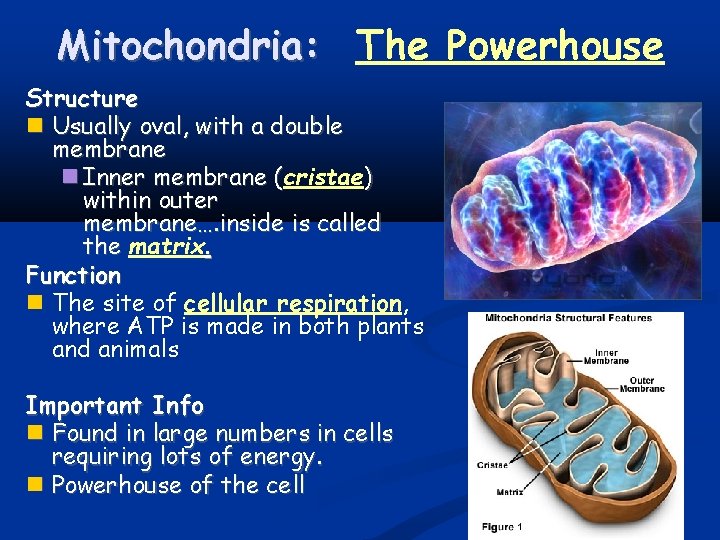
Mitochondria: The Powerhouse Structure Usually oval, with a double membrane Inner membrane (cristae ) ( within outer membrane…. inside is called the matrix. Function The site of cellular respiration, where ATP is made in both plants and animals Important Info Found in large numbers in cells requiring lots of energy. Powerhouse of the cell
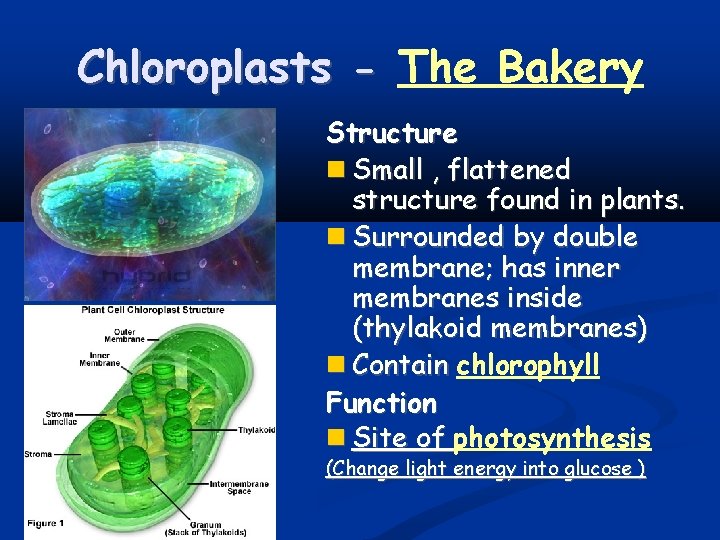
Chloroplasts - The Bakery Structure Small , flattened structure found in plants. Surrounded by double membrane; has inner membranes inside (thylakoid membranes) Contain chlorophyll Function Site of photosynthesis (Change light energy into glucose )
Endosymbiotic Theory ‘Where did organelles come from? ” Chloroplasts and Mitochondria are particularly specialized organelles as they contain their own DNA and have complex membrane structures. Because of these complexity of these cells, scientists have a theory that these organelles are actually descendents of early prokaryotic cells that were engulfed (or taken in) by early eukaryotic cells.
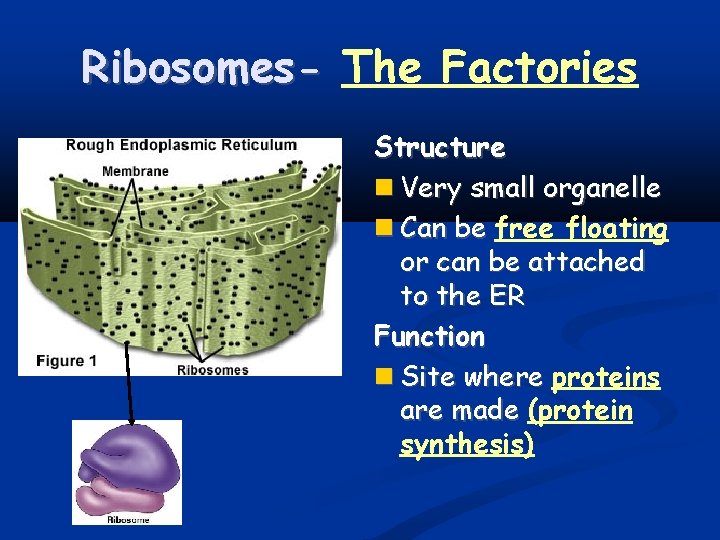
Ribosomes- The Factories Structure Very small organelle Can be free floating or can be attached to the ER Function Site where proteins are made (protein synthesis)
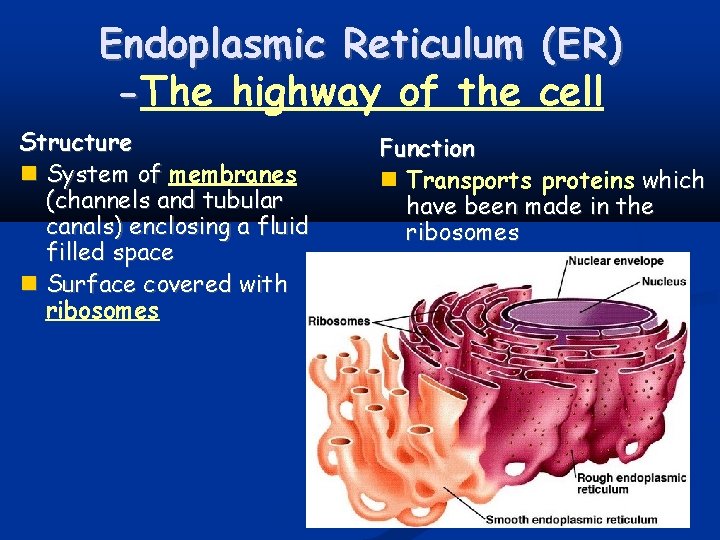
Endoplasmic Reticulum (ER) -The highway of the cell Structure System of membranes (channels and tubular canals) enclosing a fluid filled space Surface covered with ribosomes Function Transports proteins which have been made in the ribosomes
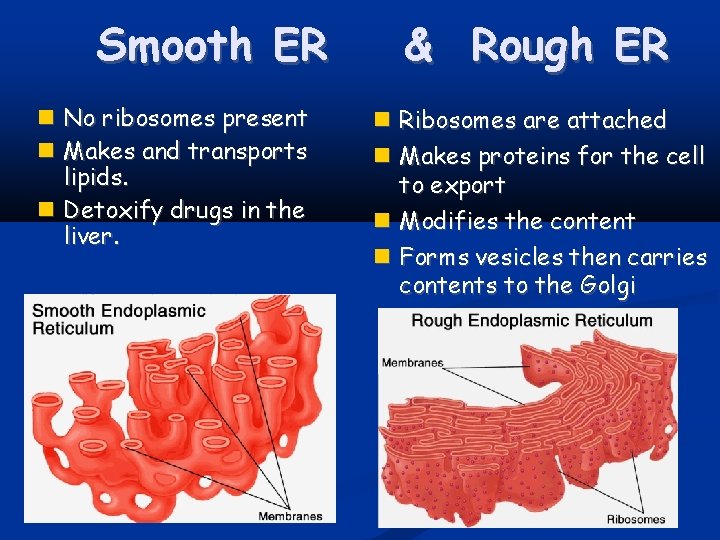
Smooth ER No ribosomes present Makes and transports lipids. Detoxify drugs in the liver. & Rough ER Ribosomes are attached Makes proteins for the cell to export Modifies the content Forms vesicles then carries contents to the Golgi
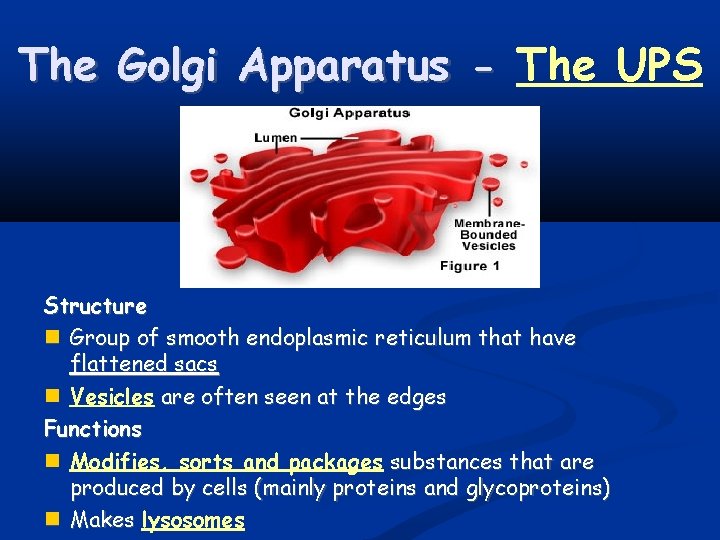
The Golgi Apparatus - The UPS Structure Group of smooth endoplasmic reticulum that have flattened sacs Vesicles are often seen at the edges Functions Modifies, sorts and packages substances that are produced by cells (mainly proteins and glycoproteins) Makes lysosomes
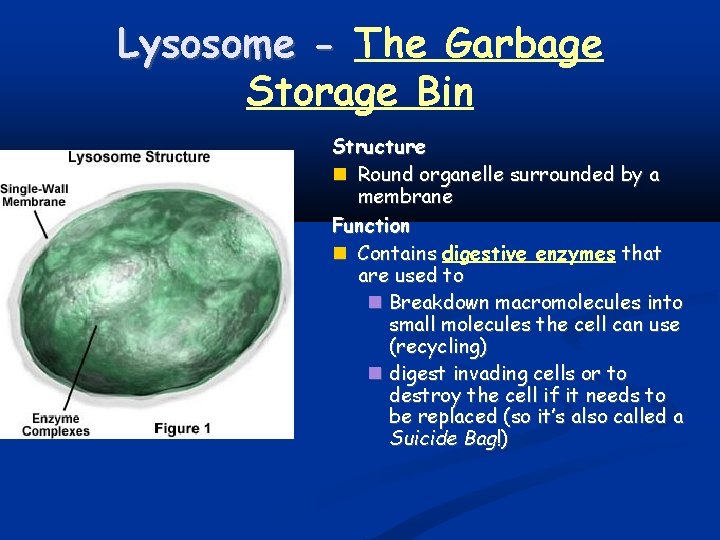
Lysosome - The Garbage Storage Bin Structure Round organelle surrounded by a membrane Function Contains digestive enzymes that are used to Breakdown macromolecules into small molecules the cell can use (recycling) digest invading cells or to destroy the cell if it needs to be replaced (so it’s also called a Suicide Bag!)
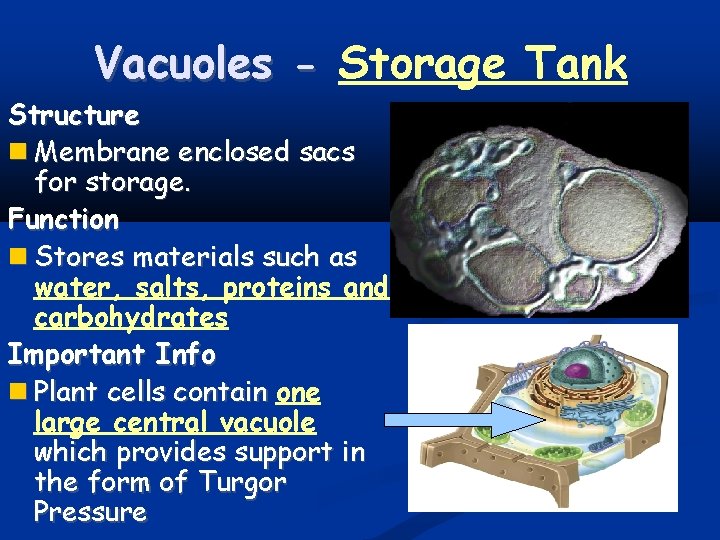
Vacuoles - Storage Tank Structure Membrane enclosed sacs for storage. Function Stores materials such as water, salts, proteins and carbohydrates Important Info Plant cells contain one large central vacuole which provides support in the form of Turgor Pressure
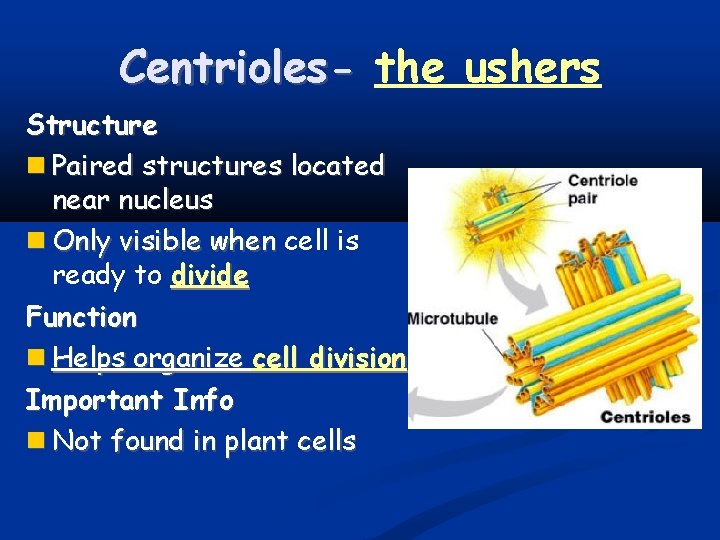
Centrioles- the ushers Structure Paired structures located near nucleus Only visible when cell is ready to divide Function Helps organize cell division Important Info Not found in plant cells
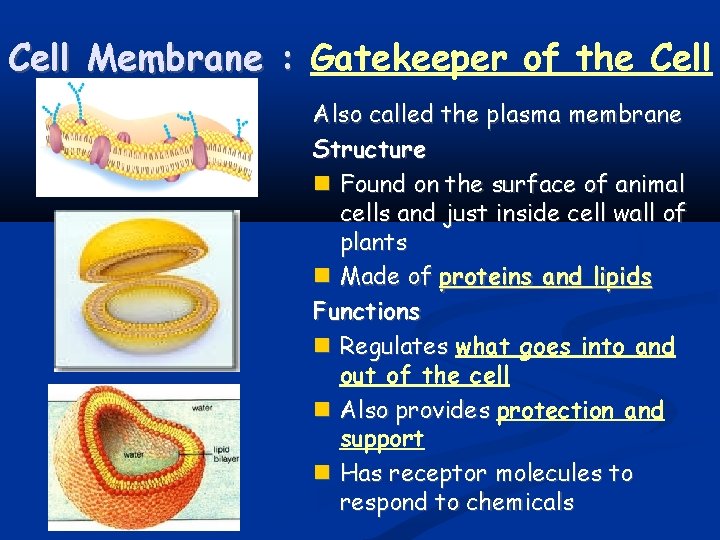
Cell Membrane : Gatekeeper of the Cell Also called the plasma membrane Structure Found on the surface of animal cells and just inside cell wall of plants Made of proteins and lipids Functions Regulates what goes into and out of the cell Also provides protection and support Has receptor molecules to respond to chemicals
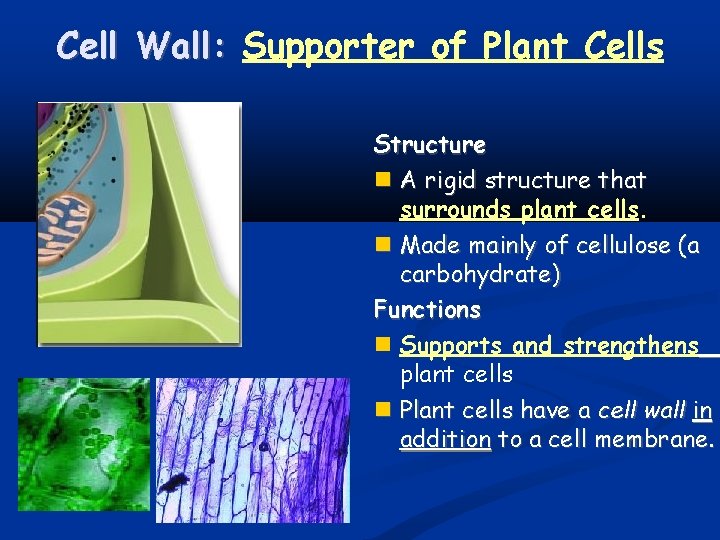
Cell Wall: Supporter of Plant Cells Structure A rigid structure that surrounds plant cells. Made mainly of cellulose (a carbohydrate) Functions Supports and strengthens plant cells Plant cells have a cell wall in addition to a cell membrane.
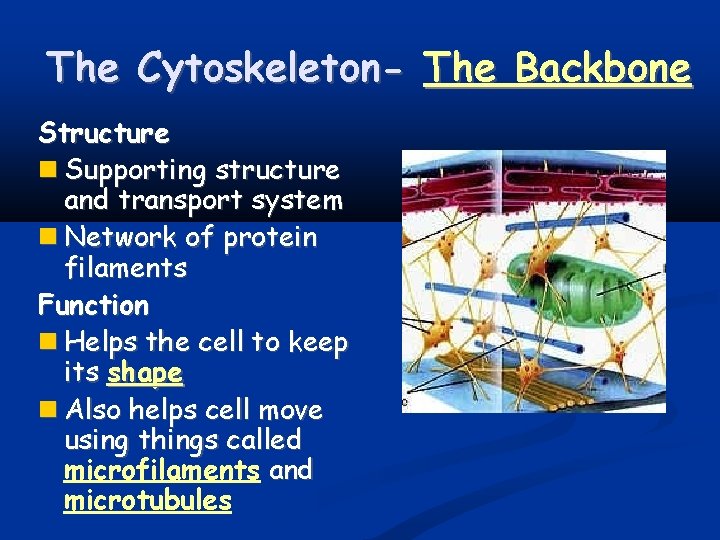
The Cytoskeleton- The Backbone Structure Supporting structure and transport system Network of protein filaments Function Helps the cell to keep its shape Also helps cell move using things called microfilaments and microtubules
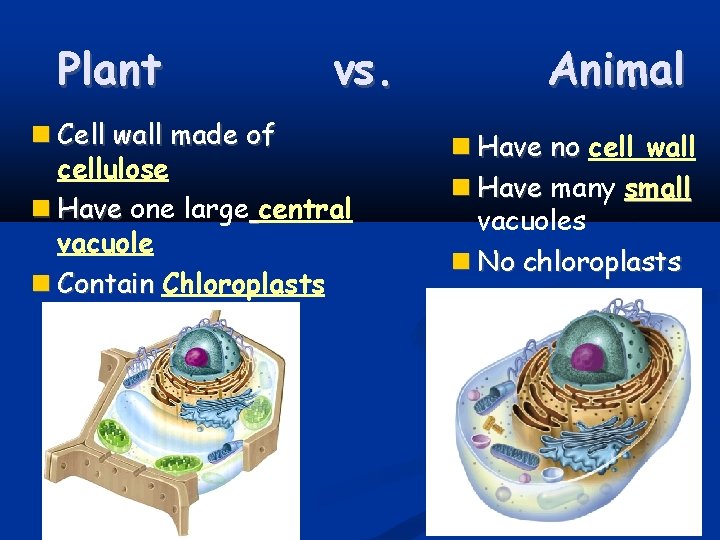
Plant vs. Cell wall made of cellulose Have one large central vacuole Contain Chloroplasts Animal Have no cell wall Have many small vacuoles No chloroplasts
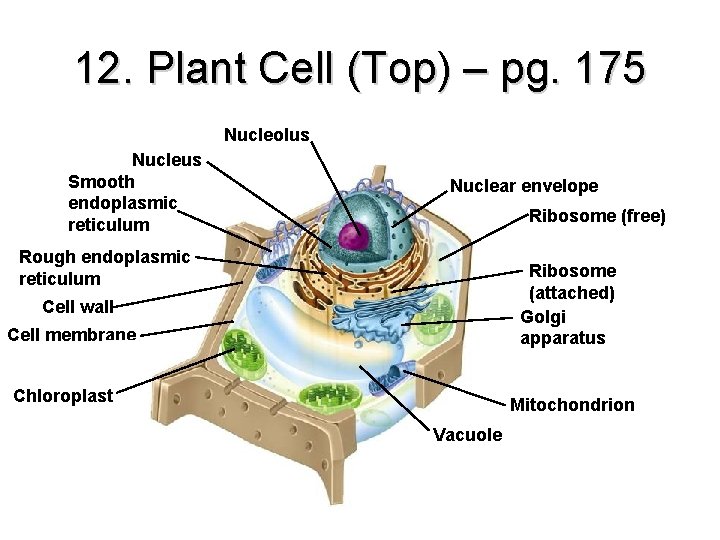
12. Plant Cell (Top) – pg. 175 Nucleolus Nucleus Smooth endoplasmic reticulum Nuclear envelope Ribosome (free) Rough endoplasmic reticulum Ribosome (attached) Golgi apparatus Cell wall Cell membrane Chloroplast Mitochondrion Vacuole
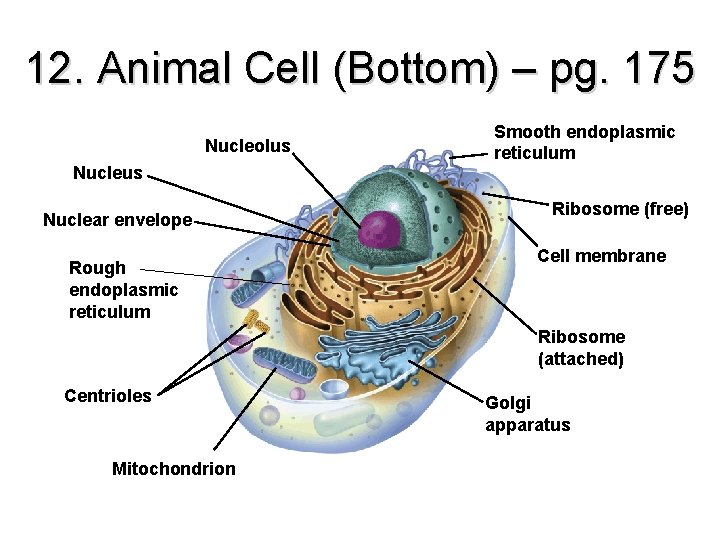
12. Animal Cell (Bottom) – pg. 175 Nucleolus Nuclear envelope Rough endoplasmic reticulum Smooth endoplasmic reticulum Ribosome (free) Cell membrane Ribosome (attached) Centrioles Mitochondrion Golgi apparatus
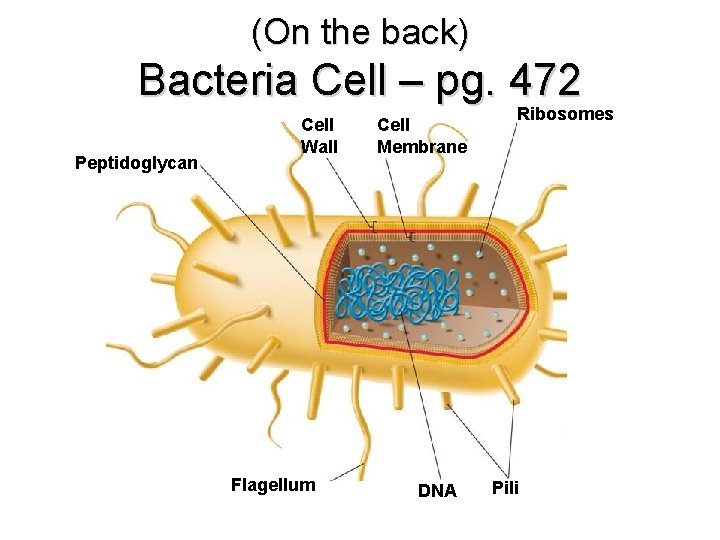
(On the back) Bacteria Cell – pg. 472 Peptidoglycan Cell Wall Flagellum Cell Membrane DNA Ribosomes Pili