
Cell TransportMembrane Cell Membranes Functions a Controls what
Cell Transport/Membrane
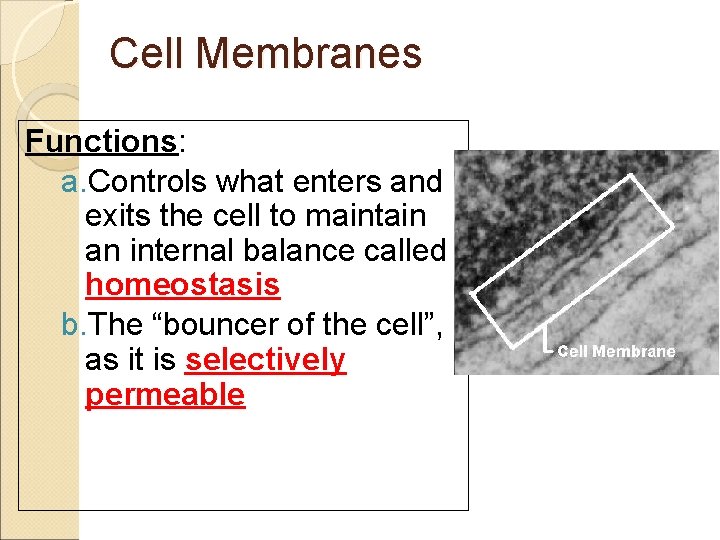
Cell Membranes Functions: a. Controls what enters and exits the cell to maintain an internal balance called homeostasis b. The “bouncer of the cell”, as it is selectively permeable
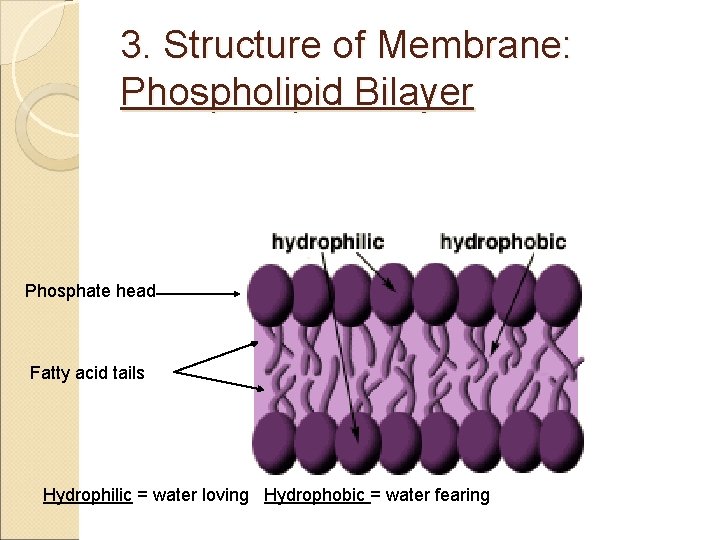
3. Structure of Membrane: Phospholipid Bilayer Phosphate head Fatty acid tails Hydrophilic = water loving Hydrophobic = water fearing
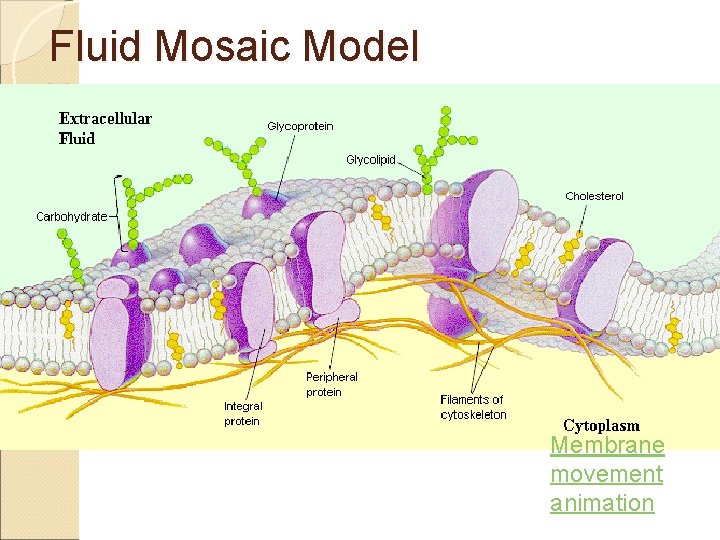
Fluid Mosaic Model Membrane movement animation
What do you think are things the cell needs? -Water -Sodium and calcium ions -Nutrients What do you think are things the cell doesn’t need? -Harmful ions -Removes excess nutrients if the levels get too high -Removes waste products
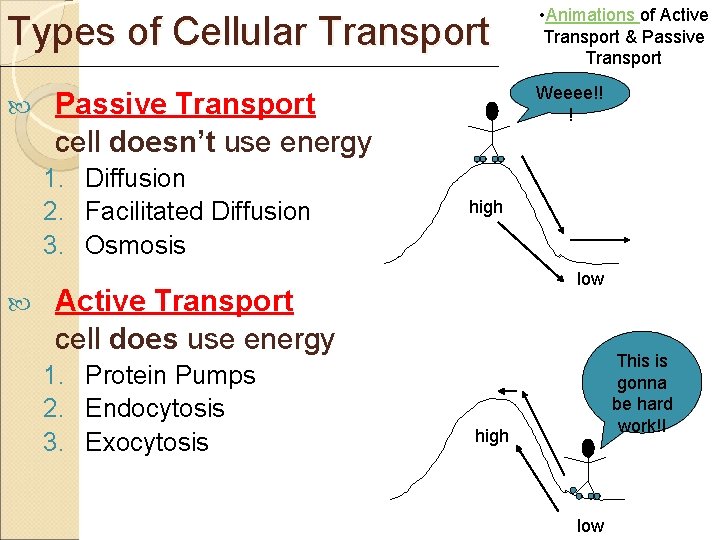
Types of Cellular Transport Weeee!! ! Passive Transport cell doesn’t use energy 1. Diffusion 2. Facilitated Diffusion 3. Osmosis high low Active Transport cell does use energy 1. Protein Pumps 2. Endocytosis 3. Exocytosis • Animations of Active Transport & Passive Transport This is gonna be hard work!! high low
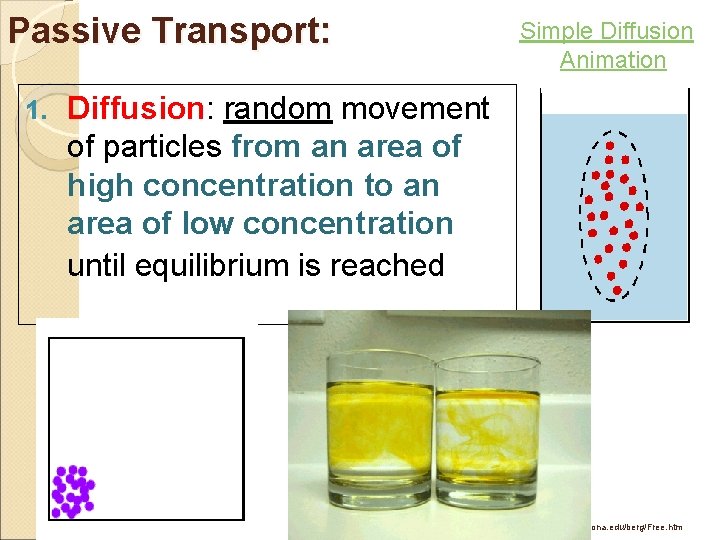
Passive Transport: 1. Simple Diffusion Animation Diffusion: random movement of particles from an area of high concentration to an area of low concentration until equilibrium is reached http: //bio. winona. edu/berg/Free. htm
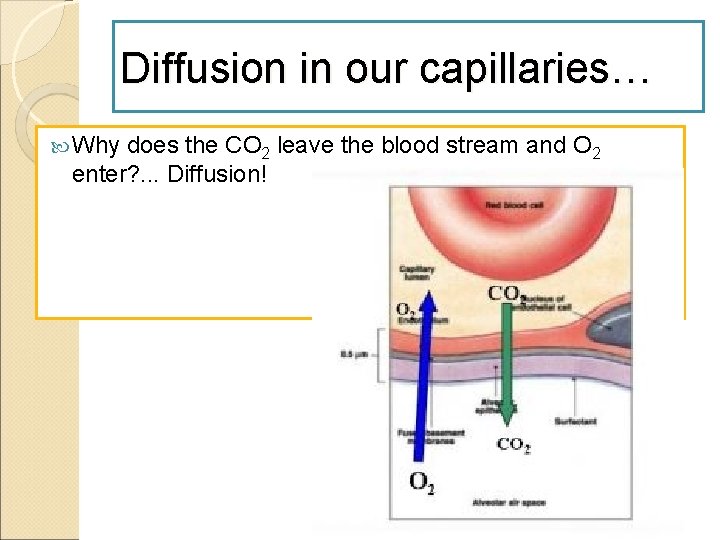
Diffusion in our capillaries… Why does the CO 2 leave the blood stream and O 2 enter? . . . Diffusion!
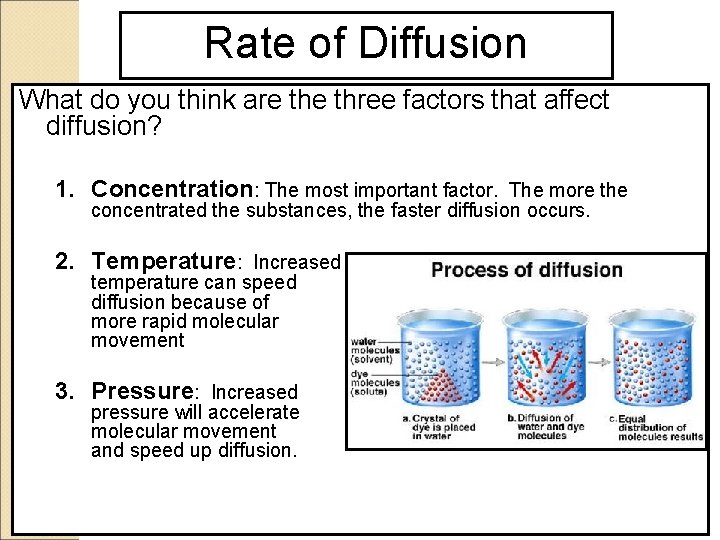
Rate of Diffusion What do you think are three factors that affect diffusion? 1. Concentration: The most important factor. The more the concentrated the substances, the faster diffusion occurs. 2. Temperature: Increased temperature can speed diffusion because of more rapid molecular movement 3. Pressure: Increased pressure will accelerate molecular movement and speed up diffusion.
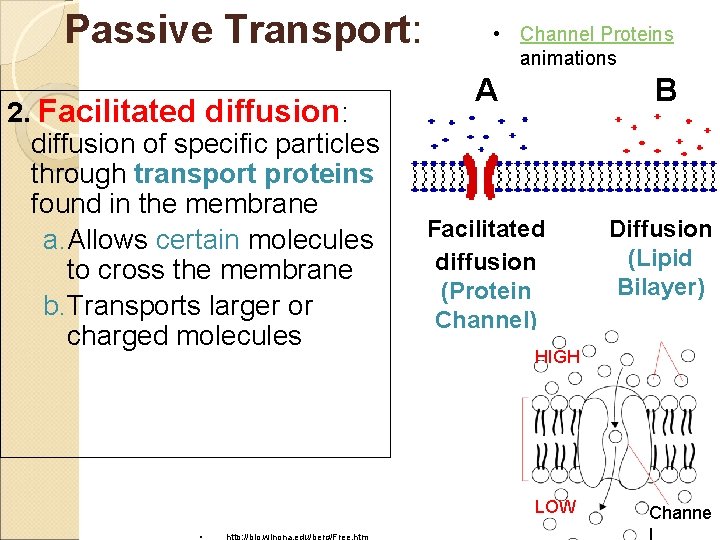
Passive Transport: 2. Facilitated diffusion: diffusion of specific particles through transport proteins found in the membrane a. Allows certain molecules to cross the membrane b. Transports larger or charged molecules • Channel Proteins animations A B Facilitated diffusion (Protein Channel) Diffusion (Lipid Bilayer) HIGH LOW Channe
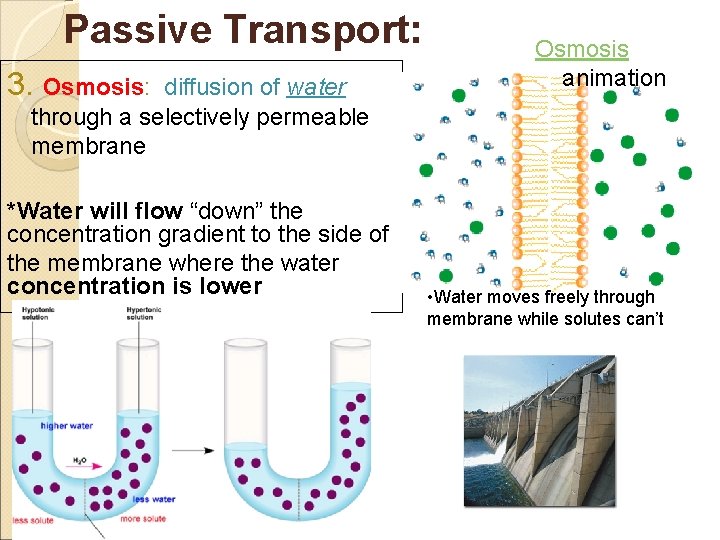
Passive Transport: 3. Osmosis: diffusion of water through a selectively permeable membrane *Water will flow “down” the concentration gradient to the side of the membrane where the water concentration is lower Osmosis animation • Water moves freely through membrane while solutes can’t
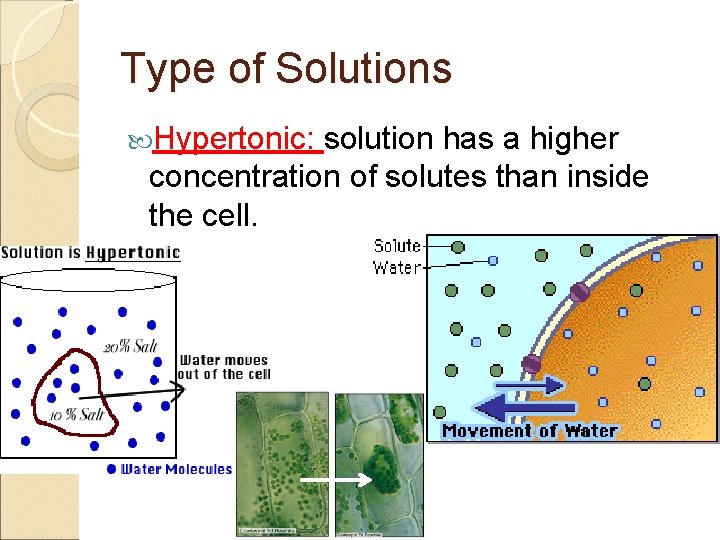
Type of Solutions Hypertonic: solution has a higher concentration of solutes than inside the cell.
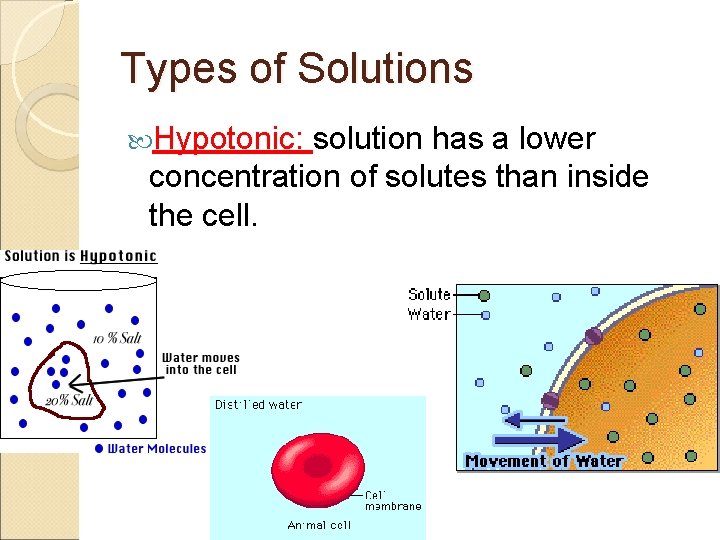
Types of Solutions Hypotonic: solution has a lower concentration of solutes than inside the cell.
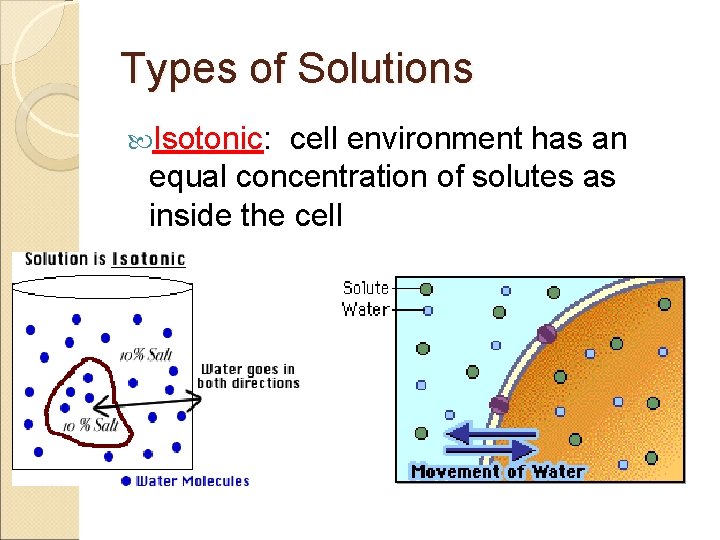
Types of Solutions Isotonic: cell environment has an equal concentration of solutes as inside the cell

Red Blood Cells Lysis
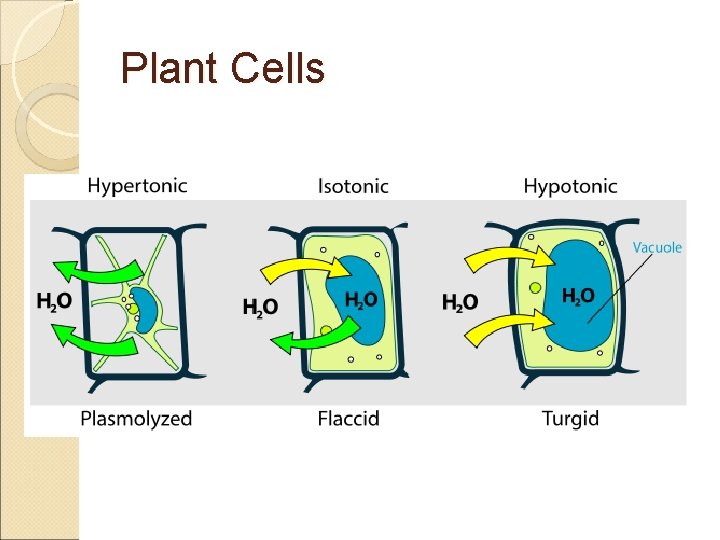
Plant Cells
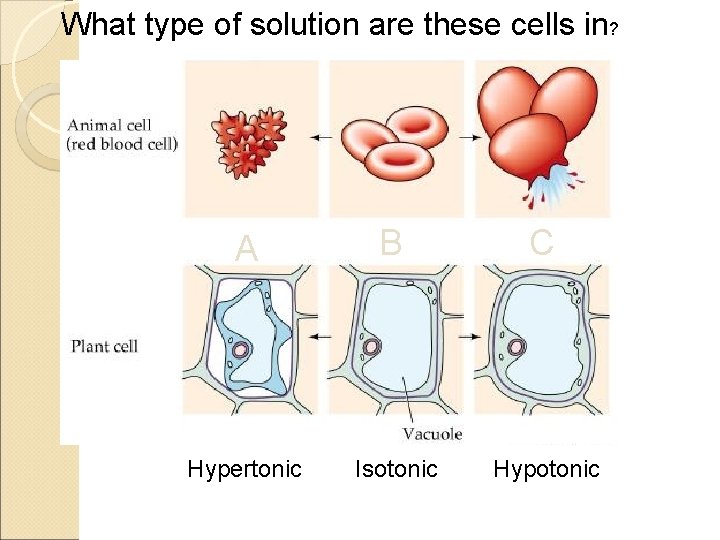
What type of solution are these cells in? A B C Hypertonic Isotonic Hypotonic
Diffusion and Osmosis in the kidney Maintaining water balance in the kidney can be inhibited by a diuretic, a substance that causes the kidneys to allow excess water loss. A very common diuretic is caffeine. ◦ Diuretics block the production of the hormone vasopressin, an anti-diuretic hormone (ADH). When the blood has a high concentration of sodium ions, the hypothalamus and pituitary gland (both in the brain) triggers the release of ADH which would tell the kidneys to reabsorb more water to help rehydrate the body. Basically, caffeine messes up the osmosis in your kidneys! It makes you release more of the water you need to keep. Therefore, your cells become dehydrated.
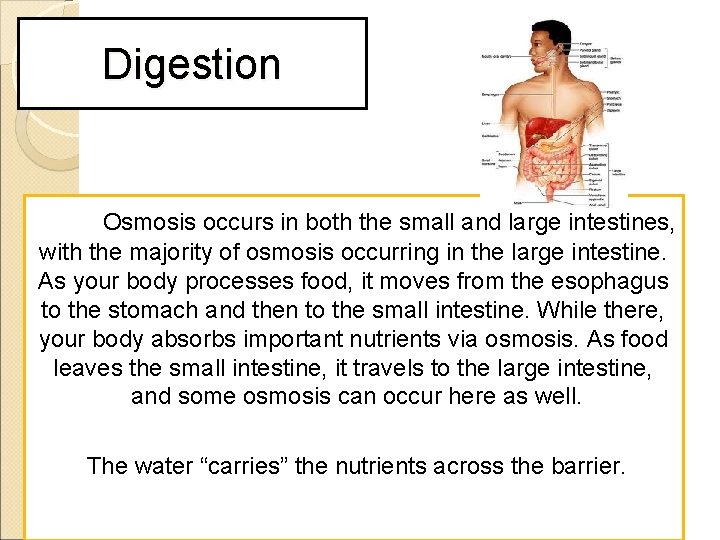
Digestion Osmosis occurs in both the small and large intestines, with the majority of osmosis occurring in the large intestine. As your body processes food, it moves from the esophagus to the stomach and then to the small intestine. While there, your body absorbs important nutrients via osmosis. As food leaves the small intestine, it travels to the large intestine, and some osmosis can occur here as well. The water “carries” the nutrients across the barrier.

Active Transport
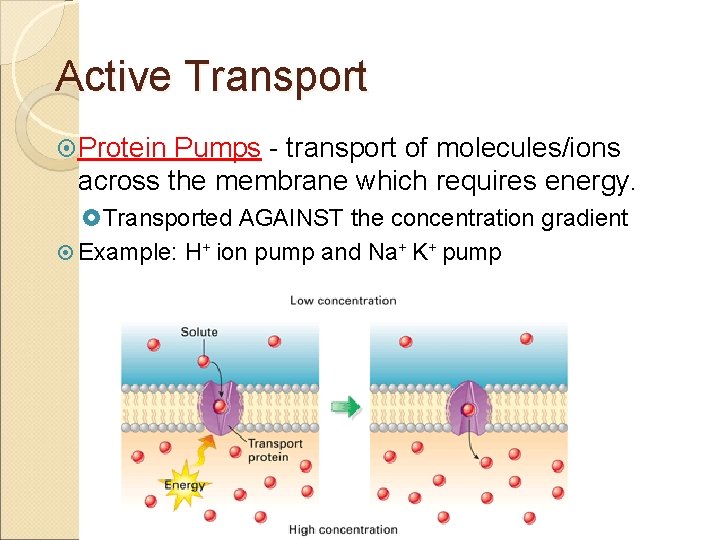
Active Transport Protein Pumps - transport of molecules/ions across the membrane which requires energy. Transported AGAINST the concentration gradient Example: H+ ion pump and Na+ K+ pump
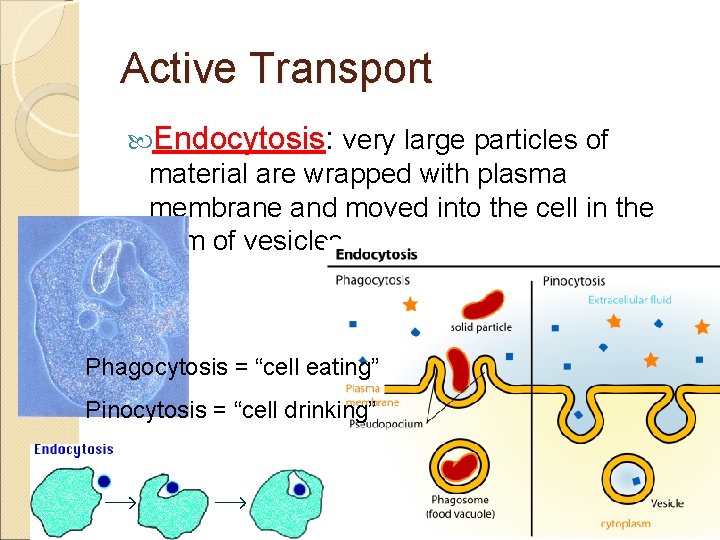
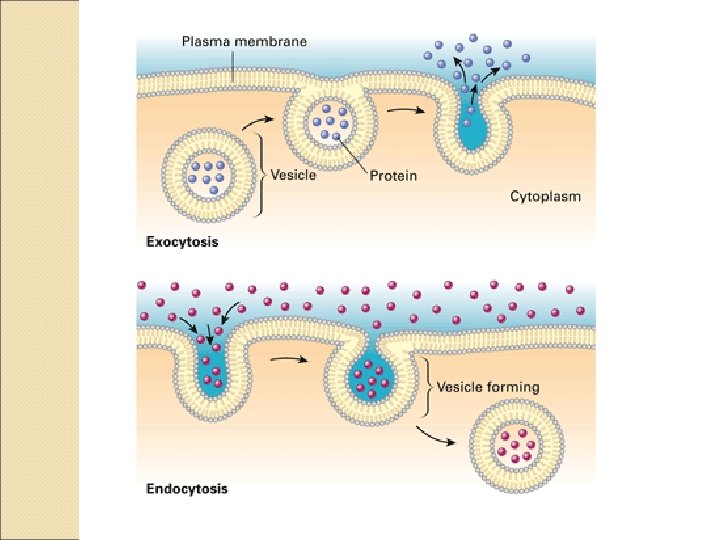
Active Transport Endocytosis: very large particles of material are wrapped with plasma membrane and moved into the cell in the form of vesicles. Phagocytosis = “cell eating” Pinocytosis = “cell drinking”
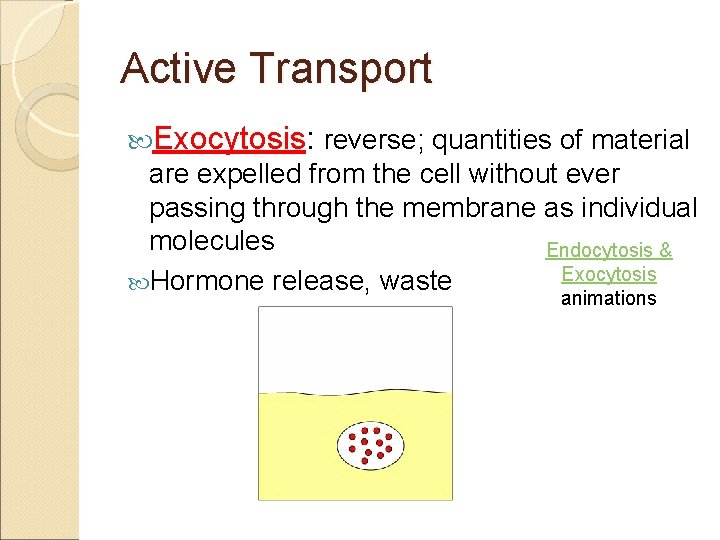
Active Transport Exocytosis: reverse; quantities of material are expelled from the cell without ever passing through the membrane as individual molecules Endocytosis & Exocytosis Hormone release, waste animations
- Slides: 24