
Cell Transport WHAT IS Homeostasis Cells try to
- Slides: 12
Cell Transport
WHAT IS Homeostasis? • Cells try to maintain a relatively constant internal environment. • This is known as HOMEOSTASIS
Things our Body Regulates • p. H • TEMPERATURE • Blood p. H between 7. 35 -7. 45 • 37 C ( 98. 6 F) • BLOOD GLUCOSE • Up to 100 mg/d. L • WATER ( in cells and tissues)
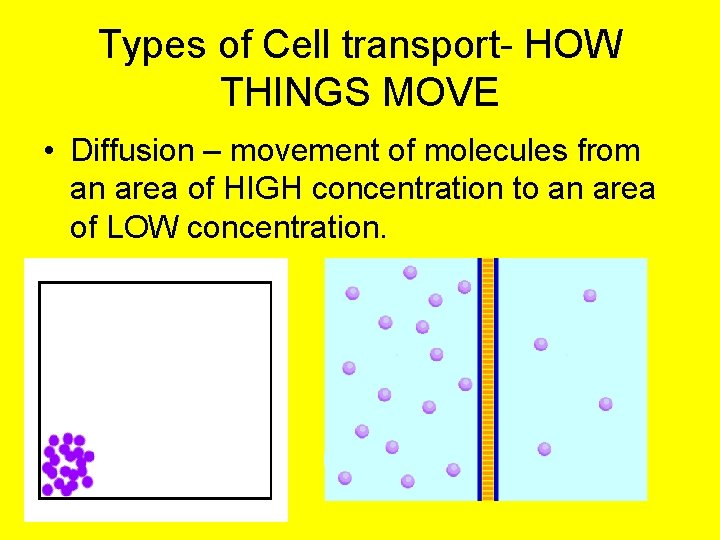
Types of Cell transport- HOW THINGS MOVE • Diffusion – movement of molecules from an area of HIGH concentration to an area of LOW concentration.
The semipermeable membrane… • Our cell membrane and other substances are SELECTIVELY or SEMI PERMEABLE • The will let some things in and not others. Some are small enough to squeeze through holes or small PORES • Some substances will need HELP to cross the membrane.
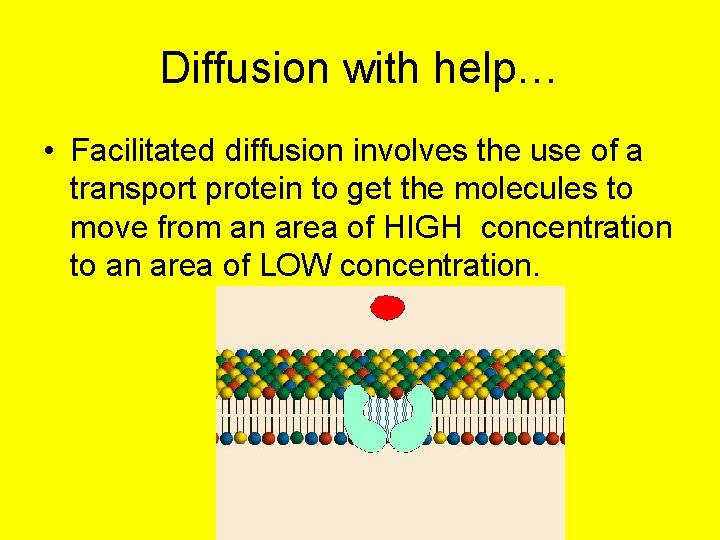
Diffusion with help… • Facilitated diffusion involves the use of a transport protein to get the molecules to move from an area of HIGH concentration to an area of LOW concentration.
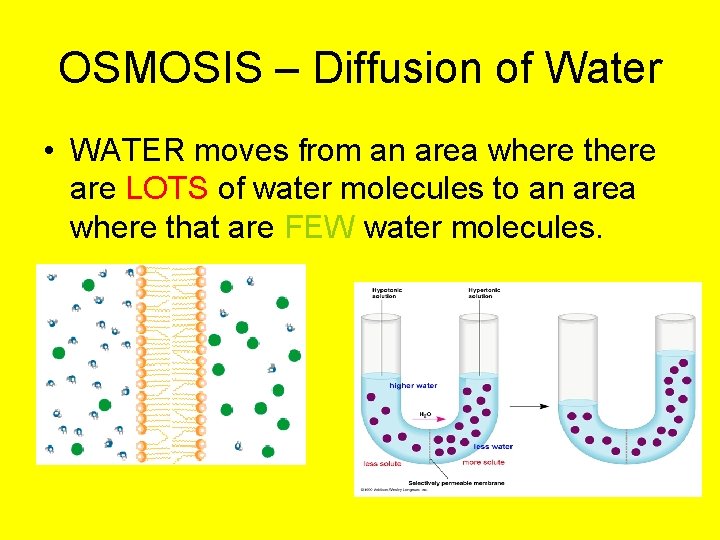
OSMOSIS – Diffusion of Water • WATER moves from an area where there are LOTS of water molecules to an area where that are FEW water molecules.
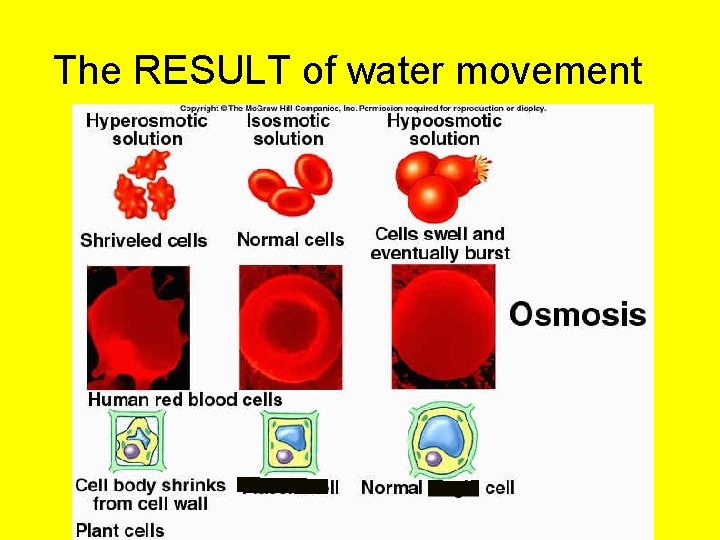
The RESULT of water movement
Things to help you understand OSMOSIS • SALT “SUCKS” – the more salt the more the water will be SUCKED across • WATER IS MOVING- It moves from LOTS of free water to an area with less free water
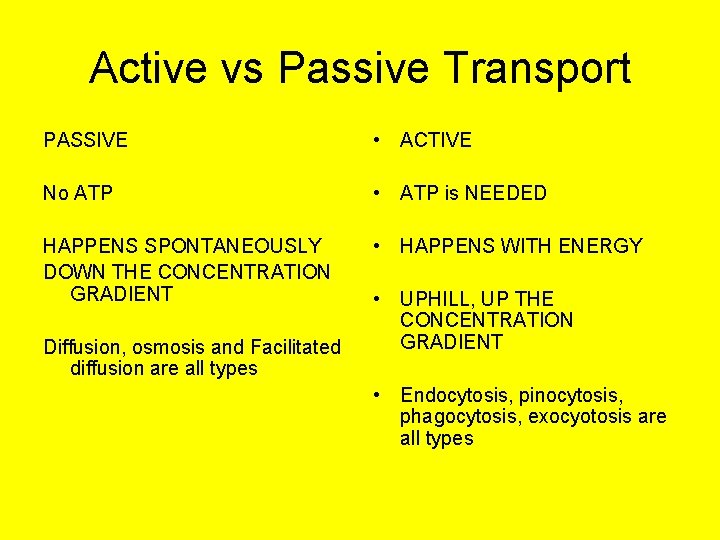
Active vs Passive Transport PASSIVE • ACTIVE No ATP • ATP is NEEDED HAPPENS SPONTANEOUSLY DOWN THE CONCENTRATION GRADIENT • HAPPENS WITH ENERGY Diffusion, osmosis and Facilitated diffusion are all types • UPHILL, UP THE CONCENTRATION GRADIENT • Endocytosis, pinocytosis, phagocytosis, exocyotosis are all types
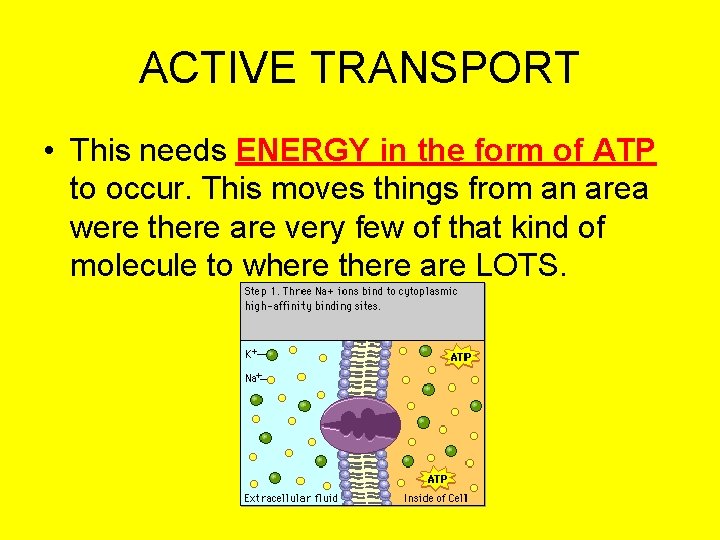
ACTIVE TRANSPORT • This needs ENERGY in the form of ATP to occur. This moves things from an area were there are very few of that kind of molecule to where there are LOTS.
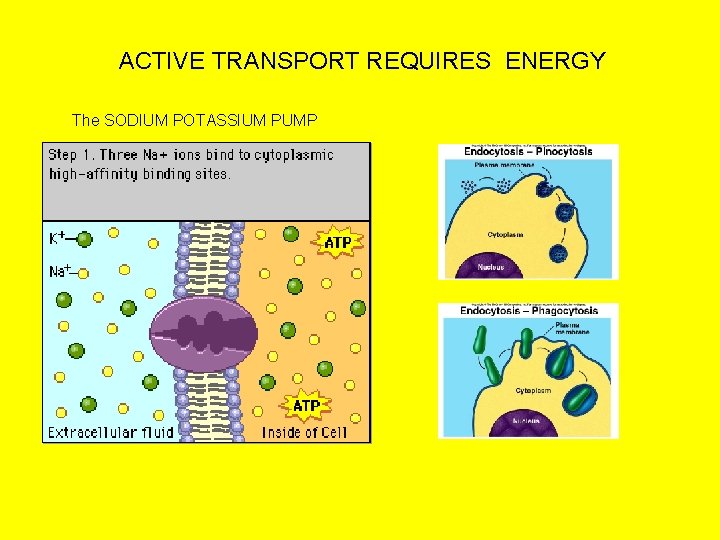
ACTIVE TRANSPORT REQUIRES ENERGY The SODIUM POTASSIUM PUMP