
CELL TRANSPORT Unit 4 Target 3 Foldable Passive
CELL TRANSPORT Unit 4 Target 3
Foldable Passive Transport Active Transport • Diffusion • Protein Pumps • Osmosis • Exocytosis • Facilitated Diffusion • Endocytosis
Passive Transport • Molecules move WITH (down) the Concentration Gradient • High concentration (crowded, more dense) to Low concentration (uncrowded, less dense) • Happens because of kinetic energy of the molecules (molecules are always in motion) • Does NOT require the CELL to use ENERGY!!!
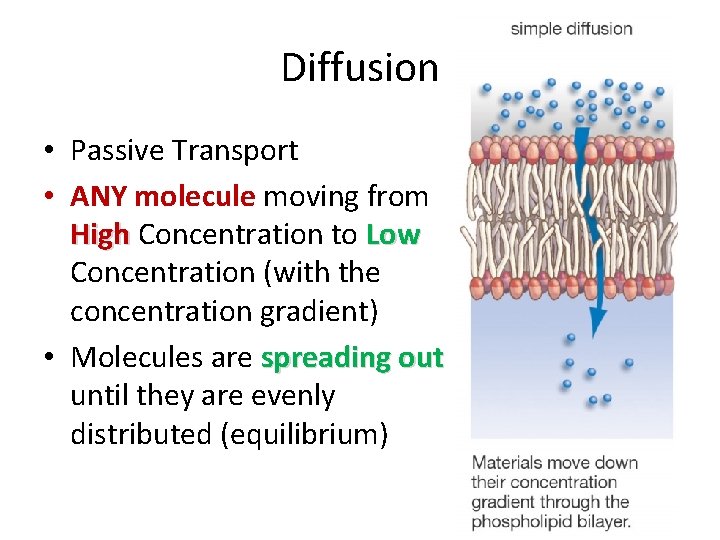
Diffusion • Passive Transport • ANY molecule moving from High Concentration to Low Concentration (with the concentration gradient) • Molecules are spreading out until they are evenly distributed (equilibrium)
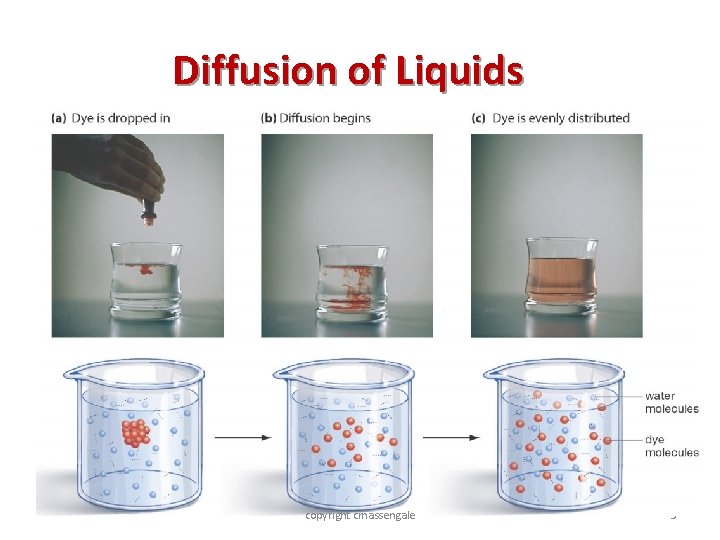
Diffusion of Liquids copyright cmassengale 5
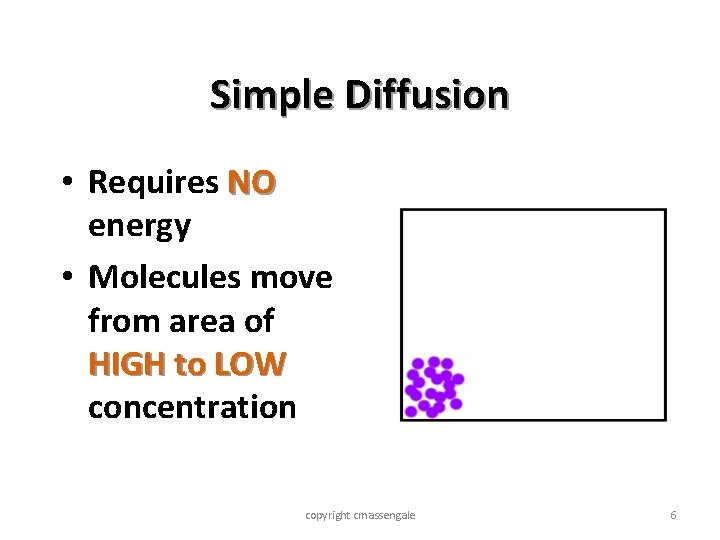
Simple Diffusion • Requires NO energy • Molecules move from area of HIGH to LOW concentration copyright cmassengale 6
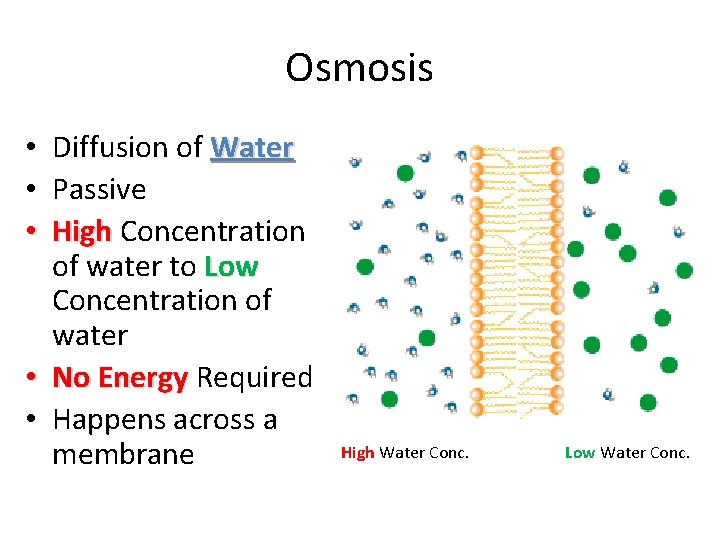
Osmosis • Diffusion of Water • Passive • High Concentration of water to Low Concentration of water • No Energy Required • Happens across a membrane High Water Conc. Low Water Conc.
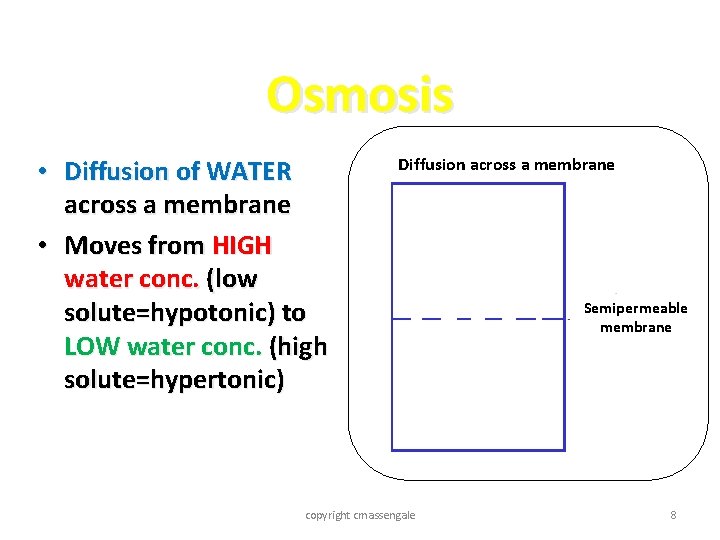
Osmosis • Diffusion of WATER across a membrane • Moves from HIGH water conc. (low solute=hypotonic) to LOW water conc. (high solute=hypertonic) Diffusion across a membrane copyright cmassengale Semipermeable membrane 8

Facilitated Diffusion • Passive Transport • Molecules that are too large to move through the lipid bilayer will use a PROTEIN CHANNEL • High Concentration to Low Concentration • No Energy is Required
Active Transport • Molecules move AGAINST (up) the Concentration Gradient • Low concentration (uncrowded, less dense) to High concentration (crowded, more dense) • Molecules DO NOT do this naturally • The Cell MUST use ENERGY to make this happen. • Energy = ATP
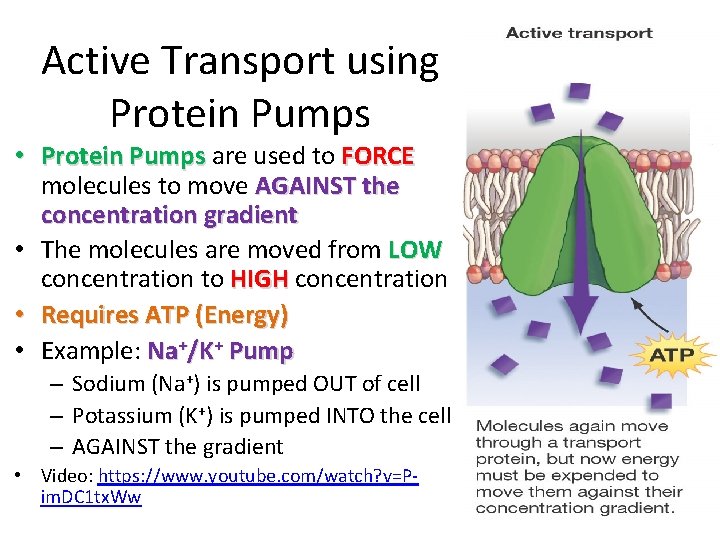
Active Transport using Protein Pumps • Protein Pumps are used to FORCE molecules to move AGAINST the concentration gradient • The molecules are moved from LOW concentration to HIGH concentration • Requires ATP (Energy) • Example: Na+/K+ Pump – Sodium (Na+) is pumped OUT of cell – Potassium (K+) is pumped INTO the cell – AGAINST the gradient • Video: https: //www. youtube. com/watch? v=Pim. DC 1 tx. Ww
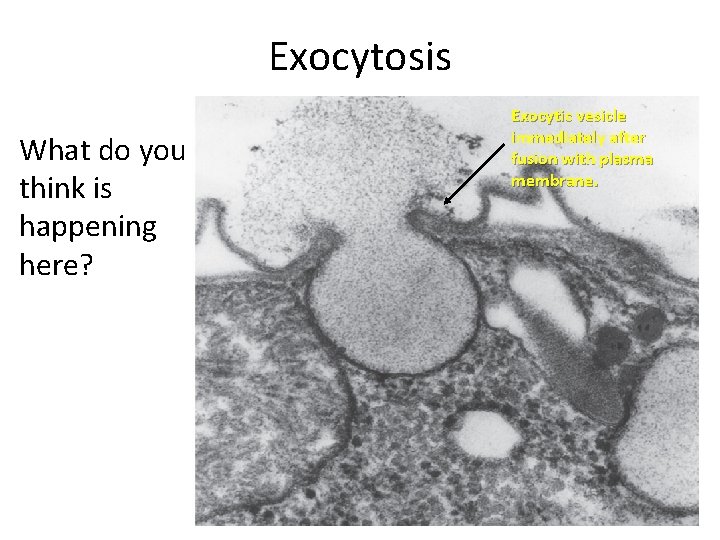
Exocytosis What do you think is happening here? Exocytic vesicle immediately after fusion with plasma membrane.
Exocytosis • Exocytosis = the cell EXPORTS large materials through the cell membrane using vesicles • Proteins & wastes produced by the cell are exported through Exocytosis. • Vesicles are small sacs made of a phospholipid bilayer. • Vesicles carry substances through the cytoplasm and fuse with the cell membrane • The contents of the vesicle are released OUTSIDE the cell • This requires the cell to use energy
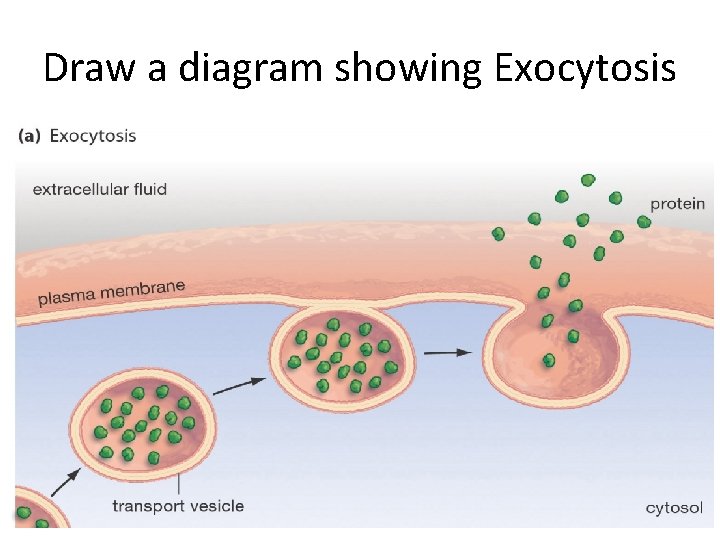
Draw a diagram showing Exocytosis
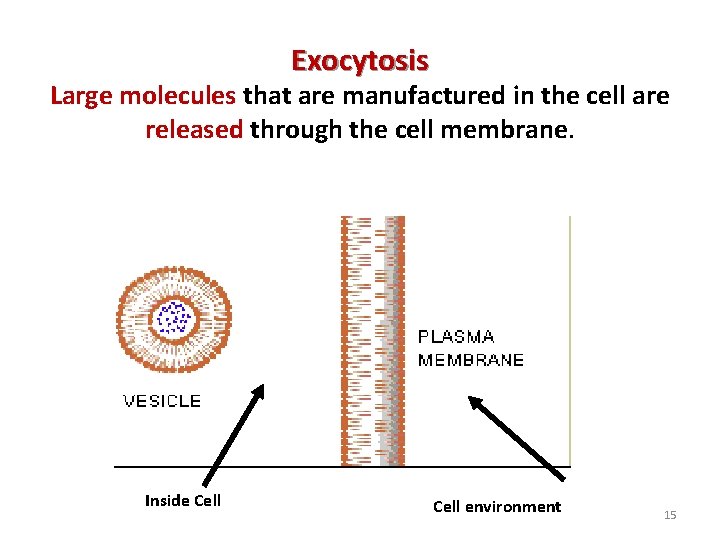
Exocytosis Large molecules that are manufactured in the cell are released through the cell membrane. Inside Cell environment 15
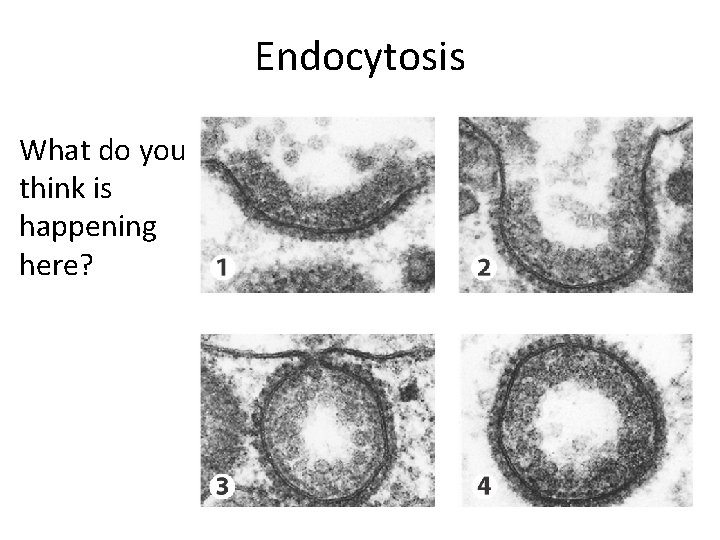
Endocytosis What do you think is happening here?
Endocytosis • Endocytosis = the cell IMPORTS large materials into the cell using vesicles • Food, Fluid, and Bacteria are imported through Endocytosis. • Vesicles form when the cell membrane surrounds the substance. • Vesicles carry substances INSIDE the cell membrane • The contents are usually carried to the lysosome to be digested. • This requires the cell to use energy
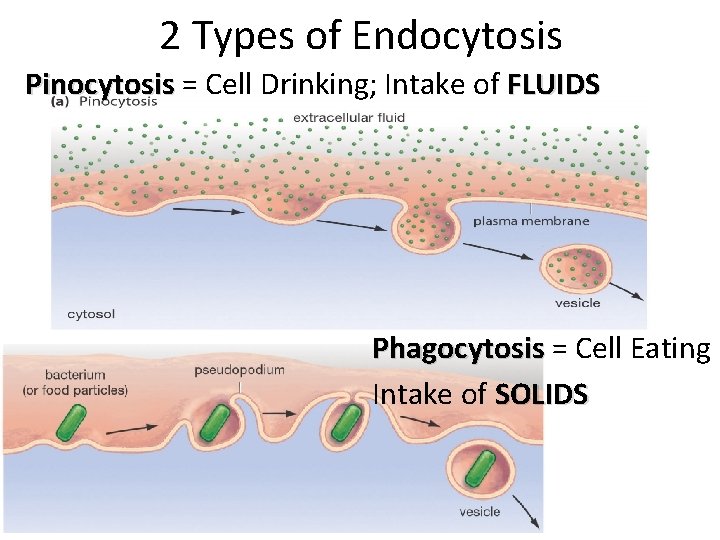
2 Types of Endocytosis Pinocytosis = Cell Drinking; Intake of FLUIDS Phagocytosis = Cell Eating Intake of SOLIDS
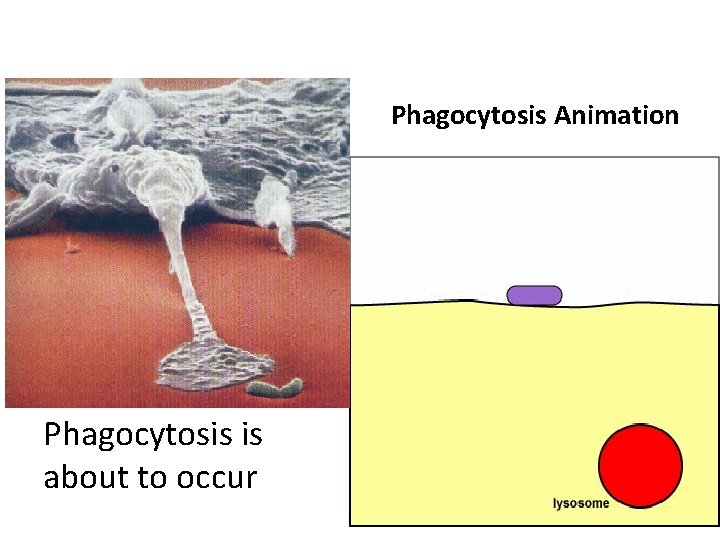
Phagocytosis Animation – Phagocytosis is about to occur 19
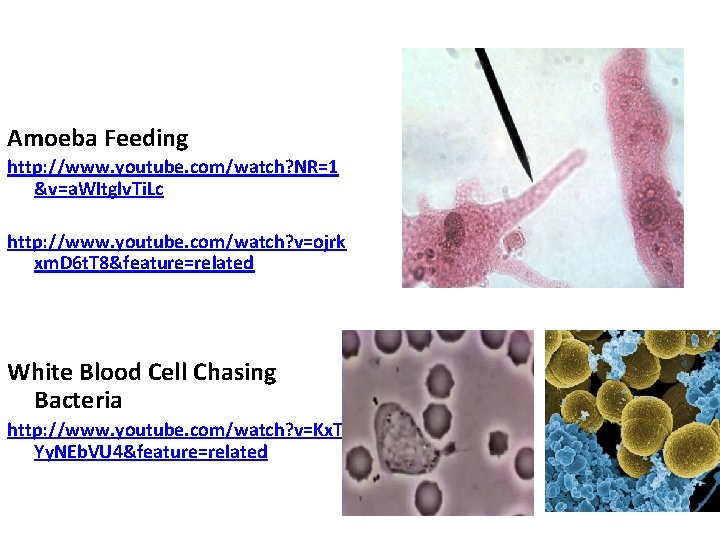
Phagocytosis. Amoeba Feeding http: //www. youtube. com/watch? NR=1 &v=a. WItglv. Ti. Lc http: //www. youtube. com/watch? v=ojrk xm. D 6 t. T 8&feature=related White Blood Cell Chasing Bacteria http: //www. youtube. com/watch? v=Kx. T Yy. NEb. VU 4&feature=related
More Videos • https: //www. youtube. com/watch? v=r 2 Pium V 8 KEY • https: //www. youtube. com/watch? v=d. PKv. Hr D 1 e. S 4
- Slides: 21