
Cell Transport Plasma Membrane Structure Passive Active Transport
Cell Transport Plasma Membrane Structure Passive & Active Transport
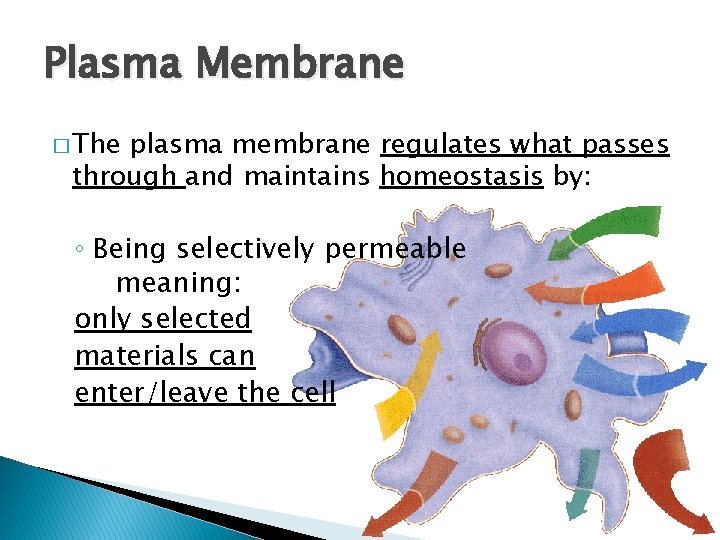
Plasma Membrane � The plasma membrane regulates what passes through and maintains homeostasis by: ◦ Being selectively permeable meaning: only selected materials can enter/leave the cell
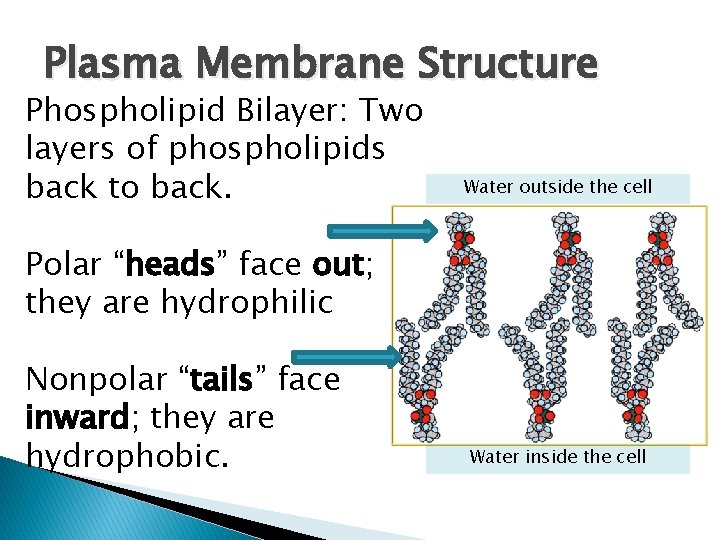
Plasma Membrane Structure Phospholipid Bilayer: Two layers of phospholipids back to back. Water outside the cell Polar “heads” face out; they are hydrophilic Nonpolar “tails” face inward; they are hydrophobic. Water inside the cell
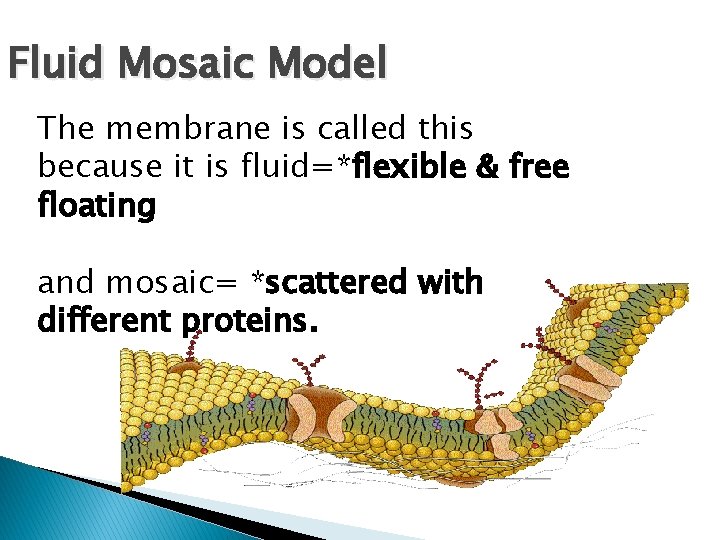
Fluid Mosaic Model The membrane is called this because it is fluid=*flexible & free floating and mosaic= *scattered with different proteins.
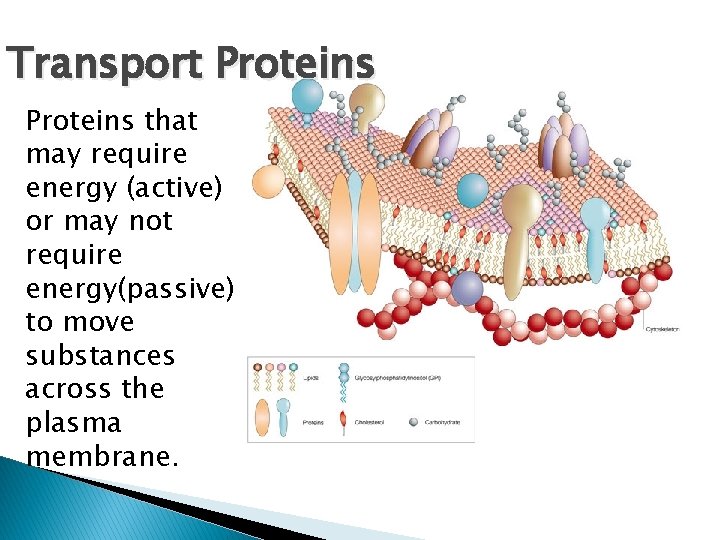
Transport Proteins that may require energy (active) or may not require energy(passive) to move substances across the plasma membrane.
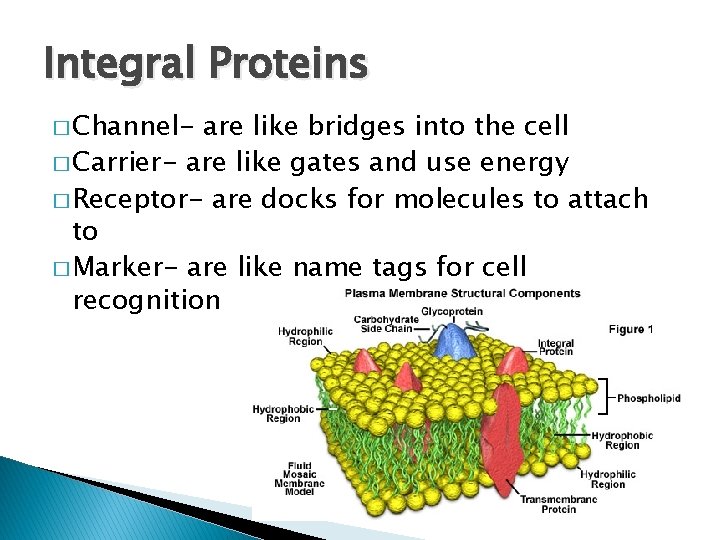
Integral Proteins � Channel- are like bridges into the cell � Carrier- are like gates and use energy � Receptor- are docks for molecules to attach to � Marker- are like name tags for cell recognition
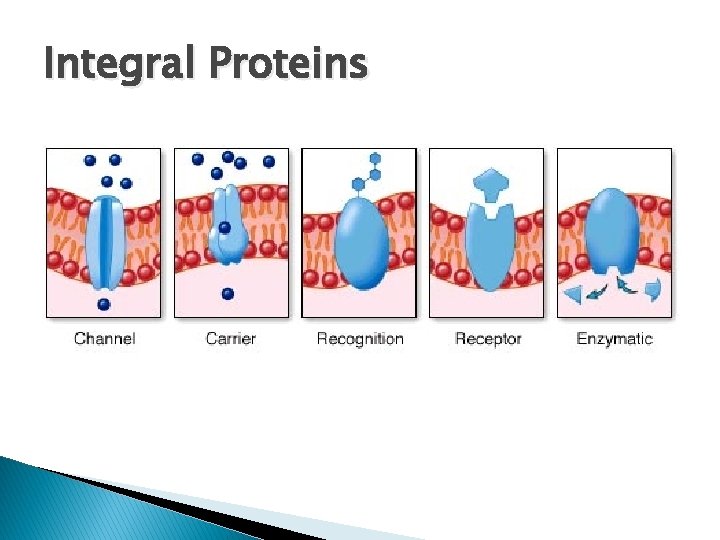
Integral Proteins
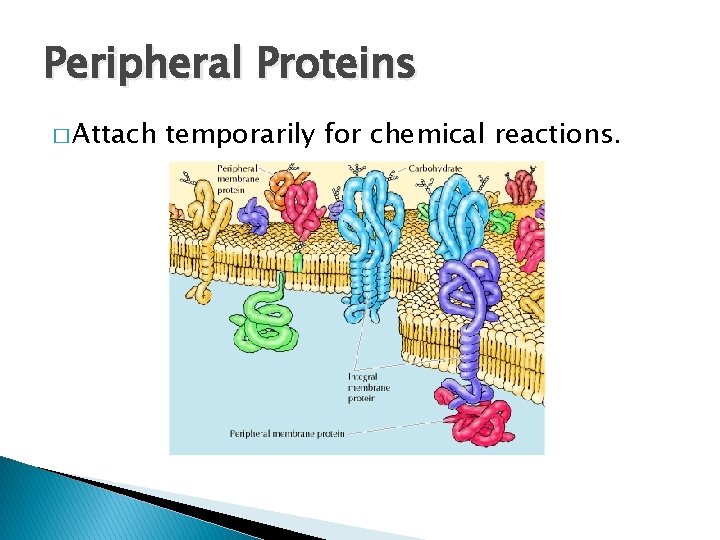
Peripheral Proteins � Attach temporarily for chemical reactions.
Cell Transport: Passive � Particles move from HI to LOW � Does NOT require energy � 3 Types: ◦ Diffusion particles move from high to low areas ◦ Osmosis diffusion of water across a membrane
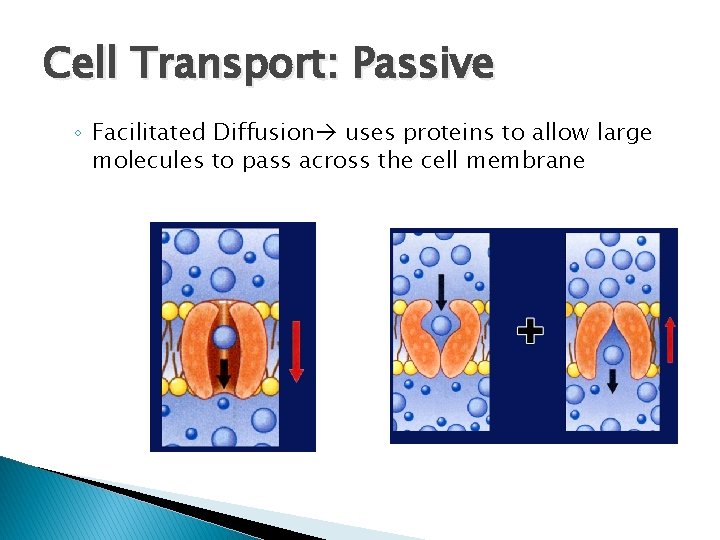
Cell Transport: Passive ◦ Facilitated Diffusion uses proteins to allow large molecules to pass across the cell membrane
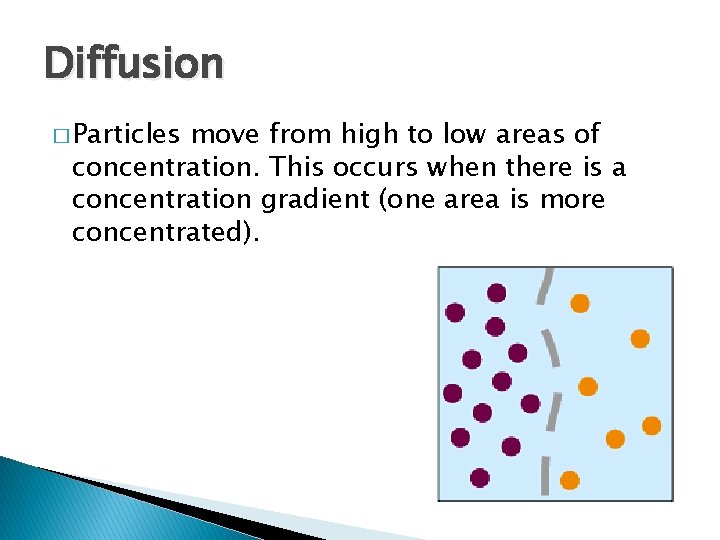
Diffusion � Particles move from high to low areas of concentration. This occurs when there is a concentration gradient (one area is more concentrated).
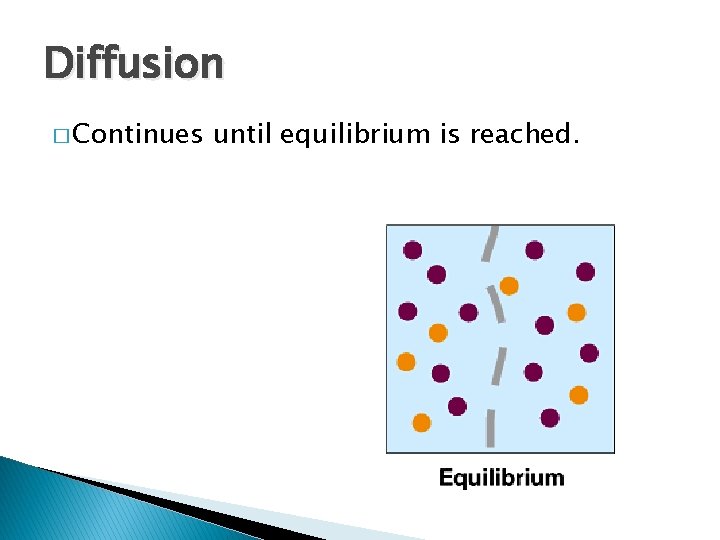
Diffusion � Continues until equilibrium is reached.
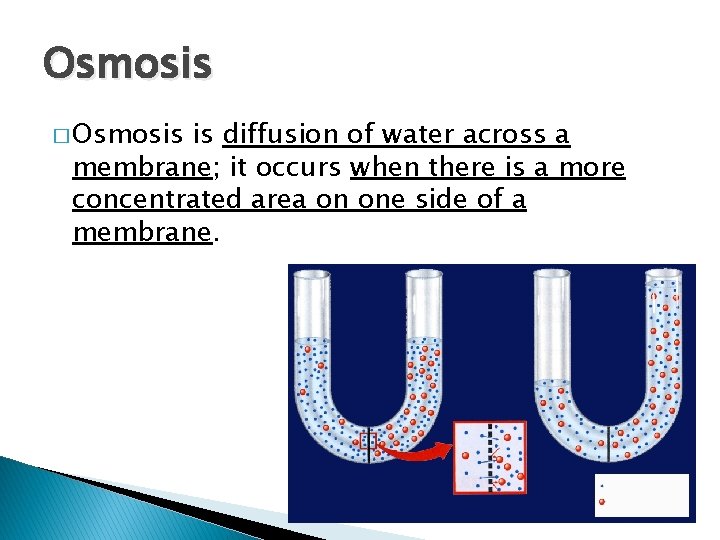
Osmosis � Osmosis is diffusion of water across a membrane; it occurs when there is a more concentrated area on one side of a membrane.

Osmotic Solutions � Hypotonic solutions are LOW strength. � Water moves INTO the cell. � Animal cells may burst (cytolysis) plant cells become swollen (turgid).
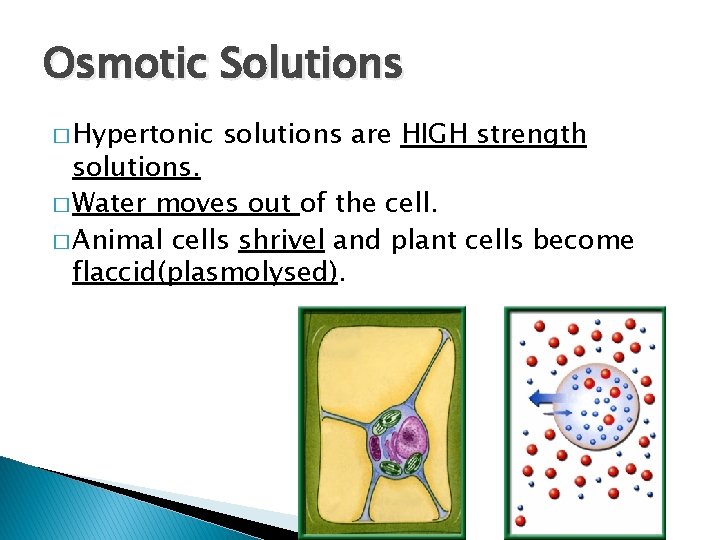
Osmotic Solutions � Hypertonic solutions are HIGH strength solutions. � Water moves out of the cell. � Animal cells shrivel and plant cells become flaccid(plasmolysed).
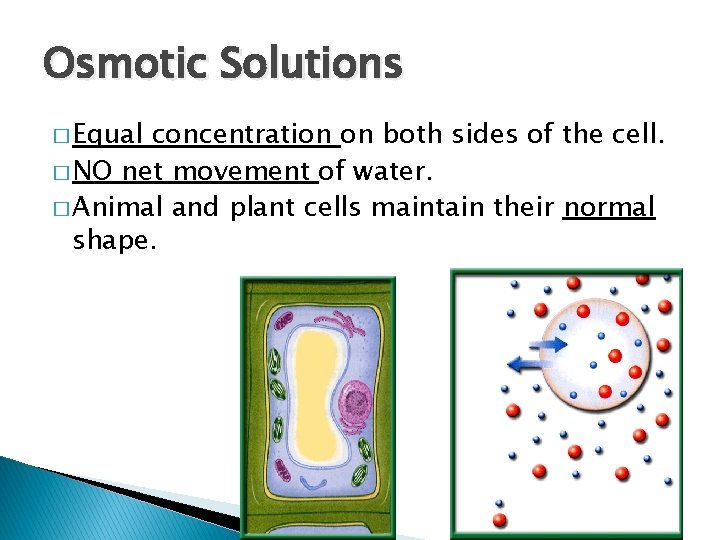
Osmotic Solutions � Equal concentration on both sides of the cell. � NO net movement of water. � Animal and plant cells maintain their normal shape.
Cell Transport : Active � Movement from LOW to HI � Requires ENERGY � 3 Types:
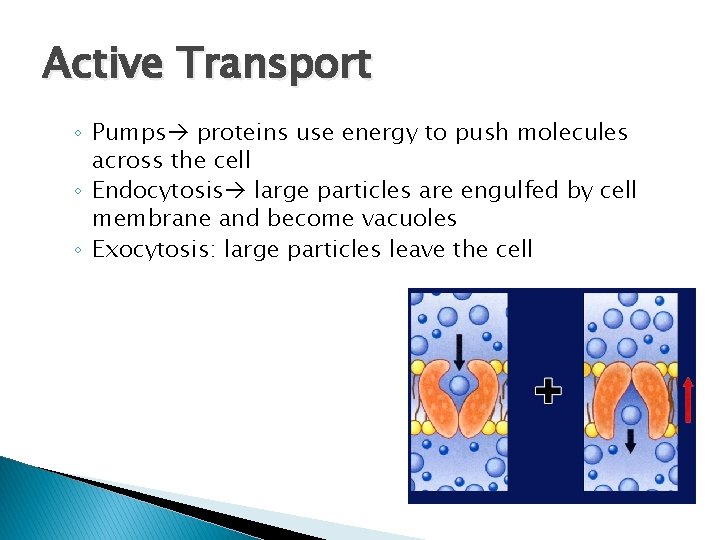
Active Transport ◦ Pumps proteins use energy to push molecules across the cell ◦ Endocytosis large particles are engulfed by cell membrane and become vacuoles ◦ Exocytosis: large particles leave the cell
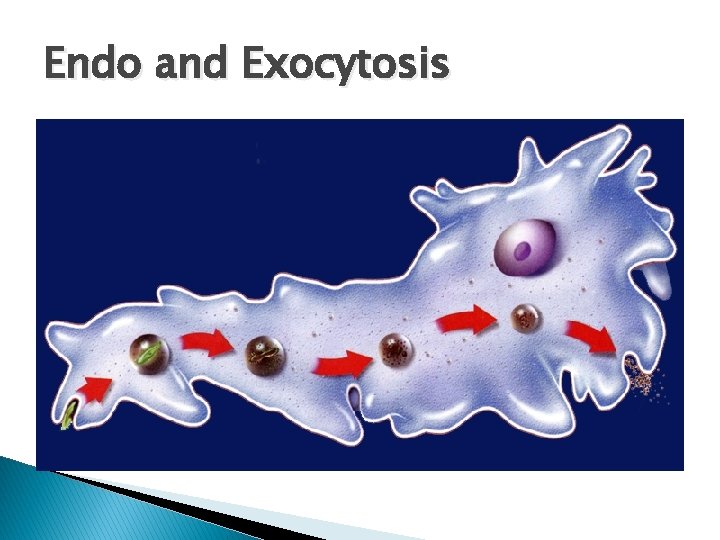
Endo and Exocytosis
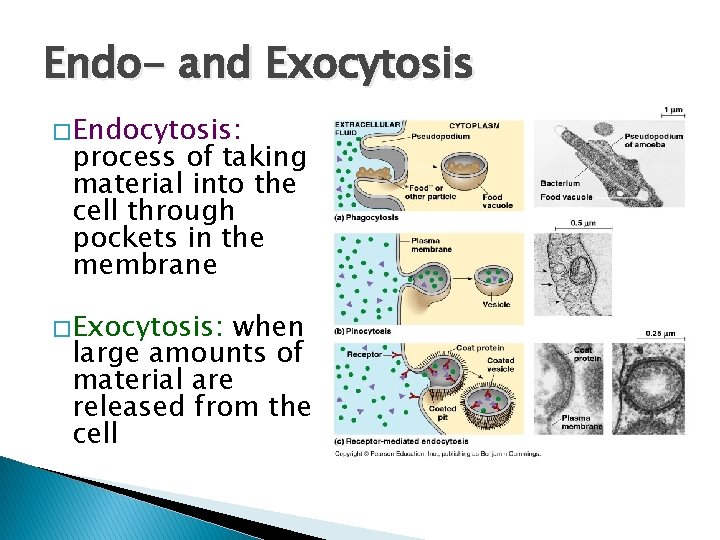
Endo- and Exocytosis � Endocytosis: process of taking material into the cell through pockets in the membrane � Exocytosis: when large amounts of material are released from the cell
- Slides: 20