
Cell Transport Notes Cell Membrane also known as
Cell Transport Notes
Cell Membrane- (also known as the lipid bilayer) regulates what enters and leaves the cell
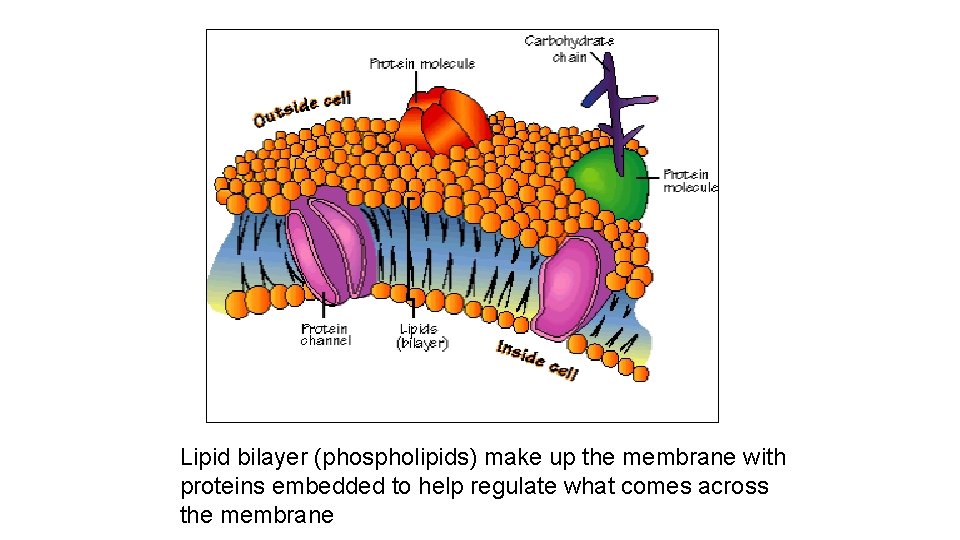
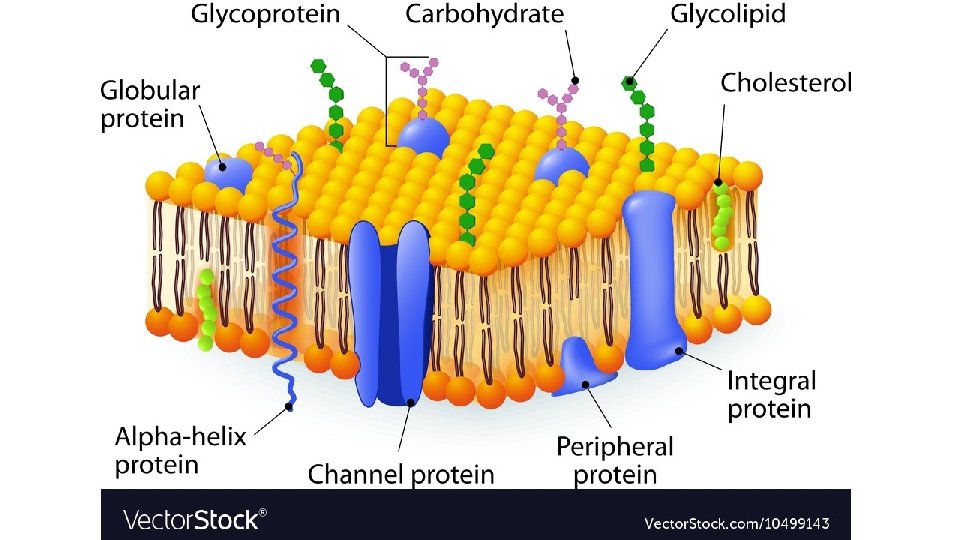
Lipid bilayer (phospholipids) make up the membrane with proteins embedded to help regulate what comes across the membrane
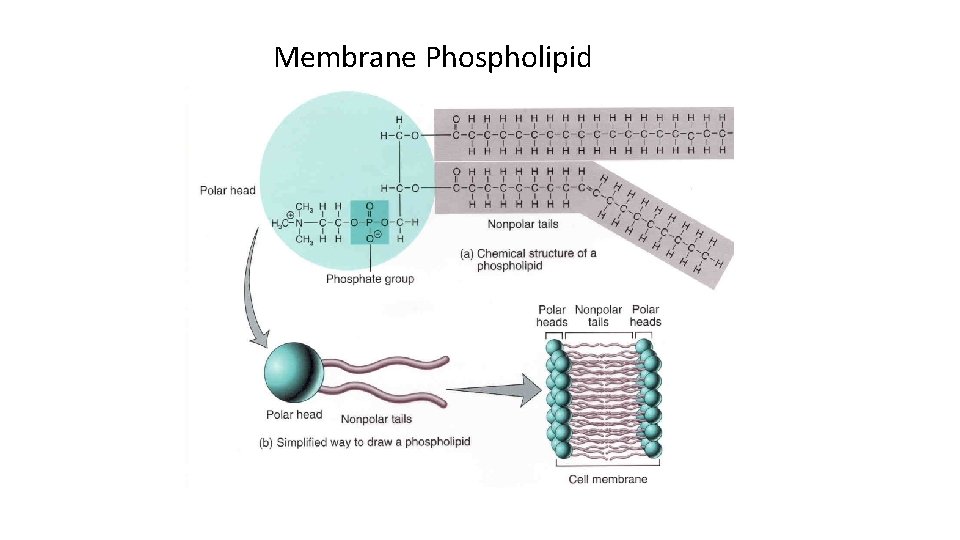
Membrane Phospholipid
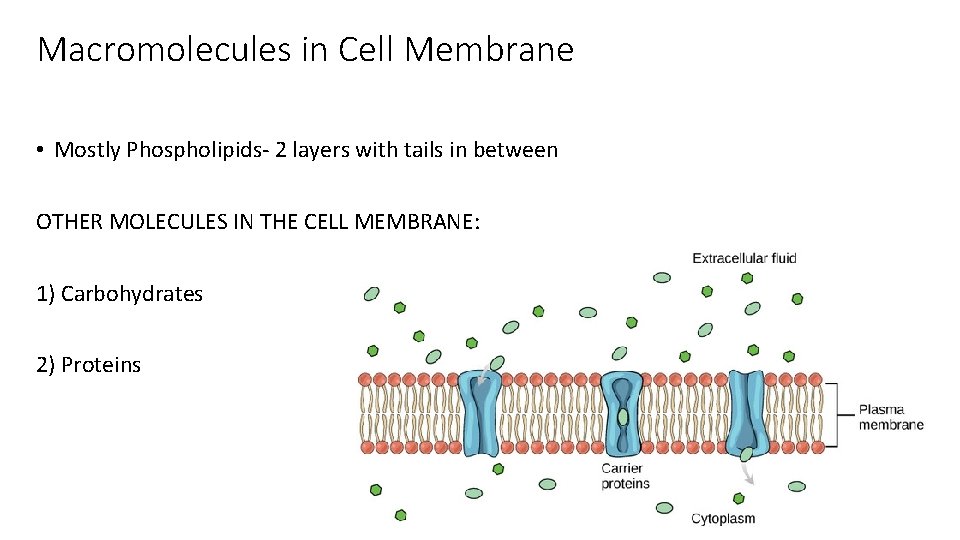
Macromolecules in Cell Membrane • Mostly Phospholipids- 2 layers with tails in between OTHER MOLECULES IN THE CELL MEMBRANE: 1) Carbohydrates 2) Proteins
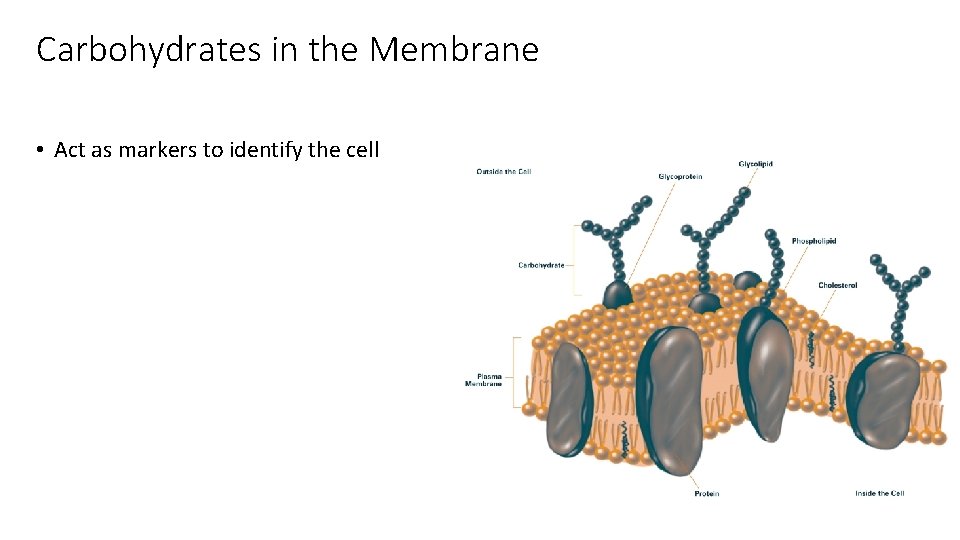
Carbohydrates in the Membrane • Act as markers to identify the cell
Proteins • Channels to let molecules into and out of the cell • Receptors that bind to signal molecules and cause a chemical reaction in the cell.
Why do we need protein channels? • The membrane is selectively-permeable (It lets some molecules pass through but others cannot) • Things that can pass: small, non polar molecules • Things that can’t pass: large or charged molecules https: //www. youtube. com/watch? v=Pfu 1 DE 9 PK 2 w
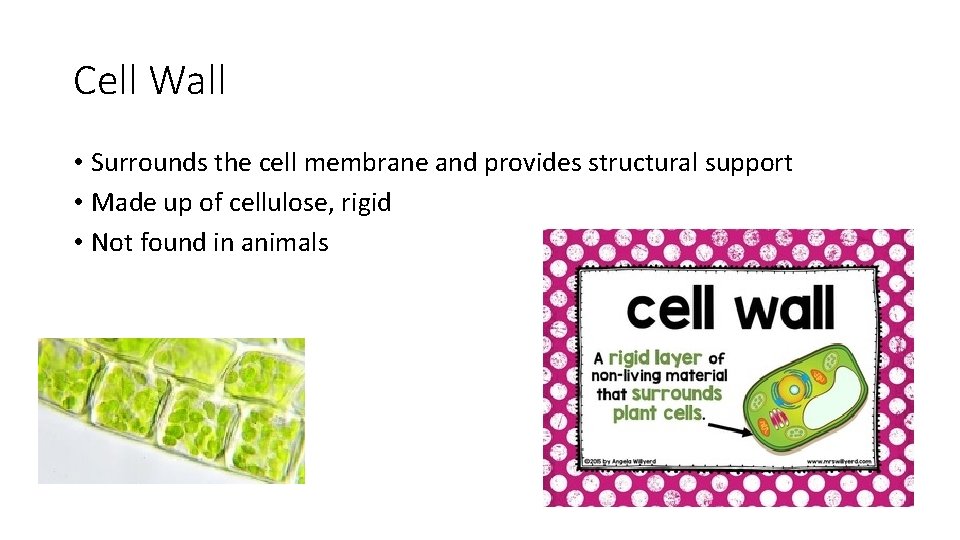
Cell Wall • Surrounds the cell membrane and provides structural support • Made up of cellulose, rigid • Not found in animals
Cell Transport- movement of particles into and out of the cell
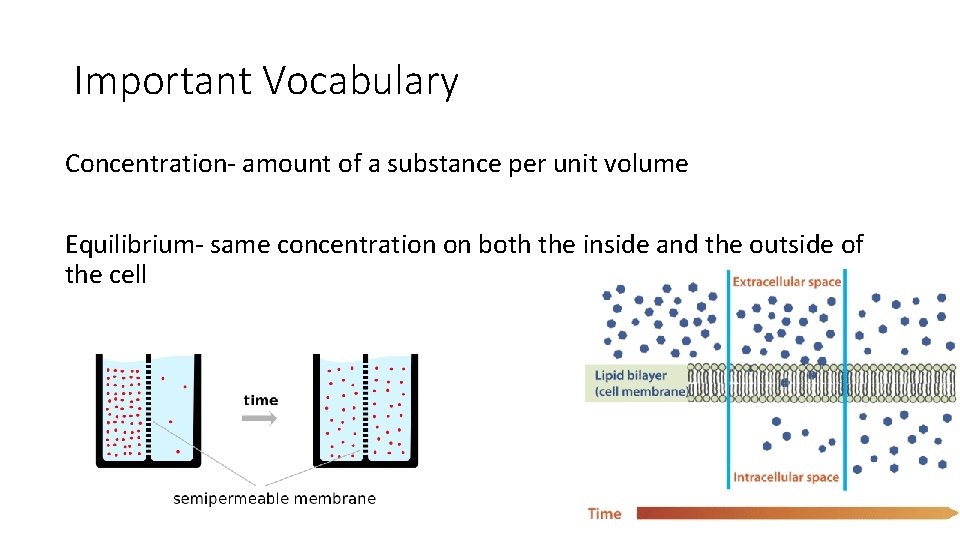
Important Vocabulary Concentration- amount of a substance per unit volume Equilibrium- same concentration on both the inside and the outside of the cell
2 Different Types of Cell Transport 1)Passive- doesn’t require any energy DIFFUSION!!! 2) Active- requires energy
Passive Transport (also known as diffusion) No energy required!!
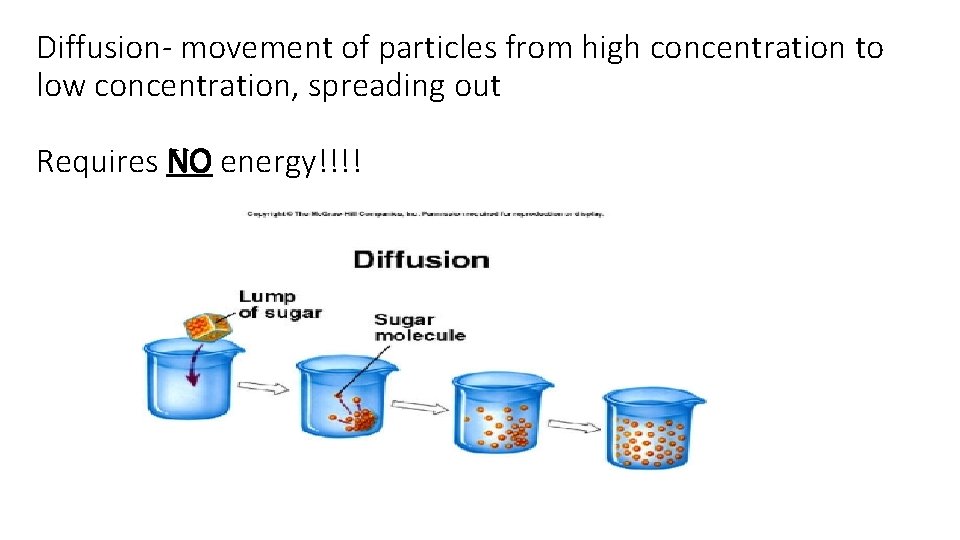
Diffusion- movement of particles from high concentration to low concentration, spreading out Requires NO energy!!!!
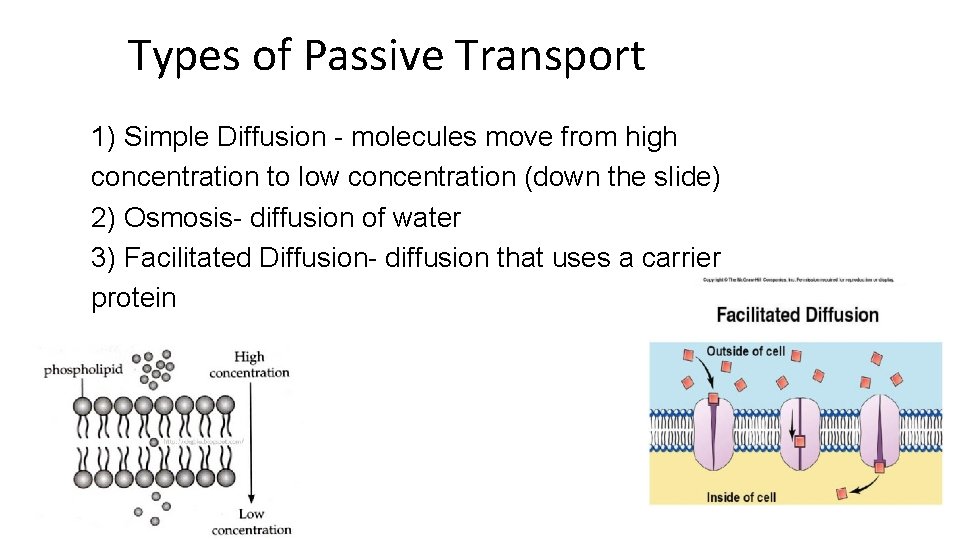
Types of Passive Transport 1) Simple Diffusion - molecules move from high concentration to low concentration (down the slide) 2) Osmosis- diffusion of water 3) Facilitated Diffusion- diffusion that uses a carrier protein
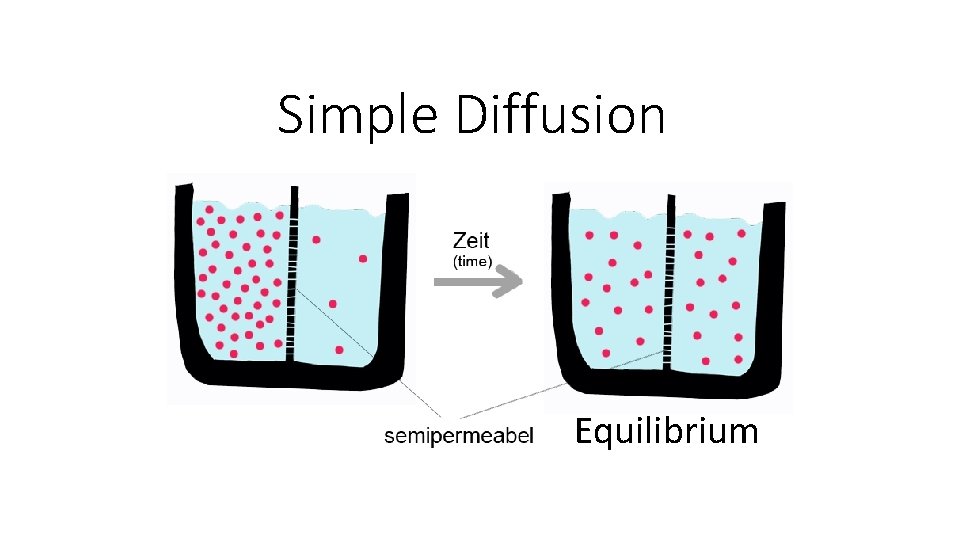
Simple Diffusion Equilibrium
Osmosis • The diffusion of water through a semi-permeable membrane https: //www. youtube. com/watch? v=Hq. Kl. Lm 2 Mjk. I
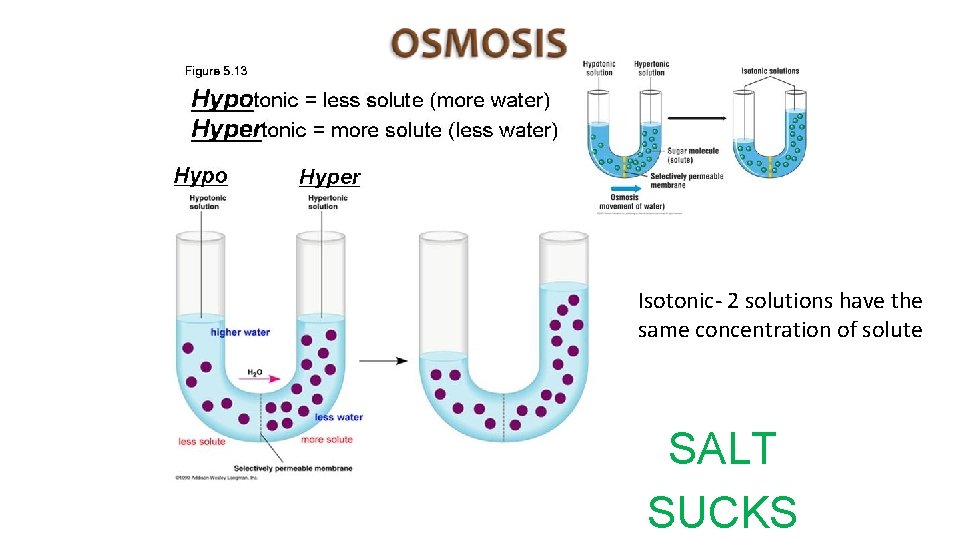
Isotonic- 2 solutions have the same concentration of solute SALT SUCKS
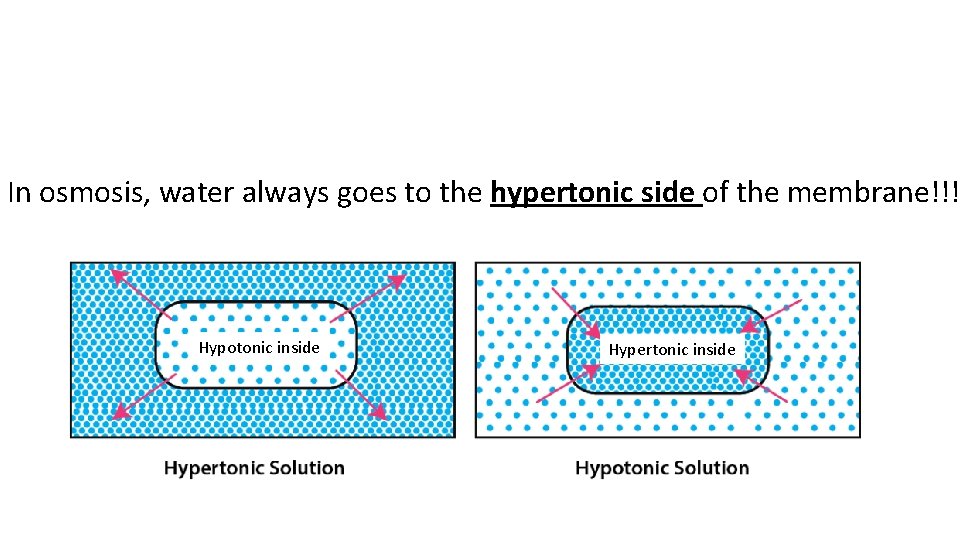
In osmosis, water always goes to the hypertonic side of the membrane!!! Hypotonic inside Hypertonic inside
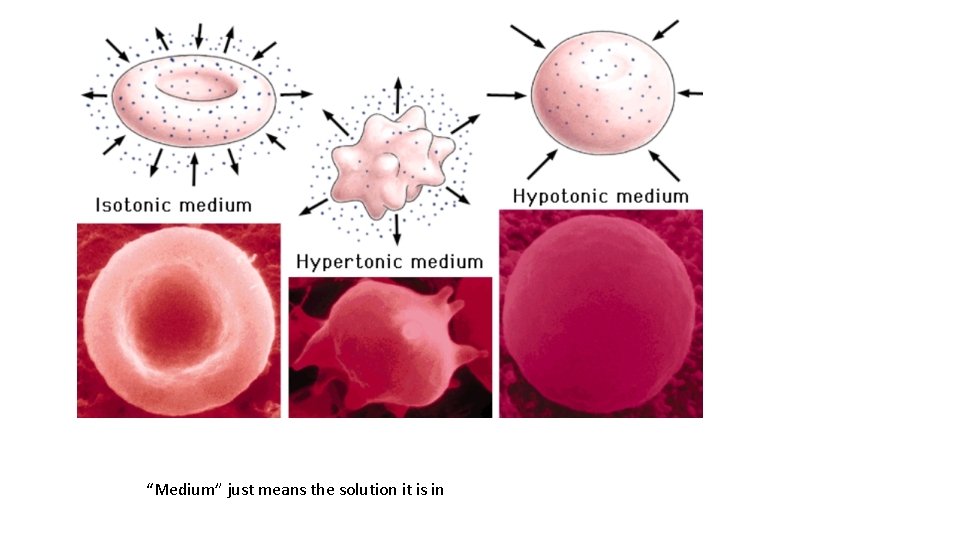
“Medium” just means the solution it is in
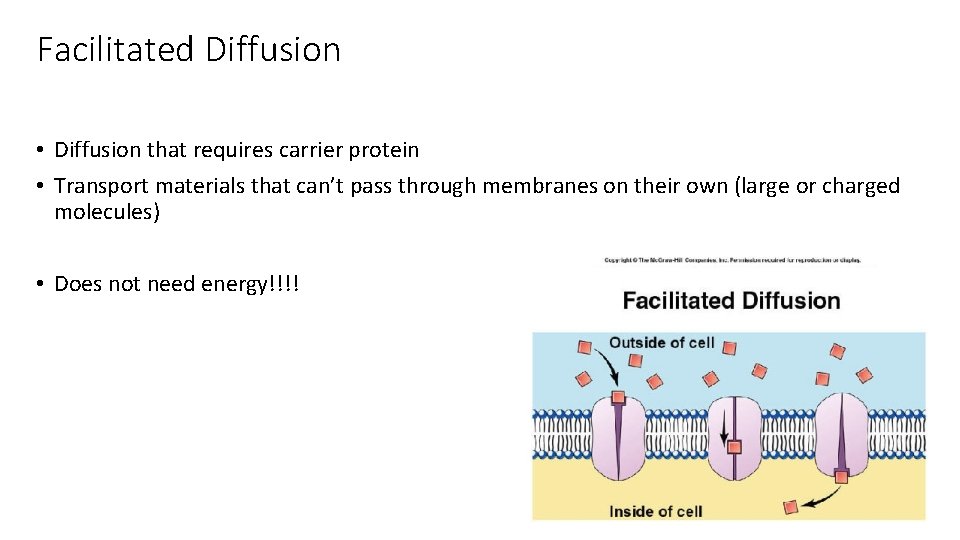
Facilitated Diffusion • Diffusion that requires carrier protein • Transport materials that can’t pass through membranes on their own (large or charged molecules) • Does not need energy!!!!
Active Transport Goes against the gradient and requires energy!!!
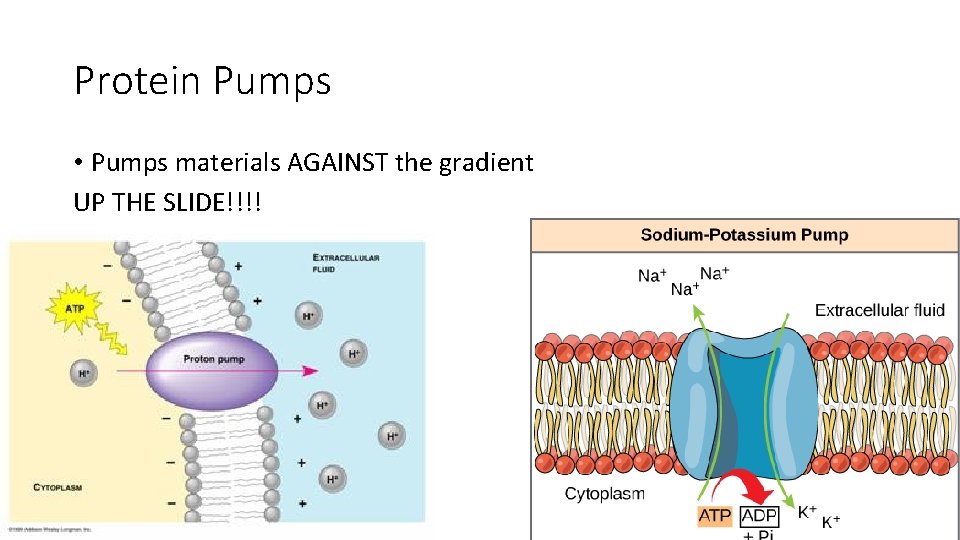
Protein Pumps • Pumps materials AGAINST the gradient UP THE SLIDE!!!!
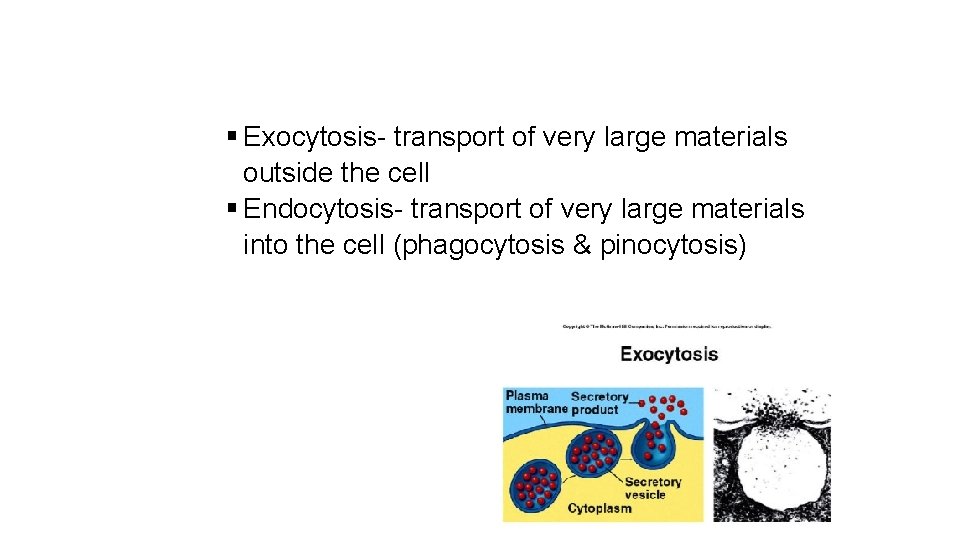
§ Exocytosis- transport of very large materials outside the cell § Endocytosis- transport of very large materials into the cell (phagocytosis & pinocytosis)
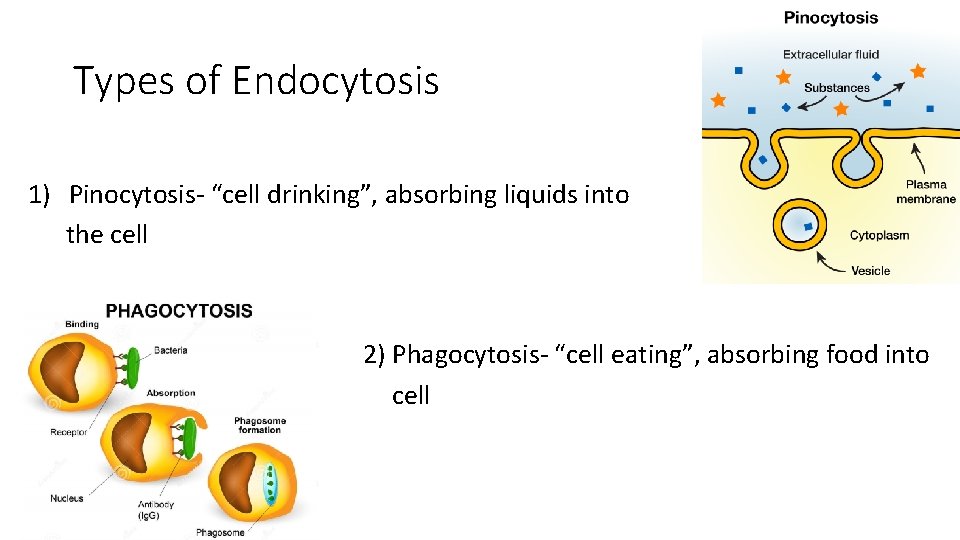
Types of Endocytosis 1) Pinocytosis- “cell drinking”, absorbing liquids into the cell the 2) Phagocytosis- “cell eating”, absorbing food into cell
- Slides: 26