
Cell Transport Notes About Cell Membranes 1 All
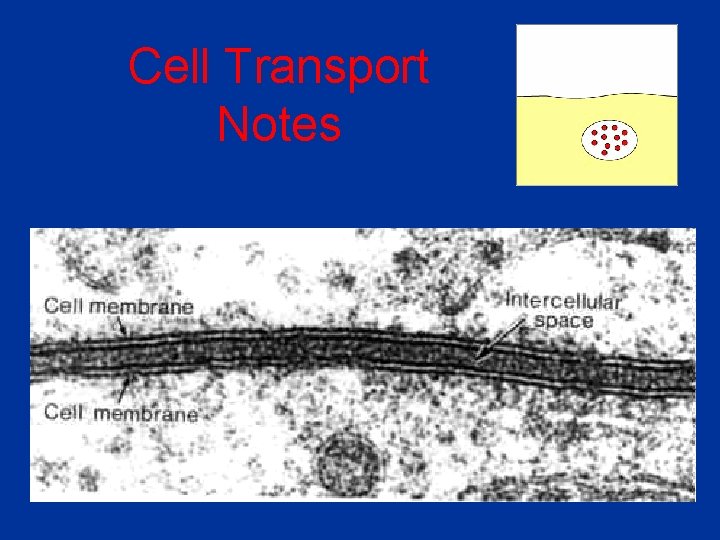
Cell Transport Notes
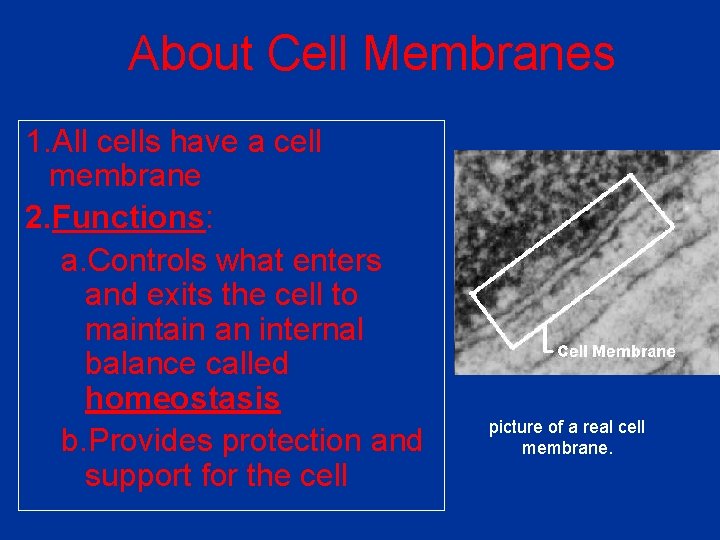
About Cell Membranes 1. All cells have a cell membrane 2. Functions: a. Controls what enters and exits the cell to maintain an internal balance called homeostasis b. Provides protection and support for the cell picture of a real cell membrane.
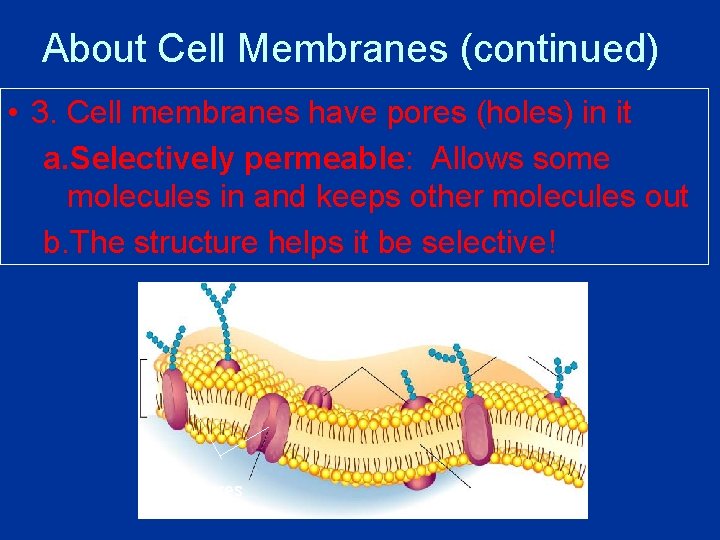
About Cell Membranes (continued) • 3. Cell membranes have pores (holes) in it a. Selectively permeable: Allows some molecules in and keeps other molecules out b. The structure helps it be selective! Pores
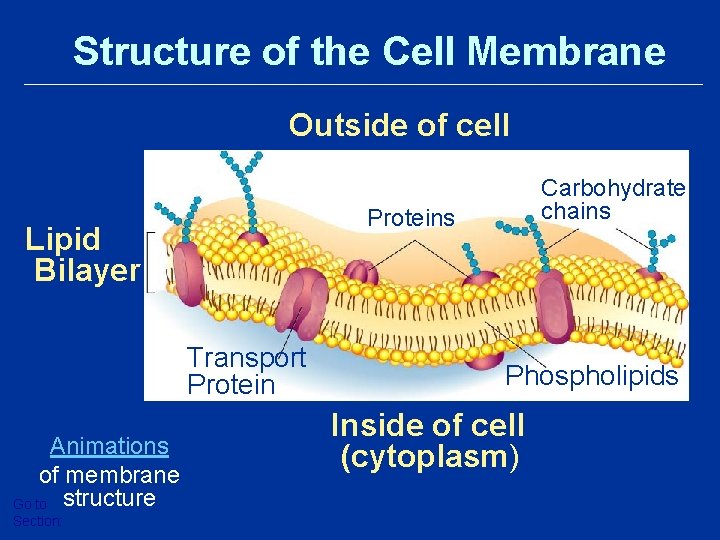
Structure of the Cell Membrane Outside of cell Proteins Lipid Bilayer Transport Protein Animations of membrane Go to structure Section: Carbohydrate chains Phospholipids Inside of cell (cytoplasm)
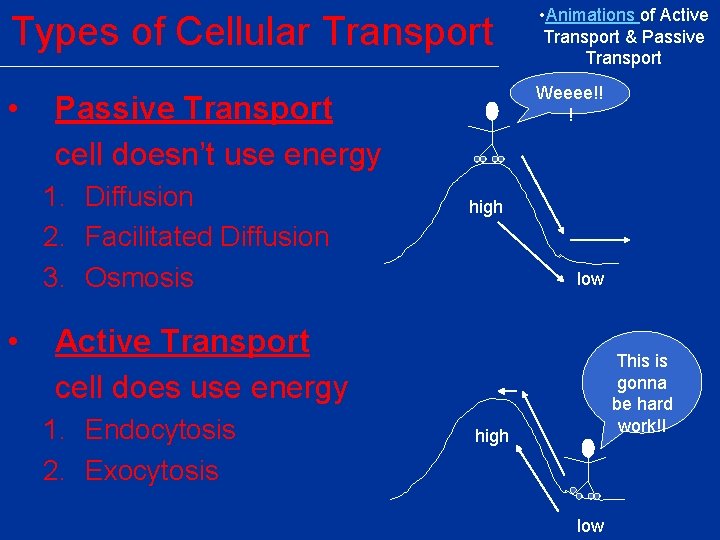
Types of Cellular Transport • Animations of Active Transport & Passive Transport • Weeee!! ! Passive Transport cell doesn’t use energy 1. Diffusion 2. Facilitated Diffusion 3. Osmosis • high low Active Transport cell does use energy 1. Endocytosis 2. Exocytosis This is gonna be hard work!! high low
Passive Transport • • • cell uses no energy molecules move randomly Molecules spread out from an area of high concentration to an area of low concentration. • (High Low) • Three types:
3 Types of Passive Transport 1. Diffusion 2. Facilitative Diffusion – diffusion with the help of transport proteins 3. Osmosis – diffusion of water
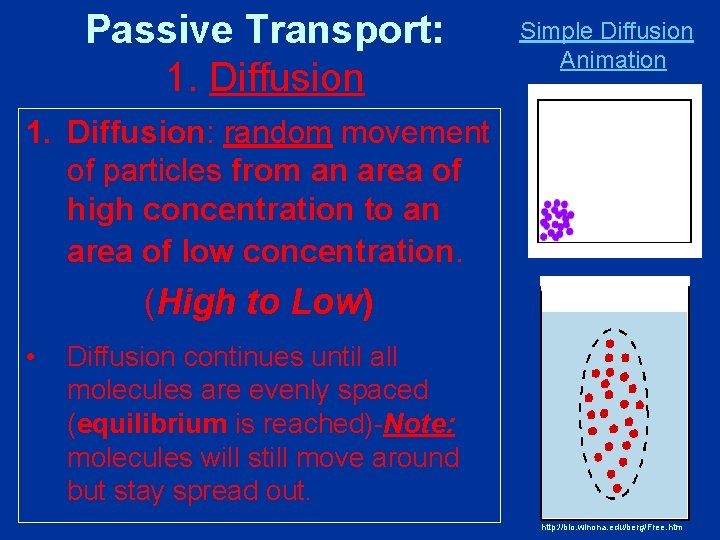
Passive Transport: 1. Diffusion Simple Diffusion Animation 1. Diffusion: random movement of particles from an area of high concentration to an area of low concentration. (High to Low) • Diffusion continues until all molecules are evenly spaced (equilibrium is reached)-Note: molecules will still move around but stay spread out. http: //bio. winona. edu/berg/Free. htm
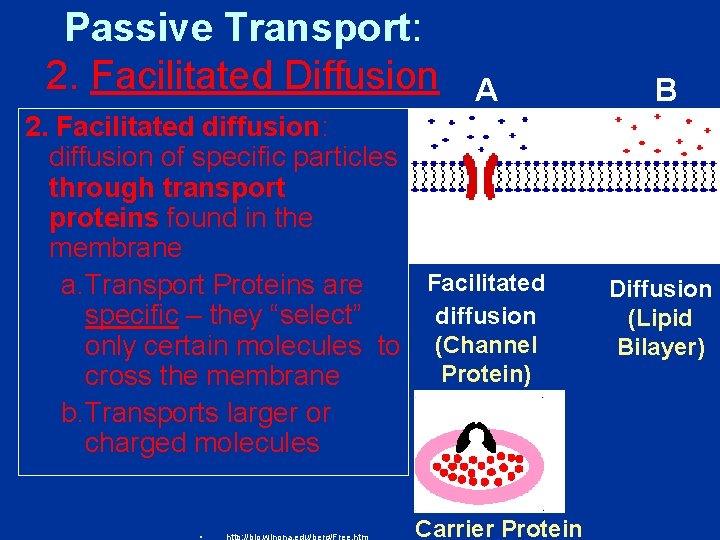
Passive Transport: 2. Facilitated Diffusion A 2. Facilitated diffusion: diffusion of specific particles through transport proteins found in the membrane Facilitated a. Transport Proteins are diffusion specific – they “select” only certain molecules to (Channel Protein) cross the membrane b. Transports larger or charged molecules Carrier Protein B Diffusion (Lipid Bilayer)
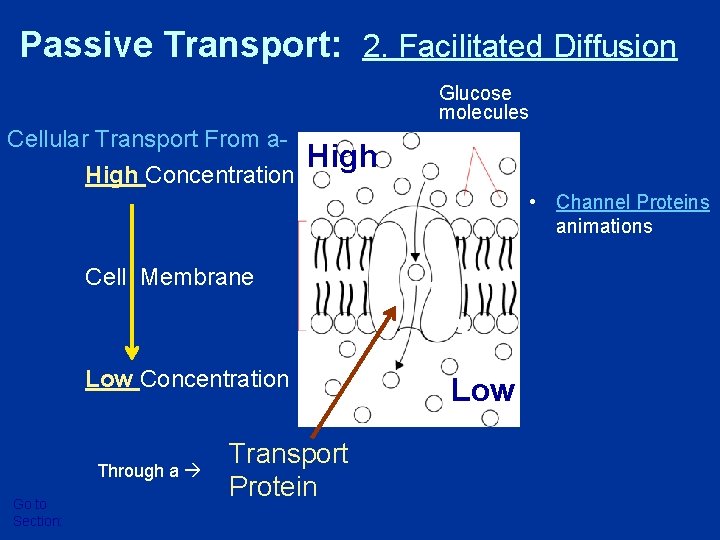
Passive Transport: 2. Facilitated Diffusion Glucose molecules Cellular Transport From a. High Concentration High • Channel Proteins animations Cell Membrane Low Concentration Through a Go to Section: Transport Protein channel Low
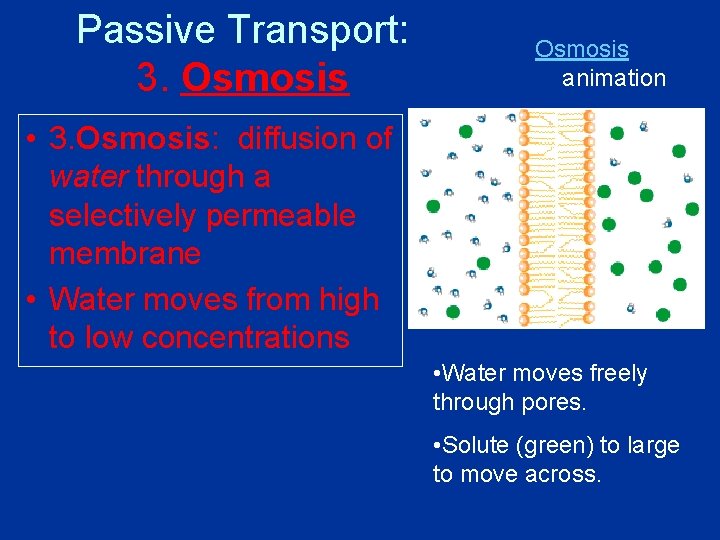
Passive Transport: 3. Osmosis animation • 3. Osmosis: diffusion of water through a selectively permeable membrane • Water moves from high to low concentrations • Water moves freely through pores. • Solute (green) to large to move across.
Active Transport • cell uses energy • actively moves molecules to where they are needed • Movement from an area of low concentration to an area of high concentration • (Low High) • Two Types:
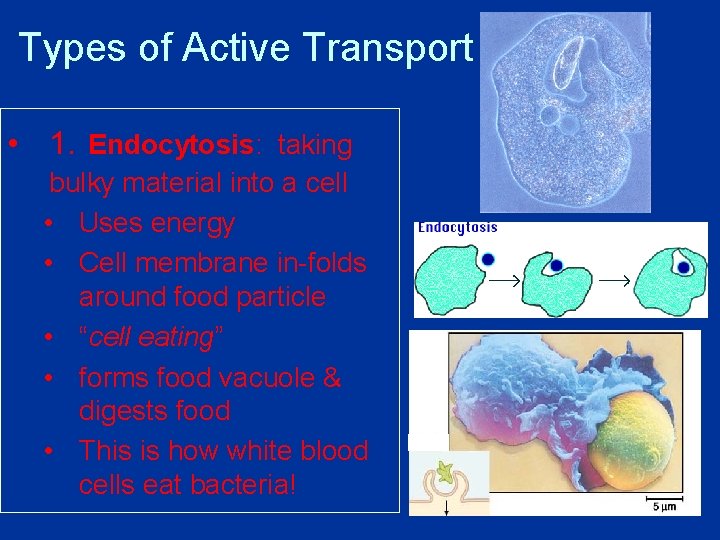
Types of Active Transport • 1. Endocytosis: taking bulky material into a cell • Uses energy • Cell membrane in-folds around food particle • “cell eating” • forms food vacuole & digests food • This is how white blood cells eat bacteria!

Types of Active Transport 2. Exocytosis: Forces material out of cell in bulk • membrane surrounding the material fuses with cell membrane • Cell changes shape – requires energy • EX: Hormones or wastes released from cell Endocytosis & Exocytosis animations
Effects of Osmosis on Life • Osmosis- diffusion of water through a selectively permeable membrane • Water is so small and there is so much of it the cell can’t control it’s movement through the cell membrane.
- Slides: 15