
Cell Transport How different substances get into and
Cell Transport How different substances get into and out of cells
Importance of Cell Membranes • Cell membranes provide support and protection for cells • Cell membranes regulate what enters and/or exits a cell and the speed at which this occurs – Cells take in food and water – Eliminate wastes
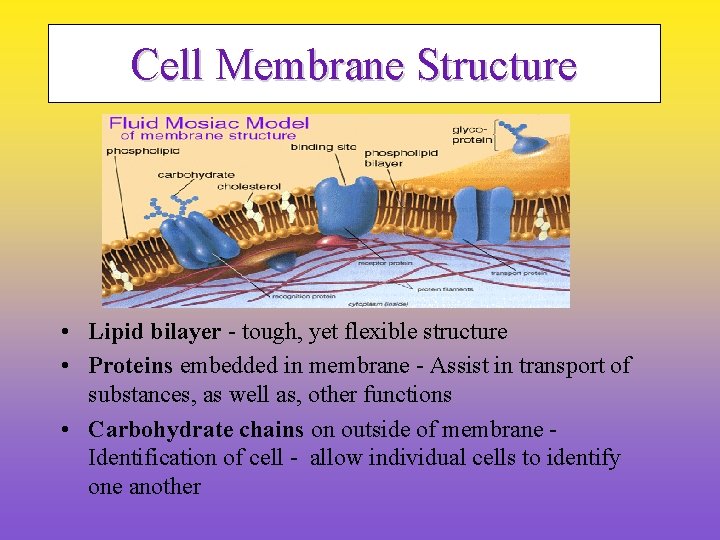
Cell Membrane Structure • Lipid bilayer - tough, yet flexible structure • Proteins embedded in membrane - Assist in transport of substances, as well as, other functions • Carbohydrate chains on outside of membrane Identification of cell - allow individual cells to identify one another
Two Kinds of Transport • Passive Transport – – Does not require energy Moves with the concentration gradient Happens as a result of simple molecular motion Small and uncharged (some exceptions) molecules such as water, oxygen, and carbon dioxide • Active Transport – Requires energy – Moves against concentration gradient – Large or charged molecules such as calcium, or potassium.

Passive—Simple Diffusion • Diffusion is the tendency of molecules to move from an area of high concentration to an area of low concentration • Molecules are in constant motion • When the concentration of a solute is the same through a system, it has reach an equillibrium • Does not require energy
Passive—Facilitated Diffusion • Larger molecules (glucose or proteins) and charged particles(Na+ or Cl-) need to be facilitated across membrane by membrane carrier or channel proteins • Still does not require energy as substances are flowing from areas of high to low concentrations
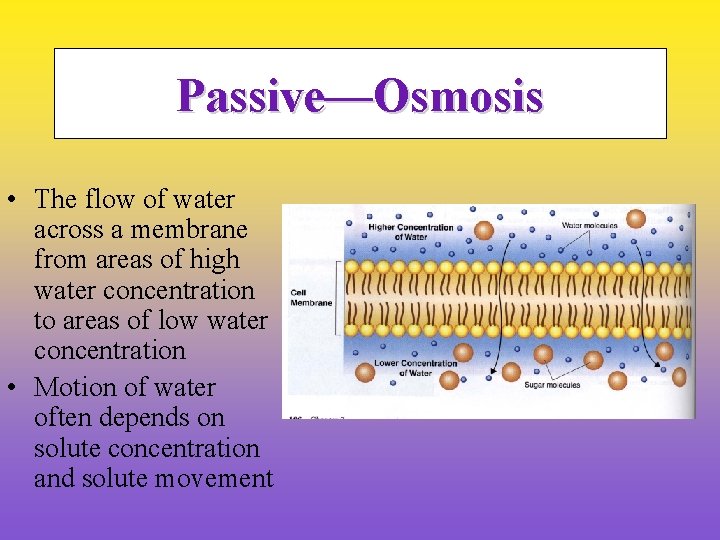
Passive—Osmosis • The flow of water across a membrane from areas of high water concentration to areas of low water concentration • Motion of water often depends on solute concentration and solute movement
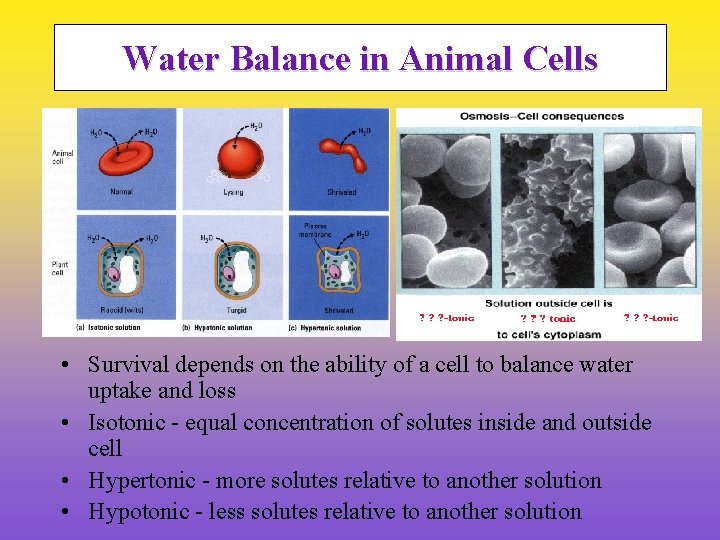
Water Balance in Animal Cells • Survival depends on the ability of a cell to balance water uptake and loss • Isotonic - equal concentration of solutes inside and outside cell • Hypertonic - more solutes relative to another solution • Hypotonic - less solutes relative to another solution
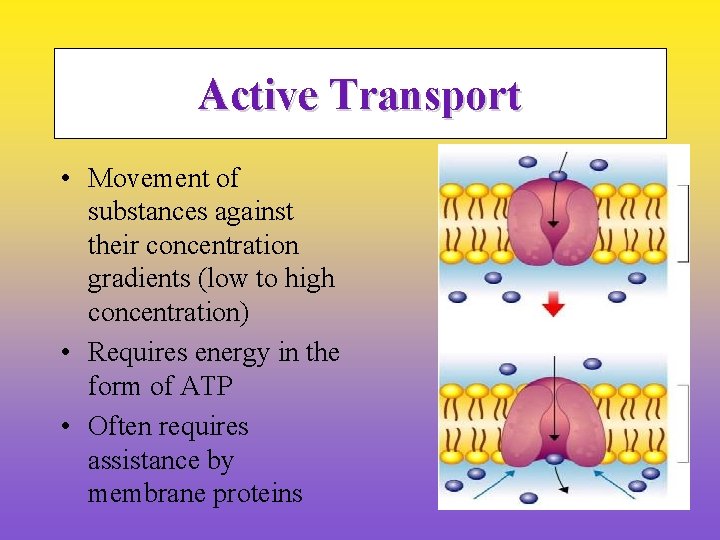
Active Transport • Movement of substances against their concentration gradients (low to high concentration) • Requires energy in the form of ATP • Often requires assistance by membrane proteins
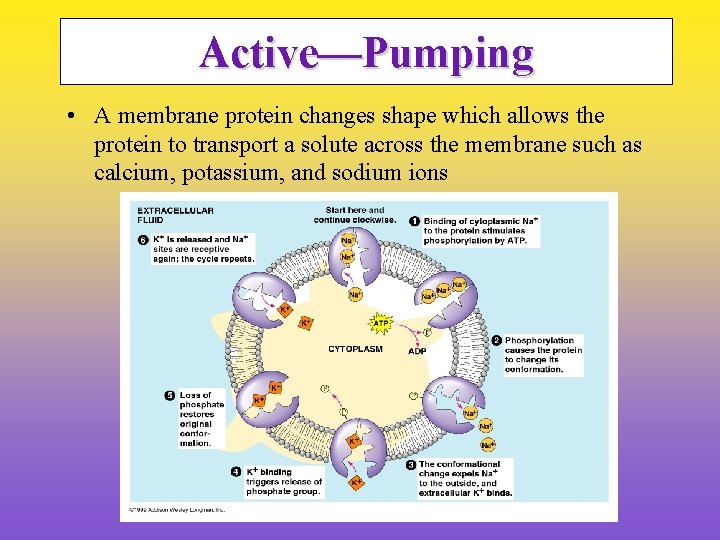
Active—Pumping • A membrane protein changes shape which allows the protein to transport a solute across the membrane such as calcium, potassium, and sodium ions
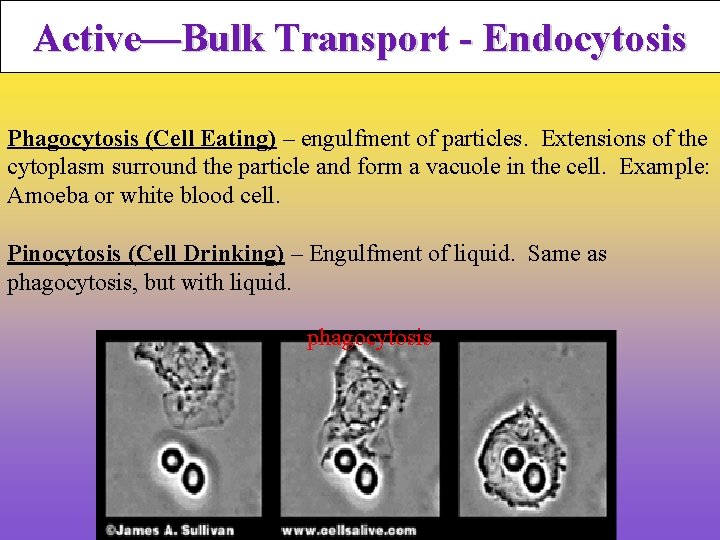
Active—Bulk Transport - Endocytosis Phagocytosis (Cell Eating) – engulfment of particles. Extensions of the cytoplasm surround the particle and form a vacuole in the cell. Example: Amoeba or white blood cell. Pinocytosis (Cell Drinking) – Engulfment of liquid. Same as phagocytosis, but with liquid. phagocytosis
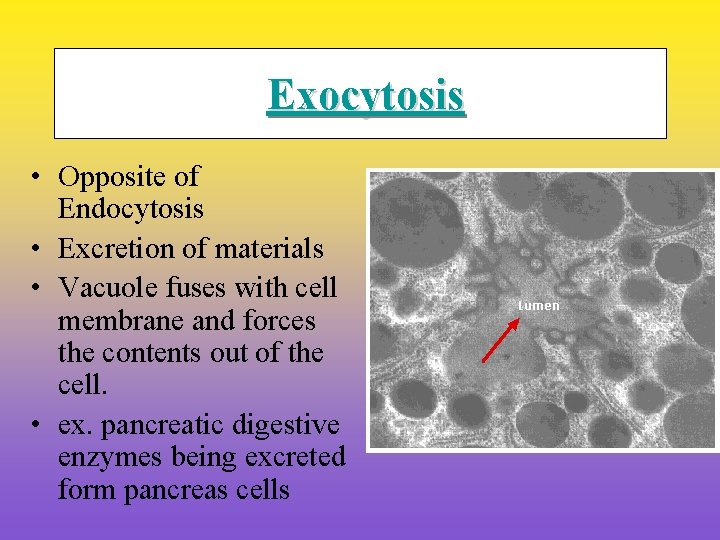
Exocytosis • Opposite of Endocytosis • Excretion of materials • Vacuole fuses with cell membrane and forces the contents out of the cell. • ex. pancreatic digestive enzymes being excreted form pancreas cells
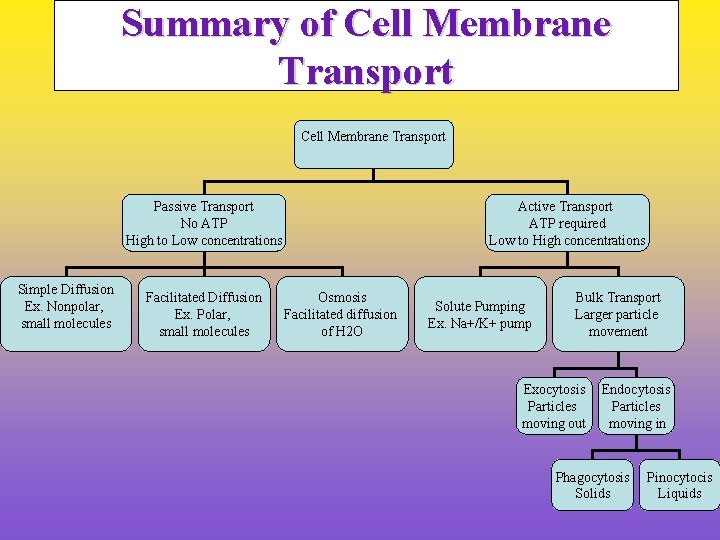
Summary of Cell Membrane Transport Passive Transport No ATP High to Low concentrations Simple Diffusion Ex. Nonpolar, small molecules Facilitated Diffusion Ex. Polar, small molecules Active Transport ATP required Low to High concentrations Osmosis Facilitated diffusion of H 2 O Solute Pumping Ex. Na+/K+ pump Bulk Transport Larger particle movement Exocytosis Particles moving out Endocytosis Particles moving in Phagocytosis Solids Pinocytocis Liquids
- Slides: 13