
Cell Transport Definition Activity Instructions Copy the organizer

- Slides: 15
Cell Transport Definition Activity Instructions: Copy the organizer below in your notebook. After looking at each slide, write down the major characteristics of each type of transport. Also answer the questions in your notebook as you come to them. You should already have the information for simple diffusion and osmosis. Therefore, these are not included in the slide presentation. Simple Diffusion Osmosis Facilitated Diffusion Active Transport Endocytosis Exocytosis
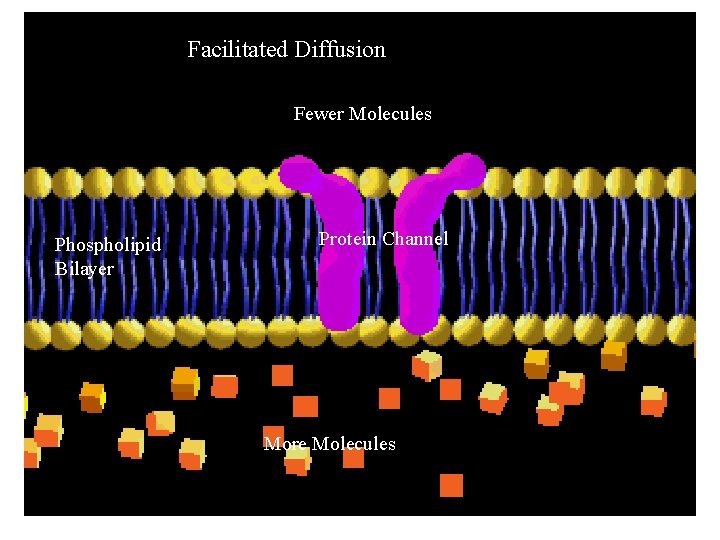
Facilitated Diffusion Fewer Molecules Phospholipid Bilayer Protein Channel More Molecules
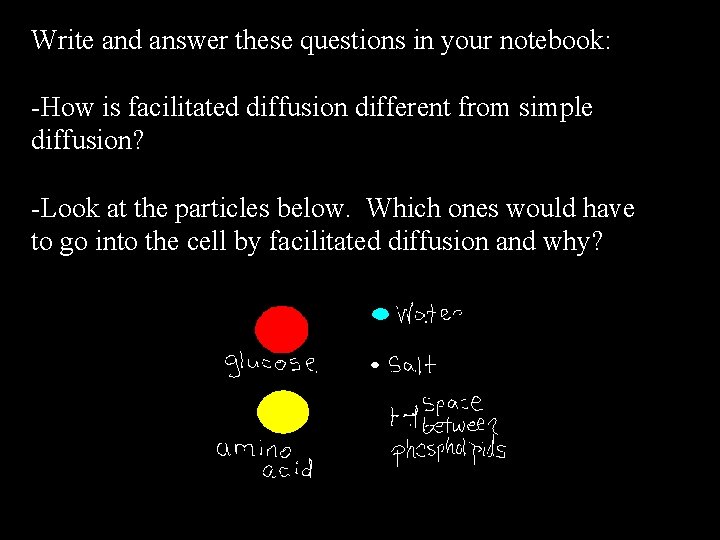
Write and answer these questions in your notebook: -How is facilitated diffusion different from simple diffusion? -Look at the particles below. Which ones would have to go into the cell by facilitated diffusion and why?
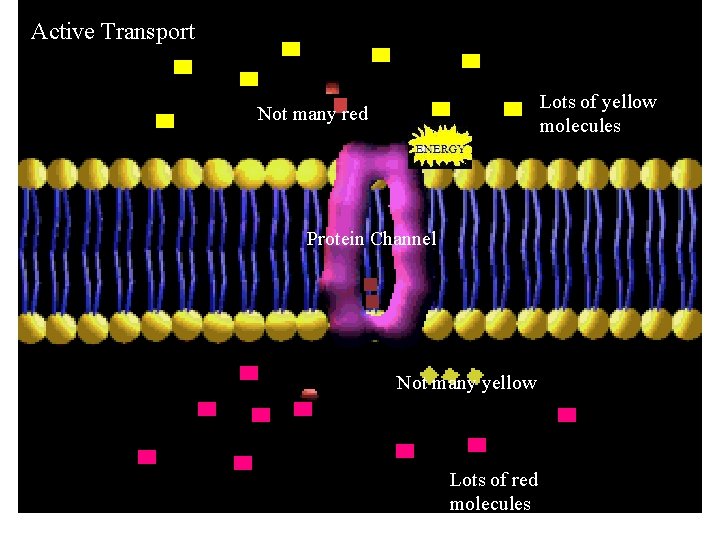
Active Transport Lots of yellow molecules Not many red Protein Channel Not many yellow Lots of red molecules
Write these questions and answer them in your notebook. -Under what circumstances would active transport be used? -Why is energy needed for this process but is not needed for osmosis, simple diffusion, and facilitated diffusion?
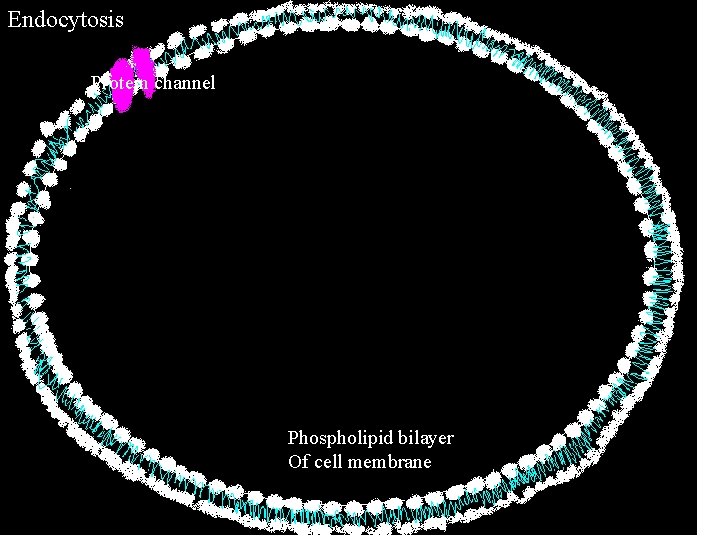
Endocytosis Protein channel Phospholipid bilayer Of cell membrane
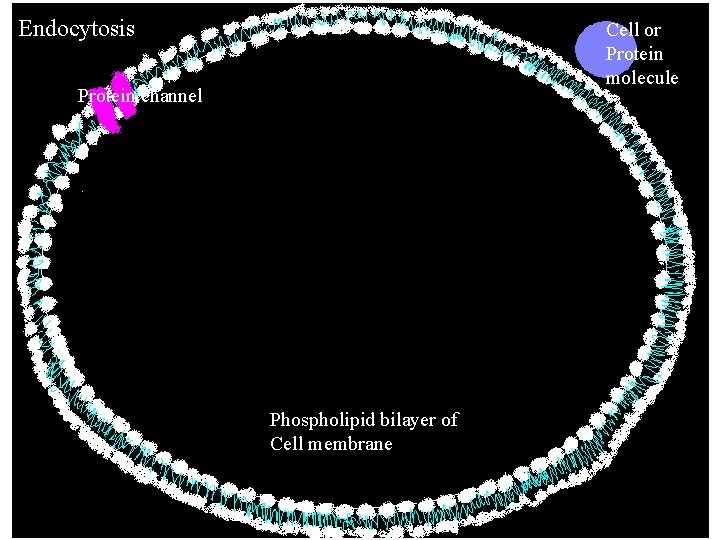
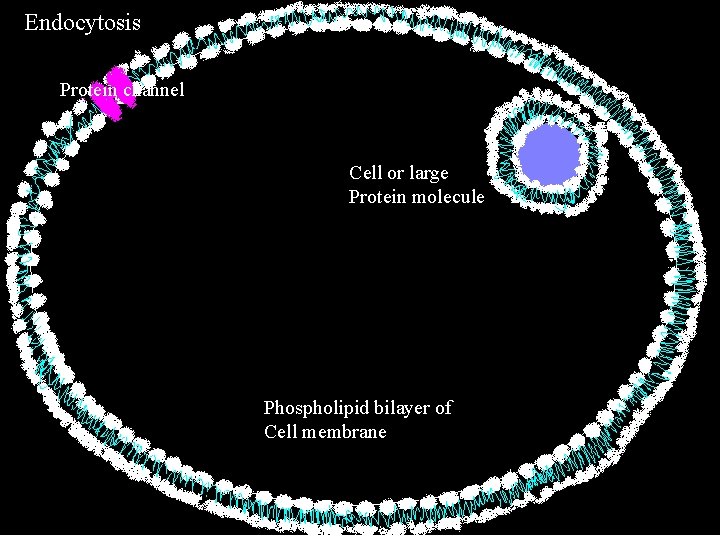
Endocytosis Cell or Protein molecule Protein channel Phospholipid bilayer of Cell membrane
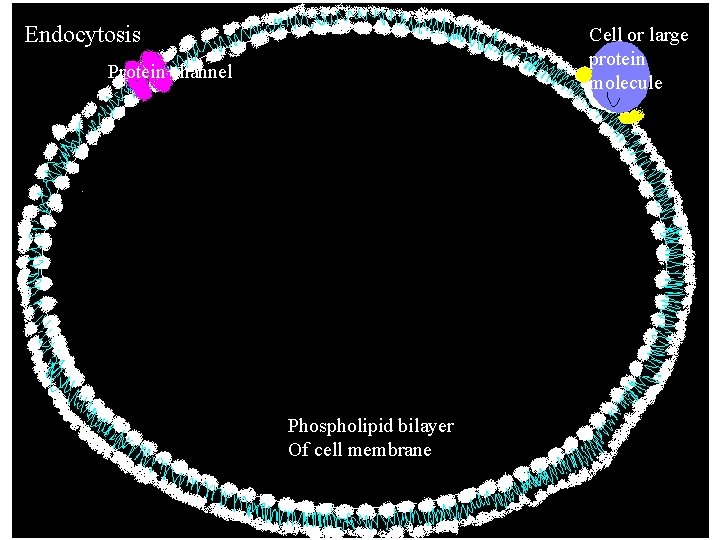
Endocytosis Cell or large protein molecule Protein channel Phospholipid bilayer Of cell membrane
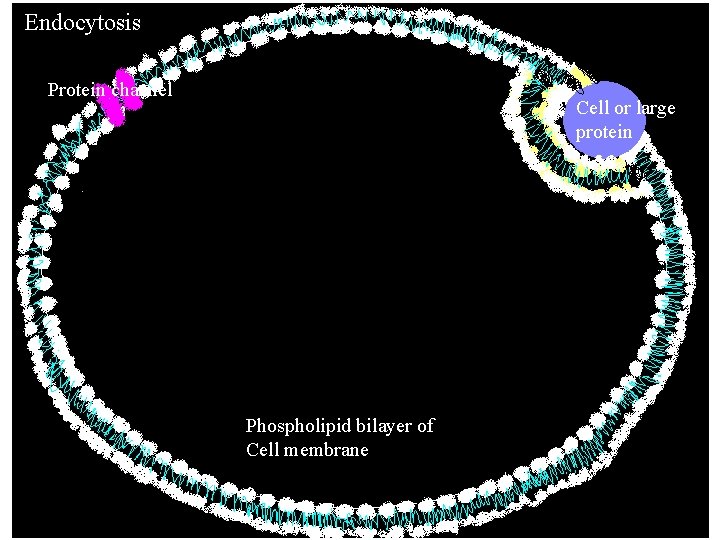
Endocytosis Protein channel Cell or large protein Phospholipid bilayer of Cell membrane
Endocytosis Protein channel Cell or large Protein molecule Phospholipid bilayer of Cell membrane
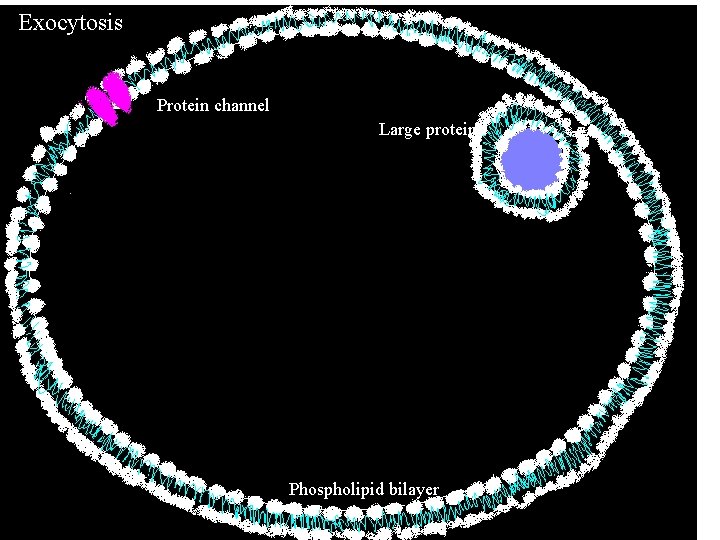
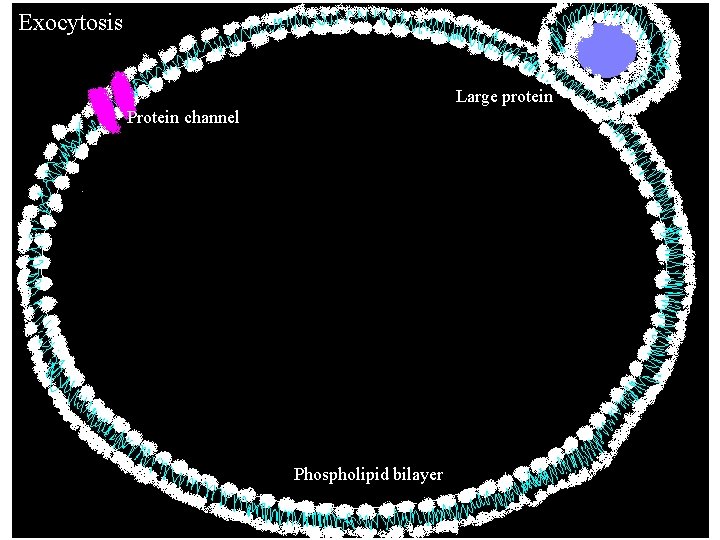
Exocytosis Protein channel Large protein Phospholipid bilayer
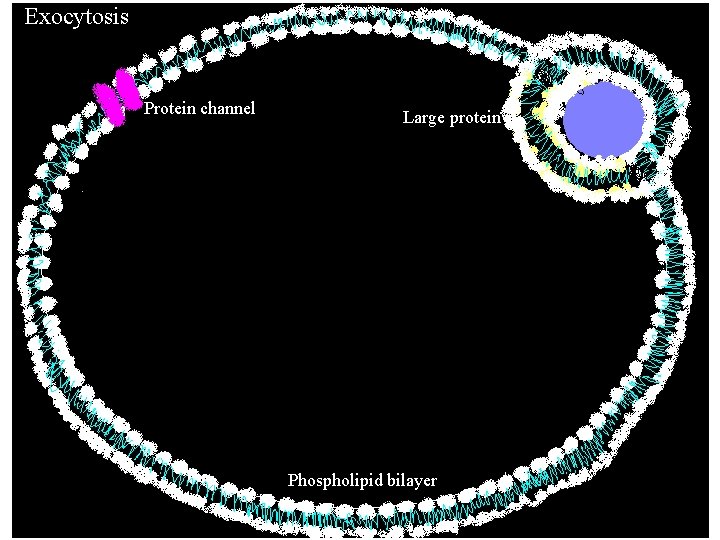
Exocytosis Protein channel Large protein Phospholipid bilayer
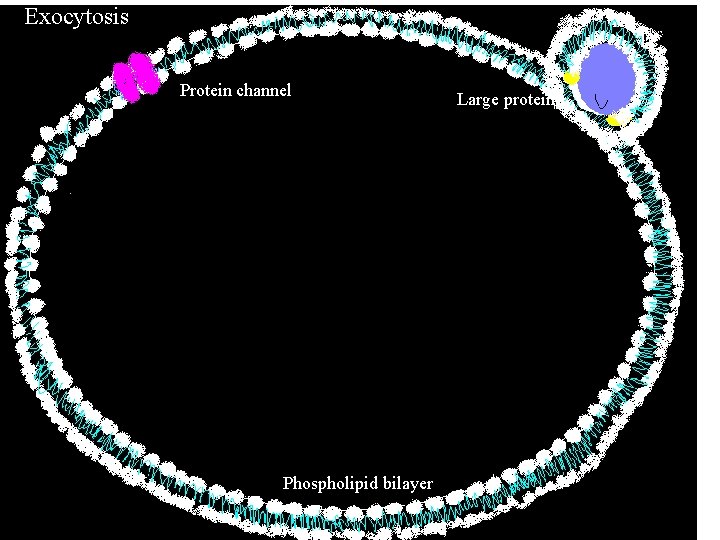
Exocytosis Protein channel Phospholipid bilayer Large protein
Exocytosis Large protein Protein channel Phospholipid bilayer
Answer the following questions in your notebook. -What is the difference between endocytosis and exocytosis? -What types of molecules have to use these processes to get into or out of cells? -Why can’t these molecules use simple or facilitated diffusion? -Like active transport, these processes require energy. Why do you think they do?