
CELL TRANSPORT Constant Motion of Molecules Kinetic Theory



- Slides: 36
CELL TRANSPORT
Constant Motion of Molecules Kinetic Theory of Matter Molecules move randomly and bump into each other and other barriers
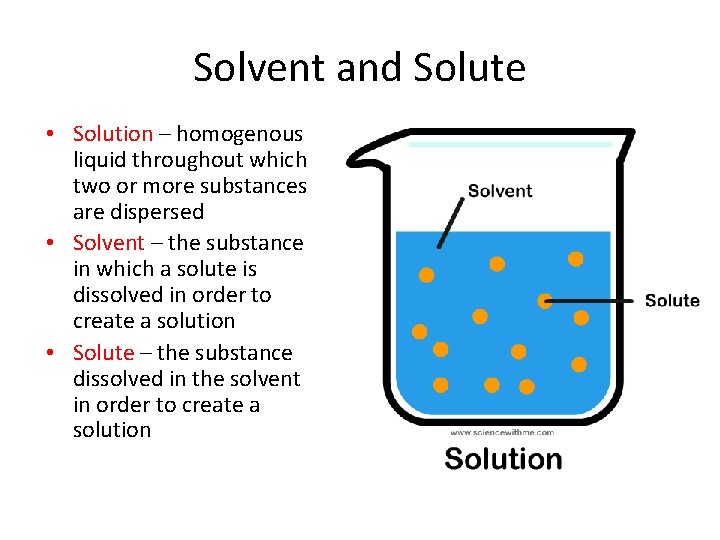
Solvent and Solute • Solution – homogenous liquid throughout which two or more substances are dispersed • Solvent – the substance in which a solute is dissolved in order to create a solution • Solute – the substance dissolved in the solvent in order to create a solution
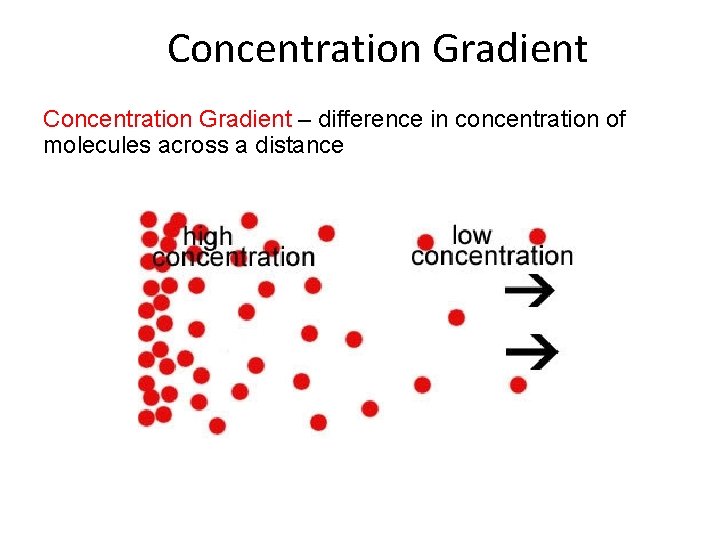
Concentration Gradient – difference in concentration of molecules across a distance
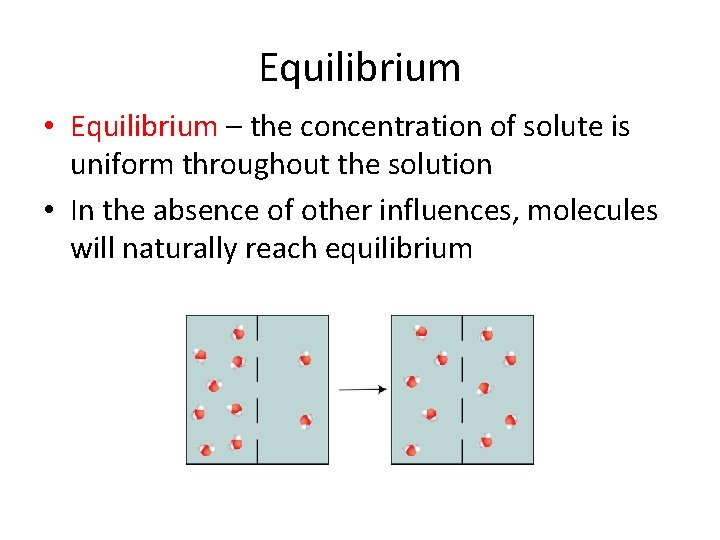
Equilibrium • Equilibrium – the concentration of solute is uniform throughout the solution • In the absence of other influences, molecules will naturally reach equilibrium
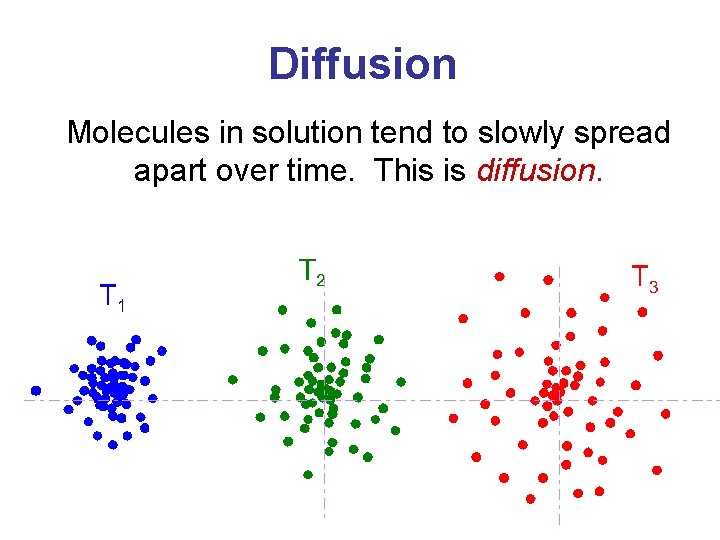
Diffusion Molecules in solution tend to slowly spread apart over time. This is diffusion.
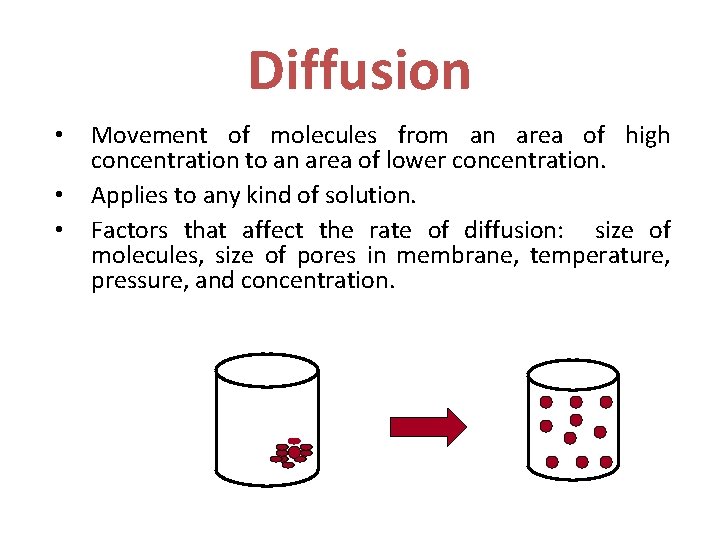
Diffusion • • • Movement of molecules from an area of high concentration to an area of lower concentration. Applies to any kind of solution. Factors that affect the rate of diffusion: size of molecules, size of pores in membrane, temperature, pressure, and concentration.
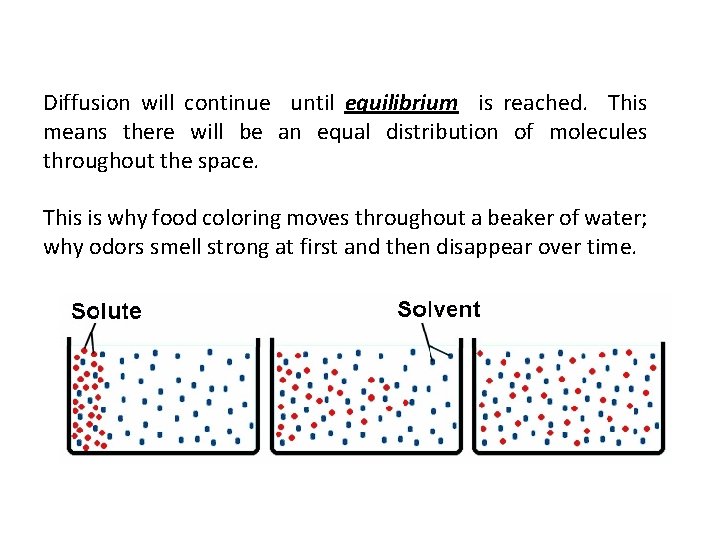
Diffusion will continue until equilibrium is reached. This means there will be an equal distribution of molecules throughout the space. This is why food coloring moves throughout a beaker of water; why odors smell strong at first and then disappear over time.
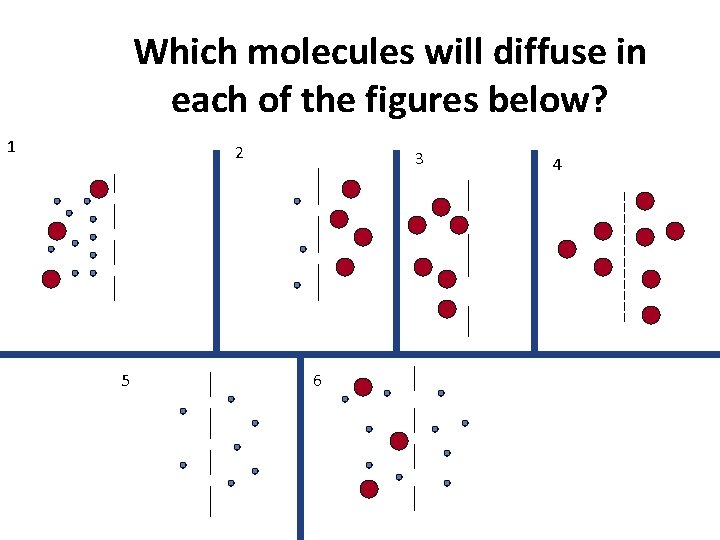
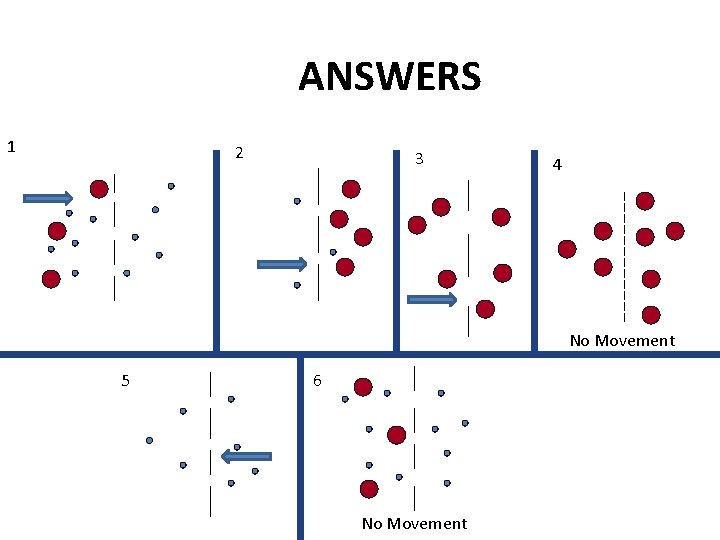
Which molecules will diffuse in each of the figures below? 1 2 5 3 6 4
ANSWERS 1 2 3 4 No Movement 5 6 No Movement
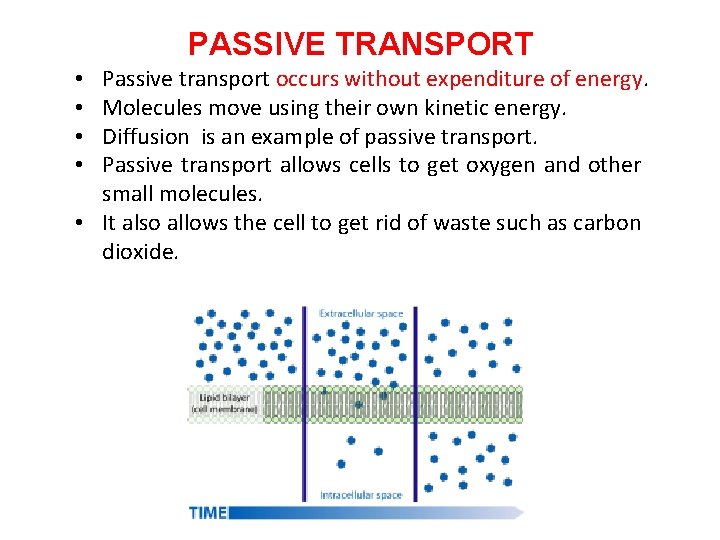
PASSIVE TRANSPORT Passive transport occurs without expenditure of energy. Molecules move using their own kinetic energy. Diffusion is an example of passive transport. Passive transport allows cells to get oxygen and other small molecules. • It also allows the cell to get rid of waste such as carbon dioxide. • •
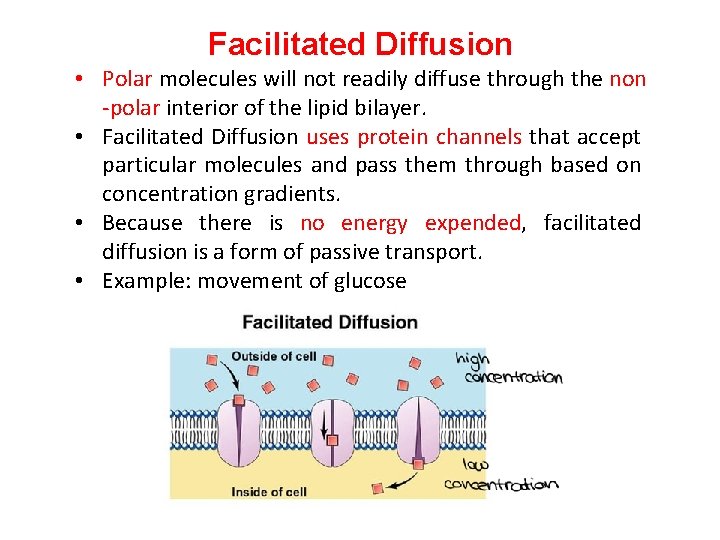
Facilitated Diffusion • Polar molecules will not readily diffuse through the non -polar interior of the lipid bilayer. • Facilitated Diffusion uses protein channels that accept particular molecules and pass them through based on concentration gradients. • Because there is no energy expended, facilitated diffusion is a form of passive transport. • Example: movement of glucose
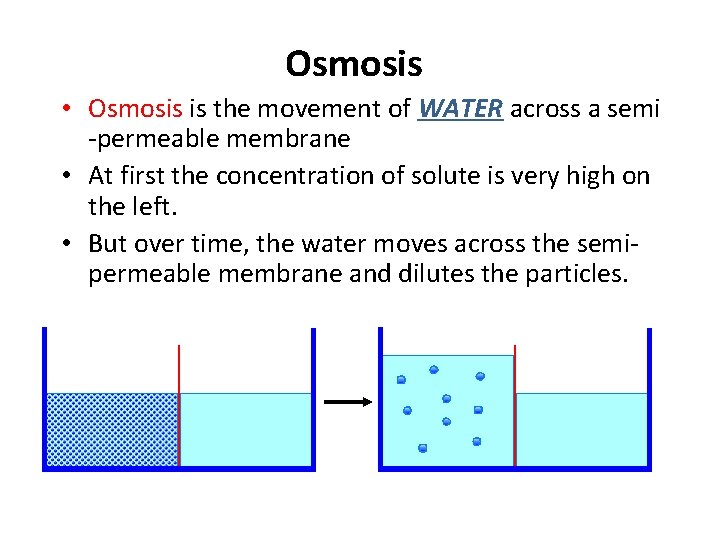
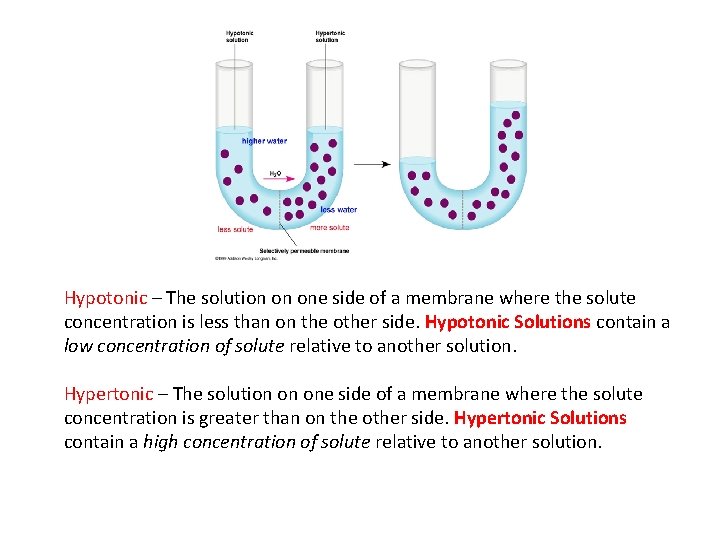
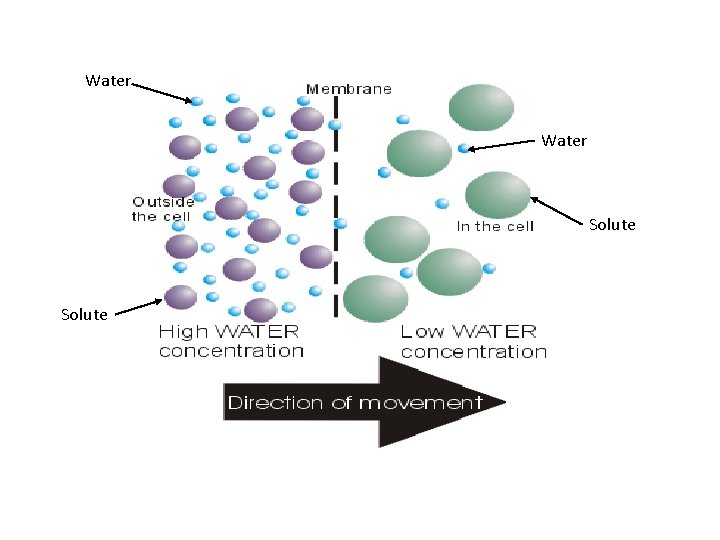
Osmosis • Osmosis is the movement of WATER across a semi -permeable membrane • At first the concentration of solute is very high on the left. • But over time, the water moves across the semipermeable membrane and dilutes the particles.
Hypotonic – The solution on one side of a membrane where the solute concentration is less than on the other side. Hypotonic Solutions contain a low concentration of solute relative to another solution. Hypertonic – The solution on one side of a membrane where the solute concentration is greater than on the other side. Hypertonic Solutions contain a high concentration of solute relative to another solution.
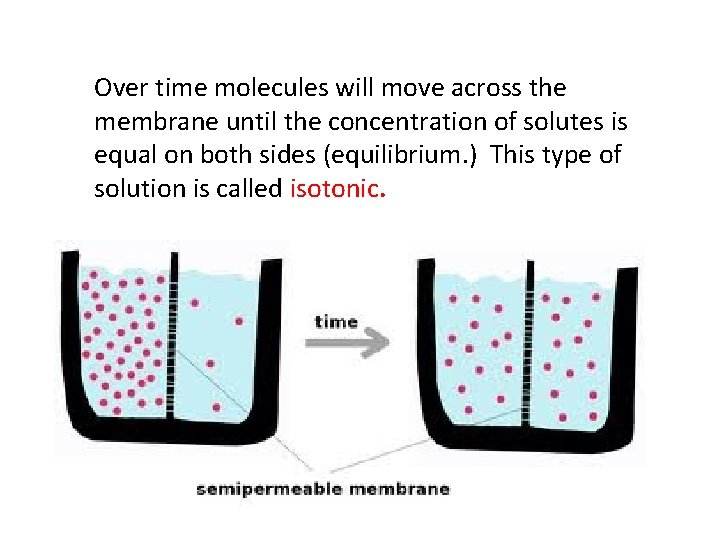
Over time molecules will move across the membrane until the concentration of solutes is equal on both sides (equilibrium. ) This type of solution is called isotonic.
Water Solute
Osmosis in Cells • • Diffusion of water across a selectively permeable membrane (a barrier that allows some substances to pass but not others). The cell membrane is such a barrier. Small molecules pass through – ex: oxygen, carbon dioxide (lipid soluble) Large molecules can’t pass through – ex: proteins and complex carbohydrates Water is a polar molecule so uses facilitated diffusion through specialized proteins called water channels.
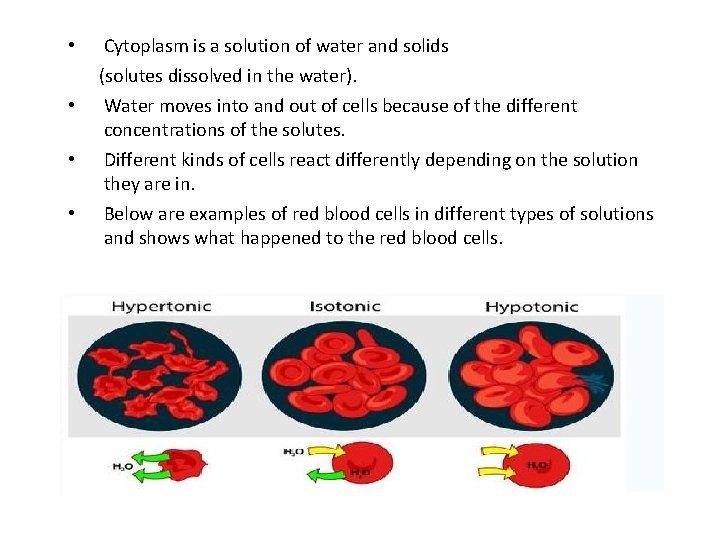
• • Cytoplasm is a solution of water and solids (solutes dissolved in the water). Water moves into and out of cells because of the different concentrations of the solutes. Different kinds of cells react differently depending on the solution they are in. Below are examples of red blood cells in different types of solutions and shows what happened to the red blood cells.
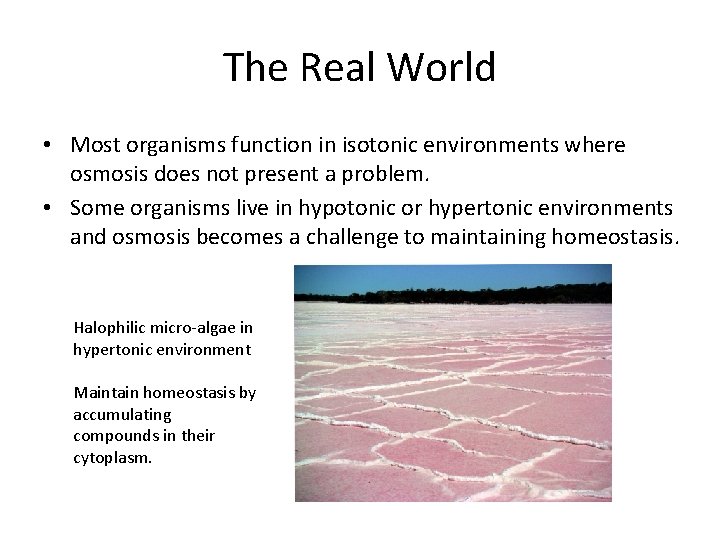
The Real World • Most organisms function in isotonic environments where osmosis does not present a problem. • Some organisms live in hypotonic or hypertonic environments and osmosis becomes a challenge to maintaining homeostasis. Halophilic micro-algae in hypertonic environment Maintain homeostasis by accumulating compounds in their cytoplasm.
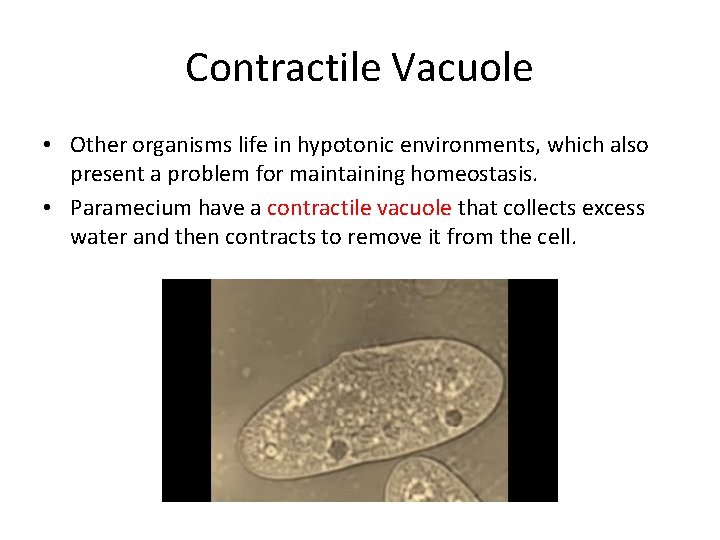
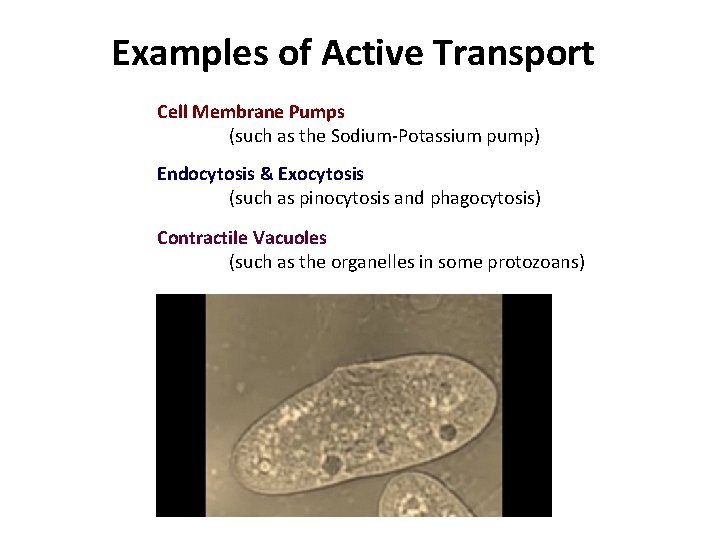
Contractile Vacuole • Other organisms life in hypotonic environments, which also present a problem for maintaining homeostasis. • Paramecium have a contractile vacuole that collects excess water and then contracts to remove it from the cell.
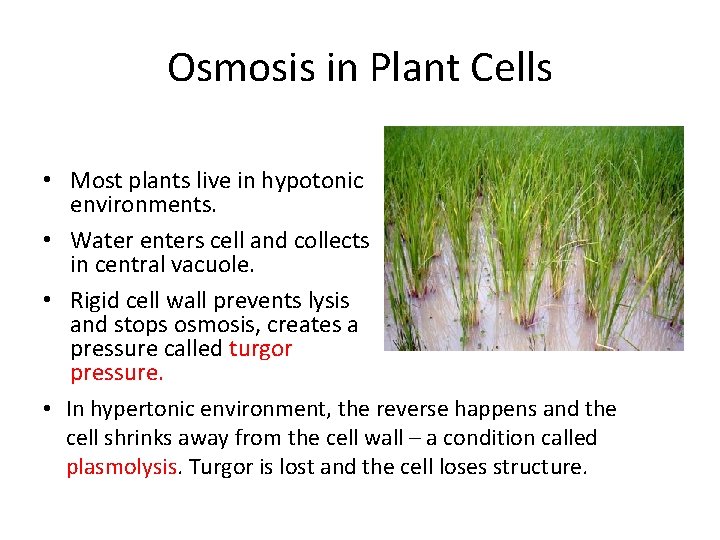
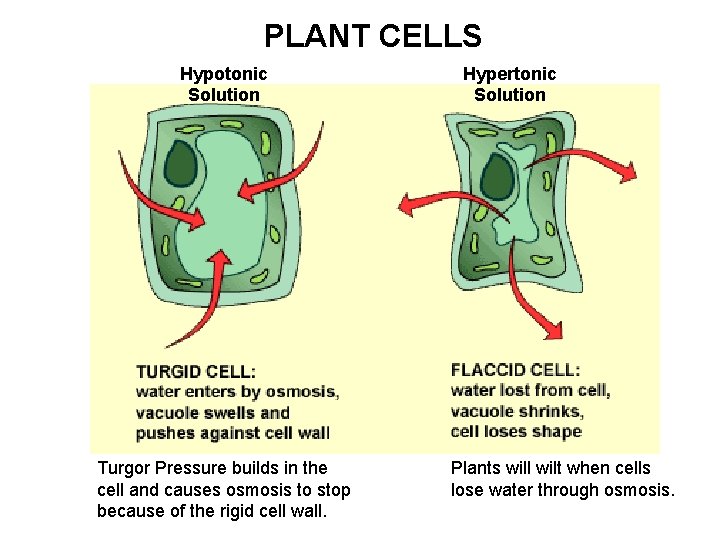
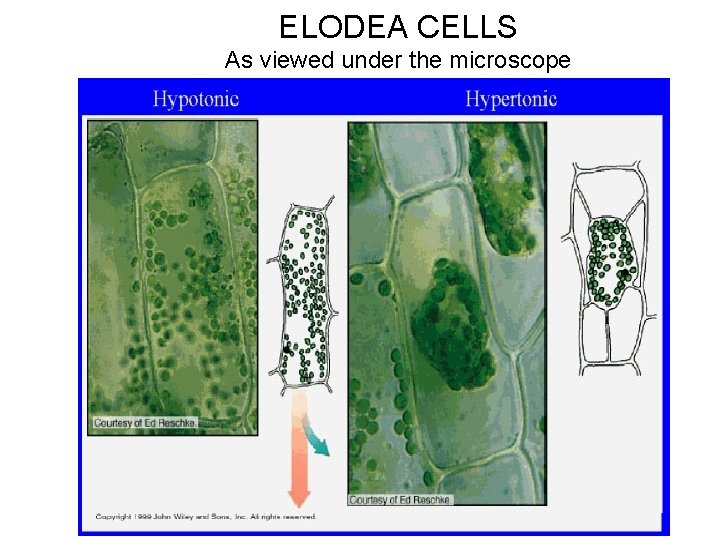
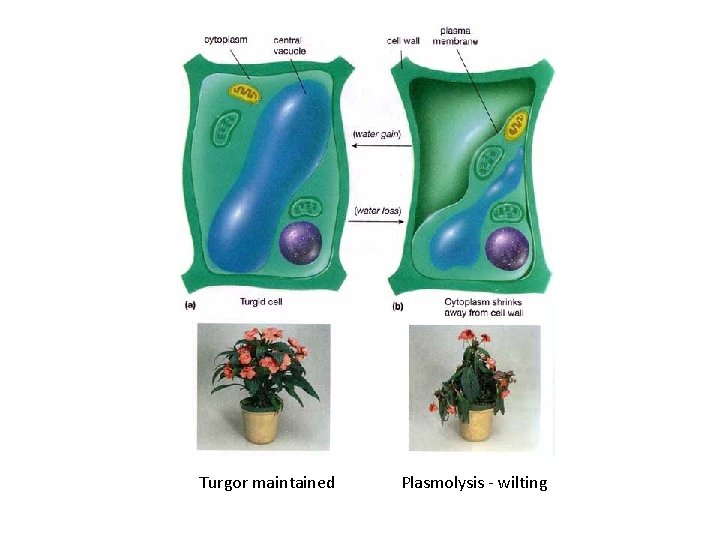
Osmosis in Plant Cells • Most plants live in hypotonic environments. • Water enters cell and collects in central vacuole. • Rigid cell wall prevents lysis and stops osmosis, creates a pressure called turgor pressure. • In hypertonic environment, the reverse happens and the cell shrinks away from the cell wall – a condition called plasmolysis. Turgor is lost and the cell loses structure.
PLANT CELLS Hypotonic Solution Turgor Pressure builds in the cell and causes osmosis to stop because of the rigid cell wall. Hypertonic Solution Plants will wilt when cells lose water through osmosis.
ELODEA CELLS As viewed under the microscope
Turgor maintained Plasmolysis - wilting
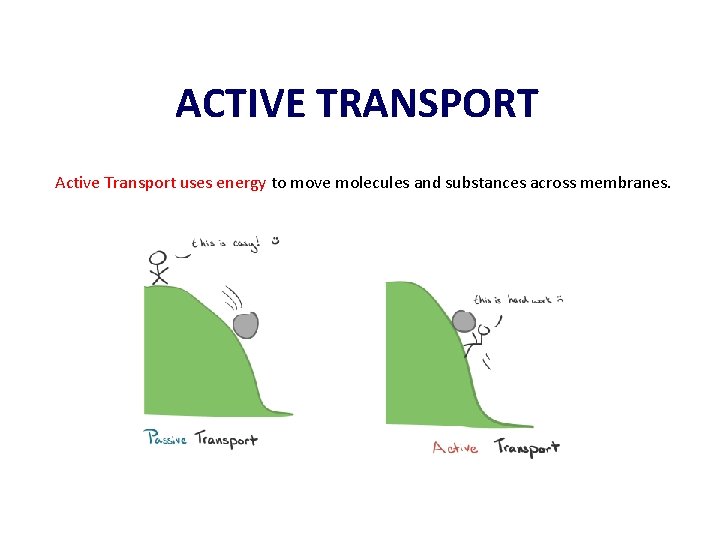
ACTIVE TRANSPORT Active Transport uses energy to move molecules and substances across membranes.
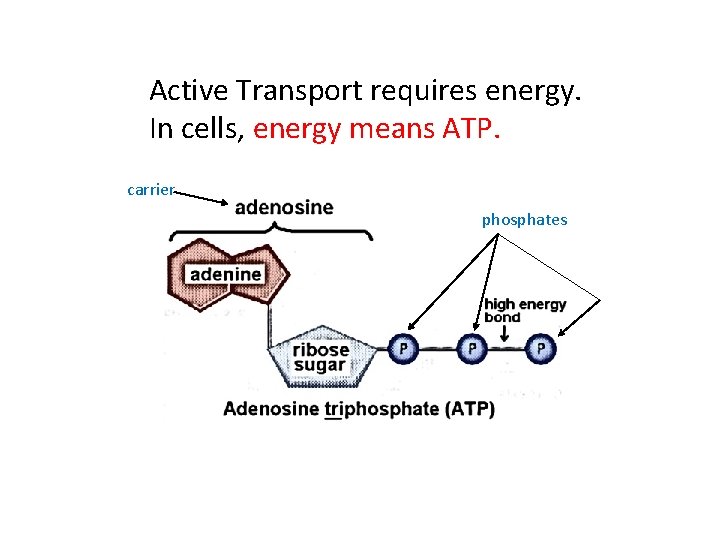
Active Transport requires energy. In cells, energy means ATP. carrier phosphates
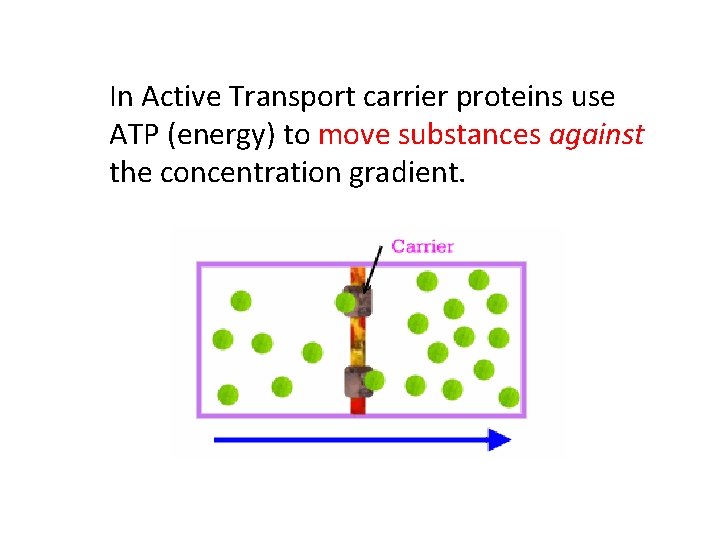
In Active Transport carrier proteins use ATP (energy) to move substances against the concentration gradient.
Examples of Active Transport Cell Membrane Pumps (such as the Sodium-Potassium pump) Endocytosis & Exocytosis (such as pinocytosis and phagocytosis) Contractile Vacuoles (such as the organelles in some protozoans)
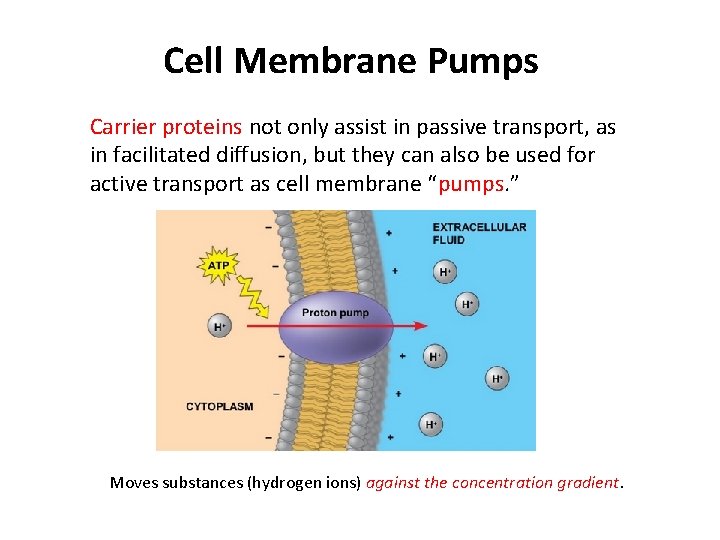
Cell Membrane Pumps Carrier proteins not only assist in passive transport, as in facilitated diffusion, but they can also be used for active transport as cell membrane “pumps. ” Moves substances (hydrogen ions) against the concentration gradient.
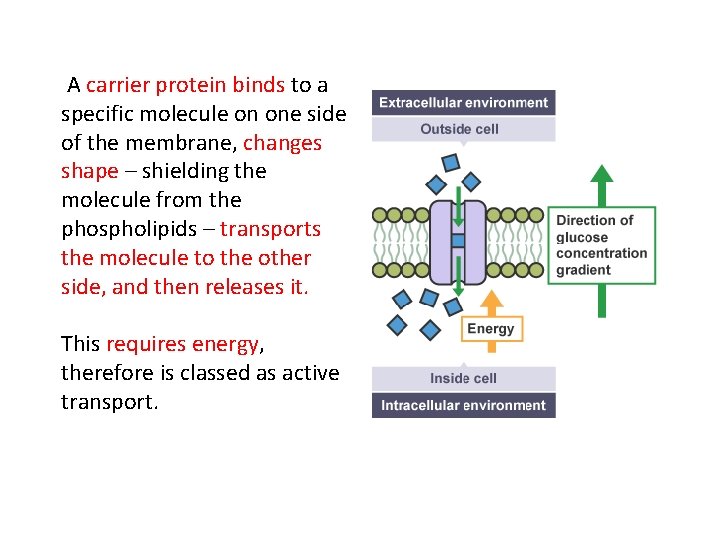
A carrier protein binds to a specific molecule on one side of the membrane, changes shape – shielding the molecule from the phospholipids – transports the molecule to the other side, and then releases it. This requires energy, therefore is classed as active transport.
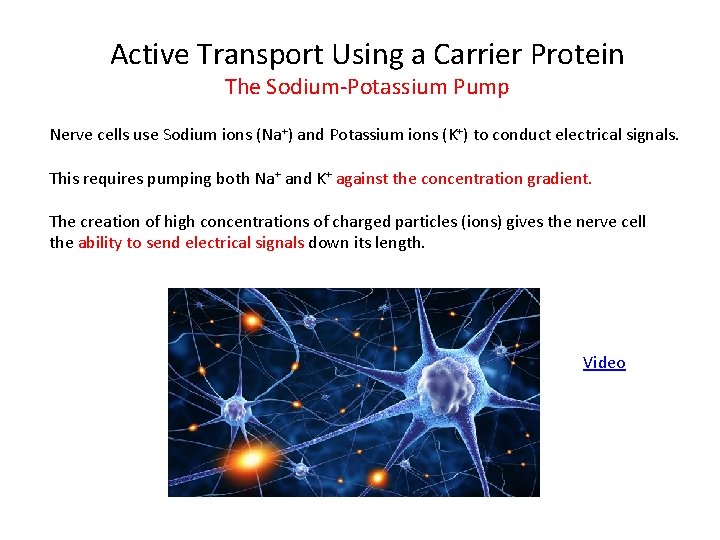
Active Transport Using a Carrier Protein The Sodium-Potassium Pump Nerve cells use Sodium ions (Na+) and Potassium ions (K+) to conduct electrical signals. This requires pumping both Na+ and K+ against the concentration gradient. The creation of high concentrations of charged particles (ions) gives the nerve cell the ability to send electrical signals down its length. Video
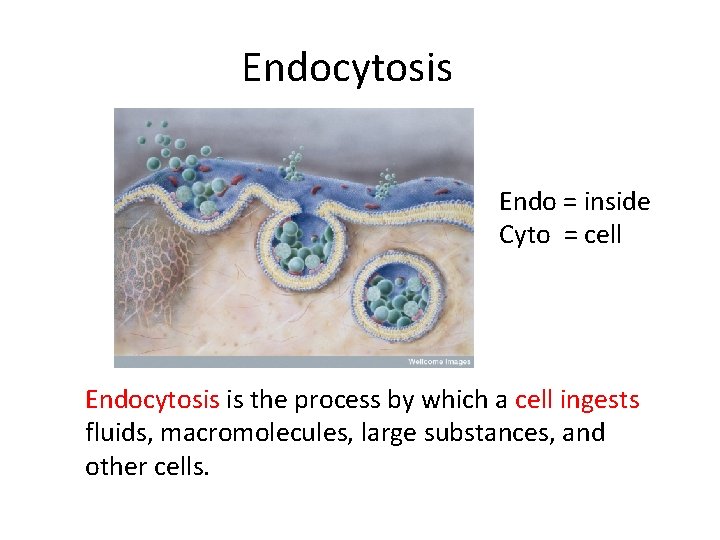
Endocytosis Endo = inside Cyto = cell Endocytosis is the process by which a cell ingests fluids, macromolecules, large substances, and other cells.
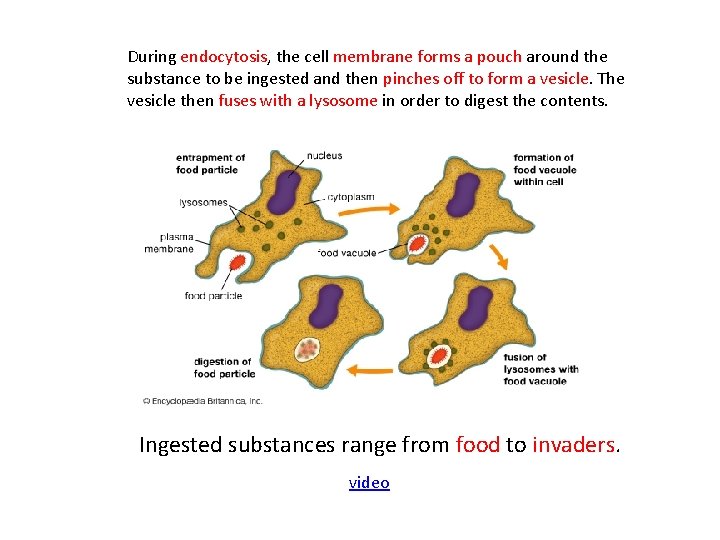
During endocytosis, the cell membrane forms a pouch around the substance to be ingested and then pinches off to form a vesicle. The vesicle then fuses with a lysosome in order to digest the contents. Ingested substances range from food to invaders. video
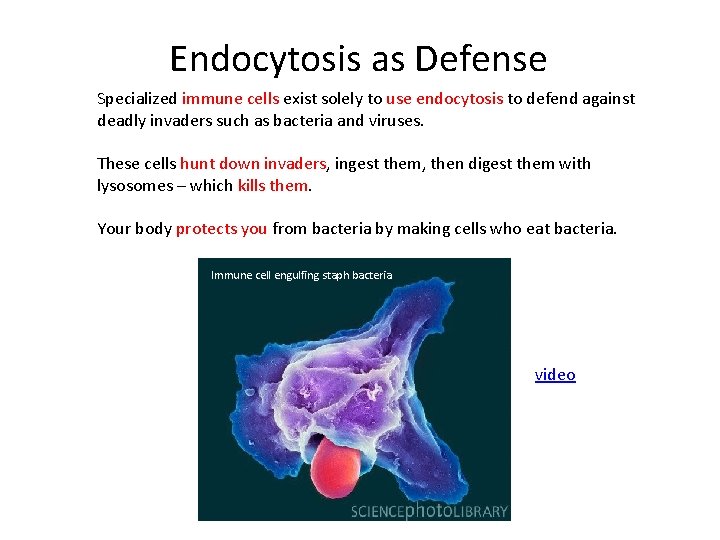
Endocytosis as Defense Specialized immune cells exist solely to use endocytosis to defend against deadly invaders such as bacteria and viruses. These cells hunt down invaders, ingest them, then digest them with lysosomes – which kills them. Your body protects you from bacteria by making cells who eat bacteria. Immune cell engulfing staph bacteria. video
Exocytosis Exo = outside Cyto = cell Exocytosis is the process by which vesicles fuse with the cell membrane and release their contents to the outside, thus removing the substances from the cell.
Cells use exocytosis to release large molecules, such as proteins, from the cell into the surrounding environment. Cells, especially unicellular organisms, can also use exocytosis to expel wastes. Video