
Cell Transport Cell Transport Every living organisms must
- Slides: 12
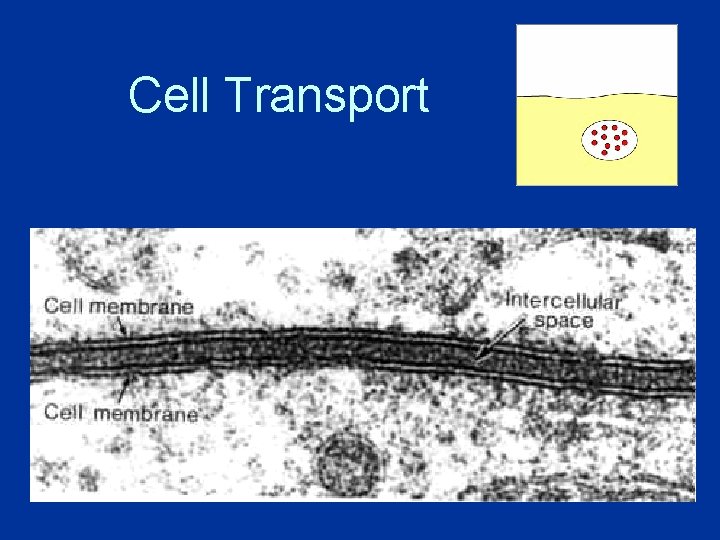
Cell Transport
Cell Transport Every living organisms must maintain homeostasis in order to survive. Homeostasis – the ability to maintain a stable environment Examples? - temperature, water, nutrient levels, hormones….
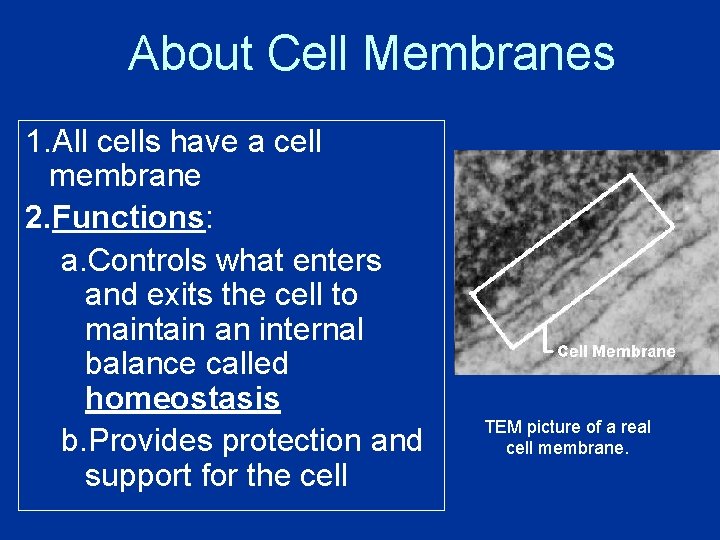
About Cell Membranes 1. All cells have a cell membrane 2. Functions: a. Controls what enters and exits the cell to maintain an internal balance called homeostasis b. Provides protection and support for the cell TEM picture of a real cell membrane.
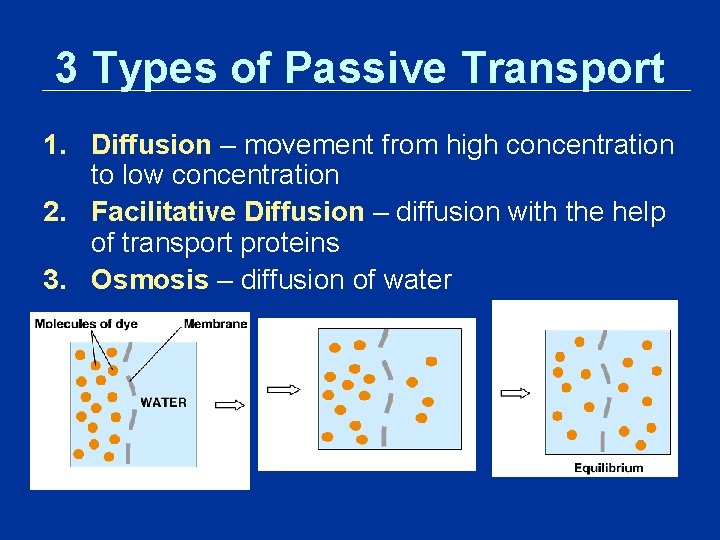
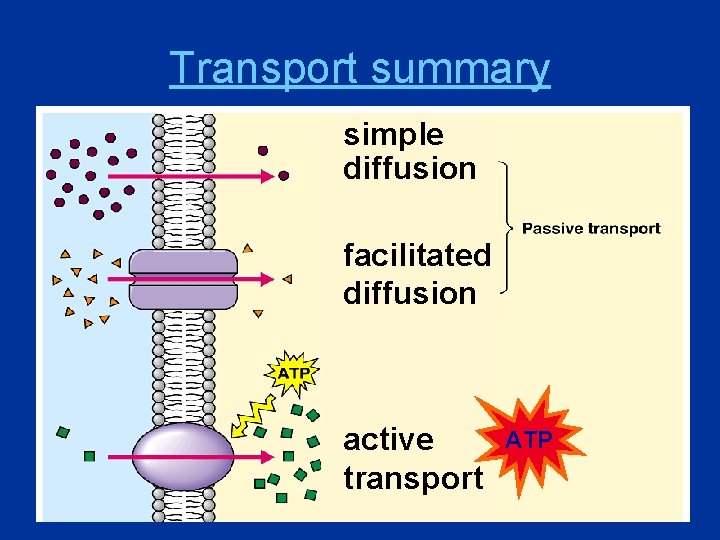
3 Types of Passive Transport 1. Diffusion – movement from high concentration to low concentration 2. Facilitative Diffusion – diffusion with the help of transport proteins 3. Osmosis – diffusion of water
Active Transport • cell uses energy • actively moves molecules to where they are needed • Movement from an area of low concentration to an area of high concentration • (Low High) • Three Types:
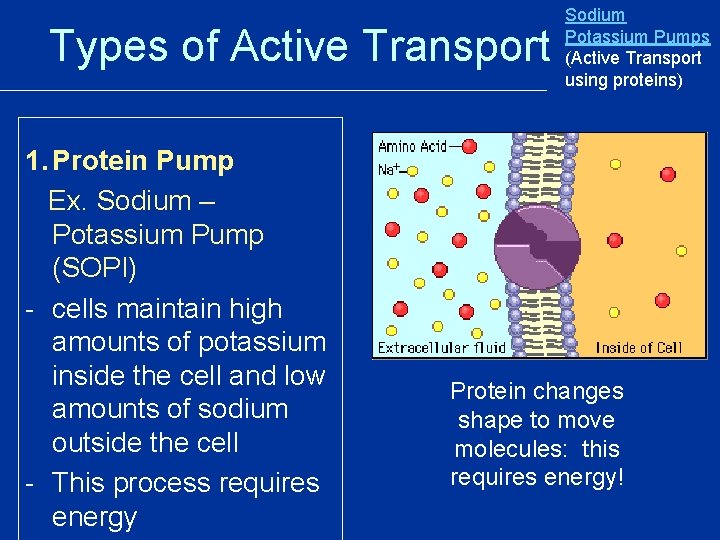
Types of Active Transport 1. Protein Pump Ex. Sodium – Potassium Pump (SOPI) - cells maintain high amounts of potassium inside the cell and low amounts of sodium outside the cell - This process requires energy Sodium Potassium Pumps (Active Transport using proteins) Protein changes shape to move molecules: this requires energy!
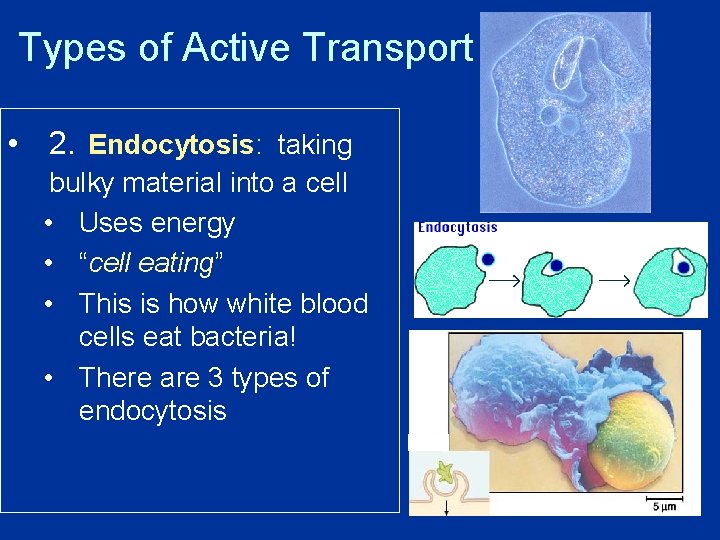
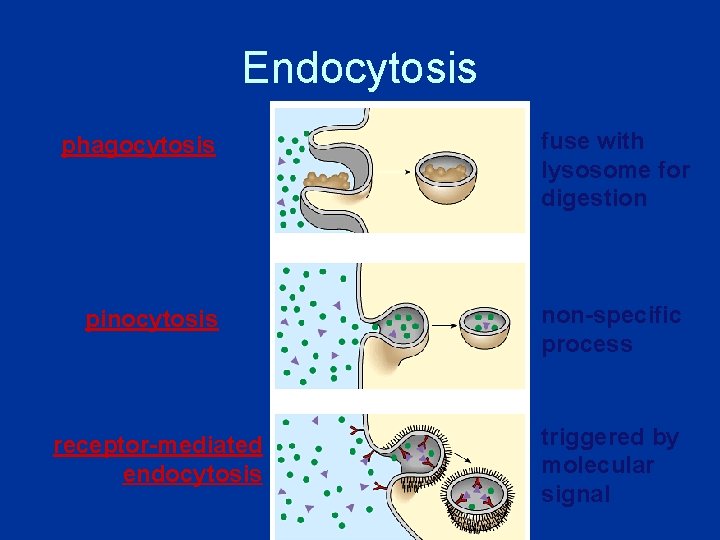
Types of Active Transport • 2. Endocytosis: taking bulky material into a cell • Uses energy • “cell eating” • This is how white blood cells eat bacteria! • There are 3 types of endocytosis
Types of Active Transport 3 Types of Endocytosis 1. Pinocytosis – moves liquids containing small dissolved particles into the cell. (“cell drinking”) – used by the intestines 2. Phagocytosis – moves large particles into the cell. (“cell eating”) 3. Receptor-Assisted Endocytosis – specific molecules attract to receptors on the cell membrane and this triggers the intake of the molecules via endocytosis. Lock-and-key mechanism – used by cells to bring in cholesterol
Endocytosis phagocytosis fuse with lysosome for digestion pinocytosis non-specific process receptor-mediated endocytosis triggered by molecular signal
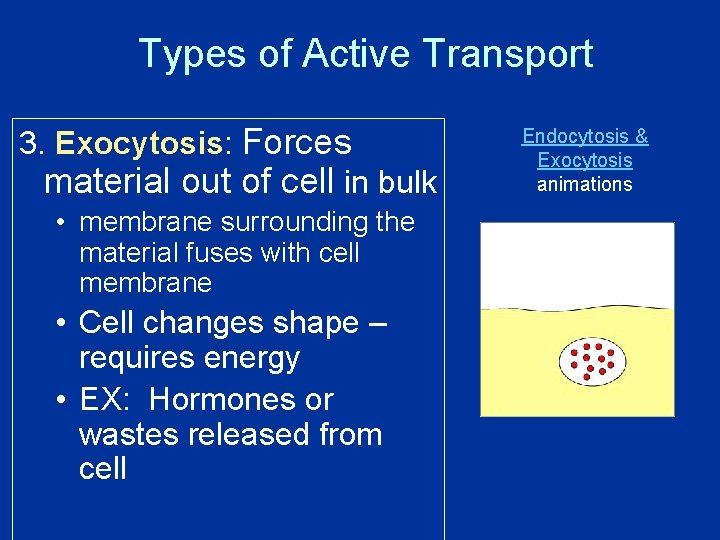
Types of Active Transport 3. Exocytosis: Forces material out of cell in bulk • membrane surrounding the material fuses with cell membrane • Cell changes shape – requires energy • EX: Hormones or wastes released from cell Endocytosis & Exocytosis animations
Transport summary simple diffusion facilitated diffusion active transport ATP
Summary Continued • Animations of Active Transport & Passive Transport • Summary video • Text page 70 # 16 -18 • Page 71 #1 -6, 8 -10