
Cell Transport AP BIOLOGY CH 7 Cell Membrane
Cell Transport AP BIOLOGY CH 7
Cell Membrane Structure & Function FLUID MOSAIC MODEL
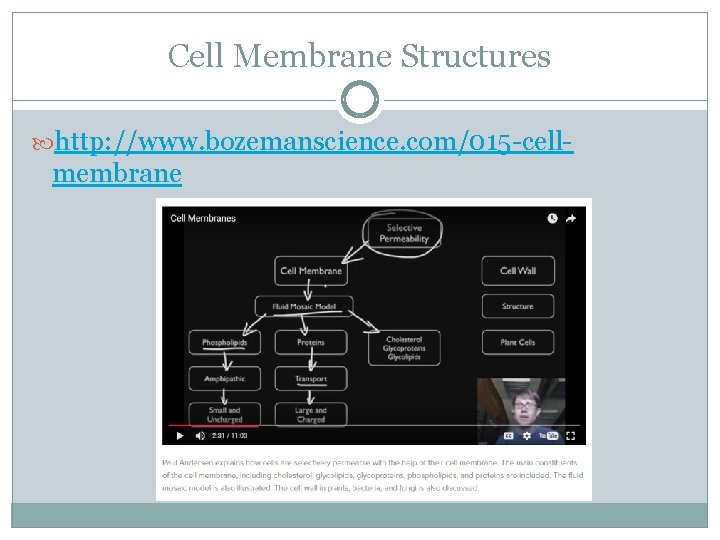
Cell Membrane Structures http: //www. bozemanscience. com/015 -cell- membrane
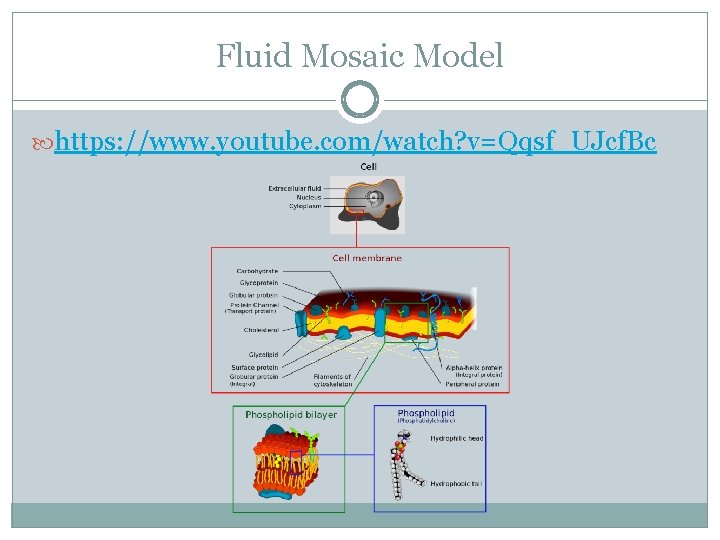
Fluid Mosaic Model https: //www. youtube. com/watch? v=Qqsf_UJcf. Bc
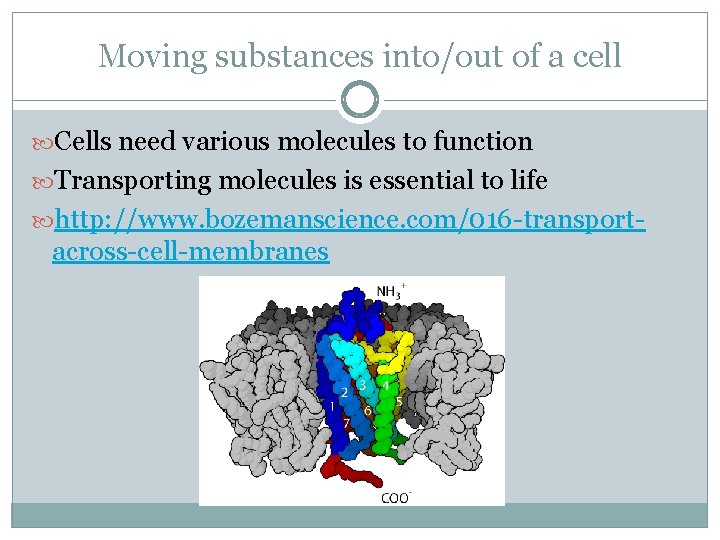
Moving substances into/out of a cell Cells need various molecules to function Transporting molecules is essential to life http: //www. bozemanscience. com/016 -transport- across-cell-membranes
Passive Transport
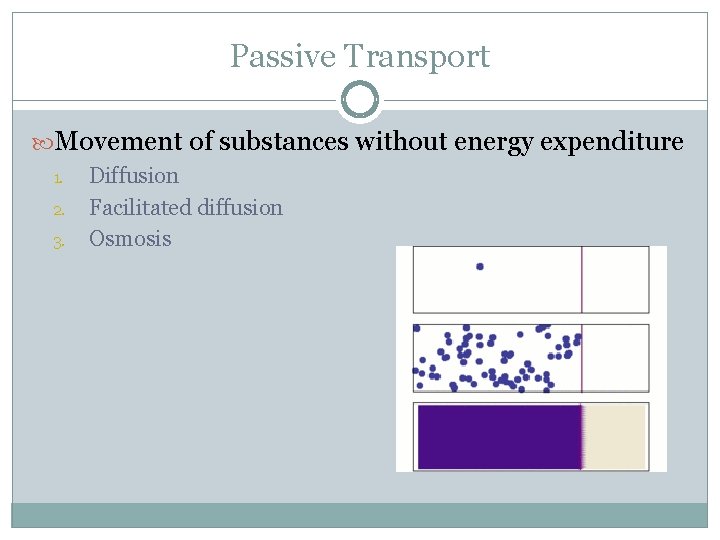
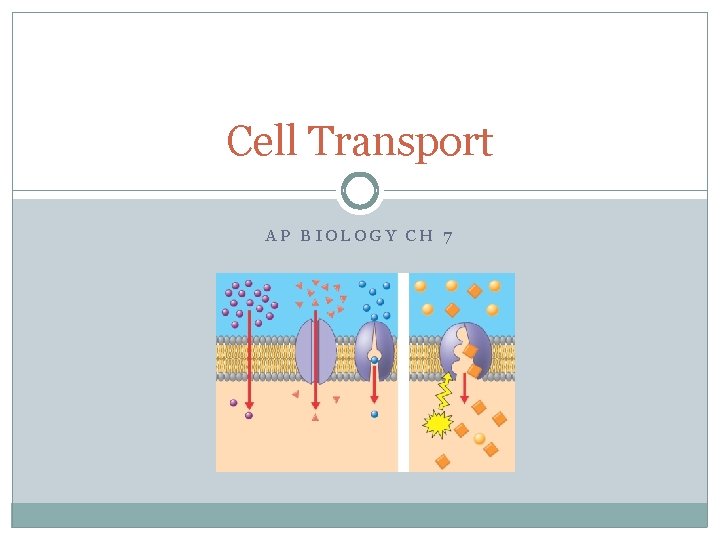
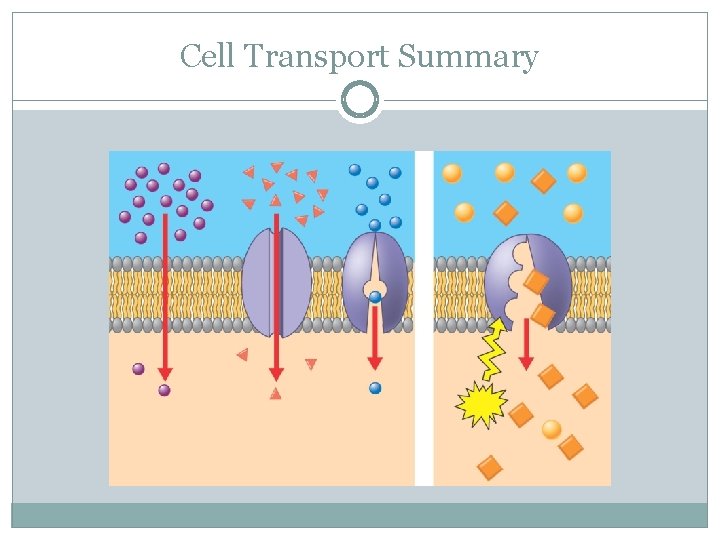
Passive Transport Movement of substances without energy expenditure 1. 2. 3. Diffusion Facilitated diffusion Osmosis
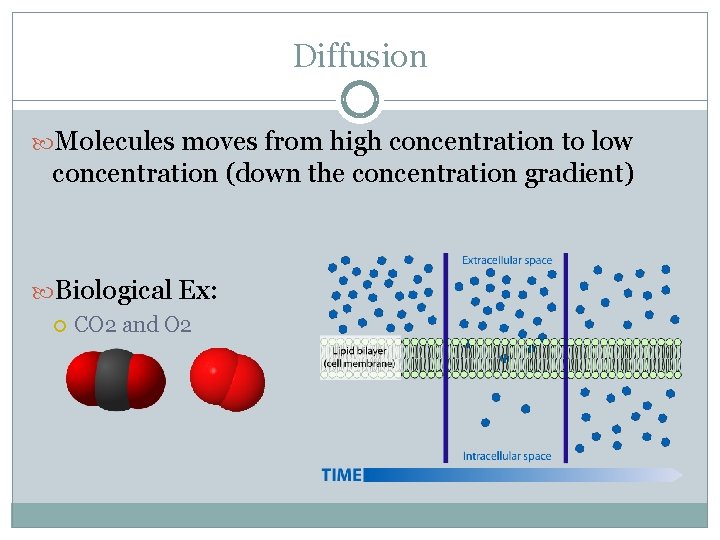
Diffusion Molecules moves from high concentration to low concentration (down the concentration gradient) Biological Ex: CO 2 and O 2
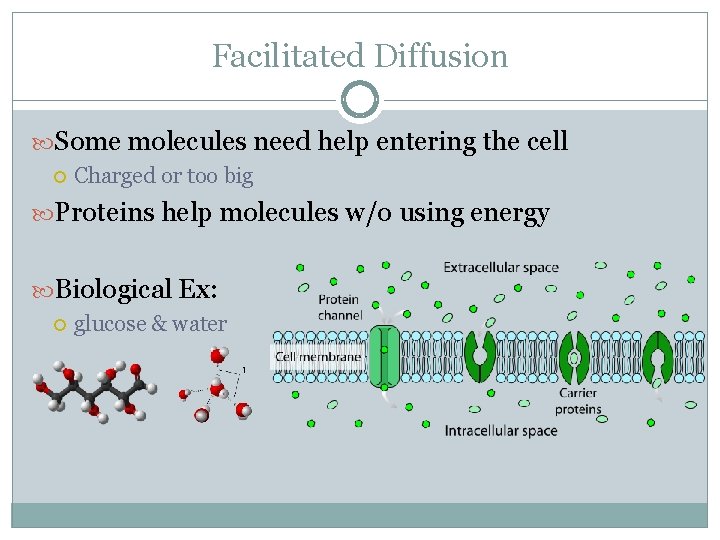
Facilitated Diffusion Some molecules need help entering the cell Charged or too big Proteins help molecules w/o using energy Biological Ex: glucose & water
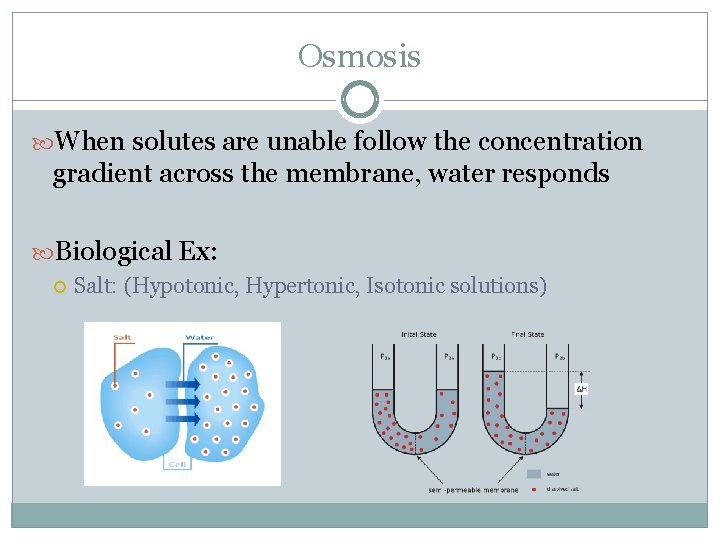
Osmosis When solutes are unable follow the concentration gradient across the membrane, water responds Biological Ex: Salt: (Hypotonic, Hypertonic, Isotonic solutions)
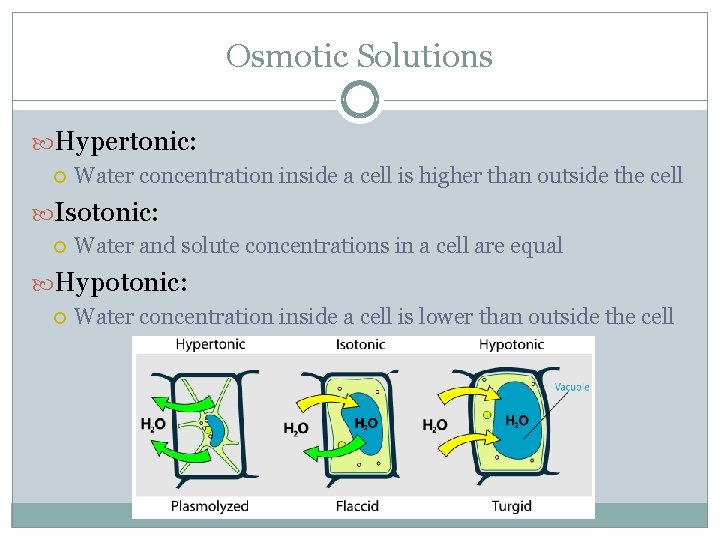
Osmotic Solutions Hypertonic: Water concentration inside a cell is higher than outside the cell Isotonic: Water and solute concentrations in a cell are equal Hypotonic: Water concentration inside a cell is lower than outside the cell
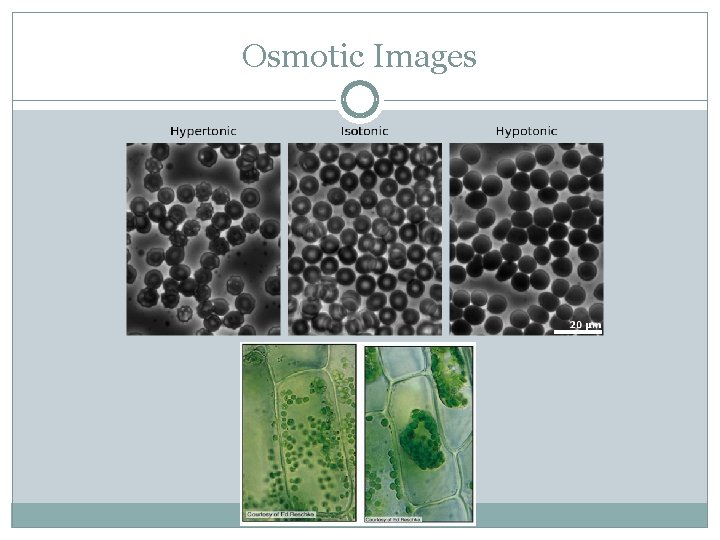
Osmotic Images
Water Potential
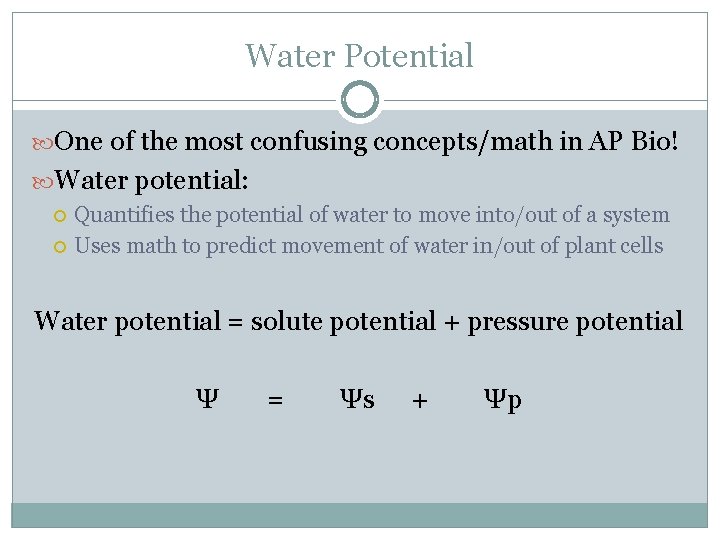
Water Potential One of the most confusing concepts/math in AP Bio! Water potential: Quantifies the potential of water to move into/out of a system Uses math to predict movement of water in/out of plant cells Water potential = solute potential + pressure potential Ψ = Ψs + Ψp
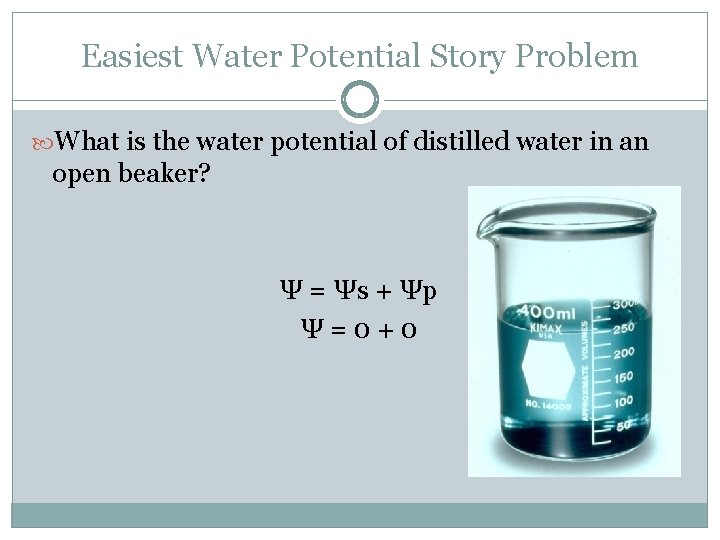
Easiest Water Potential Story Problem What is the water potential of distilled water in an open beaker? Ψ = Ψs + Ψp Ψ=0+0
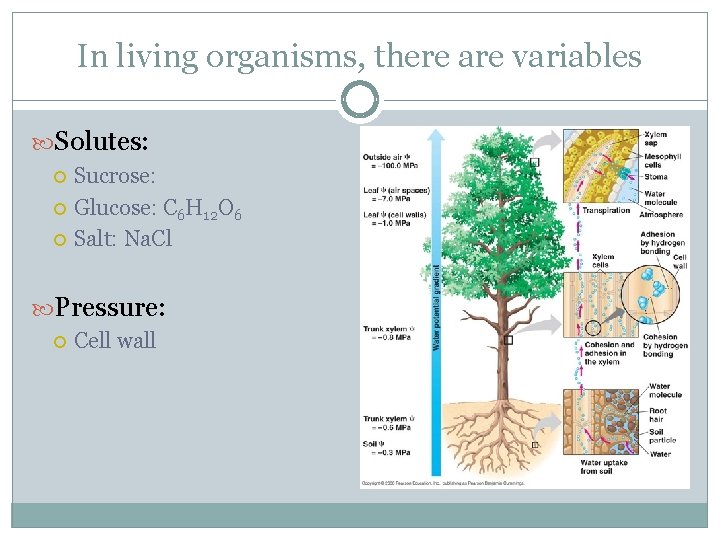
In living organisms, there are variables Solutes: Sucrose: Glucose: C 6 H 12 O 6 Salt: Na. Cl Pressure: Cell wall
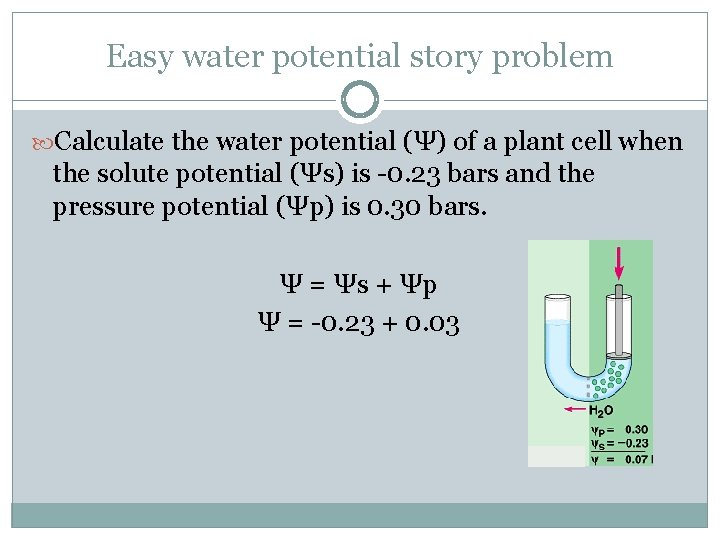
Easy water potential story problem Calculate the water potential (Ψ) of a plant cell when the solute potential (Ψs) is -0. 23 bars and the pressure potential (Ψp) is 0. 30 bars. Ψ = Ψs + Ψp Ψ = -0. 23 + 0. 03
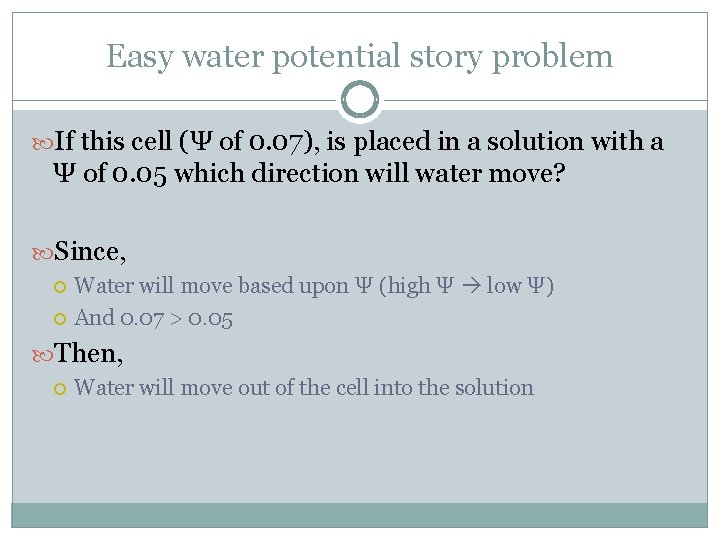
Easy water potential story problem If this cell (Ψ of 0. 07), is placed in a solution with a Ψ of 0. 05 which direction will water move? Since, Water will move based upon Ψ (high Ψ low Ψ) And 0. 07 > 0. 05 Then, Water will move out of the cell into the solution
Elaboration of Pressure Potential Usually a given in the story problem: Ex: Ψp = 4 bars Positive Value: Occurs when water enters a cell Increasing internal water exerts an outward pressure on the cell wall (turgor) Negative pressure: Occurs when water is pulled through an opening Xylem pulls water from the roots to the leaves for photosynthesis
Elaboration of Solute Potential Rarely given in a story problem: Always negative in a plant cell (pure water is zero) Ψs = -i. CRT -i = ionization constant (standard value of a molecule (1 -2)) C = concentration (moles/liter) More solutes, less water R = pressure constant (. 0831 liter bars/mole K) How many ions form from the molecules dissolving Always. 0831 T = temperature (K = (273 + C)) Increase temperature, increase molecule movement
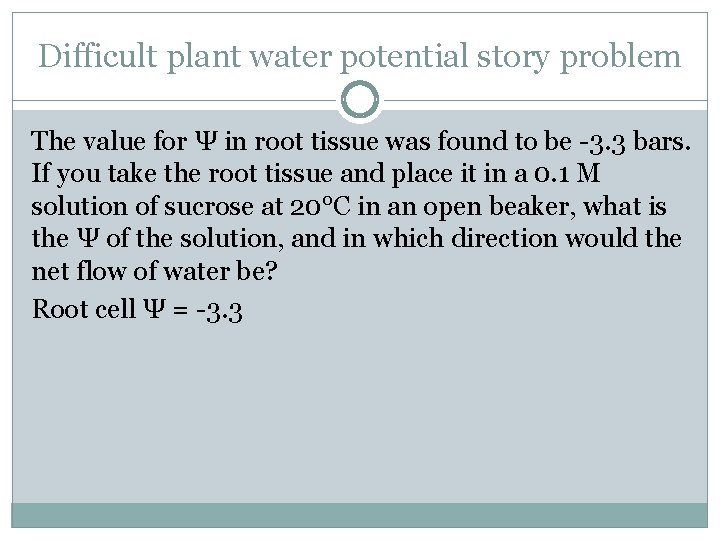
Difficult plant water potential story problem The value for Ψ in root tissue was found to be -3. 3 bars. If you take the root tissue and place it in a 0. 1 M solution of sucrose at 20°C in an open beaker, what is the Ψ of the solution, and in which direction would the net flow of water be? Root cell Ψ = -3. 3
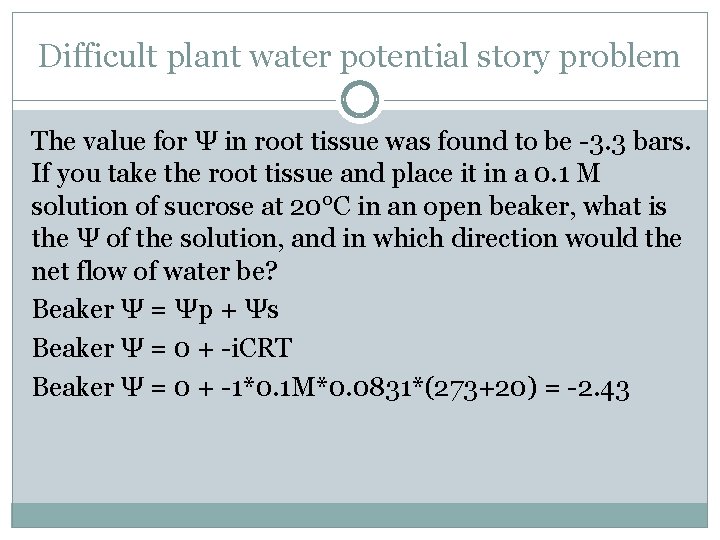
Difficult plant water potential story problem The value for Ψ in root tissue was found to be -3. 3 bars. If you take the root tissue and place it in a 0. 1 M solution of sucrose at 20°C in an open beaker, what is the Ψ of the solution, and in which direction would the net flow of water be? Beaker Ψ = Ψp + Ψs Beaker Ψ = 0 + -i. CRT Beaker Ψ = 0 + -1*0. 1 M*0. 0831*(273+20) = -2. 43
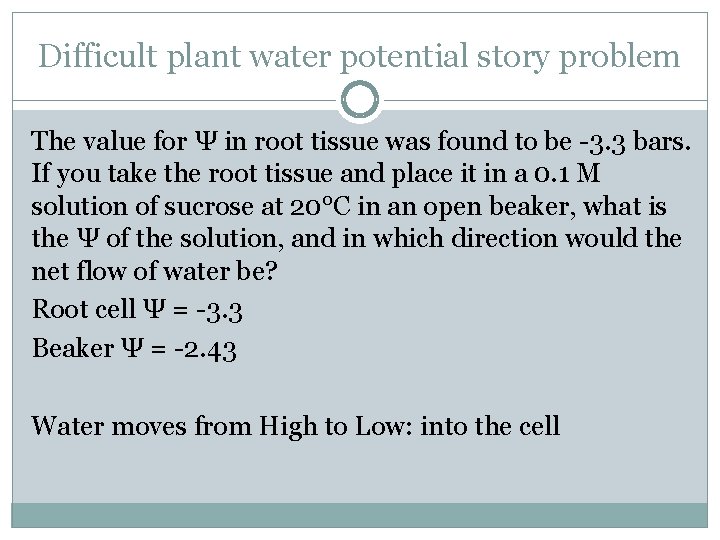
Difficult plant water potential story problem The value for Ψ in root tissue was found to be -3. 3 bars. If you take the root tissue and place it in a 0. 1 M solution of sucrose at 20°C in an open beaker, what is the Ψ of the solution, and in which direction would the net flow of water be? Root cell Ψ = -3. 3 Beaker Ψ = -2. 43 Water moves from High to Low: into the cell
Active Transport
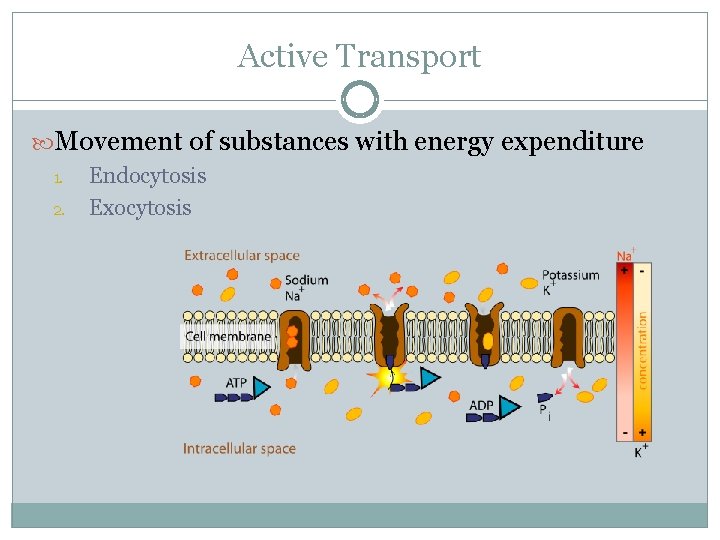
Active Transport Movement of substances with energy expenditure 1. 2. Endocytosis Exocytosis
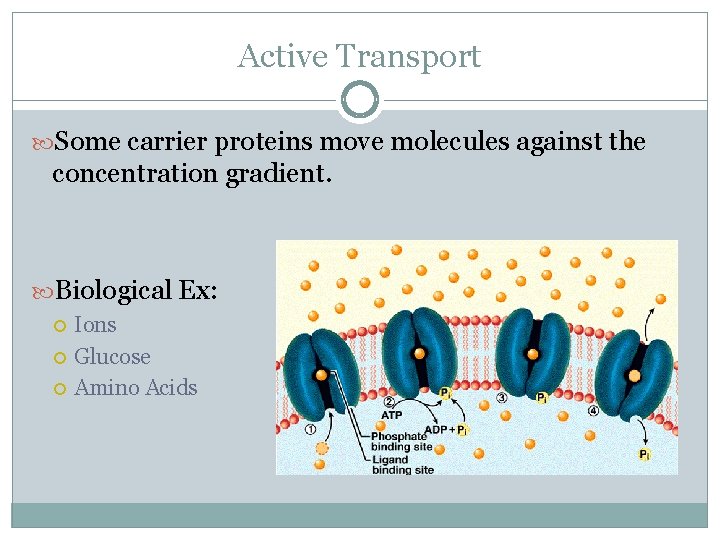
Active Transport Some carrier proteins move molecules against the concentration gradient. Biological Ex: Ions Glucose Amino Acids
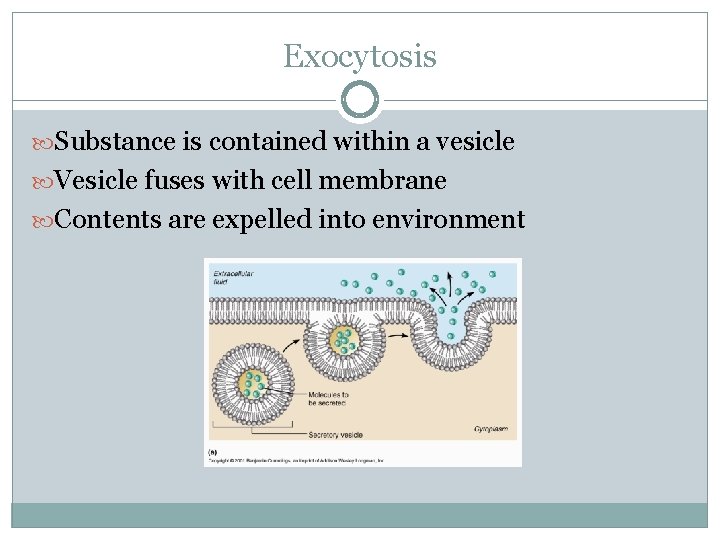
Exocytosis Substance is contained within a vesicle Vesicle fuses with cell membrane Contents are expelled into environment
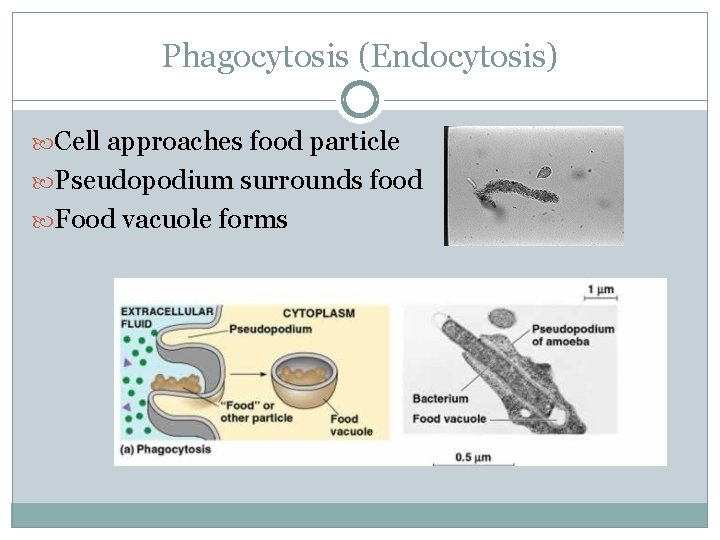
Phagocytosis (Endocytosis) Cell approaches food particle Pseudopodium surrounds food Food vacuole forms
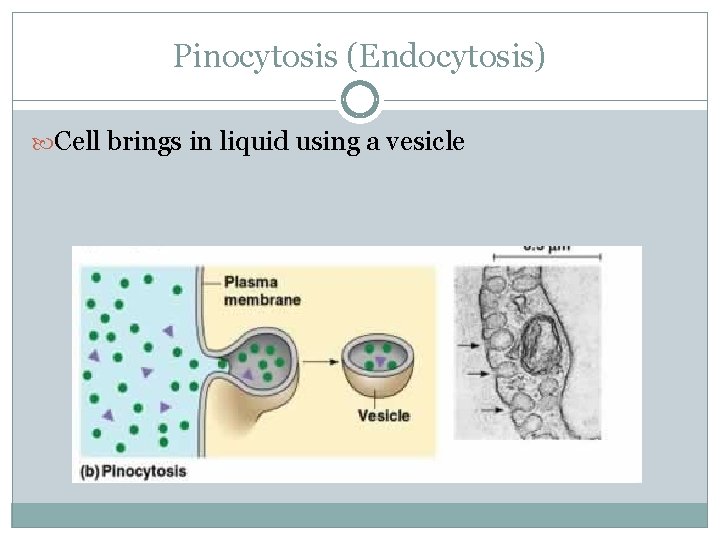
Pinocytosis (Endocytosis) Cell brings in liquid using a vesicle
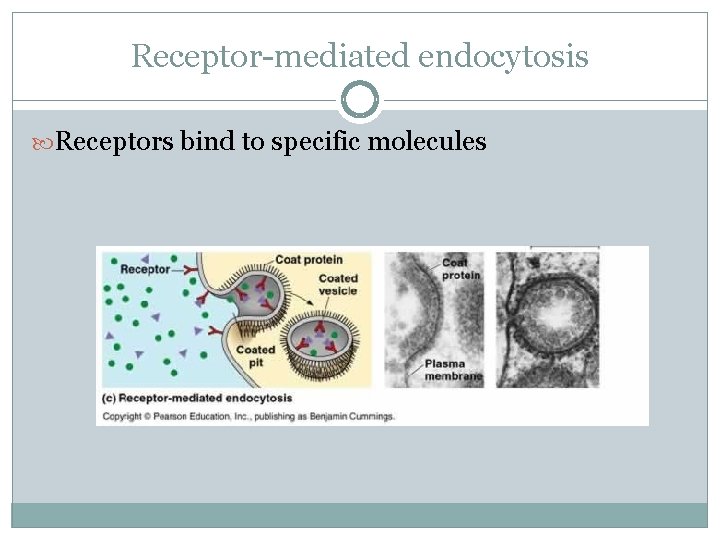
Receptor-mediated endocytosis Receptors bind to specific molecules
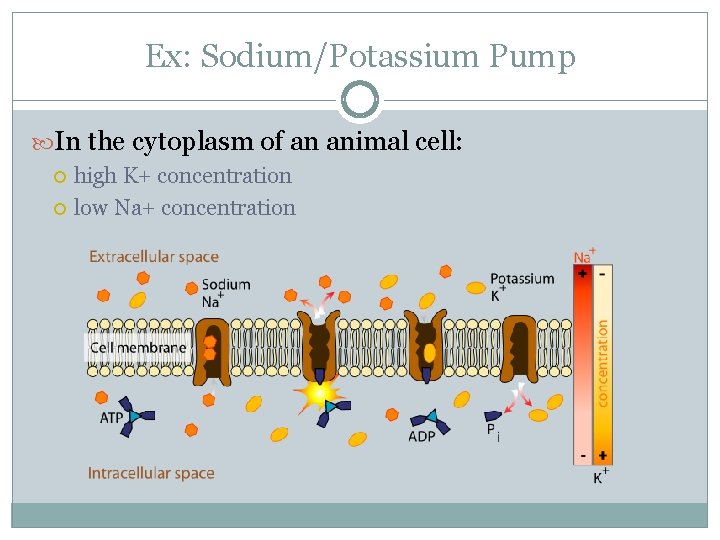
Ex: Sodium/Potassium Pump In the cytoplasm of an animal cell: high K+ concentration low Na+ concentration
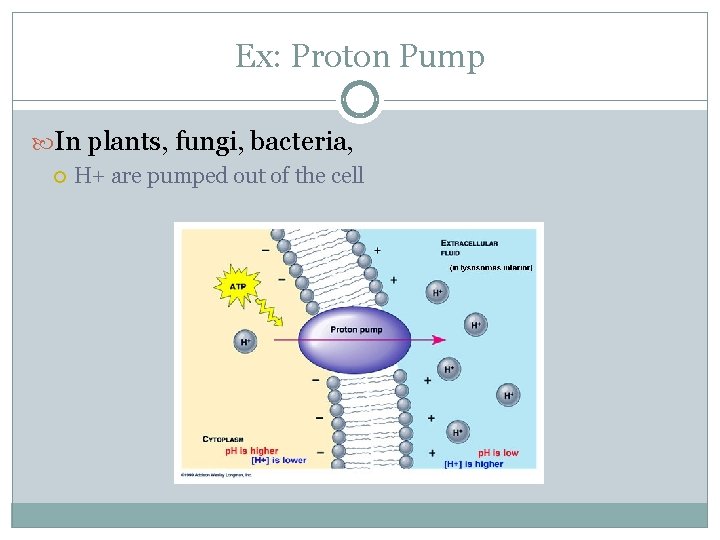
Ex: Proton Pump In plants, fungi, bacteria, H+ are pumped out of the cell
Cell Transport Summary
- Slides: 33