
Cell Theory Section A 1 1 The cell
- Slides: 10
Cell Theory Section A 1. 1 The cell is the basic unit of living things…
Living things are different from nonliving things… n You are surrounded by life, but how would you define a living thing? ¨ Does it use energy? energy ¨ Does it move? ¨ Does it consume food and water? n Organism any individual form of life that uses energy to carry out its activities.
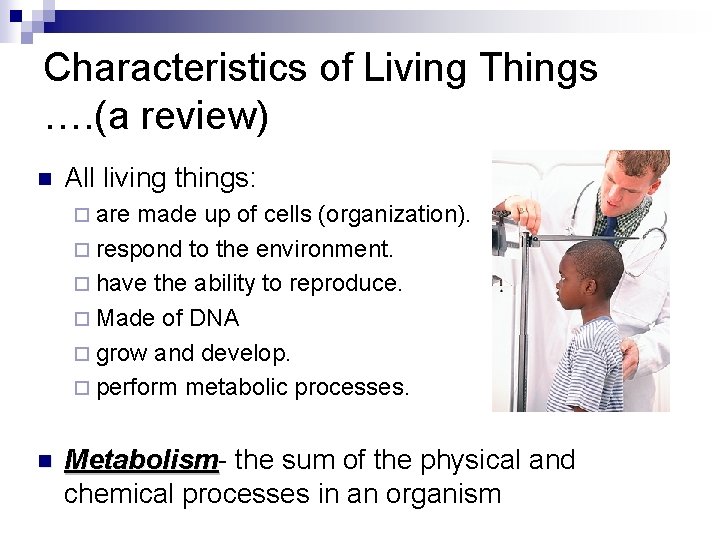
Characteristics of Living Things …. (a review) n All living things: ¨ are made up of cells (organization). ¨ respond to the environment. ¨ have the ability to reproduce. ¨ Made of DNA ¨ grow and develop. ¨ perform metabolic processes. n Metabolism the sum of the physical and chemical processes in an organism
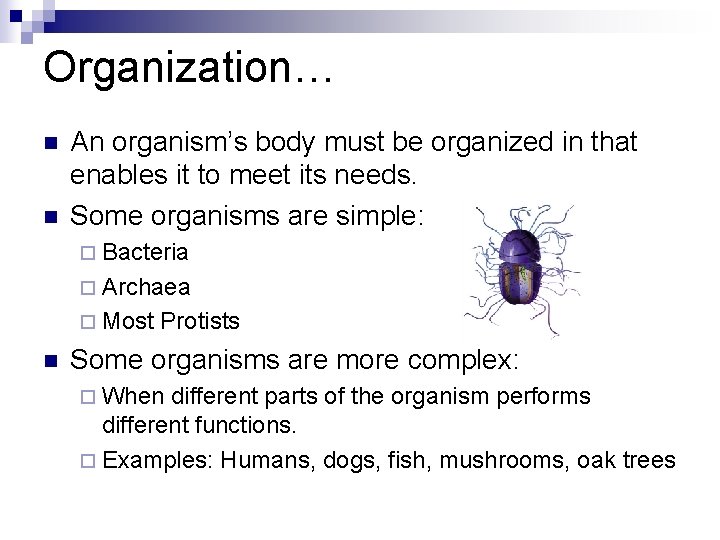
Organization… n n An organism’s body must be organized in that enables it to meet its needs. Some organisms are simple: ¨ Bacteria ¨ Archaea ¨ Most n Protists Some organisms are more complex: ¨ When different parts of the organism performs different functions. ¨ Examples: Humans, dogs, fish, mushrooms, oak trees
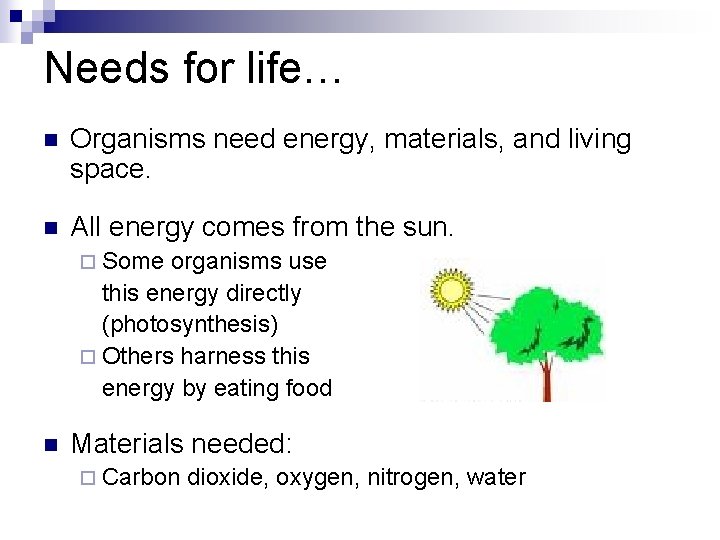
Needs for life… n Organisms need energy, materials, and living space. n All energy comes from the sun. ¨ Some organisms use this energy directly (photosynthesis) ¨ Others harness this energy by eating food n Materials needed: ¨ Carbon dioxide, oxygen, nitrogen, water
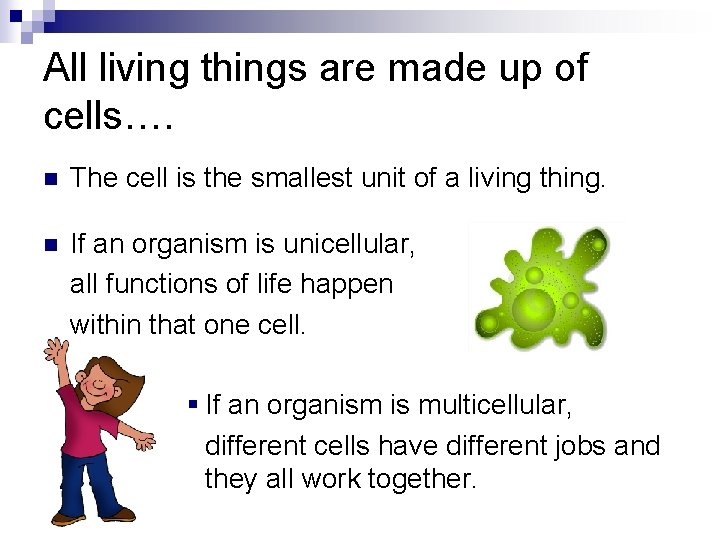
All living things are made up of cells…. n The cell is the smallest unit of a living thing. n If an organism is unicellular, all functions of life happen within that one cell. § If an organism is multicellular, different cells have different jobs and they all work together.
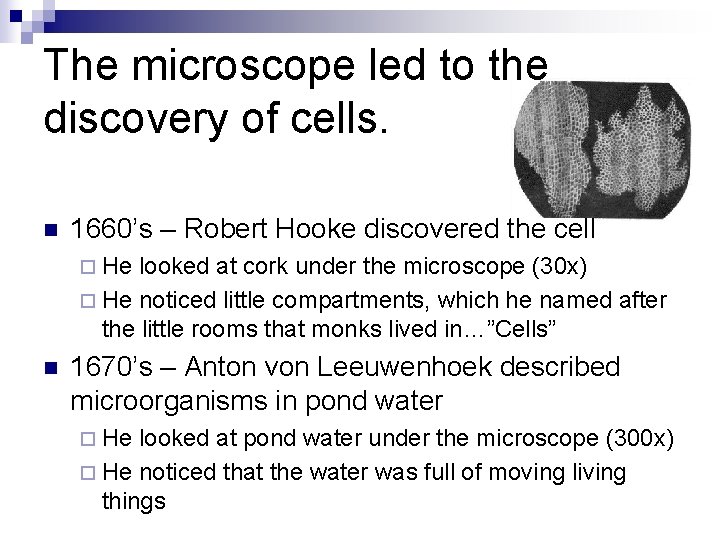
The microscope led to the discovery of cells. n 1660’s – Robert Hooke discovered the cell ¨ He looked at cork under the microscope (30 x) ¨ He noticed little compartments, which he named after the little rooms that monks lived in…”Cells” n 1670’s – Anton von Leeuwenhoek described microorganisms in pond water ¨ He looked at pond water under the microscope (300 x) ¨ He noticed that the water was full of moving living things
Cell Theory… With the invention of the microscope and the contributions of many scientists, a very important question was answered in the 1850’s. The question was: Where do cells come from?
There are three concepts to the cell theory… n All living things are composed of cells. n Cells carry out the basic structures and functions needed to support life. n All cells are produced from other cells.
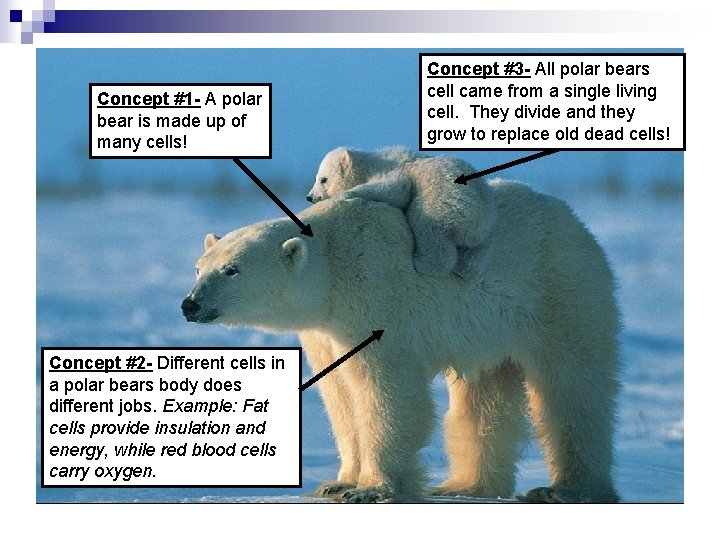
Concept #1 - A polar bear is made up of many cells! Concept #2 - Different cells in a polar bears body does different jobs. Example: Fat cells provide insulation and energy, while red blood cells carry oxygen. Concept #3 - All polar bears cell came from a single living cell. They divide and they grow to replace old dead cells!