
Cell Theory n n n In 1665 Robert
Cell Theory n n n In 1665, Robert Hooke used a primitive microscope to look at slices of cork Discovered little cubes and called them cells. Led to the cell theory 1. All organisms are made of cells 2. Cells are the basic unit of structure and function 3. All cells originate from other cells
Plasma (cell) membrane n When Hooke looked at the cell, he saw the cell wall (present in plants, not animal cells) n What do walls do? n Plasma membrane (cell membrane) – outer membrane of the cell that separates the cell from the surroundings n Purpose – Allows certain materials to pass into and out of the cell – Provides structure
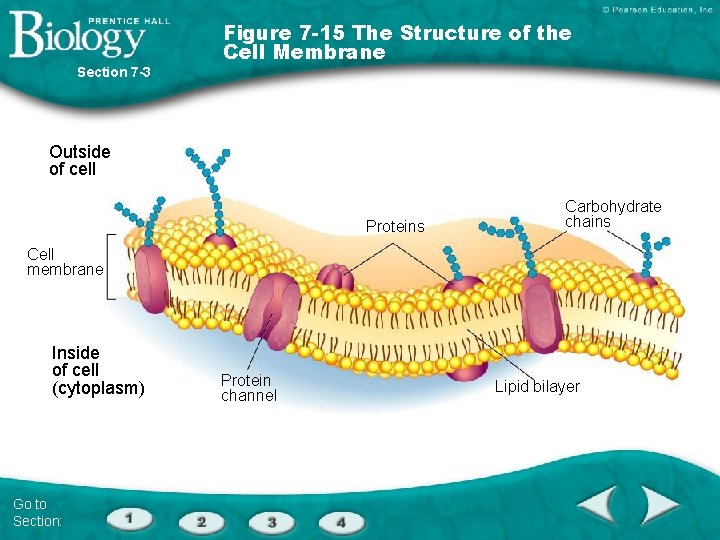
Section 7 -3 Figure 7 -15 The Structure of the Cell Membrane Outside of cell Proteins Carbohydrate chains Cell membrane Inside of cell (cytoplasm) Go to Section: Protein channel Lipid bilayer
Interest Grabber Section 7 -1 Are All Cells Alike? All living things are made up of cells. Some organisms are composed of only one cell. Other organisms are made up of many cells. 1. What are the advantages of a one-celled organism? 2. What are the advantages of an organism that is made up of many cells? Go to Section:
Section Outline Section 7 -1 Life Is Cellular A. Basic Cell Structures B. Prokaryotes and Eukaryotes 1. Prokaryotes 2. Eukaryotes Go to Section:
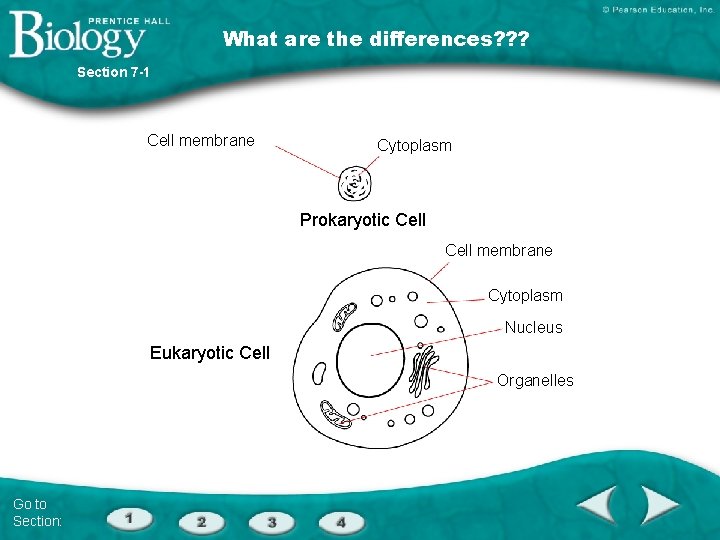
What are the differences? ? ? Section 7 -1 Cell membrane Cytoplasm Prokaryotic Cell membrane Cytoplasm Nucleus Eukaryotic Cell Organelles Go to Section:
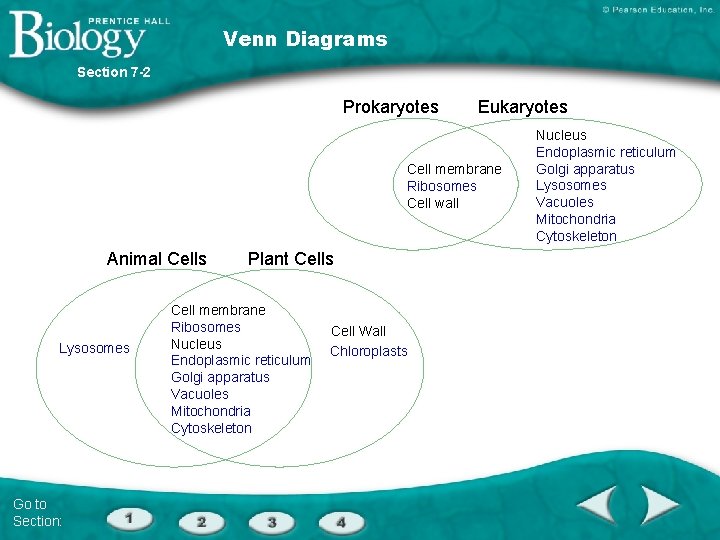
Venn Diagrams Section 7 -2 Prokaryotes Eukaryotes Cell membrane Ribosomes Cell wall Animal Cells Lysosomes Go to Section: Plant Cells Cell membrane Ribosomes Nucleus Endoplasmic reticulum Golgi apparatus Vacuoles Mitochondria Cytoskeleton Cell Wall Chloroplasts Nucleus Endoplasmic reticulum Golgi apparatus Lysosomes Vacuoles Mitochondria Cytoskeleton
Section Outline Section 7 -2 7– 2 Cell Structures A. Cell Wall B. Nucleus 1. Chromatin and Chromosomes 2. Nucleolus 3. Nuclear Envelope C. Cytoskeleton D. Organelles in the Cytoplasm 1. Ribosomes 2. Endoplasmic Reticulum 3. Golgi Apparatus 4. Lysosomes 5. Vacuoles 6. Chloroplasts 7. Mitochondria Go to Section:
Cell structure overview • Differences? – Prokaryotes vs. Eukaryotes – Plant vs. Animal cells • • • Cell Wall Plasma (Cell) Membrane Nucleus – holds genetic information Cytoplasm – fluid in the cell Organelles
Organelles • Small structures within the cell that serve different roles – They support the cell in much the same way that organs support the body of an animal – Construct a chart like the on the board
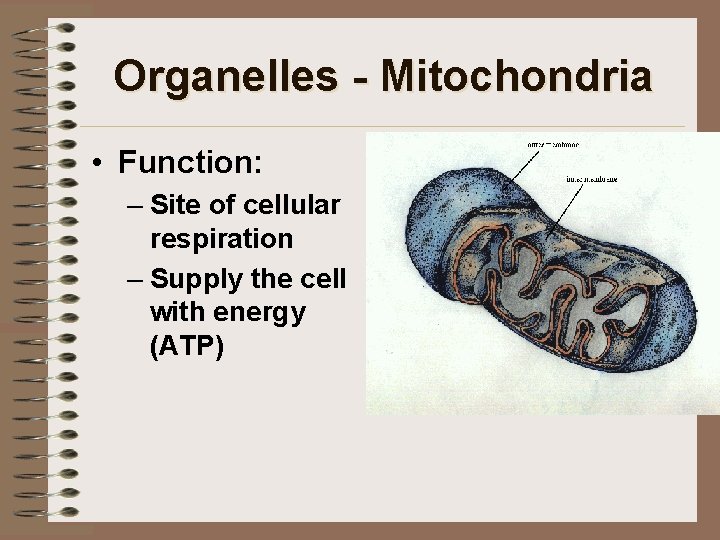
Organelles - Mitochondria • Function: – Site of cellular respiration – Supply the cell with energy (ATP)
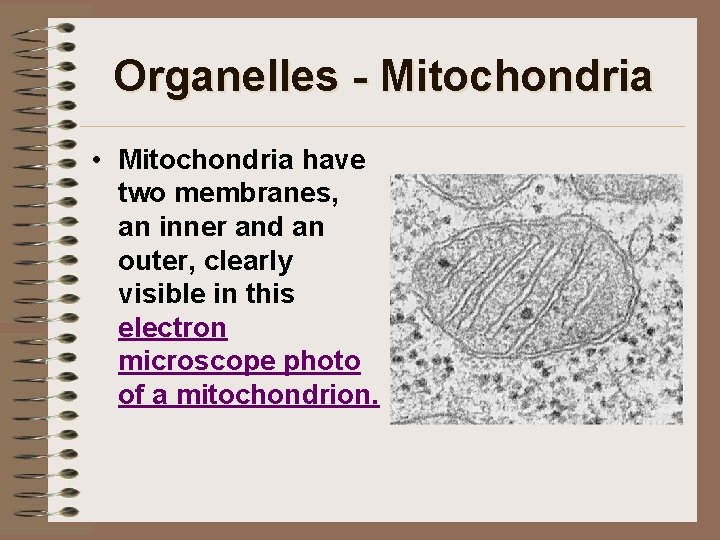
Organelles - Mitochondria • Mitochondria have two membranes, an inner and an outer, clearly visible in this electron microscope photo of a mitochondrion.

Organelles - Mitochondria • Muscle Cell Mitochondria
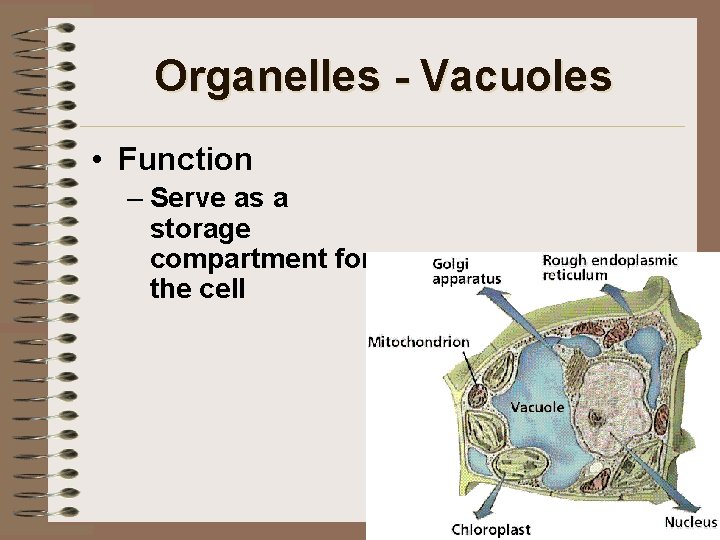
Organelles - Vacuoles • Function – Serve as a storage compartment for the cell
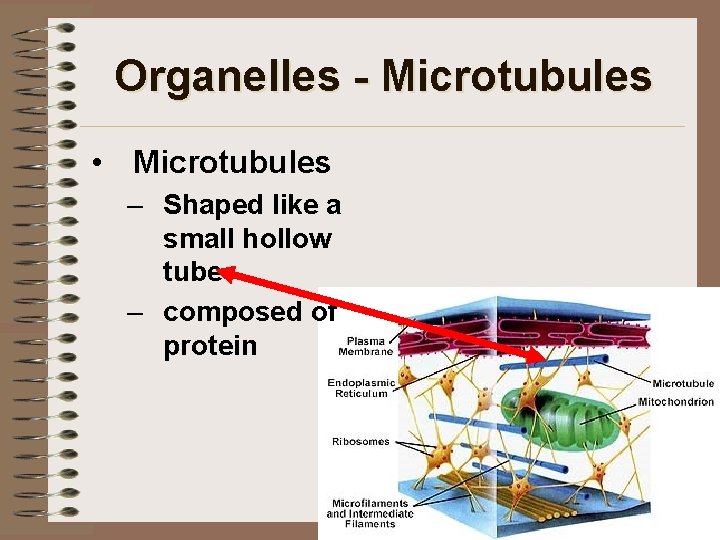
Organelles - Microtubules • Microtubules – Shaped like a small hollow tube – composed of protein
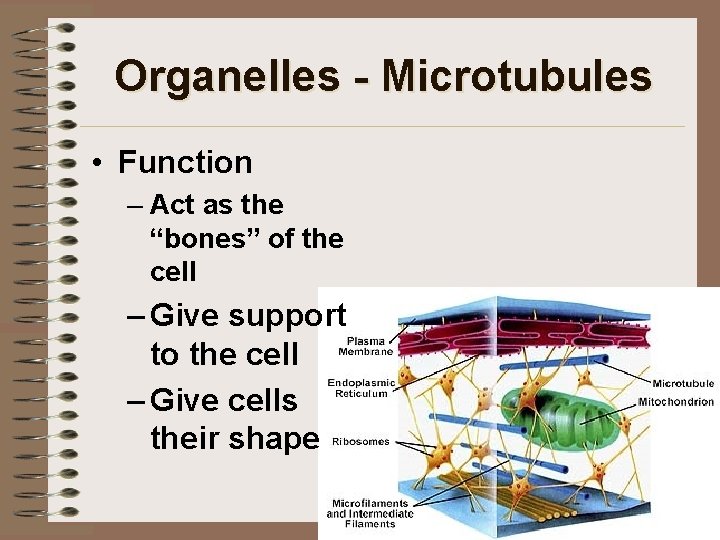
Organelles - Microtubules • Function – Act as the “bones” of the cell – Give support to the cell – Give cells their shape
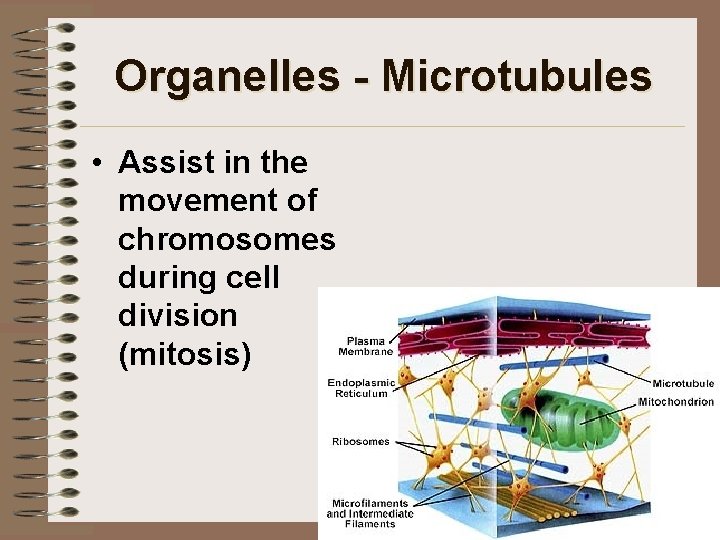
Organelles - Microtubules • Assist in the movement of chromosomes during cell division (mitosis)
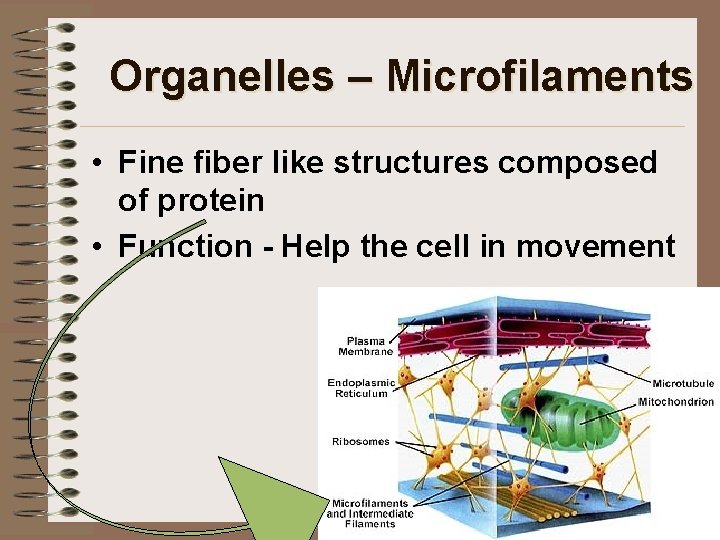
Organelles – Microfilaments • Fine fiber like structures composed of protein • Function - Help the cell in movement
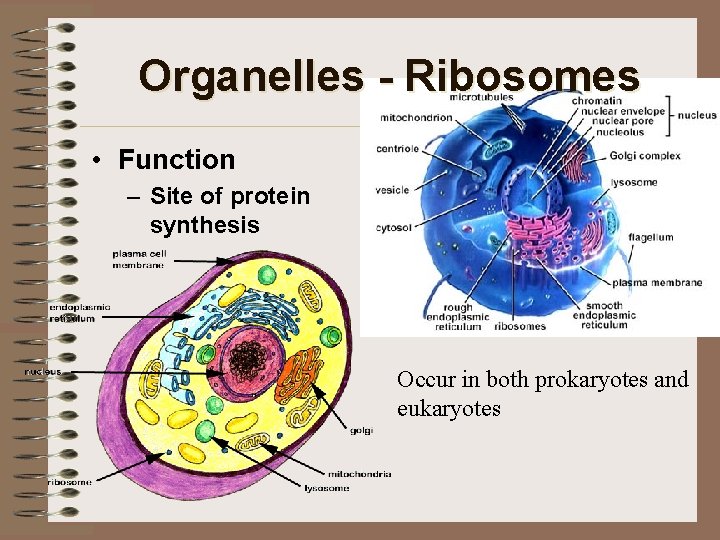
Organelles - Ribosomes • Function – Site of protein synthesis Occur in both prokaryotes and eukaryotes
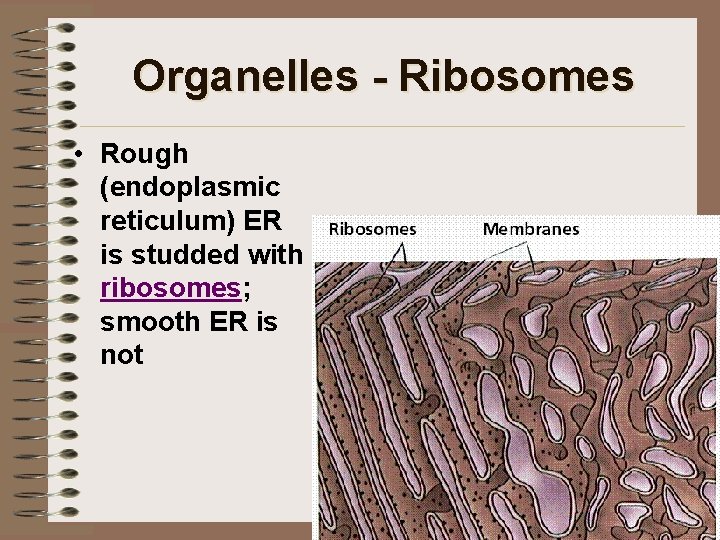
Organelles - Ribosomes • Rough (endoplasmic reticulum) ER is studded with ribosomes; smooth ER is not
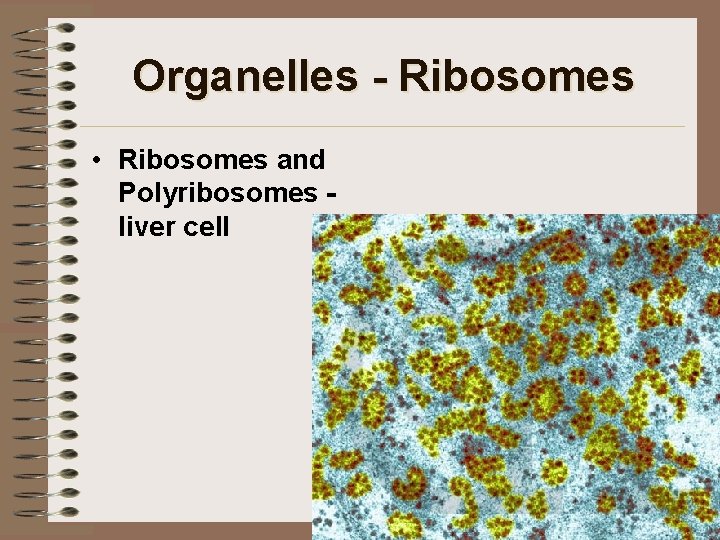
Organelles - Ribosomes • Ribosomes and Polyribosomes liver cell
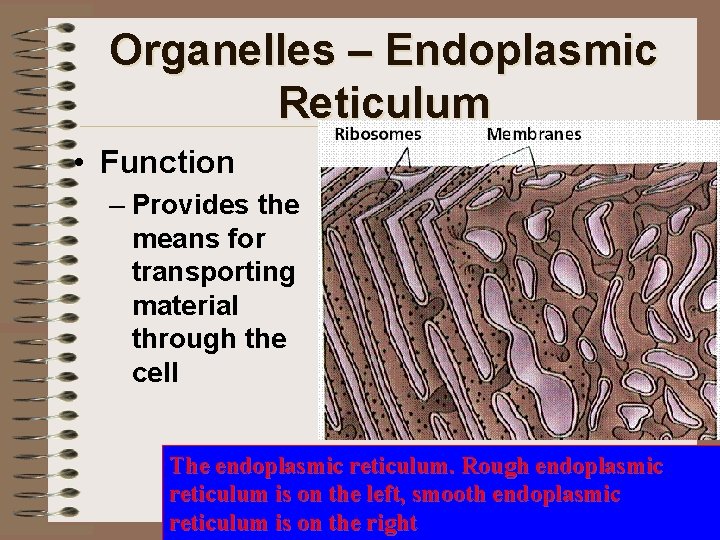
Organelles – Endoplasmic Reticulum • Function – Provides the means for transporting material through the cell The endoplasmic reticulum. Rough endoplasmic reticulum is on the left, smooth endoplasmic reticulum is on the right
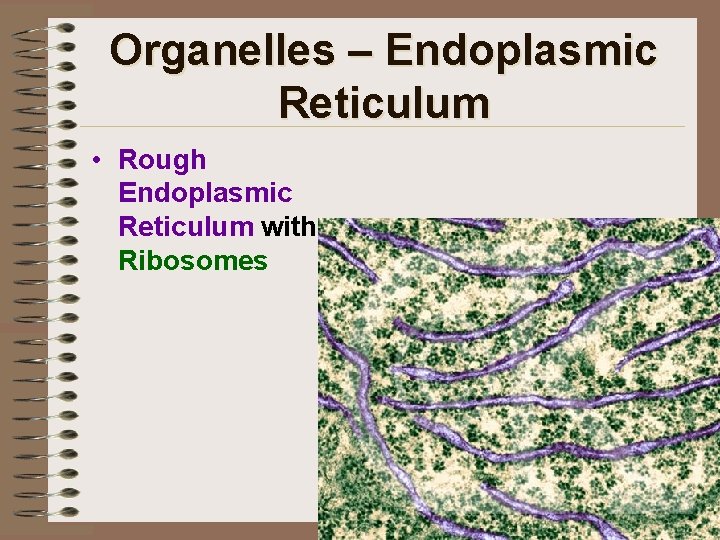
Organelles – Endoplasmic Reticulum • Rough Endoplasmic Reticulum with Ribosomes
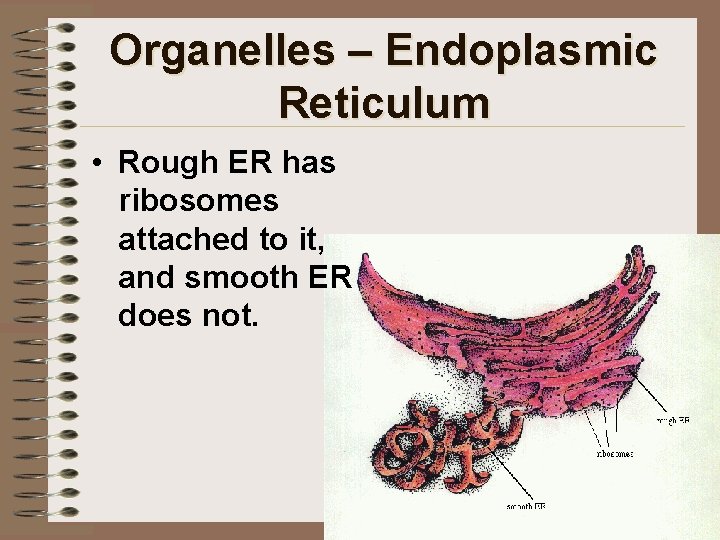
Organelles – Endoplasmic Reticulum • Rough ER has ribosomes attached to it, and smooth ER does not.
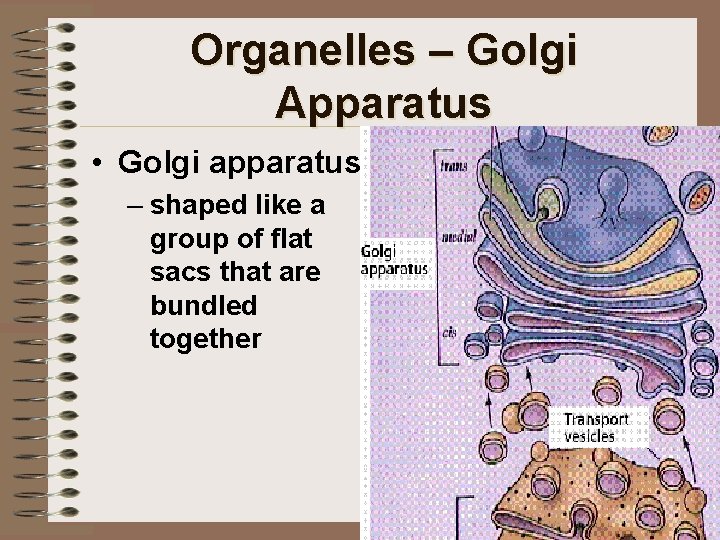
Organelles – Golgi Apparatus • Golgi apparatus – shaped like a group of flat sacs that are bundled together
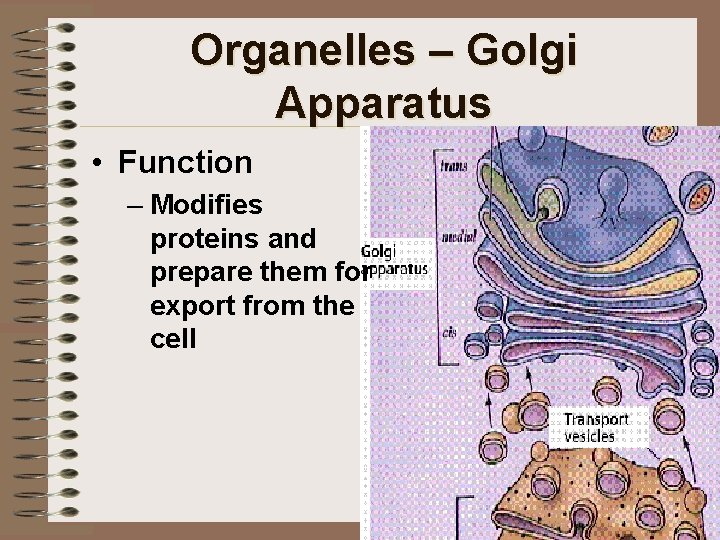
Organelles – Golgi Apparatus • Function – Modifies proteins and prepare them for export from the cell
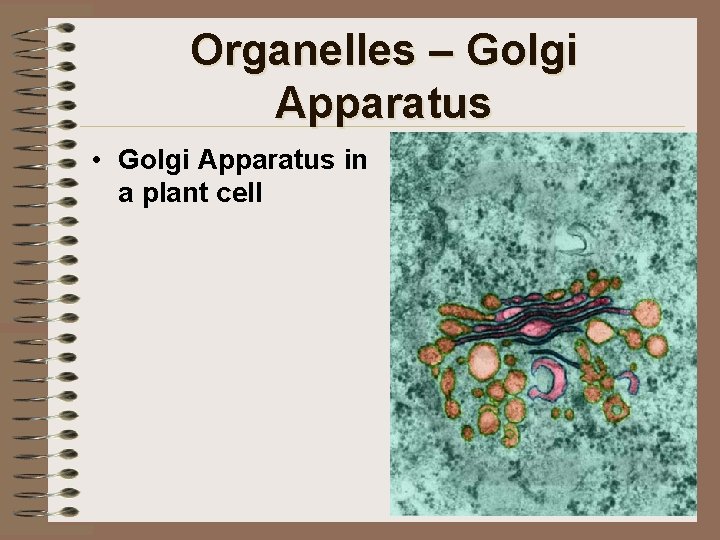
Organelles – Golgi Apparatus • Golgi Apparatus in a plant cell
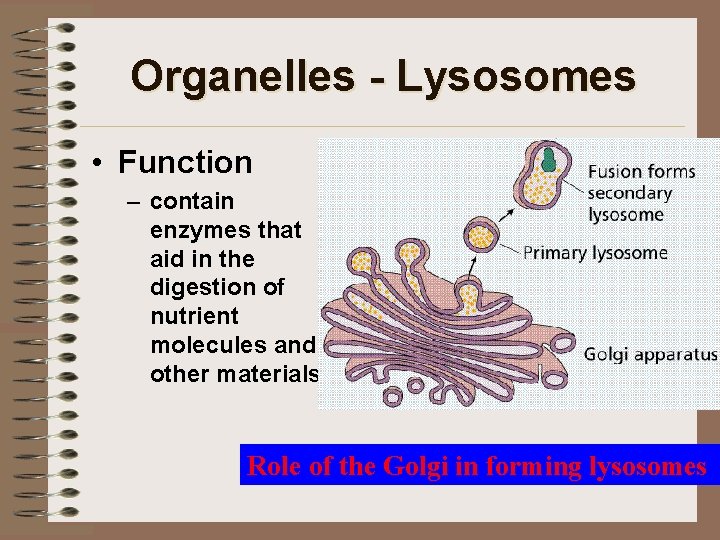
Organelles - Lysosomes • Function – contain enzymes that aid in the digestion of nutrient molecules and other materials. Role of the Golgi in forming lysosomes
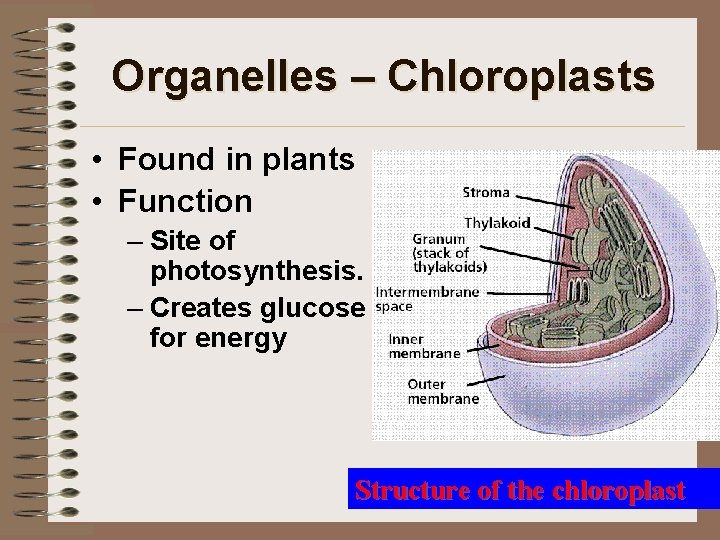
Organelles – Chloroplasts • Found in plants • Function – Site of photosynthesis. – Creates glucose for energy Structure of the chloroplast
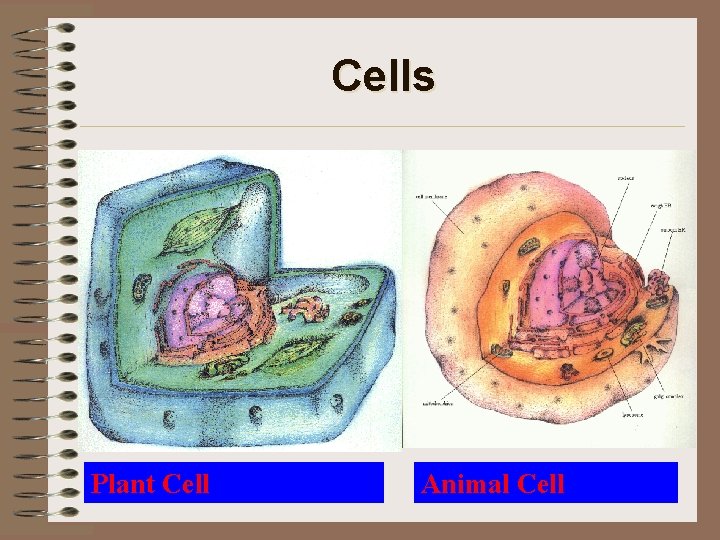
Cells Plant Cell Animal Cell
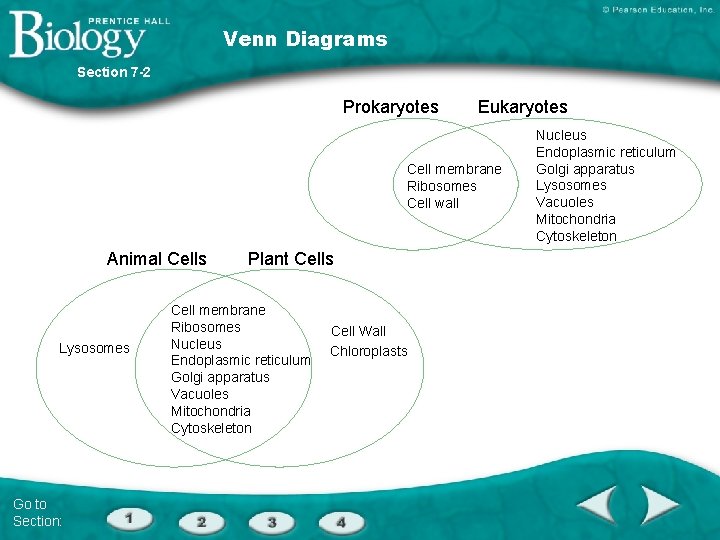
Venn Diagrams Section 7 -2 Prokaryotes Eukaryotes Cell membrane Ribosomes Cell wall Animal Cells Lysosomes Go to Section: Plant Cells Cell membrane Ribosomes Nucleus Endoplasmic reticulum Golgi apparatus Vacuoles Mitochondria Cytoskeleton Cell Wall Chloroplasts Nucleus Endoplasmic reticulum Golgi apparatus Lysosomes Vacuoles Mitochondria Cytoskeleton
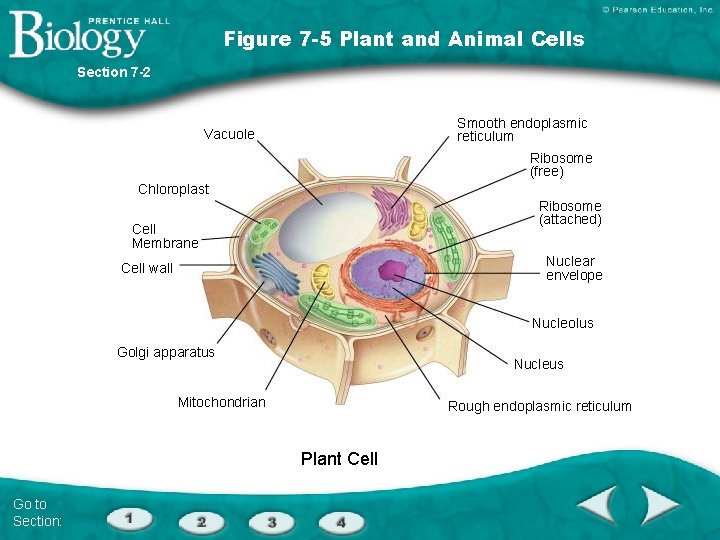
Figure 7 -5 Plant and Animal Cells Section 7 -2 Smooth endoplasmic reticulum Vacuole Ribosome (free) Chloroplast Ribosome (attached) Cell Membrane Nuclear envelope Cell wall Nucleolus Golgi apparatus Nucleus Mitochondrian Rough endoplasmic reticulum Plant Cell Go to Section:
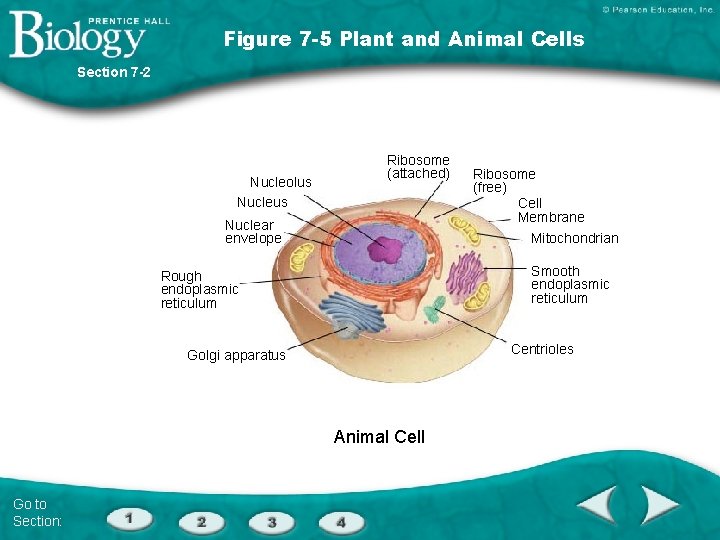
Figure 7 -5 Plant and Animal Cells Section 7 -2 Nucleolus Nucleus Ribosome (attached) Nuclear envelope Mitochondrian Smooth endoplasmic reticulum Rough endoplasmic reticulum Centrioles Golgi apparatus Animal Cell Go to Section: Ribosome (free) Cell Membrane
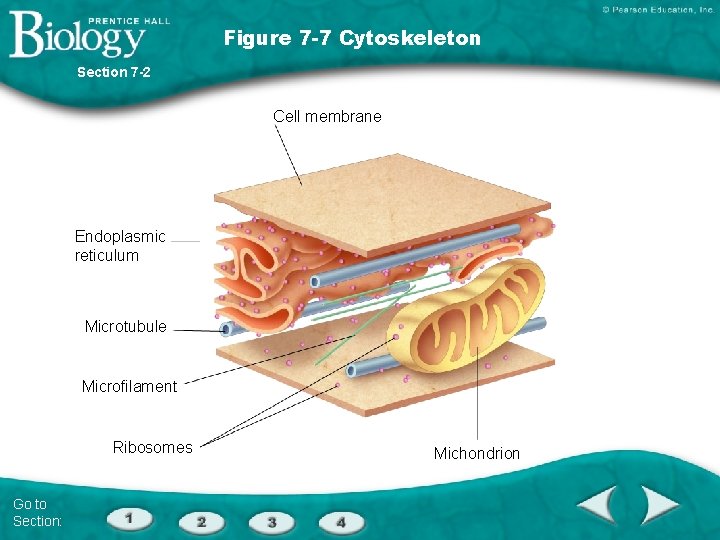
Figure 7 -7 Cytoskeleton Section 7 -2 Cell membrane Endoplasmic reticulum Microtubule Microfilament Ribosomes Go to Section: Michondrion
Classwork • Work in pairs to create posters of a cell • 2 posters – Plant – Animal • Label each structure and its function • Color code your poster
Homework • SA 7 -1 All questions • SA 7 -2 All questions • Read 7 -3
- Slides: 36