
Cell Theory Discovery of the Cell Robert Hooke
Cell Theory
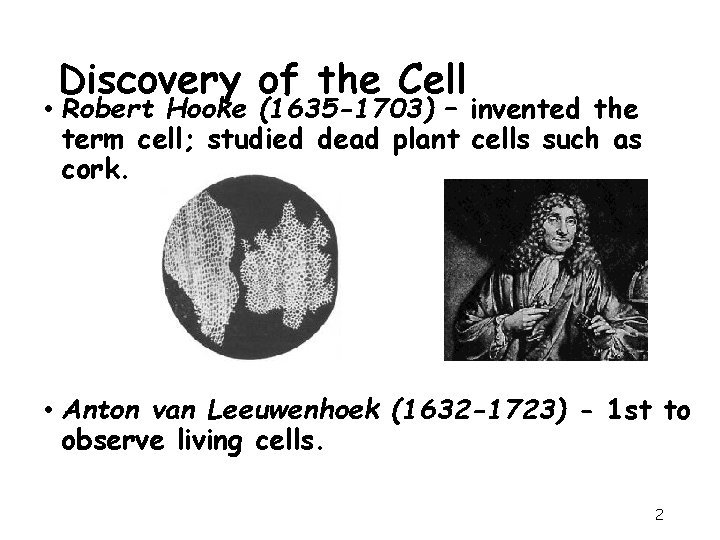
Discovery of the Cell • Robert Hooke (1635 -1703) – invented the term cell; studied dead plant cells such as cork. • Anton van Leeuwenhoek (1632 -1723) - 1 st to observe living cells. 2
van Leevheohoek Invented the microscope
Robert Hooke Came up with the name “cells”
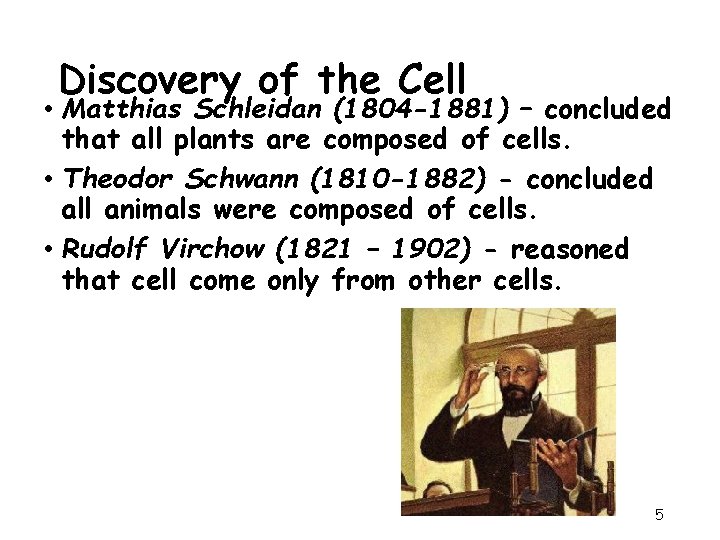
Discovery of the Cell • Matthias Schleidan (1804 -1881) – concluded that all plants are composed of cells. • Theodor Schwann (1810 -1882) - concluded all animals were composed of cells. • Rudolf Virchow (1821 – 1902) - reasoned that cell come only from other cells. 5
Schleiden “All plants are made up of cells”
Schwann All animals are made up of cells
Virchow All cells come from pre-existing cells
CELL THEORY 1) All living things are made of cells
CELL THEORY 2) Cells are the basic unit of structure and function for all living things
CELL THEORY 3) Cells come from pre-existing cells
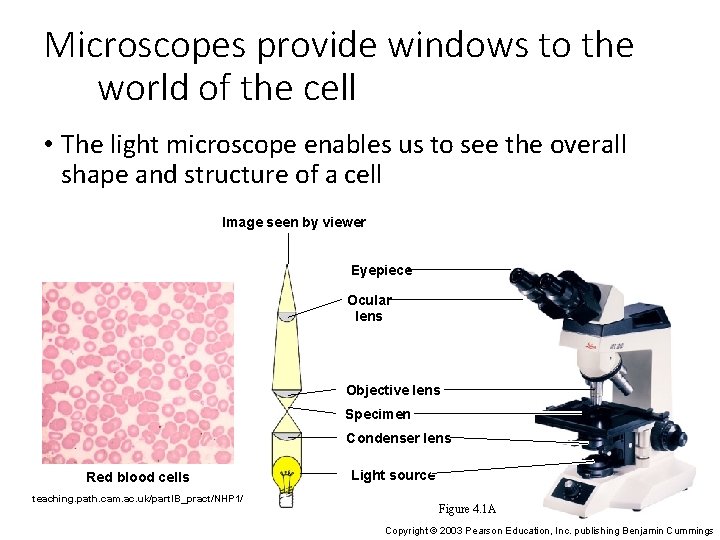
Microscopes provide windows to the world of the cell • The light microscope enables us to see the overall shape and structure of a cell Image seen by viewer Eyepiece Ocular lens Objective lens Specimen Condenser lens Red blood cells teaching. path. cam. ac. uk/part. IB_pract/NHP 1/ Light source Figure 4. 1 A Copyright © 2003 Pearson Education, Inc. publishing Benjamin Cummings
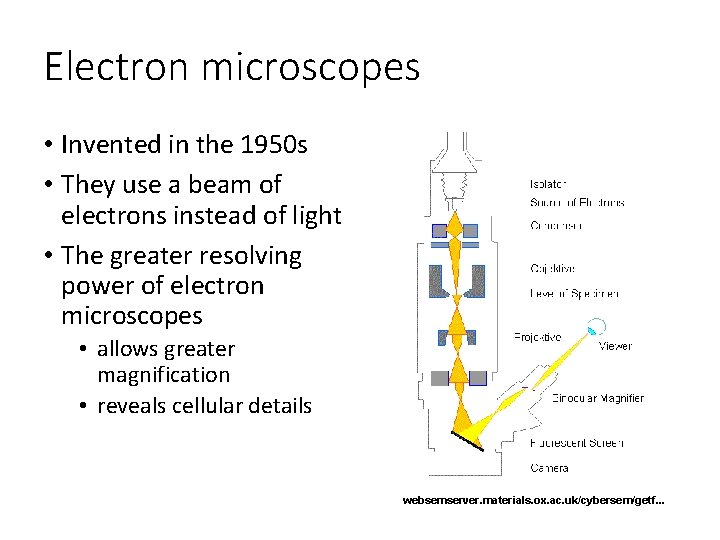
Electron microscopes • Invented in the 1950 s • They use a beam of electrons instead of light • The greater resolving power of electron microscopes • allows greater magnification • reveals cellular details websemserver. materials. ox. ac. uk/cybersem/getf. . .
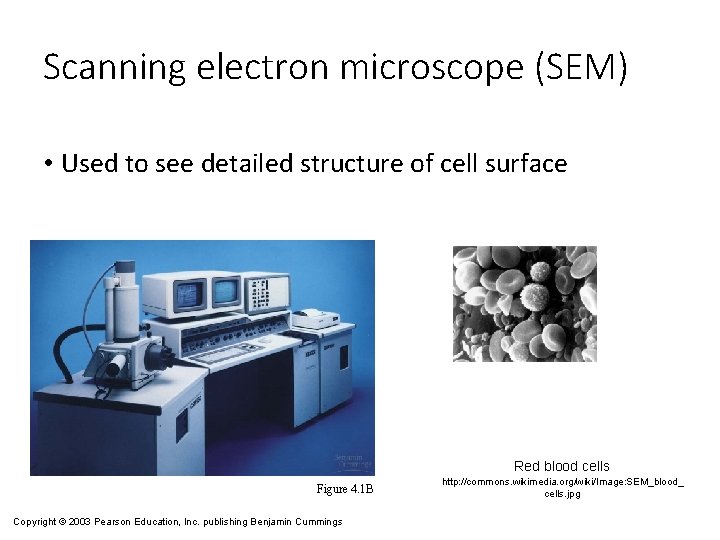
Scanning electron microscope (SEM) • Used to see detailed structure of cell surface Red blood cells Figure 4. 1 B Copyright © 2003 Pearson Education, Inc. publishing Benjamin Cummings http: //commons. wikimedia. org/wiki/Image: SEM_blood_ cells. jpg
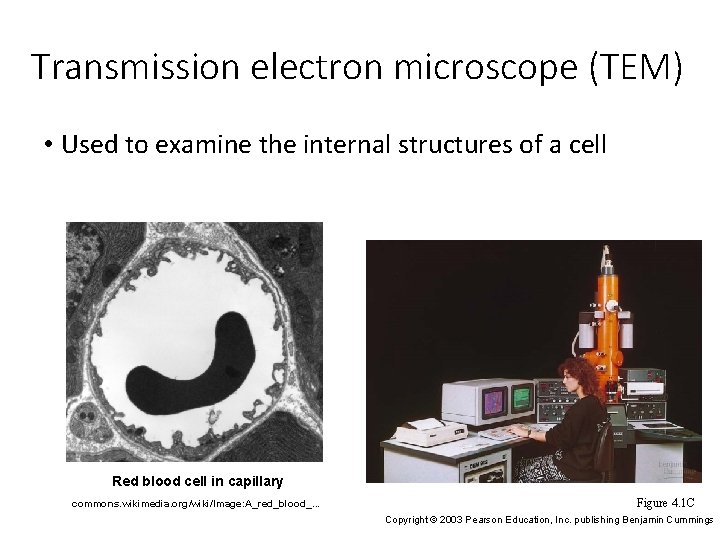
Transmission electron microscope (TEM) • Used to examine the internal structures of a cell Red blood cell in capillary commons. wikimedia. org/wiki/Image: A_red_blood_. . . Figure 4. 1 C Copyright © 2003 Pearson Education, Inc. publishing Benjamin Cummings
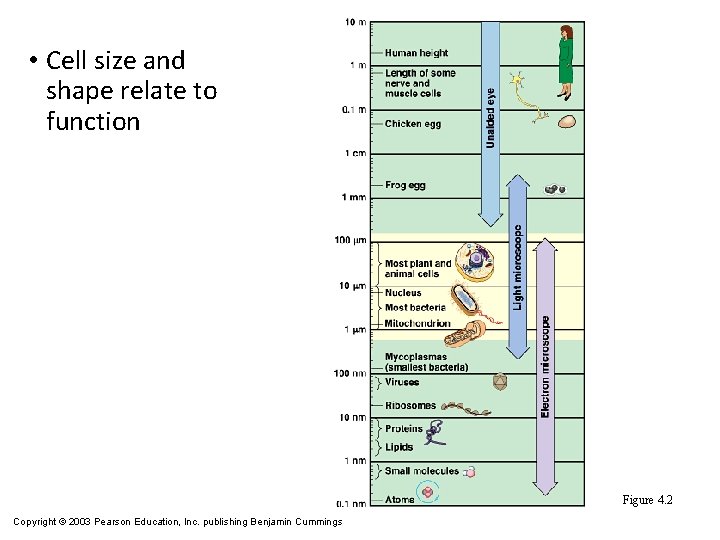
• Cell size and shape relate to function Figure 4. 2 Copyright © 2003 Pearson Education, Inc. publishing Benjamin Cummings
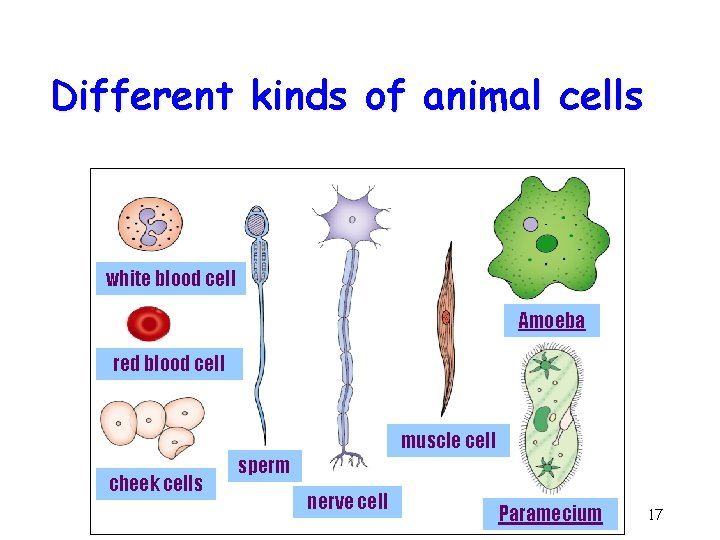
Different kinds of animal cells white blood cell Amoeba red blood cell muscle cell cheek cells sperm nerve cell Paramecium 17
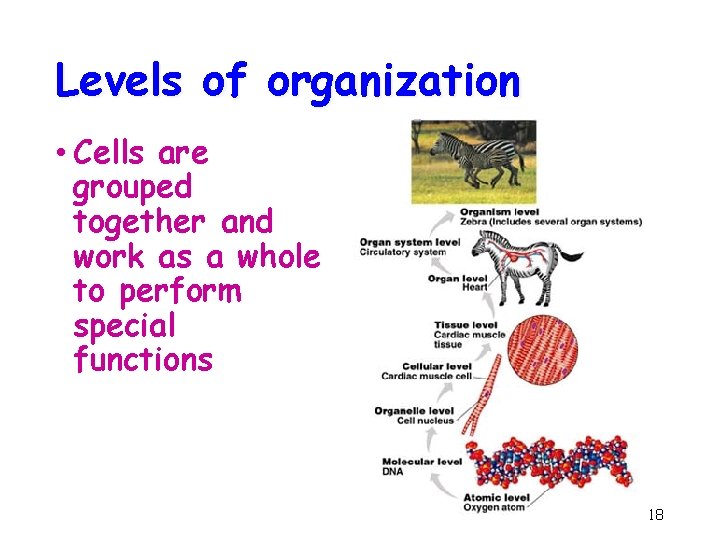
Levels of organization • Cells are grouped together and work as a whole to perform special functions 18
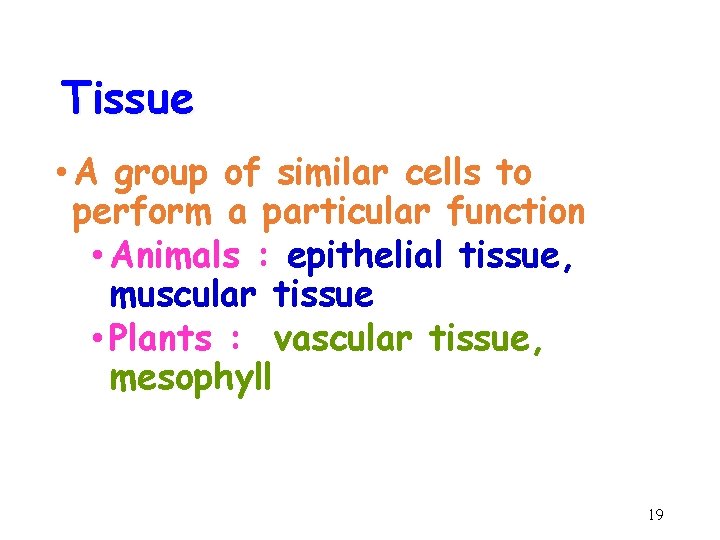
Tissue • A group of similar cells to perform a particular function • Animals : epithelial tissue, muscular tissue • Plants : vascular tissue, mesophyll 19
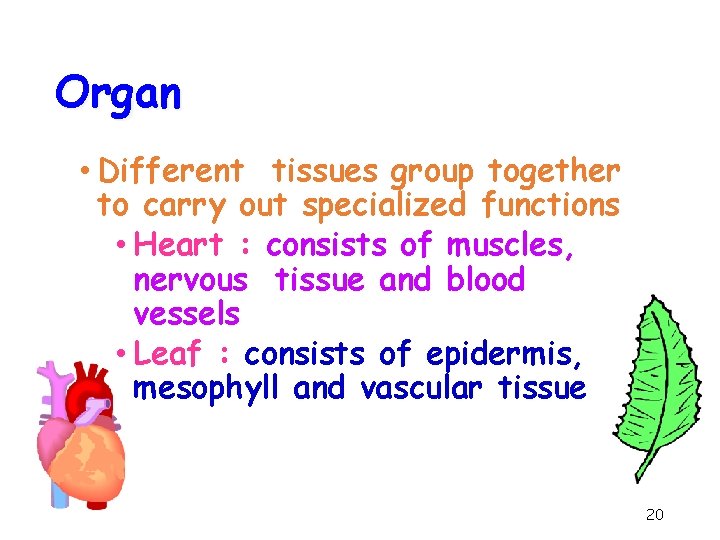
Organ • Different tissues group together to carry out specialized functions • Heart : consists of muscles, nervous tissue and blood vessels • Leaf : consists of epidermis, mesophyll and vascular tissue 20
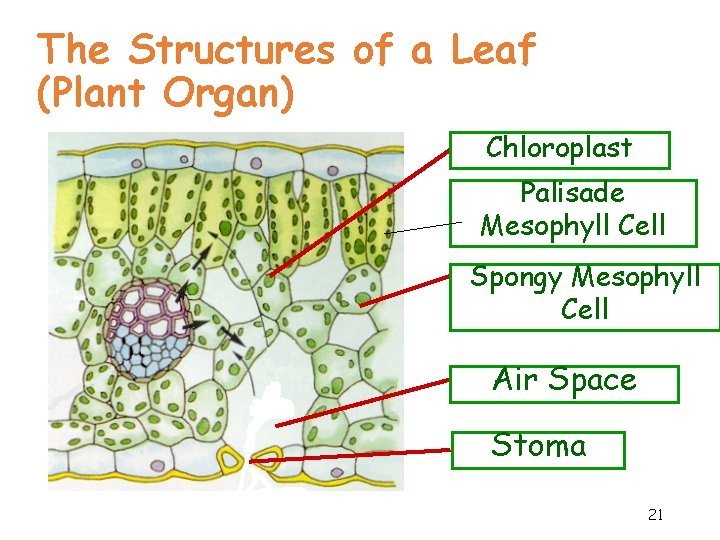
The Structures of a Leaf (Plant Organ) Chloroplast Palisade Mesophyll Cell Spongy Mesophyll Cell Air Space Stoma 21
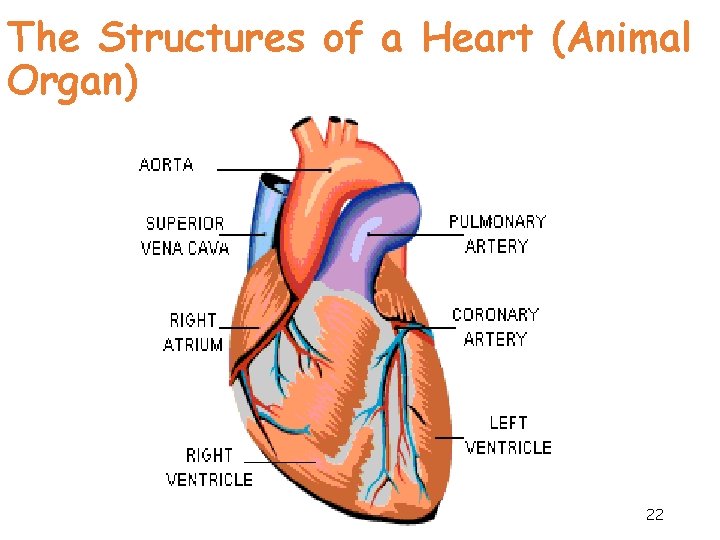
The Structures of a Heart (Animal Organ) 22
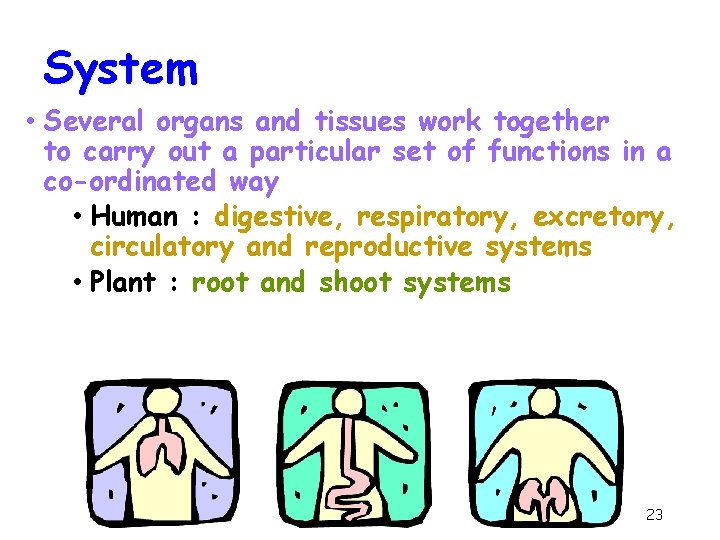
System • Several organs and tissues work together to carry out a particular set of functions in a co-ordinated way • Human : digestive, respiratory, excretory, circulatory and reproductive systems • Plant : root and shoot systems 23
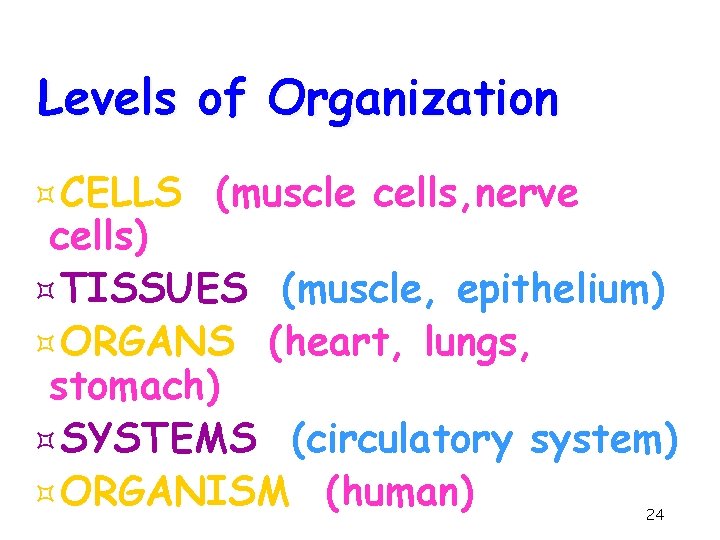
Levels of Organization ³CELLS (muscle cells, nerve cells) ³TISSUES (muscle, epithelium) ³ORGANS (heart, lungs, stomach) ³SYSTEMS (circulatory system) ³ORGANISM (human) 24
Natural laws limit cell size • At minimum, a cell must be large enough to house the parts it needs to survive and reproduce • The maximum size of a cell is limited by the amount of surface needed to obtain nutrients from the environment and dispose of wastes
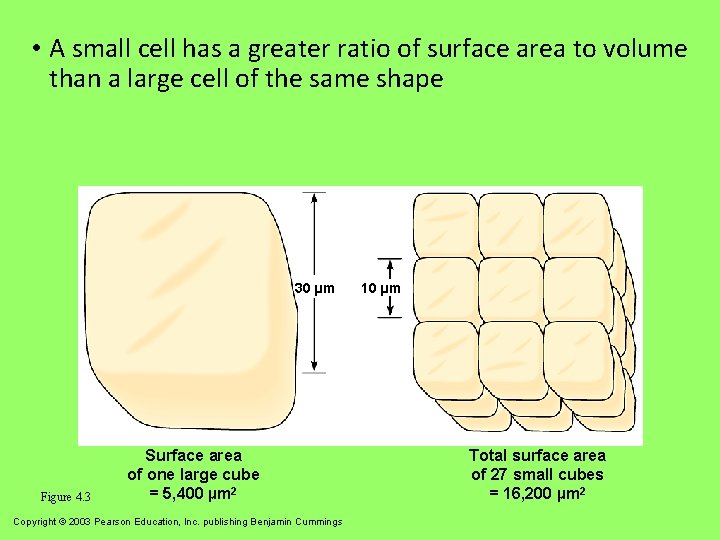
• A small cell has a greater ratio of surface area to volume than a large cell of the same shape 30 µm Figure 4. 3 Surface area of one large cube = 5, 400 µm 2 Copyright © 2003 Pearson Education, Inc. publishing Benjamin Cummings 10 µm Total surface area of 27 small cubes = 16, 200 µm 2
- Slides: 26