
Cell Theory College Prep Biology Discovery of Cells
Cell Theory College Prep Biology
Discovery of Cells 1665 - English Scientist, Robert Hooke, discovered cells while looking at a thin slice of cork. Microscope only had low power therefore he couldn’t see any cell structures. He described the cells as tiny boxes or a honeycomb Cells came from Latin word Cella meaning a small room He thought that cells only existed in plants and fungi Made suggestion of Spontaneous Generation

Spontaneous Generation For much of history, people believed that animals could come from non-living sources. They thought: Frogs developed from falling drops of rain Mice arose from sweaty shirts Flies arose from decaying meat. This is called abiogenesis; also known as spontaneous generation

Francesco Redi (1668) In 1668, Francesco Redi, an Italian physician, did an experiment to disprove spontaneous generation. He put meat in jars and covered some of them with gauze. He observed these jars to see in which one(s) maggots would develop

Redi’s Experiment His hypothesis: If jars are covered containing raw meat, then maggots would not appear because flies would not lay eggs on the meat. He put meat in jars and covered some of them with gauze. He observed these jars to see in which one(s) maggots would develop.
Elements of a Controlled Experiment Dependent variable- variable that is measured in the experiment, responds to changes in the manipulated variable Independent variable- variable that is changed during the course of the experiment, otherwise known as manipulated variable Constant-variables in an experiment that do not change in order to observe the effect of the independent variable Control group- standard by which to measure change
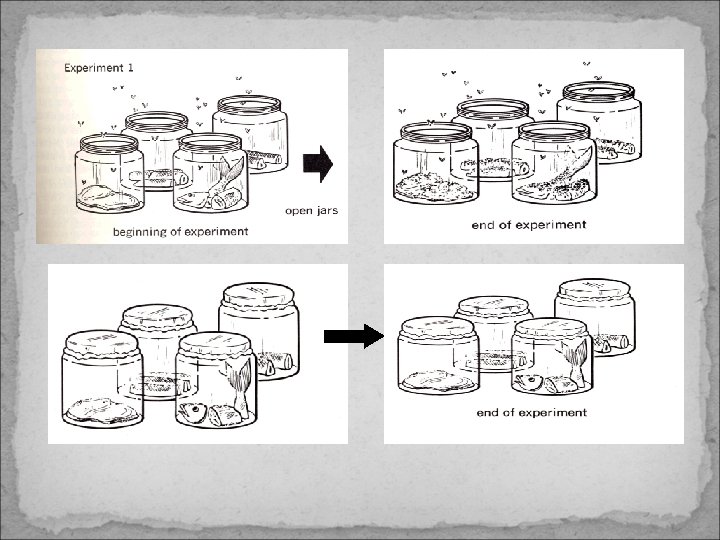
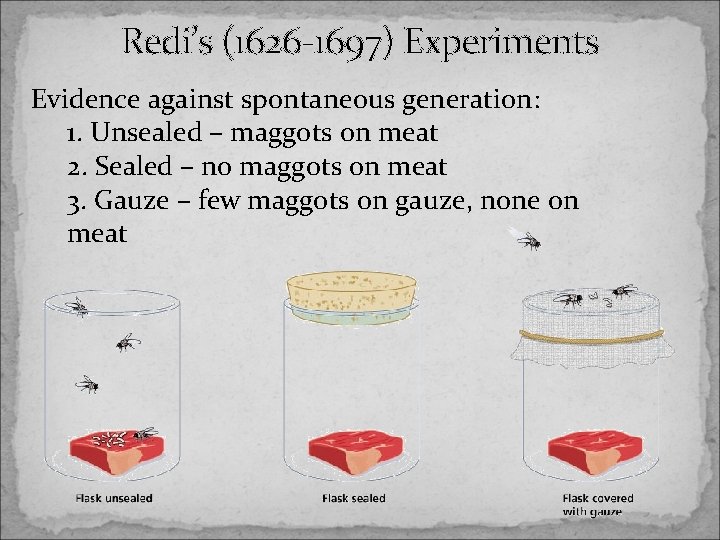
Redi’s (1626 -1697) Experiments Evidence against spontaneous generation: 1. Unsealed – maggots on meat 2. Sealed – no maggots on meat 3. Gauze – few maggots on gauze, none on meat
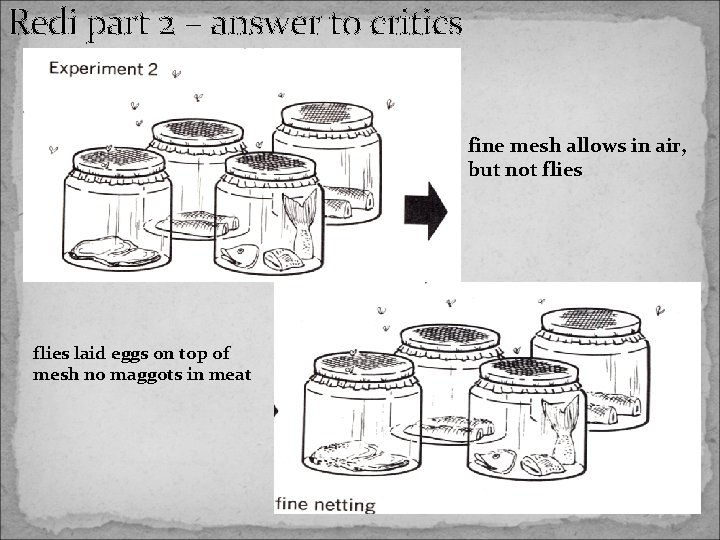
Redi part 2 – answer to critics fine mesh allows in air, but not flies laid eggs on top of mesh no maggots in meat
Redi’s Conclusions: “All living beings come from seeds of the plants or animals themselves” The results of this experiment disproved the idea of spontaneous generation for larger organisms, but people still thought microscopic organisms like algae or bacteria could arise that way.
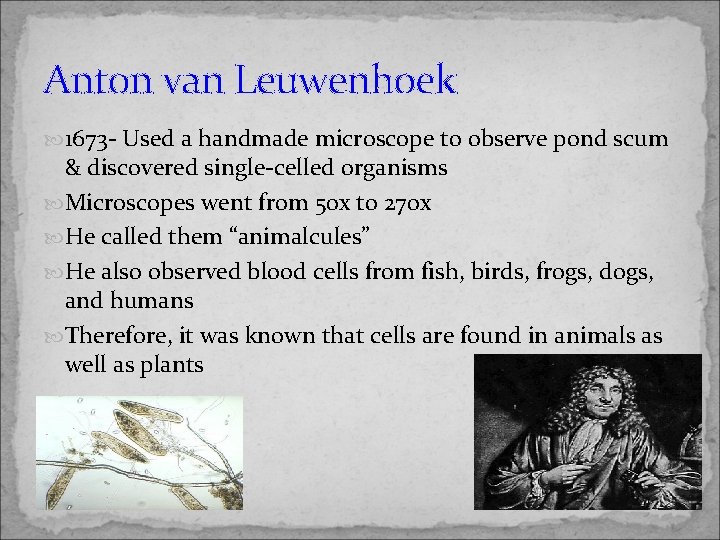
Anton van Leuwenhoek 1673 - Used a handmade microscope to observe pond scum & discovered single-celled organisms Microscopes went from 50 x to 270 x He called them “animalcules” He also observed blood cells from fish, birds, frogs, dogs, and humans Therefore, it was known that cells are found in animals as well as plants
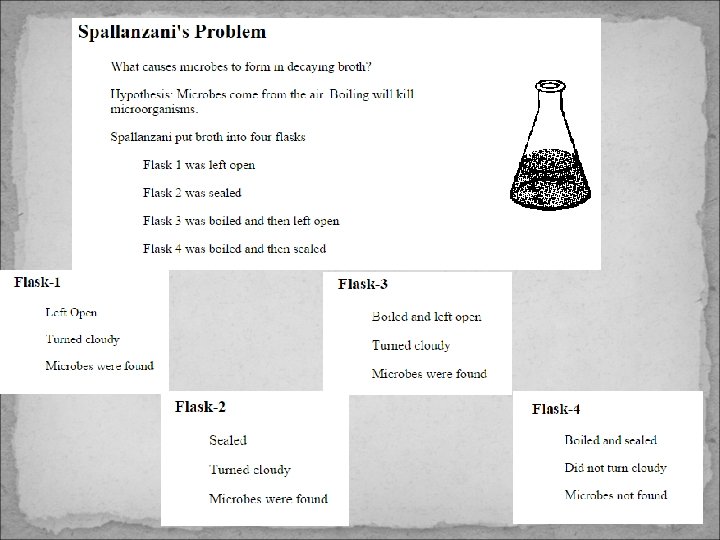
Lazzaro Spallanzani (1768) Researched theory of spontaneous generation Proved that microorganisms could be killed after an hour of boiling in broth Paved the way for Louis Pasteur
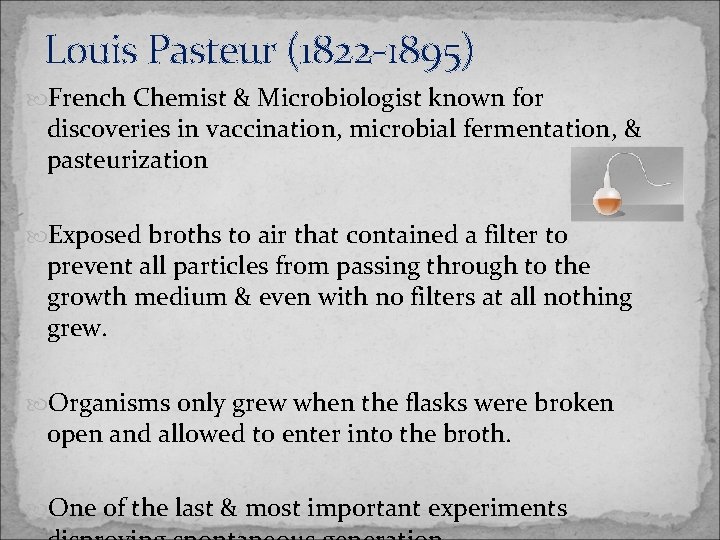
Louis Pasteur (1822 -1895) French Chemist & Microbiologist known for discoveries in vaccination, microbial fermentation, & pasteurization Exposed broths to air that contained a filter to prevent all particles from passing through to the growth medium & even with no filters at all nothing grew. Organisms only grew when the flasks were broken open and allowed to enter into the broth. One of the last & most important experiments
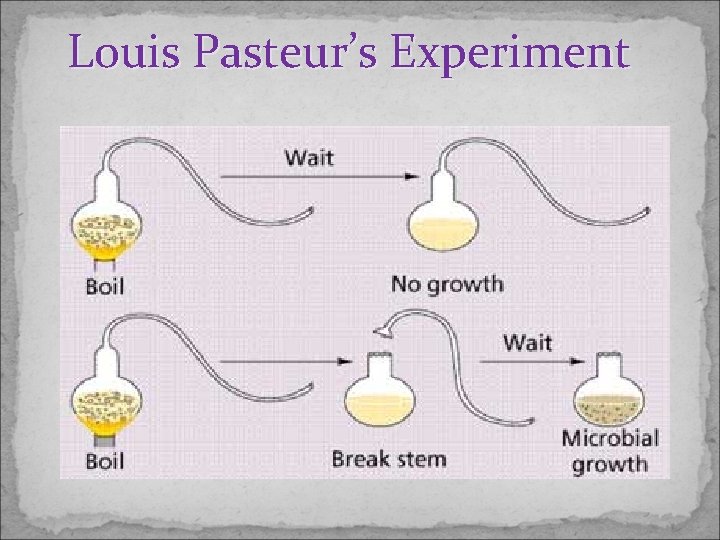
Louis Pasteur’s Experiment
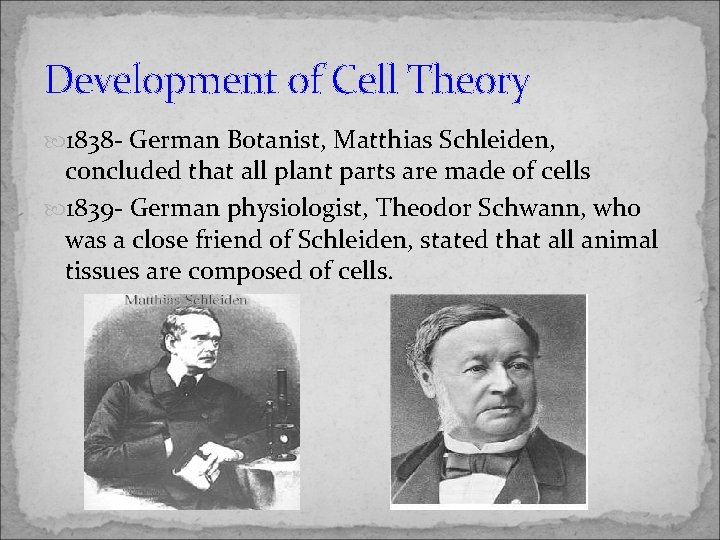
Development of Cell Theory 1838 - German Botanist, Matthias Schleiden, concluded that all plant parts are made of cells 1839 - German physiologist, Theodor Schwann, who was a close friend of Schleiden, stated that all animal tissues are composed of cells.
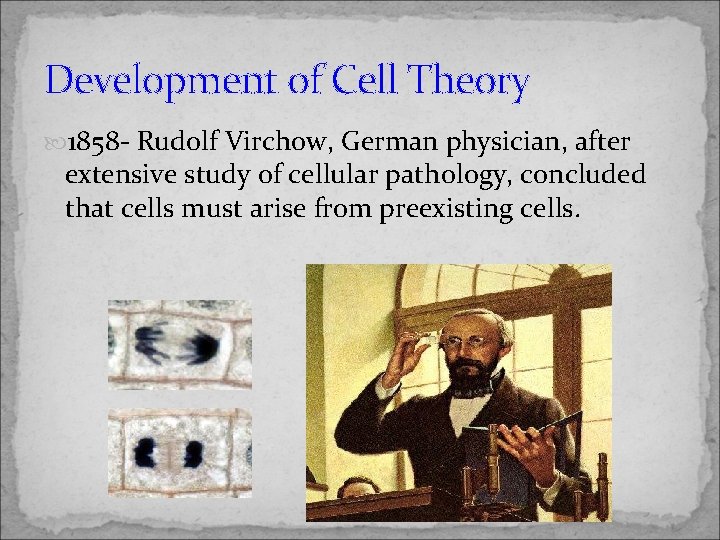
Development of Cell Theory 1858 - Rudolf Virchow, German physician, after extensive study of cellular pathology, concluded that cells must arise from preexisting cells.
The Cell Theory Complete The 3 Basic Components of the Cell Theory 1. All organisms are composed of one or more cells. 2. The cell is the basic unit of life in all living things. 3. All cells are produced by the division of preexisting cells.
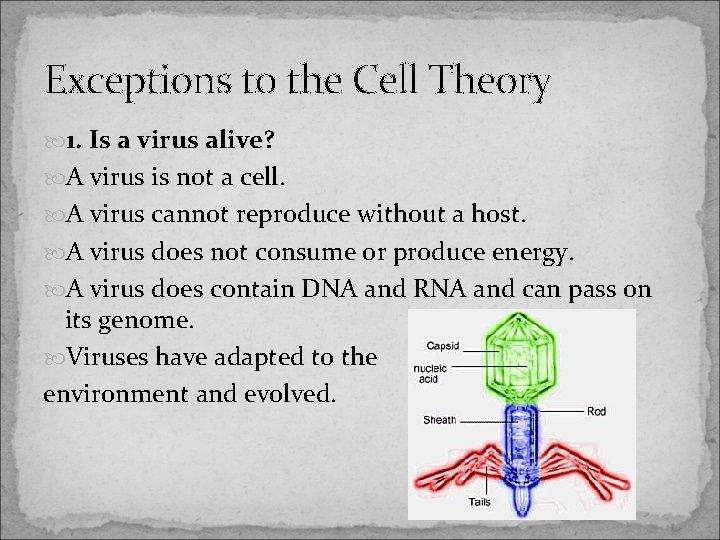
Exceptions to the Cell Theory 1. Is a virus alive? A virus is not a cell. A virus cannot reproduce without a host. A virus does not consume or produce energy. A virus does contain DNA and RNA and can pass on its genome. Viruses have adapted to the environment and evolved.
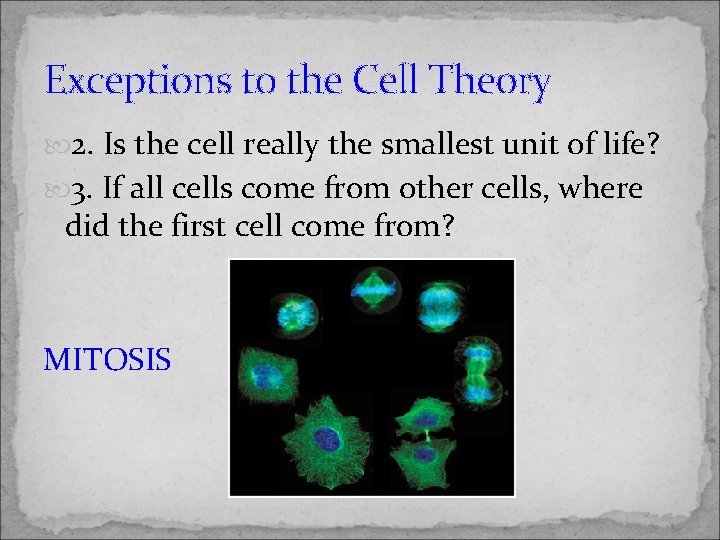
Exceptions to the Cell Theory 2. Is the cell really the smallest unit of life? 3. If all cells come from other cells, where did the first cell come from? MITOSIS
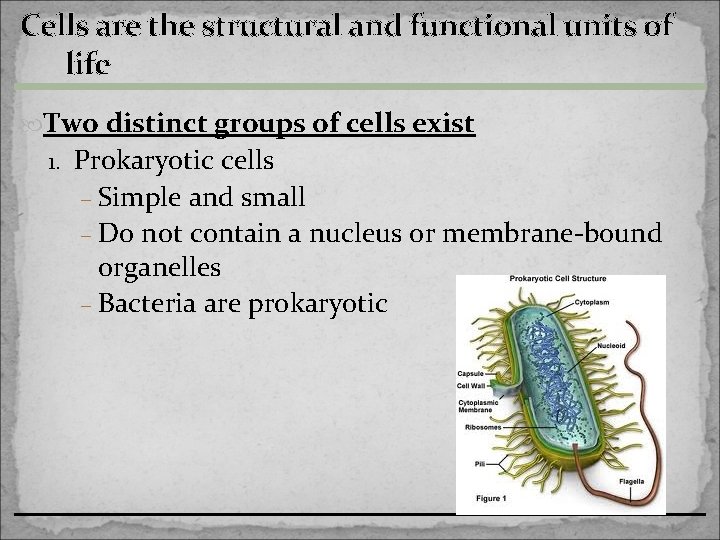
Cells are the structural and functional units of life Two distinct groups of cells exist 1. Prokaryotic cells – Simple and small – Do not contain a nucleus or membrane-bound organelles – Bacteria are prokaryotic
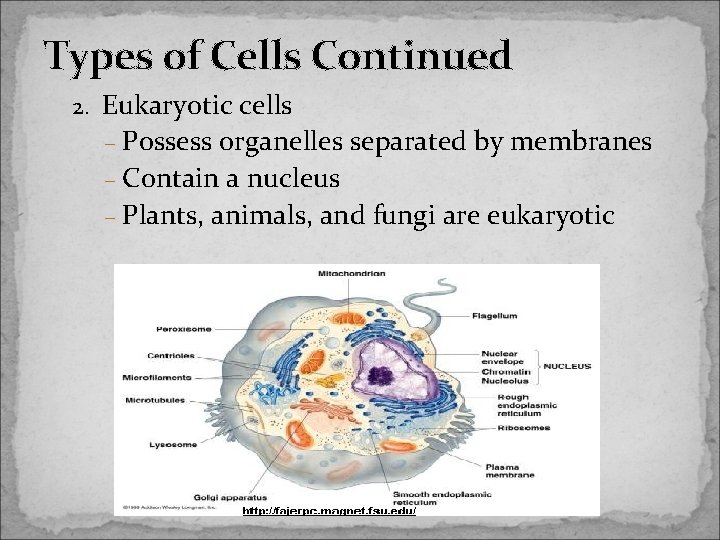
Types of Cells Continued 2. Eukaryotic cells – Possess organelles separated by membranes – Contain a nucleus – Plants, animals, and fungi are eukaryotic
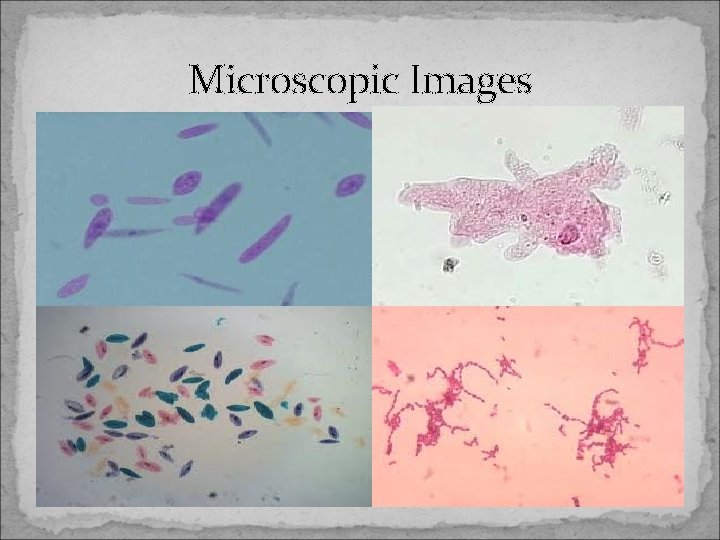
Microscopic Images
- Slides: 23