
CELL THEORY Before 17 th century no one
CELL THEORY • Before 17 th century, no one knew cells existed • Discovery of cells came with advent of microscopy • Most cells are too small to be seen with unaided eye. • Though Anton van Leeuwenhoek (1632 – 1723) Dutch scientist, first made hand-held microscope. The discovery of cells was made possible by Robert Hooke (1635 – 1703) who made improvements on the lens • Robert Brown (1773 – 1858), Scottish botanist discovered cell nucleus • Matthias Shleiden (1814 – 1881), German Botanist proposed that all plants composed of cells (in 1838) 1
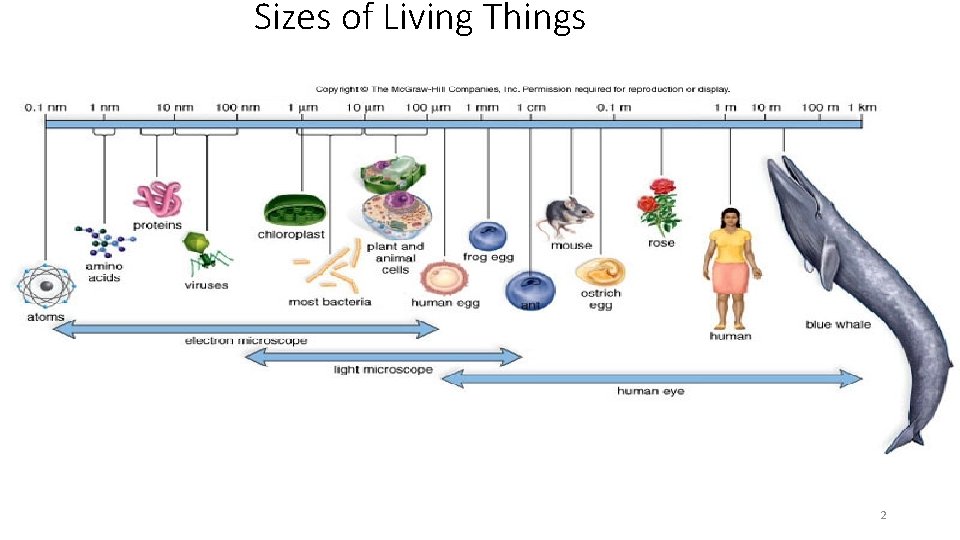
Sizes of Living Things 2
• Theador Schwann (1810 – 1882) German zoologist examined animal tissue and observed structures similar to what Shleiden observed in plants in 1839 • Rudolf Virchow (1821 – 1902). German doctor showed that cells are result of division of preexisting cells in 1850’s, thereby debunking law of spontaneous generation • cell theory was based on the work of the three German scientists • Virchow’s idea contradicted the idea of spontaneous generation (idea that nonliving things could give rise to organisms) Three Basic Principles or Tenets of Cell Theory • All living things are made of one or more cells. (Schwann and Schleiden, 1838 -39) 3
• Cells are the basic unit of structure &function in living things. (Schwann and Schleiden, 1838 -39) • Cells come only from the reproduction of existing cells or all cells arise from pre-existing cells (Rudolf Virchow, 1858) However, with further developments and advancements in the knowledge of cytology and molecular biology, some points were recently added to the above concepts which are now known as modern cell theory • The cell contains hereditary information DNA which is passed on from cell to another cell during cell division 4
• All cells are basically the same in chemical and metabolic activities • All basic chemical and physiological functions are carried out in side the cells (e. g. digestion, movement, respiration, etc. ) • A cell’s overall activity depends on the individual activities of subcellular structures within the cell (e. g organelles, plasmallema, etc. ) Cells exist in two forms • Prokaryotes • Eukaryotes Prokaryotes (Gr. , pro = primitive or before; karyon = nucleus). First to come into existence 5
The most primitive cells. They are one envelope system. • they lack a membrane-bound nucleus • They are structurally simple • They exist in two domains: o Bacteria § Four Shapes • Bacillus (rod) • Coccus (spherical) • Spirilla (spiral) • vibrio o Archaea § Live in extreme habitats 6

Shapes of Bacterial Cells 7
• Eukaryotic Cells (Gr. , eu = good, karyotic = nucleated) are two envelope system. They have secondary membrane which envelope the nucleus and other internal organelles. The size ranges between 10 to 100μm • Domain Eukarya o Protists o Fungi o Plants o Animals 8
Cells contain: • Plasma membrane • Cytoplasm; which in turn contains; • Membrane-bound nucleus • Specialized organelles • Cytoskeleton 9
CELL BIOLOGY • The cell is the basic unit of structure and function in living things. Organisms exist as unicellular or multicellular • Cells vary in their shape, size, and arrangements but all cells have similar components, each with a particular function. • There about 200 different types of cells • About 100 trillion of cells make up human body • All human cell are microscopic in size, shape and function. • The diameter range from 7. 5 micrometer (RBC) to 150 mm (ovum) 10
• Cell components are; o Plasma membrane or cell membrane (in plants) o Cytoplasm. Note that cytosol/intracellular fluid/ cytoplasmic matrix, is part of cytoplasm, is a liquid matrix around the organelles o Organelles are suspended in the cytosol. There are two types; membrane-bound and nonmembrane-bound 11
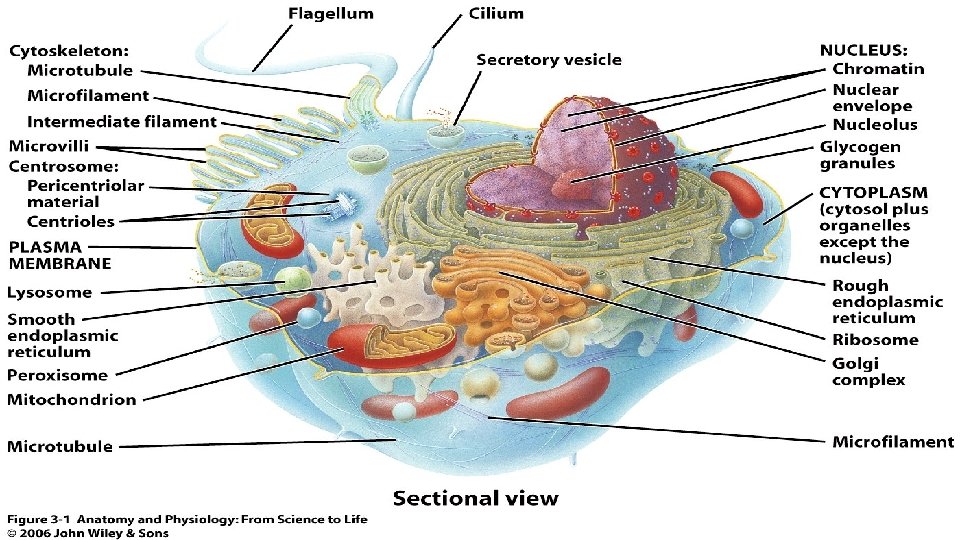
CELL STRUCTURE • This constitutes the various components of the cells • Some of the 100 trillion of cells make up human body • All human cell are microscopic in size, shape and function • In animal cells; the components of cells are q. Cell membrane q. Cytoplasm q Nucleus q. Membrane-bound and nonmembrane-bound oraganelles q. Cytoskeleton 12
13
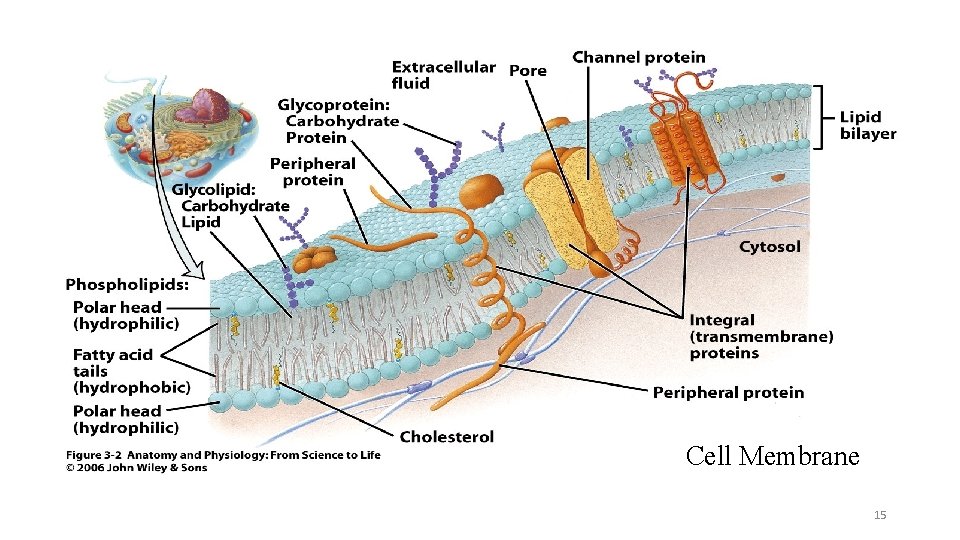
THE CELL (PLASMA) MEMBRANE • is the boundary between the cell and its exterior environment. • The cell membrane is a thin, dynamic membrane that encloses the cell and controls what enters and leaves the cell • It consists of a lipid bilayer, seen by electron microscopy as two parallel electron - dense (dark) lines with a narrow gap between them. • is only 8 – 10 nm thick, and cannot be seen by light microscopy without special dyes Fluid Mosaic Model • A model used to describe the dynamic nature and structure of cell membrane • composed of a double layer (bilayer) of phospholipid molecules with many protein molecules dispersed within it; 14
Cell Membrane 15
• Singer and Nicholson, in the early 1970 s, proposed the fluid mosaic model of membrane structure • This model was later confirmed by several researchers Membrane Proteins v there are essentially three types; intrinsic / integral proteins, extrinsic / peripheral proteins and transmembrane proteins v. Some membrane proteins have carbohydrates attached to them, forming glycoproteins that act as identification markers v. Some membrane proteins are receptors that react to specific chemicals, sometimes permitting a process called signal transduction v Some also serve as receptors to certain drugs 16
Other components in the membrane • Glycoproteins ; when membrane proteins are conjugated with polysaccharide • Glycolipids; when membrane lipids are conjugated with polysaccharide • These polysaccharide layers are termed glycocalyx FUNCTIONS OF CELL MEMBRANE § Serves as boundary of the cell. § Serve as markers that identify the cells. § Play significant role in transportation. § Cell recognition proteins-allow cell to recognize other cells 17
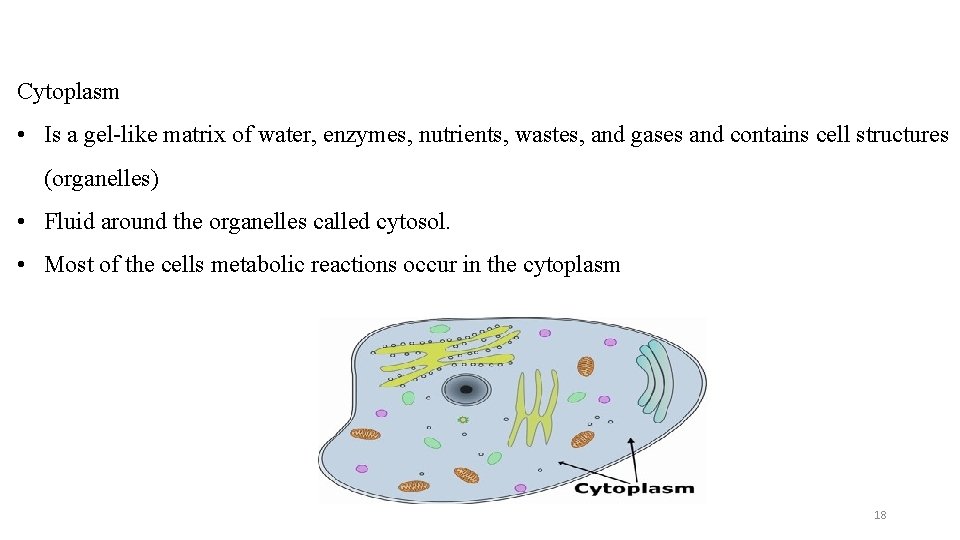
Cytoplasm • Is a gel-like matrix of water, enzymes, nutrients, wastes, and gases and contains cell structures (organelles) • Fluid around the organelles called cytosol. • Most of the cells metabolic reactions occur in the cytoplasm 18
NUCLEUS 19
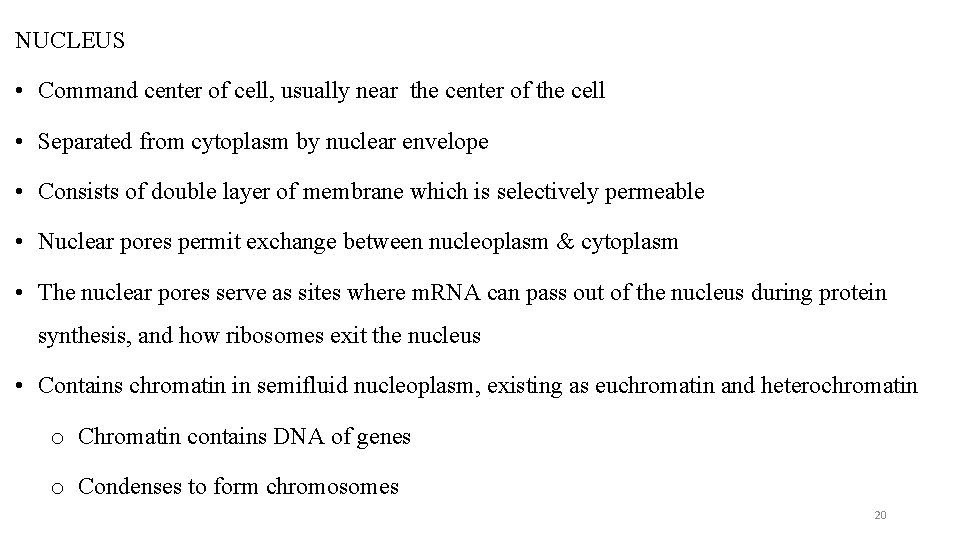
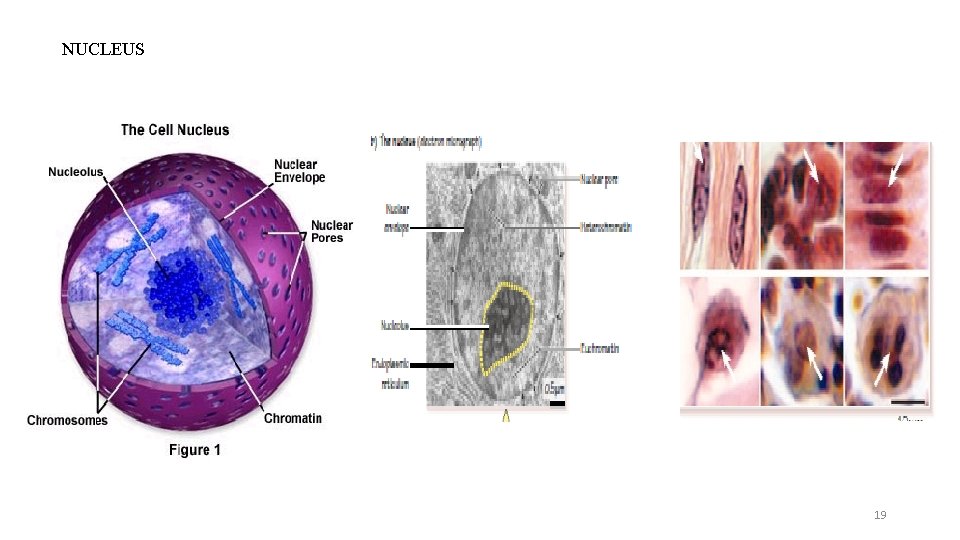
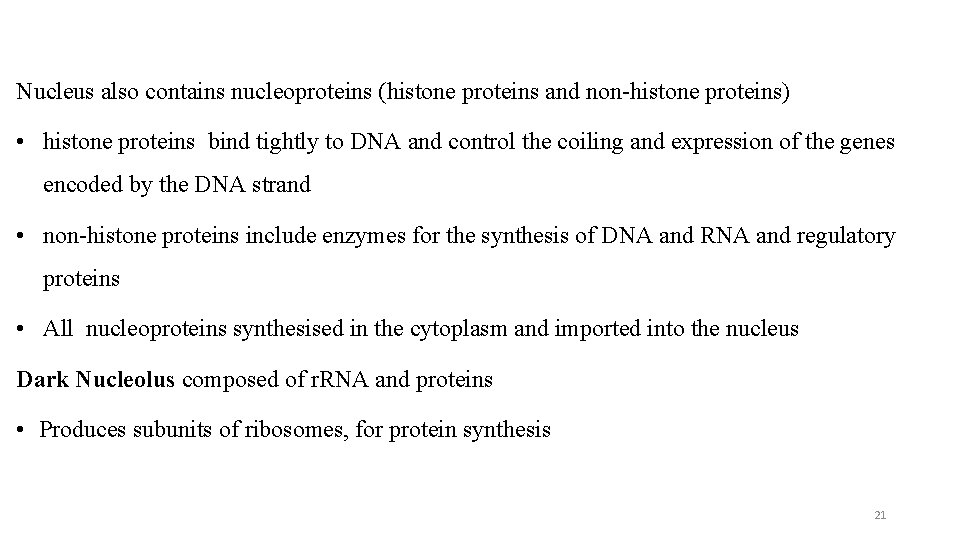
NUCLEUS • Command center of cell, usually near the center of the cell • Separated from cytoplasm by nuclear envelope • Consists of double layer of membrane which is selectively permeable • Nuclear pores permit exchange between nucleoplasm & cytoplasm • The nuclear pores serve as sites where m. RNA can pass out of the nucleus during protein synthesis, and how ribosomes exit the nucleus • Contains chromatin in semifluid nucleoplasm, existing as euchromatin and heterochromatin o Chromatin contains DNA of genes o Condenses to form chromosomes 20
Nucleus also contains nucleoproteins (histone proteins and non-histone proteins) • histone proteins bind tightly to DNA and control the coiling and expression of the genes encoded by the DNA strand • non-histone proteins include enzymes for the synthesis of DNA and RNA and regulatory proteins • All nucleoproteins synthesised in the cytoplasm and imported into the nucleus Dark Nucleolus composed of r. RNA and proteins • Produces subunits of ribosomes, for protein synthesis 21
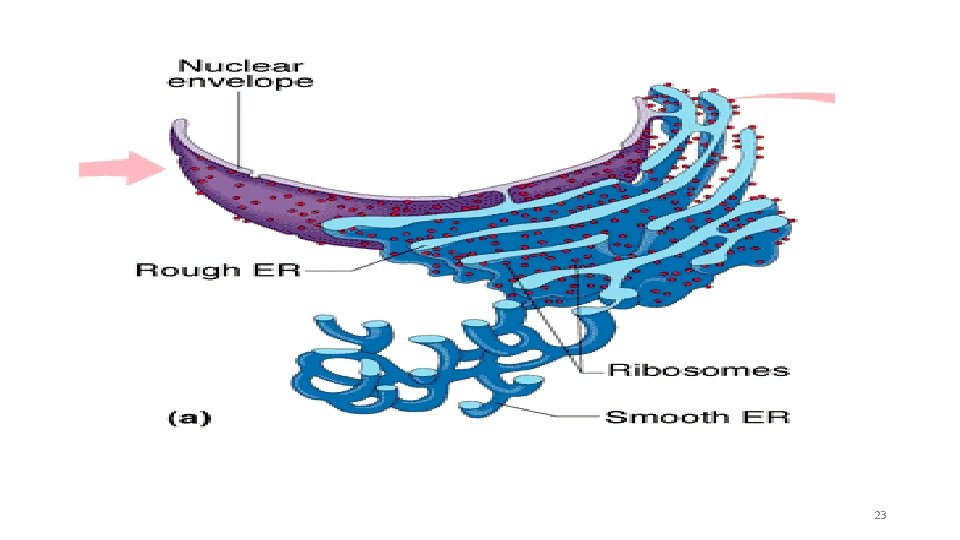
ENDOPLASMIC RETICULUM • It has a single membrane system extending throughout the cytoplasm • A network of interconnected parallel membranes (maze), that is continuous with the nuclear membrane; Two types: Rough Endoplasmic Reticulum (RER) • ER studded with ribosomes; • Function = protein synthesis and intracelluar transportation of molecules Smooth Endoplasmic Reticulum (SER) lacks ribosomes; • Function = lipid & cholesterol synthesis and • Stores calcium 22
23
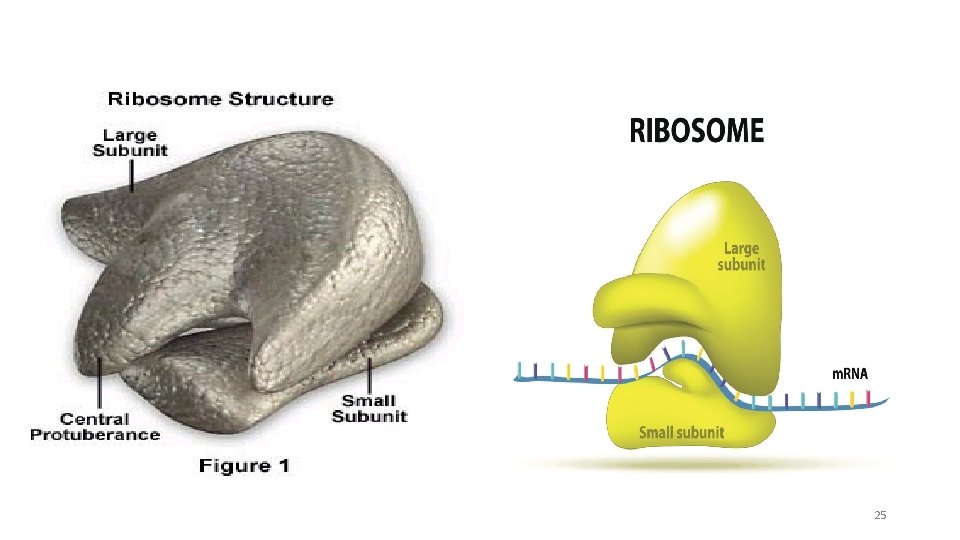
RIBOSOMES • Every cell contains thousand of ribosome's and many of them attached to the RER. • Each ribosome is non-membranous structure, made of two pieces large unit and small unit and • Each subunit composed of r. RNA. Function: protein synthesis • Protein released from the ER are not mature, need further processing in Golgi complex before they are able to perform their function within or outside the cell 24
25
Golgi Apparatus/ Complex or Body • flattened membranous sacs (cisternae). • Arranged in stacks ("stack of pancakes") associated with many vesicles (membrane bound sacs containing proteins); • Function = modification, packaging, and transport of proteins; • Encloses digestive enzymes into membranes to form lysosomes 26
GOLGI COMPLEX 27
Mitochondria • kidney-shaped organelle • Has double membrane; outer and inner membranes • whose inner membrane is folded into shelf-like partitions called cristae; • "Powerhouse" of the cell = site of cellular respiration where energy is released from glucos • It has its own DNA and RNA • Can produce its own proteins • capable of self-sufficiency • Note the endosymbiosis theory 28
29
LYSOSOME • spherical membranous sacs containing digestive enzymes; • "suicide sacs" which destroy anything the cell no longer wants or needs. • Autolysis is the process by which worn cell parts are digested by autophagy • The lysosomal enzymes comprise more than 40 different degradative enzymes • including proteases • lipases • nucleases. • These are collectively known as acid hydrolases because they are optimally active at a p. H of about 5. 0 30
Peroxisomes: • Membranous sacs containing oxidase enzymes; • Function = detoxification of harmful or toxic substances (i. e. alcohol, formaldehyde, oxygen free radicals); • H 2 O 2 (peroxide) ----> water • Similar to lysosomes o Membrane-bounded vesicles o Enclose enzymes 31
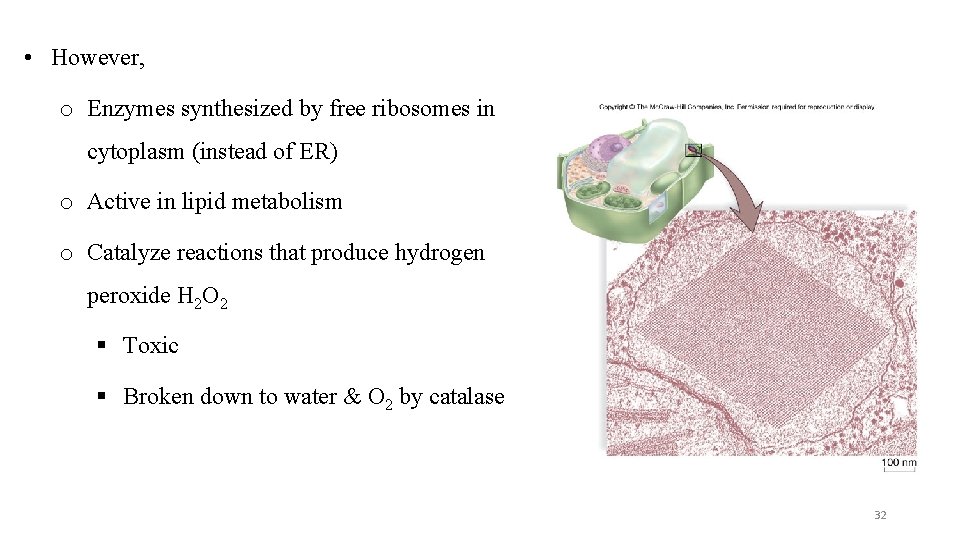
• However, o Enzymes synthesized by free ribosomes in cytoplasm (instead of ER) o Active in lipid metabolism o Catalyze reactions that produce hydrogen peroxide H 2 O 2 § Toxic § Broken down to water & O 2 by catalase 32
- Slides: 32