
Cell Theory and Types of Cells Cells Smallest
- Slides: 15
Cell Theory and Types of Cells
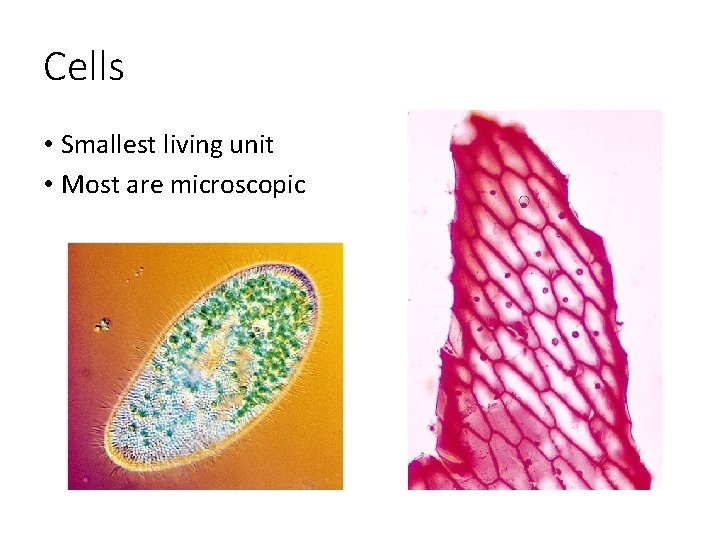
Cells • Smallest living unit • Most are microscopic
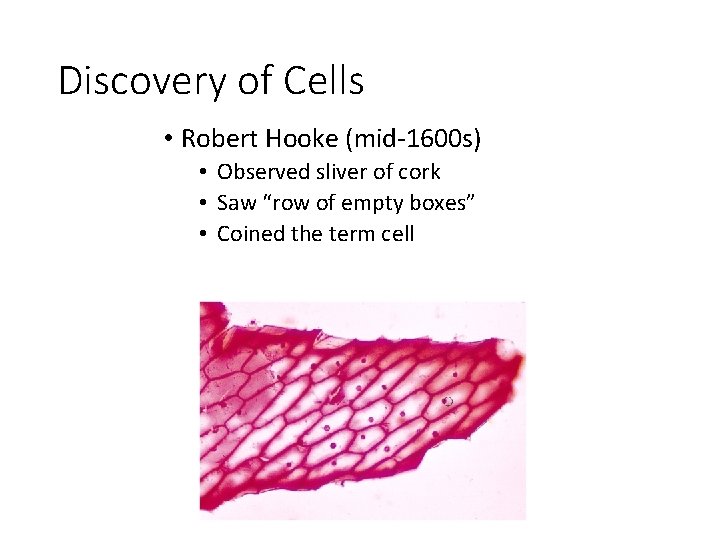
Discovery of Cells • Robert Hooke (mid-1600 s) • Observed sliver of cork • Saw “row of empty boxes” • Coined the term cell
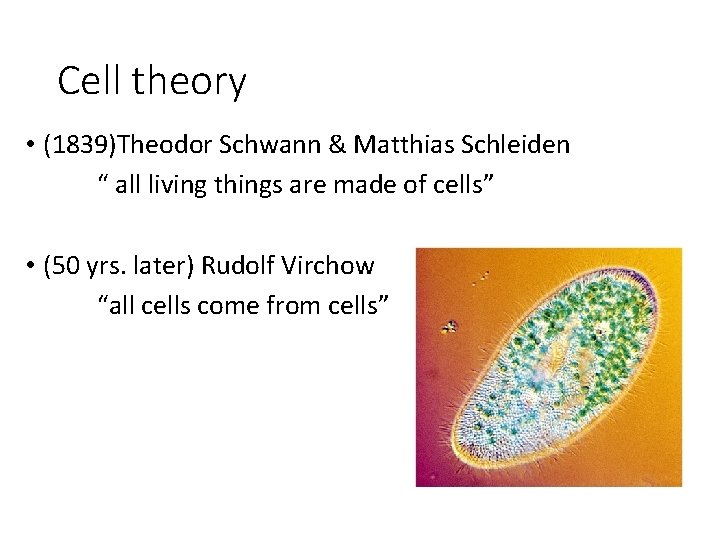
Cell theory • (1839)Theodor Schwann & Matthias Schleiden “ all living things are made of cells” • (50 yrs. later) Rudolf Virchow “all cells come from cells”
Principles of Cell Theory • All living things are made of cells • Smallest living unit of structure and function of all organisms is the cell • All cells arise from preexisting cells (this principle discarded the idea of spontaneous generation)
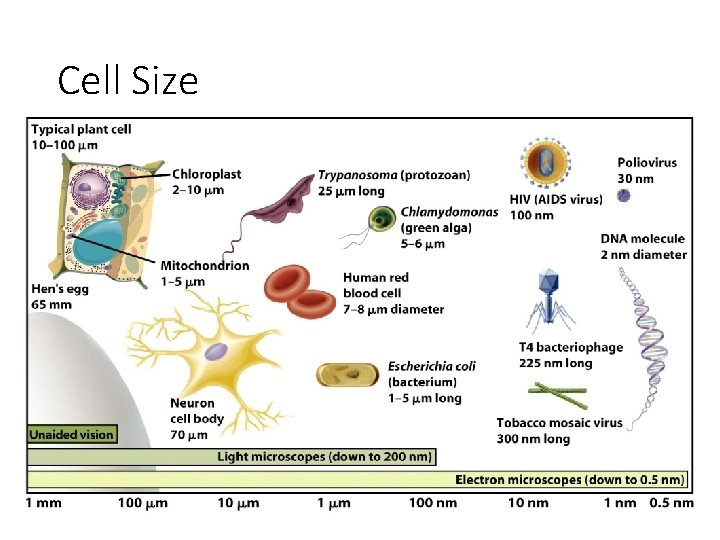
Cell Size
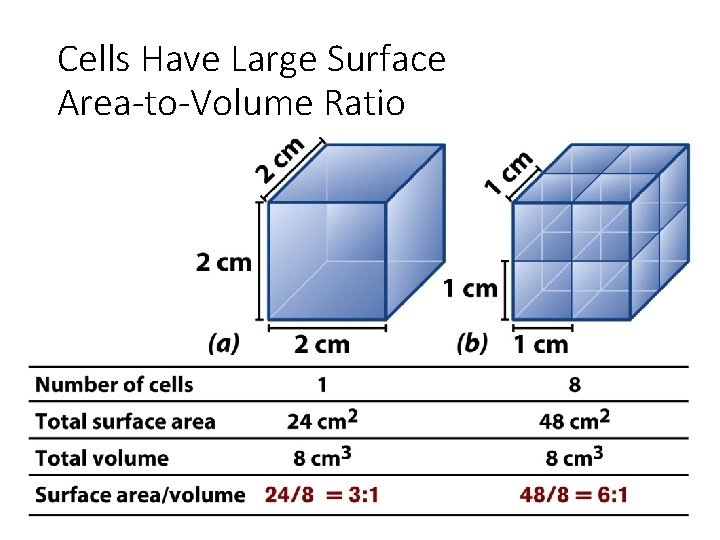
Cells Have Large Surface Area-to-Volume Ratio
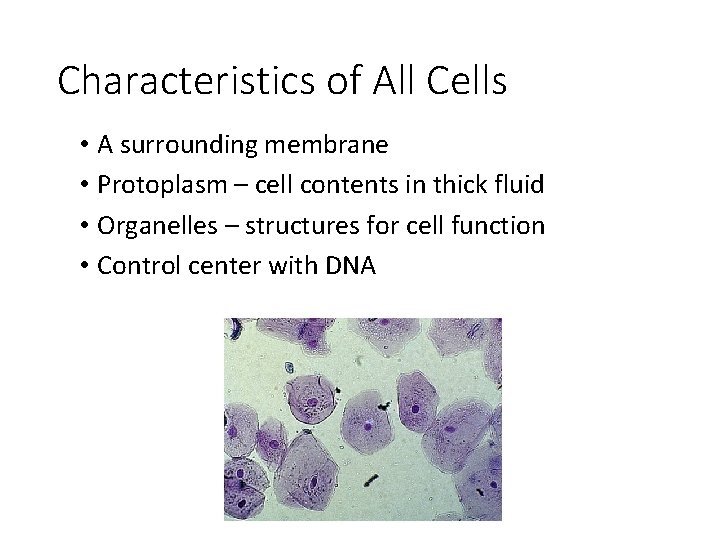
Characteristics of All Cells • A surrounding membrane • Protoplasm – cell contents in thick fluid • Organelles – structures for cell function • Control center with DNA
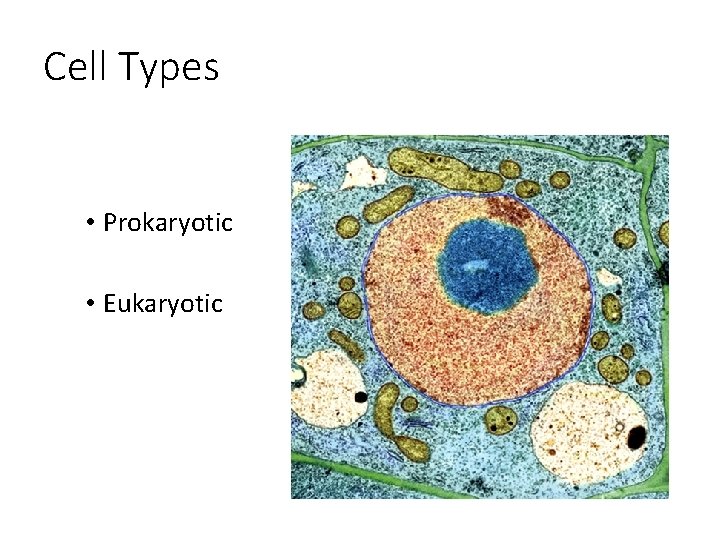
Cell Types • Prokaryotic • Eukaryotic
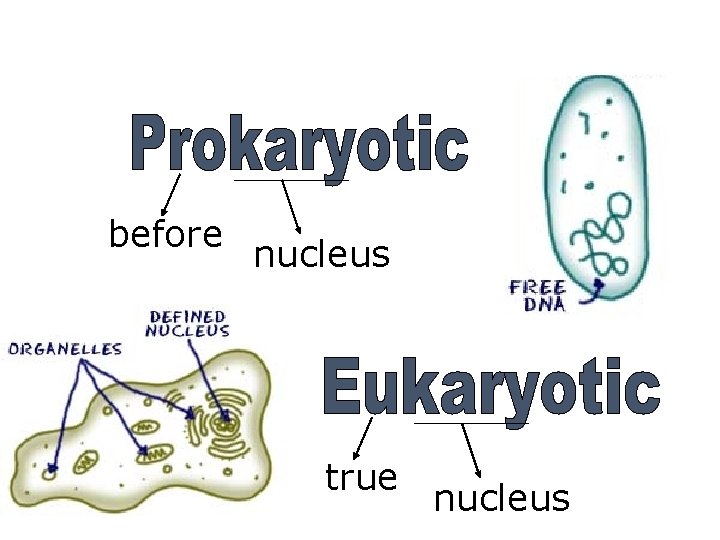
before nucleus true nucleus
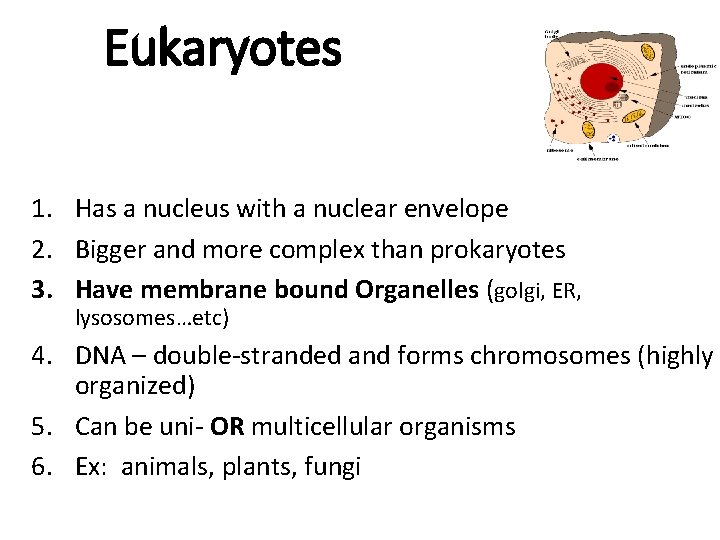
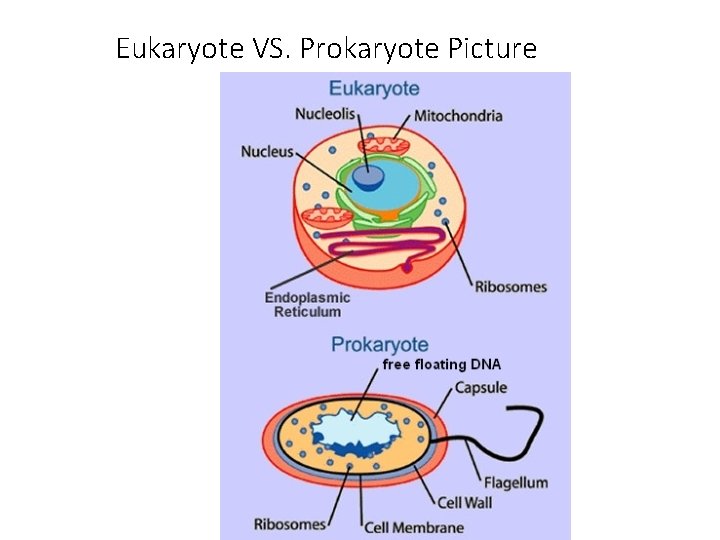
Eukaryotes 1. Has a nucleus with a nuclear envelope 2. Bigger and more complex than prokaryotes 3. Have membrane bound Organelles (golgi, ER, lysosomes…etc) 4. DNA – double-stranded and forms chromosomes (highly organized) 5. Can be uni- OR multicellular organisms 6. Ex: animals, plants, fungi
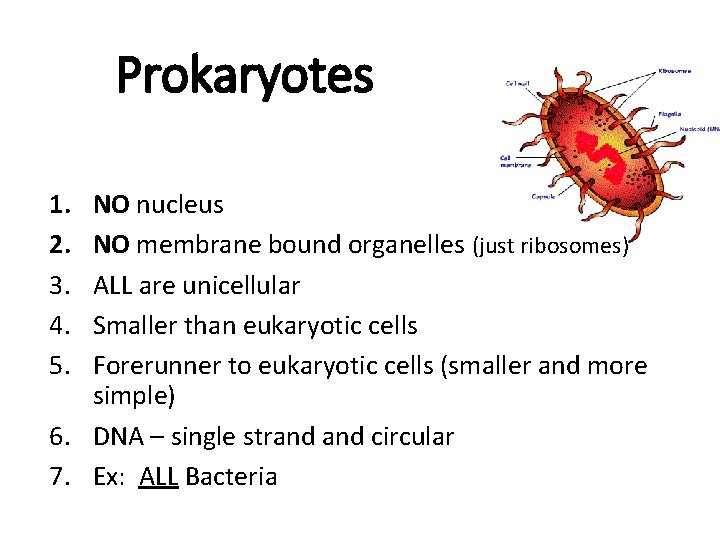
Prokaryotes 1. 2. 3. 4. 5. NO nucleus NO membrane bound organelles (just ribosomes) ALL are unicellular Smaller than eukaryotic cells Forerunner to eukaryotic cells (smaller and more simple) 6. DNA – single strand circular 7. Ex: ALL Bacteria
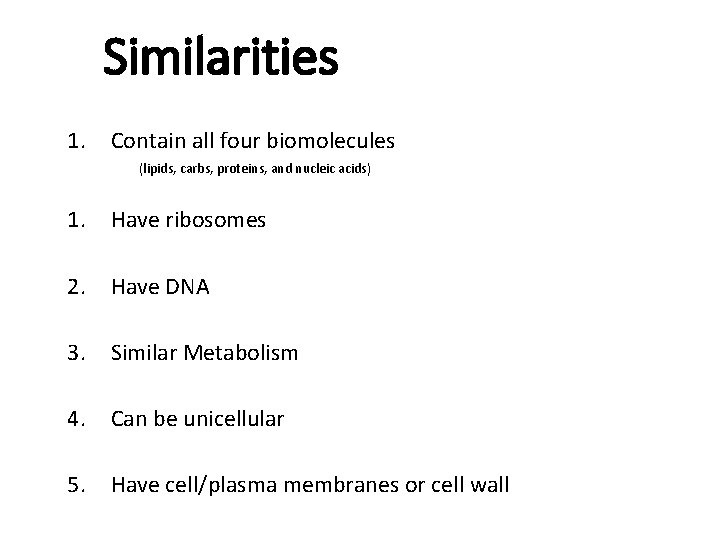
Similarities 1. Contain all four biomolecules (lipids, carbs, proteins, and nucleic acids) 1. Have ribosomes 2. Have DNA 3. Similar Metabolism 4. Can be unicellular 5. Have cell/plasma membranes or cell wall
Eukaryote VS. Prokaryote Picture
Create a Venn Diagram of Prokaryotes and Eukaryotes