
Cell Theory and Prokaryote vs Eukaryote What is

- Slides: 13
Cell Theory and Prokaryote vs. Eukaryote
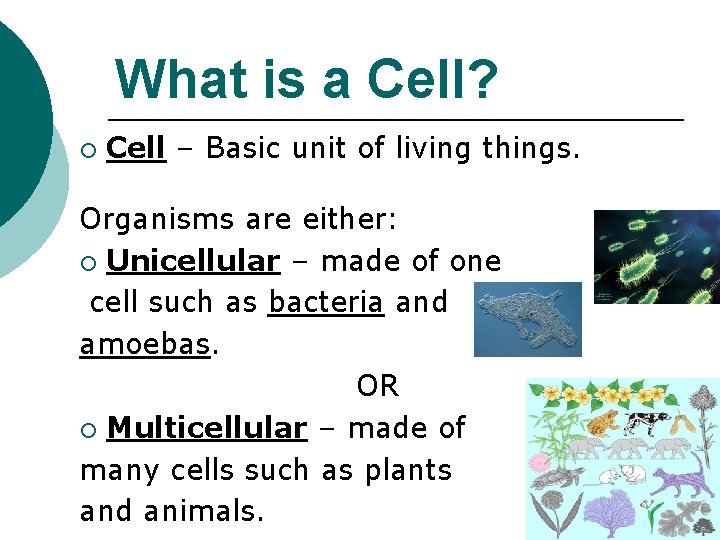
What is a Cell? ¡ Cell – Basic unit of living things. Organisms are either: ¡ Unicellular – made of one cell such as bacteria and amoebas. OR ¡ Multicellular – made of many cells such as plants and animals.
Scientists to Remember ¡ Robert Hooke (1665) – Observed “cells” in cork
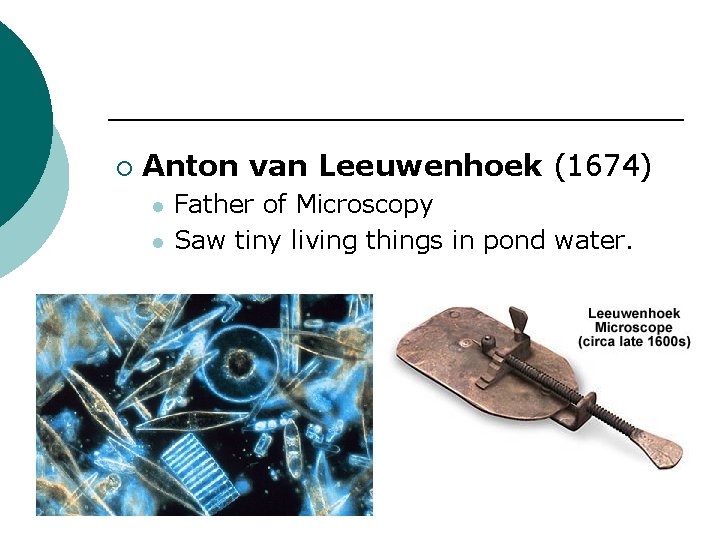
¡ Anton van Leeuwenhoek (1674) l l Father of Microscopy Saw tiny living things in pond water.
Scientists Robert Hooke (1665) – Observed “cells” in cork ¡ Anton van Leeuwenhoek (1674) – Saw tiny living things in pond water. ¡ Matthias Schleiden (1838) – Plants are made of cells. ¡ Theodor Schwann (1839) – Animals are made of cells. ¡ Rudolf Virchow (1855) – New cells come from existing cells. ¡
Scientists ¡ ¡ Janet Plowe (1931) – Cell membrane is a physical structure. Lynn Margulis (1970) – Organelles were once free-living cells.
Cell Theory ¡ Confirmed discoveries that all scientists believe to be true about cells: l 1. Cells are the basic unit of life. l 2. All living things are made of cells. l 3. New cells are produced from existing cells.
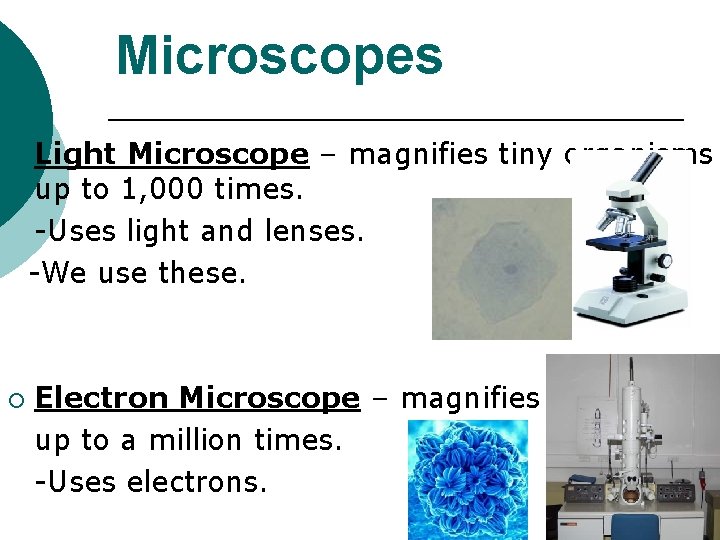
Microscopes ¡ ¡ Light Microscope – magnifies tiny organisms up to 1, 000 times. -Uses light and lenses. -We use these. Electron Microscope – magnifies up to a million times. -Uses electrons.
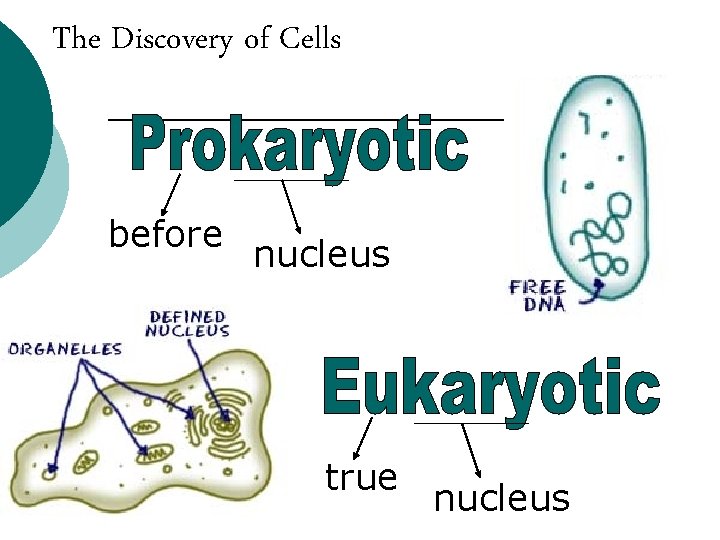
The Discovery of Cells before nucleus true nucleus
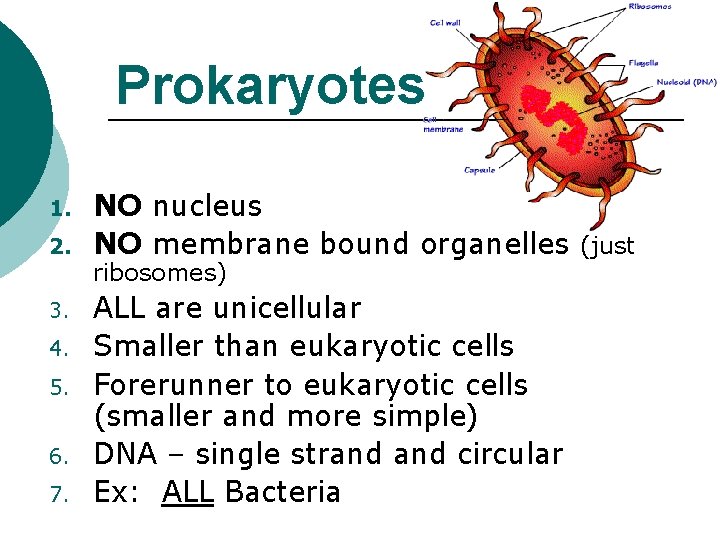
Prokaryotes 1. 2. 3. 4. 5. 6. 7. NO nucleus NO membrane bound organelles (just ribosomes) ALL are unicellular Smaller than eukaryotic cells Forerunner to eukaryotic cells (smaller and more simple) DNA – single strand circular Ex: ALL Bacteria
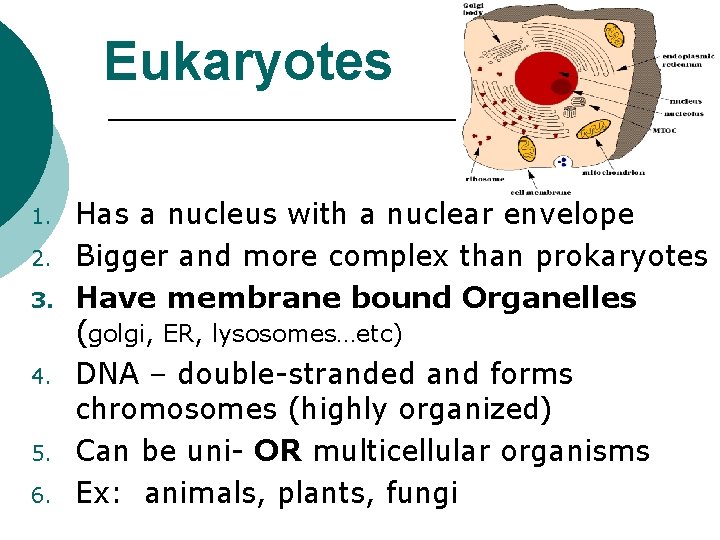
Eukaryotes 1. 2. 3. 4. 5. 6. Has a nucleus with a nuclear envelope Bigger and more complex than prokaryotes Have membrane bound Organelles (golgi, ER, lysosomes…etc) DNA – double-stranded and forms chromosomes (highly organized) Can be uni- OR multicellular organisms Ex: animals, plants, fungi
Similarities 1. Contain all four biomolecules (lipids, carbs, proteins, and nucleic acids) 1. Have ribosomes 2. Have DNA 3. Similar Metabolism 4. Can be unicellular 5. Have cell/plasma membranes or cell wall
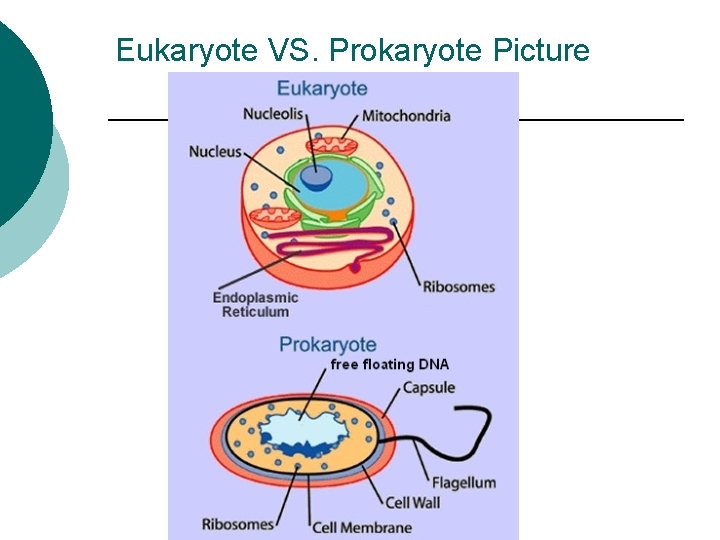
Eukaryote VS. Prokaryote Picture