
Cell The Cell is the basic unit of

Cell The Cell is the basic unit of life They make up all living things Hooke-1 st person to name the cells (studied cork) There around 75 trillion cells in the human body.
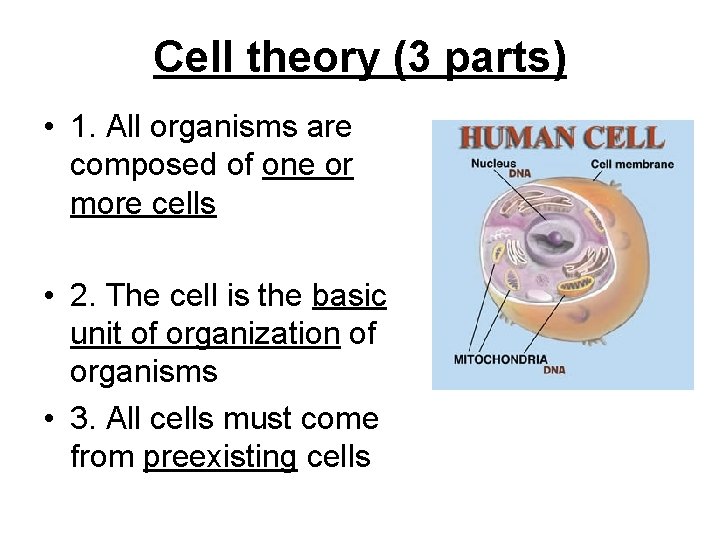
Cell theory (3 parts) • 1. All organisms are composed of one or more cells • 2. The cell is the basic unit of organization of organisms • 3. All cells must come from preexisting cells
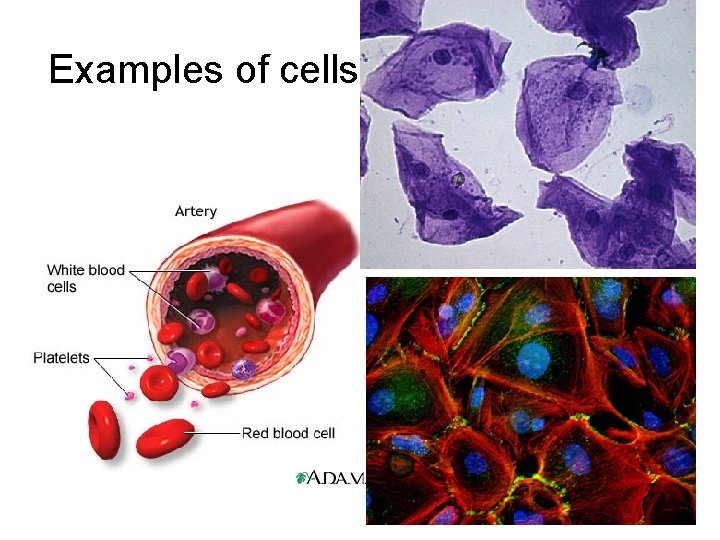
Examples of cells
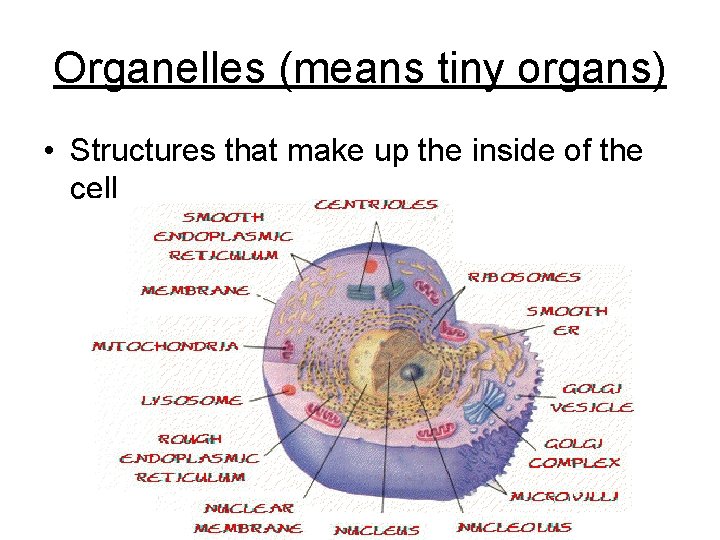
Organelles (means tiny organs) • Structures that make up the inside of the cell
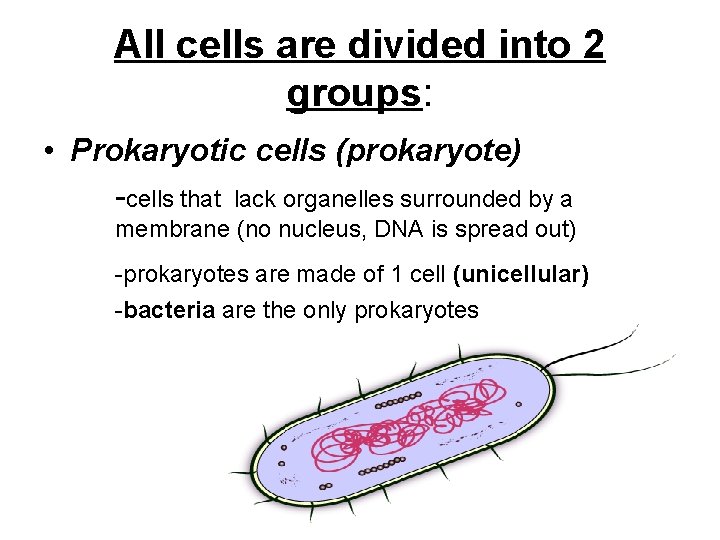
All cells are divided into 2 groups: • Prokaryotic cells (prokaryote) -cells that lack organelles surrounded by a membrane (no nucleus, DNA is spread out) -prokaryotes are made of 1 cell (unicellular) -bacteria are the only prokaryotes
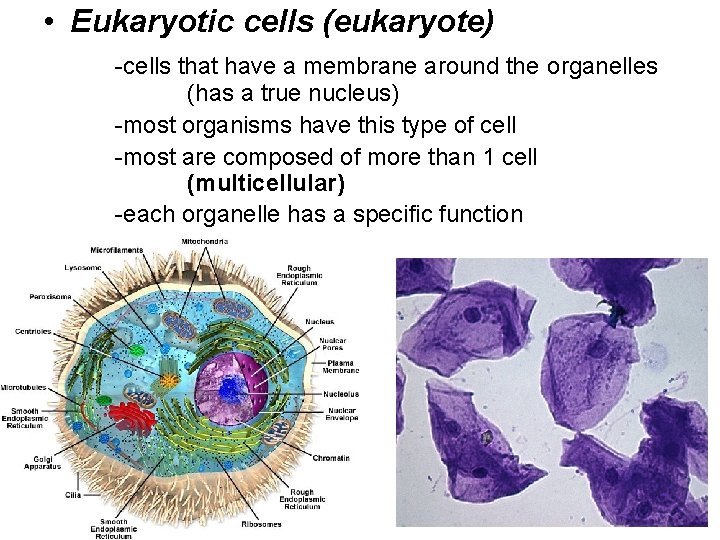
• Eukaryotic cells (eukaryote) -cells that have a membrane around the organelles (has a true nucleus) -most organisms have this type of cell -most are composed of more than 1 cell (multicellular) -each organelle has a specific function
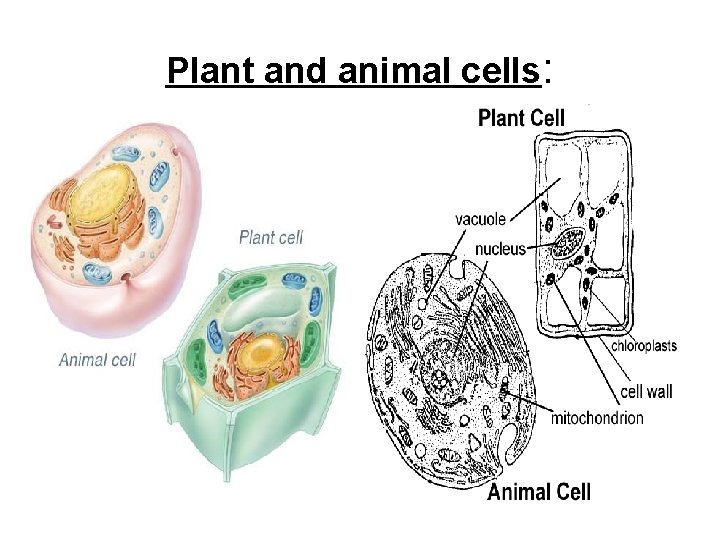
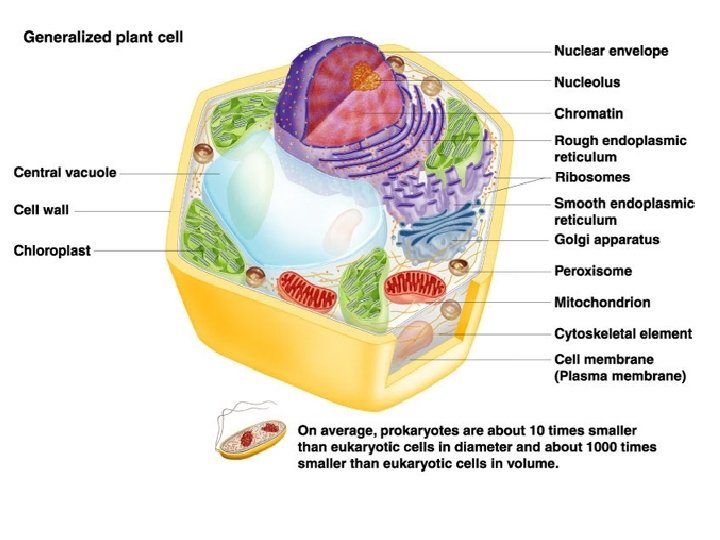
Plant and animal cells:
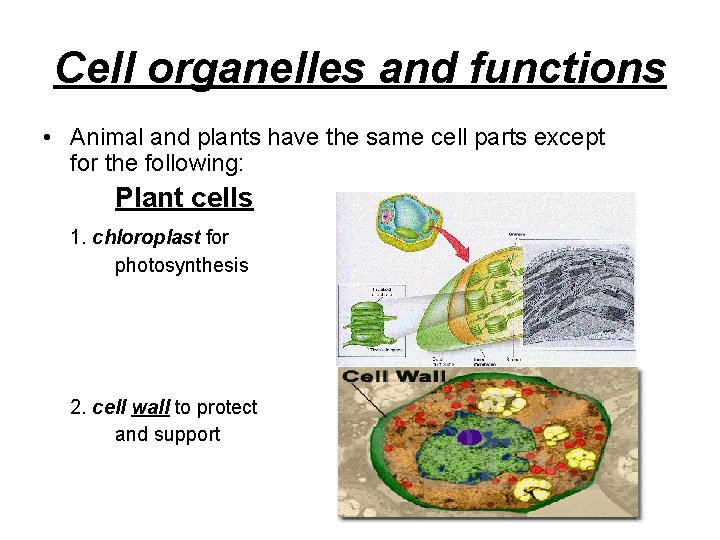
Cell organelles and functions • Animal and plants have the same cell parts except for the following: Plant cells 1. chloroplast for photosynthesis 2. cell wall to protect and support
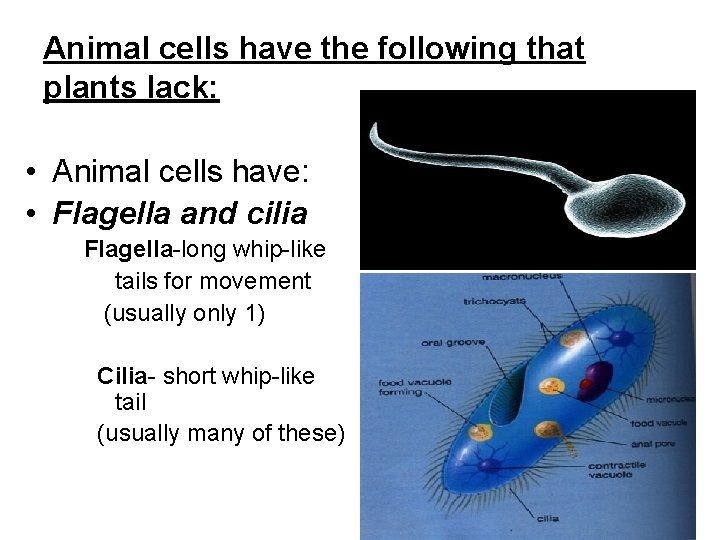
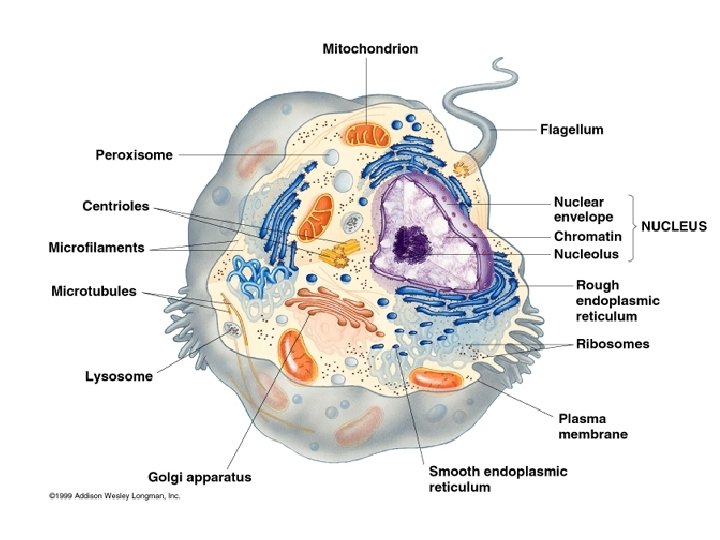
Animal cells have the following that plants lack: • Animal cells have: • Flagella and cilia Flagella-long whip-like tails for movement (usually only 1) Cilia- short whip-like tail (usually many of these)
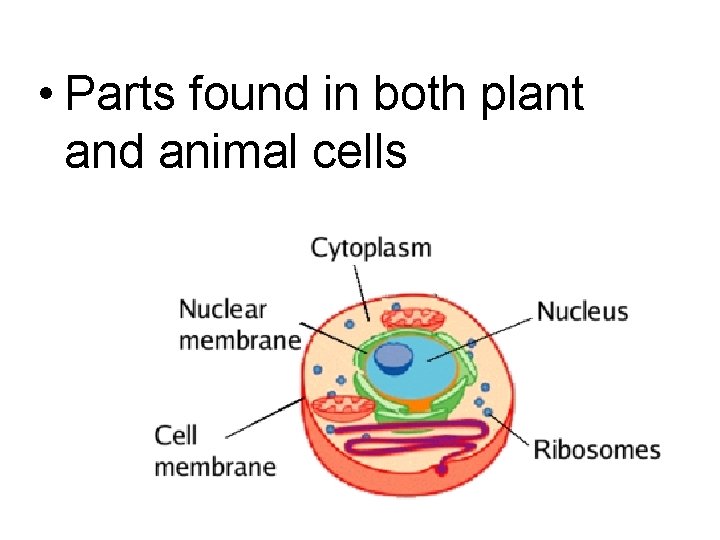
• Parts found in both plant and animal cells
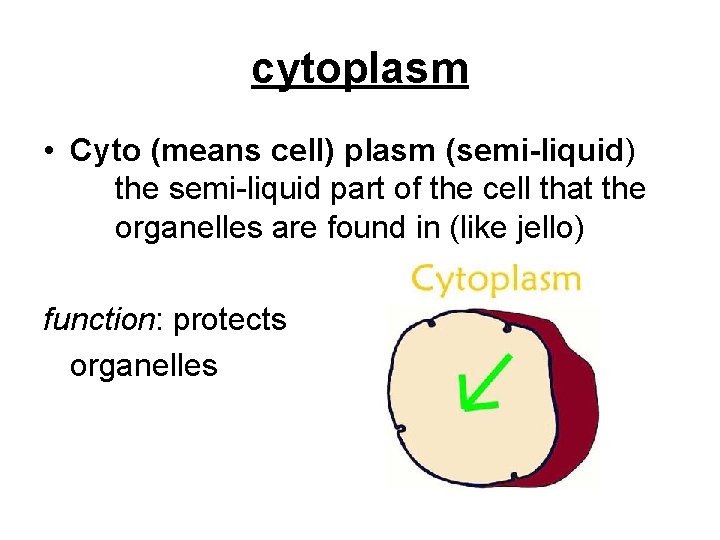
cytoplasm • Cyto (means cell) plasm (semi-liquid) the semi-liquid part of the cell that the organelles are found in (like jello) function: protects organelles
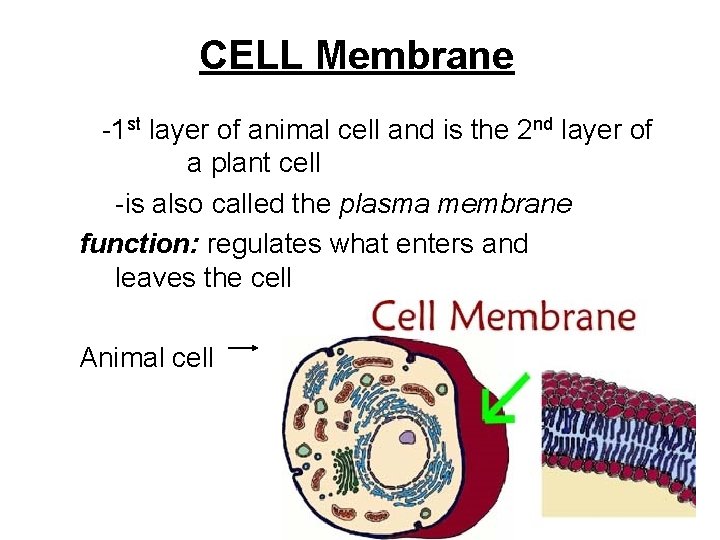
CELL Membrane -1 st layer of animal cell and is the 2 nd layer of a plant cell -is also called the plasma membrane function: regulates what enters and leaves the cell Animal cell
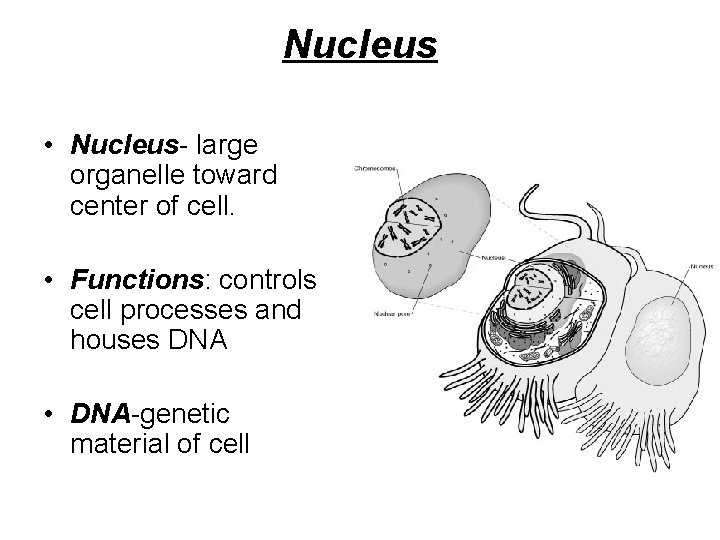
Nucleus • Nucleus- large organelle toward center of cell. • Functions: controls cell processes and houses DNA • DNA-genetic material of cell
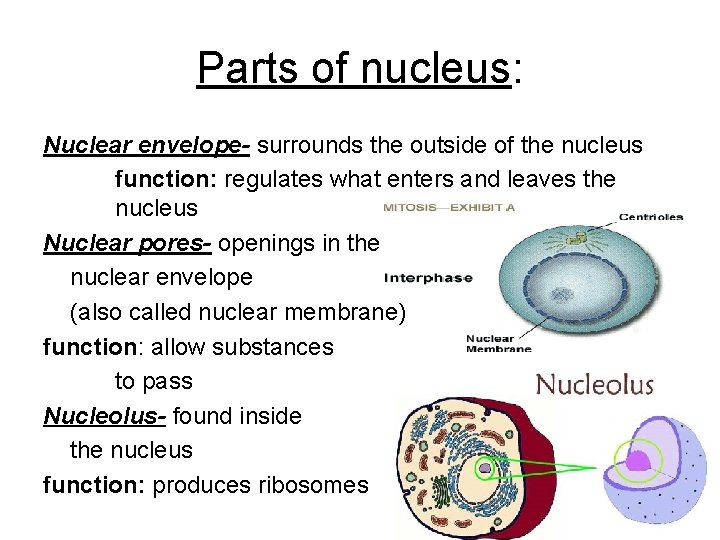
Parts of nucleus: Nuclear envelope- surrounds the outside of the nucleus function: regulates what enters and leaves the nucleus Nuclear pores- openings in the nuclear envelope (also called nuclear membrane) function: allow substances to pass Nucleolus- found inside the nucleus function: produces ribosomes
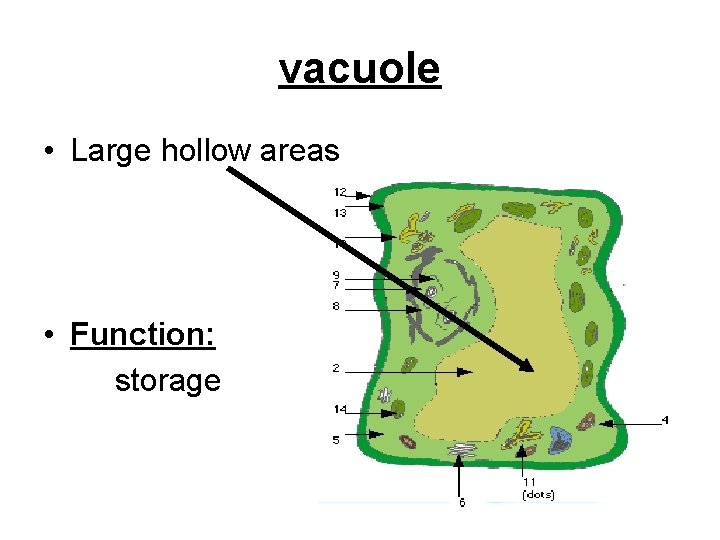
vacuole • Large hollow areas • Function: storage
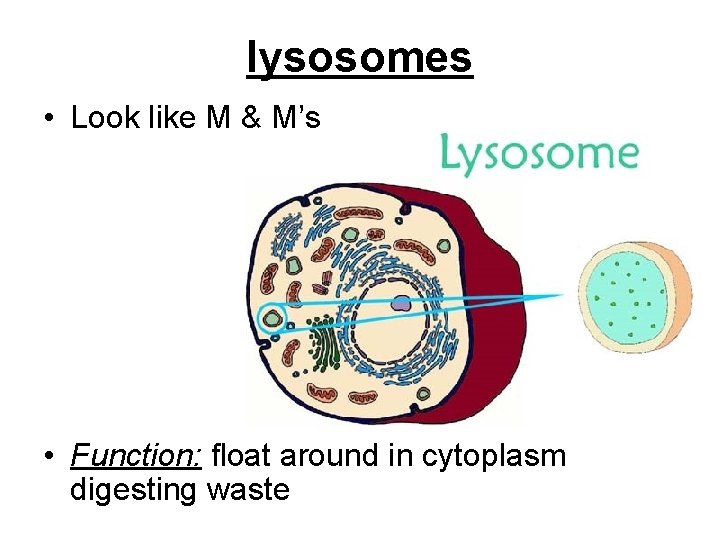
lysosomes • Look like M & M’s • Function: float around in cytoplasm digesting waste
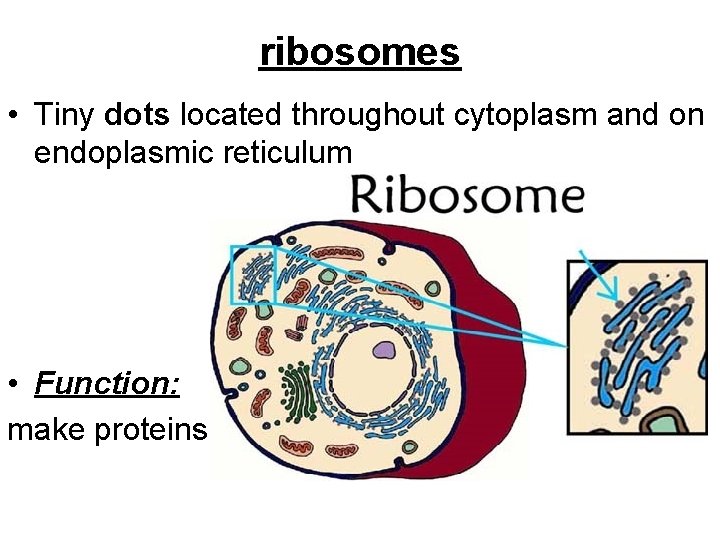
ribosomes • Tiny dots located throughout cytoplasm and on endoplasmic reticulum • Function: make proteins
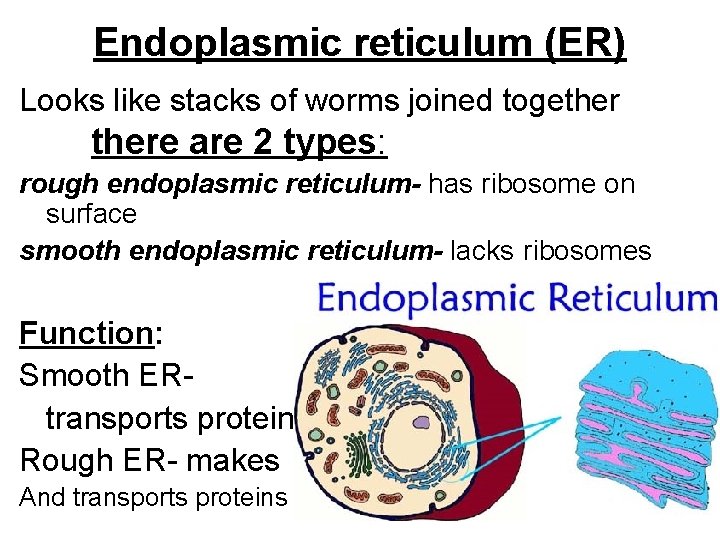
Endoplasmic reticulum (ER) Looks like stacks of worms joined togethere are 2 types: rough endoplasmic reticulum- has ribosome on surface smooth endoplasmic reticulum- lacks ribosomes Function: Smooth ERtransports proteins Rough ER- makes And transports proteins
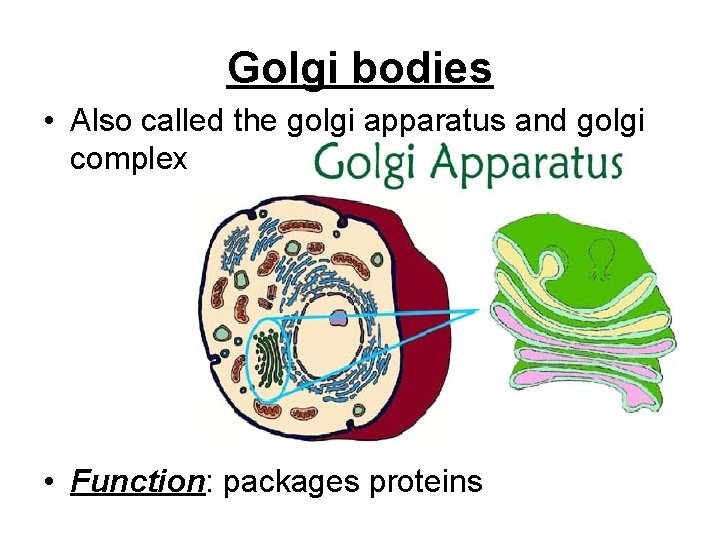
Golgi bodies • Also called the golgi apparatus and golgi complex • Function: packages proteins
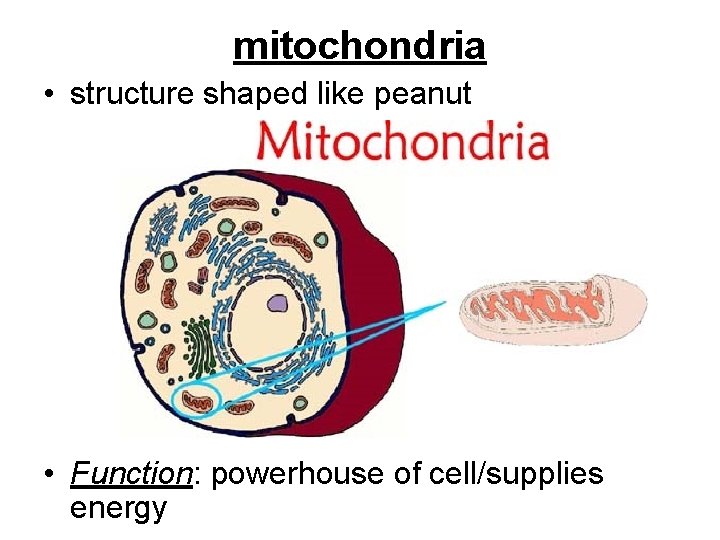
mitochondria • structure shaped like peanut • Function: powerhouse of cell/supplies energy
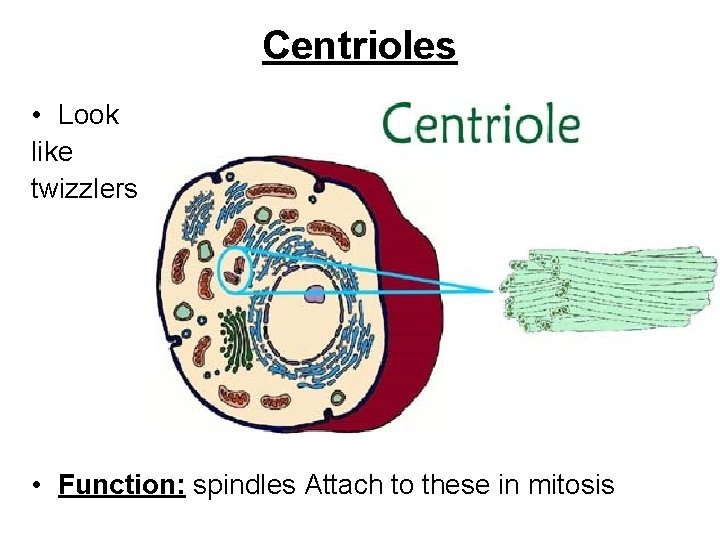
Centrioles • Look like twizzlers • Function: spindles Attach to these in mitosis
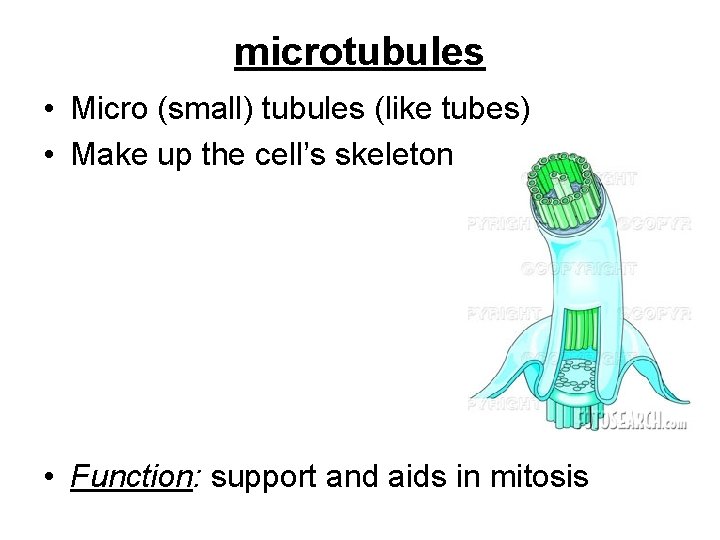
microtubules • Micro (small) tubules (like tubes) • Make up the cell’s skeleton • Function: support and aids in mitosis
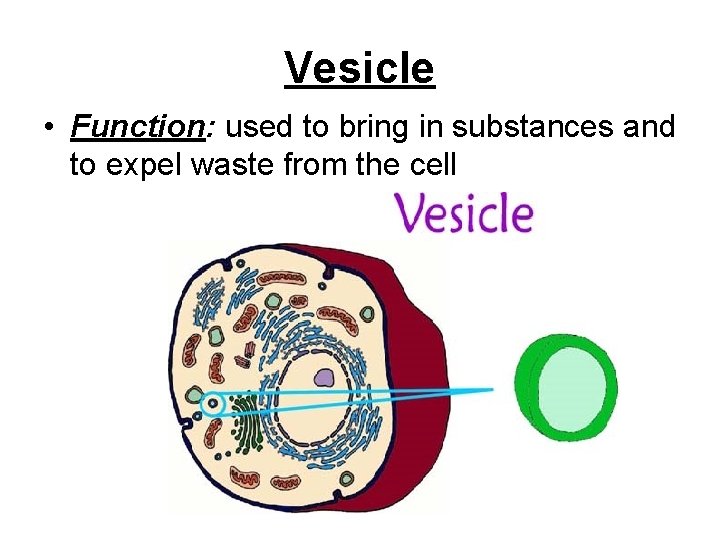
Vesicle • Function: used to bring in substances and to expel waste from the cell
Cell function test Tomorrow!! Study chart. If don’t have a chart, study notes
- Slides: 32