
Cell Terms Prefixes 1 Cyto having to do
- Slides: 75
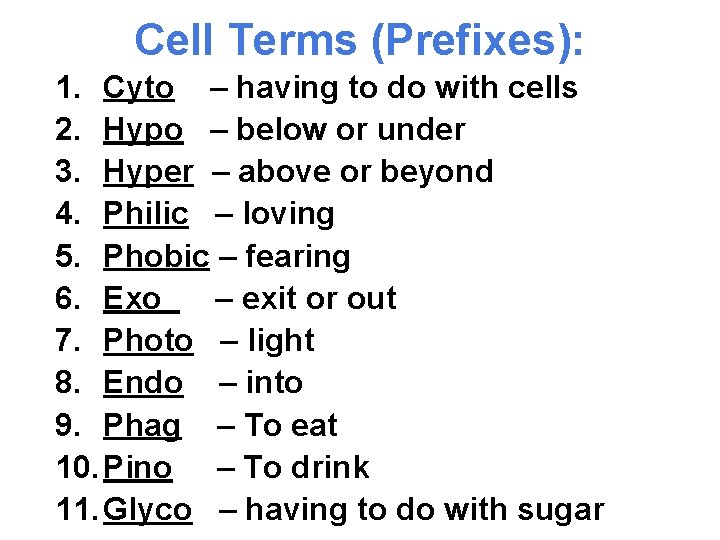
Cell Terms (Prefixes): 1. Cyto – having to do with cells 2. Hypo – below or under 3. Hyper – above or beyond 4. Philic – loving 5. Phobic – fearing 6. Exo – exit or out 7. Photo – light 8. Endo – into 9. Phag – To eat 10. Pino – To drink 11. Glyco – having to do with sugar
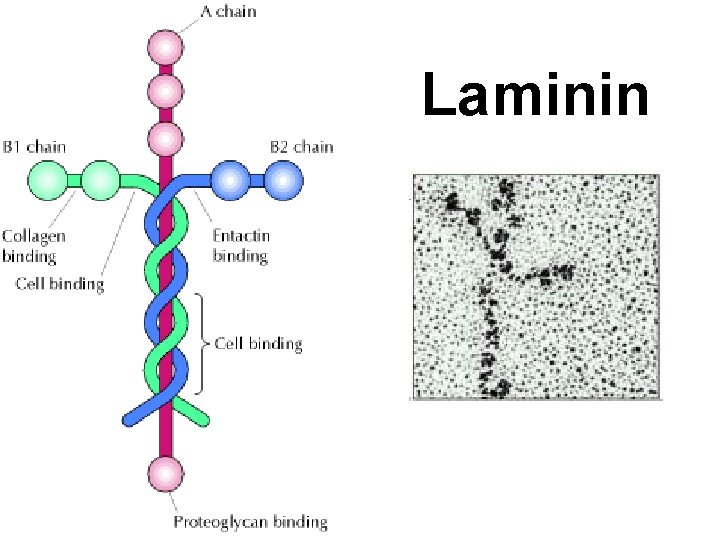
Laminin
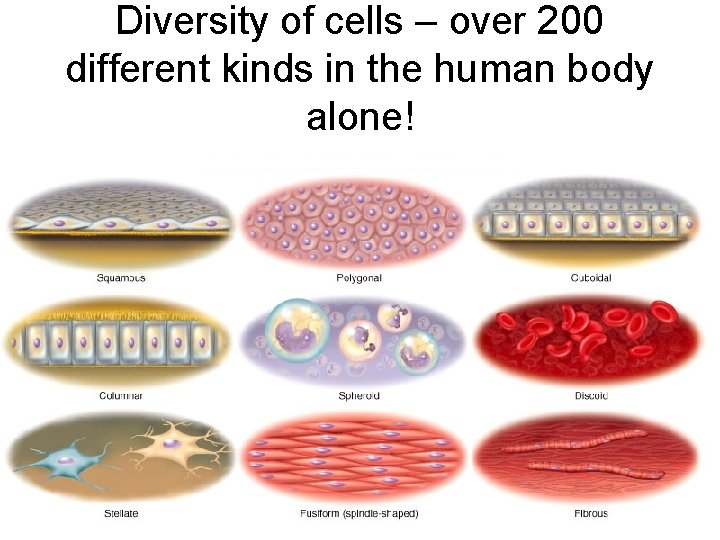
Diversity of cells – over 200 different kinds in the human body alone!
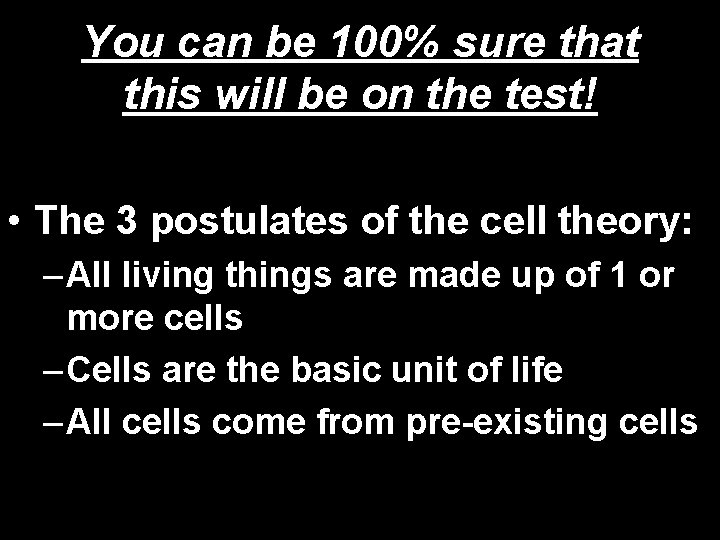
You can be 100% sure that this will be on the test! • The 3 postulates of the cell theory: – All living things are made up of 1 or more cells – Cells are the basic unit of life – All cells come from pre-existing cells
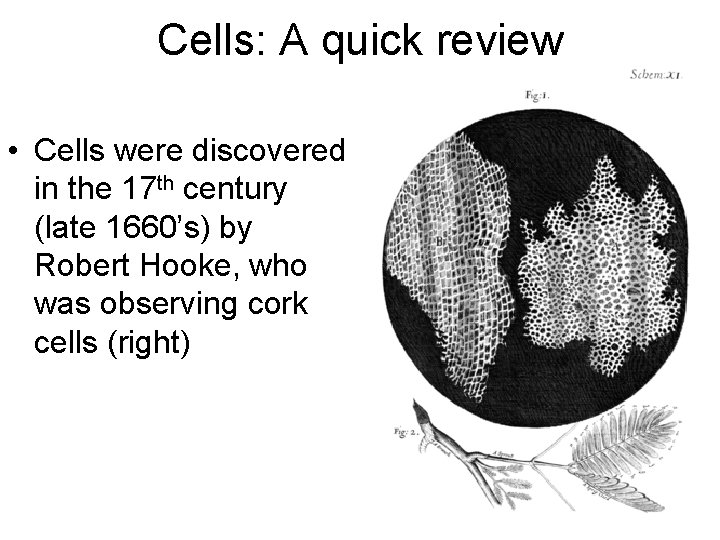
Cells: A quick review • Cells were discovered in the 17 th century (late 1660’s) by Robert Hooke, who was observing cork cells (right)
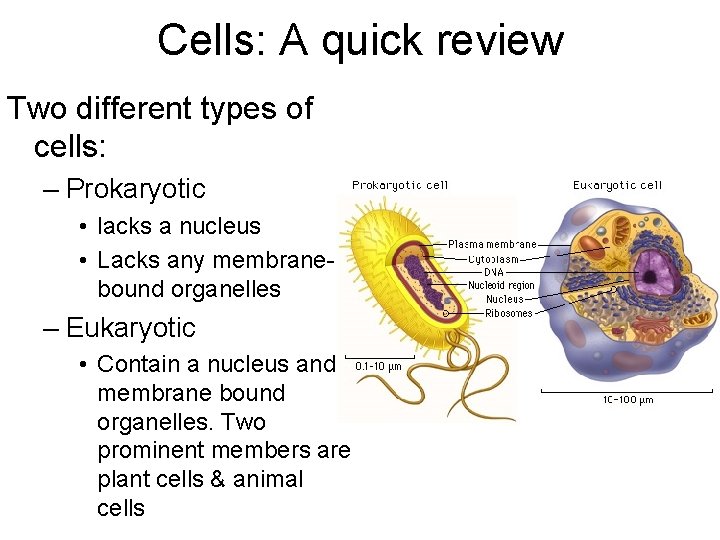
Cells: A quick review Two different types of cells: – Prokaryotic • lacks a nucleus • Lacks any membranebound organelles – Eukaryotic • Contain a nucleus and membrane bound organelles. Two prominent members are plant cells & animal cells
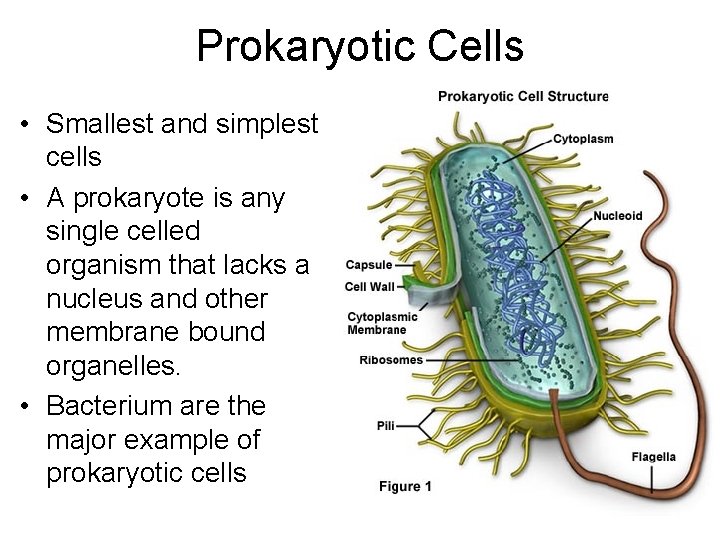
Prokaryotic Cells • Smallest and simplest cells • A prokaryote is any single celled organism that lacks a nucleus and other membrane bound organelles. • Bacterium are the major example of prokaryotic cells
Prokaryotic Cells: 3. Have a cell wall 1. Have single(like plants and stranded, fungi) that serves to circular DNA support and protect 2. NO internal the cell. compartments (no membrane 4. Cell wall made of peptidoglycan bound instead of cellulose organelles. ) 5. Many have a flagellum
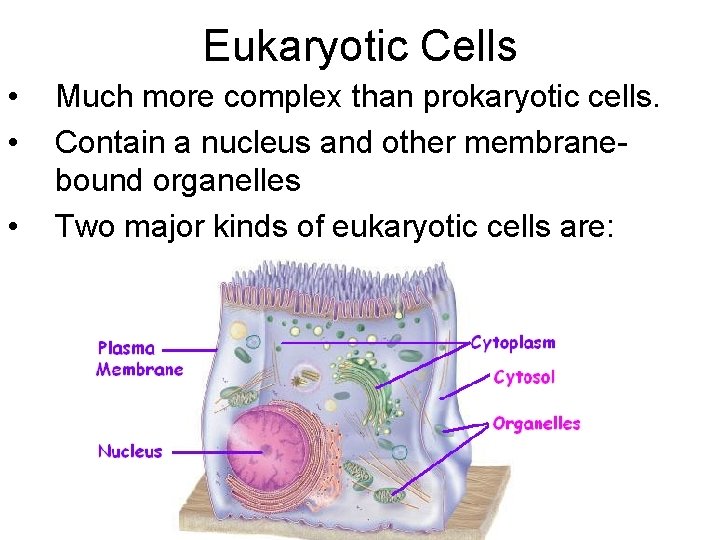
Eukaryotic Cells • • • Much more complex than prokaryotic cells. Contain a nucleus and other membranebound organelles Two major kinds of eukaryotic cells are:
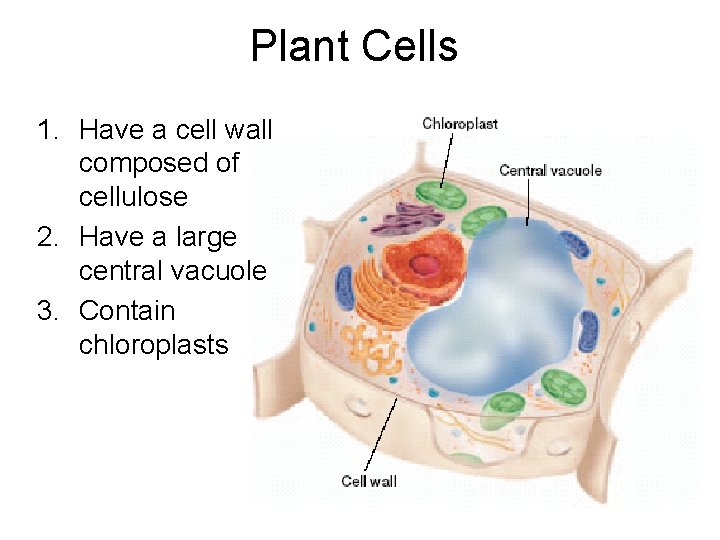
Plant Cells 1. Have a cell wall composed of cellulose 2. Have a large central vacuole 3. Contain chloroplasts
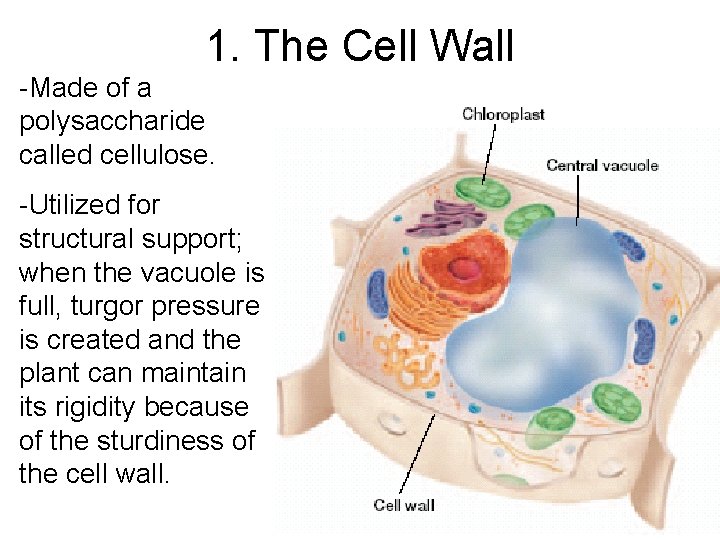
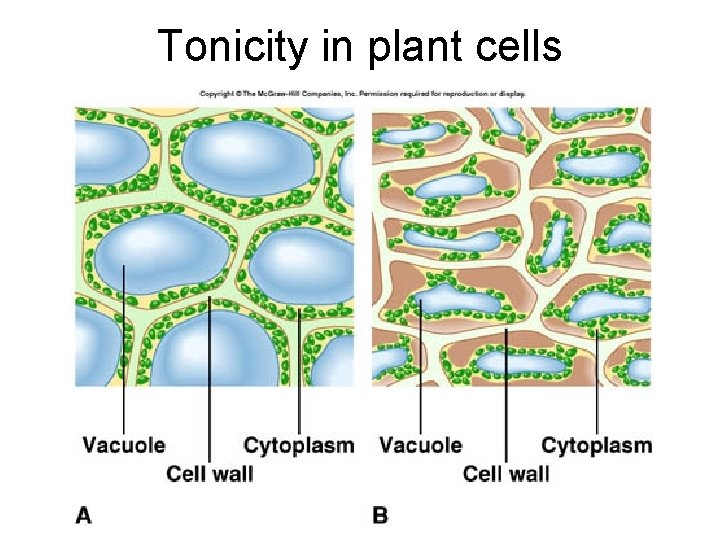
1. The Cell Wall -Made of a polysaccharide called cellulose. -Utilized for structural support; when the vacuole is full, turgor pressure is created and the plant can maintain its rigidity because of the sturdiness of the cell wall.
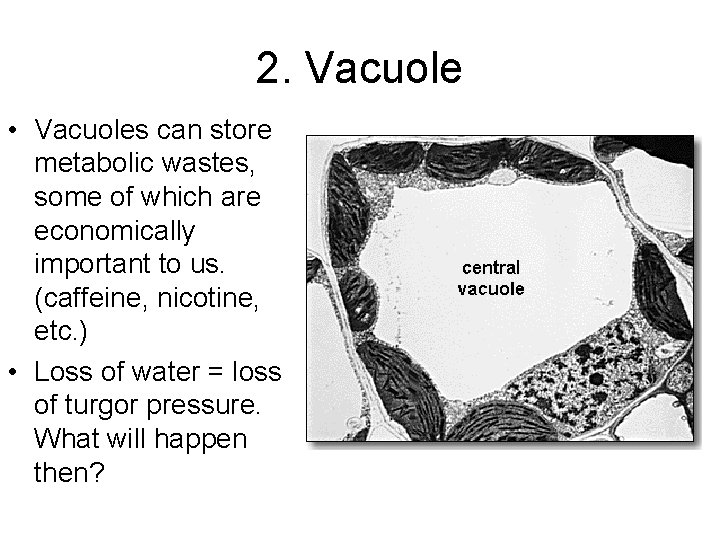
2. Vacuole • Vacuoles can store metabolic wastes, some of which are economically important to us. (caffeine, nicotine, etc. ) • Loss of water = loss of turgor pressure. What will happen then?
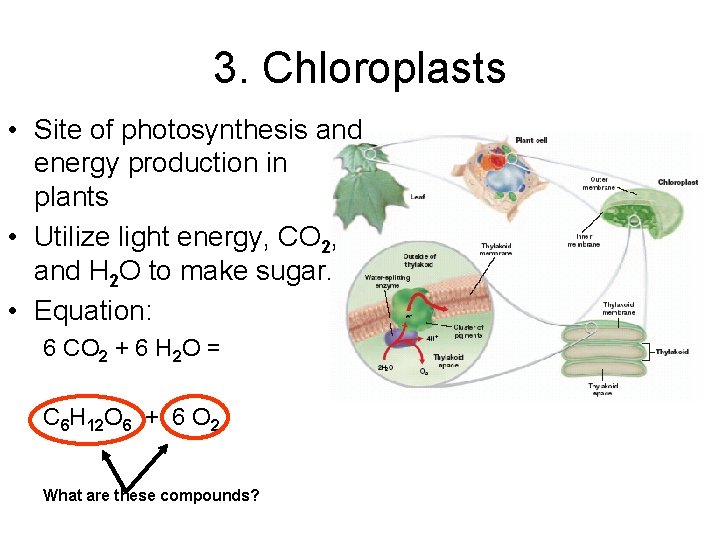
3. Chloroplasts • Site of photosynthesis and energy production in plants • Utilize light energy, CO 2, and H 2 O to make sugar. • Equation: 6 CO 2 + 6 H 2 O = C 6 H 12 O 6 + 6 O 2 What are these compounds?
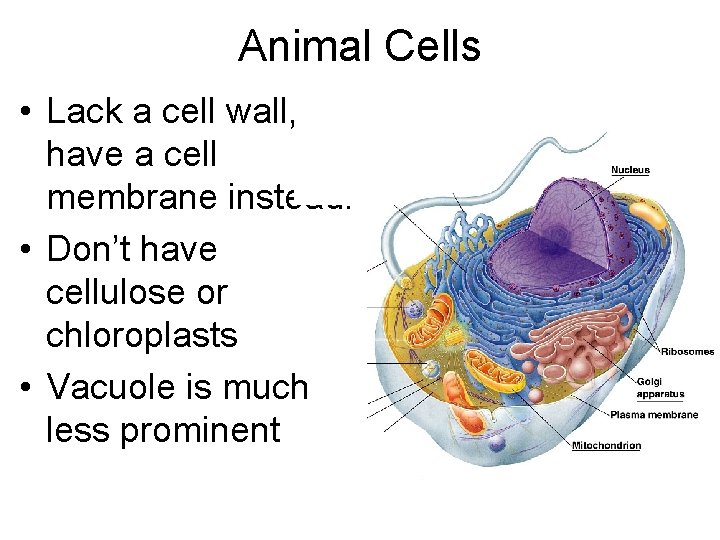
Animal Cells • Lack a cell wall, have a cell membrane instead. • Don’t have cellulose or chloroplasts • Vacuole is much less prominent
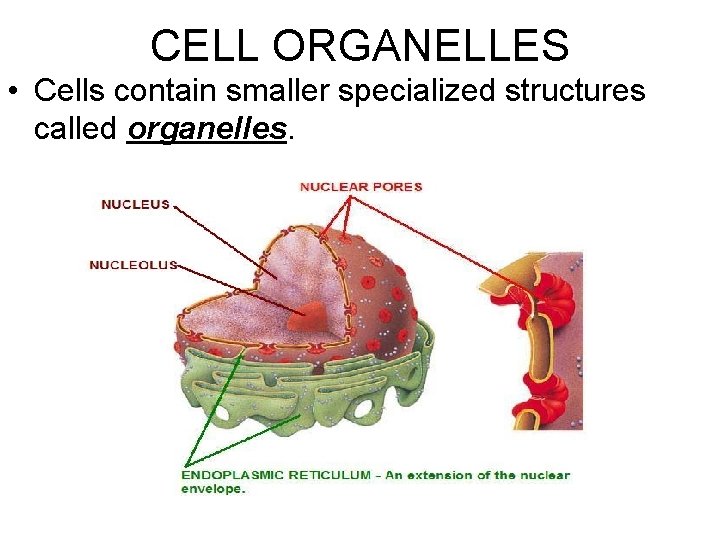
CELL ORGANELLES • Cells contain smaller specialized structures called organelles.
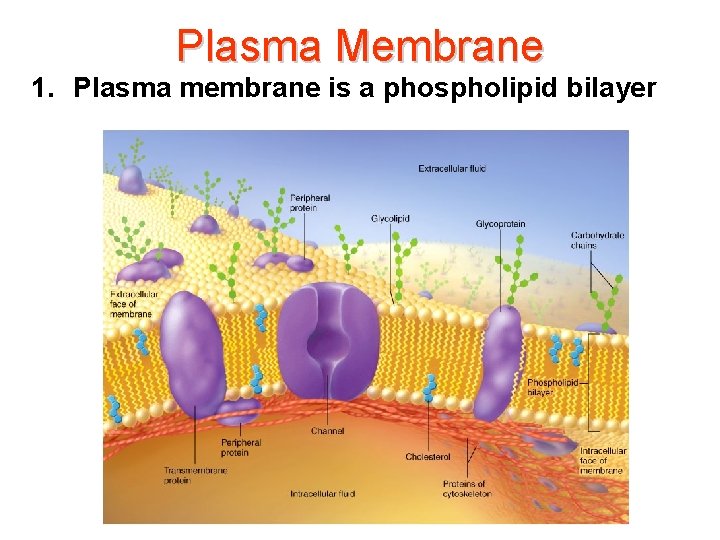
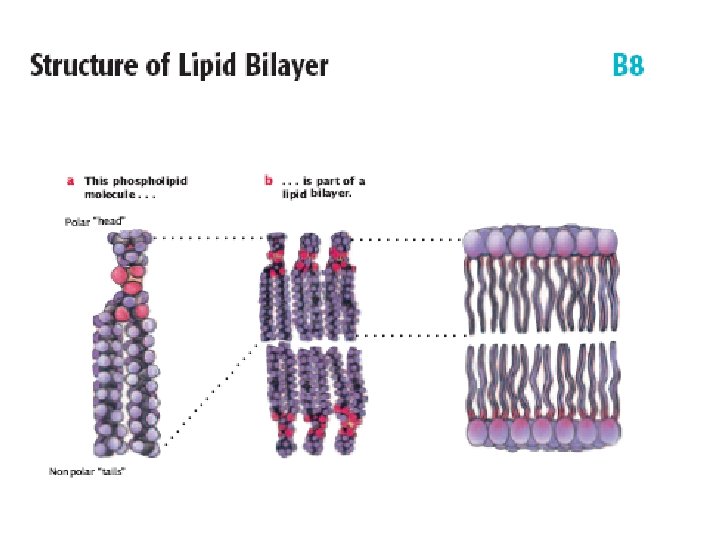
Plasma Membrane 1. Plasma membrane is a phospholipid bilayer
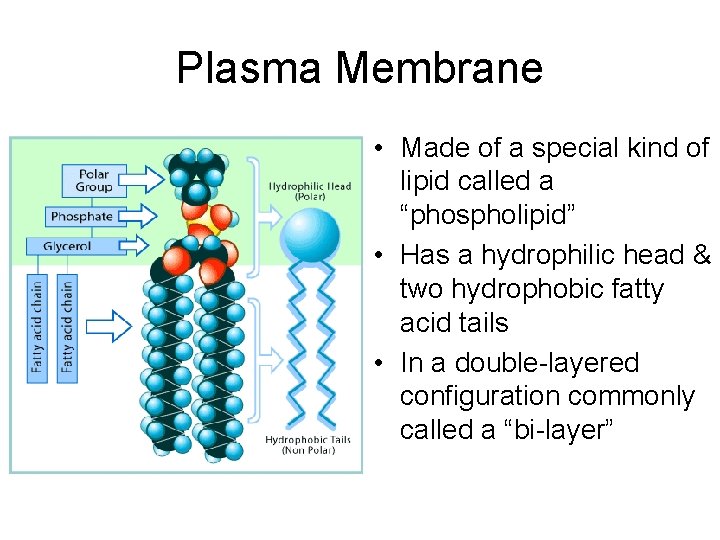
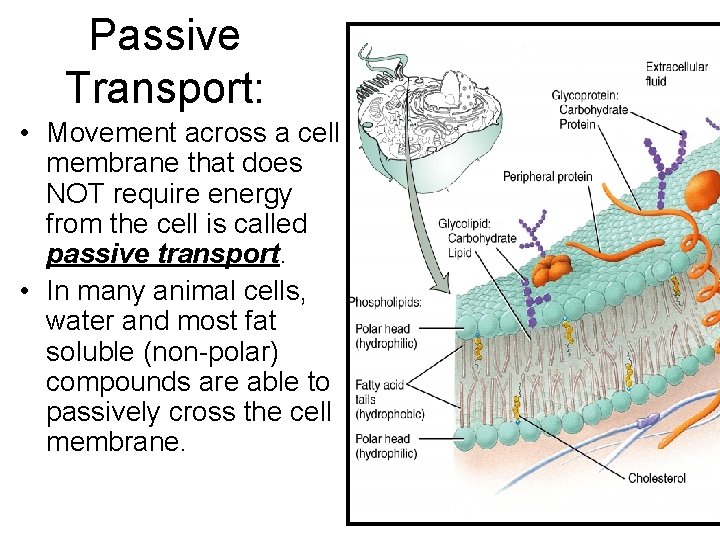
Plasma Membrane • Made of a special kind of lipid called a “phospholipid” • Has a hydrophilic head & two hydrophobic fatty acid tails • In a double-layered configuration commonly called a “bi-layer”
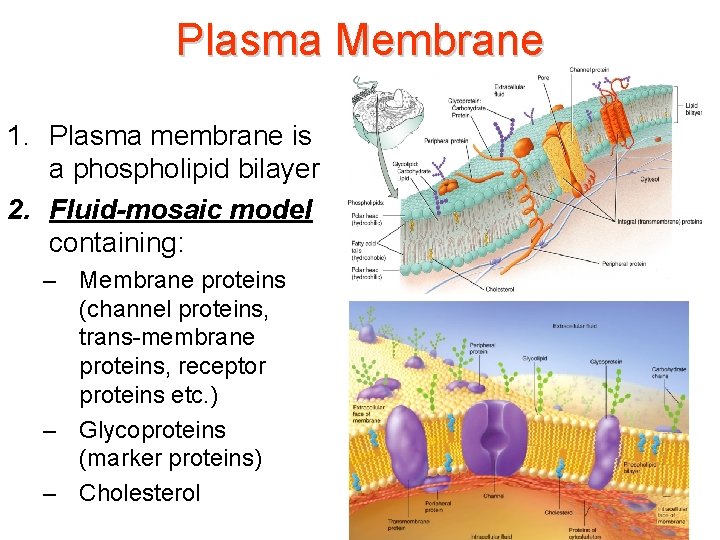
Plasma Membrane 1. Plasma membrane is a phospholipid bilayer 2. Fluid-mosaic model containing: – Membrane proteins (channel proteins, trans-membrane proteins, receptor proteins etc. ) – Glycoproteins (marker proteins) – Cholesterol
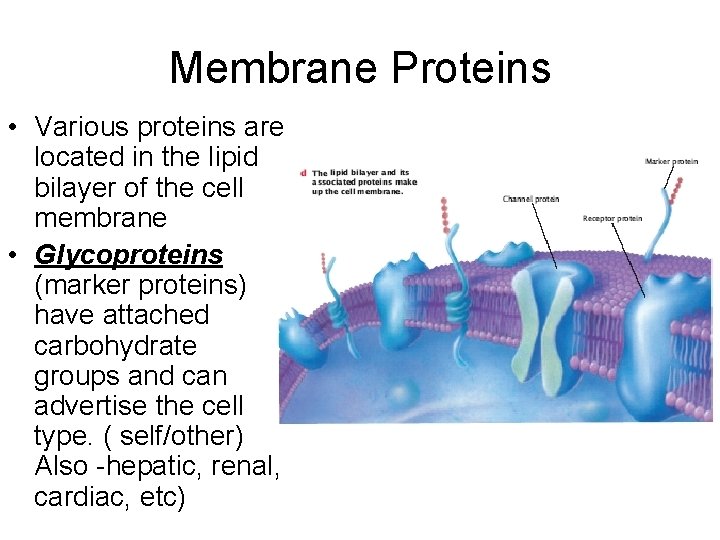
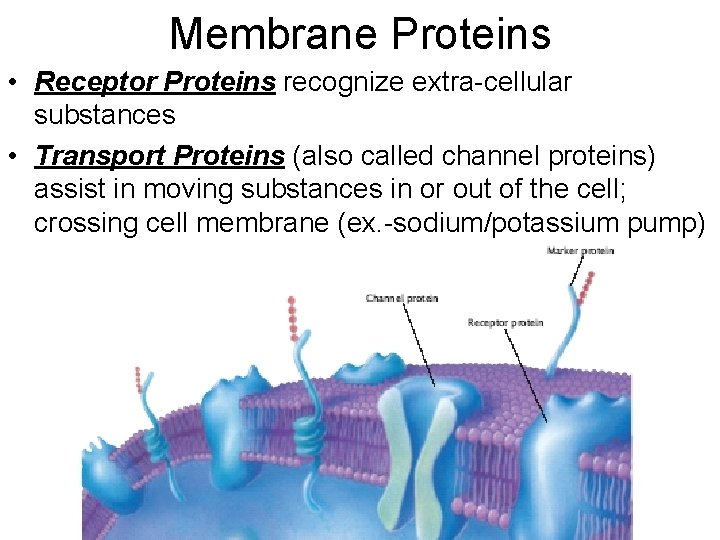
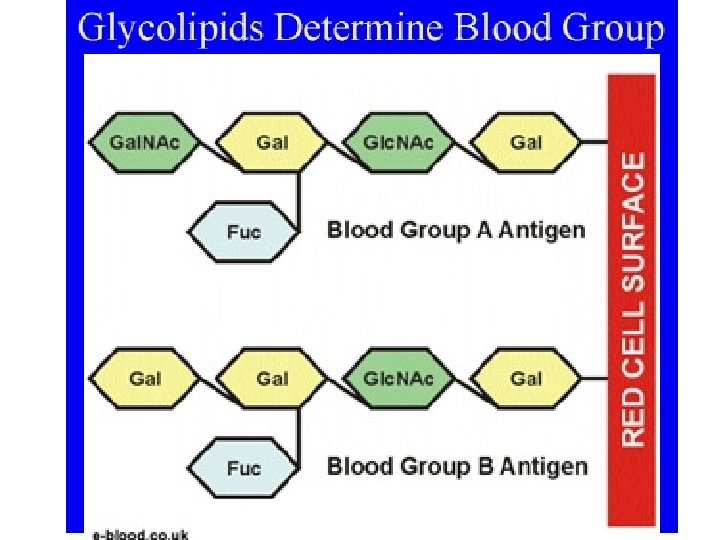
Membrane Proteins • Various proteins are located in the lipid bilayer of the cell membrane • Glycoproteins (marker proteins) have attached carbohydrate groups and can advertise the cell type. ( self/other) Also -hepatic, renal, cardiac, etc)
Membrane Proteins • Receptor Proteins recognize extra-cellular substances • Transport Proteins (also called channel proteins) assist in moving substances in or out of the cell; crossing cell membrane (ex. -sodium/potassium pump)
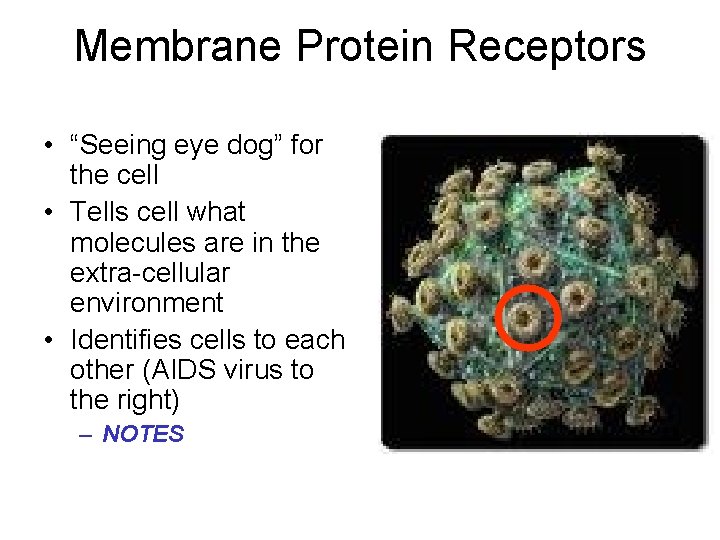
Membrane Protein Receptors • “Seeing eye dog” for the cell • Tells cell what molecules are in the extra-cellular environment • Identifies cells to each other (AIDS virus to the right) – NOTES
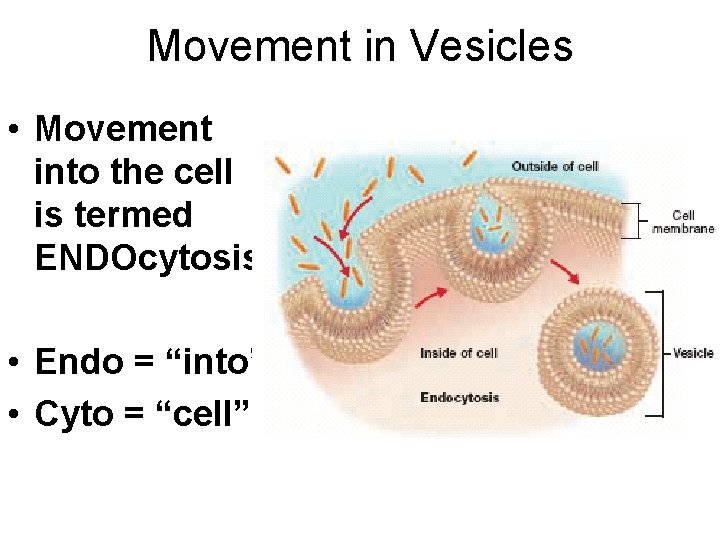
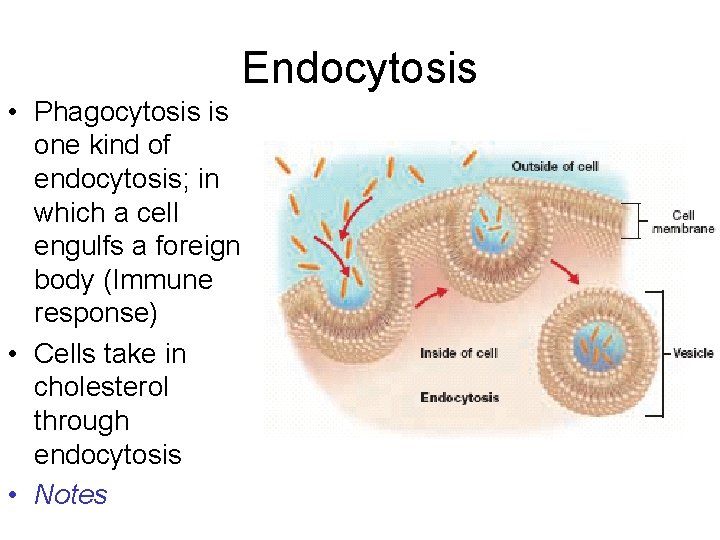
Movement in Vesicles • Movement into the cell is termed ENDOcytosis • Endo = “into” • Cyto = “cell”
Endocytosis • Phagocytosis is one kind of endocytosis; in which a cell engulfs a foreign body (Immune response) • Cells take in cholesterol through endocytosis • Notes
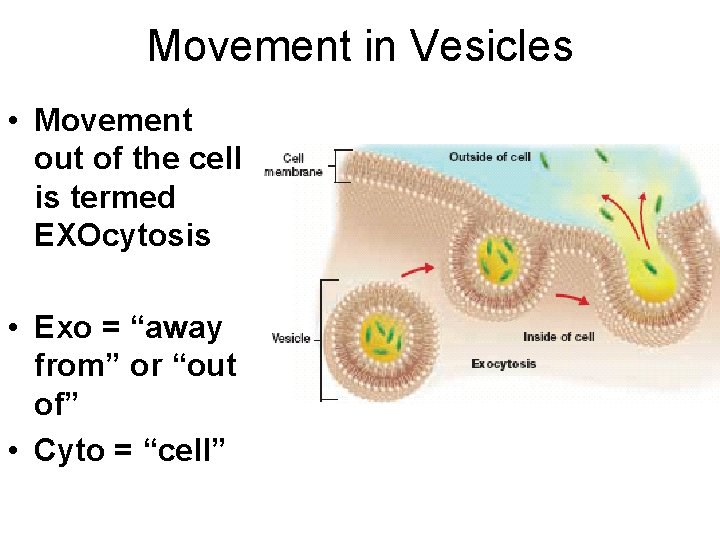
Movement in Vesicles • Movement out of the cell is termed EXOcytosis • Exo = “away from” or “out of” • Cyto = “cell”
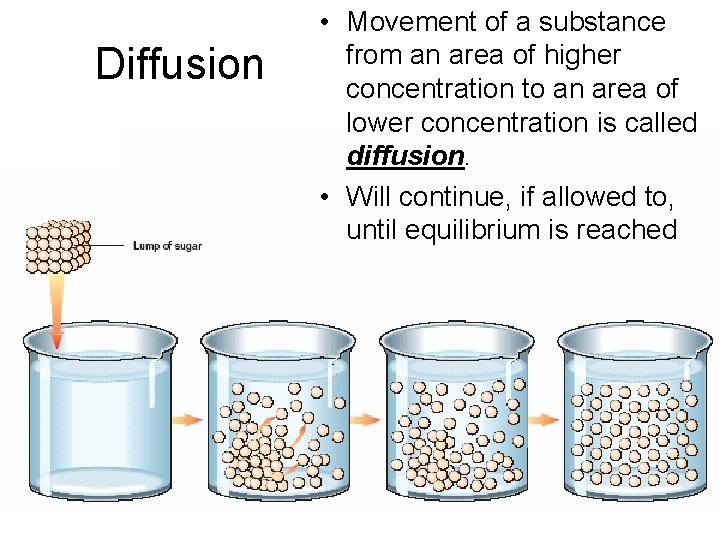
Diffusion • Movement of a substance from an area of higher concentration to an area of lower concentration is called diffusion. • Will continue, if allowed to, until equilibrium is reached
Equilibrium • Equilibrium is a condition in which the concentration of a substance is evenly distributed throughout space. – Notes
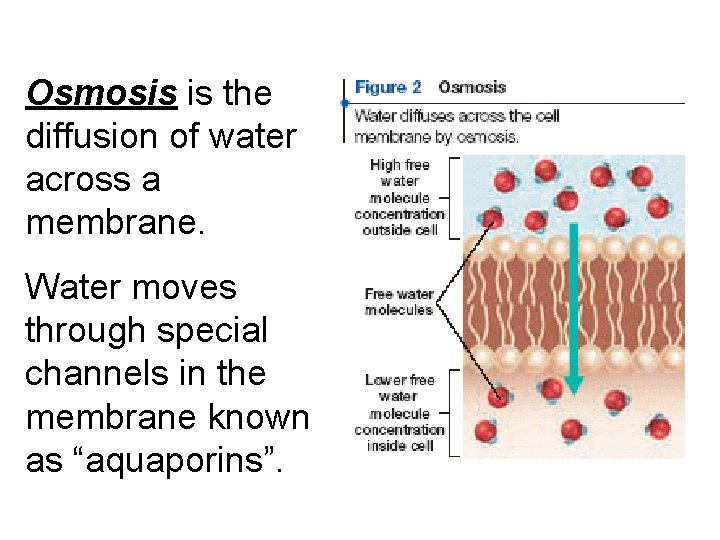
Osmosis is the diffusion of water across a membrane. Water moves through special channels in the membrane known as “aquaporins”.
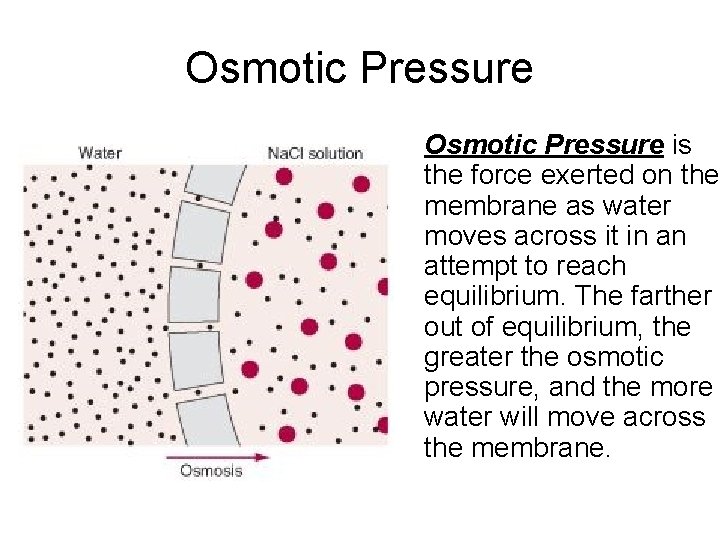
Osmotic Pressure is the force exerted on the membrane as water moves across it in an attempt to reach equilibrium. The farther out of equilibrium, the greater the osmotic pressure, and the more water will move across the membrane.
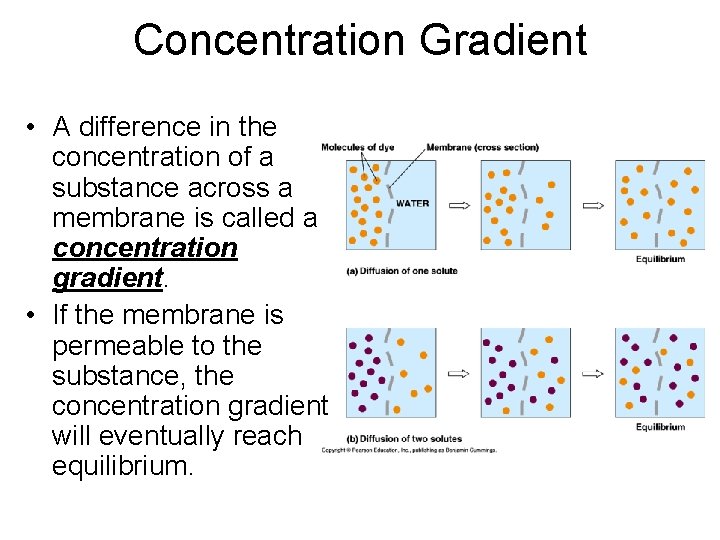
Concentration Gradient • A difference in the concentration of a substance across a membrane is called a concentration gradient. • If the membrane is permeable to the substance, the concentration gradient will eventually reach equilibrium.
Passive Transport: • Movement across a cell membrane that does NOT require energy from the cell is called passive transport. • In many animal cells, water and most fat soluble (non-polar) compounds are able to passively cross the cell membrane.
Selective Permeability • The cell membrane is selectively permeable to extra-cellular substances • The cell membrane is “picky” about who it lets through the membrane! (NO polar ions!)
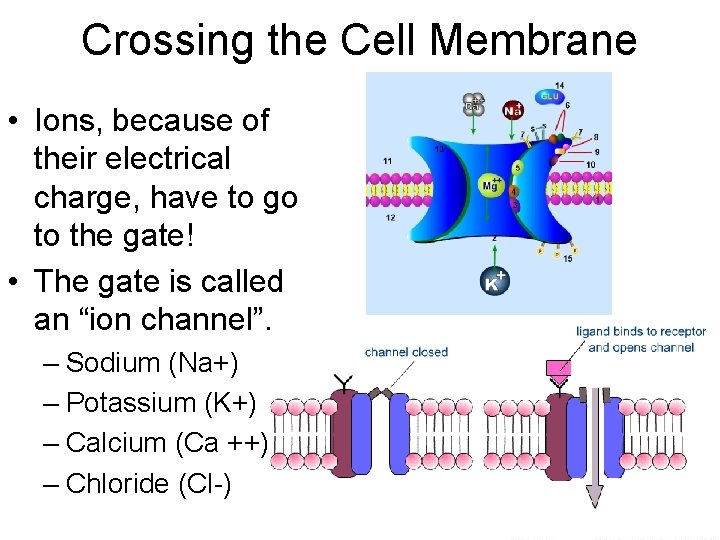
Crossing the Cell Membrane • Ions, because of their electrical charge, have to go to the gate! • The gate is called an “ion channel”. – Sodium (Na+) – Potassium (K+) – Calcium (Ca ++) – Chloride (Cl-)
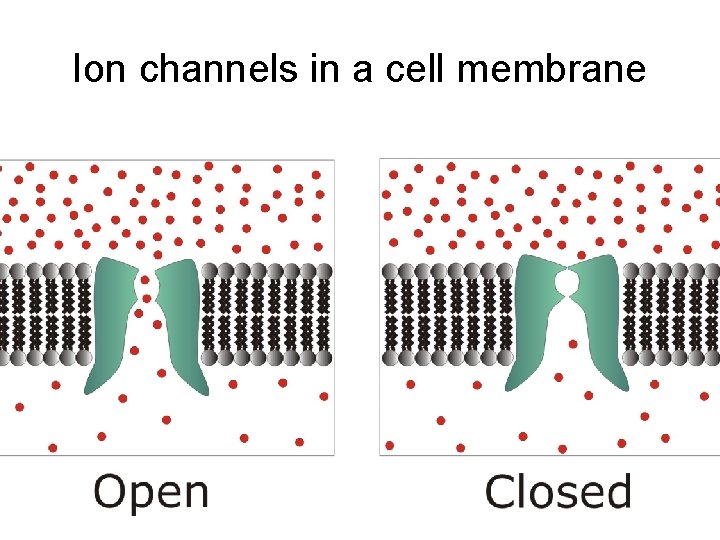
Ion channels in a cell membrane
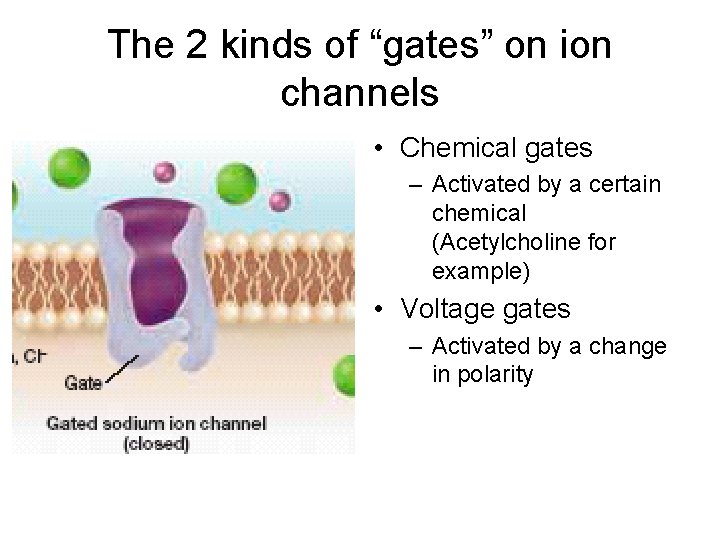
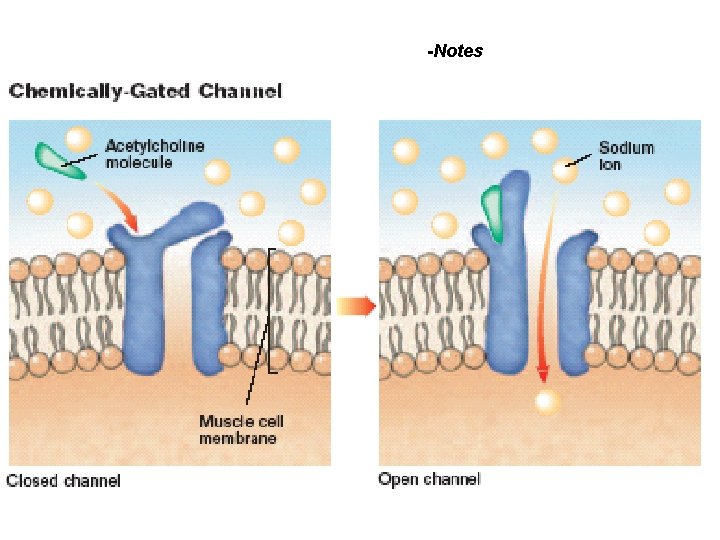
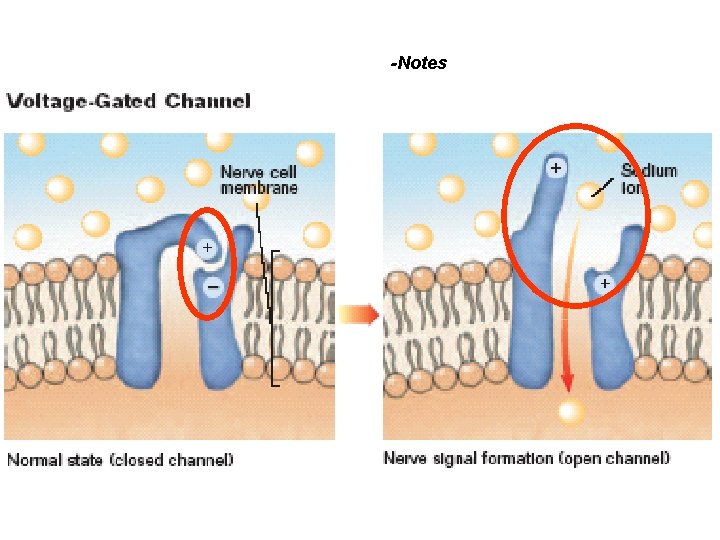
The 2 kinds of “gates” on ion channels • Chemical gates – Activated by a certain chemical (Acetylcholine for example) • Voltage gates – Activated by a change in polarity
-Notes
-Notes
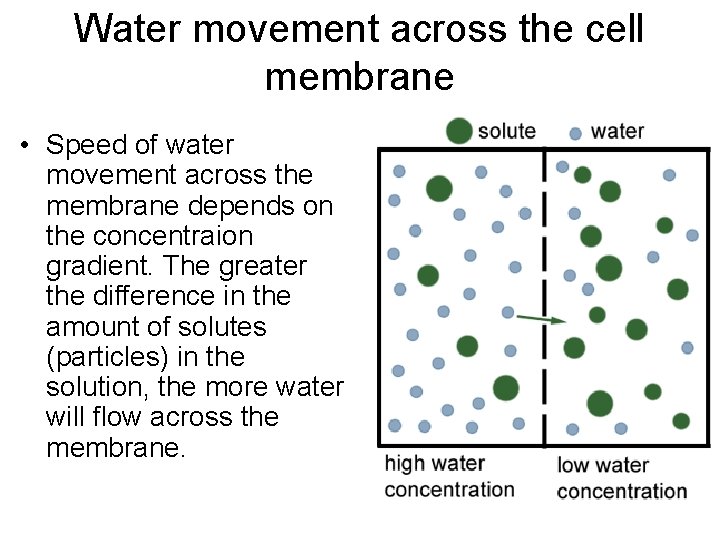
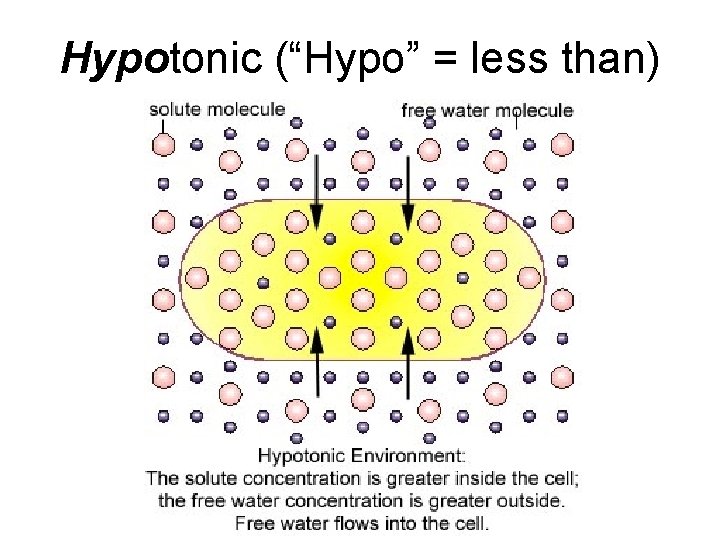
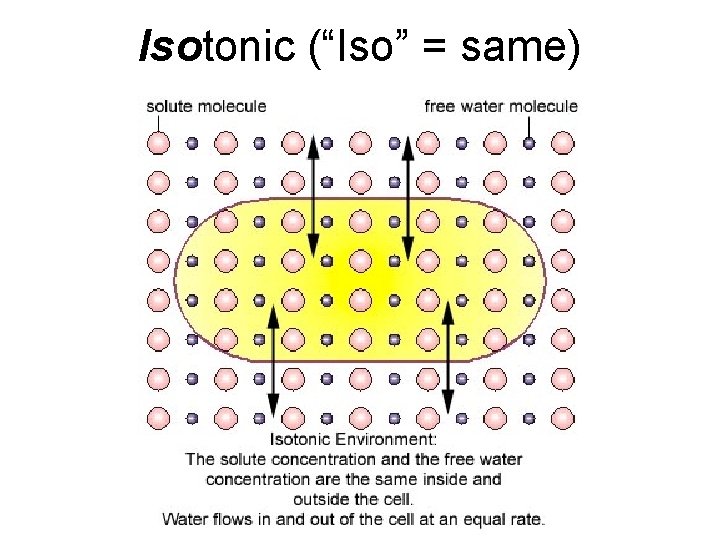
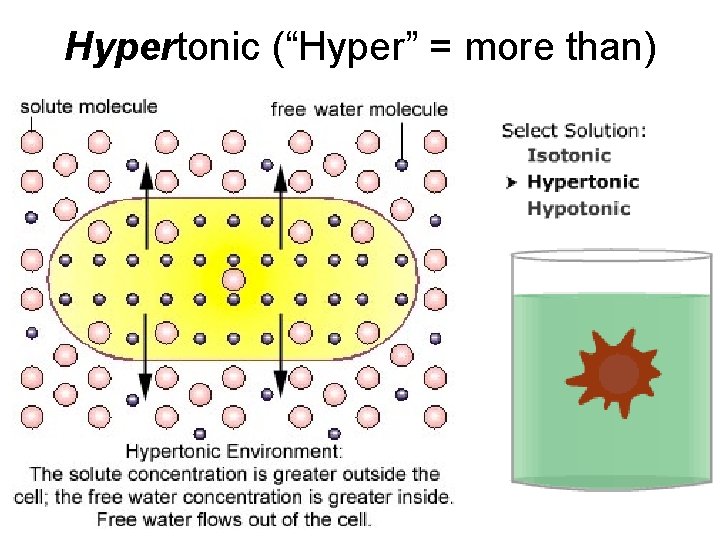
Water movement across the cell membrane • Speed of water movement across the membrane depends on the concentraion gradient. The greater the difference in the amount of solutes (particles) in the solution, the more water will flow across the membrane.
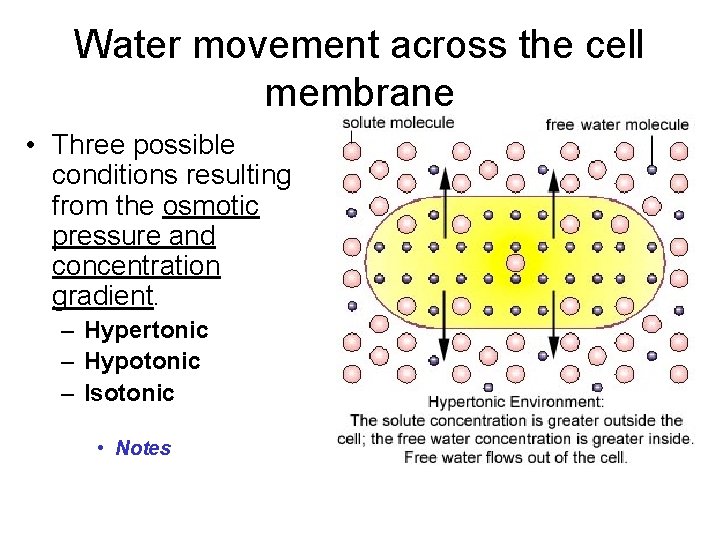
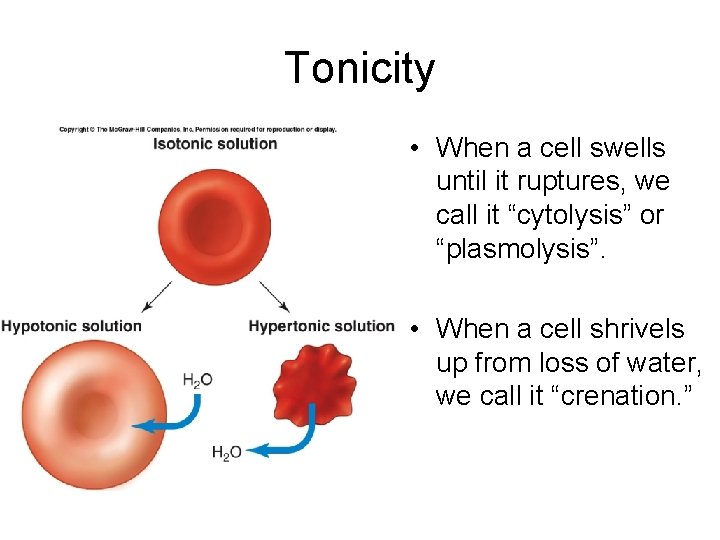
Water movement across the cell membrane • Three possible conditions resulting from the osmotic pressure and concentration gradient. – Hypertonic – Hypotonic – Isotonic • Notes
Hypotonic (“Hypo” = less than)
Isotonic (“Iso” = same)
Hypertonic (“Hyper” = more than)
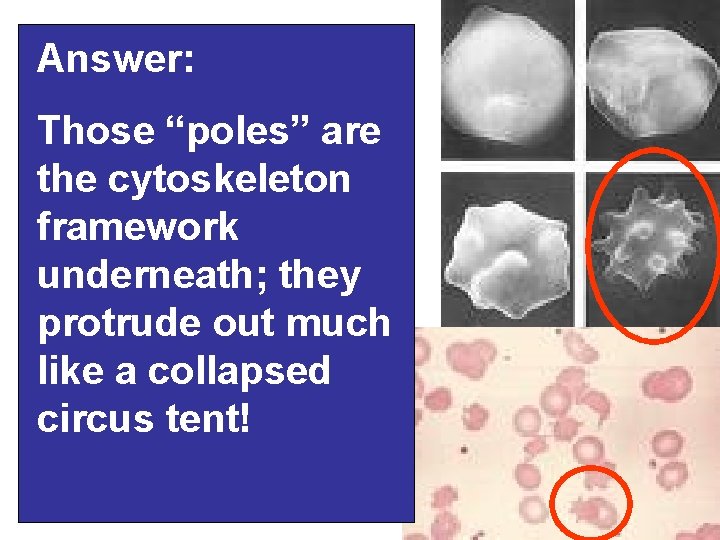
Tonicity • When a cell swells until it ruptures, we call it “cytolysis” or “plasmolysis”. • When a cell shrivels up from loss of water, we call it “crenation. ”
Tonicity in plant cells
Answer: So, tell me why… Those “poles” • Why does a crenatedare erythrocyte (shriveled the cytoskeleton up red blood cell) framework have those little ridges underneath; and poles jutting they out everywhere? protrude out much like a collapsed – Anyone have a guess? circus tent!
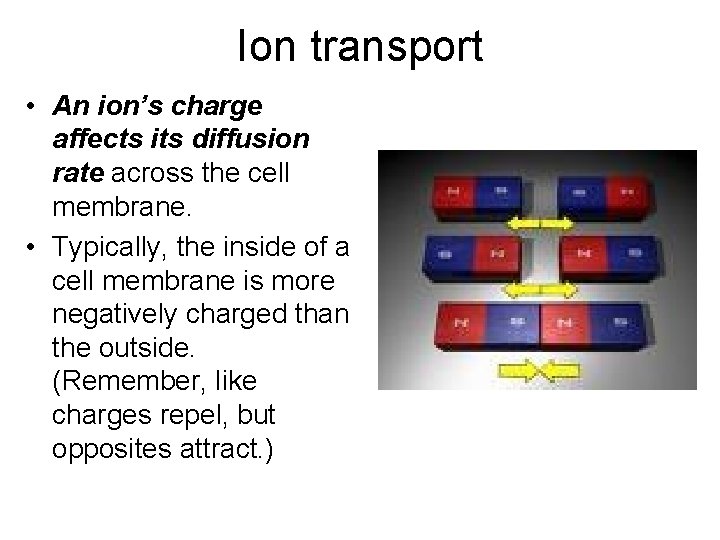
Ion transport • An ion’s charge affects its diffusion rate across the cell membrane. • Typically, the inside of a cell membrane is more negatively charged than the outside. (Remember, like charges repel, but opposites attract. )
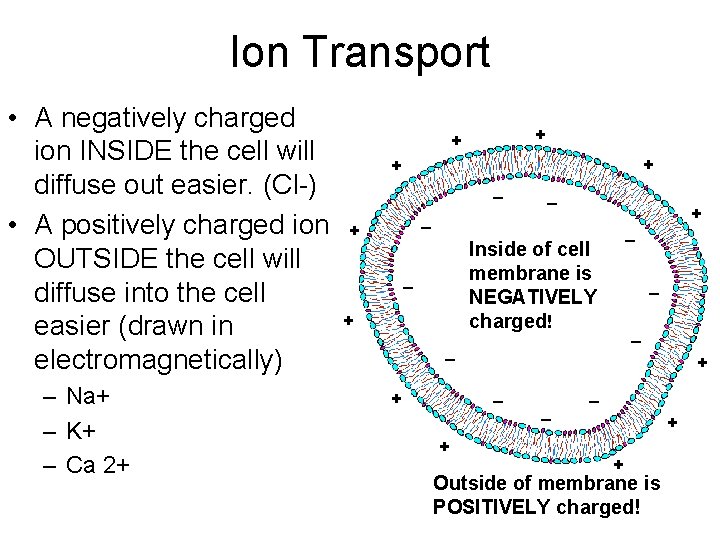
Ion Transport • A negatively charged ion INSIDE the cell will diffuse out easier. (Cl-) • A positively charged ion OUTSIDE the cell will diffuse into the cell easier (drawn in electromagnetically) – Na+ – K+ – Ca 2+ + + _ _ _ + _ Inside of cell membrane is NEGATIVELY charged! _ + _ _ _ + + + _ _ + + Outside of membrane is POSITIVELY charged!
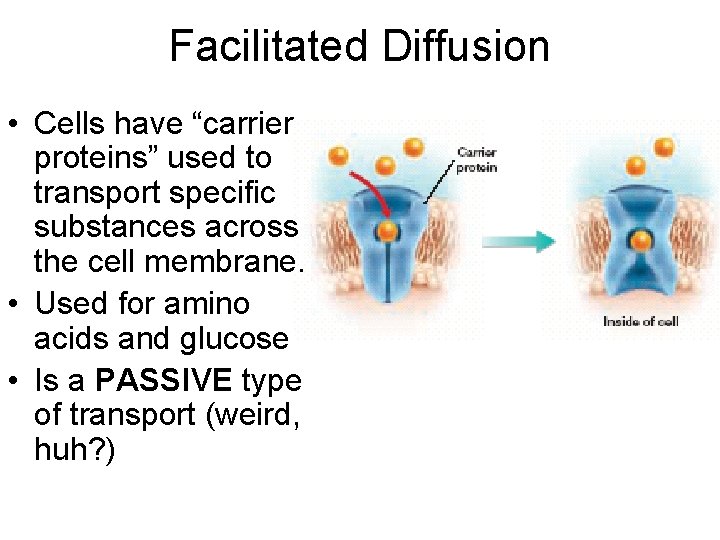
Facilitated Diffusion • Cells have “carrier proteins” used to transport specific substances across the cell membrane. • Used for amino acids and glucose • Is a PASSIVE type of transport (weird, huh? )
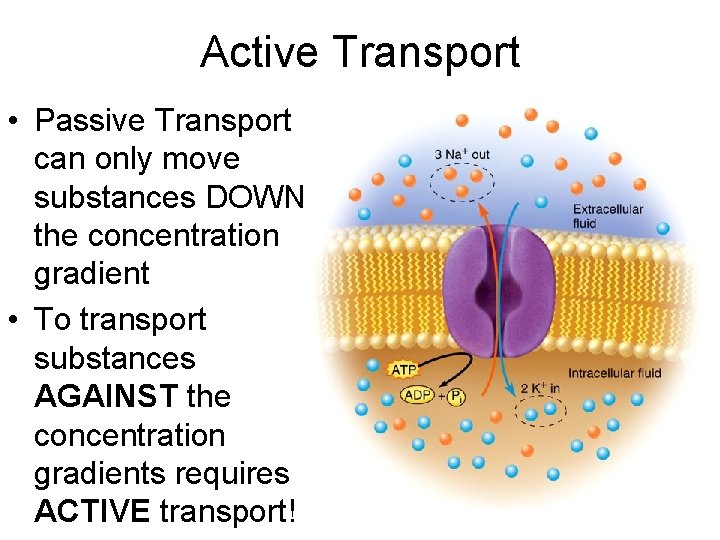
Active Transport • Passive Transport can only move substances DOWN the concentration gradient • To transport substances AGAINST the concentration gradients requires ACTIVE transport!
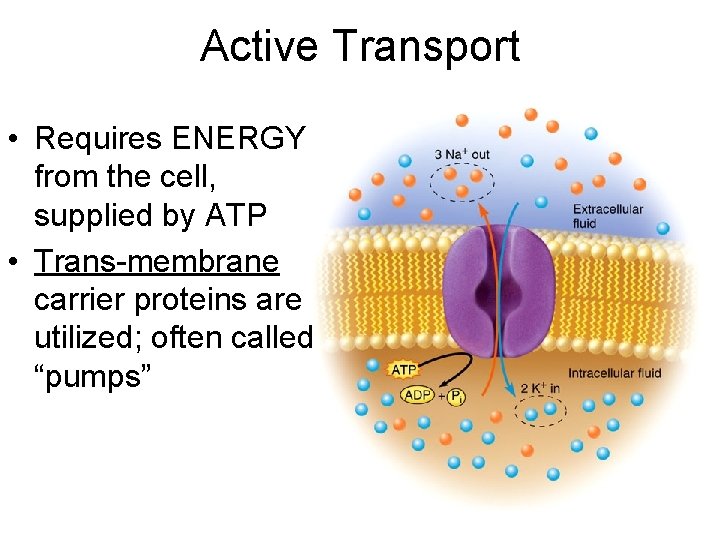
Active Transport • Requires ENERGY from the cell, supplied by ATP • Trans-membrane carrier proteins are utilized; often called “pumps”
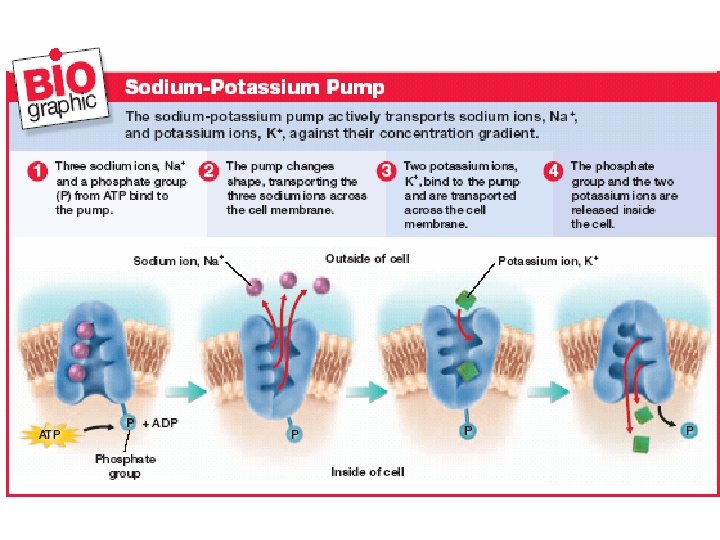
Sodium-Potassium “pump” • Sodium-Potassium pump is powered by the cells ATP • 3 Sodium ions out of the cell and 2 Potassium ions into the cell with each cycle
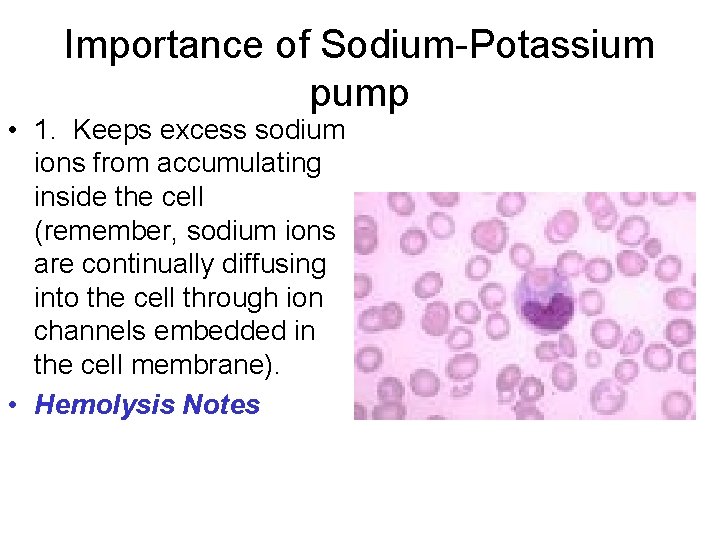
Importance of Sodium-Potassium pump • 1. Keeps excess sodium ions from accumulating inside the cell (remember, sodium ions are continually diffusing into the cell through ion channels embedded in the cell membrane). • Hemolysis Notes
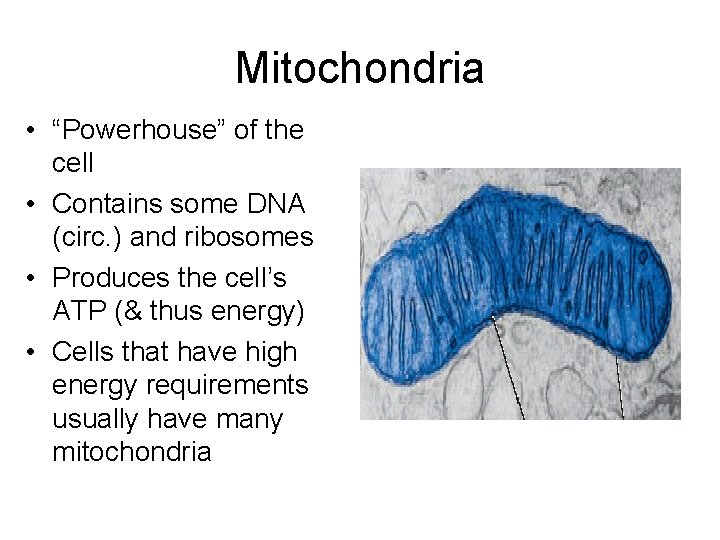
Mitochondria • “Powerhouse” of the cell • Contains some DNA (circ. ) and ribosomes • Produces the cell’s ATP (& thus energy) • Cells that have high energy requirements usually have many mitochondria
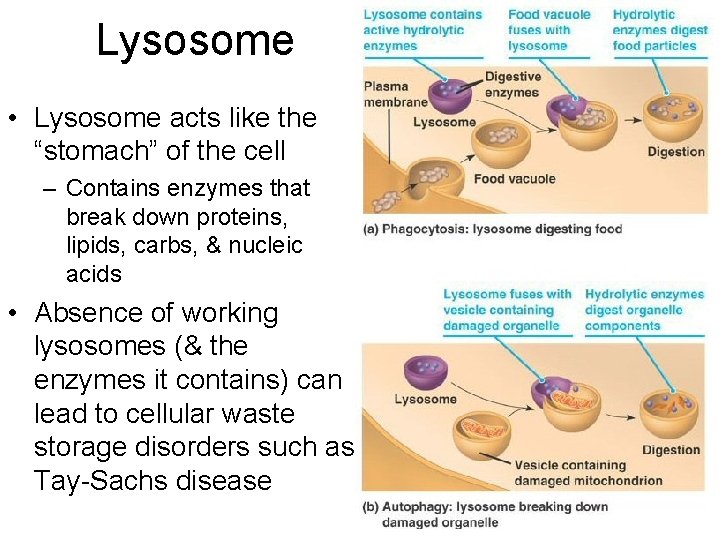
Lysosome • Lysosome acts like the “stomach” of the cell – Contains enzymes that break down proteins, lipids, carbs, & nucleic acids • Absence of working lysosomes (& the enzymes it contains) can lead to cellular waste storage disorders such as Tay-Sachs disease
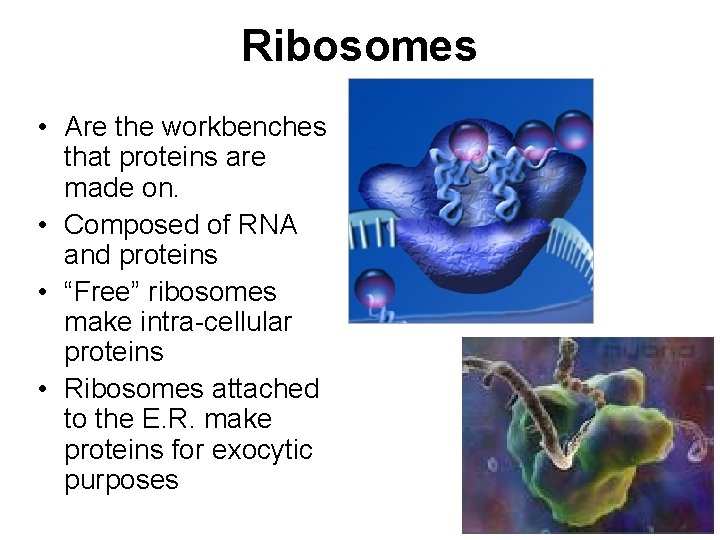
Ribosomes • Are the workbenches that proteins are made on. • Composed of RNA and proteins • “Free” ribosomes make intra-cellular proteins • Ribosomes attached to the E. R. make proteins for exocytic purposes
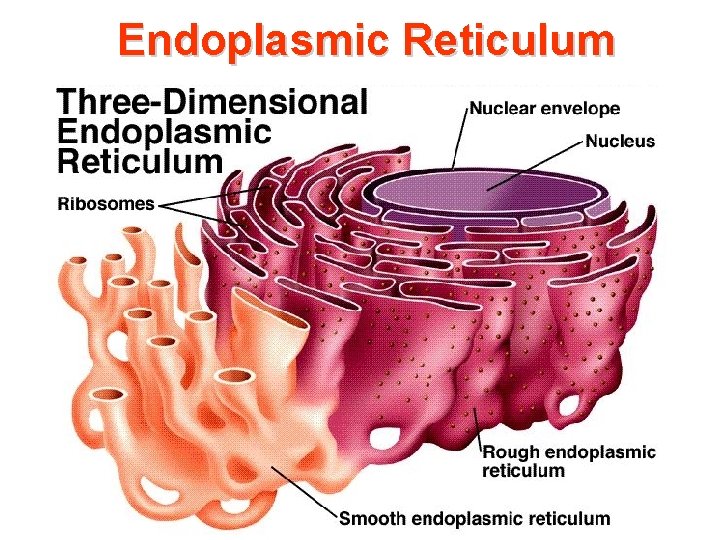
Endoplasmic Reticulum
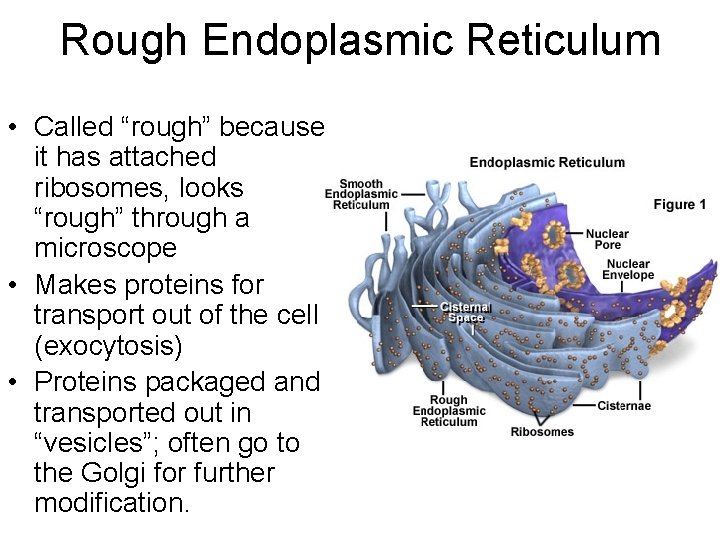
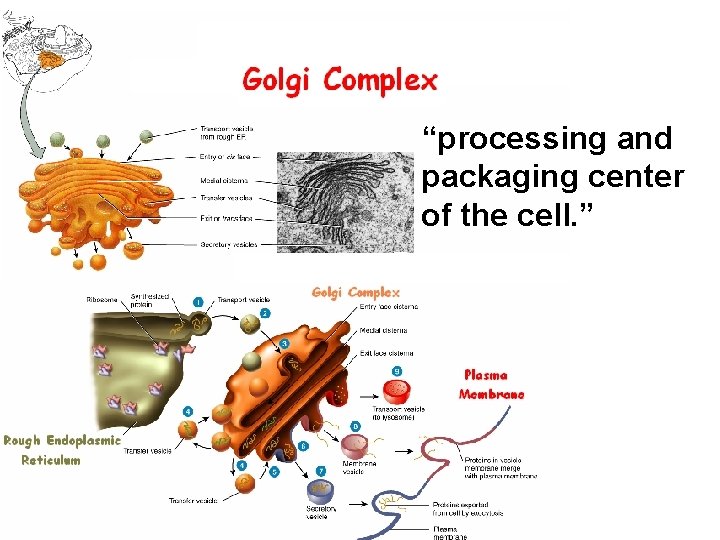
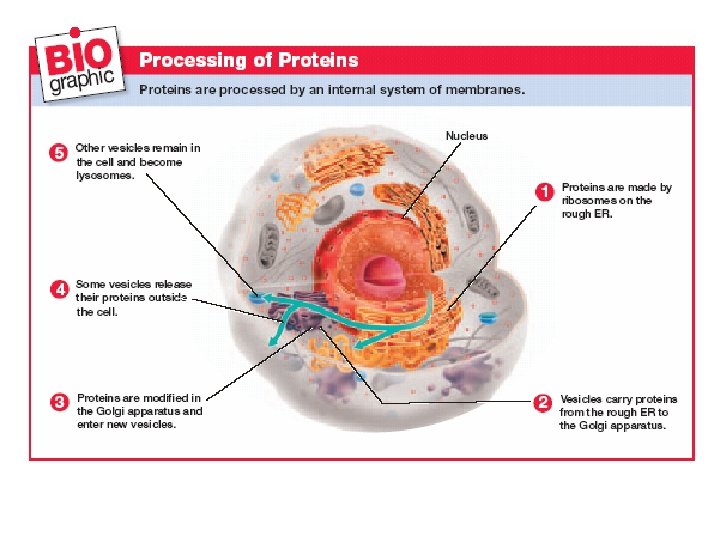
Rough Endoplasmic Reticulum • Called “rough” because it has attached ribosomes, looks “rough” through a microscope • Makes proteins for transport out of the cell (exocytosis) • Proteins packaged and transported out in “vesicles”; often go to the Golgi for further modification.
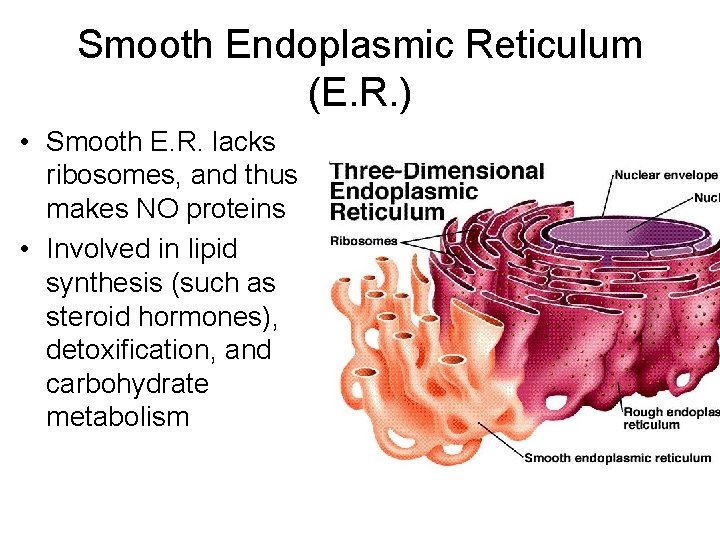
Smooth Endoplasmic Reticulum (E. R. ) • Smooth E. R. lacks ribosomes, and thus makes NO proteins • Involved in lipid synthesis (such as steroid hormones), detoxification, and carbohydrate metabolism
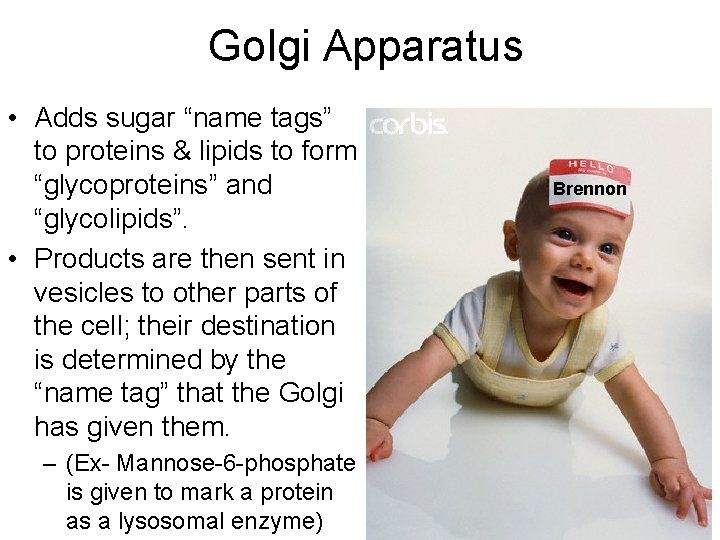
Golgi Apparatus • Adds sugar “name tags” to proteins & lipids to form “glycoproteins” and “glycolipids”. • Products are then sent in vesicles to other parts of the cell; their destination is determined by the “name tag” that the Golgi has given them. – (Ex- Mannose-6 -phosphate is given to mark a protein as a lysosomal enzyme) Brennon
“processing and packaging center of the cell. ”
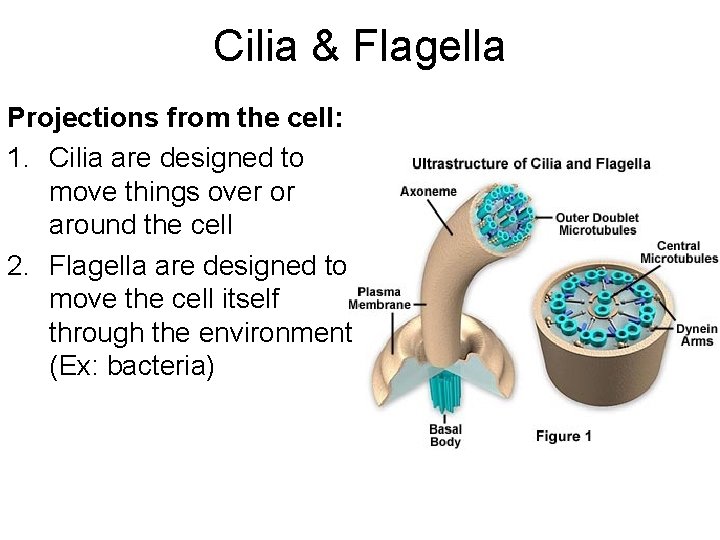
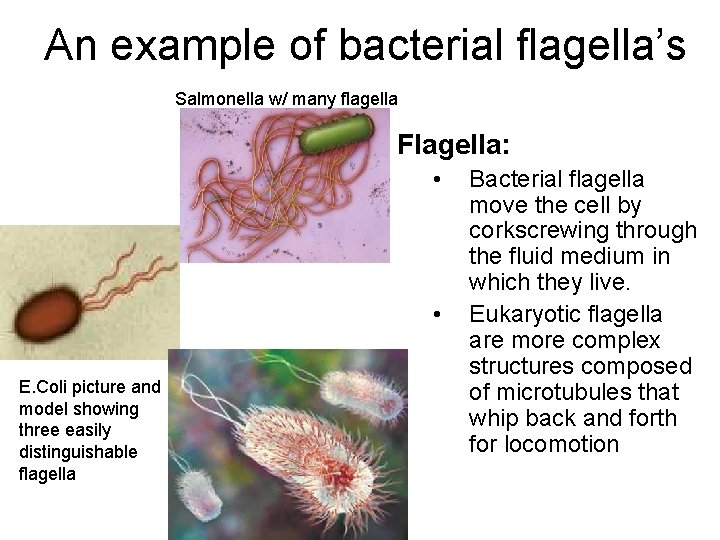
Cilia & Flagella Projections from the cell: 1. Cilia are designed to move things over or around the cell 2. Flagella are designed to move the cell itself through the environment (Ex: bacteria)
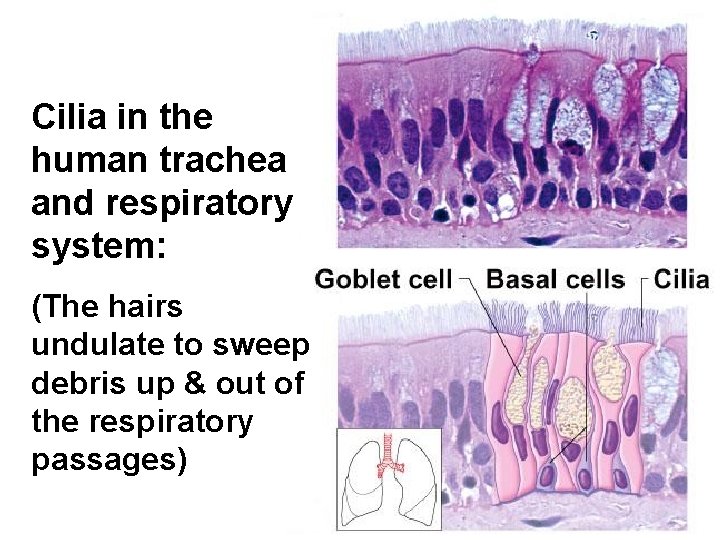
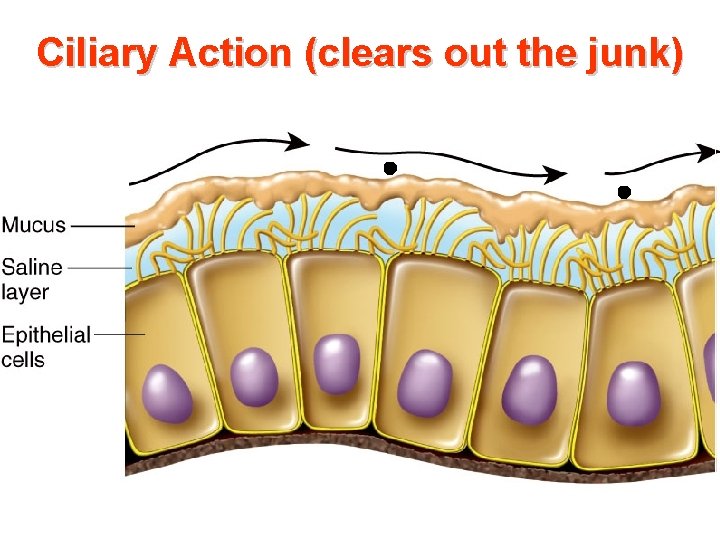
Cilia in the human trachea and respiratory system: (The hairs undulate to sweep debris up & out of the respiratory passages)
Ciliary Action (clears out the junk)
An example of bacterial flagella’s Salmonella w/ many flagella Flagella: • • E. Coli picture and model showing three easily distinguishable flagella Bacterial flagella move the cell by corkscrewing through the fluid medium in which they live. Eukaryotic flagella are more complex structures composed of microtubules that whip back and forth for locomotion
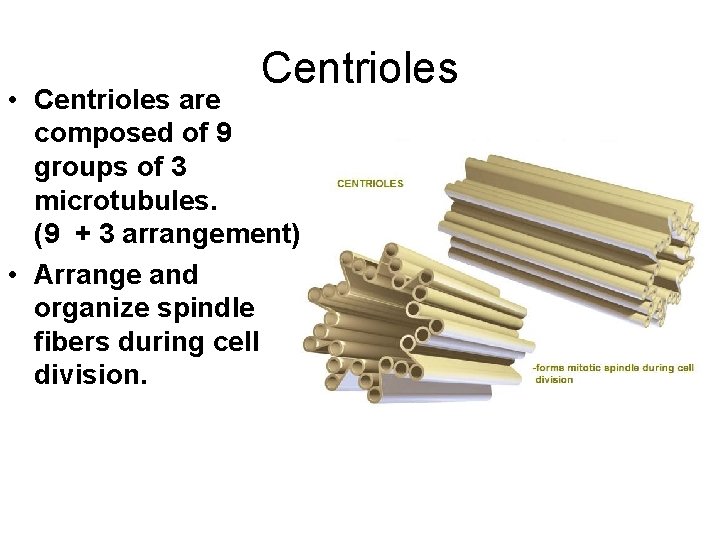
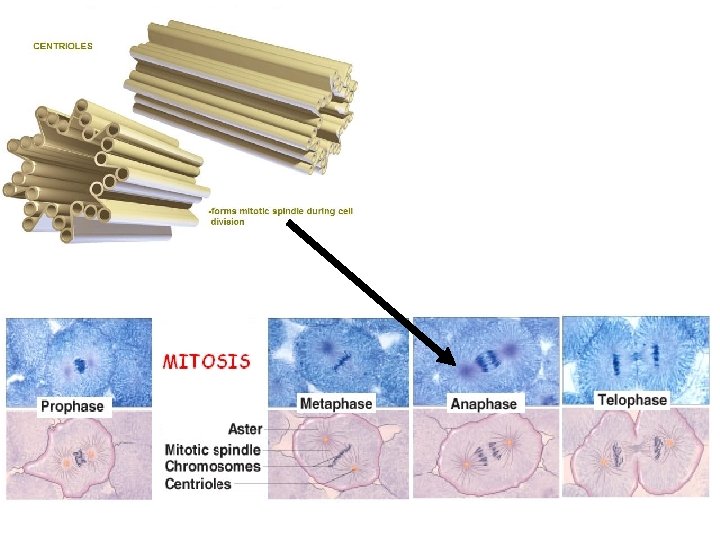
Centrioles • Centrioles are composed of 9 groups of 3 microtubules. (9 + 3 arrangement) • Arrange and organize spindle fibers during cell division.
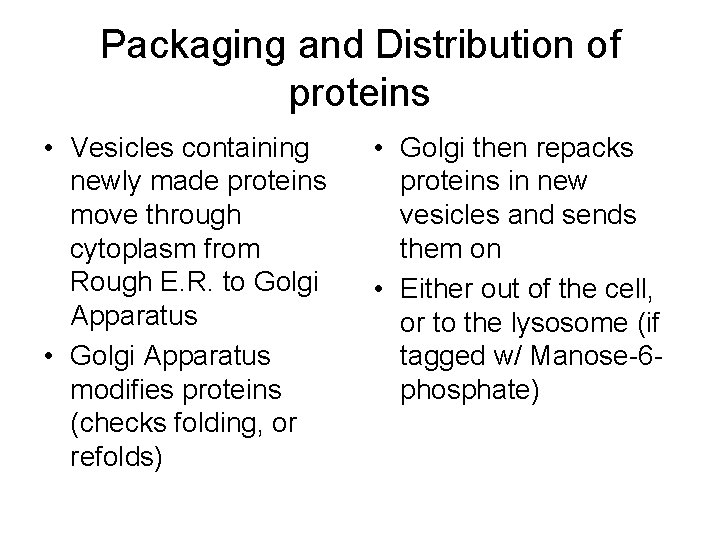
Packaging and Distribution of proteins • Vesicles containing newly made proteins move through cytoplasm from Rough E. R. to Golgi Apparatus • Golgi Apparatus modifies proteins (checks folding, or refolds) • Golgi then repacks proteins in new vesicles and sends them on • Either out of the cell, or to the lysosome (if tagged w/ Manose-6 phosphate)
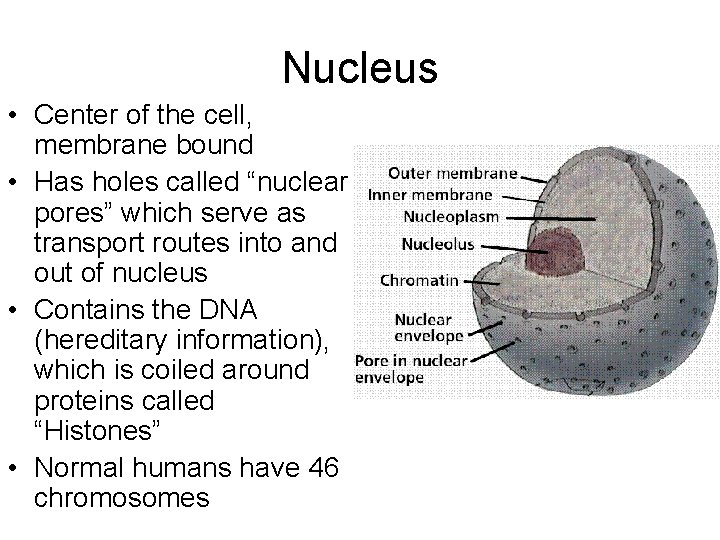
Nucleus • Center of the cell, membrane bound • Has holes called “nuclear pores” which serve as transport routes into and out of nucleus • Contains the DNA (hereditary information), which is coiled around proteins called “Histones” • Normal humans have 46 chromosomes
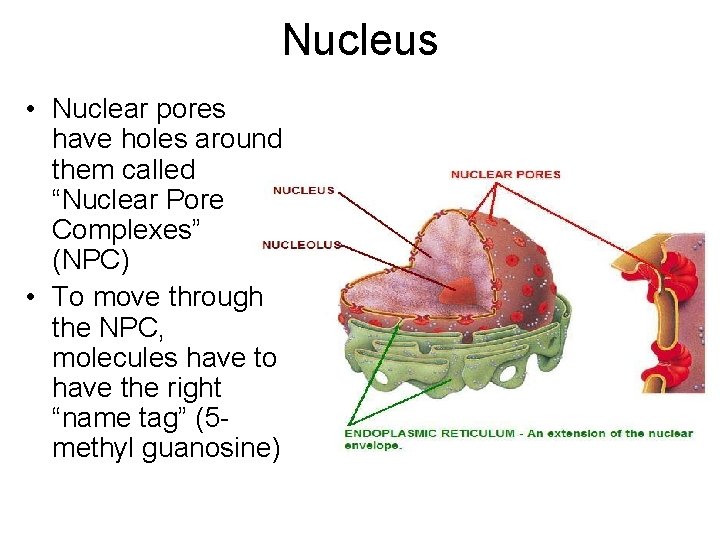
Nucleus • Nuclear pores have holes around them called “Nuclear Pore Complexes” (NPC) • To move through the NPC, molecules have to have the right “name tag” (5 methyl guanosine)
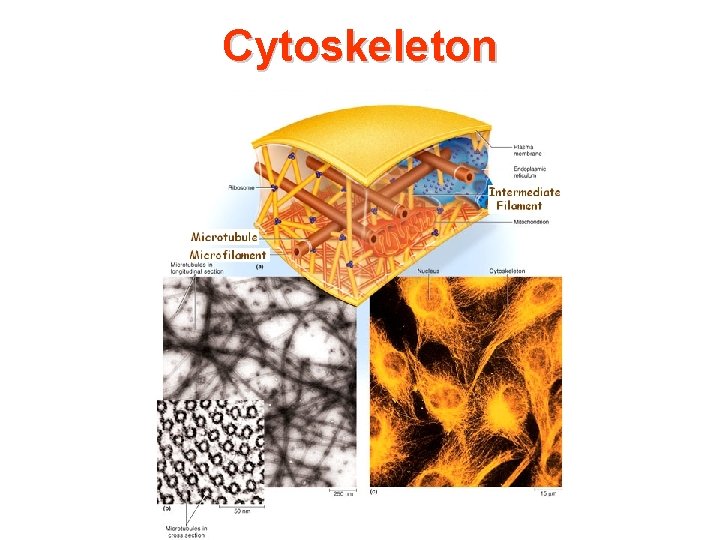
Cytoskeleton
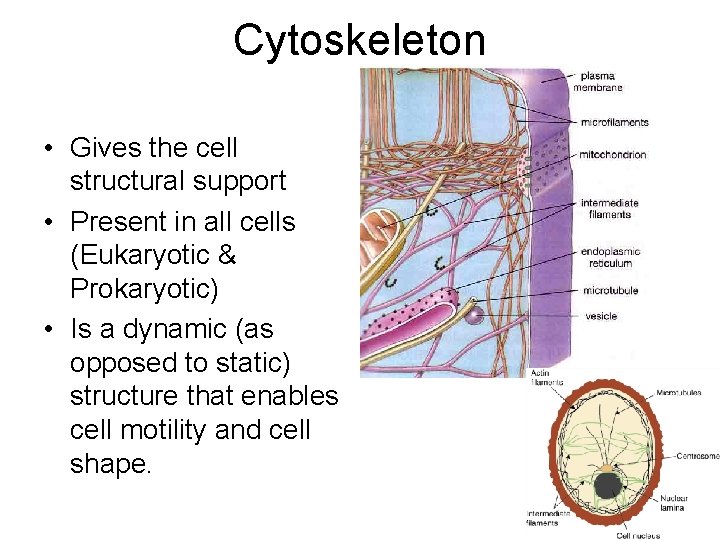
Cytoskeleton • Gives the cell structural support • Present in all cells (Eukaryotic & Prokaryotic) • Is a dynamic (as opposed to static) structure that enables cell motility and cell shape.
• Study these for the test: – Cell Theory • 3 postulates – Cell Prefixes & Terms • From 11 term list; cyto, glyco, trans, pino, phag, etc. – Cell Organelles • Nucleus, Nucleolus, Golgi, Smooth ER, Rough ER, Chloroplasts, Cell Wall, Vacuole, Lysosome, Ribosomes, Centrioles, Cytoskeleton, etc. – Cell Environment • Diffusion, Osmosis, Osmotic Pressure, Active Transport, Passive Transport, Ion Transport, Tonicity (Hypotonic, Hypertonic, & Isotonic) etc.