
Cell Structures Notes Prokaryotes Eukaryotes inner life of

- Slides: 27
Cell Structures Notes Prokaryotes Eukaryotes
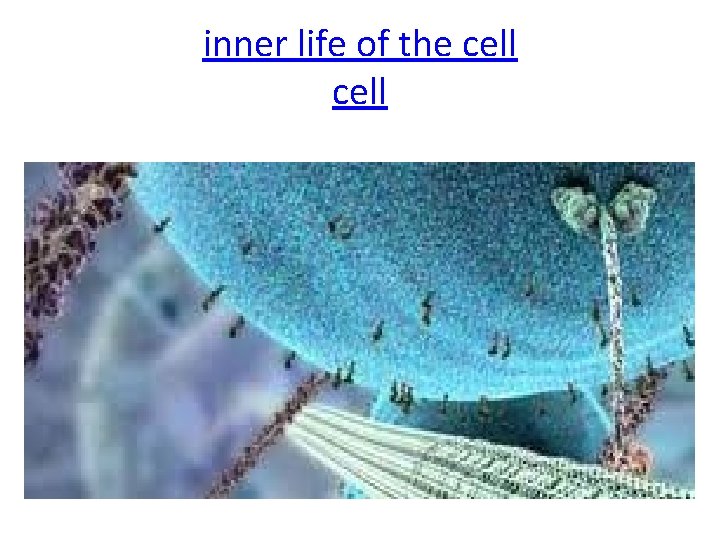
inner life of the cell
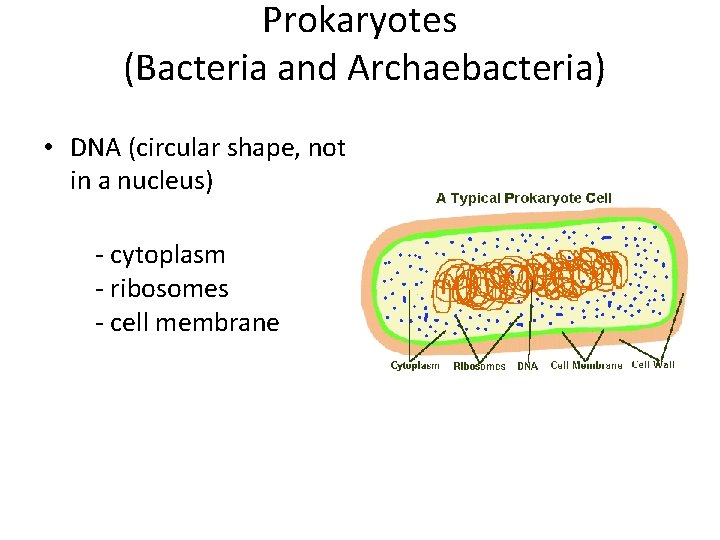
Prokaryotes (Bacteria and Archaebacteria) • DNA (circular shape, not in a nucleus) - cytoplasm - ribosomes - cell membrane
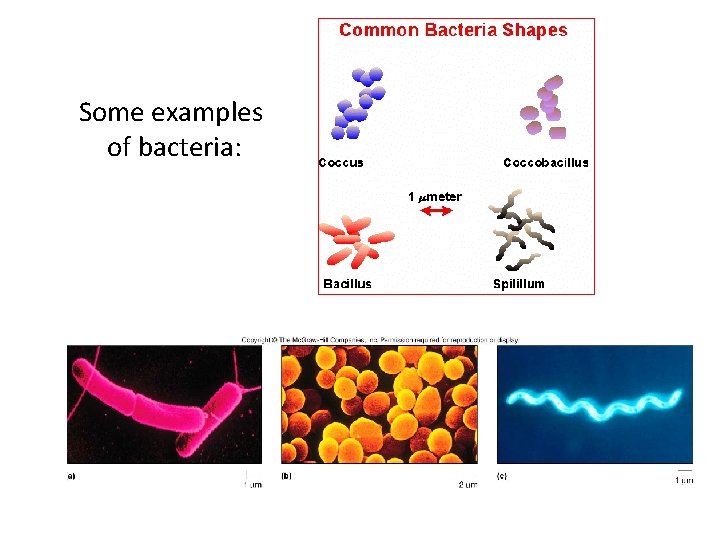
Some examples of bacteria:
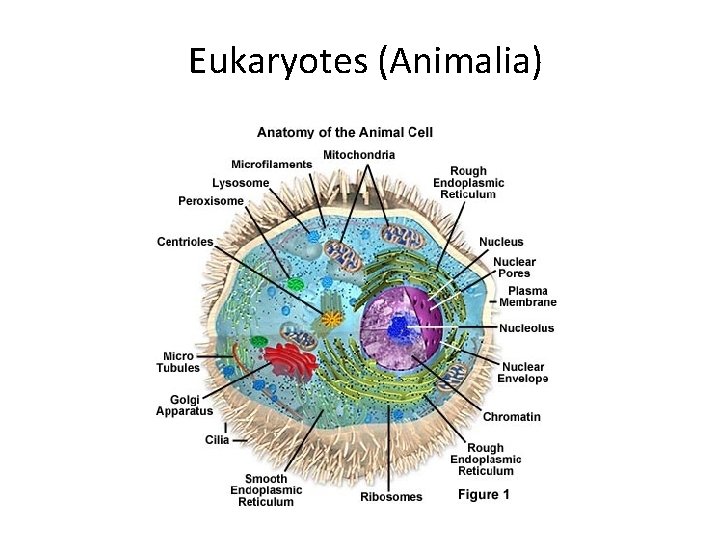
Eukaryotes (Animalia)
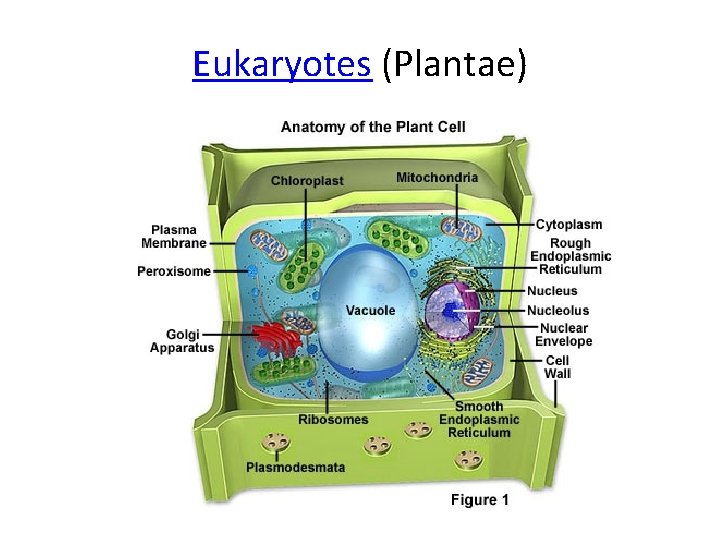
Eukaryotes (Plantae)
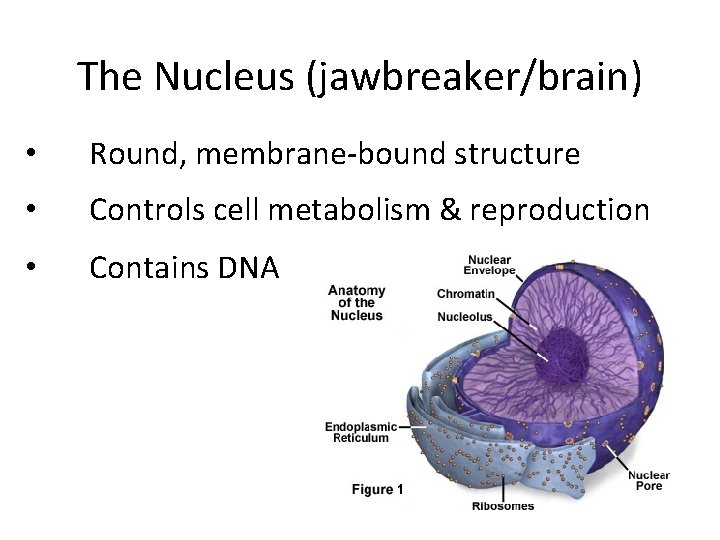
The Nucleus (jawbreaker/brain) • Round, membrane-bound structure • Controls cell metabolism & reproduction • Contains DNA
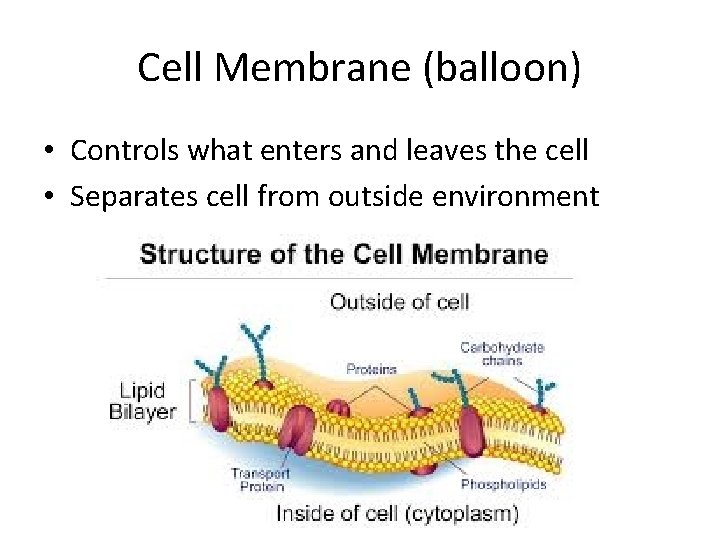
Cell Membrane (balloon) • Controls what enters and leaves the cell • Separates cell from outside environment
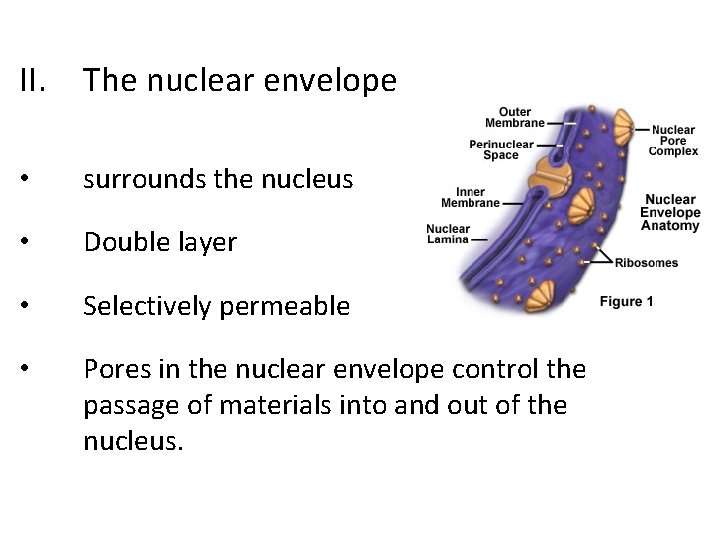
II. The nuclear envelope • surrounds the nucleus • Double layer • Selectively permeable • Pores in the nuclear envelope control the passage of materials into and out of the nucleus.
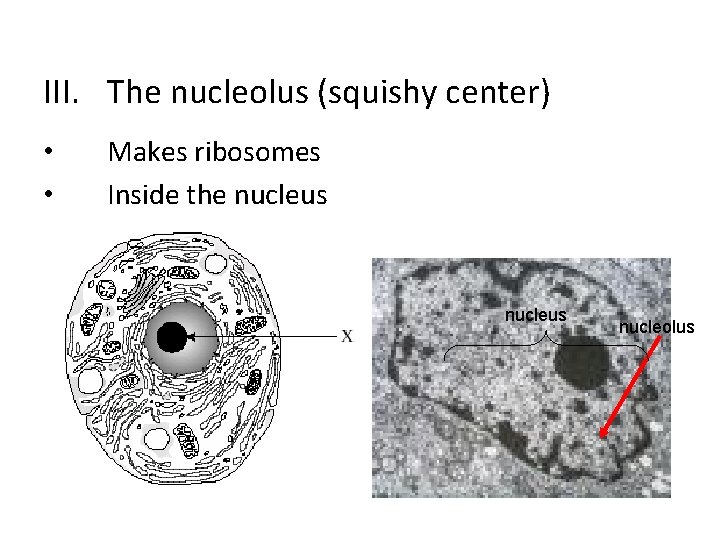
III. The nucleolus (squishy center) • • Makes ribosomes Inside the nucleus nucleolus
The Cytoplasm (jello) • • • Watery material between the cell membrane and the nucleus chemical reactions take place here. Organelles float in the cytoplasm.
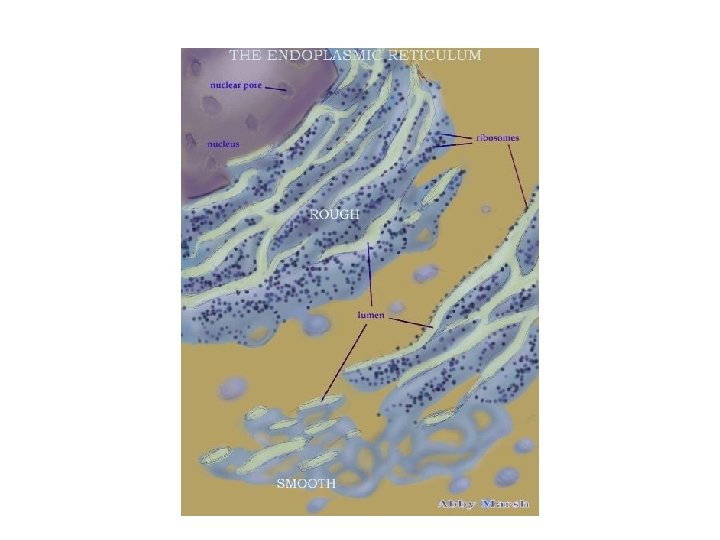
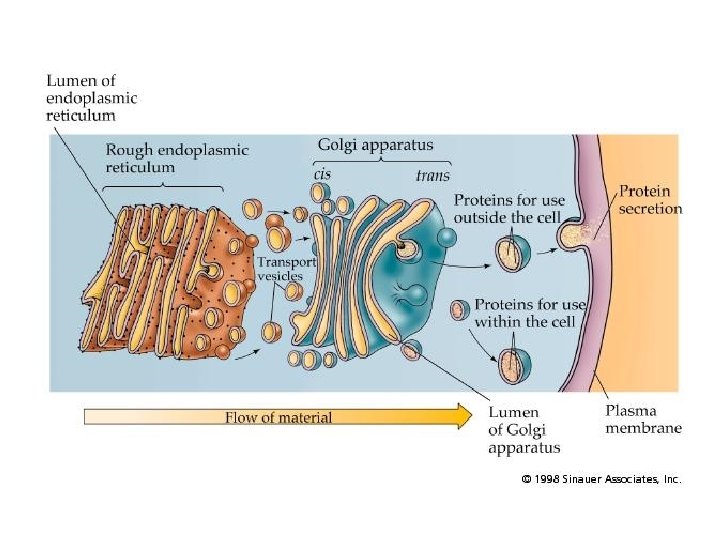
Endoplasmic Reticulum (factory) • • • A system of membranes. transports materials through the cell. Two types of E. R. 1. Rough E. R. – has ribosomes 2. Smooth E. R. – no ribosomes
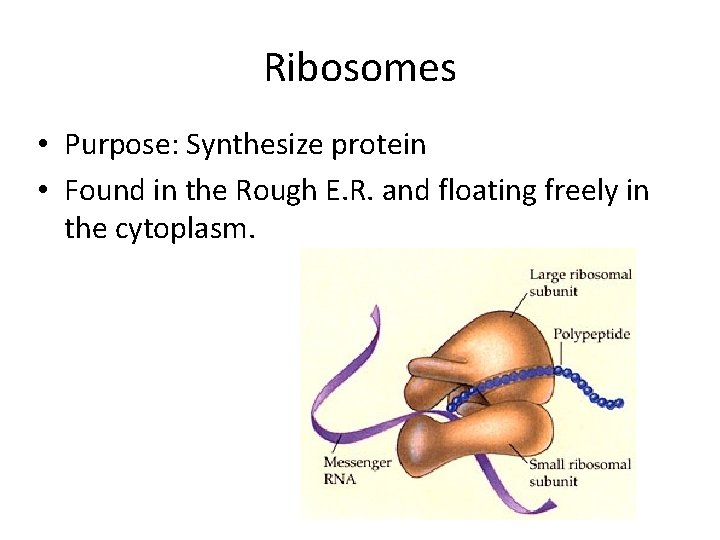
Ribosomes • Purpose: Synthesize protein • Found in the Rough E. R. and floating freely in the cytoplasm.
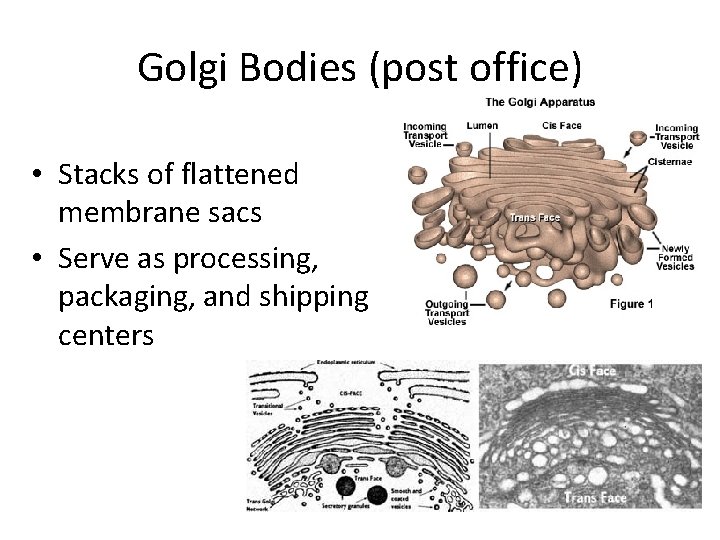
Golgi Bodies (post office) • Stacks of flattened membrane sacs • Serve as processing, packaging, and shipping centers
Lysosomes (trash can) • Small, round structures that contain digestive enzymes • They are produced by the Golgi Body • digest food within the cell, or to break down worn out parts.
Vacuoles • Fluid filled sacs • In plants, a single large vacuole fills the center of the cell. • Contractile vacuole – a type of vacuole used to pump water out of the cell
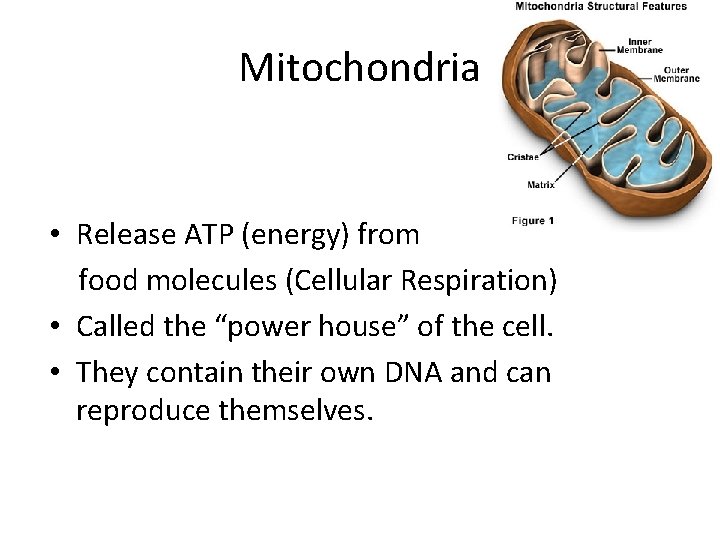
Mitochondria • Release ATP (energy) from food molecules (Cellular Respiration) • Called the “power house” of the cell. • They contain their own DNA and can reproduce themselves.
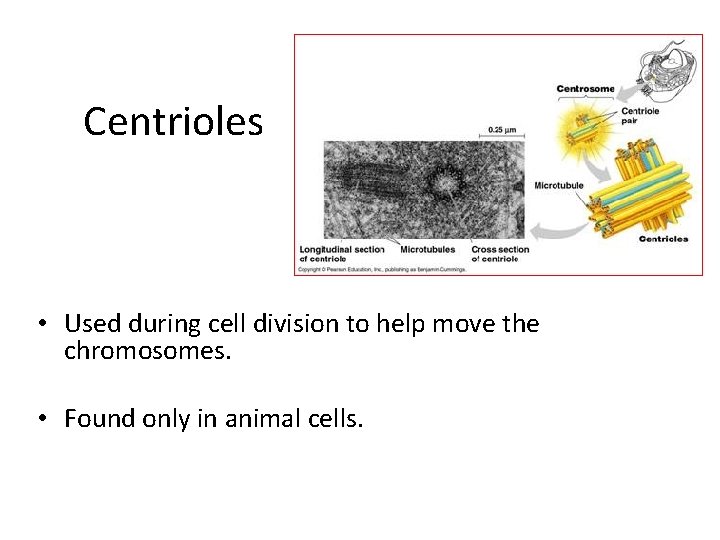
Centrioles • Used during cell division to help move the chromosomes. • Found only in animal cells.
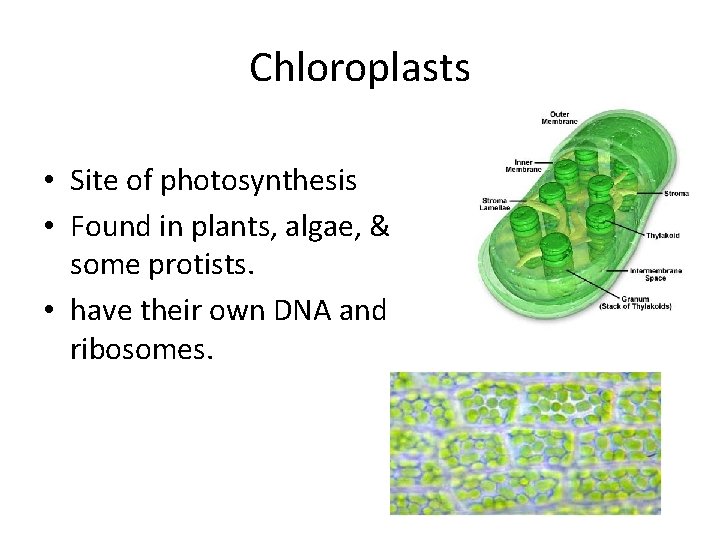
Chloroplasts • Site of photosynthesis • Found in plants, algae, & some protists. • have their own DNA and ribosomes.
Cell Wall (shoe box) • • Made of carbohydrates Surrounds the cell membrane Protects and supports the cell Found in plant cells, bacteria, and some protists
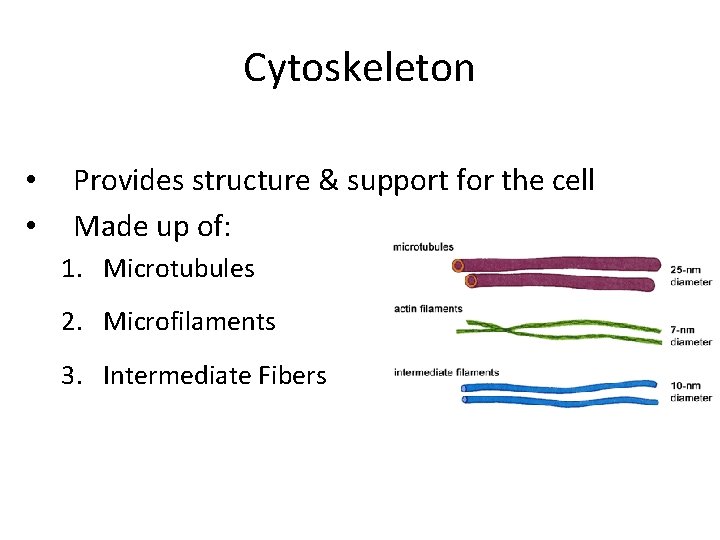
Cytoskeleton • • Provides structure & support for the cell Made up of: 1. Microtubules 2. Microfilaments 3. Intermediate Fibers
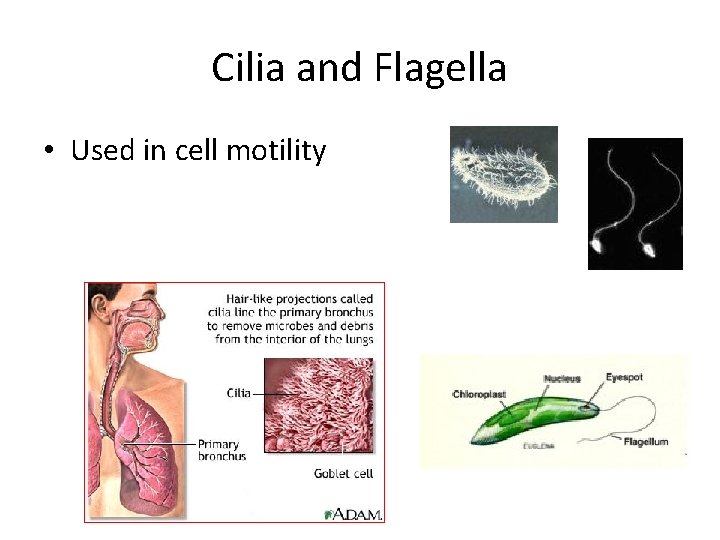
Cilia and Flagella • Used in cell motility
• https: //www. youtube. com/watch? v=zaf. JKb. MPA 8
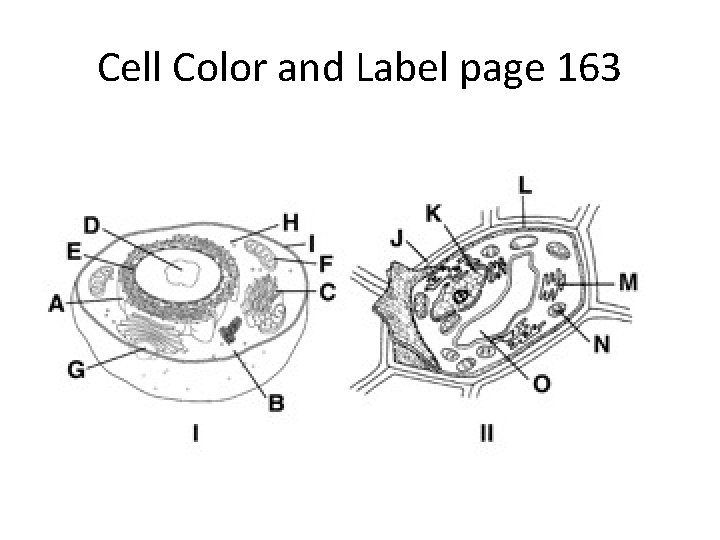
Cell Color and Label page 163
TOTD • Give 3 organelles and their functions